Politics

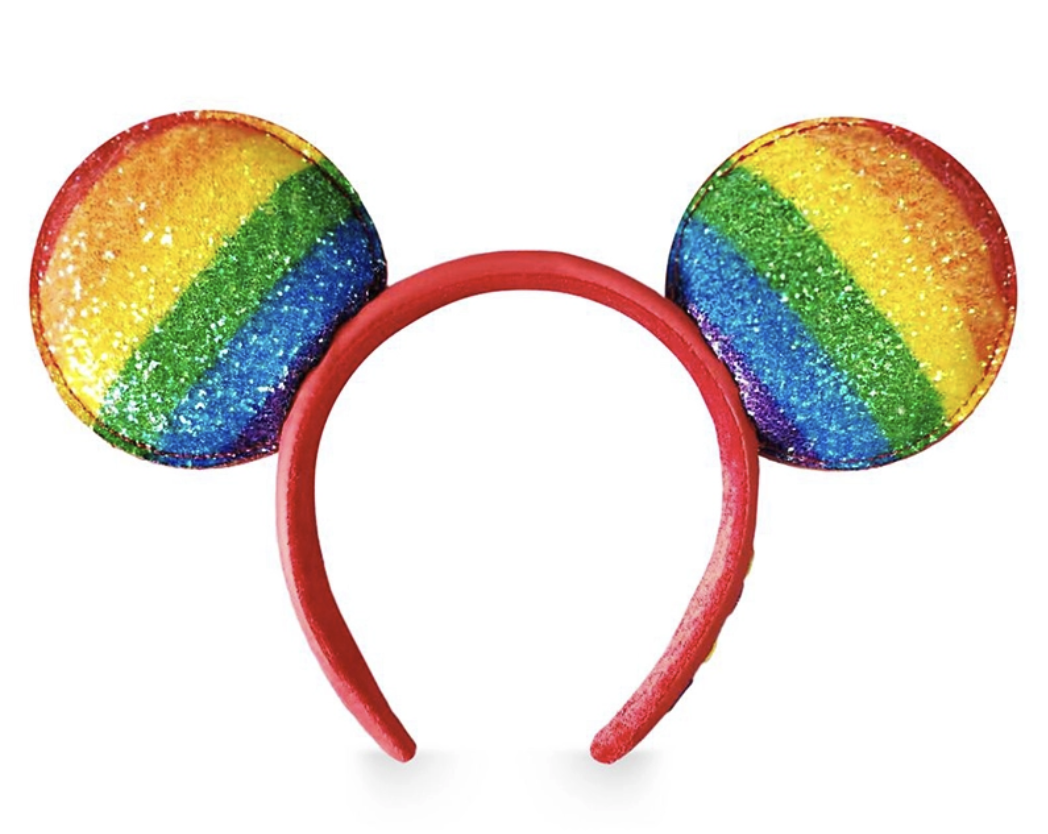
Press quiet as a mouse when it comes to Catholic angles in this Disney-DeSantis fight

Press quiet as a mouse when it comes to Catholic angles in this Disney-DeSantis fight

I was never nuts for Disney. I’ve never been to one of their a theme park, either as a child or now as a parent of two children, and never indulged in their movies much over my lifetime. I’ll freely admit that puts me in the minority, both in the United States and around the world, when it comes to Disney consumption.

I was, however, once a Disney employee. No, I didn’t work in one of their stores. Instead, I was employed at ABC News in New York, where I worked for their digital unit running the website and other internet assets such as social media. It was a great place to work — although not “The Happiest Place On Earth” as the official tagline for Disneyland states. It was, after all, a newsroom — but one of the perks was free tickets each year to their amusement parks.

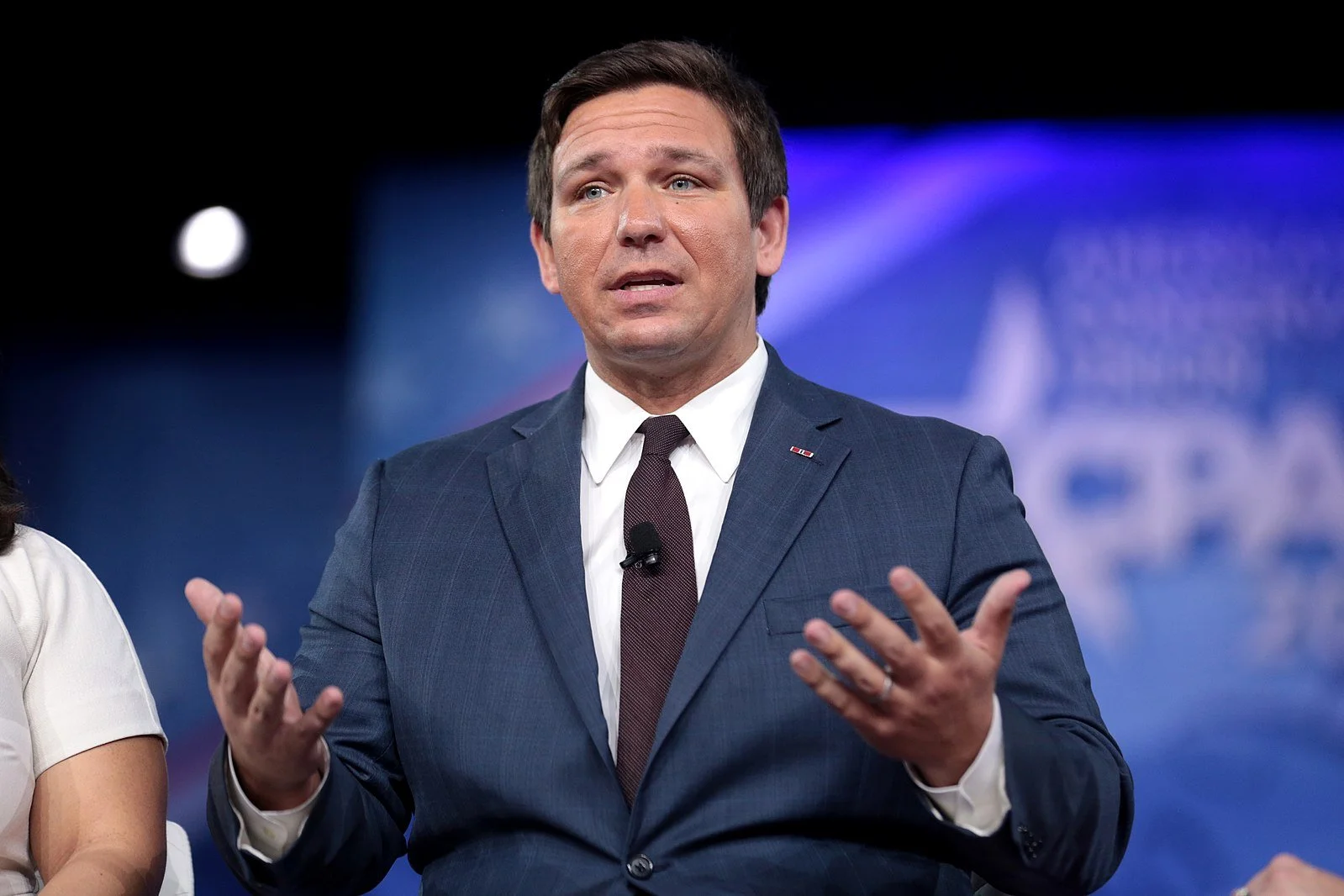
I say all this in the context of the ongoing feud regarding the Florida “Parental Rights in Education” bill, which is now law after Gov. Ron DeSantis signed it. This is the much-discussed bill that bans classroom instruction on sexual orientation or gender identity from kindergarten through third grade “in a manner that is not age appropriate or developmentally appropriate for students in accordance with state standards.”

The law continues to get media coverage for two reasons. First, because of Disney’s involvement and second due to the larger notion that DeSantis, a potential 2024 presidential candidate, is — everyone chant the media mantra — “engaging in a culture war.” This remains a political story, a business story and a pop culture story.

Is this also an important religion story? It certainly is (tmatt takes on this very topic in GetReligion’s most recent podcast).

My most recent GetReligion post focused on the news media’s largely ignoring the Republican DeSantis’ Catholic faith in regard to the widespread news coverage around the bill, which opponents effectively labeled “Don’t Say Gay” even though the bill never used those words.

At the same time, the news coverage for conservative press around the legislation has centered much more on Disney’s late-in-the-game activism in opposing it. The coverage among mainstream and progressive news sites continues to center on that activist “Don’t Say Gay” mantra.

Please respect our Commenting Policy

Podcast: Concerning the many religion-beat stories linked to that 'Don't Say Gay' bill

Podcast: Concerning the many religion-beat stories linked to that 'Don't Say Gay' bill

Let’s talk news-business realities for a moment.

If you do an online search for the following terms — “Parental Rights in Education,” Florida — you will get about 43,000 hits on Google News (as of Thursday afternoon).

Then again, if you run a search for these terms — “Don’t Say Gay,” Florida — you will get 6,820,000 hits on Google News and 24,100,000 hits on Google (period).

That’s a pretty big difference. What’s going on?

On this week’s “Crossroads” podcast (CLICK HERE to tune that in) I argued that the real name of this bill sounded way, way too much like a whatever it was that parents in Virginia wanted during that recent election that left the Democratic Party establishment in shock.

As it turns out, a new Public Opinion Strategies poll (.pdf here) found that registered voters — a majority of Democrats, even — liked the contents of this controversial Florida bill when shown its key, defining language:

“Classroom instruction by school personnel or third parties on sexual orientation or gender identity may not occur in Kindergarten through third grade or in a manner that is not age appropriate or developmentally appropriate for students in accordance with state standards.”

Clearly, “Don’t Say Gay” worked much better for political activists who wanted to keep the focus on LGBTQ-era sexual education for prepubescent children. The whole idea was that way too many parents are burdened with religious, moral and cultural beliefs that were on the wrong side of history. Thus, “parental rights” and classroom transparency are not helpful concepts.

What does this have to do with the many religion-angle stories that journalists could be chasing linked to this legislation and variations on this bill that are sure to show up in other states?


Please respect our Commenting Policy

Along the religion beat: Should 'mainstream media' pundits take sides on church disputes?

Along the religion beat: Should 'mainstream media' pundits take sides on church disputes?

The acerbic anti-Donald Trump conservative Jonah Goldberg says that — at National Review and currently TheDispatch.com — he has spent the past 25 years complaining about "liberal media bias."

But, he wrote last week, much has changed during that time with the breakup of America's onetime "hegemony" of three broadcast networks, the newsmagazines and a few influential newspapers. Now we have devoutly conservative news-talk radio and cable TV while infinite opinions of commentary and information overwhelm the Internet.

Then there's rising distrust in the news media, which The Religion Guy believes is a serious threat to healthy democracy. A Pew Research Center survey, reported last August, found that since 2016 the percentage of Americans with at least "some" trust in the national news media has slumped from 76% down to 58%, and among Trump-era Republicans and Republican leaners from 70% down to 35%.

Another simultaneous change, Goldberg said, is "the blurring of reporting with partisan punditry, particularly on cable news and social media." The Guy would contend that this distrust expands when partisan opinion seeps into or overshadows supposed hard news. (This is the spirit of our media age, since, as tmatt often observes here at GetReligion, opinion is cheap and actual reporting is expensive).

That brings us to religion coverage in the print media and the Internet (broadcasters and cable generally slight the beat) and a rather idiosyncratic must-read complaint about The New York Times from Hillsdale College historian D.G. Hart, posted at Real Clear Religion the same day as Goldberg's article. In case you missed it, the text is here.

Hart thinks the Times "rightly" figures that explicitly religious periodicals can handle faith news, which means he does not read the paper that closely (though it can be criticized for sins of omission). The article appears to suggest the Times and other outlets should downplay or eliminate attempts to do religion-beat reporting -- which would remove the very reason GetReligion exists.


Please respect our Commenting Policy

Elite American super-cities are bleeding people: Any religion ghosts in this big story?

Elite American super-cities are bleeding people: Any religion ghosts in this big story?

It’s hard to imagine any corner of American life that has not been touched by the coronavirus pandemic.

Obviously, there have been plenty of religion stories — along with the obvious angles linked to politics, business and technology.

Then you have stories that combine all of these elements. That is, they combine all of these themes if reporters are willing to look at the numbers and trends through multiple lens. However, as any GetReligion reader knows, not all lens are created equal.

One of the most important stories has been the impact of COVID-19 realities on some of the most important zip codes — “important” from an elite-news perspective — on the blue coasts. That brings us to that massive headline the other day in The New York Times, a paper that has, for the most part, treated evidence of New York City woes as part of a vast a right-wing conspiracy theory. Here’s that double-decker headline:

Cities Lost Population in 2021, Leading to the Slowest Year of Growth in U.S. History

Although some of the fastest growing regions in the country continued to grow, the gains were nearly erased by stark losses in New York, Los Angeles and San Francisco.

This is, of course, an almost totally religion-free story. I was pleased to notice that the Times team took demographic issues — including birth-rate slumps — rather seriously, even if the editors didn’t (as usual) connect the dots and see the religious, cultural and moral elements of that important angle (please see this earlier GetReligion piece — “New York Times asks this faith-free question: Why are young Americans having fewer babies?” — for background).

Am I arguing that the flight from several important American super-cities is essentially a religion story? Of course not. Am I saying that issues linked to faith, family and culture are playing a role in this very, very important story? Yes, I am.


Please respect our Commenting Policy

No longer a Ukraine news sidebar: Pope Francis asks if combat can ever be moral

No longer a Ukraine news sidebar: Pope Francis asks if combat can ever be moral

As Russia's invasion sought to erase Ukraine from the map, Moscow's Orthodox Patriarch Kirill, a key ally of dictator Vladimir Putin, met via video last week with Pope Francis.

The Religion Guy had planned to propose a wartime sidebar about the theological justifications for combat that could run any time, but suddenly the theme has gained timely mainbar status.

That's because an official Vatican release reported that Francis stated this at the meeting: "There was a time, even in our churches, when people spoke of a holy war or just war. Today we cannot speak in this manner. A Christian awareness of the importance of peace has developed. Wars are always unjust, since it is the people of God who pay."

Francis' 2020 encyclical Fratelli Tutti declared similarly that "it is very difficult nowadays to invoke the rational criteria elaborated in earlier centuries to speak of the possibility of a 'just war'."

Francis deplores the bloodshed in Ukraine, but did not publicly castigate Putin or Russia by name, presumably in case a neutral papacy could help negotiate an end to the conflict. (That argument is used to explain Pope Pius XII's silence during Nazi Germany's Holocaust against European Jewry.)

Journalists can, at this point, ask several logical questions:

* Is Francis declaring dead the church's "just war" teaching, first formulated in the 5th Century by St. Augustine?

* Should 1.36 billion Catholics shift to pacifism, which excludes support for all wars?

* Is Ukraine wrong to take up arms to defend its existence as a sovereign and democratic nation?

Nearly all Christian commentators agree that Russia's aggression is evil and Ukraine's military defense against it is justified.


Please respect our Commenting Policy

No need for balance? Washington Post offers sermon on behalf of Alabama trans activists

No need for balance? Washington Post offers sermon on behalf of Alabama trans activists

Before we get to the Washington Post story at the heart of this post, please allow me to share a journalism parable from my years at the Rocky Mountain News (RIP), back in the 1980s.

It was obvious that, sooner or later, Operation Rescue protesters would come to the Boulder Abortion Clinic, which was nationally known for its work in third-trimester abortions and other controversial procedures. I urged my editors to commit time and resources to a pair of profiles of important activists on both sides. One was a former abortionist who had joined the pro-life cause. The other was a liberal Christian who was pouring her life into the defense of abortion rights.

These profiles would be the same length and would run side-by-side, with similar art and headlines. There would be no need to include balance and dissent in each of the profiles since they represented competing voices on both sides of an important debate in public life. In the end, we heard praise and criticism from readers on both sides of this event.

Now, let’s look at the Post story that ran under this double-decker headline:

Activists face an avalanche of anti-transgender bills

‘If this bill don’t pass, it’s coming back next year,’ says an ardent advocate in Alabama

That sub-headline is, for all practical purposes, the only time that “conservative” cultural voices are heard in this long, long feature story. Every single sentence in this story is written using the precise terms, images and themes of the activists opposed to these “anti-transgender” bills in Alabama and across America.

In effect, this story — a totally valid profile of an important activist — is one half of a package covering these debates deep in the Bible Belt.

The problem is that there is no second profile. There is no feature of equal length addressing, let’s say, the views of a Black church leader who works with young people who are making efforts to “detransition” after declaring themselves trans.


Please respect our Commenting Policy

As Florida's DeSantis wages culture war, his Catholic faith isn't news -- unless it's used to attack him

As Florida's DeSantis wages culture war, his Catholic faith isn't news -- unless it's used to attack him

The two things that lots of people don’t want to read about these days is the coronavirus pandemic and Donald Trump, part of a larger trend regarding news fatigue in this country. Unfortunately, this post will mention both and only because it is about Ron DeSantis.

The Florida governor has been in the news the past few years because of his connection to the former president and a virus that paralyzed the planet for two years. A hero to the right and bogeyman to the left, DeSantis has received plenty of mainstream news coverage — much of it one-sided — because of his use of so-called culture war issues to push legislation.

DeSantis, who is running for re-election and among the favorites to run for the White House in 2024, has been a lightning rod for Democrats and a focus of criticism from the mainstream press for the last two years. His actions regarding COVID-19 were at odds with how blue states handled the virus, often catapulting him to national attention.

While the coverage has predictably focused on politics, the religion-news hooks in these stories have largely been ignored — unless they were highlighted to be used against him. The bottom line: DeSantis is not the kind of Catholic who draws cheers from journalists who admire progressive Catholics.

Those angles were once again set aside by the press coverage of the recent debate about the state’s sex-education bill.

As political conservatives and liberals battled it out over the merits of this bill, the press ignored DeSantis’ Catholic faith throughout the past few weeks of coverage.

The legislation — which the press insisted on calling the “Don’t Say Gay” bill — was, as the Associated Press recently noted, the following:

Since its inception, the measure has drawn intense opposition from LGBTQ advocates, students, national Democrats, the White House and the entertainment industry, amid increased attention on Florida as Republicans push culture war legislation and DeSantis ascends in the GOP as a potential 2024 presidential candidate.

There’s a lot to unpack in that paragraph, but mostly for what’s not mentioned.


Please respect our Commenting Policy

Never forget: There are more than two strategic camps in the global United Methodist war

Never forget: There are more than two strategic camps in the global United Methodist war

It’s time for another religion-beat journey beyond “whataboutism” and the basic assumption that all controversial subjects have “two sides,” and that’s basically that.

Of course, we live in an age in which many elite newsrooms decline to cover “one side” of a story if, according to newsroom doctrines, it’s already obvious which side is good and which side is bad. Here at GetReligion we have a term for this — “Kellerism,” a nod to candid remarks once made, on the record, by former New York Times editor Bill Keller.

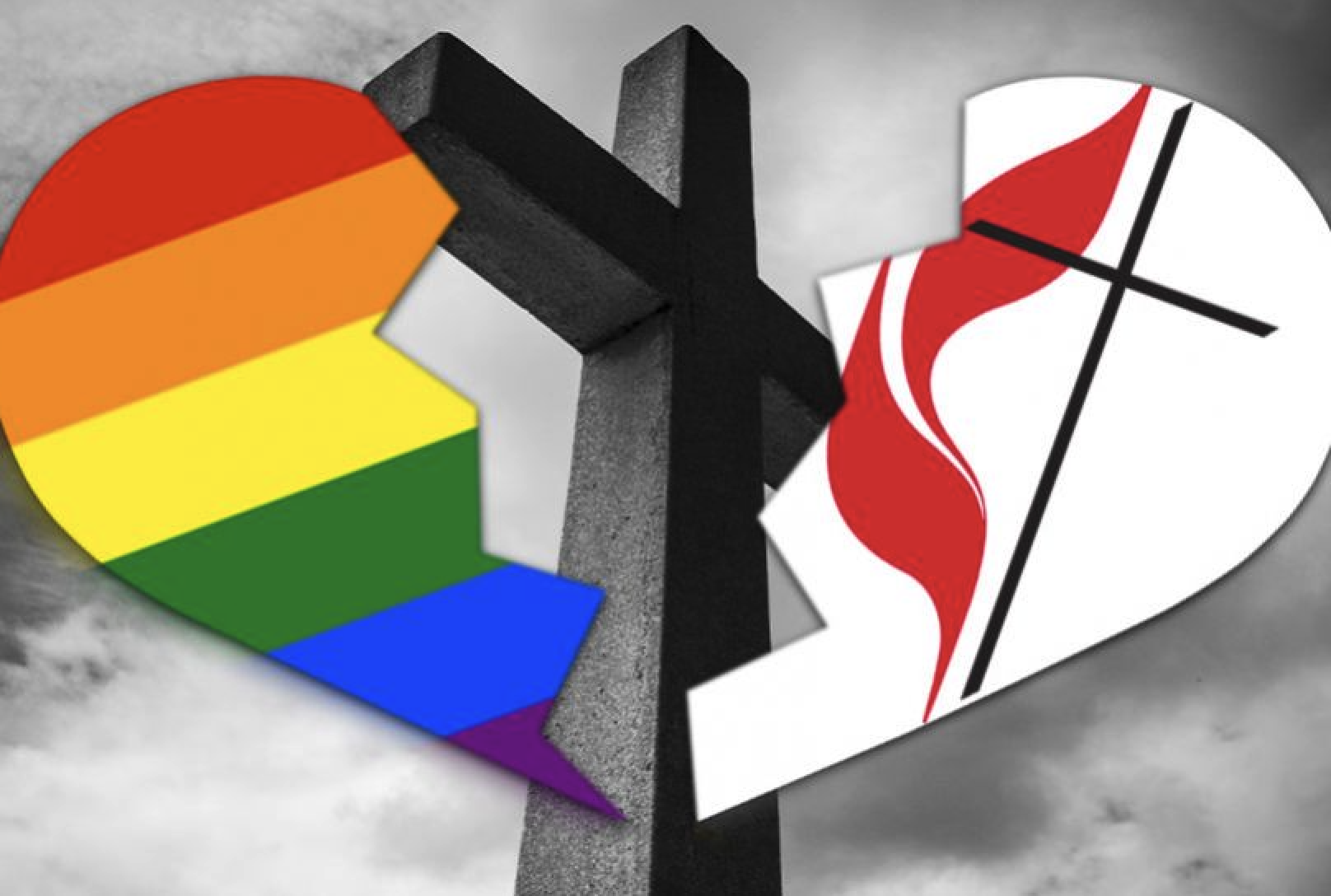
In this case, we are looking at a religion-beat superstory at the local, regional, national and global levels — the break-up of the United Methodist Church, the second largest Protestant denomination in America.

To get the big picture, please see this recent GetReligion post by Richard Ostling: “The latest United Methodist bombshell will create news throughout 2022 and beyond.” To see how long this battle has been going on, check out this “On Religion” column that I wrote in 1998: “United Methodists — Breaking up is hard to do” and two more on a related topic, “Old fault lines can be seen in the ‘seven churches’ of divided Methodism” (and then part II).

Here are Three Big Ideas for today. Remember that I have, as a reporter, been wrestling with this ongoing story since the early 1980s.

(I) Never forget the unique element of this story, which is that the United Methodist Church has a GLOBAL structure that includes the growing churches of Africa and Asia, as well as the splintering (and usually shrinking) congregations in the United States. Readers should question news reports that fail to mention — or even stress — the racial and cultural diversity of the global conservative United Methodism coalition.

(II) While fights about LGBTQ issues make headlines, the United Methodist wars have — behind the scenes — included clear divisions on basic, even credal, issues in Christian theology. In addition to clashing views of biblical authority, we’re talking about splits on salvation, sin, heaven, hell, the Resurrection and the very nature of Jesus Christ. Reporters need to ask questions about issues other than sex.

(III) There are, at the very least, three major groups involved in this story. Let’s call them the “candid left,” the “establishment left” and then the “traditional” United Methodists, as in the defenders of the existing laws and doctrines in the United Methodist Book of Discipline. However, there are subgroups on the right. Never assume that the global conservatives have precisely the same views as their American counterparts.

To see that these issues look like “in the wild,” consider this recent Religion News Service story: “Vote delayed again, some United Methodists say they quit. Now what?”


Please respect our Commenting Policy

Beyond the Orthodox questions: How might the Ukraine war scramble world Christianity?

Beyond the Orthodox questions: How might the Ukraine war scramble world Christianity?

Russia's invasion of Ukraine has potential to be "the most transformational" European conflict since World War II, writes New York Times foreign policy columnist Thomas Friedman.

Will it be transformational for Christianity?

There's a slim chance peace could be restored, but at this writing Russian dictator Vladimir Putin appears committed to doing whatever it takes to demolish the independence of his once-friendly neighbor and its young democracy. We might see Russian military occupation, a puppet regime, persistent armed resistance by furious Ukrainians, ongoing aid by the West and at some future point a humiliating defeat and withdrawal -- a replay of the decade-long occupation of Afghanistan that played into the Soviet Union's collapse and therefore to Ukraine's independence.

Russia faces accusations of war crimes amid mass killings of innocent civilians, and bombardment of homes, hospitals, schools and infrastructure, with attendant suffering.

The contours of world Christianity could be scrambled, as a result of all of this. This religious aspect seems a mere sidebar for the news media just now.

But long term, the Russian Orthodox hierarchy has fused the church's stature with a regime hit by widespread moral condemnation, sagging influence and rising economic and diplomatic isolation. Opprobrium comes not just from the U.S. and western allies. In a United Nations vote, 141 nations denounced the "aggression" while only four problematic regimes backed Russia. Even China abstained.

The media should be alert to the following possible scenarios.

The starting point for discussion is a current church split within Ukraine, whose Orthodox population is second only to the massive church of Russia. See detail here in a previous Memo.

In 1686, the Ecumenical Patriarch, "first among equals" who lead Orthodoxy's independent "autocephalous" branches, granted the Moscow Patriarch the jurisdiction over Ukraine that it still exercises. But after national independence, a rival Orthodox Church of Ukraine now led by Metropolitan Epiphanius arose, and Ecumenical Patriarch Bartholomew — with the sympathy of western leaders — formalized its autocephalous status in 2019.


Please respect our Commenting Policy