Politics

New podcast: Sex, marriage and babies are now topics too hot for preachers to handle?

New podcast: Sex, marriage and babies are now topics too hot for preachers to handle?

Hey religion-beat reporters (and even pros who cover politics): Want to find some really interesting stories?

Ask this question: What are the subjects that clergy are afraid to address in the pulpit? This was the big idea looming in the background during this week’s “Crossroads” podcast (CLICK HERE to tune that in).

For example, lots of people interpreted the silence of many super-preachers on the ethics and affairs of Donald Trump as evidence of support for him. It is much more likely (see some of the info in this “On Religion” column) that they knew the people in their pews were divided on this topic.

Thus, they were afraid to discuss it. They didn’t want to start a war.

Here’s another case study, one so old that my reporting on it predates the Internet. But I addressed the topic in this 2016 post here at GetReligion. Remember the “True Love Waits” phenomenon?

Anyway, I realize that for many people the whole "True Love Waits" thing was either a joke or an idealistic attempt to ask young people to do the impossible in modern American culture. …

What fascinated me was that, according to key "True Love Waits" leaders, they didn't struggle to find young people who wanted to take vows and join the program. What surprised them was that many church leaders were hesitating to get on board because of behind-the-scenes opposition from ADULTS in their congregations.

The problem was that pastors were afraid to offend a few, or even many, adults in their churches — even deacons — because of the sexual complications in many lives and marriages, including sins that shattered marriages and homes. Key parents didn't want to stand beside their teens and take the program's vows.

This brings me to some amazing Gallup Poll data that —as far as I can tell — didn’t receive any news coverage when it came out in 2020. There was a Twitter flurry about it the other day, which led to some people re-upping this “story” that wasn’t a “news story.”

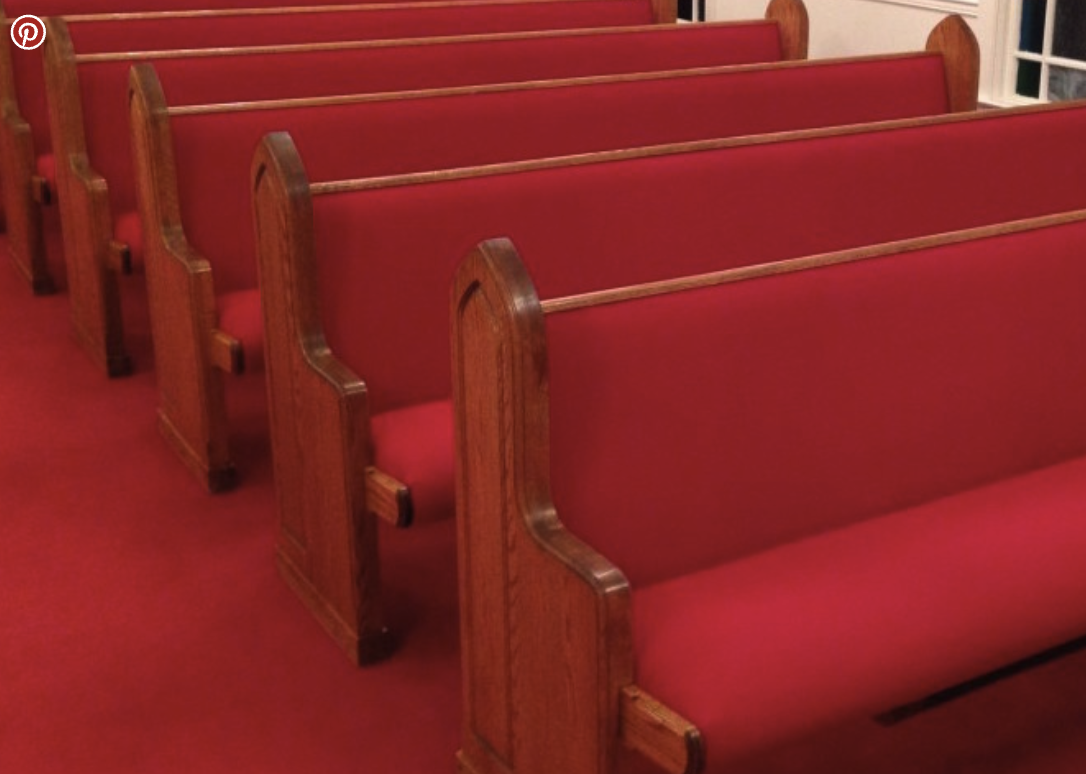
The headline on the feature at Gallup: “Is Marriage Becoming Irrelevant?” Here is a chunk of the information that should have raised eyebrows, for reporters and preachers — including clergy who face people sitting in “red,” “conservative” pews.


Please respect our Commenting Policy

Do athletes have a moral duty to protest Chinese authoritarianism? How about Elon Musk?

Do athletes have a moral duty to protest Chinese authoritarianism? How about Elon Musk?

Do elite international athletes have a moral responsibility to publicly comment or act in a way that acknowledges their awareness of oppressive — or worse — political conditions in nations in which they compete?

Do societal moral standards require them to speak up, even when criticism and confrontation jeopardize their ability to compete and may threaten to derail an entire career?

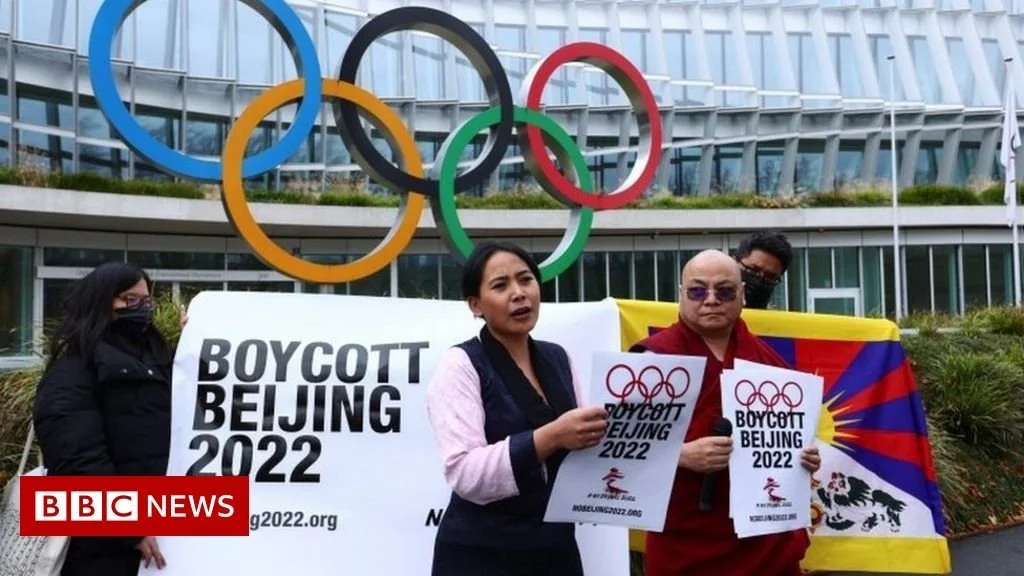
The Beijing Winter Olympics — scheduled to begin in early February in and around China’s capital city — makes this a timely question.

Several democratic nations have announced “diplomatic” boycotts of the Beijing competition. They include the United States, Australia, Britain, Canada, Denmark, and Japan. (To be clear: democratic claims alone do not necessarily stifle a nation’s darker impulses and render it “moral.”)

That means that no political office holders from the the boycotting nations will attend these Games, but qualifying athletes are free to make their own choices about competing.

The following paragraphs from the above linked Washington Post article explain the limits on free speech China is demanding (with International Olympic Committee acquiescence).

The IOC has said athletes will be free to express themselves during the Games as long as they abide by IOC rules barring any demonstrations during sporting events or medal ceremonies.

Athletes could raise any number of issues, including allegations of cultural genocide against the Uyghurs in Xinjiang, the erasure of civil freedoms in Hong Kong, and the arrests of human rights lawyers, activists and outspoken Chinese citizens. [Note that the Post left Tibetan issues, a major international sticking point for the West, off this list.]

But Chinese authorities are extremely sensitive to criticism about the country’s human rights record, its role in the outbreak of the covid-19 pandemic, and even the country’s efforts during the Korean War.


Please respect our Commenting Policy

Is America really threatened by civil war? What is religion's role in these tensions?

Is America really threatened by civil war? What is religion's role in these tensions?

American Civil War talk is all the rage this New Year.

No, not that war, the one that cost 620,000 lives and was evoked by President Biden to castigate Senate Democrats and Republicans who are blocking passage of new election-ballot rules. Rather, The Guy refers to the drumbeat of warnings that the disunited United States may in the near future face an internal legal and economic cold war or some kind of hot war.

National Public Radio's Ron Elving reports that "not long ago the idea of another American Civil War seemed outlandish. These days, the notion has not only gone mainstream, it seems to suddenly be everywhere." He summarized anxiety-producing polls that show a polarized nation, and noted that 434,000,000 firearms are in civilian hands.

Then there's New Yorker Editor David Remnick's article "Is a Civil War Ahead?" New York Times columnist Michelle Goldberg likewise wonders, "Are We Really Facing a Second Civil War?" A Times op-ed by former National Security Council staffers Jonathan Stevenson and Steven Simon offers "the worst case scenario" in which "the United States as we know it could come apart at the seams" with "insurrection, secession, insurgency and civil war."

New January books include "The Next Civil War: Dispatches From the American Future" by novelist Stephen Marche, who sees virtually inevitable doom, and the slightly more upbeat "How Civil Wars Start and How to Stop Them" by Barbara F. Walter of the University of California San Diego. (Is it mere coincidence that The Atlantic's London writer Tom McTague is just out with "How Britain Falls Apart"?)

One typical forecaster is all the more interesting because he's Canadian. Thomas Homer-Dixon of Royal Roads University issued a New Year's Eve alarm in the influential Globe and Mail. He believes that as soon as 2025 "American democracy could collapse, causing extreme domestic political instability, including widespread civil violence. By 2030, if not sooner, the country could be governed by a right-wing dictatorship."

Outlandish?


Please respect our Commenting Policy

Novak Djokovic is both Orthodox and unorthodox: Why ignore faith when covering this story?

Novak Djokovic is both Orthodox and unorthodox: Why ignore faith when covering this story?

First things first. I am not a tennis fan. I don’t think I have seriously cared about the outcome of a tennis match since the late Arthur Ashe won Wimbledon in 1975.

Also, as a Baby Boomer at high risk (asthma), I have had both shots and the booster. I am currently in semi-lockdown. I wear a mask when shopping and in jammed public places. I’m one of those folks in the middle — pro-vaccine, but anti-government mandate. What about religious exemptions? As I have written here at GetReligion, that would be a complex U.S. Supreme Court case.

This brings me to the Novak Djokovic drama. I vaguely knew that he was one of the world’s top tennis players, but knew nothing about his unique — bizarre, even — beliefs about a host of medical issues.

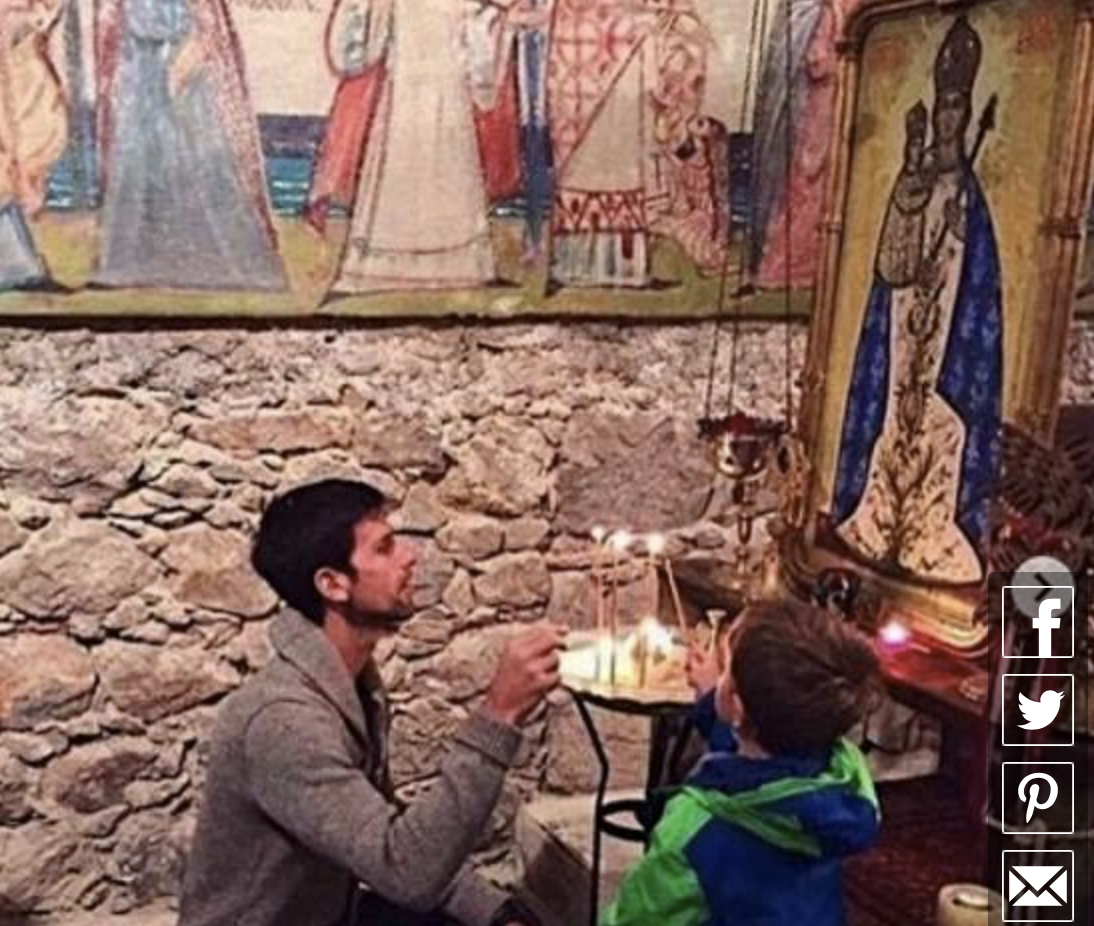
Then I saw an image that hit home for me, as an Eastern Orthodox Christian believer. It showed Djokovic doing what Orthodox parents do — helping his young son light prayer candles and venerate icons.

What follows in this post has nothing to do with whether readers think Djokovic is right or wrong, a liar or a Serbian hero, a lunatic or a misunderstood believer, of some kind of another. What I am doing here is asking a journalism question about mainstream coverage of this battle in the wider COVID-19 wars. I read the New York Times, of course, so that was where I immediately went for information.

The question: How could journalists try to tell the story of Djokovic and his opposition to COVID-19 vaccines without digging into his complex and, it seems to me, confusing set of Orthodox and unorthodox religious beliefs? Isn’t that a crucial and factual element of this story?

I am aware, of course, that anti-vaccine sentiment is present in some Orthodox circles — such as Serbia — but certainly not all (my own bishop has been very careful during the pandemic).


Please respect our Commenting Policy

Concerning Elon Musk, the Babylon Bee and the wise teachings of Jesus

Concerning Elon Musk, the Babylon Bee and the wise teachings of Jesus

At the end of each podcast, Babylon Bee leaders ask guests the same 10 questions, including this stumper: "Calvinist or Arminian?"

That caught Elon Musk by surprise, and he needed clarification on the difference between Arminian believers and persons from Armenia. After some background on Protestant history, he said: "My mind would say 'determinism' and my heart says, 'free will.' "

Why was the mastermind behind Tesla and SpaceX -- a man worth $278 billion at the end of 2021-- talking to a Christian satire website? The answer: Musk has 69.7 million Twitter followers, and he frequently responds, even if it's a U.S. senator questioning his taxes.

"You know, he engages with our content from time to time," Bee CEO Seth Dillon told Fox News. After email exchanges about a meeting, Musk said: "Fly to me and we'll do it."

The result was 100-plus minutes of conversation in Austin, Texas, ranging from satire to science, from politics to pop culture. Topics included why entrepreneurs are fleeing California, sustainable energy, superheroes (Musk would choose to be "Irony Man"), the physics of reusable rockets, cyborgs, how "wokeness" threatens humor, CNN morality and the future of a planet near an expanding sun.

Musk discussed his journey from South Africa to America, including his days as a manual laborer while struggling to pay student loans. Then he dove into computer coding and online commerce, making millions of dollars that led to Tesla. The rest is history.

On celebrity websites, Musk is often described as an atheist or agnostic. Asked if he prays, Musk once replied: "I didn't even pray when I almost died of malaria." But after the success of the first manned Falcon rocket mission, Musk said, in his public remarks: "You know, I'm not very religious but I prayed for this one."


Please respect our Commenting Policy

Add that forthcoming U.S. House report on Jan. 6 riot to your 2022 religion news calendar

Add that forthcoming U.S. House report on Jan. 6 riot to your 2022 religion news calendar

We can expect that the U.S. House select committee investigating the Jan. 6 Capitol attack will unveil findings in time to help Democrats' Nov. 8 prospects and, thus, spur Republican ire.

Even if the report ignores the matter, this report can peg thoughtful and thorough journalistic re-examination of the religious significance of continuing furor over the nine troublesome weeks from the 2020 vote through Jan. 6. Carefully balanced, non-partisan contexting will be needed.

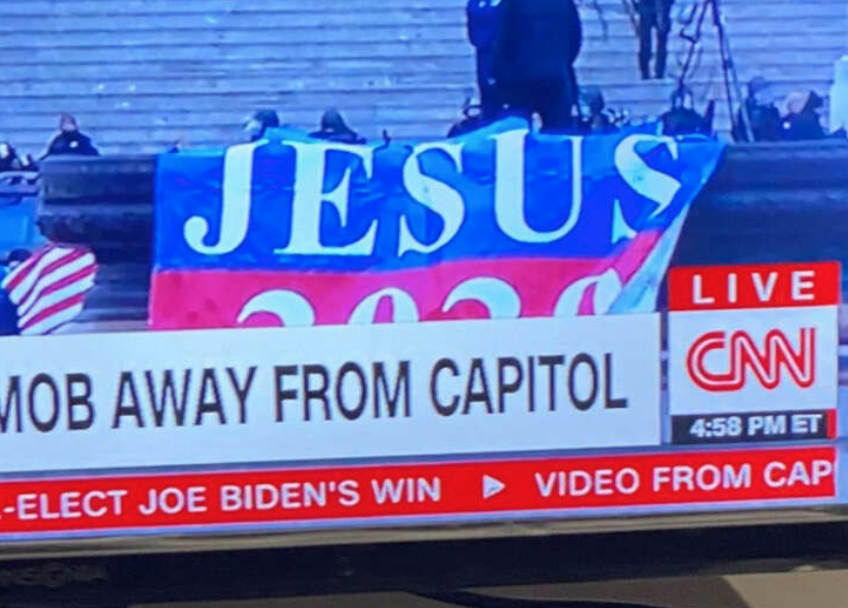
Media and amateur videos show us that -- yes -- some of the rioters uttered prayers and brandished Christian signs, slogans and symbols. Were they isolated cranks, or representative of a broader religious phenomenon, or a bit of both?

A New York Times anniversary walkup last week counted 275 defendants with federal charges for obstructing Congress, 225 or so for acts against police, and another 300 for minor trespass or disorderly conduct. So far, a fifth of these defendants have admitted legal guilt.

Importantly, the Times reported that the mob included "church leaders" (plural).

In a national newspaper, that phrase suggests not some small-time parsons from independent churches but notable media stars, denominational and "parachurch" officials, influential college and seminary thinkers, or at least local pastors from "big steeple" congregations. In fact, that reference appears to echo this Times passage that has been discussed several times here at GetReligion, referring to religious image on Jan. 6:

The blend of cultural references, and the people who brought them, made clear a phenomenon that has been brewing for years now: that the most extreme corners of support for Mr. Trump have become inextricable from some parts of white evangelical power in America.

At some point, it would be good to cite examples of “church leaders” linked to “evangelical power.”

By contrast, last year The Washington Post's Michelle Boorstein perceptively profiled certain of the rioters to highlight Americans' growing trend of concocting idiosyncratic "do it yourself" religions for themselves.


Please respect our Commenting Policy

Two think pieces on changes in American religious life, with a few political twists

Two think pieces on changes in American religious life, with a few political twists

It’s time for another “think piece” weekend double-shot.

In other words, I want to point readers toward two different online features that, at first, may not seem to be related. However, when you look closer you can see the DNA that connects them.

The first is a blog post by my friend Rod “Live Not By Lies” Dreher, but I want readers to consider his post as a mere frame work around a blast of data from the Pew Research Center team. The headline on Dreher’s post states, once again, an old trend (think “Sheilaism”), but one that is being more — not less — important: “Christianity Declines — But Not ‘Spirituality’.”

Dreher points to this quotation from a recent Pew feature, which digs deeper into the center’s mine of religiously unaffiliated research:

The secularizing shifts evident in American society so far in the 21st century show no signs of slowing. The latest Pew Research Center survey of the religious composition of the United States finds the religiously unaffiliated share of the public is 6 percentage points higher than it was five years ago and 10 points higher than a decade ago.

Christians continue to make up a majority of the U.S. populace, but their share of the adult population is 12 points lower in 2021 than it was in 2011. In addition, the share of U.S. adults who say they pray on a daily basis has been trending downward, as has the share who say religion is “very important” in their lives.

Currently, about three-in-ten U.S. adults (29%) are religious “nones” — people who describe themselves as atheists, agnostics or “nothing in particular” when asked about their religious identity. Self-identified Christians of all varieties (including Protestants, Catholics, members of the Church of Jesus Christ of Latter-day Saints, and Orthodox Christians) make up 63% of the adult population. Christians now outnumber religious “nones” by a ratio of a little more than two-to-one. In 2007, when the Center began asking its current question about religious identity, Christians outnumbered “nones” by almost five-to-one (78% vs. 16%).

The recent declines within Christianity are concentrated among Protestants.

A trend this massive will affect almost every area of American life, including politics.


Please respect our Commenting Policy

New podcast: Are the bitter wars over the Latin Mass about politics or Catholic doctrine?

New podcast: Are the bitter wars over the Latin Mass about politics or Catholic doctrine?

I like hearing from readers. I really do.

However, every now and then I write a national “On Religion” column and I just know that I am going to hear from readers about a specific angle that — for reasons of space — I had to leave out. This happens less often here at GetReligion, since length is not an issue in online forums of this kind.

Anyway, this week’s “On Religion” column was about the tensions among Catholics about Pope Francis and his crackdown on use of the old Latin Mass. I focused on developments in the Archdiocese of Chicago, where it is clear that there’s more to these “worship wars” than use of the Tridentine rite.

That column is already online in some mainstream newspapers, with headlines such as this: “Latin Mass meets Chicago rules.” That column served as the launching pad for this week’s “Crossroads” podcast (CLICK HERE to tune that in), which also looked at an important analysis piece at Crux about five kids of Pope Francis stories — both doctrinal and political — that readers can expect to see in 2022.

When I clicked “send” on that column (including my private listserv to family and friends), I knew that some Catholics would ask why I didn’t address a, well, colorful Mass that recently took place at the progressive St. Sabina Parish in Chicago. Here is the top of the Catholic News Agency story about that:

Outraged by a freewheeling Christmas Eve Mass that featured jazz musicians, choreographed dances around the altar, and theatrical lighting effects, some Catholics are calling on Cardinal Blase Cupich to crack down on liturgical abuses in Novus Ordo Masses in the Archdiocese of Chicago, rather than imposing severe restrictions on reverential Traditional Latin Masses.

Father Michael L. Pfleger, a well-known social activist in Chicago, celebrated the Dec. 24 evening Mass. … Many of those upset by the Mass say it crossed the line from worship to entertainment. That view is fueled, in part, by the fact that it is not clear from the nearly 2½ hour video of the service, billed as "Christmas Eve at Sabina," when the liturgy actually begins. There is no apparent greeting, penitential act, or opening prayer, all required Introductory Rites of the Novus Ordo liturgy.

In the video, posted on YouTube, Pfleger does not appear on the altar until after nearly an hour of musical and dance performances.

Well, it is unusual for a Mass to include music by Stevie Wonder and the classic Vincent Guaraldi soundtrack from the Peanuts Christmas special.


Please respect our Commenting Policy