Politics

New podcast: Are some SCOTUS justices asking, 'Are all religious schools equal in Maine?'

New podcast: Are some SCOTUS justices asking, 'Are all religious schools equal in Maine?'

Let’s say that, in the state of Maine, there are two very different “Lutheran” schools. You could, in this hypothetical case, also say “Episcopal,” or “Presbyterian” or “Congregational.”

Leaders at one of these schools insist that their school is in “the Lutheran tradition,” and it may retain ties to a doctrinally liberal flock. The school has a chapel, but attendance is optional since its students (it may be an elite boarding school) come from all kinds of religious faiths or have no stated faith at all. Classes on hot-button moral issues — sexuality, for example — stress this church’s progressive doctrines.

Academic life is very different at the other Lutheran school, which draws most of its students and financial support from a conservative Lutheran body. Chapel attendance is required and classes linked to moral theology are quite countercultural — defending 2,000 years of Christian tradition.

The question, in the latest church-state case at the U.S. Supreme Court, is whether the state of Maine has the power to say that the first school is eligible for tuition support — using tax dollars — because it’s policies do not clash with those in public schools. Students at the conservative school are not eligible, because its beliefs are “sectarian.”

This is tricky territory and church-state experts on the Religious Right would certainly disagree with experts from the Religious Left and secular think tanks. The question discussed in this week’s “Crossroads” podcast (click here to tune that in) is whether journalists covering this case allowed readers a chance to understand the views of activists on both sides.

Let me state, right up front, that my dueling Lutherans illustration is based on “equal access” church-state principles that emerged from a left-right coalition during the Bill Clinton administration. The big idea: If state officials create policies that affect nonprofits, they cannot back secular groups while discriminating against religious organizations. States could, however, deny aid to both. In other words, religious faith is not a uniquely dangerous form of speech or activity.

Let me state this another way. Under the separation of church and state, officials are not supposed to use tax dollars to back state-approved forms of religion. Ah! But what if some religious groups have doctrines that are consistent with state policies, while others clash with the doctrines of the state?

Please respect our Commenting Policy

Behold! The New York Times dared to explore the spiritual 'fire' inside Denzel Washington

Behold! The New York Times dared to explore the spiritual 'fire' inside Denzel Washington

Behold. It is time for me to praise — at great length — something published in The New York Times. It was even written by Maureen Dowd, of all people.

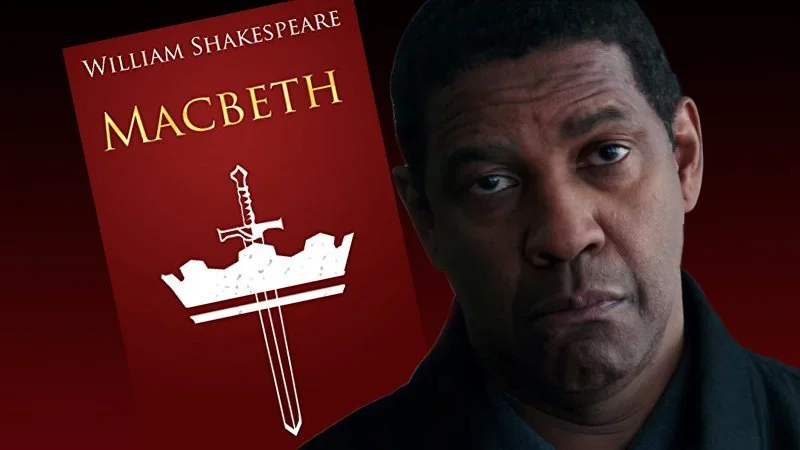
The headline on this length first-person feature: “Denzel Washington, Man on Fire.” No, this story isn’t about the stunningly violent, but at times quite biblical, 2004 movie entitled “Man on Fire.” It’s about the new film — “The Tragedy of Macbeth” — that combines the Oscar-level talents of Washington, director Joel Coen and producer-actress Frances McDormand, who is married to Coen. For Washington, playing the lead role represented a return to his theater roots with Shakespeare.

As you would expect, a Times piece by Dowd is going to include quotes from Hollywood A-listers such as Ethan Hawke, Liev Schreiber, Melissa Leo and Meryl Streep. Tom Hanks has this to say about Washington: ““He is our Brando. Nicholson. Olivier.”

However, the key to this feature is that the “fire” in the headline is both artistic and spiritual. It is, literally, a reference to Washington’s Pentecostal Christian upbringing and the Christian faith that he is not afraid to discuss in the context of his talent and his vocation.

It’s hard to know what to quote from this piece — since it covers so many bases. If you want insights into filmmaking and the complex minds of Coen and McDormand, you will find it. This isn’t a religion story. However, it’s a story that is willing to let Washington speak his mind.

The faith element enters with one of those “here I am talking to Denzel Washington” scenes that are far too common in arts and entertainment journalism. But, in this case, this tired device works. This passage is long, long, long, but essential. I will break it up, just a bit:

[Washington] said he had gotten very little sleep. He had just put the final touches on a film he directed, “A Journal for Jordan,” the true story of the romance between Dana Canedy, a former New York Times reporter and editor, and Sgt. Charles Monroe King, a soldier who was killed by a roadside bomb in Iraq, after meeting their infant son only once. It stars Michael B. Jordan and Chanté Adams and also opens widely on Christmas Day.

“It’s just a beautiful story of loss and love,” Mr. Washington said, “a story about real heroes and sacrificing, men and women who have given their lives so that we have the freedom to complain.”


Please respect our Commenting Policy

About Southern Baptist wars and the Merritt family: Here's some inside baseball worth covering

About Southern Baptist wars and the Merritt family: Here's some inside baseball worth covering

I rarely write about Southern Baptist affairs unless one of their annual conventions is at hand, but I can’t resist commenting on a fascinating sideshow happening between the highly symbolic Merritt family and their fellow conservatives.

Jonathan Merritt is the openly gay (and I assume celibate, based on previous comments) son of the Rev. James Merritt, a former president of the Southern Baptist Convention. It’s been a tough ride for the past 10 years as the younger Merritt has tried to reconcile his sexuality with his faith, while working as a news- columnist. His father has been under immense pressure as well.

The latest fracas, with a hat tip to JulieRoys.com, has to do with the elder Merritt walking away from his position as a visiting professor at Southeastern Baptist Theological Seminary in Wake Forest, N.C. The whole affair has gone unnoticed by many newsrooms, even though this is a topic that is newsworthy for a variety of reasons. Here is what Roys wrote:

Former Southern Baptist Convention President James Merritt resigned last week as a visiting professor at Southeastern Baptist Theological Seminary over controversy sparked by Merritt’s decision to share a sermon online by his son who’s gay. …

The decision came after Merritt, who’s also pastor of Cross Pointe Church in Duluth, Georgia, tweeted a link to a sermon by his son, Jonathan Merritt. The younger Merritt is a graduate of Southeastern Baptist and an author, journalist, and popular speaker. In August, Jonathan Merritt announced on Instagram that he’s gay.

“I don’t agree with my loved son @JonathanMerritt on everything to be sure,” James Merritt tweeted November 22. “But I encourage you to listen to his message on Mark 13. It is both brilliant and faithful to the gospel and the coming of Jesus!”

After that, things got really interesting. Here is the chronology:

Nov. 22 — James Merritt publishes his tweet.

Nov. 23 — The Conservative Baptist Network, a group of some 6,000 members based in Memphis, issues a statement with the headline: “Promoting homosexual preachers is not loving, biblical or Baptist.” The elder Merritt responds that same day.


Please respect our Commenting Policy

Just how big is the Mississippi abortion case at U.S. Supreme Court? Well, THIS BIG

Just how big is the Mississippi abortion case at U.S. Supreme Court? Well, THIS BIG

“The most important abortion case in decades” is how the New York Times’ Adam Liptak describes it.

“The most significant abortion case in a generation,” agree the Wall Street Journal’s Jess Bravin and Brent Kendall.

“The biggest challenge to abortion rights in decades,” echo The Associated Press’ Mark Sherman and Jessica Gresko.

It’s not hyperbole: Roe v. Wade, the 1973 U.S. Supreme Court decision that legalized abortion nationwide, faces its biggest test yet. The Washington Post’s Robert Barnes explains:

The Supreme Court on Wednesday signaled it is on the verge of a major curtailment of abortion rights in the United States, and appeared likely to uphold a Mississippi law that violates one of the essential holdings of Roe v. Wade established nearly 50 years ago.

Whether the court would eventually overrule Roe and its finding that women have a fundamental right to end their pregnancies was unclear.

But none of the six conservatives who make up the court’s majority expressed support for maintaining its rule that states may not prohibit abortion before the point of fetal viability, which is generally estimated to be between 22 and 24 weeks of pregnancy.

At Christianity Today, Kate Shellnutt reports that “pro-life evangelicals who had rallied for the cause for decades were encouraged that the conservative-leaning court appeared willing to uphold a contentious Mississippi law that bans abortion after 15 weeks.”

Other helpful religion coverage:

How faith groups feel about this major abortion case (by Kelsey Dallas, Deseret News)

Before there was Roe: Religious debate before high court’s historic ruling on abortion (by Adelle M. Banks, Religion News Service)

Religion abortion rights supporters fight for access (by Holly Meyer, The Associated Press)


Please respect our Commenting Policy

New podcast: Are news reports 'dunking' on the late religious broadcaster Marcus Lamb?

New podcast: Are news reports 'dunking' on the late religious broadcaster Marcus Lamb?

If you search for the word “posterized” in up-to-date online dictionaries, this is what you find: “A slang term depicting a play in basketball. In said play, a player dunks the ball over top or in front of another player, making a play so picturesque that it may appear on a poster, hence the term, posterized.”

Clearly, this is linked to another term frequently used in the nasty verbal wars that are common on social-media sites, with Twitter — dominated by liberal and conservative voices in elite zip codes — being the best example.

That term is “dunking.”

“Dunking” is relevant to the main topic discussed in this week’s “Crossroads” podcast (click here to tune that in) about media coverage of the death of religious broadcaster Marcus Lamb, who died of COVID-19 after using his Daystar Television Network to criticize vaccine mandates and other anti-pandemic rules and guidelines, while advocating alternative treatments.

“Dunking” is defined, sort of, in this Slate article: “ ‘Dunking’ Is Delicious Sport — But it might be making Twitter even more terrible.” Here is a relevant passage:

Since Twitter rolled out the feature a couple of years ago, the quote-tweet has evolved into something like a pair of magic high-tops dispensed to every user on the service: Anyone can botch a tweet, and anyone can leap over him or her to score a couple of points—or a couple thousand likes and retweets.

The basketball term is apt: In a Twitter dunking, someone has made his point or said her piece, and instead of responding to it with a direct reply, perhaps in the spirit of equal-footed debate, the dunker seizes it like an alley-oop on his or her way to the basket. Maybe another player gets the unwitting assist, but the point is yours to be liked and retweeted not just as a reply but as a worthier tweet in its own right.

What does this look like in practice? Consider this example from the blitz of tweets about Lamb’s death. This dunk comes from the creator of the “America’s Best Christian” brand:


Please respect our Commenting Policy

Finally, another Overby Center program: Why religion was one big factor in vaccine wars

Finally, another Overby Center program: Why religion was one big factor in vaccine wars

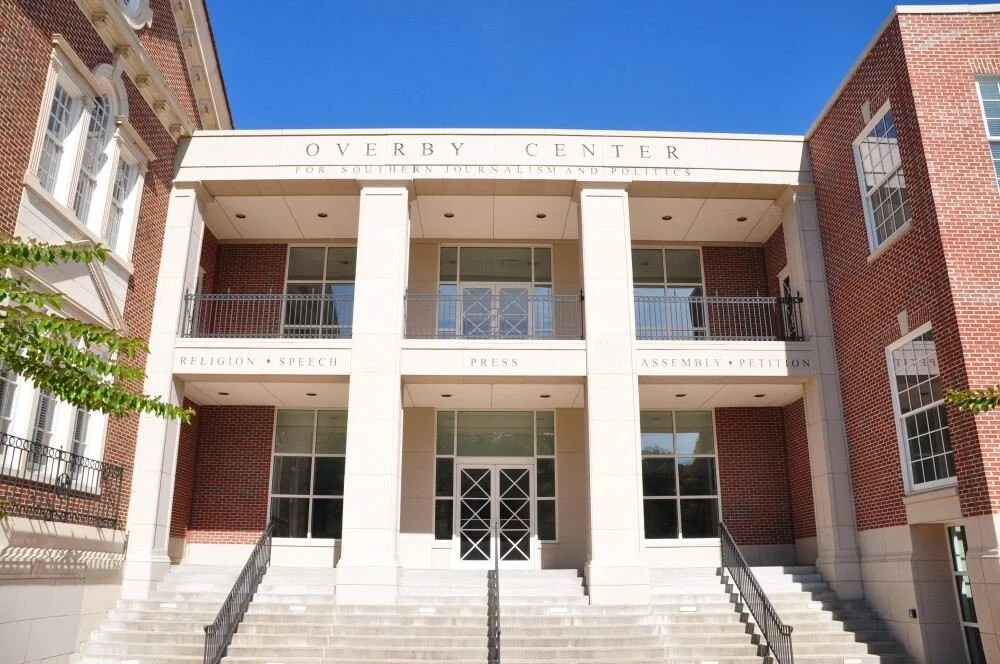
I have strong memories, to say the least, of the first Overby Center program in which I was able to participate, as a senior fellow for the center and as editor of GetReligion.

The topic was the role that religion would play in the 2020 presidential election. Religion-beat patriarch Richard Ostling was there and both of us stressed that, while journalists were pouring oceans of ink into coverage of (#TriggerWarning) white evangelicals, Catholic voters would play the pivotal role in swing states. I also noted the little-covered 2016 impact of Latino evangelicals and, especially, Pentecostal believers in Florida. I didn’t think to predict a starring 2020 role these Latino voters in Texas.

When was that program? Here’s a clue. As I drove home, I stopped for lunch in Jackson, Tenn. As I pulled back onto the interstate headed east, I heard a radio report noting that the mysterious virus that was causing havoc in Wuhan, China, had now been detected in Europe and, perhaps, in New York City.

Days later, the whole world turned upside down.

With social-distancing, masks and vaccines in mind, we recently gathered in Oxford for a forum addressing a logical topic — why religion was a key factor (but not the only one or even the dominant one) in America’s wars over COVID-19 vaccines. Click here to watch the event on YouTube.

In addition to Center founder Charles Overby, I was joined by three logical voices on this subject.

First, political scientist (and GetReligion contributor) Ryan Burge Zoomed in with several crucial charts full of relevant info. Take this post, for example: “Thinking about white evangelicals, COVID-19 vaccines and VERY popular headlines.” Then there was Marquita Smith of the University of Mississippi faculty, a journalist I came to know while she was teaching at John Brown University on the edge of the Ozarks. She is now the assistant dean of graduate programs at the Ole Miss J-school.

The final panelist was the Rev. Daniel Darling, who was recently named director of the Land Center for Cultural Engagement at Southwestern Baptist Theological Seminary in Fort Worth, Texas.

Then again, Darling may be better known in religion-beat circles because of this New York Times headline: “Fired After Endorsing Vaccines, Evangelical Insider Takes a Leadership Role.”


Please respect our Commenting Policy

Notre Dame's 'woke' rebuild plan: Why the glaring lack of mainstream news coverage?

Notre Dame's 'woke' rebuild plan: Why the glaring lack of mainstream news coverage?

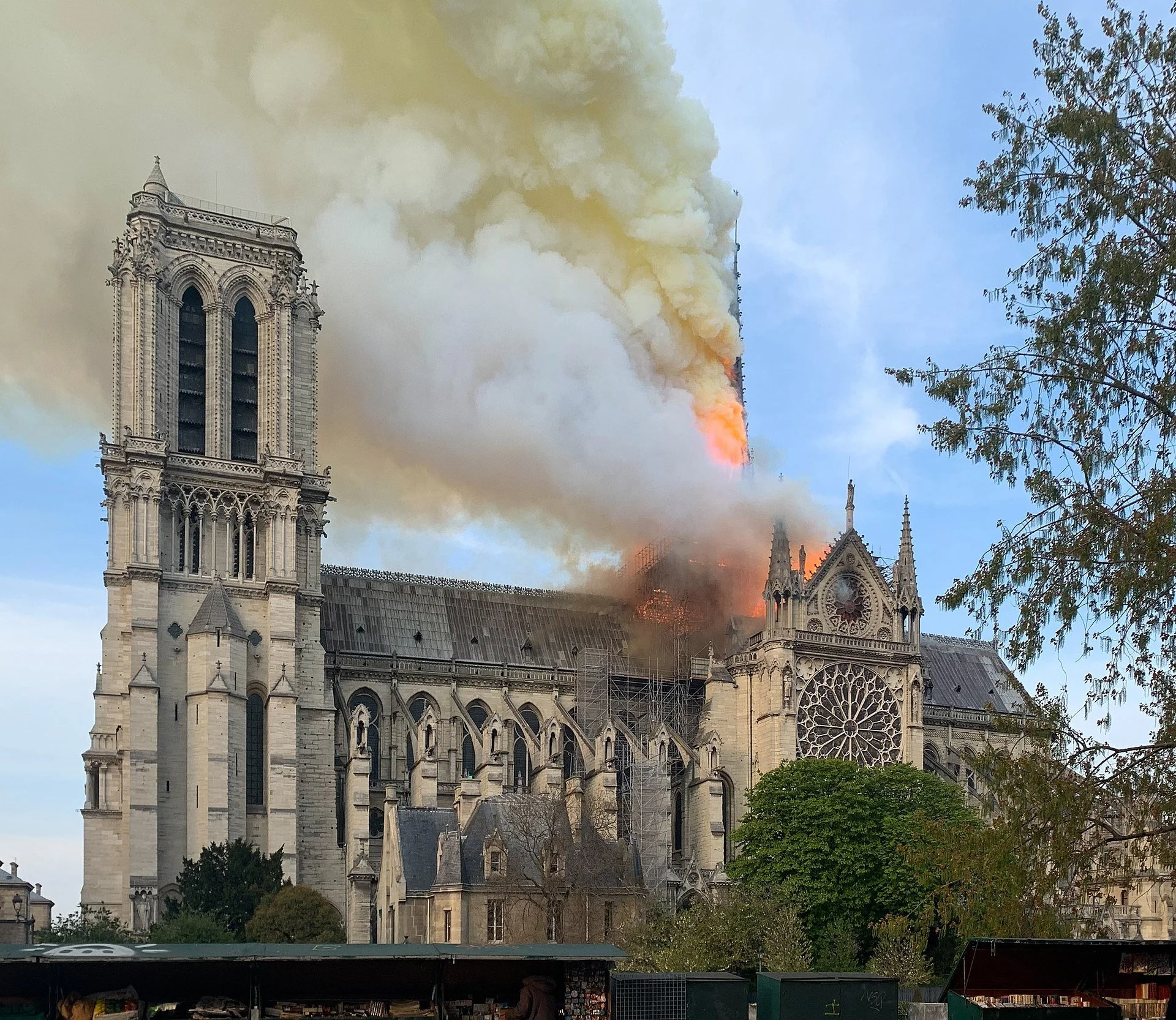
Before the pandemic dominated the news cycle starting in 2020 (and continues to do so), the fire that ravaged Notre Dame in Paris in 2019 was among that year’s biggest stories.

Over the Thanksgiving weekend, the famed cathedral was once again catapulted into the news cycle — despite it being a busy few days thanks largely to the Omicron coronavirus variant — after The Telegraph, based in London, reported a scoop under the headline “Notre Dame interior faces ‘woke’ Disney revamp.”

What followed was an amazing lack of mainstream news coverage.

Here’s how the Telegraph story (behind a paywall) opened. The following is a meaty excerpt since so many of you do not have a subscription to the British newspaper:

Paris’ fire-ravaged Notre-Dame cathedral risks resembling a “politically correct Disneyland” under controversial plans for its renovation seen by the Daily Telegraph.

Critics have warned that the world-famous cathedral will be turned into an “experimental showroom” under plans to dramatically change the inside of the medieval building.

Under the proposed changes, confessional boxes, altars and classical sculptures will be replaced with modern art murals, and new sound and light effects to create “emotional spaces”.

There will be themed chapels on a “discovery trail”, with an emphasis on Africa and Asia, while quotes from the Bible will be projected onto chapel walls in various languages, including Mandarin.

The final chapel on the trail will have a strong environmental emphasis.

“It’s as if Disney were entering Notre-Dame,” said Maurice Culot, a prize-winning Paris-based architect, urbanist, theorist and critic who has seen the plans.

“What they are proposing to do to Notre-Dame would never be done to Westminster Abbey or Saint Peter’s in Rome. It’s a kind of theme park and very childish and trivial given the grandeur of the place,” he told The Telegraph.


Please respect our Commenting Policy

Queen Elizabeth II offers clear, personal sermon -- even while absent from public stage

Queen Elizabeth II offers clear, personal sermon -- even while absent from public stage

Close watchers of the British Monarchy have recently become concerned about two words describing life in Windsor Castle -- "new stage."

First there was Queen Elizabeth II's unexplained overnight hospital stay in October for "tests." Then the 95-year-old monarch missed the recent National Day of Remembrance service for Britain's war dead. She did, however, attend christening rites at All Saints Chapel for her two newest great-grandsons.

All of this represents a "new stage" in her very public life.

"She's alright, thank you very much," said Prince Charles, responding to a Sky News enquiry. "Once you get to 95, it's not quite as easy as it used to be."

The Queen has not, however, been silent. Her recent message to Church of England's General Synod -- her first absence from this gathering -- was strong and personal. It was read by her youngest son, Prince Edward, the Earl of Wessex, who rarely seeks the public spotlight.

"It is hard to believe that it is over 50 years since Prince Philip and I attended the very first meeting of the General Synod," said the prince, reading the Queen's words. "None of us can slow the passage of time; and while we often focus on all that has changed in the intervening years, much remains unchanged, including the Gospel of Christ and his teachings.

"The list of tasks facing that first General Synod may sound familiar to many of you -- Christian education, Christian unity, the better distribution of the ordained ministry. … But one stands out supreme: 'To bring the people of this country to the knowledge and the love of God.' "


Please respect our Commenting Policy

America's secular and religious death-by-choice debate is perennial and always newsworthy

America's secular and religious death-by-choice debate is perennial and always newsworthy

By count of the Death with Dignity organization, which devised Oregon's pioneering 1997 law under which 1,905 lives have been ended as of January 22, 10 states plus the District of Columbia have legalized euthanasia and -- assignment editors note -- 14 more states are currently debating such proposals. Click here to check on the situation in each state.

To begin, writers dealing with this perennial and newly current issue should be aware of the verbal politics with what's variously known as "euthanasia" (from the Greek meaning "good death"), "the right to die," "death on demand," "assisted suicide," "physician-assisted suicide” or "mercy killing." The activists who use the “pro-choice” label dislike any blunt mention of "suicide" or "killing" and urge instead that we use "physician-assisted death," "aid in dying" or "death with dignity."

Coverage by some media outlets, to be blunt, replaces non-partisanship with cheerleading.

Britain's The Economist had this mid-November cover headline: "The welcome spread of the right to die." However, to its credit the news magazine's (paywalled) editorial and international survey did summarize problems and opposing arguments.

A November 16 New York Times roundup on U.S. action — “For Terminal Patients, the Barrier to Aid in Dying Can Be a State Line” — reported that in addition to states that may newly legislate death-by-choice, states that already permit it are weighing further liberalization such as ending in-state residency requirements, shortening or waiving waiting periods, dropping the mandate that only physicians handle cases, filing of one request rather than two or more and other steps to streamline the process.

Reporters can find non-religious arguments in favor from Death With Dignity, cited above. It also recommends procedures to avoid abuse of this right. On the con side, pleas and cautions can be obtained from various disability rights organizations (click here for information).

On that score, psychiatrist-turned-journalist Charles Krauthammer, a non-religious Jew, spent much of his adult life paralyzed from the waist down.


Please respect our Commenting Policy