Politics

Complex doctrinal story or mere politics? Hmmm ... What shaped news about U.S. bishops?

Complex doctrinal story or mere politics? Hmmm ... What shaped news about U.S. bishops?

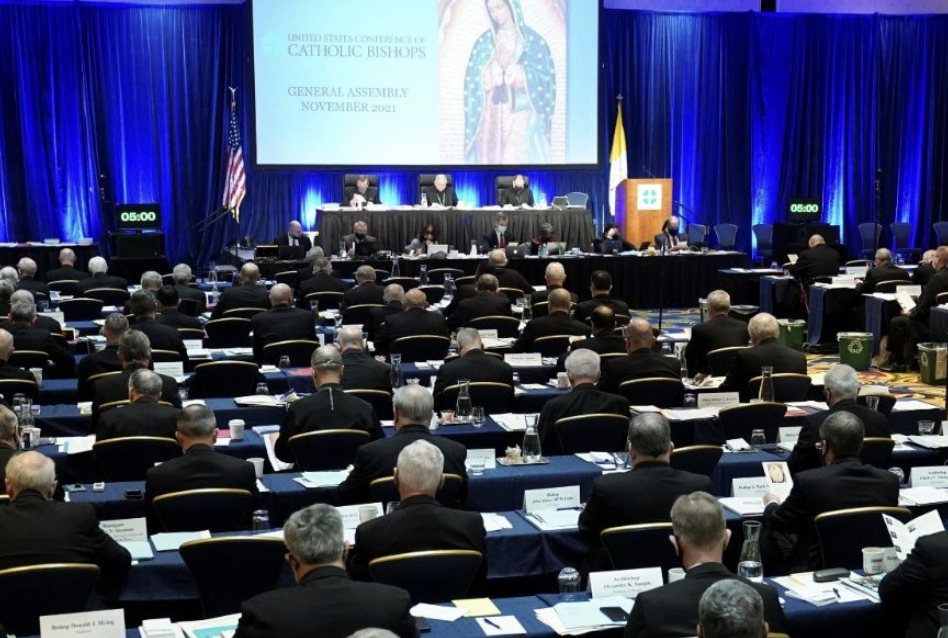
Let’s face it. This Baltimore meeting of the United States Conference of Catholic Bishops was a classic example of what kind of stories drive front-page news in the mainstream press.

For starters, you had a complicated story about a doctrinal, moral and institutional crisis in Roman Catholicism today — the collapse of Catholic beliefs and practice related to sin, confession, forgiveness and Holy Communion.

Then you had a political story that, for journalists, pitted the satanic hordes of conservative bishops linked, somehow, to Donald Trump against the wise, progressive, nuanced shepherds who sympathize with ordinary Catholics like President Joe Biden.

Guess which story framed most of the coverage? Consider this headline from the journalistic college of cardinals at The New York Times: Catholic Bishops Avoid Confrontation With Biden Over Communion.” And here’s the overture:

BALTIMORE — The Roman Catholic bishops of the United States backed away from a direct conflict with President Biden …, approving a new document on the sacrament of the eucharist that does not mention the president or any politicians by name.

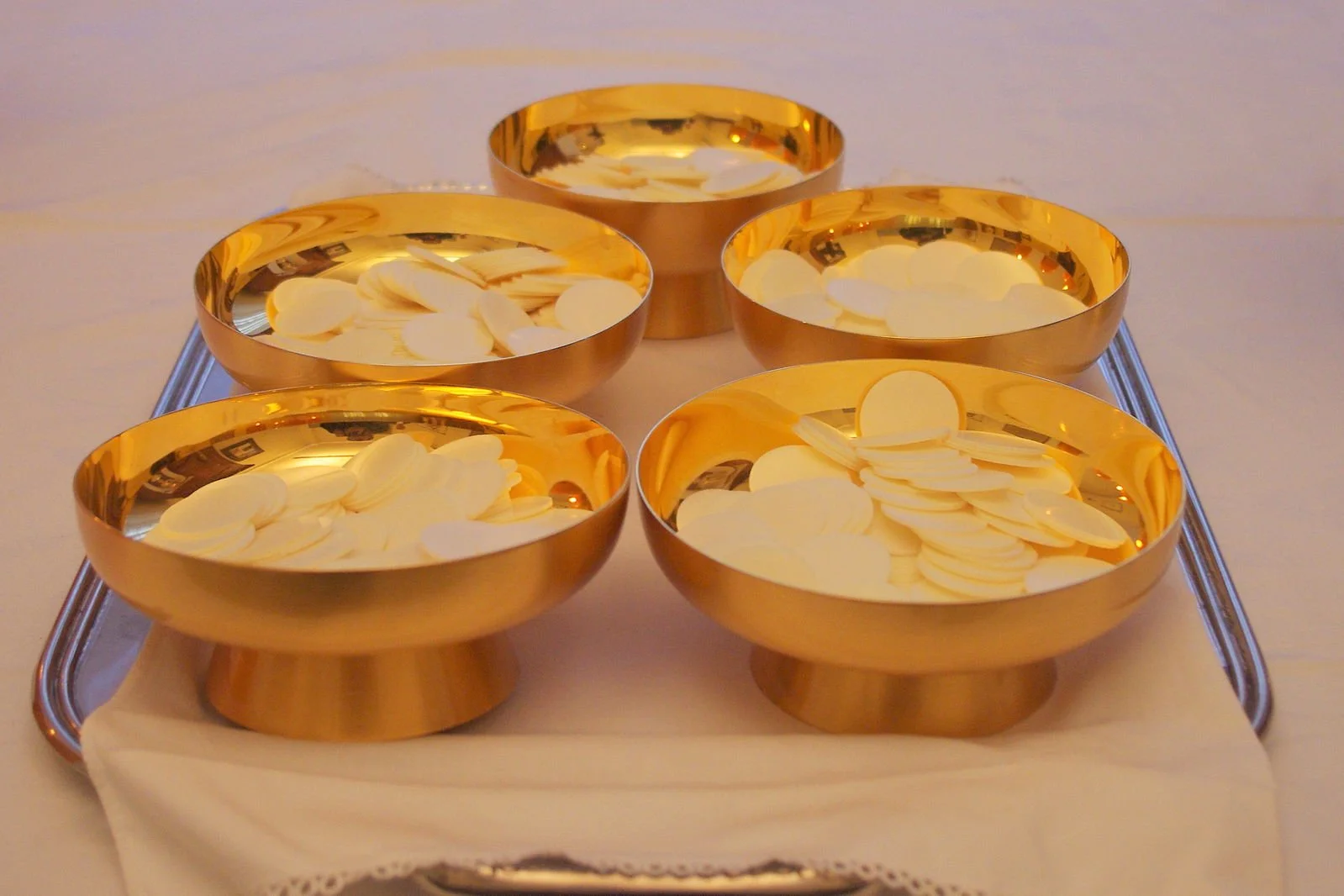
At issue was the question of which Catholics, under which circumstances, are properly able to receive communion, one of the most sacred rites within Christianity. For some conservative Catholics, the real question was more pointed: Should Catholic politicians who publicly support and advance abortion rights be denied the sacrament?

For some of the most outspoken critics of Mr. Biden and other liberal Catholic leaders, the document represented a strategic retreat.

OK, here is a blunt question about that last statement: Is there any evidence that ANY DRAFT of this document — "The Mystery of the Eucharist in the Life of the Church" (.pdf here) — included a single reference to Biden, the White House or the presidency? If conservatives drove the process that led to this document, as assumed in the news coverage, isn’t it logical that references of this kind would have made it into digital ink at some point?

Please respect our Commenting Policy

Plug-In: Minichurches and burned-out pastors -- four crucial COVID-19 trends to follow

Plug-In: Minichurches and burned-out pastors -- four crucial COVID-19 trends to follow

COVID-19 rages on.

So does the pandemic’s big impact on American religion.

From in-person attendance declining to pastors burning out, here are four related trends to watch:

(1) Churches changed during the pandemic and many aren’t going back (by Janet Adamy, Wall Street Journal)

“The number of churchgoers has steadily dropped in the U.S. over the past few decades,” Adamy reports. “But Covid-19 and its lockdown restrictions accelerated that fall. In-person church attendance is roughly 30% to 50% lower than it was before the pandemic, estimates Barna Group, a research firm that studies faith in the U.S.”

(2) Why the minichurch is the latest trend in American religion (by Bob Smietana, Religion News Service)

Smietana profiles a small church in Wisconsin, noting, “Cornerstone is part of the fastest-growing group of congregations in America: the minichurch. According to the recently released Faith Communities Today study, half of the congregations in the United States have 65 people or fewer, while two-thirds of congregations have fewer than 100.”

(3) The pastors aren’t all right: 38% consider leaving ministry (by Kate Shellnutt, Christianity Today)

“Pastoral burnout has worsened during the pandemic,” Shellnutt explains. “A Barna Group survey released (this week) found that 38 percent of pastors are seriously considering leaving full-time ministry, up from 29 percent in January.”

See related coverage from the Washington Times, by former GetReligionista Mark A. Kellner.

(4) Most churches find financial stability in 2021 (by Aaron Earls, Lifeway Research)

“Emerging from the pandemic, most churches don’t seem to be underwater financially, but many are treading water,” Earls reports.


Please respect our Commenting Policy

Podcast: Why was the New York Times so interested in Marvin Olasky? Take a guess ...

Podcast: Why was the New York Times so interested in Marvin Olasky? Take a guess ...

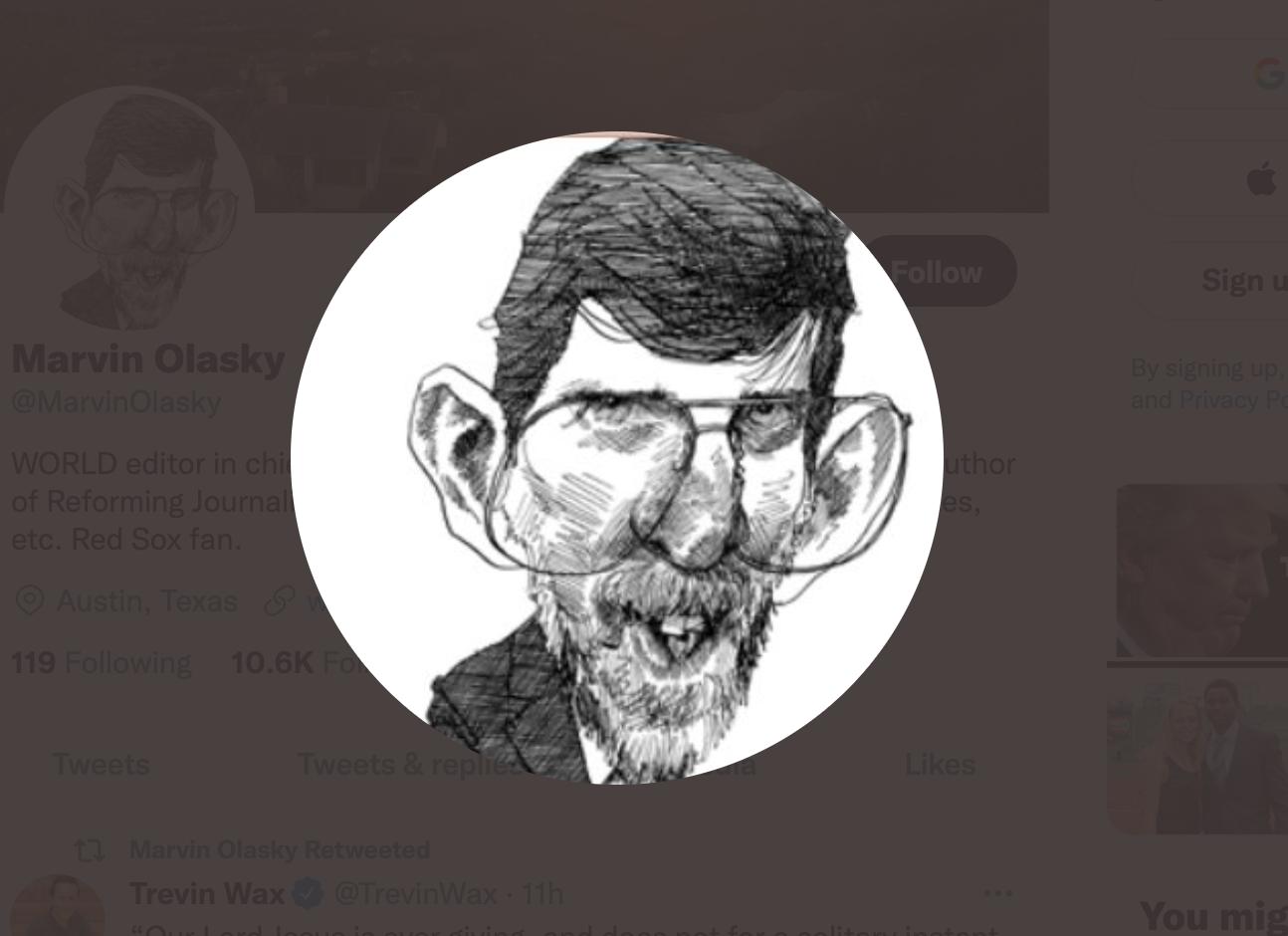
Why was The New York Times so interested in Marvin Olasky and his views on journalism and Christian faith?

That’s a question that I heard several times this week from readers and others.

Actually, the Times published a previous article on Olasky, which I mentioned in a post here earlier this week (“Wut happened? Tensions behind World's move to push Olasky out of his editor's chair”). So let’s tweak that question a bit, to get to the point that host Todd Wilken and I discussed in this week’s “Crossroads” podcast (click here to listen to it).

Why was the Times team so interested — it’s a long, complex feature — in Olasky right now?

Actually, the answer to that question is pretty clear. Read the headline: “His Reasons for Opposing Trump Were Biblical. Now a Top Christian Editor Is Out.” Now,. read the thesis statement:

At one level, Mr. Olasky’s departure is just another example of the American news media sinking deeper into polarization, as one more conservative news outlet, which had almost miraculously retained its independence, is conquered by Mr. Trump.

It also marks the end of a remarkable era at a publication that has shaken evangelical churches and related institutions with its deeply reported articles. … At a time when hot takes get the clicks, these articles offered something old-fashioned and hard for any community to take: accountability reporting.

That’s actually two answers, isn’t it.

Answer No. 1: Trump, Trump, Trump, Trump. Answer No. 2: Olasky has built a magazine known for producing hard-news articles. That’s rare, in today’s digital world dominated by a quick-click business model that loves opinions and commentary work. The editorial approach at World was shaped by cultural, religious conservatism, more than partisan politics.

Think of this magazine as an evangelical version of the late, great New Republic.


Please respect our Commenting Policy

How will media cover the secretive Afghan mullah who will shape Islam's global status?

How will media cover the secretive Afghan mullah who will shape Islam's global status?

Showing his age, The Guy notes with amusement that early in his career "Afghanistanism" meant "the practice (as by a journalist) of concentrating on problems in distant parts of the world while ignoring controversial local issues" (per the authoritative Merriam-Webster)!

Today, many will argue that no nation is more important in news terms than the Islamic Emirate of Afghanistan, which affects both international turmoil and Islam's global status and cultural direction.

Journalists may ask, “Why?” This is probably the most heavily Muslim of nations and the Taliban who regained power in August proudly proclaim totalist governance based upon strictly interpreted and enforced Sharia (Islamic religious law). This example of Islam in action presents a huge challenge to the world religion.

A two-page (paywalled) Wall Street Journal status report by chief foreign correspondent Yaroslav Trofimov last weekend said the militantly Sunni Taliban have yet to impose the harshest policies that provoked wide condemnation during the prior Taliban years in power.

But the future is iffy.

For the moment, females seem able to attend primary school, but mostly not high school and college. Rigid bans on women leaving home unless accompanied by male relatives have not reappeared, and some women continue careers though many do not.

Public spectacles of beheading of opponents, and street beatings by religious police, have not resumed (though there are social-media rumors), nor have music and visual art yet been restricted. Shia and Sufi Muslims, and the tiny enclaves of non-Muslims, are understandably anxious, along with Christians, both coverts and missionaries who chose to remain after the exodus. (Other aspects of autocratic rule are commonplace in that part of the world.)


Please respect our Commenting Policy

Holy Communion wars: What is news at this week's USCCB meeting depends on what you read

Holy Communion wars: What is news at this week's USCCB meeting depends on what you read

What is news?

It’s the key question editors and reporters continuously ask themselves when approaching and covering a major event.

Days before a pre-scheduled event or meeting like a political convention or the Super Bowl, these same people working in newsrooms prepare for what they can expect — although much of journalism deals with the unexpected such as a scandal, a crime or natural disaster.

Reporters are not in the seeing-the-future business — but there are storylines that they look for ahead of a pre-arranged event.

One such event will be the United States Conference of Catholic Bishops annual fall meeting in Baltimore (the first in-person assembly since the pandemic struck in March 2020) that started Monday and runs through Thursday. What used to be largely overlooked week by mainstream news organizations, the meeting has been catapulted into the spotlight in recent years for several reasons.

Many prominent Catholic bishops have become increasingly vocal in the ongoing culture wars and that’s drawn more media attention. At the same time, American Catholics have increasingly become split along political and doctrinal lines on issues such as abortion during the trump years. Last year’s election of Joe Biden, the first Catholic president since John F. Kennedy in 1960, and his open advocacy of pro-abortion policies.

Thus, the USCCB meeting has become a news even that now lives outside the Catholic media ecosystem. Alas, there may even be political-desk reporters covering this event.

The main storyline since the 2020 election season has been the ongoing argument over whether Catholic politicians who openly advocate for abortion are in direct conflict with church teachings and therefore should not receive Holy Communion.


Please respect our Commenting Policy

Wut happened? Tensions behind World's move to push Olasky out of his editor's chair

Wut happened? Tensions behind World's move to push Olasky out of his editor's chair

First things first: Readers need to know that Marvin Olasky has been a friend of mine for yearly three decades. If I was dangling off a cliff, I’d trust Olasky to hold the rope.

Through the years, Marvin and I have disagreed on many journalism issues and had some stimulating debates. For example: He was dead right when, in the first years of Internet life, he predicted that life in the digital world — think social media in particular — would undercut old-school standards of balance and objectivity in journalism. In GetReligion terms, think “Kellerism” and much of today’s New York Times.

Back to the present, and a pretty solid Times piece that is lighting up Twitter. Here’s the double-decker headline:

His Reasons for Opposing Trump Were Biblical. Now a Top Christian Editor Is Out.

A clash over culture and politics comes to World, a groundbreaking journalistic institution that covers evangelical Christians.

There is, of course, no way to leave Donald Trump out of this story, with Olasky submitting his resignation (he was planning to retire next summer) after a coup in the World board after several years of tensions. Among the hot-button issues, readers learn, were COVID-19 masks and voter fraud (#DUH).

As I said, the story is pretty good, with Olasky — rare, this — portrayed in the elite press as a good guy. However, there is one statement that I need to challenge right up front:

At one level, Mr. Olasky’s departure is just another example of the American news media sinking deeper into polarization, as one more conservative news outlet, which had almost miraculously retained its independence, is conquered by Mr. Trump.

Has the newsroom at World been “conquered by Trump”?

I would say that we do not know that, yet. It’s clear that the World board signed off on the creation of an ambitious World-branded commentary website — without Olasky’s approval as editor. But do we know that the news team will not bravely carry on with its work?

We do not know that, do we?


Please respect our Commenting Policy

Plug-in: Supreme Court questions inmate's demand for vocal prayers in Texas death chamber

Plug-in: Supreme Court questions inmate's demand for vocal prayers in Texas death chamber

Last week, we set the scene for the U.S. Supreme Court’s hearing of a religious freedom case involving a Texas death-row inmate.

This week, we summarize the mixed response justices gave in that inmate’s case.

Christianity Today’s Daniel Silliman lays out the plot aptly:

If you give a man in a Texas execution chamber the right to a prayer, is he entitled to two?

Can he ask for candles?

Or Communion?

If the United States Supreme Court says a condemned man has the religious right to have his pastor touch his foot while the state injects a lethal dose of chemicals into his veins, then will the court also have to allow a pastor to touch a man’s hand, his head, or even the place where the needle pierces the skin?

The justices quizzed attorney Seth Kretzer about the slippery slope of death penalty prayer on Tuesday morning, as they weighed whether the First Amendment and the Religious Land Use and Institutionalized Persons Act (RLUIPA), passed by Congress in 2000, give 37-year-old John Henry Ramirez the right to have his pastor lay hands on him and pray aloud when the state of Texas puts him to death.

The high court was skeptical of the inmate’s “demand that his pastor be allowed to pray out loud and touch him during his execution,” according to The Associated Press’ Jessica Gresko.

Justice Clarence Thomas raised concerns “about inmates ‘gaming the system’ by asserting dubious religious claims that served to delay their executions, notes the Wall Street Journal’s Jess Bravin.

The court “seemed divided,” explains the Washington Post’s Robert Barnes, who produced a “deeply reported and evocative” advance piece on the case, reporting from Corpus Christi, Texas.


Please respect our Commenting Policy

Private conversations, public debates: Concerning bishops, Joe Biden and Holy Communion

Private conversations, public debates: Concerning bishops, Joe Biden and Holy Communion

Asked if he discussed abortion with Pope Francis during their recent Vatican summit, President Joe Biden said: "No, it didn't. It came up -- we just talked about the fact he was happy that I was a good Catholic, and I should keep receiving Communion."

The next day, the Associated Press noted that Biden received Holy Communion at St. Patrick's Church in Rome.

Asked to validate the president's second-hand quotation, Vatican spokesman Matteo Bruni told reporters: "I would consider it a private conversation."

What do U.S. bishops think? That has remained a hot topic as the United States Conference of Catholic Bishops braces for its fall 2021 meetings next week (Nov. 15-18) in Baltimore -- its first in-person assembly since the start of the coronavirus pandemic.

What is labeled as "draft 24" of a proposed USCCB statement on "Eucharistic coherence" flashes back to an earlier controversy about Catholic politicians, Holy Communion and an atmosphere of "scandal" among the faithful.

"We repeat what the U.S. bishops stated in 2006: 'If a Catholic in his or her personal or professional life were knowingly and obstinately to reject the defined doctrines of the Church, or knowingly and obstinately to repudiate her definitive teaching on moral issues, he or she would seriously diminish his or her communion with the Church," said this draft from late September -- first obtained by The Pillar, a Catholic news website.

The quote continued: " 'Reception of Holy Communion in such a situation would not accord with the nature of the Eucharistic celebration, so that he or she should refrain.' "

As insiders have predicted, this draft of "The Mystery of the Eucharist in the Life of the Church" doesn't mention debates about the sacramental status of Catholic politicians who have consistently served as advocates for abortion rights, such as Biden or House Speaker Nancy Pelosi.

It does, however, connect some dots on this subject, while drawing from the writings of Pope Francis.


Please respect our Commenting Policy

New podcast: Left, right, middle? Two giant U.S. seminaries are pro-vaccine, but anti-mandate

New podcast: Left, right, middle? Two giant U.S. seminaries are pro-vaccine, but anti-mandate

Let’s do a COVID-19 religion-news flashback, looking at a storyline or two near the start of the pandemic.

I’m doing this in order to analyze how the press is framing a major new development — the federal-court lawsuit filed by Southern Baptist Theological Seminary and Asbury Seminary challenging the Biden administration’s vaccine mandate. These are, by the way, two of the largest seminaries in the United States and, while other seminaries are collapsing, these two are growing.

Coverage of this lawsuit was the hook for this week’s “Crossroads” podcast. (CLICK HERE to tune that in.)

So now the flashback. Remember when I was writing — at GetReligion and in my national “On Religion” column for the Universal syndicate — about the vast majority of American religious groups who were caught in the middle of the “shelter in place” and lockdown wars linked to COVID-19?

Remember the Catholic priests in Texas who were trying to hear confessions out in the open air (in a big field and parking lot), while following guidelines for social distancing? Or how about the churches that were under attack for holding services in drive-in movie theaters, with the faithful in cars, while it was OK for folks to be in parking-lot scrums at liquor stores and big box super-marts? Then you had the whole casinos are “essential services” while religious congregations were not “essential.”

I argued, at that time, that this was way more complicated than religious people who cooperated with the government and those who didn’t. This was not a simple left vs. right, good vs. bad situation. In fact, there were at least FIVE different groups to cover in these newsy debates:

They are (1) the 99% of religious leaders who cooperated and took worship online, (2) some religious leaders who (think drive-in worship or drive-thru confessions) who tried to create activities that followed social-distancing standards, (3) a few preachers who rebelled, period, (4) lots of government leaders who established logical laws and tried to be consistent with sacred and secular activities and (5) some politicians who seemed to think drive-in religious events were more dangerous than their secular counterparts.

That’s complicated stuff.

The problem is that, in the world of American politics, things have to be crushed down into left and right templates or even, there for a few years, into pro-Donald Trump and the anti-Donald Trump. I’m sure we’re past that last part. Right?


Please respect our Commenting Policy