Politics

Journalism tips on: (1) Evangelical crack-ups, (2) campus faith fights, (3) COVID exemptions

Journalism tips on: (1) Evangelical crack-ups, (2) campus faith fights, (3) COVID exemptions

A potential U.S. evangelical crack-up continues as a lively story topic since Guy Memos here since these two Memos here at GetReligion, “Are we finally witnessing the long-anticipated (by journalists) evangelical crack-up?” and also “Concerning evangelical elites, Donald Trump and the press: The great crack-up continues.” In USA Today, Daniel Darling, for one, sought hope despite his recent victimhood in these tensions.

Media professionals considering work on this theme should note a lament at book length coming next week: "Struggling with Evangelicalism: Why I Want to Leave and What It Takes to Stay" by Dan Stringer. The author is a lifelong evangelical, Wheaton College (Illinois) and Fuller Theological Seminary alum, leader of InterVarsity's graduate student and faculty ministries in Hawaii and Evangelical Covenant Church minister. This book comes from InterVarsity Press.

The Guy has yet to read this book, but it looks to be a must-read for reporters covering American evangelicals in the Bible-Belt and elsewhere. Stringer ponders how evangelicalism can move beyond too-familiar sexual scandals, racial and gender conflicts, and Trump Era political rancor -- what a blurb by retired Fuller President Richard Mouw calls "blind spots, toxic brokenness and complicity with injustice."

Regarding the Donald Trump factor, the evangelical elite was largely silent, with one faction openly opposed, while certain outspoken evangelicals backed the problematic populist.

As The Guy has observed, recent politics exposed the already existing gap between institutional officials and the Trumpified evangelical rank and file. Problem is, to thrive any religious or cultural movement needs intelligent leaders united with a substantial grass-roots constituency to build long-term strategy.

Evangelicalism has always combined basic unity in belief with a wide variety of differences. Think denominational vs. independent, Arminian vs. Calvinist, gender "complementarian" vs. "egalitarian," Pentecostal-Charismatic vs. others and a racial divide so wide that many Black evangelicals shun the e-word alltogether.

In an October 21 Patheos article, historian Daniel K. Williams at the University of West Georgia added North vs. South to those internal divisions. He recounts that the Southern Baptist Convention remained mostly apart when northerners began to supplant "fundamentalism" with "evangelicalism" in the World War II era. Eventually, he says, this movement formed a North-South alliance but it's now eroding.
Please respect our Commenting Policy

Dang it! Your GetReligionistas pounced a bit too early on the 'parental rights' wars

Dang it! Your GetReligionistas pounced a bit too early on the 'parental rights' wars

Dang it (said the Texas Baptist preacher’s kid), I really hate it when GetReligion gets to a serious media topic Just. A. Bit. Too. Early.

What am I talking about?

Well, take a look at the New York Times headline featured in the tweet at the top of this post, a tweet authored by a symbolic figure in the wider world of Democratic Party life. Michael Wear is a political consultant, but he is best known as the faith-outreach director for Barack Obama's 2012 campaign and then as part of Obama's White House staff. Here’s that headline:

Republicans Seize on Schools as a Wedge Issue to Unite the Party

Rallying around what it calls “parental rights,” the party is pushing to build on its victories this week by stoking white resentment and tapping into broader anger at the education system.

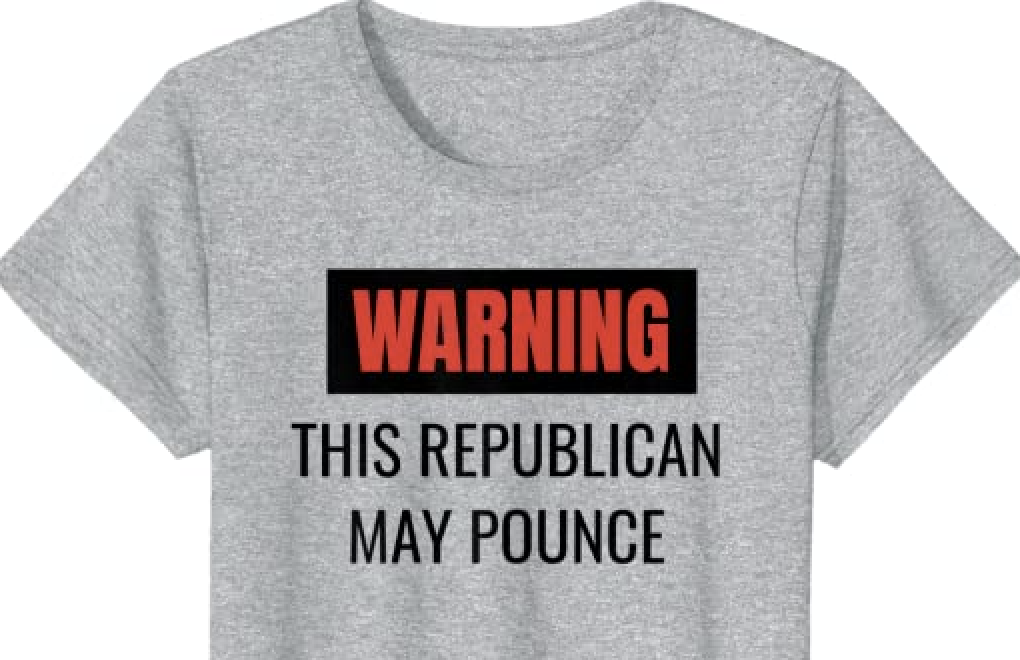
First of all, I think the verb “seize” is a stand-in for the world “pounce,” which has become a bit of a cliche in recent years. Here is the Urban Dictionary take on the “Republicans pounce!” phenomenon or click here for a National Review essay on the subject. The whole point is that the issue at hand isn’t really all that important, but conservatives have “pounced” on it and are using this alleged issue to hurt liberals in social media, conservative news sources, etc.

Major media on the coasts, of course, avoid covering the topic — unless it leads to an embarrassing defeats for Democrats in a symbolic state like Virginia.

Anyway, the Times headline may ring a bell or two for those who read this October 22 podcast-post here at GetReligion: “Are 'parental rights' references (inside scare quotes) the new 'religious liberty.” Here is the opening of that post:


Please respect our Commenting Policy

New podcast: Did Glenn Youngkin win the Latino vote in Virginia? Maybe ask folks in pews?

New podcast: Did Glenn Youngkin win the Latino vote in Virginia? Maybe ask folks in pews?

On the morning after The Virginia Election, I noted that the sharp folks at a must-bookmark niche-news website — A Journey Through NYC Religion — had done some old-fashioned digging and discovered some interesting religion ghosts (to use an old GetReligion term) in that political earthquake. Click here for that story: “Faith trumps Trump in Virginia.”

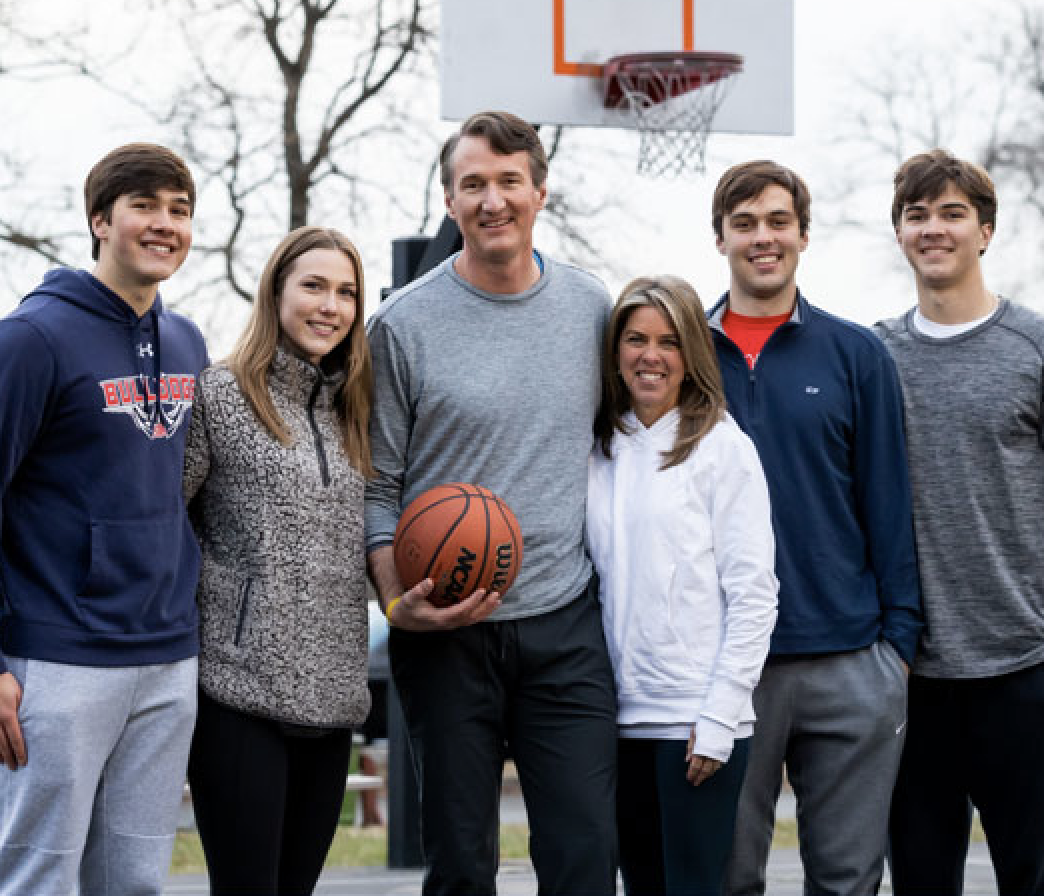
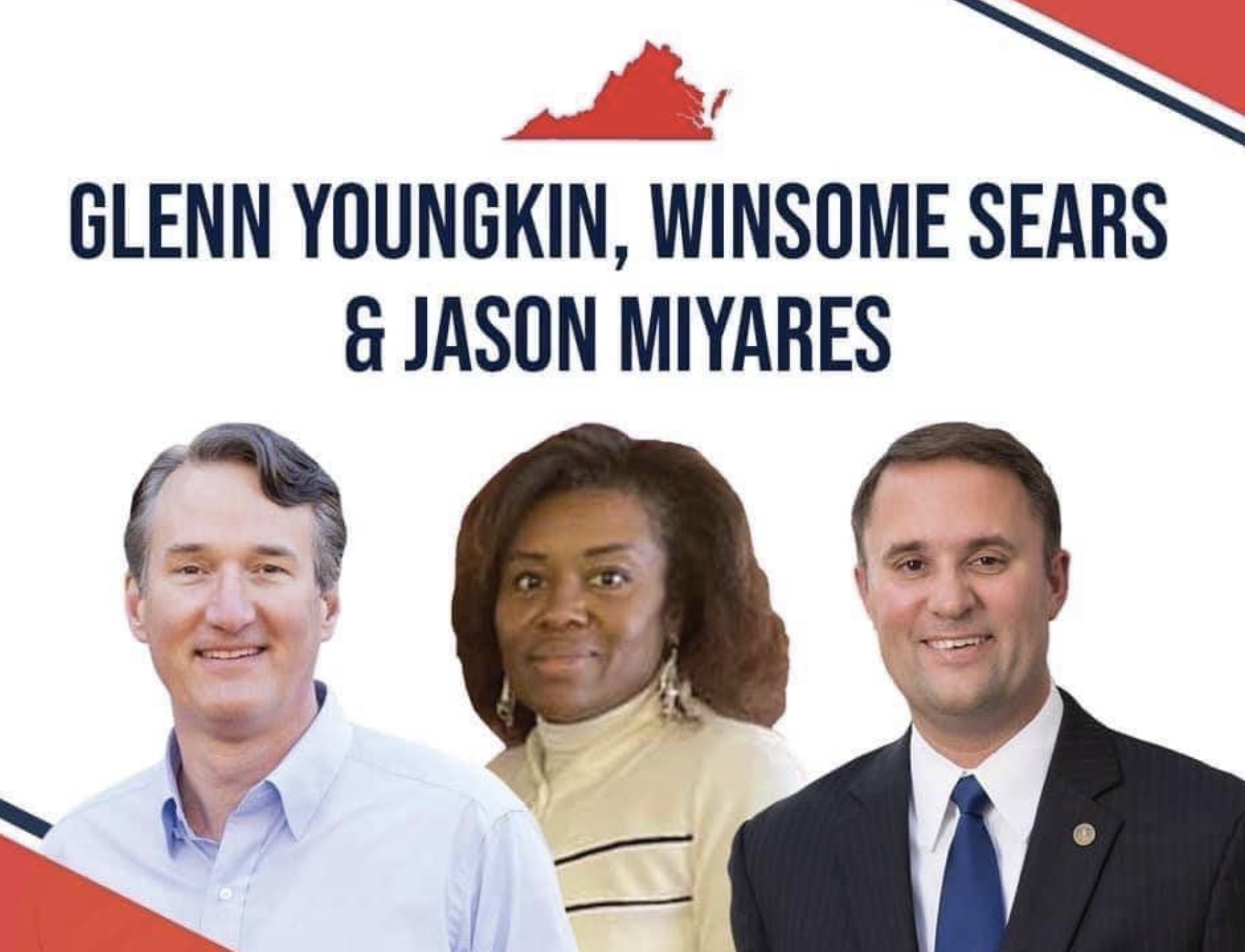
I sure didn’t know, from reading mainstream press coverage, that Governor-elect Glenn Youngkin was an evangelical Anglican who once was a leader in the Alpha course, an evangelism program that expanded from the Church of England into churches and denominations around the world.

I didn’t know that Lieutenant Governor-elect Winsome Sears, an African American evangelical and former Marine, had once led a Salvation Army ministry and that the state’s new attorney general, Jason Miyares, appears to be a Latino evangelical Episcopalian.

All of that showed up in my post-election piece with this headline: “Yes, there were overlooked religion angles in today's biggest U.S. political news story.”

We talk about all of that in this week’s “Crossroads” podcast (click here to tune that in), but also veered off into other religion-based angles in the current political climate. One of them took us into familiar territory, at least for those who have followed GetReligion for the past five or six ears. I’m talking about the rising political clout of Latino evangelicals, traditional Catholics and Pentecostal believers.

There’s some evidence that Youngkin and the diverse GOP lineup actually WON the Latino vote in the Virginia election (click here for a totally faith-free Politico discussion of that topic).

So here is that question again: How can journalists cover shifting patterns among Latino voters — and Black voters, as well — without examining the role of religion and cultural issues?

Let’s say: Is it safe to assume that pro-life Latinos are more likely — lacking acceptable Democrats on the ballot — to opt for Republicans? How about Latinos who favor school choice? Who old traditional Christian views on gender issues?


Please respect our Commenting Policy

While most media ignore religious persecution, Al Jazeera devotes space and time to it

While most media ignore religious persecution, Al Jazeera devotes space and time to it

I remember when Al Jazeera was looking to hire folks in Washington, D.C., about the time they launched Al Jazeera English in 2006.

Some journalists about town weren’t sure about applying there, even though the money was said to be good and its connections within the Arabic-speaking world were light years better than any other news operation.

It was, of course, the whiff of Arab nationalism and Islamism that scared a lot of folks off. (Then again, in 2018, it was officially banned from more than one-third of all Arabic-speaking countries, so sometimes those connections exact a high price.)

Anyway, that was then. In 2008, it launched a human-rights desk in its newsrooms and began doing stories where such rights were violated. Being that religious groups were often the first targeted, Al Jazeera got into some serious religion reporting — covering all kinds of issues, often with a striking effort to be balanced, fair and accurate.

Fast forward to 2021, where they just won first place in the Excellence in Television News Magazine Religion Reporting category for the Religion News Writers annual contest. I am not sure what specific story won them that award but in recent years, they’ve done some quality religion pieces. Now they’re at the point where folks are writing academic papers based on their religion coverage.

I am not going to go into their reporting on Islam, which is a whole other topic. This post concerns their human rights-religious minorities coverage. One of their latest examples details how Myanmar has become “a living hell” for Christians — a story very few secular media are covering. Let’s start here:

Last month, Myanmar soldiers gunned down Cung Biak Hum, a 31-year-old Baptist pastor, while he rushed to help put out a fire caused by military shelling. As his town of Thantlang in Myanmar’s northwestern Chin State went up in flames, soldiers sawed off the pastor’s finger and stole his wedding ring.


Please respect our Commenting Policy

Yes, there were overlooked religion angles in today's biggest U.S. political news story

Yes, there were overlooked religion angles in today's biggest U.S. political news story

Well what do you know. Evangelical Anglicans and the Salvation Army had a big night in the Commonwealth of Virginia.

That’s probably not the first thing that leaps to mind today, for political junkies who spent most of the night (the World Series finale was a big deal) watching political pundits express shock and, sometimes, grief watching a Republican newcomer upset name-brand Democratic Party candidate.

Lots of people talked about Donald Trump, of course. Some people dug a bit deeper and focused on how governor-elect Glenn Youngin managed to affirm some themes from the Trump revolution, while striving to stay as far away as possible from personal contact with Orange Man Bad.

This brings me to a headline this morning at A Journey Through NYC Religions, which is one of those niche-news websites that many religion-beat pros have in their browser favorites — because of its heady mix of hard facts and hard-to-label commentary.

Here’s the headline: “Faith trumps Trump in Virginia.”

Say what?

I think many journalists would assume — if they thought about religion angles in the Virginia race — that the members of the victorious GOP team probably came from White megachurches. But that’s not what veteran editor Tony Carnes found when he looked for the ties that bind, in this case. Here is his overture:

Most of the media attention in the Virginia elections has been on Trump and his influence. The Democratic candidate Terry McAuliffe tried unsuccessfully to tag his opponent Glenn Youngkin as a Trumper.

However, under the surface of politics, there was a deeper spiritual culture and social network that connected the top three candidates in Virginia. This characteristic made the GOP effort in Virginia more winsome (indeed, that is the first name of Winsome Sears, the next Lieutenant Governor.)


Please respect our Commenting Policy

Many media pros have missed a mega-money source backing some big Christian causes

Many media pros have missed a mega-money source backing some big Christian causes

Follow the money.

Those three little words guide journalists and prosecutors alike. And that explains the news potential of the Georgia-based National Christian Foundation (NCF), www.ncfgiving.com/ which to date has quietly given $14 billion to 71,000 non-profit groups, $1.3 billion of that last year, in both tiny and huge grants. An Atlanta Journal-Constitution piece recently noted that "mysterious" operation is "one of the most influential charities you've never heard of."

Writing last week for Ministry Watch (a news website that reporters should follow), GetReligion alumnus Steve Rabey reports that NCF became "the world's largest Christian foundation" largely through word-of-mouth referrals rather than promotional efforts. The Chronicle of Philanthropy, which posted antagonistic coverage in February, ranks NCF as the nation's eighth-largest charity.

NCF calls itself a "ministry," and though it aids a wide range of secular non-profit charities it's a particularly important vehicle for religious donations from wealthy conservative Protestants who share its belief that "the entire Bible is the inspired and inerrant Word of God." The foundation's 26 offices around the U.S. handle donations -- contact info posted here -- so local angles for the media abound. (At national headquarters, Dan Stroud is C.E.O and Steve Chapman the media contact via info@ncfgiving.com or 404-252-0100.)

Rabey's piece includes a helpful link to the Guidestar.org posting of NCF's 593-page IRS Form 990 filed for 2019, with a listing of grant recipients that reporters will want to eyeball. The largest categories of donations ranged from local churches ($215 million) on down to medical care ($21 million). Major causes included evangelism, relief, education, children and youth work, museums, spiritual and community development, media and publishing, orphan care, Bible translation and ministry to the homeless.

NCF typifies the rising importance of "donor-advised funds" in U.S. philanthropy. The basic idea has existed for a century and was devised as a vehicle for Christian donors in 1982 by pioneering Atlanta tax attorney Terry Parker, still a board member, along with evangelical financial gurus Ron Blue and Larry Burkett.


Please respect our Commenting Policy

Biden says pope called him a 'good Catholic' and why (most) journalists took his word on that

Biden says pope called him a 'good Catholic' and why (most) journalists took his word on that

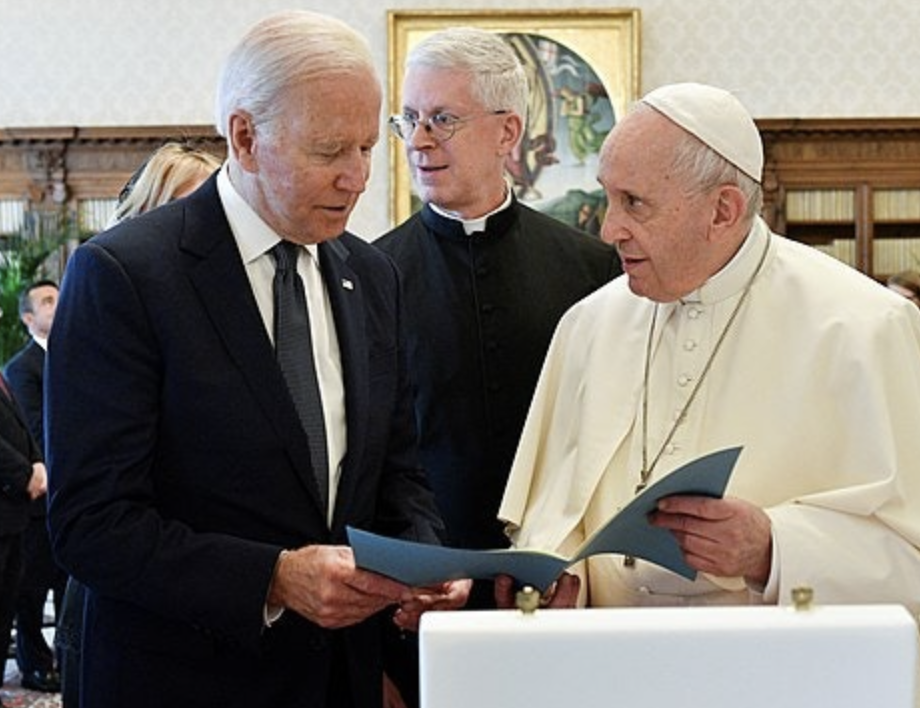
A funny thing happened when President Joe Biden visited Pope Francis at the Vatican.

The event actually made news, especially with Biden quotes about what allegedly happened in private.

In fact, it was big news across the media ecosystem — from the mainstream press to Catholic news sites — because of 20 words the president uttered to reporters in Rome after the face-to-face had already taken place.

“We just talked about the fact that he was happy I’m a good Catholic and I should keep receiving Communion,” Biden said.

With those words, Biden grabbed plenty of favorable headlines (much needed ones if you look at his sagging poll numbers as of late) online throughout the day and into the weekend. At the same time, it widened the rift between the pope and a group of U.S. bishops because of Biden’s support for abortion. Thus, it will lead to further conflict between Biden and those same bishops.

Given the love many in the press had given Biden even before the meeting, none of this should come as a surprise. The rush to accept Biden’s claim — while Vatican officials declined to confirm it — has shaped mainstream news coverage of this encounter.

Biden continued to get great headlines a day after the meeting and into Sunday when he boldly attended Mass at St. Patrick’s Church in Rome, where he received Communion. It’s worth noting that Biden was not given Communion by the pope during his private meeting. It’s also worth noting that the pope serves as the bishop of Rome.

Why all the glowing headlines, built on the acceptance of Biden’s second-hand quote from Pope Francis?

Biden’s words fit the popular news narrative on the Communion issue, beginning with the label that the president is a “devout Catholic,” even as his words and actions undercut Catholic doctrine. Far too many news accounts were happy to take Biden’s words at face value — perhaps because doing so validated their own beliefs on the issue. It amounted to a papal dispensation.


Please respect our Commenting Policy

Is this statement accurate? All true evangelicals wanted to vote for Donald Trump -- period

Is this statement accurate? All true evangelicals wanted to vote for Donald Trump -- period

As a rule, your GetReligionistas strive to avoid writing about analysis features that are published in magazines such as The Atlantic.

However, when I keep hearing people asking questions about one of these “think pieces,” it’s hard not to want to add a comment or two to the discussion.

So first, let’s start with something that GetReligion team members have been saying for nearly two decades, as a reminder to readers who have never worked in mainstream newsrooms: Reporters/writers rarely write the headlines that dominate the layouts at the top of their pieces.

Case in point: The double-decker headline on that buzz-worthy Peter Wehner commentary piece at The Atlantic:

The Evangelical Church is Breaking Apart

Christians must reclaim Jesus from his church.

Yes, I know. There is no such thing as “the evangelical church.”

Do basic facts matter? There are, of course, denominations that are predominantly evangelical. Some of them disagree on all kinds of things — such as baptism or the ordination of women. There are Pentecostal denominations that share many, but not all, doctrines with flocks that are connected with the evangelical movement. There are lots of evangelicals who still sit — though many are quite unhappy — in liberal Protestant pews.

We won’t even talk about that second line: “Christians must reclaim Jesus from his church.”

You can get to the heart of this confusion by — if you are reading the Wehner piece online — glancing at the tagline that appears in the subject line in your computer browser. That semi-headline reads: “Trump is Tearing Apart the Evangelical Church.”

Ah, that’s the heart of this matter.


Please respect our Commenting Policy

Define 'evangelical,' please. Alas, many Americans don't think that this is a religious term

Define 'evangelical,' please. Alas, many Americans don't think that this is a religious term

Here’s a scary thought: Who wants to dress up as an evangelical for Halloween?

Except, exactly what would that look like?

Would it involve wearing a red “Make America Great Again” hat? Does the term still have any religious and/or theological meaning left?

Those questions came to mind as I perused some of the week’s big religion stories — both news reports and major analytical takes. Here are five such headlines that caught my attention:

(1) Why ‘evangelical’ is becoming another word for Republican: “Instead of theological affinity for Jesus Christ, millions of Americans are being drawn to the evangelical label because of its association with the G.O.P.,” Ryan Burge, a frequent contributor to ReligionUnplugged.com, writes in an opinion piece for the New York Times.

(2) In a post-Donald Trump world, these pastors are ditching the evangelical label for something new: “They looked to each other to ask, What could it look like to organize as ‘post-evangelicals?’” religion writer Sarah Pulliam Bailey reports for the Washington Post. “They had at least one thing in common: They were all on some journey of deconstruction, the process of reexamining their long-held beliefs, and they wanted to participate in reconstruction and the building up of something new.”

(3) The evangelical divide: “Political and social issues are splintering American Christians. Can the Church find unity?” asks part one of a three-part series by World magazine senior reporter Sophia Lee.

(4) The evangelical church is breaking apart: “As a person of the Christian faith who has spent most of my adult life attending evangelical churches, I wanted to understand the splintering of churches, communities, and relationships,” contributing writer Peter Wehner explains in The Atlantic. “I reached out to dozens of pastors, theologians, academics, and historians, as well as a seminary president and people involved in campus ministry. All voiced concern.”


Please respect our Commenting Policy