Politics

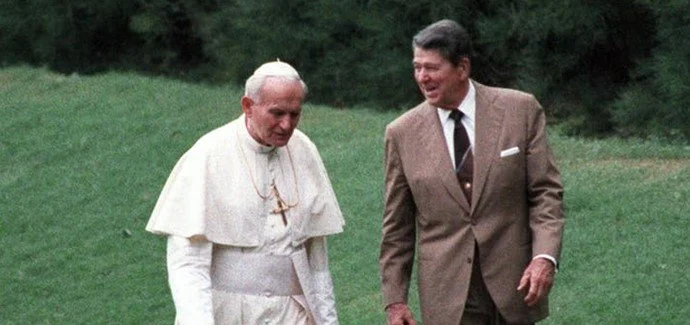
New podcast: When popes and presidents meet, headlines may not tell the private stories

New podcast: When popes and presidents meet, headlines may not tell the private stories

Sometimes, the calendar isn’t friendly to columnists and podcasters.

This week’s “Crossroads” podcast (click here to tune that in) was recorded before the lengthy, closed-door chat (with photo ops before and after) between Pope Francis and the “devout” Catholic President Joe Biden. Thus, host Todd Wilken and I took a kind of “tomorrow’s headlines” approach, surveying the advance coverage of the meeting and some fascinating features that looked at images and the realities of some previous pope-president meetings.

In this podcast I predicted that the headlines and public pronouncements would focus on their agreements about the environment, immigration, poverty and COVID-19 strategies.

Why? Well, the mainstream press believes that these meetings are, first and foremost, political events and these are political topics, even though they clearly have doctrinal content for those with the eyes to see that.

Biden and the pope agree on these subjects and, at this point, the progressive Pope Francis has little or no motivation to hurt a Catholic progressive in the White House. They have many of the same goals and they, to be blunt, have all the same enemies — especially among American Catholics who wear the red hats that mark them as cardinals (and those who have not received red hats).

Would anything significant happen in the private discussions?

That’s the kind of question that Catholic publications will probe and, here at GetReligion, I’ll leave commentary on that topic to Clemente Lisi (it helps that he is fluent in Italian).

If you are looking for a perfect summary of the elite press template for coverage of this meeting, and the ties that bind these two modern Catholics, this block of Washington Post material — from a political-desk story, of course — is pitch perfect:

… The resonance is also personal, given the similarities between the 84-year-old pope and the 78-year-old president, who have in a sense become allies. Both attained ultimate leadership late in their lives and quickly moved in a liberal direction. They have faced internal resistance. Both are treated warily by conservative American bishops.
Please respect our Commenting Policy

Don't neglect the Supreme Court's potentially weighty case on religious schools funding

Don't neglect the Supreme Court's potentially weighty case on religious schools funding

Media eyes are trained on the U.S. Supreme Court's December 1 argument on Mississippi's abortion restrictions, preceded by a fast-tracked November 1 hearing about the stricter law in Texas. But don't neglect the Court's December 8 hearing and subsequent decision on tax funding of religious schools in the potentially weighty Carson v. Makin case (docket #20-1088).

University of Baltimore law Professor Kimberly Wehle certainly wants us to pay heed, warning October 14 via TheAtlantic.com that this is a "sleeper" appeal that "threatens the separation of church and state." In her view, the high court faces not just the perennial problem of public funding for religious campuses. She believes the justices could decide "religious freedom supersedes the public good" by aiding conservative Christian schools that, based on centuries of doctrine, discriminate against non-Christian and LGBTQ students and teachers.

Journalistic backgrounding: Thinly-populated Maine provides an unusual context for this story because the majority of its 260 school districts do not operate full K-12 systems and instead pay tuition for public or private schools that families choose for upper grades. Religiously-affiliated schools are included, but not if Maine deems them "sectarian."

Notably, the parents' plea for tuition is backed by major institutions of the Catholic Church, the Southern Baptist Convention and other evangelical Protestants, the Church of God in Christ (the nation's largest African-American denomination), Latter-day Saints (formerly called "Mormons") and Orthodox Judaism, alongside the 63-campus Council of Islamic Schools. A reporter's question: Has such a religious coalition ever formed in any prior Supreme Court case?

Of further interest, the case engages a major religious-liberty theorist, Michael W. McConnell, director of Stanford University's Constitutional Law Center and former federal judge on the 10th Circuit Court of Appeals. He wrote that circuit's 2008 opinion in Colorado Christian University v Weaver (.pdf here), which tossed out a law that barred "pervasively sectarian" colleges from a state scholarship program.

In Carson, McConnell filed a personal brief September 8 that hands the Supreme Court a history lesson (.pdf here) on religious freedom as conceived when the Constitution's First Amendment was framed. He has explored this ground since a significant Harvard Law Review article in 1989.


Please respect our Commenting Policy

That question again: What's happening to religious believers and others stuck in Afghanistan?

That question again: What's happening to religious believers and others stuck in Afghanistan?

This is a case in which I don’t want to say, “We told you so,” but -- well — we told you so.

If you dug into this recent podcast-post — “ 'What's next in Afghanistan?' Warning: this news topic involves religion” — you’d know that the GetReligion team has been worried about what will happen to elite news coverage of human rights issues and, specifically, religious freedom, in Afghanistan under this new Taliban regime. In fact, that podcast included many themes from an earlier GetReligion podcast-post with this headline: “When the Taliban cracks down, will all the victims be worthy of news coverage?”

It appears that there are two problems.

Reality No. 1: It’s hard to cover the hellish realities of life in the new-old Afghanistan without discussing the messy exit of U.S. diplomats and troops from that troubled nation. Thus, new coverage will please Republicans, who are infuriated about that issue, and anger the White House team of President Joe Biden, which wants to move on. New coverage allows Republicans to “pounce,” as the saying goes.

Reality No. 2: There are many valid stories inside Afghanistan right now, but some are more explosive than others in terms of fallout here in America. This is especially true when dealing with stories about Americans who are still trapped there. Then there are religious believers — including Christians and members of minority groups inside Islam — who face persecution and even executions because of their beliefs. It appears that some journalism executives (and foreign-policy pros) continue to struggle with the reality that religious issues are at the heart of the Afghanistan conflict.

Thus, cases of political and religious persecution in Afghanistan are “conservative news.” For a quick overview, see this National Review piece: “In Afghanistan, ‘Almost Everyone Is in Danger Now.’ “ Note this snarky line:

The sort of headline that shouldn’t just be local news. … Those knee-jerk Biden critics over at . . . er, the Connecticut affiliate of NBC News report: “43 Connecticut Residents Still Stuck In Afghanistan.

Here is a key chunk of that NBCConnecticut.com report:


Please respect our Commenting Policy

New podcast: Are 'parental rights' references (inside scare quotes) the new 'religious liberty'

New podcast: Are 'parental rights' references (inside scare quotes) the new 'religious liberty'

Here’s a question that I heard recently from a young person down here in Bible Belt country: Why do students at (insert public school) need permission forms from their parents and a doctor to take (insert over-the-counter medication), but the school can assist a student’s efforts to change her gender identity while keeping that a total secret from the parents?

Obviously, something had changed at this school. The crucial question was whether parents had any right to shape or attempt to influence the education — or the moral and physical transformation — of their child in this setting controlled by the state and funded by their tax dollars. Yes, there are religious doctrines involved in many or even most of these cases.

Here’s the question we discussed during this week’s “Crossroads” podcast: Are media reports about this issue starting to turn parental rights into “parental rights,” complete with those prickly “scare quotes” that have turned references to old-school religious liberty issues into so-called “religious liberty” issues. Click here to listen to that podcast.

You can find traces of this conflict if you dig deep enough in a recent New York Times story with this double-decker headline:

The Unlikely Issue Shaping the Virginia Governor’s Race: Schools

Virginia Republicans in a tight governor’s race have been staging “Parents Matter” rallies and tapping into conservative anger over mandates and critical race theory.

The team behind this fascinating Times story didn’t spot the obvious religion ghost in this story. But this story didn’t attempt to turn these standoffs into libertarian dramas in which Trumpian parents are only concerned about COVID-19 conflicts about masks and vaccines (see a related Washington Post story, for example).


Please respect our Commenting Policy

Fallout from Pelosi's Roman holiday continues: More proof journalistic objectivity is dead?

Fallout from Pelosi's Roman holiday continues: More proof journalistic objectivity is dead?

Debates about the concept of objectivity in news coverage have been around for a long time — but now they are heating up to shockingly intense levels.

Objectivity, as it pertains to reporting, refers to fairness and nonpartisanship on the part of journalists and news organizations in the way they cover stories. An emphasis on objectivity is also linked to journalistic standards for balance, accuracy and showing respect for citizens on all sides of public debates.

This so-called “American model of the press” (click here for background) first evolved in the post-Civil War era and in the early 20th century as a way for U.S. newspapers to report and disseminate information to a wide, diverse body of readers. It allowed for a consistent method of testing that information so that personal and cultural biases would not undermine accuracy.

In a polarized digital age, the practice has been criticized and objectivity is all but dead as news outlets test new business models for struggling newsrooms. As a result, alternatives have emerged, most notably, in the form of a more partisan press that preaches to choirs of digital subscribers.

That brings us — no surprise — to the latest news story to inflame U.S. Catholics.

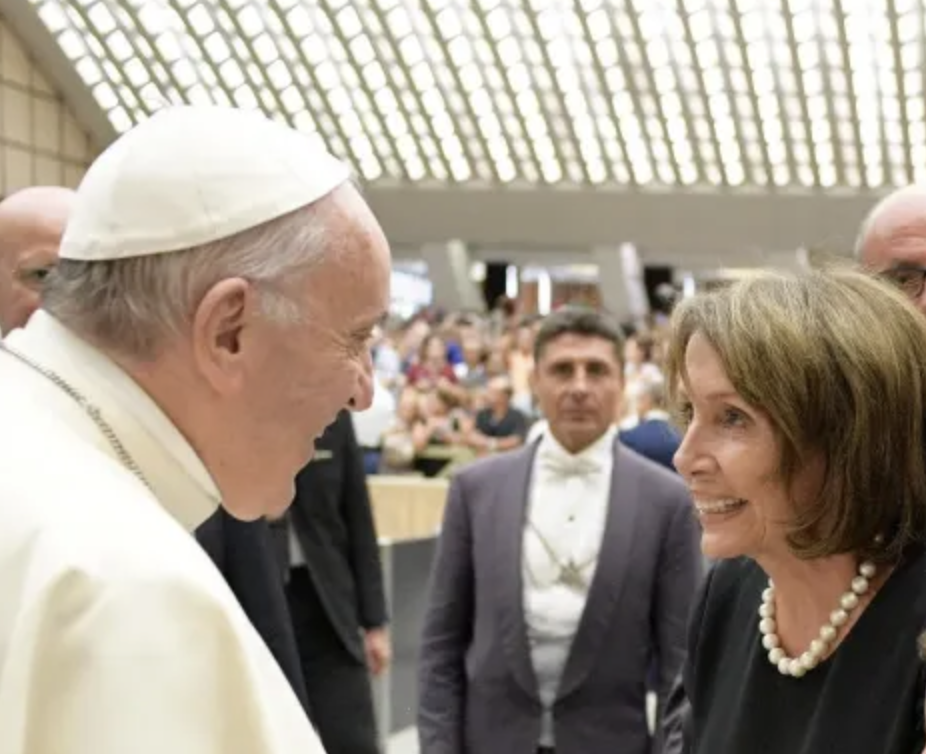
Despite it being almost two weeks since House Speaker Nancy Pelosi met with Pope Francis at the Vatican, the fallout and reaction from that October 9 private audience continues to reverberate across the American political landscape, especially among Catholics across the doctrinal spectrum. Naturally, some are concerned about how the news media we consume has covered it all.

If facts are what matters here, it’s obvious that San Francisco Archbishop Salvatore Cordelione should play a major role in these debates — since he is Pelosi’s bishop. Thus, he plays a crucial role in determining her sacramental status in the church. Who included his voice in this discussion and who didn’t?


Please respect our Commenting Policy

Jill Biden's reborn Christian faith: Washington Post dug for some key details (AP didn't)

Jill Biden's reborn Christian faith: Washington Post dug for some key details (AP didn't)

Since I grew up Southern Baptist, I have heard many, many people give “testimonies” about how they embraced faith and were “born again.” Now that I am Eastern Orthodox, I have heard many people tell similar stories about how they came to embrace ancient Christian doctrines and beauty of sacramental worship.

Most of the time these stories include some details about history of the person’s faith or lack thereof. One part of telling the point to which a believer has travelled is to share some background information about where the journey started.

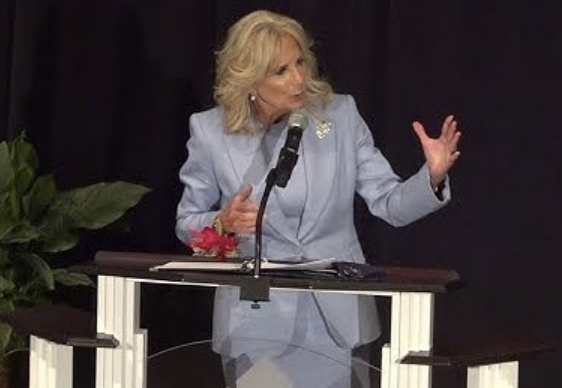
I would certainly think that this would be true when the person who is “testifying” is America’s current First Lady. Thus, I had a few expectations when I started reading the Associated Press report that ran with this headline: “Jill Biden says SC ‘prayer partner’ helped change her life.”

The hook for this story was the surprise visit that President Joe Biden and First Lady Jill Biden made to West Columbia, S.C., to honor the 50th anniversary of the Rev. Charles B. Jackson becoming the pastor of Brookland Baptist Church. The focus of the story, however, was on Jill Biden’s “prayer partner” relationship with the pastor’s wife, Robin. Here is the crucial passage in this AP report:

The first lady doesn’t usually speak publicly about her faith but said Sunday that “it’s always been an important part of who I am.” She recalled being a teenager who “fell in love with the peace of the quiet wooden pew,” the “joy of the choir” and the “deep wisdom of the Gospels.”

She said prayer helps her “connect to the people that I love and to the world around me.”

“But in 2015, my faith was shaken,” the first lady said, her voice breaking as she described watching “my brave, strong, funny, bright young son fight brain cancer.”

“Still, I never gave up hope,” she said. “Despite what the doctor said, I believed that my son would make it. In the final days, I made one last, desperate prayer and it went unanswered.”


Please respect our Commenting Policy

Concerning evangelical elites, Donald Trump and the press: The great crack-up continues

Concerning evangelical elites, Donald Trump and the press: The great crack-up continues

Ah, yes, those omnipresent American evangelical Protestants.

Love ‘em or hate ‘em, the media can't avoid ‘em. And in case anyone doubts media fascination, consider last Sunday's episode of NBC's influential, anachronistically-named gabfest "Meet the Press."

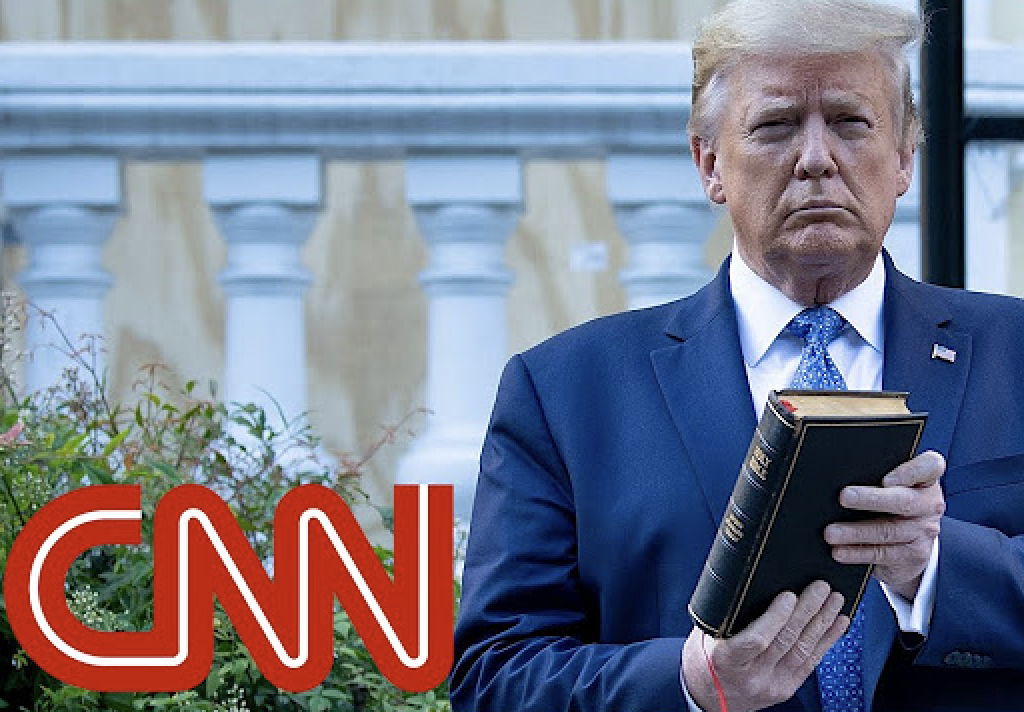
In the midst of a hyper-clogged October political agenda, the show devoted a major segment to what host Chuck Todd called "the debate among evangelicals about Donald Trump and whether he represents their values." Click here for the transcript. This was excerpted from a 30-minute piece that's streaming on Peacock.

The segment led off with a visit to the nondenominational, independent Patriot Church outside Knoxville, where the Ken Peters averred: "I think President Trump is a miracle. I think God picked Donald Trump, an imperfect vessel, to be the champion of His people." This is a congregation that has inspired almost as many headlines as it has members.

Yes, Pew Research tells us Trump scored 84% with white evangelical voters in 2020. But politicized preacher Peters is hardly representative of the sprawling and diverse network of evangelical clergy, churches, denominations, campuses and agencies.

An older-style evangelical pastor, the Rev. Phil Nordstrom of Knoxville's Life Church, told NBC that "we're trying to not fight the culture wars from the pulpit." Todd then interviewed the Rev. Russell Moore, former Southern Baptist social-issues spokesman turned "public theologian" at Christianity Today magazine, who fretted over Trump-era politicization of the evangelical image.

A prior Guy Memo weighed the possibility that a newsworthy evangelical crack-up is upon us, while another Memo focused on the related Donald Trump political angle. Now there are further developments.

In case journalists are gathering string for a broad state-of-the-evangelical-union article, The Guy looked for perspective in a real period piece from 1977, our Time magazine Christmas cover story, "That Old Time Religion: The Evangelical Empire."

Now this feature was written just before the advent of Jerry Falwell's Moral Majority, Ronald Reagan's presidency, Pat Robertson's Christian Coalition and presidential run, the rightward doctrinal lurch by the Southern Baptist Convention, the rise of anti-abortion militancy and all the rest that would gobble up headlines in succeeding decades.


Please respect our Commenting Policy

Police kept priest from saying Last Rites for stabbed politician. News story? (Yes, in UK)

Police kept priest from saying Last Rites for stabbed politician. News story? (Yes, in UK)

The basic facts are clear and powerful: A member of of the UK Parliament is stabbed to death by a terrorist during an open, low-security town-hall meeting with citizens in Essex.

It also appears that religion is part of this story.

The key question, apparently, was whether to mention that Conservative MP David Amess was Catholic. This created the following equation — the more “Catholic” details, the more “conservative” the story. This is especially true about a poignant, and some would say outrageous, fact about police actions that prevented a priest from being able to say Last Rites for the victim. Hold that thought.

Believe it or not, it was possible to find a faith-free version of this story, as in this report from ABC News. Then there was this watered-down fact paragraph way down in the Reuters report:

Amess, married with five children, was first elected to parliament to represent the town of Basildon in 1983, and then nearby Southend West in 1997. He was knighted by Queen Elizabeth for his public service in 2015.

His website listed his main interests as "animal welfare and pro-life issues".

Then there was this chunk of background material from the BBC:

A Conservative backbencher for nearly forty years, Sir David entered Parliament in 1983 as the MP for Basildon. He held the seat in 1992, but switched to nearby Southend West at the 1997 election.

Raised as a Roman Catholic, he was known politically as a social conservative and as a prominent campaigner against abortion and on animal welfare issues. He was also known for his championing of Southend, including a long-running campaign to win city status for the town.

Wait — he was “raised” as a Catholic?


Please respect our Commenting Policy

Plug-In: Clashes between religion and COVID-19 vaccines are (#DUH) not fading away

Plug-In: Clashes between religion and COVID-19 vaccines are (#DUH) not fading away

Where to begin this week?

“As they impose COVID-19 vaccine mandates, company leaders across the country are facing a flood of requests for religious exemptions,” the Deseret News’ Kelsey Dallas reports in a story explaining how employers judge such requests.

“As the Biden administration prepares a federal vaccine mandate and more states and companies impose them to help accelerate the pandemic's end, letter-writing efforts by religious leaders (supporting exemptions) are being reinforced by legal advocacy groups such as Liberty Counsel,” according to Reuters’ Tom Hals.

“The prelate who oversees Catholics in the U.S. military issued a statement Tuesday (Oct. 12) supporting service members who have refused to get vaccinated against COVID-19 on religious grounds,” Religion News Service’s Jack Jenkins notes.

Here we go again.

For the seventh time in the last year (yes, I counted), news of religion and the COVID-19 vaccines tops the latest Weekend Plug-in. See previous installments here, here, here, here, here and here.

Why does Plug-in keep focusing on this subject? Because it remains major news. And it likely will for a while.

Here are a few more related stories that caught my attention this week:

Latino Catholics are among the most vaccinated religious groups. Here’s why. (by Alejandra Molina, RNS)

‘It’s not Satanism’: Zimbabwe church leaders preach vaccines (by Farai Mutsaka, Associated Press)

The pandemic has helped religion’s reputation. Do religious vaccine resisters put this progress at risk? (by Kelsey Dallas, RNS)


Please respect our Commenting Policy