Politics

Trying to spot religion 'ghosts' in the dramatic fall of America's version of Afghanistan (#FAIL)

Trying to spot religion 'ghosts' in the dramatic fall of America's version of Afghanistan (#FAIL)

The whole idea of Axios, as a news publication, is to take massive, complex stories and — using a combination of bullet lists and URLs to additional information — allow readers to quickly scan through the news of the previous day. The Axios team calls this “smart brevity.”

More often than not, this turns out to be a crunched summary of the big ideas in mainstream coverage. Thus, it’s logical to look at this online newsletter’s take — “1 big thing: System failure” — on the horrific scenes that unfolded yesterday in Kabul, Afghanistan.

The big question: What did American diplomats, intellectuals and politicos miss in the big picture?

* The United States was literally run out of town after 20 years, $1 trillion and 2,448 service members' lives lost.

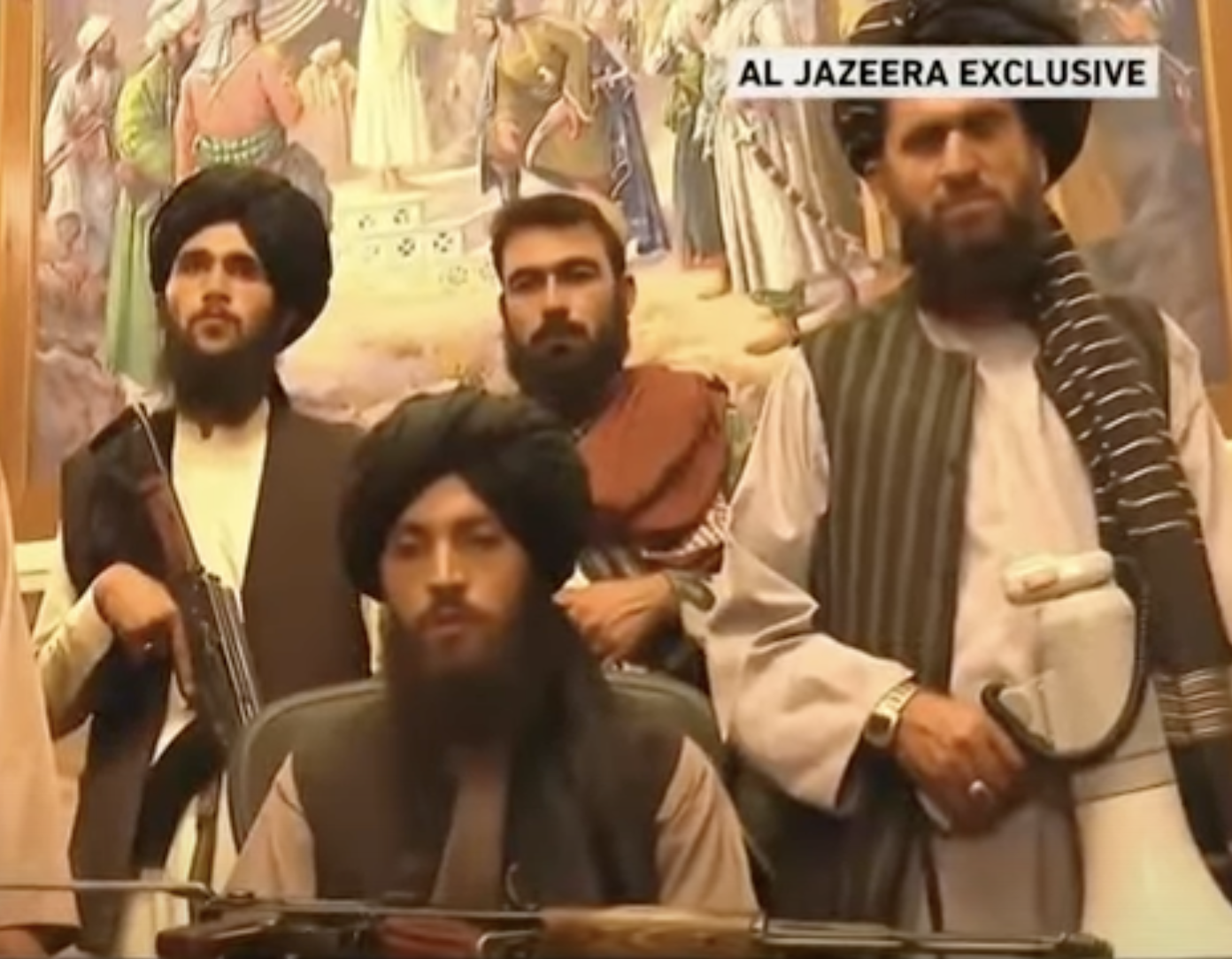
* Mohammad Naeem, the spokesman for the Taliban's political office, told Al Jazeera today: "Thanks to God, the war is over in the country."

Why it matters: A friend who spent more than a decade as a U.S. official in Afghanistan and Iraq texted me that the collapse "shows we missed something fundamental — something systemic in our intel, military and diplomatic service over the decades — deeper than a single (horrible) decision."

* As the BBC's Jon Sopel put it: "America's attempt to export liberal democracy to Afghanistan is well and truly over. …”

What were the key tasks in this “export of liberal democracy”? Here is my two-point summary.

First, the United States and its allies had to build an Afghan military that could protect this project. #FAIL

Second, the Western nation builders had to sell a vision of an Islamic culture that, somehow, embraced American values on a host of different issues — from free elections to freedom for women, from Western-style education to respect for the Sexual Revolution in all its forms. This Georgetown University faculty lounge vision of Islam needed to be more compelling than the one offered by the Taliban. #FAIL

Looking at this from a journalism perspective, I think it is more than symbolic that most of the elite media coverage of the fall of this new, alternative Afghanistan have almost nothing to say about Islam and, in particular, the divisions inside that stunningly complex world religion. Was this, in any way, a “religion story”? Apparently not. #FAIL

There is way too much coverage to look at, of course. However, it does help to look at The New York Times, since that is the straw that stirs the drink in American media. My goal was to find material that contrasted the Taliban’s vision of Islam with the vision offered by the U.S. State Department.

Please respect our Commenting Policy

Plug-In: From life issues to gov't mandates, religious reactions to vaccines have been complex

Plug-In: From life issues to gov't mandates, religious reactions to vaccines have been complex

Want to be smart?

Then avoid simple narratives in news coverage. That’s especially true on the still-timely subject of religion and debates about the COVID-19 vaccines.

For evidence, check out these recent stories:

“As vaccine mandates become a reality, politicians, pastors and even the pope are speaking out against faith-based exemptions,” the Deseret News’ Kelsey Dallas reports.

But here’s the twist: “In many cases, those who claim a religious exemption are part of a denomination that doesn’t share their concerns, although many faith leaders do support making exemptions available.”

“Does respect for human life mean vaccine mandates?” asks a story by the Washington Post’s Michelle Boorstein.

The answer? It’s complicated.

“In recent days, with a handful of organizations from Facebook and Google to the University of Virginia announcing vaccine mandates, religious leaders and organizations have considered their own teachings and values on the question of how to show respect for life,” Boorstein writes. “And their conclusions vary widely.”

This news, via USA Today, jumps out at you: “Florida church vaccinates hundreds after 6 members die from COVID-19 in 10 days.”

"It's just been ripping our hearts apart,” the senior pastor says in the story by Marina Pitofsky.

It’s probably no surprise that social media pounced on the church for waiting until members died to promote vaccinations.

Except, as anyone reading the entire report learns, it didn’t: “The church vaccinated about 800 people in March at a similar event as COVID-19 vaccines became widely available in the U.S.”

While not religion related per se, Peggy Noonan’s Wall Street Journal column this week makes some excellent points.


Please respect our Commenting Policy

New podcast: Yes, religious issues are part of the great divide in media and, thus, America

New podcast: Yes, religious issues are part of the great divide in media and, thus, America

When journalism profs talk about “old-school journalism,” we are actually discussing a rather modern phenomenon which is often called the American Model of the Press. It was born when printing presses started speeding up in the mid-to-late 19th century and, as it evolved, it stressed accuracy, fairness and balance when dealing with controversial issues.

What does that mean? At the very least, it meant showing respect for competing points of view — in part to allow newspapers (and advertisers) to reach a broad, diverse audience of readers.

This model replaced, at least in newspapers and wire services, what is often called the European Model of the Press. In this model, accuracy is still emphasized, but newsroom coverage is clearly and honestly based on specific editorial points of view — liberal, conservative, labor, business, etc. It is openly biased.

I offer this journalism history flashback because these terms played a major role in this week’s “Crossroads” podcast (click here to tune that in). The key question this week: How are readers supposed to relate to journalists and newsrooms when they claim to use the American Model, but their news coverage (especially online) is, on most issues (especially topics mixing politics and religion), clearly being crafted to fit a particular cultural or political template? Yes, we are talking about “Kellerism,” a term long used here at GetReligion (click here and then here for background).

In part, host Todd Wilken and I focused on a viral tweetstorm by the Russian-British comedian Konstantin Kisin, instead of dissecting the contents of one or more mainstream news reports.

It’s crucial to note that Brexit — as opposed to Donald Trump-era America — was the first hook for Kisin’s long, long commentary. Also, the ultimate goal here is to understand why so many people are skeptical when it comes to the COVID-19 vaccines (whether one agrees with that point of view or not).

(Reminder to readers: As a 67-year-old grandfather with asthma, I got my COVID shots as soon as possible. I also wear a mask when visiting institutions that ask me to do so. As for church, I follow the instructions of my bishop and our priests. It also helps to know that, after decades as a pro-life Democrat, I am now a third-party voter.)

Here is the opening of the Kisin thread. Whether he knew it or not, it is a litany mourning the loss of the American Model of the Press.


Please respect our Commenting Policy

Sports and religion: Simone Biles, mental health and why no mention of rosaries

Sports and religion: Simone Biles, mental health and why no mention of rosaries

It’s mid-August, so it’s the time of year when the Lisi clan leaves the hustle-and-bustle of New York City for a few weeks for the quieter environs of Long Island’s East End. It’s from this undisclosed beach location where I wrote this post about the latest goings on in the Catholic world.

It’s has been a busy summer for Catholicism and this month could be even busier. I’ve been distracted, in part, by sports. The subsiding of the pandemic brought back sports with a roar this summer. The centerpiece for it all has been the pandemic-delayed Tokyo Games.

The Olympics have been a great distraction from the Delta variant, our insane politics and the culture wars that dominate the news cycle every minute of each day.

It’s true that sports do intersect with these topics, but that’s why I typically limit my Twitter minutes this time of year. I’ve been fascinated by the athletes — and in particular the ones with ties to Catholicism — that dominated the recent Summer Games.

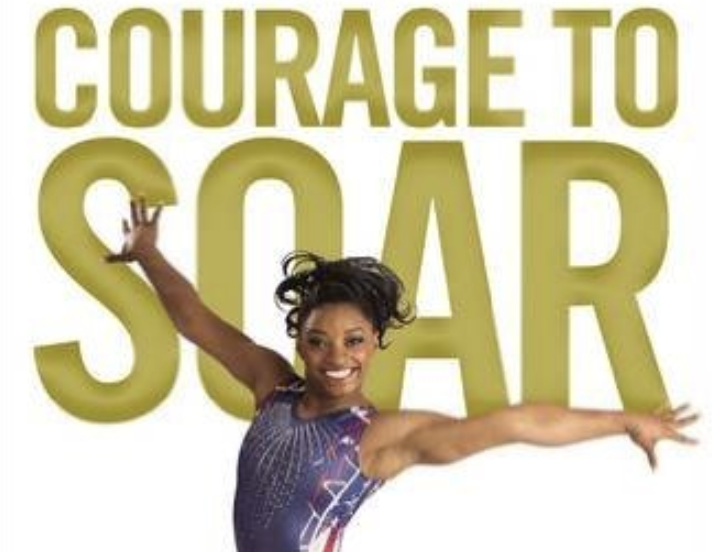
The headliner, of course, was gymnast Simone Biles and her decision to temporarily withdraw from competition to prioritize her mental health drew criticism, but also massive praise.

Her actions put a spotlight on athletes’ mental health, but also highlighted the inability of the mainstream press to delve deeper and ask pertinent questions regarding her faith. You see, Biles is a Roman Catholic, something written about leading up to the 2016 Summer Olympics in Rio. You wouldn’t know it from the news coverage of the past few weeks.

The lack of mentions in news accounts of Biles being Catholic in regards to her mental wellness spilled over this past Monday when the gymnast’s Instagram account made news. She claimed to be pro-abortion-rights in a post, triggering plenty of mainstream news coverage. In a subsequent Twitter post, Biles wrote that in no way did she favor aborting babies as an alternative to the foster care system. Biles grew up in the foster care system and was later adopted.

Again, none of the mainstream news coverage included that she is an active Roman Catholic.


Please respect our Commenting Policy

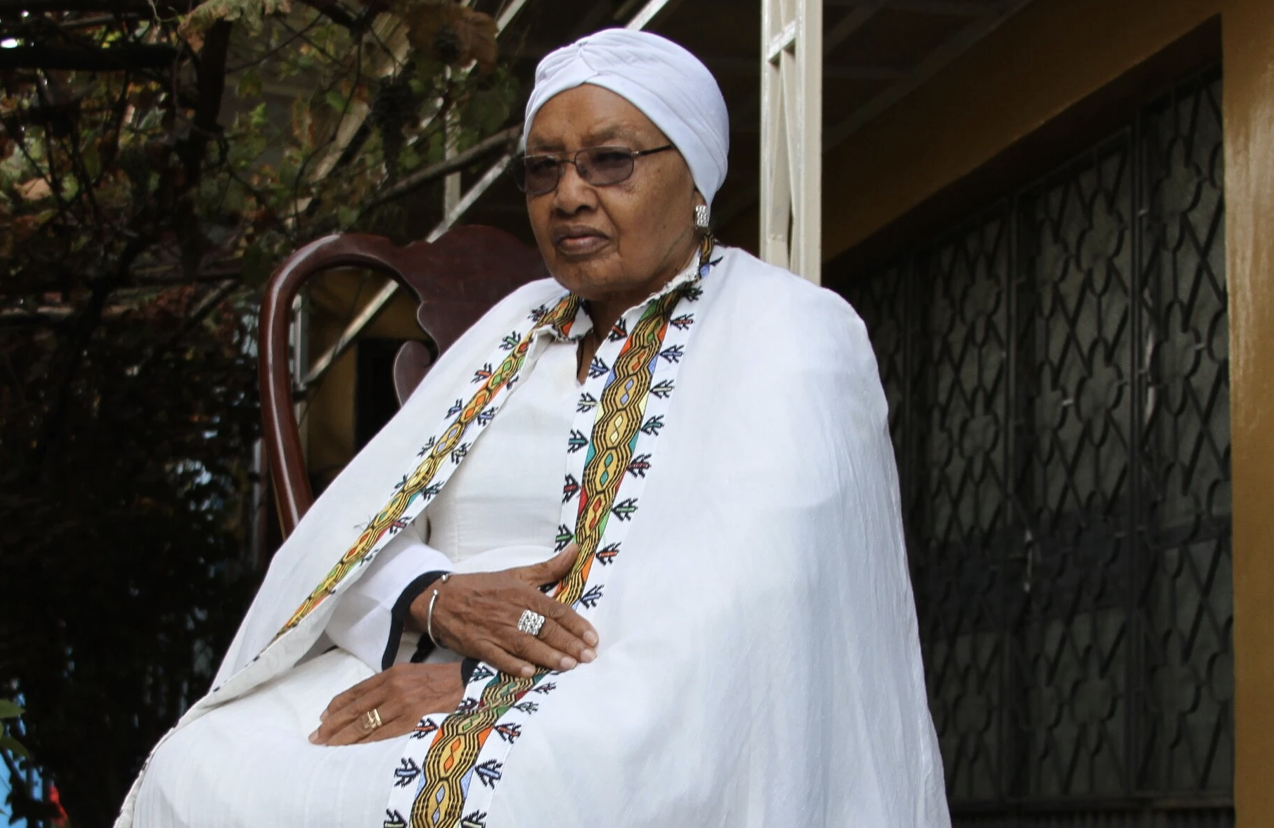
Yo, New York Times editors: Why edit faith out of obit for the 'Mother Teresa' of Africa?

Yo, New York Times editors: Why edit faith out of obit for the 'Mother Teresa' of Africa?

If you know anything about old-school journalism, then you have heard this mantra — “who, what, when, where, why and how.” During my nearly three decades as a journalism and mass media professor, I used to refer to these essential building blocks of hard-news reporting as the “W5H” formula.

Clearly, when you are dealing with the life story of a woman who sacrificed everything in order to help poor, suffering, abandoned children, the “why” factor in that equation is going to be especially important.

This brings us to two very different news reports about the death of one of modern Ethiopia’s most beloved figures, a woman who was frequently described as a living saint. Here is the New York Times headline: “Abebech Gobena, the ‘Mother Teresa’ of Africa, Dies at 85.” And here is the overture:

Abebech Gobena was returning from a pilgrimage to the holy site of Gishen Mariam, about 300 miles north of the Ethiopian capital, Addis Ababa, when she saw the woman and her baby.

It was 1980, and Ms. Gobena was passing through an area recently stricken by drought and an accompanying famine. All along the road were bodies — many dead, some dying, some still able to sit up and ask for food.

“There were so many of these hungry people sprawled all over, you could not even walk,” she said in a 2010 interview with CNN. She handed out what little she had — a loaf of bread, a few liters of water.

The word “holy” in the lede is rather important, since we are talking about Coptic Orthodox monastery of Gishen Mariam.

According to ancient traditions, Gishan Mariam is the location of a piece of the cross on which Jesus was crucified. It was a gift from St. Helena, the mother of Constantine I, and came to Ethiopia as a gift from the Patriarch of Alexandria. A festival called “Meskel,” celebrating the finding of the cross, is a major event in Ethiopian life.

So the story begins with Gobena returning from a pilgrimage to this holy site, which almost certainly tells us something about this woman’s life. This is interesting, since the Times piece does not include any of the following words — “Christian,” “Orthodox,” “Coptic,” “faith” or “saint.”

Would it make a difference, for example, to know that the small amount of water Gobena was carrying, which he gave to those who were suffering, was holy water that she was carrying home from the shrine to be used for rites of blessing and healing?


Please respect our Commenting Policy

Press braces for the Supreme Court's big one: Religion and abortion (phase I)

Press braces for the Supreme Court's big one: Religion and abortion (phase I)

In late July the U.S. Supreme Court's in-box was clogged with dozens of secular and religious briefs that oppose its 1973 Roe v. Wade decision, which established women's right to abortion, further defined in the 1992 Planned Parenthood v. Casey case.

Next up, watch for briefs that back the high Court's existing abortion-rights regime, which are due by mid-September. There should be keen journalistic interest in which religions decide to bless "pro-choice" policies and why, with likely contentions that 1st Amendment religious liberty requires legalized abortion even as other Christian and Jewish thinkers disagree.

The media are well aware that the Court's upcoming decision in the Dobbs v. Jackson Women's Health case (docket #19-1392) will be epochal, and the new briefs show the issue is as politically contentious as ever.

Dobbs involves rigid abortion limits even before fetal "viability" as legislated by Mississippi.

In response, fully 25 of the 50 states, all with Republican attorneys general, are asking the Court to scuttle Roe and Casey. Also, 87% of the Republicans in the U.S. House and Senate, from 40 states, want the two decisions overturned "where necessary" while lower courts clean up legal muddles. Also filing on this side are 396 legislators in 41 states.

Briefs also come from "pro-life" or religious physicians, nurses, and attorneys, "pro-family" organizations, and notable intellectuals like John Finnis of the University of Oxford, Robert George of Princeton University (click here for his recent tweetstorm), and Mary Ann Glendon of Harvard Law School.

Also Dr. Ben Carson, the world-renowned pediatric neurosurgeon and Donald Trump Cabinet member. He argues not from his Seventh-day Adventist faith but from embryology, saying the existence of a "new unique human life" at conception is "objective scientific fact. " He considers life to be a "natural right" that "does not depend on theology."

Writers will find a similar approach in the most important religious organization brief.


Please respect our Commenting Policy

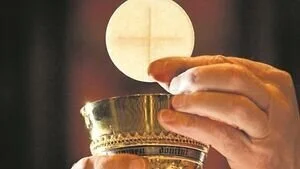
When a Catholic politician is denied Communion, why does Axios think he's heroic?

When a Catholic politician is denied Communion, why does Axios think he's heroic?

Ever since President Joe Biden took office, fellow GetReligionista Clemente Lisi has been writing articles about the new president’s inevitable clash with Catholic bishops over Communion, and how President Biden is regularly framed as a “devout” Catholic despite his major departure from said doctrine on life issues, not to mention religious liberty. The bishops, on the other hand, are framed as “right wing.”

The Communion conundrum has spread to a state where I used to live: New Mexico, home of the country’s largest annual pilgrimage of penitents who walk 30 miles every Good Friday from Santa Fe to the Chimayo sanctuary in the northern hills. New Mexico is drenched in Catholicism, starting around April 30, 1598, when Spanish explorers coming north from Mexico held a Thanksgiving Mass and dinner near the Rio Grande.

There are evangelical Protestants, Jews, Buddhists and other groups around the state, but the bulk of the populace is Catholic, so the Communion issue is going to matter there, which is why one bishop’s decision to bar a local Catholic politician from the altar makes waves. Here is how Axios framed it:

A New Mexico lawmaker denied Communion by a bishop over his vote to advance abortion protections told Axios exclusively he won't be bullied and looks forward to receiving Communion with President Biden one day.

Just for fun, I’ll also run the lede from the National Catholic Register just for comparison:

After a New Mexico state senator said he was denied Communion this weekend because of a political matter, his diocese responded that it had privately warned him he should not present himself for Communion, due to his obstinate support for a pro-abortion bill.

Two different takes, no? Back to Axios:

Why it matters: The example set by Sen. Joseph Cervantes, a Democrat, is drawing the attention of lawmakers around the country. Blue states are moving to protect abortion rights should the Supreme Court overturn or erode Roe v. Wade.

• "I won't have any problem finding to place to receive Communion," Cervantes said during an interview. "In fact, I look forward one day to receiving Communion at the same parish where President Biden does."

• He said other parishes and another diocese in New Mexico have offered to give him Communion, highlighting the split among U.S. Catholic bishops over elected officials and abortion.

The slant of this piece is a textbook example of why conservatives of all religious persuasions tend to loathe the media. The lede basically states takes Cervantes’ word for it that he is being “bullied,” without mentioning that Cervantes went out of his way to defy private exhortations from his spiritual overseers.


Please respect our Commenting Policy

Washington Post still thinks sin and repentance have nothing to do with Holy Communion

Washington Post still thinks sin and repentance have nothing to do with Holy Communion

For years now, quite a few mainstream journalists have made it pretty obvious that they think the bishops of the Catholic church have a moral and perhaps even legal obligation to let Catholics do whatever they want to do in public life while continuing to take Holy Communion.

All that matters, according this newsroom version of the evolving spirit of Vatican II, is that these Catholic individuals believe — as a matter of conscience — that they are good to go. Catholics who are on the right side of history even have the right to openly state, in word and deed, that they believe Catholic doctrine is wrong and should be changed. This used to be called Protestantism, but nevermind.

This brings us to yet another Washington Post report about the life and times of a Michigan judge named Sara Smolenski, her same-sex wife Linda and the East Grand Rapids parish in which she is not allowed to take Holy Communion. (For a flashback to earlier coverage, please see this Julia Duin post: “Press doesn't get why a Catholic priest would withhold Communion from outspoken gay judge.”)

This story does a great job of proving that progressive Catholics have strong views on this issue. The story also offers small bites of material from Catholics stating the church’s doctrinal stance on this matter. If you are looking for any sense of fairness and balance — such as Catholics explaining or defending church doctrine — then you are not going to find it in the Post coverage. Again.

One other key point: This story contains zero references to the role that Confession — the Sacrament of Penance — plays in Catholic teachings on sin, repentance, forgiveness, salvation and, thus, Holy Communion. Hold that thought, because we will return to that point.

The Post headline, this time around, states: “Bishops’ debate over Communion sparked by Biden seeps into holiest sacrament for Catholics.” Here’s the overture:

St. Stephen Catholic Church is the parish and school where Sara Smolenski grew up with her nine siblings, where her parents were married, where she worshiped on Sundays and served as a volunteer distributing Communion. It was also the place where the priest called in late 2019 to tell her she should no longer come up during Mass to receive the holy sacrament.

“He says: ‘I’m going to have to ask you not to take Communion because you’re married to Linda in the state of Michigan. He just kept saying: ‘Respect the church,’” said Smolenski, 63, a longtime District Court judge.


Please respect our Commenting Policy

Twist on familiar assimilation questions: Where are trends leading Islam in U.K. (and U.S.)?

Twist on familiar assimilation questions: Where are trends leading Islam in U.K. (and U.S.)?

THE QUESTION:

Where are current trends leading Islam in the U.K. (and what about the U.S.)?

THE RELIGION GUY'S ANSWER:

As in the United States, the Muslim minority population is growing steadily in the United Kingdom, up 107% since 2001 to exceed 3 million -- even as participation in many Christian churches declines.

The odds are good that British society will be reshaped by the inner workings among followers of the world's second-largest religion. That underscores the importance of the new book "Among the Mosques: A Journey Across Muslim Britain" (Bloomsbury) by Ed Husain.

This depiction of Britain is rather unnerving, though France apparently faces a more fraught situation. There the enforcement of "laicite," rigid separation of religion from the state originally aimed at Christianity, limits sensitivity to Muslim concerns and adds to long-running alienation and failure to assimilate. Current disputes, for instance, involve public schools' headscarf bans and unwillingness to provide alternatives to pork on cafeteria menus.

British author Husain is a practicing Muslim, political consultant and adjunct professor at America's Georgetown University. A sympathizer with militant "Islamism" in his younger days, he now advocates a tolerant and modernized form of the faith and that shapes his narrative.

Just before COVID-19 hit, Husain toured London and five other cities in England, two in Scotland, and one each in Wales and Northern Ireland, mingling with fellow believers and non-Muslims at the grass roots to discern trends. His knowledge of the faith, reputation as an author on Islam, study overseas and command of languages like Arabic and Urdu aided the sort of access denied to outside investigators.

While older British Muslims tended to assimilate, he found, many more recent immigrants are suspicious or hostile toward their adopted nation and their neighbors, isolating to create what's somewhat a country within a country.


Please respect our Commenting Policy