Politics

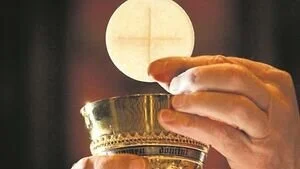
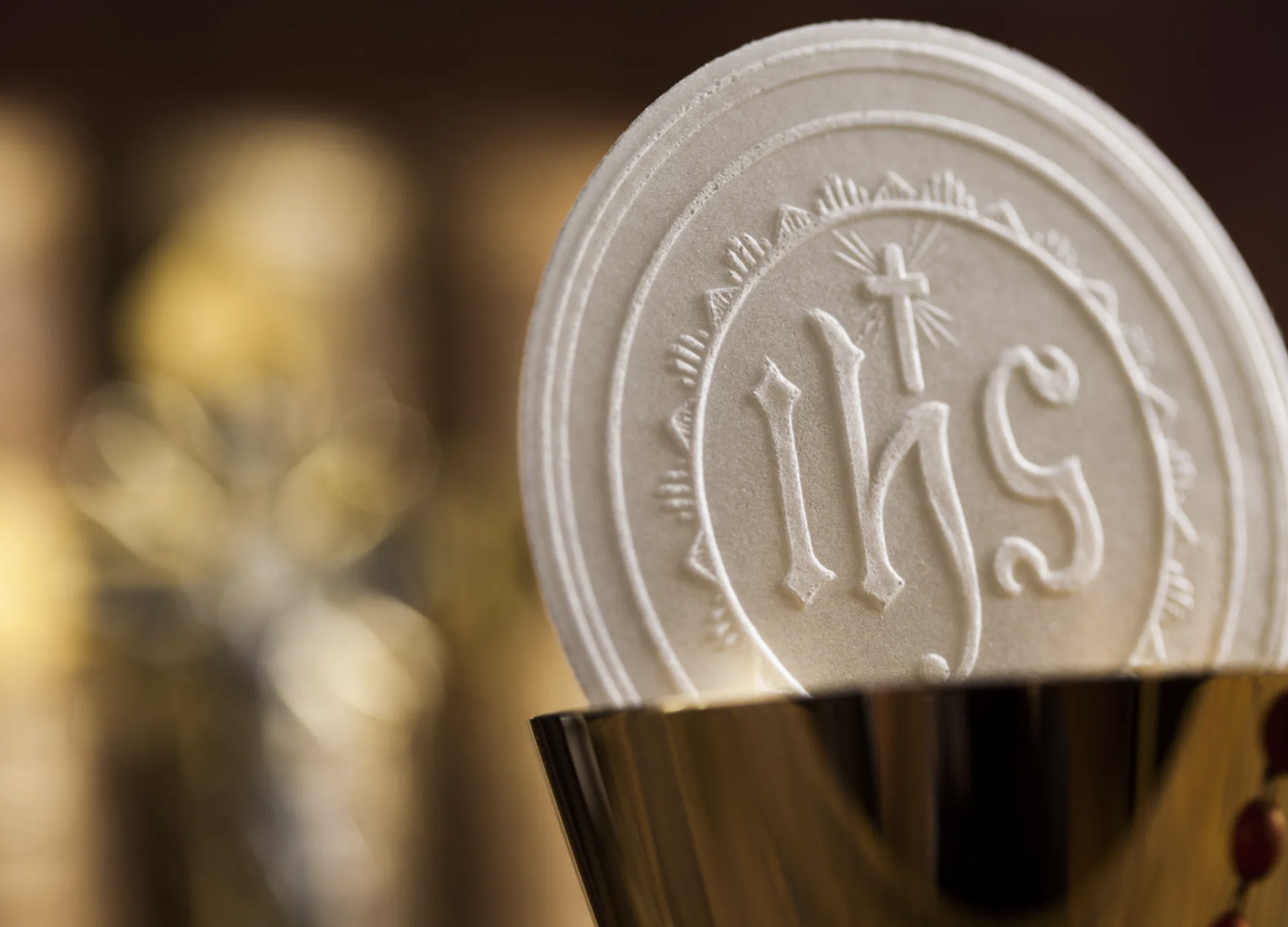
New podcast: What are the future news hooks as U.S. bishops wrestle with Holy Communion?

New podcast: What are the future news hooks as U.S. bishops wrestle with Holy Communion?

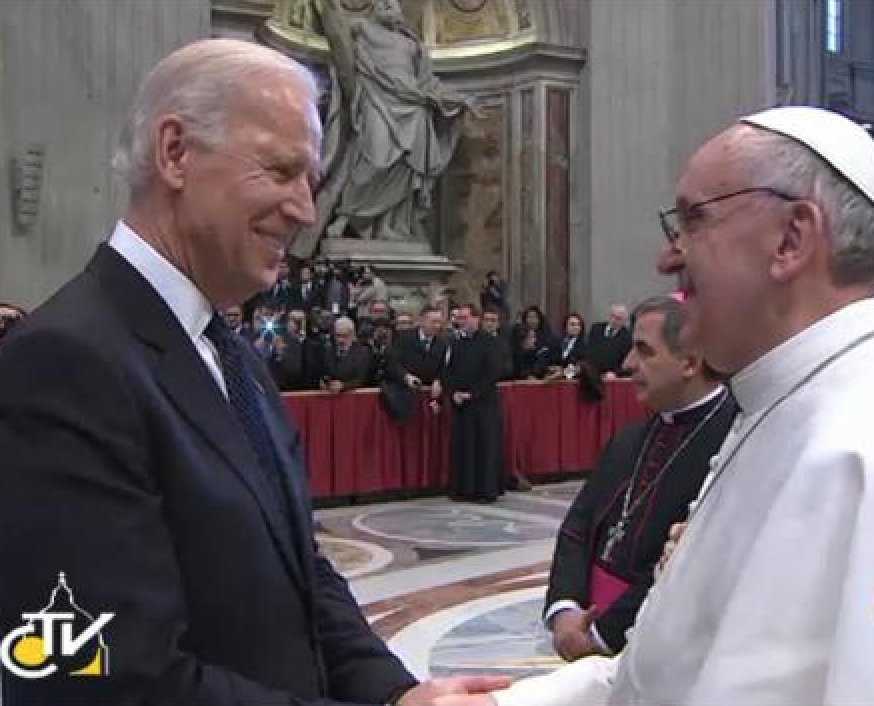
Let’s say that, at some point in the future, multimedia crews manage to discover where President Joe Biden was attending Mass on a given Sunday.

As the president attempts to leave, journalists shout an obvious question, something like: "Mr. President! The U.S. bishops are almost done with the final draft of their document on abortion, politics and Holy Communion. Are you concerned about this?”

Recently, Biden responded to a similar question by saying: "That's a private matter and I don't think that's going to happen."

This kind of language, that specific doctrinal issues are “personal” or “private,” has been part of American Catholic code ever since the famous 1984 address at the University of Notre Dame by the late New York Gov. Mario Cuomo. But let’s say — as I suggested in this week’s “Crossroads” podcast (CLICK HERE to tune that in) — that Biden decides to tweek this reply at some point in the future.

What would happen if he said this: “That’s between me and my father confessor, so I will have no response at this time.”

This response would have several implications. First of all, it would mean that Biden is saying that he (a) has a father confessor, (b) that he has gone to confession, (c) that he has confessed his sins, (d) that his confessor has assigned him some for of penance and (e) absolved him of his sins. That last part, of course, could be assumed if Biden is receiving Holy Communion.

Oh, and there’s one implication here: That this is happening with a blessing, to one degree or another, from the bishop in authority over Biden’s father confessor. Ah, there is the main news hook.

The bishop and the priest would not, of course, discuss the contents of the president’s confessions. The bishop, however, could say that Biden’s ongoing actions clashing with church doctrines — linked to abortion, same-sex marriage, trans advocacy or some other issue — require the denial of Holy Communion since these actions are, under Catholic doctrines, a threat to the president’s eternal soul.

After all, as the journalists (and canon lawyers) at The Pillar recently noted:

Please respect our Commenting Policy

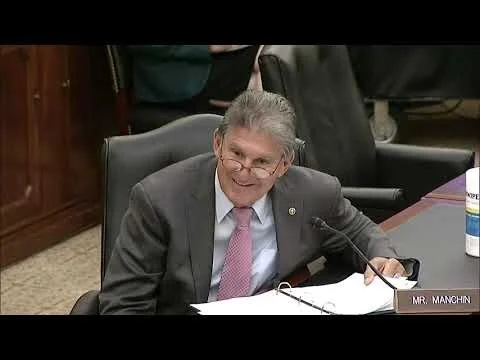
Why does no one, including the New Yorker, want to address the Catholicity of Joe Manchin?

Why does no one, including the New Yorker, want to address the Catholicity of Joe Manchin?

The New Yorker always has interesting profiles and I got to reading one about West Virginia Sen. Joe Manchin, a conservative Democrat who is the one bulwark in the U.S. Senate against a Republican majority.

That is, in a Senate divided 50/50, Manchin is the swing vote on the Democratic side. And he has been known to oppose the hopes and dreams of the Democratic Party’s center-left coalition.

So lots of people are writing about him, including the New Yorker, which bent over backward to avoid talking about one of the inner strengths that Manchin has: His determination to be a Catholic politician, even in an age in which compromise is all but impossible.

Tmatt has covered Manchin beforehand and these days, Manchin is very much in the headlines these days because if anything, the diference between two major parties is massive.

The story begins with a near-fatal accident involving two Senators, one of them Manchin.

In another year, the prospect of losing two Democratic senators overboard in an ice storm might be greeted with a certain wry resignation among Washington’s political class. This year, it inspires panic, at least among Democrats: in a 50-50 Senate, the Party’s agenda is only one vote — or one heartbeat — from oblivion. Manchin, in particular, holds extraordinary power.

As perhaps the Senate’s most conservative Democrat, he often breaks from the Party, which gives him a de-facto veto over a large swath of the Administration’s agenda. In the first months of Joe Biden’s Presidency, Manchin tanked the nomination of Neera Tanden as budget director (he disapproved of her tweets), opposed raising the corporate tax rate to twenty-eight per cent (he preferred twenty-five per cent), and single-handedly narrowed unemployment benefits in a COVID-relief bill.

Over and over, Manchin said that he was driven by a fundamental faith in bipartisanship, a belief that Democrats could and must find Republican support for their legislation—a posture so at odds with the present hostilities in Washington that it evoked a man hoisting his glass for a toast while his guests lunged at one another with steak knives…

Biden and Manchin have obvious points in common—two white, Catholic Joes, in their seventies, both former football players who take pride in their working-class roots, long after becoming wealthy.

What drives Manchin, what gives him the courage to stand alone as he so often does?


Please respect our Commenting Policy

U.S. Catholic bishops OK drafting Communion guidelines: Press asks about politics -- period

U.S. Catholic bishops OK drafting Communion guidelines: Press asks about politics -- period

Any short list of classic Pope Francis remarks about abortion would have to include the 2018 speech in which he asked, using a Mafia image: “Is it just to resort to a contract killer to solve a problem?”

There was more: “Interrupting a pregnancy is like eliminating someone. Getting rid of a human being is like resorting to a contract killer to solve a problem.” While some people support abortion rights, Francis added: “How can an act that suppresses innocent and defenseless life as it blossoms be therapeutic, civil or simply human?”

Or how about this quote, drawn from a 2020 address to the United Nations?

“Unfortunately, some countries and international institutions are also promoting abortion as one of the so-called ‘essential services’ provided in the humanitarian response to the pandemic. … It is troubling to see how simple and convenient it has become for some to deny the existence of a human life as a solution to problems that can and must be solved for both the mother and her unborn child.”

While there is no question that Pope Francis is a progressive on many issues linked to economics, immigration and other political topics, he has continued — sometimes in blunt language involving evil and the demonic — to defend the basics of Catholic moral theology.

So what are readers supposed to make of the Sunday New York Times story that opens with this summary statement:

WASHINGTON — Pope Francis and President Biden, both liberals, are the two most high-profile Roman Catholics in the world.

But in the United States, neither of these men is determining the direction of the Catholic Church. It is now a conservative movement that decides how the Catholic Church asserts its power in America.

Perhaps that is a bit simplistic?

The context, of course, was the decision by U.S. Catholic bishops — after three days of contentious debate — to approve a measure on to draft a statement that could deny Holy Communion to pro-abortion-rights politicians like President Joe Biden.


Please respect our Commenting Policy

Plug-In: Lots of news about Southern Baptists, U.S. Catholic bishops and even a modern Jonah

Plug-In: Lots of news about Southern Baptists, U.S. Catholic bishops and even a modern Jonah

One.

Two.

This makes three straight weeks that the Southern Baptist Convention’s big meeting in Nashville, Tennessee, has topped Plug-in.

Want an impossible challenge? Try highlighting the best coverage out of the plethora of headlines produced in Music City this week.

Some of the big news:

• The surprise election of “moderate” (if you’re OK with that term from the SBC past) pastor Ed Litton from Alabama as the SBC’s president.

Religion News Service’s Bob Smietana, the Washington Post’s Sarah Pulliam Bailey, Christianity Today’s Kate Shellnutt, the New York Times’ Ruth Graham, The Associated Press’ Travis Loller and Peter Smith and ReligionUnplugged’s own Hamil R. Harris all offer insightful coverage on that. (Even the Los Angeles Times weighs in, via Atlanta bureau chief Jenny Jarvie.)

The skirmish over critical race theory, which Chris Moody describes in an in-depth narrative piece for New York Magazine.

Also, don’t miss The Tennessean’s Wednesday front-page report by Katherine Burgess, Duane W. Gang and Holly Meyer.

For more on the CRT angle, see Adelle M. Banks’ RNS story and Greg Garrison’s Birmingham News coverage.

The major action to confront sexual abuse in the denomination, as the Houston Chronicle’s Robert Downen, CT’s Shellnutt, the Memphis Commercial Appeal’s Burgess and RNS’ Smietana detail.


Please respect our Commenting Policy

Thinking about 1962: Catholic politicos, an archbishop, excommunication, doctrine and race

Thinking about 1962: Catholic politicos, an archbishop, excommunication, doctrine and race

The equation was rather remarkable.

First you had some Catholic politicians who — in words and deeds — kept defying church teachings on an important and controversial topic in public life.

Then you had an archbishop who faced a tough decision about whether to do anything, beyond verbal warnings, to show them he was willing to defend these church teachings on moral theology and the sacraments.

When the archbishop stepped up and punished the politicos, denying them Holy Communion and more, the mainstream press — CBS and The New York Times, even — openly backed his actions with positive coverage.

Wait, what was that last thing?

Right now, the U.S. Catholic bishops are headed deeper into a showdown over the status of President Joe Biden and other Catholics who openly — through word and deed — defy church teachings on abortion, marriage, gender and other issues in which doctrines are defined in the Catholic Catechism and centuries of church tradition.

As part of the discussion this past week, America magazine — a strategic voice for Catholic progressives — can this fascinating essay: “What a 60-year-old excommunication controversy tells us about calls to deny Biden Communion.” It was written by Peter Feuerherd, a journalism professor at St. John's University in New York City. Here’s the overture:

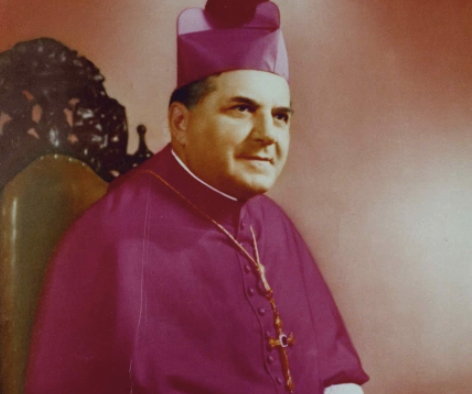
In April 1962, Archbishop Joseph Rummel of New Orleans not only denied Communion to three Catholics in his archdiocese; he went a step beyond. At 86 years of age and in ill health — he would die two years later — he formally excommunicated the three, who vehemently opposed his efforts to desegregate Catholic schools.


Please respect our Commenting Policy

New podcast: Is SBC President Ed Litton 'woke'? What is a 'conservative' stance on CRT?

New podcast: Is SBC President Ed Litton 'woke'? What is a 'conservative' stance on CRT?

It certainly was an interesting way to start a podcast (click here to tune that in) about press coverage of the 2021 national meeting of the Southern Baptist Convention.

Here’s the gist of what “Crossroads” host Todd Wilken wanted to know: If journalists were going to write that the Rev. Mike Stone — who lost his bid to become SBC president — was “right-wing” and “ultraconservative,” then why didn’t they pin “left-wing” and “ultraliberal” labels on Bishop-elect Megan Rohrer, the first trans/queer/gender fluid bishop in the Evangelical Lutheran Church of America?

Think about it this way: Stone and the new Conservative Baptist Network — many flew pirate flags — set out to attack the already conservative (theologically speaking) leadership of the Southern Baptist Convention, saying that it was not conservative ENOUGH on several issues. In other words, the goal was to move the SBC further right and away from recent pronouncements by the convention.

Meanwhile, Bishop-elect Rohrer is an open advocate of the CURRENT teachings of the ELCA. In the context of this denomination and its doctrines, Rohrer is part of the ruling class.

Now, is Rohrer “ultraliberal” in the context of American culture? How about liberal mainline Protestantism? How about other Lutheran bodies? Was Stone “ultraconservative” in the context of today’s SBC?

You can see the struggle here. Are journalists supposed to label religious leaders in the context of the wider culture or of their own flocks? I have argued that this depends: I go with the “flock” framing when discussing news events that are taking place inside a given “flock.”

As I argued the other day (#SBC21: Press wrestles with Twitter-niche labels as Southern Baptists choose a new leader), most of the religion-beat pros who gathered in Nashville tried to be very cautious when describing the various groups under the conservative SBC umbrella. The exception was the New York Times, which offered a kind of acid-flashback return to the SBC civil wars of the early 1980s.

The key was the labeling in this early headline — “Southern Baptists Narrowly Head Off Conservative Takeover” — and then this overture:


Please respect our Commenting Policy

#SBC21: Press wrestles with Twitter-niche labels as Southern Baptists choose a new leader

#SBC21: Press wrestles with Twitter-niche labels as Southern Baptists choose a new leader

If you have followed mainstream coverage of religion (and politics) in recent decades, you know that many journalists tend to make liberal use of the vague term “moderate.”

This has certainly been true of coverage of warfare inside the Southern Baptist Convention.

Since “liberal” is kind of scary, journalists have long divided the SBC into “moderate” and “conservative” camps. With very few exceptions, your typical “moderate” Southern Baptist would be a “fundamentalist” in the world of mainline Protestantism.

Thus, in the great SBC civil war of 1979 and the years thereafter, the term “moderate” came to mean Southern Baptists that mainstream journalists thought were acceptable. These were the folks in the white hats who backed abortion rights, women’s ordination and, at first, were silent or vague on LGBTQ issues. Most of all, they were the enemies of those Southern Baptists who fit under the Religious Right umbrella.

With that in mind, consider the tweaked double-decker headline on The New York Times report after the fireworks at the SBC national meetings in Nashville:

Southern Baptists Narrowly Head Off Ultraconservative Takeover

Ed Litton, a moderate pastor from Alabama, won a high-stakes presidential election with the potential to reshape the future of the country’s largest Protestant denomination.

The original headline stuck with the old-school “moderate” vs. “conservative” language.

The leadership of the Conservative Baptist Network may have been sad about their candidate, the Rev. Mike Stone of Georgia, losing the election. But they had to be elated at how the Times described this event in terms that meshed with their views on SBC life. Here is the top of that report:

NASHVILLE — In a dramatic showdown on Tuesday, Southern Baptists elected a moderate pastor from Alabama as their next president, narrowly heading off an attempted takeover by the denomination’s insurgent right wing.


Please respect our Commenting Policy

What to read, and why, as Catholic bishops mull plan to deny Biden Holy Communion

What to read, and why, as Catholic bishops mull plan to deny Biden Holy Communion

This is a week that could change Catholic life in this country. That is not an exaggeration when you consider what the bishops will be debating.

Barring an intervention from Pope Francis himself, the U.S. bishops will consider, and vote on Thursday, a plan for a document about Holy Communion that includes denying the sacrament to politicians who repeatedly support policies advocating abortion rights. That includes President Joe Biden, only the country’s second Catholic commander in chief ever.

The United States Conference of Catholic Bishops will gather virtually for their three-day Spring General Assembly starting tomorrow. The public sessions are available on the USCCB website for all to watch. While the bishops will have a busy agenda ahead of them, the biggest issue — in terms of news coverage — is this question of whether the sacrament of Communion can be denied to Catholic politicians with a history of backing abortion rights.

What can we expect from the news coverage?

This has been an issue that was pushed to the forefront by many bishops following Biden’s election last November. This is an issue that has been covered by both the mainstream press as well as Catholic media. The arguments and decisions made this week will have a lasting impact on Catholicism and those who practice it. The opinions many will form this week will come directly from the coverage they read.

Here is the debate in a nutshell: Some bishops want politicians who identify as Catholic to hold public policy positions that are not at odds with church teaching on abortion, marriage, LGBTQ rights and other issues in moral theology. Others argue that these politicians can hold political positions that clash with the church — while expressing private support for church teachings — and continue to attend Mass and receive Holy Communion.

That this division also happen to match with how these Catholics vote will dominate the coverage. it also comes at a time when the Supreme Court will take up a major abortion rights challenge.


Please respect our Commenting Policy

#SBC2021, CRT and sexual abuse: Are compromises possible in this complex showdown?

#SBC2021, CRT and sexual abuse: Are compromises possible in this complex showdown?

When most journalists, and thus most news consumers, think of Southern Baptists it’s highly likely that “compromise” is not one of the first words that leaps to mind.

But think about this for a moment. The current firestorm surrounding the Southern Baptist Convention’s national meetings in Nashville (tomorrow and Wednesday) centers on recent efforts by the convention’s leaders to find working compromises on two explosive issues in church life — racism and sexual abuse. In both cases, forces have pulled at convention leaders to move further to the right or to pursue more “progressive” options that would clash with realities in SBC life and polity.

Consider the hellish realities of racism and, in particular, the complex secular doctrines of “Critical Race Theory.” The SBC could praise CRT and embrace it or totally reject this school of thought. A compromise? That would stress listening to conservative Black church leaders and saying that CRT makes some points about racism in America that are valid, but that it also contains secular views of evil and race that do not mesh with traditional Christian beliefs. Hold that thought.

On sexual abuse, there are progressives who want the SBC to start some kind of national agency that would be granted powers to yank abusive clergy and congregations into line. This would clash with Baptist teachings on the autonomy of local churches. At the same time, others say SBC leaders have already gone to far while trying to create a centrist, compromise, stance — providing some guidelines for churches facing accusations of sexual abuse, as well as best-practices materials on how to help victims.

So, here is the journalism question to ponder in the next few days: Can national-level religion reporters find a way to avoid the classic two-army, left vs. right, template that dominates most news coverage of clashes of this kind? This would allow readers to see the larger picture — the attempt to find compromises between two extremes that please enough conservatives to prevent a damaging explosion in SBC life.


Please respect our Commenting Policy