Politics

Plug-In: How hot will SBC meetings get in Nashville? Sexual-abuse fights are Round 1

Plug-In: How hot will SBC meetings get in Nashville? Sexual-abuse fights are Round 1

Look for a little thunder today, but I don’t see any rain in the Nashville, Tennessee, forecast for next week.

That’s probably a good thing because I’m not sure how many more leaks the Southern Baptist Convention can take.

The heat will be turned up, though, as 16,000 Baptist messengers converge on Music City for the denomination’s (yes, I’m going to use that word) biggest annual meeting in a quarter-century.

Last week’s Plug-in set the scene, but the headlines just keep coming.

The new developments start with Washington Post religion writer Sarah Pulliam Bailey’s scoop last Saturday on a leaked letter detailing allegations that Southern Baptist leaders mishandled sex abuse claims.

Next up: That would be the leaked audio Thursday of SBC officials showing reluctance to take action against churches accused of mishandling abuse, as The Associated Press’ Peter Smith and Travis Loller, Religion News Service’s Bob Smietana and Adelle M. Banks and The Tennessean’s Holly Meyer report.

More to read:

Pressure mounts for an independent investigation of SBC Executive Committee handling of abuse (by Bob Smietana, RNS)

Tensions erupt among Southern Baptists ahead of their big meeting in Nashville. Here's why (by Holly Meyer, The Tennessean)

Sexual abuse pushed to top of agenda for Southern Baptist Convention (by Terry Mattingly, Universal syndicate columnist)

Southern Baptist pastors demand inquiry into handling of sex abuse cases (by Yonat Shimron, RNS)

Please respect our Commenting Policy

Beyond Potiphar's wife: Leaked letters yank SBC debates about sexual abuse into the open

Beyond Potiphar's wife: Leaked letters yank SBC debates about sexual abuse into the open

It's hard to follow warfare inside the Southern Baptist Convention without a working knowledge of biblical symbolism.

Consider this passage in a May 31 letter (.pdf here) from the Rev. Russell Moore to SBC President J.D. Greear, which described key events leading to his recent resignation as head of the denomination's Ethics and Religious Liberty Commission.

"You and I both heard, in closed door meetings, sexual abuse survivors spoken of in terms of 'Potiphar's wife' and other spurious biblical analogies," wrote Moore, in a letter posted at the Baptist Blogger website. "The conversations in these closed door meetings were far worse than anything Southern Baptists knew. … And as you know, this comes on the heels of a track-record of the Executive Committee staff and others referring to victims as 'crazy' and, at least in one case, as worse than the sexual predators themselves."

Who was "Potiphar's wife"? She was known for her efforts to manipulate Joseph during his enslavement in Egypt. The Genesis narrative notes: "Now Joseph was handsome and good-looking. And after a time, his master's wife cast her eyes upon Joseph, and said, 'Lie with me.' " When Joseph refused, the seductress accused him of assault and had him jailed.

It's easy to see how "Potiphar's wife" insults would fit into attempts to discredit Moore and activists who want America's largest Protestant flock to change how its agencies, seminaries and nearly 48,000 autonomous congregations deal with sexual abuse.

Moore's resignation, after years of attacks by critics, has pushed sexual abuse to the top of the agenda at the SBC's June 15-16 national meetings in Nashville -- along with the election of a new president.


Please respect our Commenting Policy

Weekend thinking: Concerning Southern Baptists and the fracturing of evangelicalism

Weekend thinking: Concerning Southern Baptists and the fracturing of evangelicalism

All together now: Can the word “evangelical” be defined in doctrinal terms or is it time to admit that “evangelical” is a political term and that’s that?

A related question: Is the war between the alleged “woke” conservatives and the “real” conservatives in the Southern Baptist Convention based on serious disagreements about essential Christian doctrines or leftover resentments and anger from the 2016 rise of Donald Trump?

The way I see things, religion-beat pros can do some groundbreaking research on these questions this coming week during the SBC’s tense national meetings in Nashville.

If you have been following SBC life for a half-century or so, you know that what goes around comes around. Only this time it is really, really hard to find concrete doctrinal differences between the generals in the two warring camps. That was the subject of this week’s GetReligion podcast: “Will SBC politicos answer questions about doctrinal clashes in this new war?

But here is one more question for this weekend: Is there anything really new about this conflict?

A fascinating piece at MereOrthodoxy.com — “The Six Way Fracturing of Evangelicalism” — believes that we are watching a religious and cultural earthquake that will change evangelicalism forever. The piece was written by the Rev. Skyler Flowers of Grace Bible Church in Oxford, Miss., a graduate of Reformed Theological Seminary.

Before I point out a few crucial pieces of that puzzle, I’d like — once again — to flash back to a 1987 interview I did with the Rev. Billy Graham, a man who knew a thing or two about evangelicalism. I asked him: “What does the word ‘evangelical’ mean?”

"Actually, that's a question I'd like to ask somebody, too," he said, during a 1987 interview in his mountainside home office in Montreat, N.C. This oft-abused term has "become blurred. ... You go all the way from the extreme fundamentalists to the extreme liberals and, somewhere in between, there are the evangelicals."

The key, he argued, is that “evangelical” needed to be understood:


Please respect our Commenting Policy

New podcast: Will SBC politicos answer questions about doctrinal clashes in this new war?

New podcast: Will SBC politicos answer questions about doctrinal clashes in this new war?

Whether they’ll admit it or not, when covering conflicts and controversies many (not all) journalists seem to think that one of their main duties is to help (wink, wink) readers separate the people in white hats from those in black hats, smart people from the not-so-smart people and kind people from mad people.

There are several ways to do this. Reporters can quote calm, articulate people on one side, will seeking the most radical, scary voices on the other. I have, when covering events linked to abortion, seen TV crews rush past women who oppose abortion (including women who have experienced abortions) in order to interview screaming male protesters who are waving (literally) bloody signs.

Journalists can do long, personal interviews with people on one side, while pulling dry, boring quotes from press releases on the other. They can allow one set of activists to define all the crucial terms and questions, while ignoring or distorting the beliefs of activists on the other side.

Journalists also get to choose the labels they pin on the competing armies. That was the subject that loomed over this week’s “Crossroads” podcast (CLICK HERE to tune that in), which focused on the bitter debates surrounding the resignation of Russell Moore as leader of the Southern Baptist Convention’s Ethics and Religious Liberty Commission.

The obvious other news hook: The nation’s largest non-Catholic flock will hold its 2021 national meeting next week (June 15-16) in Nashville. For more background, see this earlier post: “That SBC powderkeg: Clearly, executive committee is bitterly divided on sexual-abuse issues.”

As the old saying goes, “You can’t tell the players without a program.” Well, it’s going to be crucial how journalists label the “players” in this conflict.

For example, here is a crucial section of a new Peter Wehner essay at The Atlantic, which ran under this headline: “The Scandal Rocking the Evangelical World — The sudden departure of Russell Moore is forcing an overdue conversation about the crises of American Christendom.”


Please respect our Commenting Policy

Many pieces in this news puzzle: New Israeli coalition reflects land's complex religiosity

Many pieces in this news puzzle: New Israeli coalition reflects land's complex religiosity

What does it say about Israel that its founding prime minister was someone who today might be labeled a “BuJew,” a Jew strongly attracted to Buddhist philosophy? Or that it took Israel more than 70 years to produce a prime minister who identifies with Orthodox Judaism?

The BuJew prime minister was, of course, the otherwise secular David Ben-Gurion, Israel’s George Washington equivalent. Ben-Gurion actually took several days during a 1961 two-week state visit to Burma (today’s Myanmar) to attend a Buddhist retreat. I can’t imagine an Israeli prime minister doing that today given the Jewish state’s current political turmoil and Orthodoxy’s influence.

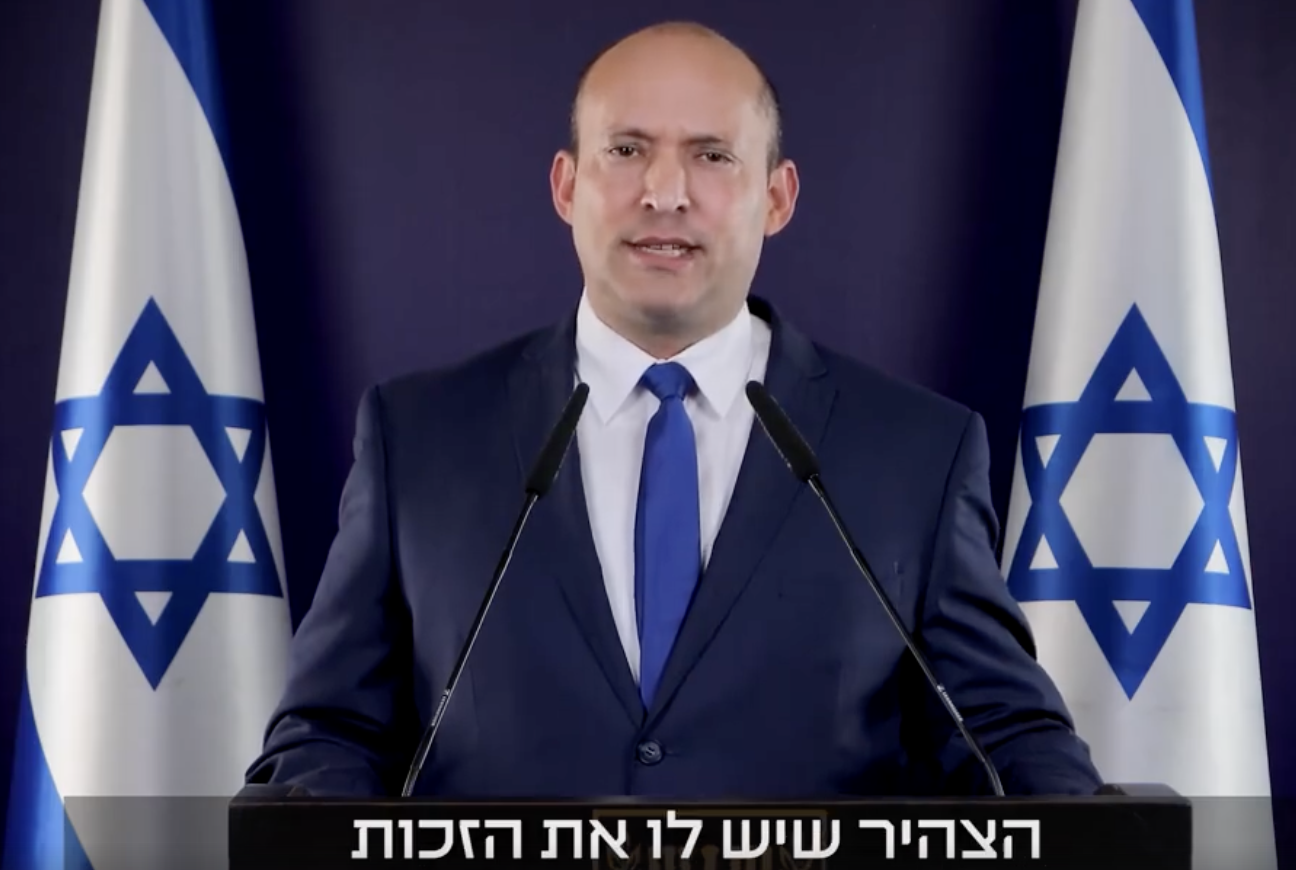
The first Orthodox prime minister is set to be Naftali Bennett, who as of this writing is scheduled to command the top spot in Israel’s nascent anti-Netanyahu governing coalition, itself tentatively set to formally assume office within days.

Again, what does all of this say? A lot, I’d argue, about Israel’s religious complexity and the degree to which religion and politics are tightly intertwined, perhaps inseparably so, in Israel (and the Middle East in general, but that’s a larger topic for another day).

I’d also argue it underscores the importance for journalists opining on Israel to be well versed on its religious politics — from its varied and often antagonistic Jewish factions, to its distinctive Arab Muslim, Christian and Druse communities — if they are to adequately explain the thinking that goes into Israeli decision making.

Consider the following. Benjamin (Bibi) Netanyahu, the longtime right-wing prime minister, is a secular Jew, as are most Israeli Jews. Yet he nonetheless enjoyed the support of his nation’s ultra-Orthodox parties. Netanyahu gained their support by including the parties in his ruling coalitions, giving them great access and sometimes control over public funds needed for their community institutions and economic safety nets.

Bennett, meanwhile, has gained the condemnation of several leading Orthodox Jews, even though identifies with this religious descriptor.


Please respect our Commenting Policy

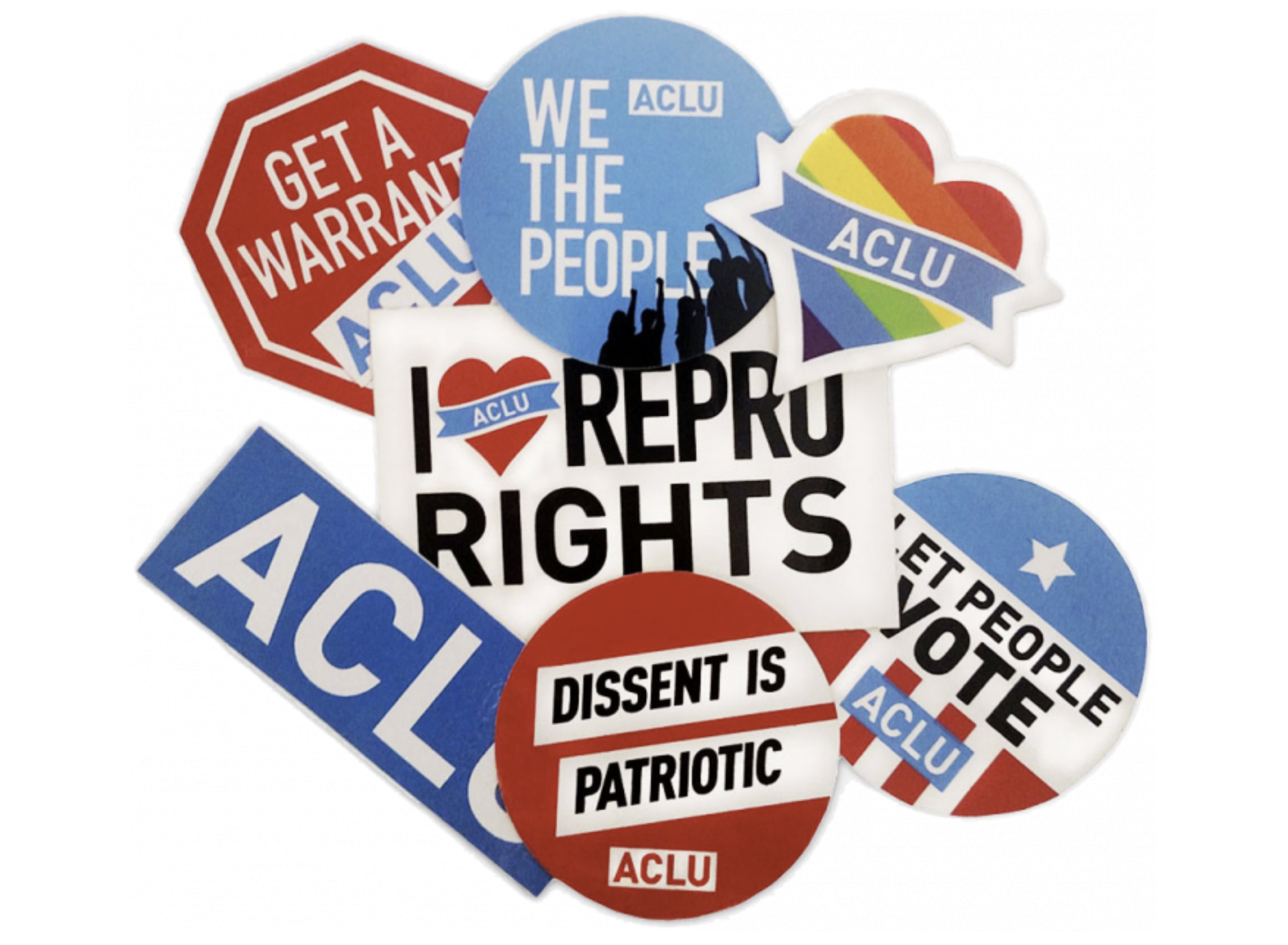
The New York Times (#WHOA) probes ACLU's move away from First Amendment liberalism

The New York Times (#WHOA) probes ACLU's move away from First Amendment liberalism

I don’t know about you, but The New York Times was the last place that I expected to see a long news feature about disturbing trends at the American Civil Liberties Union away from its proud history of First Amendment liberalism.

I am sure that some ACLU insiders must have felt the same way, especially in light of recent headlines about the rising power of a generation of woke journalists at the Times. The pot calling the kettle black?

But there was no way around the contents of that dramatic double-decker headline the other day:

Once a Bastion of Free Speech, the A.C.L.U. Faces an Identity Crisis

An organization that has defended the First Amendment rights of Nazis and the Ku Klux Klan is split by an internal debate over whether supporting progressive causes is more important.

As the headline states, the emphasis in this report is about free speech. Maybe it was too much to ask Times editors to see the same illiberal trend developing in ACLU work defending the First Amendment clause protecting religious freedom, without “scare quotes.”

But we will take what we get because of the influence that the Times has in other newsrooms and even in some influential corners of elite academia.

The story opens with an event celebrating the career of lawyer David Goldberger, who played a key role in the famous 1978 case when the ACLU defended the free speech rights of Nazis to march in Skokie, Ill., the home of many Holocaust survivors. Read this long passage carefully:


Please respect our Commenting Policy

That SBC powderkeg: Clearly, executive committee is bitterly divided on sexual-abuse issues

That SBC powderkeg: Clearly, executive committee is bitterly divided on sexual-abuse issues

Several decades ago, early in the media coverage of the Catholic clergy sexual abuse scandals, a veteran Catholic educator gave me some sobering advice.

When dealing with stories about sexual abuse, he stressed, the usual doctrinal and cultural labels do not apply. There wasn’t a “left” or a “right” side of the story because there were people hiding their sins on both sides. When dealing with sexual abuse, most conflicts centered on issues of honesty and integrity and, most of all, a willingness to repent and admit that these sins and crimes were real.

I thought of that the other day when reading the Religion News Service story that started dominos falling in America’s largest non-Catholic flock: “Leaked Russell Moore letter blasts SBC conservatives, sheds light on his resignation.” (I apologize for getting to this story late, due to a week of travels with family, followed by a painful health crisis that has me rather drugged and could return me to an emergency room at any moment.)

Journalists and SBC insiders were not surprised that RNS scribe Bob Smietana was involved in breaking that story, in part because of his years of experience in the Nashville market at The Tennessean, as well as five years with Lifeway Research, an organization linked to Southern Baptist life. This is one of those cases in which a reporter can build on years of experience and contacts in a complex, massive organization and, thus, Smietana has been landing one SBC scoop after another in recent years. It’s crucial that this RNS story was supported by a post featuring the full text of the 4,000-word Moore letter.

The next key story, by Sarah Pulliam Bailey, ran in The Washington Post: “Newly leaked letter claims Southern Baptist leaders 'covered up' sex abuse allegations.” Click here (.pdf file) for a full text of this second Moore letter. It’s packed with material from crucial voices on both sides of this conflict, with most of them speaking on the record. This is another MUST read report.

The ink will be flying fast and furious, I imagine, as combatants prepare for the 2021 national Southern Baptist Convention, which will be held June 15-16 in Nashville, with preliminary gatherings two days earlier.

As Moore stated in the letter posted by RNS, many people will assume that this conflict centers on his highly public opposition to the presidential candidacy of Donald Trump. However, he stressed that he is convinced the main lightning rod was his efforts to fight sexual abuse inside the SBC, along with his bridge-building efforts to Black congregations, a growing and strategic network in the convention.


Please respect our Commenting Policy

Plug-In: Southern Baptists brace for biggest annual meeting in a quarter-century

Plug-In:  Southern Baptists brace for biggest annual meeting in a quarter-century

The Southern Baptist Convention’s annual meeting is a hot ticket once again.

Flash back to 1985: At the height of the battles between the denomination’s conservatives and moderates, 45,000 Southern Baptists flocked to Dallas.

But by 2001 — when I covered my first SBC annual meeting for The Oklahoman — the typical number of “messengers” sent by local congregations had dipped below 10,000. I actually wrote a front-page story from New Orleans that year headlined “Baptists share united voice.”

For years, the meetings were a big draw for national and regional journalists who cover religion. But as Southern Baptists gathered in Orlando, Florida, in 2010, Cathy Lynn Grossman, then the religion writer for USA Today, asked, “Who's watching Southern Baptists debate their future?”:

The wire services are walking the beaches of Pensacola with President Obama and religion reporters — what's left of us — are hobbled by lack of travel budgets and the rigidly local focus of many media.

The Tennessean’s Bob Smietana, now with Religion News Service, was one of perhaps only two mainstream reporters (along with the Arkansas Democrat-Gazette’s Frank Lockwood) who flew to Florida for that meeting.

At the time, I opined that not just a lack of travel budgets — but a shortage of news woven through the lens of sex and politics — was to blame.

Not to fear: No such shortage of news exists anymore. (Thank Donald Trump. Or Russell Moore. Or if you prefer, Beth Moore.)


Please respect our Commenting Policy

New podcast: Among waves of Tulsa Massacre ink, a fine AP religion story pointed forward

New podcast: Among waves of Tulsa Massacre ink, a fine AP religion story pointed forward

The 100th anniversary of the Tulsa Race Massacre is one of those stories that punches every button that can be pushed in news coverage today, especially after months of news about the complex Black Lives Matter movement and its impact on American life.

Obviously, this is a story about history and the voices of the few survivors who are alive to talk about the impact of this event on their lives and their community. In many parts of America, this is a story that can be linked to similar horrors from the past. For starters, there were the Red Summer riots of 1919 here in Knoxville, Tenn., and elsewhere.

Obviously, this is a legal and political story right now as efforts continue to pull the details of the Tulsa Massacre into the light of day. Consider the top of this remarkable multi-media report from The New York Times: “What the Tulsa Race Massacre Destroyed.”

Imagine a community of great possibilities and prosperity built by Black people for Black people. Places to work. Places to live. Places to learn and shop and play. Places to worship.

Now imagine it being ravaged by flames.

In May 1921, the Tulsa, Okla., neighborhood of Greenwood was a fully realized antidote to the racial oppression of the time. … Brick and wood-frame homes dotted the landscape, along with blocks lined with grocery stores, hotels, nightclubs, billiard halls, theaters, doctor’s offices and churches.

Yes, many of the 13 churches in Greenwood were destroyed or damaged, as 35 square blocks were burned down. No one truly knows how many people died, but the estimate of 300 is almost certainly low, with reports of mass graves and bodies tossed in the Arkansas River. As many news reports noted, no one has ever been prosecuted the crimes linked to the massacre in and around what was known as America’s Black Wall Street.

Did the major news coverage of the anniversary — some of it staggering in its complexity and depth — cover the many religion angles of this story? Yes and no. As always, political voices and news hooks received the most attention.

But there was one Associated Press story in particular — “Tulsa pastors honor ‘holy ground’ 100 years after massacre” — that we discussed, and praised, during this week’s “Crossroads” podcast (click here to tune that in).


Please respect our Commenting Policy