Politics

What's new about Joe Biden's White House faith office and why this story bears watching

What's new about Joe Biden's White House faith office and why this story bears watching

Not to anyone’s huge surprise, President Biden has resurrected a faith-based office as the religious face of the Biden White House.

Don’t yawn yet. There are some intriguing differences between what President Obama’s faith-based office was like and what Biden is proposing. The office’s most recent incarnation includes discussion about race, Covid, pluralism and “constitutional guarantees.” From Religion News Service:

President Joe Biden signed an executive order on Sunday (Feb. 14) reestablishing the White House Office of Faith-Based and Neighborhood Partnerships, undoing former President Donald Trump’s efforts to reshape an agency that went largely unstaffed for most of his tenure.

I do need to take some issue with the top paragraph. Trump did have a faith-based office called the Faith and Opportunity Initiative, and it was headed up by Paula White-Cain, a Florida-based televangelist with no government experience.

However, her connections among evangelicals and charismatics were second to none, and those were the folks who Trump saw as essential to his surprise 2016 victory. They got well-publicized visits to the White House and photo ops in the Oval Office. What’s not as well known is there were Jewish groups who also had access through White-Cain; something I learned when I was researching this 2017 profile on Paula.

In a statement accompanying the announcement of the executive order, Biden echoed his recent remarks to the National Prayer Breakfast, bemoaning widespread physical and economic suffering due to the coronavirus pandemic, racism and climate change. He added that those struggling “are fellow Americans” and are deserving of aid.

“This is not a nation that can, or will, simply stand by and watch the suffering around us. That is not who we are. That is not what faith calls us to be,” he said. “That is why I’m reestablishing the White House Office of Faith-Based and Neighborhood Partnerships to work with leaders of different faiths and backgrounds who are the frontlines of their communities in crisis and who can help us heal, unite, and rebuild.”

I still think White-Cain let in more folks than most people knew but she got no credit for it.

The White House announced the appointment of Melissa Rogers, a First Amendment lawyer and senior fellow at the Brookings Institution, to oversee the office, as she did in former President Barack Obama’s second term. Rogers will also serve as senior director for faith and public policy in the White House Domestic Policy Council.

I interviewed Rogers for my Paula piece and she was helpful and knowledgeable. She was also accessible to the press and not above taking a few pot shots with how the Trump administration was running its faith-based office in recent years. Clearly, White-Cain either didn’t read or didn’t listen to Rogers’ critiques.

Please respect our Commenting Policy

Reader asks: How can news consumers decide if Ethiopian massacre reports are true?

Reader asks: How can news consumers decide if Ethiopian massacre reports are true?

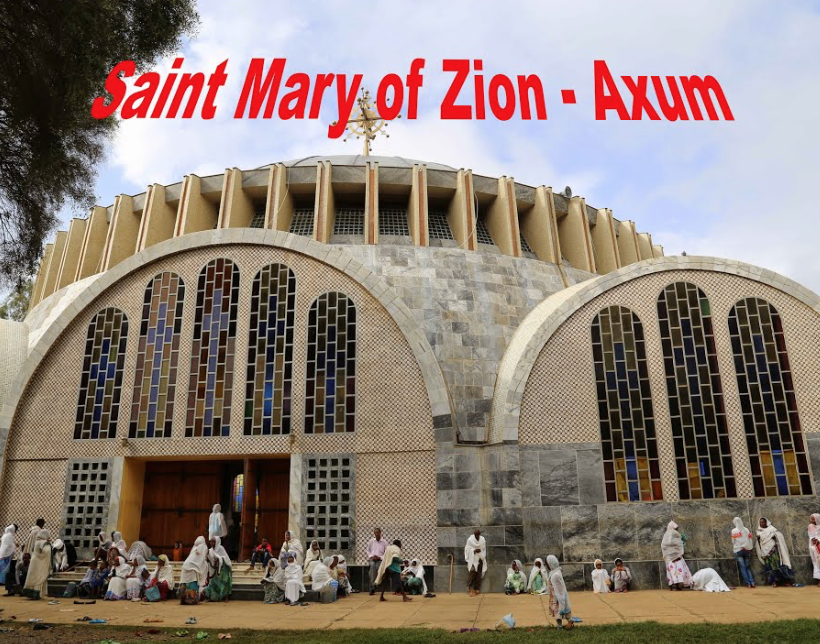
While Americans focused on the dramatic conclusion of 2020 White House race, reports began circulating in the overseas press claiming that a sickening massacre had taken place in a famous church — a pilgrimage site for the Ethiopian Orthodox.

How famous? For centuries, church officials have claimed that the Church of St. Mary of Zion in Axum contains the Ark of the Covenant.

This was, from the start, a journalism horror story — since Ethiopian officials were preventing foreign journalists from reaching the site of the alleged massacre. At the same time, activists on both sides of the stunningly complex conflict appeared to be working hard to shape the coverage that was taking place.

The other day, a frustrated reader sent me this note, after seeing materials posted online attempting to undercut claims that this massacre of 700-plus believers took place. “I’ve trusted you and your sources for about five years now so I’m hoping you can help get to the bottom of this,” the reader said.

I told the reader that, to me, it appeared that this was a case in which — at this point — certainty was impossible. A careful reader would note that some journalists were saying that claims about the massacre could not be verified — either way. “Human rights activists on left and right are concerned about the report and believe the attack COULD have taken place. But there has been no verification that has been locked down certain,” I said.

If you want to see what we’re talking about, check out these early reports from Catholic News Agency (“Hundreds reportedly dead after massacre at Oriental Orthodox church in Ethiopia”) and The Church Times (“Massacre ‘of 750’ reported in Aksum church complex, Tigray, Ethiopia”).

This is, of course, an argument about the attribution of truth claims. When journalists cannot (for a variety of reasons) do on-site reporting to seek evidence, they frequently are forced to seek the best sources that are available to them (often via telephone or other forms of technology) and report what they can. Here is the crucial point: Journalists have to clearly identify the identity of the sources and let readers know what kind of access they would or would not have to the information.

This leads us to a recent Associated Press story with a headline stating, “ ‘Horrible’: Witnesses recall massacre in Ethiopian holy city.

The key word is, of course, “witnesses.”


Please respect our Commenting Policy

Behind the headlines: As winter storm cripples Texas power grid, people of faith rally to help

Behind the headlines: As winter storm cripples Texas power grid, people of faith rally to help

Texans like to brag that they live in “a whole other country.”

I don’t suppose, though, that whoever came up with that slogan had Siberia in mind.

As a severe winter storm crippled the state’s energy grid this week, my parents were among 4 million residents who lost electricity. Mom and Dad endured a really chilly night before going to stay at my sister’s house for a few days.

Heroes (think “Mattress Mack”) and villains (#FlyingTed) have emerged, while people of faith — as they tend to do during disasters — rally to help.

Here at Religion Unplugged, Jillian Cheney tells the inspiring story of a church that partnered with a Jeep club to rescue snowed-in families.

Houses of worship losing power themselves hampered some efforts to provide reliable sanctuary, but “leaders are doing all they can to connect and comfort their communities,” Christianity Today’s Kate Shellnutt reports.

Churches and other faith groups teamed up to help open an emergency warming center for the homeless at a Dallas convention center, Religion News Service’s Bob Smietana notes.

Catholic churches in San Antonio and Fort Worth opened their doors, according to the Catholic News Agency’s Jonah McKeown.

Among others mobilizing to help: Southern Baptists, Churches of Christ and Episcopalians.

Power Up: The Week’s Best Reads

1. A congregation of avatars: A few pastors minister “to the wild universe of virtual reality, or VR for short,” this fascinating feature by World magazine’s Juliana Chan Erikson explains.


Please respect our Commenting Policy

Ryan Burge day: Political tensions rise as secularism grows (yet faith numbers stay strong)

Ryan Burge day: Political tensions rise as secularism grows (yet faith numbers stay strong)

Anyone who has followed GetReligion for nearly two decades knows that we have — over, and over, and over — stressed that the safe middle ground in American life seems to be vanishing.

This is true in religion and it is certainly true in politics.

Now, journalists and news consumers can prepare to dig into two books related to these trends — both linked to the work of names that will be familiar to GetReligion readers.

The first, by GetReligion contributor Ryan Burge, is entitled, “The Nones: Where They Came From, Who They Are, and Where They Are Going.” It will hit the market March 9th. We will come back to Burge in a moment, with links to some of his omnipresent charts and commentary.

The second book is entitled, “Secular Surge: A New Fault Line in American Politics,” and it was written by David Campbell, Geoffrey C. Layman and (here’s the familiar name to most GetReligion readers) John C. Green.

Yes, that John C. Green, the man from the 2007 seminar at the Washington Journalism Center who told a circle of journalists from around the world about emerging research about “religiously unaffiliated” Americans and how this would impact politics and, in particular, the shape of the Democratic Party. The line-graph he sketched on our write-on-wall that day was a foretaste of the stunning 2012 Pew study on the rapid rise of the “nones.”

The key was that the “nones” were the natural political partners of secular voters and believers in the shrinking world of the Religious Left. At some point, however, he said there would be tensions with moderate and even conservative Democrats in the Black church and in Hispanic pews, both Catholic, evangelical and Pentecostal. As I wrote in an On Religion column:

The unaffiliated overwhelmingly reject ancient doctrines on sexuality with 73 percent backing same-sex marriage and 72 percent saying abortion should be legal in all, or most, cases. Thus, the “Nones” skew heavily Democratic as voters — with 75 percent supporting Barack Obama in 2008. The unaffiliated are now a stronger presence in the Democratic Party than African-American Protestants, white mainline Protestants or white Catholics.

“It may very well be that in the future the unaffiliated vote will be as important to the Democrats as the traditionally religious are to the Republican Party,” said Green, addressing the religion reporters. “If these trends continue, we are likely to see even sharper divisions between the political parties.”


Please respect our Commenting Policy

Ryan Burge day: Black church believers and Black ‘nones’ show little Ideological divide

Ryan Burge day: Black church believers and Black ‘nones’ show little Ideological divide

There are a number of narratives that have emerged from the 2020 election season, many of which will take years to fully unpack.

One of the most important actually began to take root in December 2017 when Alabama held a special election to fill the Senate seat vacated by Jeff Sessions who became Attorney General in the Donald Trump administration. Alabama, one of the most conservative states in the nation, elected a Democrat — Doug Jones — to a statewide office for the first time in 25 years.

The reason for the victory was quickly attributed to the African-American community who turned out in large numbers for the Democrats. This same thread has run through coverage of the 2020 presidential election, when Joe Biden bested Trump in Georgia. Observers noted that the deep history of civil rights activism in the state energized the African-American base to repudiate the Trump presidency.

That bore out again on Jan. 5, 2021 when the Democrats won both Senate run-off elections in the state, defeating two Republican incumbents.

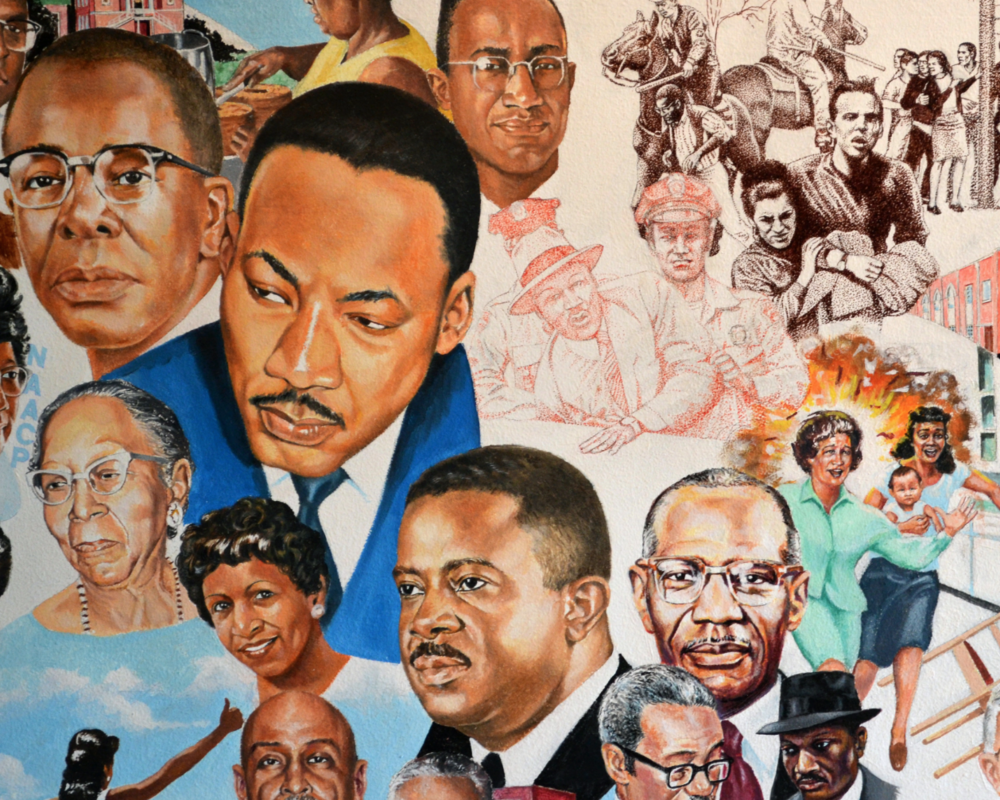
The Rev. Raphael Warnock’s win has garnered the most headlines. The pastor of one of America’s most historic churchesEbeneezer Baptist — Warnock’s sermons featured prominently in the campaign. One of the results of this coverage is that it pulled back the curtain a bit on the Black church experience for many White Americans who have never had a lot of exposure to other religious traditions.

Yet, despite the fact that a lot of the chatter about the Black vote has centered on people of faith — it’s important to recognize that the Black community is not a religious monolith. While the largest share of African-Americans identify as Christian (63.5%), nearly a quarter indicate that they have no religious affiliation (22.1%) and another 15% identify as part of another faith group (Muslims, Buddhists, Hindus, etc.)

While these religious differences generate huge political divides among the White community, is the same true for Black Americans? The data indicates that race generates a unifying identity for Black Americans much more so than it does for White America, and religious differences at the ballot box are often small or non-existent when comparing Black Americans of different faith traditions.

In terms of political partisan and ideology — the differences between Black Christians, Black Nones and those of other faith traditions is relatively small. However, it’s worth pointing out that Black Christians are clearly the most likely to identify with the Democratic Party.


Please respect our Commenting Policy

Supreme Court justices are not singing the same religious liberty tune during pandemic

Supreme Court justices are not singing the same religious liberty tune during pandemic

Legal battles over pandemic-era worship gatherings rage on.

Last October’s confirmation of Justice Amy Coney Barrett flipped the U.S. Supreme Court’s script on such questions.

The latest ruling came last Friday night: A 6-3 order stopped California’s ban on indoor worship in most of the nation’s most populous state. But the justices allowed a 25 percent capacity limit to remain.

Perhaps most interestingly, the majority said California can keep prohibiting singing and chanting. For now.

On the singing issue, the justices sang several different tunes:

Chief Justice John Roberts: “The State has concluded … that singing indoors poses a heightened risk of transmitting COVID–19. I see no basis in this record for overriding that aspect of the state public health framework.”

Barrett, joined by Justice Brett Kavanaugh: “Of course, if a chorister can sing in a Hollywood studio but not in her church, California’s regulations cannot be viewed as neutral. But the record is uncertain. … (H)owever, the applicants remain free to show that the singing ban is not generally applicable and to advance their claim accordingly.”

Justice Neil Gorsuch, joined by Justices Clarence Thomas and Samuel Alito: “California has sensibly expressed concern that singing may be a particularly potent way to transmit the disease. … But, on further inspection, the singing ban may not be what it first appears. It seems California’s powerful entertainment industry has won an exemption. So, once more, we appear to have a State playing favorites … expending considerable effort to protect lucrative industries (casinos in Nevada; movie studios in California) while denying similar largesse to its faithful.”


Please respect our Commenting Policy

In the age of COVID-19, it's impossible for clergy to avoid wrestling with the internet

In the age of COVID-19, it's impossible for clergy to avoid wrestling with the internet

Even before the coronavirus crisis, this question haunted pastors: What in God's name are we supposed to do with the internet?

American clergy aren't the only ones wrestling with this puzzle. Consider this advice -- from Moscow -- about online personality cults.

"A priest, sometimes very young, begins to think that he is an experienced pastor -- so many subscribers! -- able to answer the many questions that come to him in virtual reality," noted Patriarch Kirill, leader of the Russian Orthodox Church, at a recent diocesan conference. "Such clerics often lose the ability to accept any criticism, and not only on the internet, or respond to objections with endless arguments."

Pastors eventually have to ask, he added, if their online work is leading people through parish doors and into face-to-face faith communities.

"That is the question of the hour, for sure," said Savannah Kimberlin, director of published research for the Barna Group. Recent surveys have convinced Barna researchers that "the future church will be a blend of digital and in-person work. But it's up to us to decide what that will look like. …

"But isn't that true of our society as a whole? There are digital solutions for so many issues in our lives, right now. … But we can also see people yearning for more than that -- for experiences of contact with others in a community."

In a recent survey, 81% of churchgoing adults affirmed that "experiencing God alongside others" was very important to them, she said. At the same time, a majority of those surveyed said they hoped their congregations would continue some forms of online ministry in the future.

Similar paradoxes emerge when researchers studied evangelistic efforts to reach people who are "unchurched" or completely disconnected from religious institutions.

Half of all unchurched adults (52%), along with 73% of non-Christians, said they are not interested in invitations to church activities. However, a new Barna survey -- cooperating with Alpha USA, a nondenominational outreach group -- found that 41% of non-Christians said they were open to "spiritual conversations about Christianity" if the setting felt friendly.

Online forums and streamed events -- experienced at home, with viewers in control -- may offer some newcomers the flexibility and "safety" that they want.


Please respect our Commenting Policy

Did the January 6th riot at the U.S. Capitol involve Christian 'heresy' or was it 'apostasy'?

Did the January 6th riot at the U.S. Capitol involve Christian 'heresy' or was it 'apostasy'?

THE QUESTION:

Did the January 6th Capitol riot involve Christian “heresy” or “apostasy”?

THE RELIGION GUY’S ANSWER:

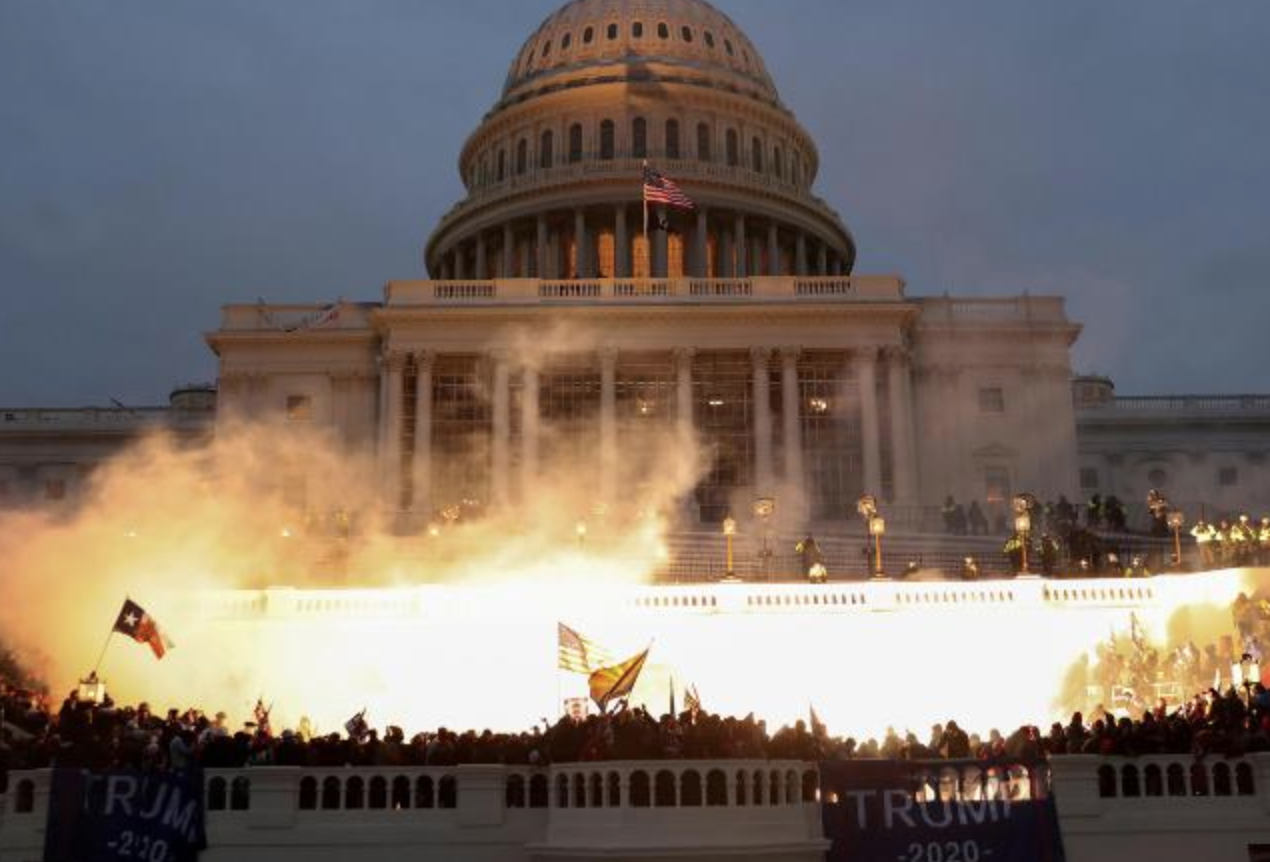
The U.S. Senate may have debated whether ex-President Donald Trump bears responsibility for the Jan. 6 riot at U.S. Capitol, but certain conservative Christians focused instead on his followers. They propose that the final day of Trump’s campaign to overturn President Biden’s December 14 Electoral College victory involved religious “heresy” or “apostasy.”

Those leveling this charge are not #NeverTrump politicians or pundits but devout and conservative Christians. That may seem surprising because in the media and the public mind the “religious right” fuses with devotion to Trump. But such thinkers take doctrine and biblical teaching seriously (unlike religious liberals who define political sins while ignoring theological errors).

A survey by the conservative American Enterprise Institute shows 63% of white evangelicals think Biden’s win was illegitimate, despite the numerous federal and state court rulings that found no evidence for Trump’s claim of a “sacred landslide.” But to what extent were Christians implicated in the Capitol mayhem?

As weeks roll on, we’re learning how a radical fringe planned the Capitol attack in advance and energized the crowd that Trump assembled and addressed.

Terry Mattingly of GetReligion.org distinguishes among four groups: The horde that Trump assembled to hear his demand that Congress and Vice President Mike Pence somehow overthrow Biden’s election; those who obeyed Trump’s plea to march on the Capitol; the militant marchers who broke into the security zone, but only protested outside the Capitol; and the smaller, violent, and foul-mouthed mob that desecrated this potent symbol of democracy across the globe.

Regarding that fourth group, Tony Carnes, editor of the A Journey Through NYC Religions website observed that, “no pastors, priests, or other organized religious leaders have been identified so far as part of the riot.” Mattingly wondered where’s the evidence that links a legal protest that evolved into insurrection with “evangelical networks and institutions.” And yet, videos do capture some incongruous Christian symbols and prayers that mingled with the homicide, threats to kill national leaders, injuries to 138 police, vandalism and theft.


Please respect our Commenting Policy