People

Plug-In: Many churches are vanishing, while others are growing. Trends worth covering?

Plug-In: Many churches are vanishing, while others are growing. Trends worth covering?

This newsletter marks the return of Weekend Plug-in after two weeks of vacation. Did you miss me?

I’m still catching up on the headlines I missed while watching a whole lot of Texas Rangers games.

But I know the U.S. Supreme Court ruled on two important religious freedom cases — one on religious accommodation at work and the other involving free speech and free exercise protections for people of faith who are creative professionals.

Click the preceding links, by the way, to read excellent coverage of the decisions by the Washington Times’ Mark A. Kellner.

In more recent news, the gunman who killed 11 people in a Pittsburgh synagogue is eligible for the death penalty, a federal jury announced. The decision clears the way, as The Associated Press’ Peter Smith reports, “for further evidence and testimony on whether he should be sentenced to death or life in prison.”

In case you need a reminder, this is our weekly roundup of the top headlines and best reads in the world of faith. We start with the giant religion trend that should be bigger news.

What To Know: The Big Story

Houses of worship closing: “Everybody is caught up with fighting over sexuality or politics on Twitter — and almost no one is paying attention (to) the collapse of congregational life in America.”

Religion News Service national writer Bob Smietana made that prescient observation on social media this week. Smietana, of course, wrote a book on the subject called “Reorganized Religion: The Reshaping of the American Church and Why It Matters.”

Many churches are shrinking. Then again, some churches are growing. Trends worth covering? What are the patterns here?
Please respect our Commenting Policy

After 10 years of mystery, the Orthodox shepherds of Aleppo remain missing

After 10 years of mystery, the Orthodox shepherds of Aleppo remain missing

Metropolitan Paul Yazigi had no way to know that he was about to vanish into the chaos of the Turkish-Syrian border during the violent rise of the Islamic State.

"If we want to be good children to God, then we don't thank Him only when He gives us [blessings]," he said, in one of his final sermons (translated from Arabic) before he was kidnapped on April 22, 2013.

"Also, when we are hurting, we say to Him: 'Your hand must be taking care of us, and we thank You.' …A Christian is a creature that gives thanks to God for all things one knows and doesn't know, for both the good and the hardships one faces in his life."

Sermons about faith and suffering are always timely in ancient churches.

The bishops of Aleppo, Syria -- Metropolitan Yazigi and Metropolitan Yohanna Ibrahim of the Syriac Orthodox Church -- disappeared 10 years ago while seeking the release of two kidnapped priests. Their car was surrounded by a pack of armed men, as they maneuvered through risky checkpoints near west of Aleppo. Their driver died in the gunfire, but a survivor later testified that the kidnappers were not speaking Arabic and appeared to be from Chechnya.

There were no ransom demands from the terrorists. The shepherds of Aleppo simply vanished, inspiring few headlines outside the Middle East.

The 10-year anniversary passed quietly this spring, after years of special prayers during Orthodox worship services around the world.

"I don't think anyone can assume, at this point, that they are still living. But there is a sense that we don't know enough about what happened to have a sense of closure," said Father Thomas Zain, dean of St. Nicholas Antiochian Orthodox Cathedral in Brooklyn, New York.

"It's likely that they were kidnapped in Turkish territory, which added another level of complexity to the political situation."


Please respect our Commenting Policy

Covering the 303 Creative decision: Why do reporters keep ignoring the fine print?

Covering the 303 Creative decision: Why do reporters keep ignoring the fine print?

Judging from the recent coverage on the US Supreme Court’s decision on 303 Creative v. Elenis, you’d think that a pogrom against LGBTQ Americans is in process.

Many of the headlines came out and said that SCOTUS was allowing businesses to turn away gay customers, period. That’s false and that’s clear in the majority opinion. The truth was that you cannot compel people to create and deliver a message demanded by these customers if you don’t agree with that message (in this case for reasons of religious doctrine and practice).

I’ll start with the Denver Post, in whose backyard the whole case developed.

First, a note to the Post editors: Underneath the headline (“Colorado wedding website designer can refuse gay customers, U.S. Supreme Court rules”) the subhead spells Justice Neil Gorsuch’s name wrong. Being that Gorsuch, the writer of the opinion, is very well known by locals — as he was a longtime Colorado resident before ascending to the high court — the Post might want to correct that.

The First Amendment allows a Colorado graphic designer to refuse to make wedding websites for same-sex couples, the U.S. Supreme Court ruled Friday in a decision that could have a sweeping nationwide impact.

The high court ruled for Littleton graphic artist Lorie Smith, who said her Christian faith prevents her from creating wedding websites for same-sex couples. Smith, who runs the business 303 Creative, wanted to make wedding websites only for straight couples.

I skimmed the article and didn’t see anything about religious beliefs being the reason behind Smith’s decision until well into the piece.

Also, note that — once again, we’re talking about the printed content of the majority decision — declining to do same-sex wedding content is not the same thing as the ability to refuse customers, period.

She challenged Colorado’s public accommodation law, which says that if she offers wedding websites to the public, she must provide them to all customers. Businesses that violate the law can be fined, among other penalties.


Please respect our Commenting Policy

New York City has evolved into a complex, tense 'post-secular' cultural chess board

New York City has evolved into a complex, tense 'post-secular' cultural chess board

Early in his church-planting work in New York City, the Rev. Tim Keller focused on what he called the Center City, which started in lower Manhattan, near Wall Street, and extended past Central Park.

The Presbyterian Church in America seminary professor camped in the old Tramway Diner under the 59th Street Bridge at 2nd Avenue, asking New Yorkers probing questions about their lives. He dug into the socialist Dissent Magazine to learn the city's secular lingo.

But New York was already evolving in 1989, when Redeemer Presbyterian Church opened its doors two weeks after Easter, said Tony Carnes, leader of the "A Journey through NYC Religions" website.

Changes began in the 1970s in the city's boroughs "with more internationals arriving from all over," including Global South cultures in which "no one doubts that faith is an important part of life," he said, reached by telephone. "It took time to see these changes affect Manhattan, but they did."

In 2000, Carnes' team found -- through a face-to-face census with church leaders -- 120 evangelical congregations in the Manhattan Center City. That number reached 197 a decade later, 251 in 2014, 308 in 2019 and are expected to near 370 in 2024.

"We know there are others, because we hear things all the time," said Carnes. "We just haven't found them all -- yet."

For decades, researchers considered New York City a lab for the brand of secularism defined by Harvard Divinity School historian Harvey Cox, author of the influential "The Secular City" in 1965. In a famous quotation, he noted: "Secular Humanism is opposed to other religions; it actively rejects, excludes, and attempts to eliminate traditional theism from meaningful participation in the American culture."

However, at sidewalk level it's obvious that there are "two New Yorks," noted Carnes. While secularism remains dominant in mass media, academia and other parts of the cultural establishment, the reality is more complex in Queens, Brooklyn, the Bronx, Staten Island and now parts of Manhattan.


Please respect our Commenting Policy

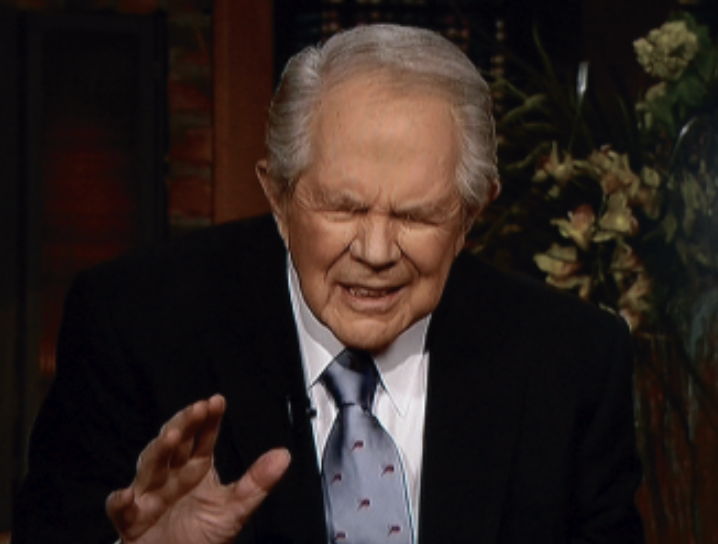
The Rev. Pat Robertson -- a charismatic broadcaster who preached to his own choir

The Rev. Pat Robertson -- a charismatic broadcaster who preached to his own choir

The Pat Robertson for President advance team made it clear that journalists were barred from its campaign rally in a church near Denver.

The candidate wanted friendly faces. As one volunteer said: "What Pat might have to say to a group of pastors … might not be the kinds of things he'd want mainstream Republicans to read in the press."

The faithful inside that 1988 event raised their hands in praise to God and sang familiar choruses with a true believer that they knew shared their embrace of miracles, prophecy and "speaking in tongues." That kind of trust fueled Robertson's media-driven career, which ended on June 8 with his death at age 93.

Yes, I was on the outside of that door, researching my very first syndicated "On Religion" column. Before Robertson arrived, supporters prayed for a "special anointing" of God's power on their candidate. There is the kingdom of heaven, and there is the kingdom of the earth, one man prayed. "We thank you for men of courage, like Pat Robertson, who are working to bring these two kingdoms closer together," he added.

Robertson avoided blunt faith language when facing the press during that high-wire political campaign. However, he kept blending subtle biblical references into remarks about economics, foreign policy and hot cultural issues. He knew fans of his daily 700 Club broadcasts could break the code.

"Robertson had his own program. He knew he could say whatever he wanted to say there," said Kenneth Woodward, known for decades of work at Newsweek and books such as "Getting Religion: Faith, Culture and Politics from the Age of Eisenhower to the Era of Obama."

On one level, "he didn't need to talk to the press because he could talk straight to his own people. But that doesn't always work in politics, when you need to reach other people in order to succeed," said Woodward, reached by telephone.

Once Robertson veered into politics, his critics paid closer attention to what he said, about almost anything.


Please respect our Commenting Policy

Pat Robertson: Was he an influential religious broadcaster or some kind of 'evangelicalist'?

Pat Robertson: Was he an influential religious broadcaster or some kind of 'evangelicalist'?

I must admit that I have not had the time to dig into the 666 million words or so (that’s an estimate) of news and commentary dedicated to the death of the Rev. Pat Robertson. It’s hard to do much reading when at the wheel of a car for about 1,400 miles (and that was the return trip).

But I do have some thoughts on the passing of the charismatic quote machine that journalists loved, loved, loved to hate (see my 2005 commentary for the Poynter Institute). If Robertson didn’t exist, blue-zip-code pundits would have created him ex nihilo.

Truth be told, I never met the man — even though, technically speaking, I briefly worked for him during a failed 2000 attempt to build a D.C. beltway-based master’s degree journalism program for Regent University.

How to describe Pat Robertson?

First and foremost, he was a media maven and entrepreneur, creating the Christian Broadcasting Network in 1960. Years later, he sold the Family Channel for something like $2 billion. Love it or hate it, the niche-news and commentary DNA of The 700 Club can be found all over the place on cable television.

For journalists, he was mainly a political activist — playing a major role in the creation of the Christian Coalition. In 1988 he made a surprisingly relevant attempt to win the White House, seeking the Republican nomination. He was the son of a U.S. senator and, before jumping into media work, graduated from Yale Law School and New York Theological Seminary.

The media entrepreneur poured millions of dollars into academica, with the creation of Regent University — which only offered graduate-school degrees in subjects that Robertson considered culturally significant (such as law and mass communications).

Robertson was a bestselling author, with the help of numerous ghost writers (including a major gay-rights pioneer).

I would argue that his most significant achievement was helping merge the charismatic movement into mainstream evangelical Protestantism, adding doctrinal elements of Pentecostalism into the rapidly growing world of post-denominational Christianity in America and around the world.

But here is the big journalism question: Why do so many mainstream journalists call Robertson an “evangelist,” even though crusades and public preaching of that style were never part of his life and work?


Please respect our Commenting Policy

Plug-In: Life after Pat Robertson, a religious broadcaster who mixed religion and politics

Plug-In: Life after Pat Robertson, a religious broadcaster who mixed religion and politics

In the headlines, former President Donald Trump has been indicted on federal charges in the classified documents case. A possible prison sentence aside, will the case help or hurt Trump with conservative Christian voters? Stay tuned.

Here in Oklahoma City, where I am, the Oklahoma Sooners celebrate their third straight Women’s College World Series championship. The best team in college sports finished the season by winning a record 53 games in a row.

And yes, Jesus is a big part of their team chemistry, as ESPN’s Hallie Grossman has highlighted.

This is our weekly roundup of the top headlines and best reads in the world of faith. We start with Thursday’s death of Pat Robertson at age 93.

What To Know: The Big Story

‘He obeyed God’: That’s how the Christian Broadcasting Network characterizes Pat Robertson’s life.

More from CBN:

Pat Robertson dedicated his life to preaching the Gospel, helping those in need, and educating the next generation. He founded the Christian Broadcasting Network and numerous organizations, including Operation Blessing, Regent University, the American Center for Law and Justice, and International Family Entertainment Inc. He was also a New York Times best-selling author and host of The 700 Club.

Pat was married to the love of his life and partner in ministry for 67 years, Dede Robertson, until she died in 2022. Together, they had four children, 14 grandchildren, and 24 great-grandchildren.

Religion and politics: Robertson was a “pugnacious conservative whose Christian Broadcasting Network defined televangelism for decades,” the Washington Times’ Mark A. Kellner writes.

“With CBN, ‘The 700 Club,’ Regent, the Christian Coalition, and a run for president, he changed evangelicals’ place in public life,” according to Christianity Today’s Kate Shellnutt.

The 1988 Republican presidential candidate “turned evangelicals into a powerful constituency that helped Republicans capture Congress in 1994,” the New York Times’ Douglas Martin notes.

Robertson’s legacy: The Associated Press’ Ben Finley explains:


Please respect our Commenting Policy

Flashback: That popular question, 'Who was the most remarkable person you've covered?'

Flashback: That popular question, 'Who was the most remarkable person you've covered?'

Mother Teresa was having a bad press conference.

Journalists gathered for her 1989 Denver visit seemed determined to ask a litany of questions about her views on every imaginable issue in world affairs and American politics. The soft-spoken, yet often stern, nun seemed confused and kept stressing that her Missionary Sisters of Charity would always focus on the needs of the needy and the sick, including those suffering from AIDS.

One television reporter even asked if the day's main ecumenical event — a "Celebrate Life with Mother Teresa" prayer rally — would include a Mass. Once again, the tiny sister from Calcutta was confused. How could there be a Catholic Mass if the rally included Lutherans, Baptists, Episcopalians, Pentecostal believers and clergy from other churches?

"We will pray together," she said. "That is what we can do."

I raised my hand and asked another question that I knew she might not want to answer. I had heard that she had privately toured Northeast Denver, an impoverished area hit hard by gangs. Might she open a mission there?

Mother Teresa smiled, but gently deflected the question, noting that Denver had recently been added at the end of a long list of dioceses worldwide making just such a request.

What happened next was a singular moment in my journalism career, one that awkwardly blurred the lines between the personal and the professional.

Why bring this up right now?


Please respect our Commenting Policy

Bonus podcast: Jimmy Carter plays a big role in 'evangelical' history in America (updated)

Bonus podcast: Jimmy Carter plays a big role in 'evangelical' history in America (updated)

Apparently, it’s time for people to start taking vacations.

The Lutheran Public Radio team that produces the “Crossroads” podcast week after week is taking some time off. Thus, there is no GetReligion podcast in this slot today.

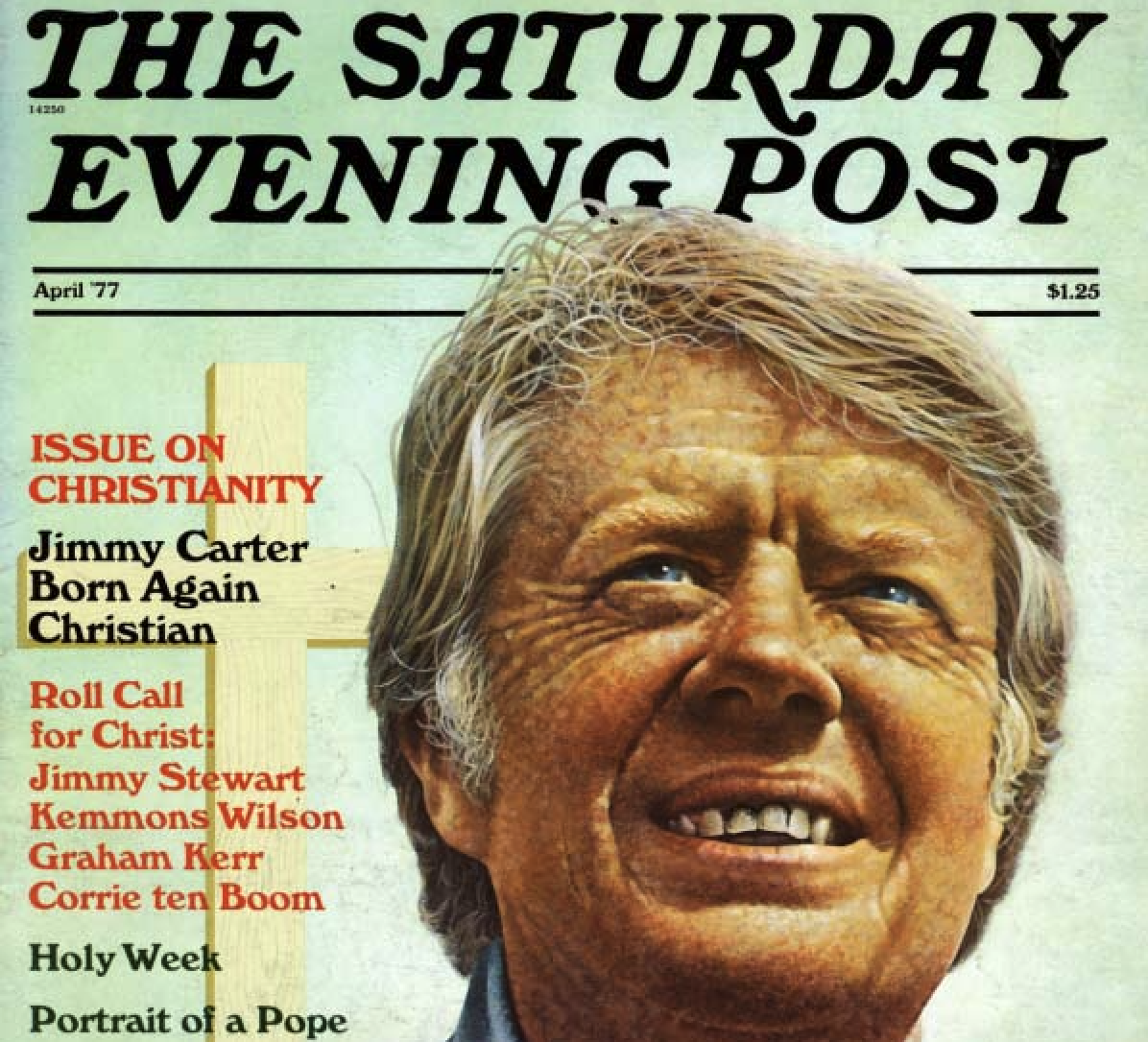
At the same time, I am headed due west with my family for a week or more. However, several weeks ago I was a guest on the Engage 360 podcast created by Denver Seminary, the campus where I taught media studies classes in the early 1990s. The topic — the legacy of former President Jimmy Carter — was directly linked to many discussions on this weblog about evangelicals, journalism and American politics IApple podcast link here).

The question, of course, is this: WHICH legacy of Jimmy Carter?

In this podcast, we really didn’t spend much time on Carter the politician — even though his arrival as a centrist Southern Democrat was important. He has continued to evolve toward more progressive positions on moral and social issues (like his party), but not to the same degree. Hold that thought.

We talked quite a bit about Carter’s impact on American evangelicalism and, in particular, the role he played in forcing American journalists to wrestle with the complex world of evangelicalism. When many evangelicals rejected the reality of Jimmy Carter the president, as opposed to the candidate, he also helped fuel the creation of the Religious Right.

Let’s start with journalism. As I have written before:

I'll never forget the night when an anchor at ABC News – faced with Democrat Jimmy Carter talking about his born-again Christian faith – solemnly looked into the camera and told viewers that ABC News was investigating this phenomenon (born-again Christians) and would have a report in a future newscast.

What percentage of the American population uses the term "born again" to describe their faith? … I mean, Carter wasn't telling America that he was part of an obscure sect, even though many journalists were freaked out by this words — due to simple ignorance (or perhaps bias).

I was a student at Baylor University at that time and, yes I was active as a volunteer in the Carter campaign.


Please respect our Commenting Policy