People

Plug-In: What do we know about the faith of the two latest GOP White House candidates?

Plug-In: What do we know about the faith of the two latest GOP White House candidates?

A week has passed since influential pastor and author Tim Keller’s death. Look for some of the best tributes to him below.

Making news today: Texas’ GOP-controlled House could impeach scandal-ridden Republican Attorney General Ken Paxton and kick the longtime Christian right culture warrior out of office, The Associated Press’ Jake Bleiberg and Jim Vertuno report.

Jumping into this week’s roundup of the top headlines and best reads in the world of faith, we start with two new entrants in the 2024 presidential race.

What To Know: The Big Story

Political opposites: “One has the most winning personality in politics,” the Wall Street Journal’s Peggy Noonan says of South Carolina Sen. Tim Scott.

“The other doesn’t but has a story to tell about policy,” Noonan says of Florida Gov. Ron DeSantis.

Thusly, the Pulitzer Prize-winning columnist and speechwriter for former President Ronald Reagan characterizes the two aspirants who declared for the GOP nomination this past week.

Scott focuses on faith: “A cornerstone of Republican Tim Scott's political career has been an unyielding faith,” USA Today’s Phillip M. Bailey notes.

Monday’s campaign kickoff by Scott, one of the nation’s most prominent Black Republicans, emphasized his Christian faith and personal story, according to the Washington Post’s Marianne LeVine.

At Politico, Natalie Allison asks, “Can Tim Scott actually win with piles of money, lots of faith and a big bet on Iowa?”

Please respect our Commenting Policy

Redeemer Presbyterian's Tim Keller: An outsider who came to New York City -- to stay

Redeemer Presbyterian's Tim Keller: An outsider who came to New York City -- to stay

On the Sunday after 9/11, thousands of New Yorkers went to church, with many joining a line stretching outside the Redeemer Presbyterian services in a Hunter College auditorium.

The Rev. Tim Keller asked his staff if they could manage a second service -- doubling the day's attendance to 5,300. Keller's sermon, "Truth, Tears, Anger and Grace," began with Jesus weeping before raising Lazarus from the dead.

Many Americans were "coming to New York to fix things," he noted. "We are glad for them. They will try to fix the buildings. We need that. And eventually they will leave. But when Jesus weeps, we see that he doesn't believe that the ministry of truth -- telling people how they should believe and turn to God -- or the ministry of fixing things is enough, does he? He also is a proponent of the ministry of tears. The ministry of truth and power without tears isn't Jesus."

This sermon contained major themes from the life and work of Keller, who died on May 19 death at age 72, after a three-year battle with Pancreatic cancer. Instead of seeking quick fixes, especially through politics, he kept urging conservative Protestants to stress compassion and face-to-face ministry, while continuing to defend centuries of Christian doctrine.

In Keller's case, that meant building a church for New Yorkers that addressed their blunt, exhausting, even cynical, concerns about life.

In that first sermon after 9/11, Keller noted that everyone had an opinion about New York City and America as a whole. Some were claiming that "God is punishing us" because of rampant immorality. Others said America had been judged because of social injustice and greed. Instead of blaming the victims, Keller said it was time to ask who would stand their ground and love their neighbors.


Please respect our Commenting Policy

Tim Keller sought 'winsome' Manhattan apologetics, a goal that became more difficult

Tim Keller sought 'winsome' Manhattan apologetics, a goal that became more difficult

If one looks up the word “winsome” in a dictionary, here is a typical example of what shows up, via Merriam-Webster: “generally pleasing and engaging often because of a childlike charm and innocence.”

However, a Google search for the term “winsome,” when combined with “Tim Keller,” opens up a window into a completely different world — one closely linked to debates about the meaning of the word “evangelical” in a Donald Trump-era culture.

Frankly, I am not going to go there. What I will do is urge GetReligion readers who visit Twitter to follow the #TimKeller hashtag and check out the waves of tributes in the wake of the passing of one of the most important American evangelicals — defined in terms of doctrine — in recent decades.

Instead of looking at the tsunami of news coverage, I will simply note the obvious — Keller is receiving much, or even most, of this attention because he lived, worked, preached and wrote in New York City. If his career had unfolded in the Bible Belt, mainstream journalists would never have heard of him. Thus, here is the New York Times double-decker headline on its obituary (which ran quickly, but inside the print edition):

The Rev. Timothy Keller, Pioneering Manhattan Evangelist, Dies at 72

Shunning fire and brimstone, he became a best-selling author and founded Redeemer Presbyterian Church, which drew young New Yorkers.

The Gray Lady’s lede offered this:

The Rev. Timothy J. Keller, a best-selling author and theorist of Christianity who performed a modern miracle of his own — establishing a theologically orthodox church in Manhattan that attracted thousands of young professional followers — died on Friday at his home in Manhattan. He was 72.

Yes, we can talk about the accuracy of the word “evangelist” in the headline. Once again, there are mainstream journalists who believe that is simply another way to say “evangelical.” Unless I missed something, Keller was not active in holding the kinds of public events — think Billy Graham “crusades” — normally associated with public evangelism. Were there some Central Park rallies with Keller sermons and altar calls that I missed? Please let me know.

What he was, of course, was a church builder and an “apologist” for small-o orthodox Christianity, of the Reformed form,” both in preaching and in writing — in books and a host of other forms.


Please respect our Commenting Policy

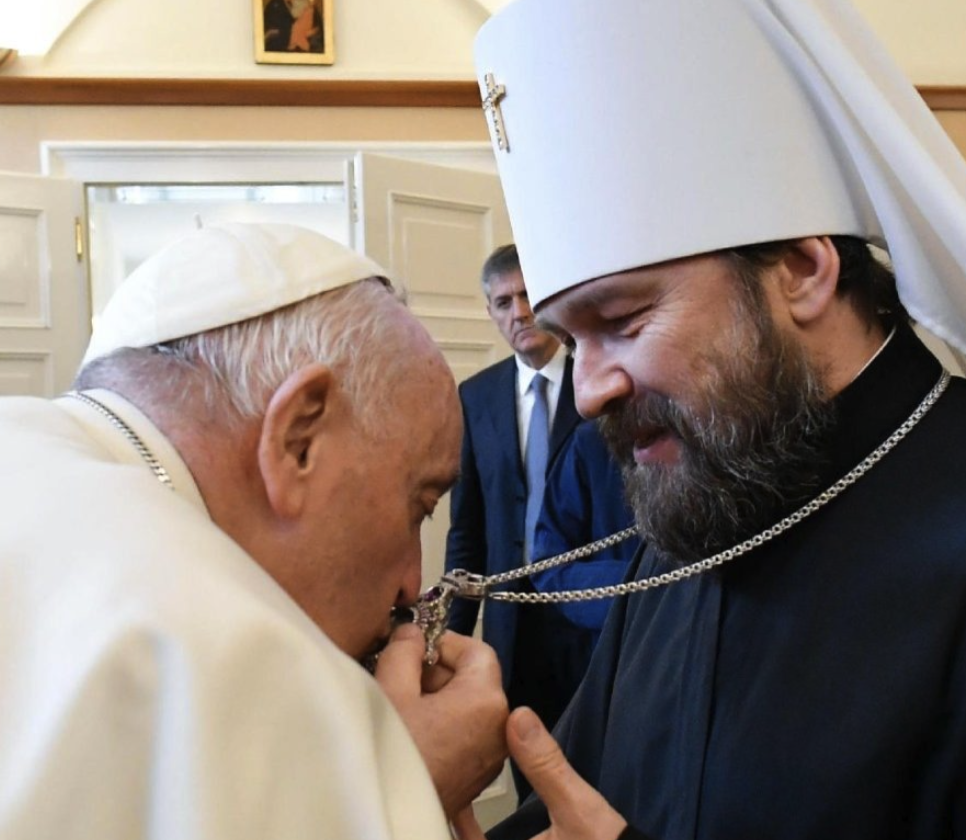
Yes, what about that meeting between Pope Francis and an exiled Russian Orthodox leader?

Yes, what about that meeting between Pope Francis and an exiled Russian Orthodox leader?

So, my gentle readers, please allow me to flash back to a recent news story that I intended to discuss, but travel got in the way. This was a story that may or may not have been important, but we really don’t know because it centered on a private meeting between Pope Francis and a very symbolic Russian Orthodox leader.

Why to I say that Metropolitan Hilarion of Budapest is a highly”symbolic” Orthodox leader, especially at this point in the hellish conflict between Russia and Ukraine?

To explain my use of “symbolic,” we need to look at the Associated Press story that ran with this headline: “Pope in Hungary meets with Ukrainian refugees, Russian envoy.”

Ah, but was Metropolitan Hilarion a “Russian envoy,” in this case? Hold that thought, because things get more complex in the AP lede:

BUDAPEST, Hungary (AP) — Pope Francis plunged into both sides of Russia’s war with Ukraine on Saturday, greeting some of the 2.5 million Ukrainian refugees who have fled across the border to Hungary during a public prayer service and then meeting privately with an envoy of the Russian Orthodox Church that has strongly supported the war.

First, an important point of grammar in the final clause of that sentence, as in “meeting privately with an envoy of the Russian Orthodox Church that has strongly supported the war.” I added the bold italics, stressing that this is “that,” rather than “who.”

As we will see, it appears that the AP team covering this event knew little or nothing about the recent personal history of Hilarion. Then again, AP may have — for for some reason — chosen to omit interesting and potentially important information.

Hold that thought (again), as we read some material that appears later in this story:

Immediately after greeting and encouraging the refugees, Francis … met with the Russian Orthodox Church’s representative in Hungary, Metropolitan Hilarion, who developed close relations with the Vatican during his years as the Russian church’s foreign minister. The Vatican said the 20-minute meeting at the Holy See’s embassy in Budapest was “cordial.”

The Russian church’s strong support for the Kremlin’s war has rankled the Vatican and prevented a second papal meeting with Patriarch Kirill, the head of the Russian Orthodox Church and an ally of Russian President Vladimir Putin.


Please respect our Commenting Policy

Celebrities, monarchs, politicos, clergy and sacramental ghosts in coronation of Charles III

Celebrities, monarchs, politicos, clergy and sacramental ghosts in coronation of Charles III

If you read the main Associated Press report about the coronation of King Charles III then you know, in summary material near the top, that the rites were attended by “celebrities including Judi Dench, Emma Thompson and Lionel Richie.”

You would not, however, know that — for the first time in history — the monarch processed into Westminster Abbey behind a new Cross of Wales which, because of a recent gift from Pope Francis — contained two fragments from the “true cross” of Jesus discovered in 312 A.D. by the Empress Helen, mother of Constantine. We are talking about a relic reverenced by the early church and, ever since, by the ancient churches of East and West.

I know. It’s all about priorities. Was the coronation of Charles III a religious rite, a political ceremony or a mega-watt event in mass pop culture?

The obvious answer to this question is "Yes.” The issue, as usual, is which angle received the most accurate and informed attention in the AP report. Want to guess?

Before we go on, let me make a confession. I am, at the moment, high in the mountains of North Carolina and access to solid WiFi is, to be blunt, near zero. I drive into a small town about once day. Thus, I am going to focus on the religion details (and lack thereof) in the AP report alone — since that is what will be read by most news consumers in Middle America and elsewhere.

I will end with some questions about the rite that I have not been able to answer, questions linked to the ecumenical and interfaith content of the ceremony — details that appear to be close to the heart of the new king (background here from TheConversation website). But first, here is the overture:

LONDON (AP) — King Charles III was crowned … at Westminster Abbey, in a coronation ceremony steeped in ancient ritual and brimming with bling at a time when the monarchy is striving to remain relevant in a fractured modern Britain.

In displays of royal power straight out of the Middle Ages, Charles was presented with an orb, a sword and scepter and had the solid gold, bejeweled St. Edward’s Crown placed atop his head as he sat upon the 700-year-old oak Coronation Chair.

In front of world leaders, foreign royals, British aristocrats and stars, Charles declared: “I come not to be served but to serve.”


Please respect our Commenting Policy

Plug-In: For GOP White House hopefuls, it's time for faith-and-freedom questions again

Plug-In: For GOP White House hopefuls, it's time for faith-and-freedom questions again

She was 19. I was 22. We said “I do” in a little church east of Oklahoma City exactly 33 years ago today. Happy anniversary to my wife, Tamie!

While you do the personal math on the above numbers, it’s time for another edition of Weekend Plug-in.

As always, I appreciate you reading this newsletter.

Pope Francis arrived in Hungary this morning, “walking, rather than using a wheelchair as he has on the last four foreign trips,” the National Catholic Reporter’s Christopher White notes.

Check out White’s advance coverage of the pope’s trip.

Meanwhile, let’s jump right into the rest of the week’s top headlines and best reads in the world of faith.

What To Know: The Big Story

Is this heaven?: No, it’s Iowa. But not the one with Kevin Costner.

“The Iowa Faith and Freedom Coalition’s Spring Kick-off event on Saturday represented the first cattle call of the year, a forum for GOP candidates to court an indispensable voting bloc,” Christianity Today’s Kelsey Kramer McGinnis explains.

The key takeaway of McGinnis’ interviews with voters: “The world feels out of control. They want someone who will fix it.”

Trump vs. Pence: At New York Magazine, political columnist Ed Kilgore writes about former President Donald Trump, former Vice President Mike Pence and the “struggle for the souls of Iowa evangelicals.”


Please respect our Commenting Policy

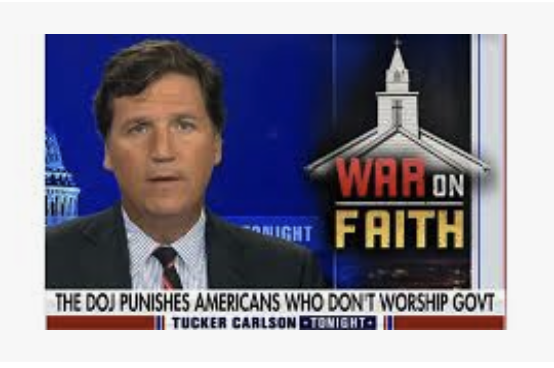
Podcast: What role did God-talk play in Tucker Carlson's fall at Fox News? Good question

Podcast: What role did God-talk play in Tucker Carlson's fall at Fox News? Good question

Rod “Live Not By Lies” Dreher has shared the following anecdote many times, but it’s especially interesting that he used it, once again, in this Substack post: “Tucker Fired Because Of Religion.”

I am using it to open this podcast post because this week’s “Crossroads” discussion (CLICK HERE to tune that in) isn’t really about Tucker Carlson’s forced exit from Fox News — it’s about whether Carlson was a very good fit with the Fox News political and cultural worldview in the first place.

My theory is that Carlson is a conservative populist — as opposed to being a D.C. Beltway Republican — and that his religious beliefs (especially after he stopped drinking) are part of that mix. This created tension with the dominant Fox News management culture, which is rooted in the Page 3 Libertarian Republican beliefs of titan Rupert Murdoch and the network’s original mastermind, the now disgraced Roger Ailes.

This brings me back to Dreher’s anecdote:

I have long wondered why Fox News doesn’t have much religious reporting, or cover things including a religious angle, even though many of their loyal viewers are religious. Now I know. And you should know too. You might recall my telling the story about how the freelancers Fox hired to cover the 2002 Catholic bishops’ meeting in Dallas, the first one after the scandal broke, asked me to brief them on who the players were, and what the issues were. They took copious notes, but when I told them about the homosexual clerical networks, and their roles in the scandal, they told me to stop. “Orders from the top of the network: stay away from that stuff,” I was told. I told them that you couldn’t understand the scandal without that factor. Maybe so, they said, but we are ordered not to touch it.

Thus, Dreher argues that Carlson’s forced exit should open the eyes of Fox News-hooked religious and cultural conservatives.

Whatever Rupert Murdoch’s internal motivations, the fact is — well, to be precise, what I confidently believe to be the truth — that Tucker Carlson gave an extraordinary speech about the theological aspect of the cultural crisis we are enduring. He talked bluntly, to an audience at Washington’s leading conservative think tank, about the fundamentally spiritual nature of the fights we’re in. And he encouraged his audience to pray for our country.

Several days later, he was fired.

As you would expect, this brings us to the much-discussed Vanity Fair feature that ran with a headline proclaiming, “Tucker Carlson’s Prayer Talk May Have Led to Fox News Ouster: “That Stuff Freaks Rupert Out.


Please respect our Commenting Policy

'On Religion' column enters year 35: Demons, martyrs, violence and miracles in Colombia

'On Religion' column enters year 35: Demons, martyrs, violence and miracles in Colombia

In one of her first encounters with violence linked to the Revolutionary Armed Forces of Colombia (FARC), Deann Alford heard, or felt, a bullet pass and slam into a door frame, with shrapnel striking a nearby woman and child.

The future journalist was both shocked and inspired by her contacts with Christians caught in that land's toxic climate of paramilitary warfare, narcotrafficking and kidnappings. She struggled to grasp how someone like pilot Russell Martin Stendal, after years held for ransom, could forgive his kidnappers and then start a missionary effort to convert them.

"Without his months as their hostage, I'm convinced he never could have reached the FARC," wrote Alford, in "Victorious: The Impossible Path to Peace," her blunt memoir about religious freedom in Colombia.

Stendal, she added, "has forgiven all. But I have not. ... In my quarter-century as a journalist, I've written dozens of articles about Colombian guerrilla groups' crimes against Christians, ranging from extortion to murder. Many of these stories regard crimes of the FARC, typically threatening and abducting church workers, missionaries and pastors, extorting them with offers they could not refuse."

Eventually, Alford realized that it wasn't enough to cover Colombia with telephone calls, faxes and Internet connections. She would have to put "boots on the ground" and return. "But I didn't. I was afraid. No, that word is too mild. I was terrified. I let the risk of being killed and kidnapped keep me away."

Alford's bottom line: "I told the Lord I would go anywhere for him but Colombia."

But she returned and, over years of contacts, her fears mixed with frustration. After working in secular newsrooms, as well as Christian publications and wire services, she couldn't understand why more people -- journalists and religious leaders -- could not see the importance of the faith stories unfolding, decade after decade, in Colombia.

This is another example of an important theme woven into my work with this "On Religion" column, with this week marking the start of my 35th year. Simply stated, many journalists do not "get" religion, in terms of grasping the role faith plays in many important events and trends stories.

But Alford was dealing with an even more complex equation. Yes, many editors fail to value religion-news coverage. But it's also true that many Americans -- including people in pews -- do not value coverage of international news. Thus, it's hard to imagine a tougher sell in today's media marketplace than coverage of religion news on the other side of the world.


Please respect our Commenting Policy

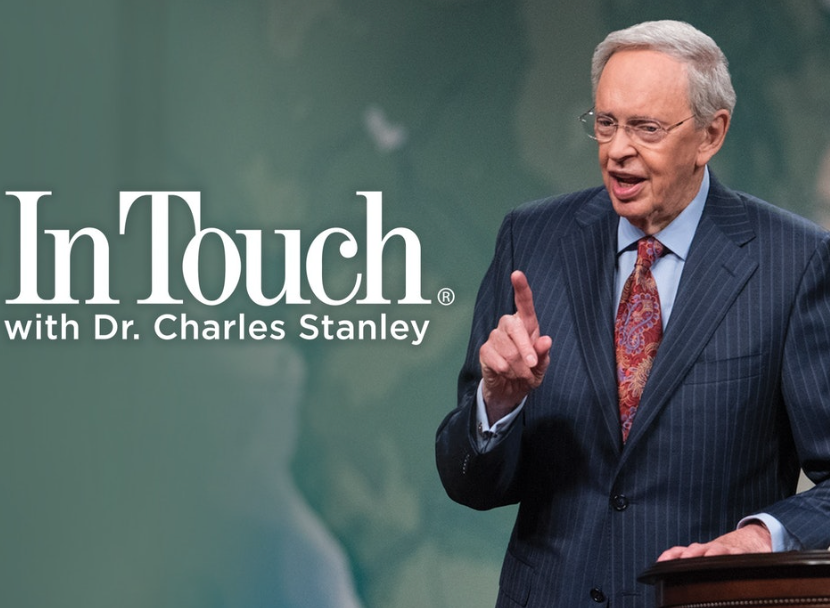
RIP Charles Stanley, a Southern Baptist media pro (and a megachurch preacher, too)

RIP Charles Stanley, a Southern Baptist media pro (and a megachurch preacher, too)

There’s an old saying in the Sunbelt that goes like this: When Jesus makes his glorious return on the last day, He will still have to fly through Atlanta.

I will visit that giant airport myself, today, on my way home from speaking at a Poynter Institute conference — “Telling the Stories of Faith and the Faithful” here in Los Angeles. One day featured meetings with West Coast reporters, including many that don’t work the religion beat, and the second day focused on talks with a circle of faith-group leaders. There were great questions and lots of dialogue.

Thinking about the Atlanta airport reminded me of what I think was as highly symbolic encounter with the Rev. Charles Stanley, a pivotal Southern Baptist leader and preacher who died this week. See this Associated Press report: “Charles Stanley, influential Baptist preacher, dies at 90.

The leader of First Baptist Church of Atlanta was elected SBC president in 1985 during what was, in my experience, one of the most intense, even angry, national conventions ever (and that’s saying something) during the near life-and-death Southern Baptist civil war of that era.

To get to that meeting in Kansas City, working for The Charlotte Observer, I had to (#DUH) change planes in Atlanta. I ended up on the same plane with Stanley, who was rumored to be a candidate for SBC president. He was in First Class, obviously, and I was not, obviously. After we had been airborne for an hour or so, I walked up front to give Stanley my card and to request an interview before the election.

Seeing that he was reading a document, I confess that I looked it over before I alerted him to my presence at his right shoulder.

Trust me — I wish I had a photographic memory. Why? Because he was reading a professional set of public-relations guidelines describing (#WaitForIt) how to deal with journalists after his election as SBC president.


Please respect our Commenting Policy