People

Christian web designer at the Supreme Court: How reporters covered 303 Creative case

Christian web designer at the Supreme Court: How reporters covered 303 Creative case

On the face of it, 303 Creative v. Elenis, a case heard before the U.S. Supreme Court on Monday, sounded unimpressive.

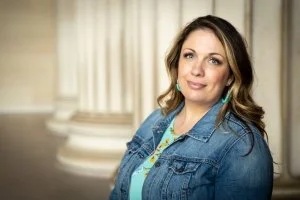
A Christian web designer living near Denver was suing her state civil rights commission for the right to create wedding web sites without having to include creative content about same-sex weddings in the mix. She hadn’t been approached by any gay couples yet — but because she might be, she launched a pre-emptive lawsuit with the aid of the Alliance Defending Freedom, a law firm with an impressive track record of 11 wins at the Supreme Court level.

Yet, the more I read about the case and the issues it was trying to raise, the more intrigued I got. And the hearing on Monday didn’t disappoint. It lasted some two and one-half hours, which is long by Court standards. Covering hour-long hearings at the high court is difficult at best; I can only imagine how tough it was for reporters to sift through 150 minutes of speech — and all the tangents that were involved — to sum up how the hearing went.

Which is why I am merely critiquing the first drafts of what I hope will be more in-depth articles as time goes on. I’ll start with how CBS covered the story:

The Supreme Court's conservative bloc appeared sympathetic Monday to a Colorado graphic designer who argues a state law prohibiting discrimination on the basis of sexual orientation violates her free speech rights by forcing her to express a message that conflicts with her closely held religious beliefs.

During oral arguments in the case known as 303 Creative LLC v. Elenis, the court seemed to move closer to resolving a question it has left unanswered since 2018, when it narrowly ruled in favor of a Colorado baker who refused to make a cake for a same-sex wedding: whether states like Colorado can, in applying their anti-discrimination laws, compel an artist to express a message they disagree with.

An editorial comment: It's a minor annoyance that the plural “they” is used for a singular “artist.” Just write “he or she” for heaven’s sake.

One issue with reporting on this case is that it takes a ton of backstory to explain that this case isn’t just about a web designer, but also a cake designer-baker in a previous Supreme Court case.

Please respect our Commenting Policy

Podcast: ProPublica probes for-profit hospice horrors, but ignores faith-based networks

Podcast: ProPublica probes for-profit hospice horrors, but ignores faith-based networks

Every now and then, your GetReligionistas run into a story that puts us in a real bind, in terms of the basic media-criticism work that we do here.

The nonprofit journalism group ProPublica, in this case working with The New Yorker, recently published a great example of this kind of report. We are talking about a deeply researched piece that is a must-read story — period. Reporter Ava Kofman’s work is painful, even agonizing, to read, for all the right reasons.

At the same time, the story is seriously lacking when it comes to exploring religious facts and beliefs that are essential to its subject, which is hospice care.

The feature does include a nod to the Christian history of hospice care, but avoids any meaningful discussion of the differences between the work done in faith-based hospice networks — which are massive — and what happens with some (maybe many) for-profit hospices, such as those at the hellish heart of this report. The headline: “Endgame: How the Visionary Hospice Movement Became a For-Profit Hustle.”

This must-read report was the hook for this week’s “Crossroads” podcast (CLICK HERE to tune that in) and I will stress that this subject was deeply personal for host Todd Wilken and for me. Wilken is a Missouri-Synod Lutheran pastor and has years of experience assisting with end-of-life issues and questions. My father was a Southern Baptist pastor who spent the last decade of his ministry working in Houston’s hospital complex, include the Texas Children’s Hospital.

This story does a great job of the “follow the money” components of scandals linked to for-profit hospice care. Here is the anecdotal lede:

Over the years, Marsha Farmer had learned what to look for. As she drove the back roads of rural Alabama, she kept an eye out for dilapidated homes and trailers with wheelchair ramps. Some days, she’d ride the one-car ferry across the river to Lower Peach Tree and other secluded hamlets where a few houses lacked running water and bare soil was visible beneath the floorboards. Other times, she’d scan church prayer lists for the names of families with ailing members.


Please respect our Commenting Policy

NPR offers a faithful Mike Pence interview: But readers will need the transcript to know that

NPR offers a faithful Mike Pence interview: But readers will need the transcript to know that

National Public Radio posted a story the other day with a totally predictable headline: “Mike Pence, pondering a presidential run, condemns Trump's rhetoric on Jan. 6.

What we have here is a perfect chance to meditate on that concept that readers see all the time here at GetReligion, when dealing with the political lens through which most (#IMHO) elite-market journalists view the world. That would be: “Politics is real. Religion? Not so much.”

Things are a bit more nuanced with this particular NPR feature. To be blunt: The Steve Inskeep interview is way, way better than the feature that someone — an intern, perhaps — wrote about the contents of the interview.

The text version is — I am sure this will shock many — all about Donald Trump, Donald Trump and Donald Trump, with a near-laser focus on the events of January 6th at the U.S. Capitol.

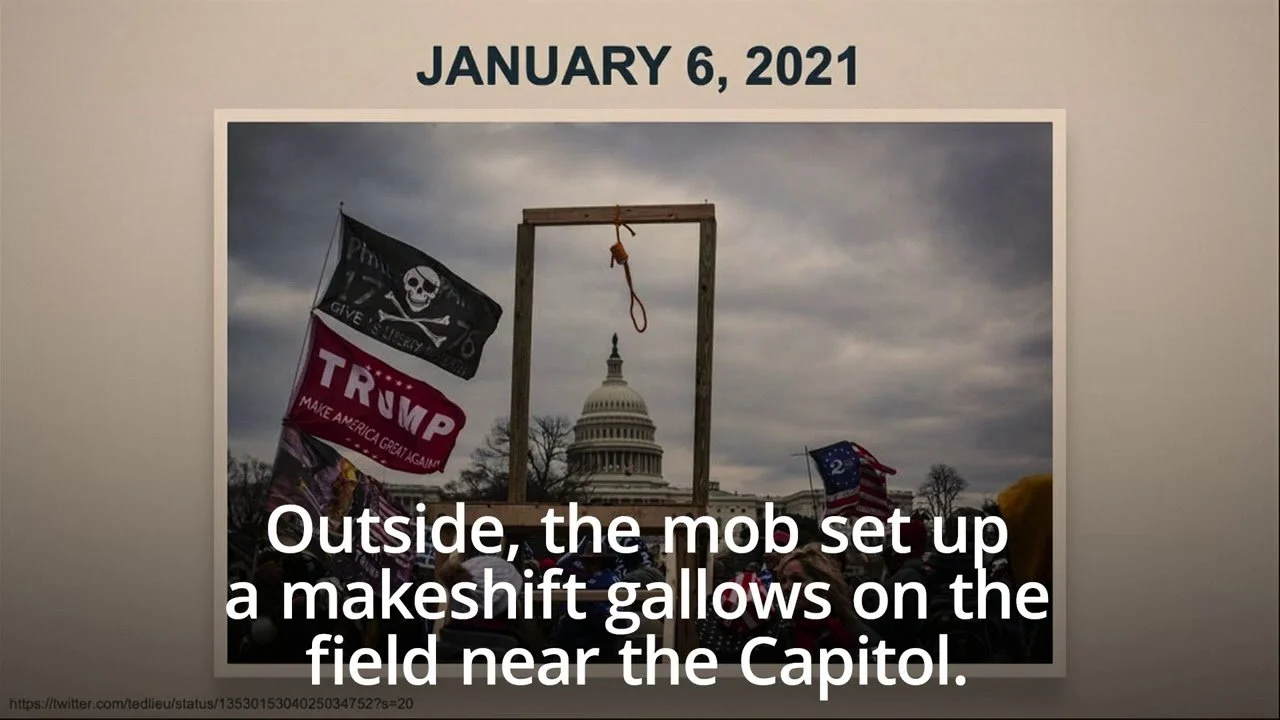
Now, that’s a crucial subject, since Vice President Mike Pence was the man that many Trump-inspired rioters wanted to hang (or they chanted words to that effect). That’s a topic that cannot be avoided, and I get that. This is an interview that will infuriate Trump disciples and, at the same time, will leave the progressive left just as mad.

The bottom line: The interview is about Pence’s memoir “So Help Me God,” and that’s a book that has a much broader focus than recent partisan politics. I would argue — based on the interview itself — that the book’s most important contents are not linked to Trump, Trump, Trump. The most provocative parts of the interview are about federalism and (#triggerwarning) the First Amendment. But, first, here is the highlighted Trump material:

Pence faces an extraordinary challenge as a political leader whose national reputation is closely tied to the record of the Trump administration but who says the Constitution and his conscience would not allow him to follow Trump's ultimate demand. …

When a mob disrupted the proceedings, Pence retreated with family members to an office within the U.S. Capitol and then to an underground parking garage, but refused to flee the building.


Please respect our Commenting Policy

Return of the evangelical arguments about morality, character and two-party politics

Return of the evangelical arguments about morality, character and two-party politics

It was totally logical for the Southern Baptist Convention to pass its "Resolution on Moral Character of Public Officials" in 1998.

Consider this "whereas" clause: "Some journalists report that many Americans are willing to excuse or overlook immoral or illegal conduct by unrepentant public officials so long as economic prosperity prevails." This was followed by: "Tolerance of serious wrong by leaders sears the conscience of the culture, spawns unrestrained immorality and lawlessness in the society, and surely results in God's judgment."

Thus, the SBC urged American leaders to "live by the highest standards of morality both in their private actions and in their public duties."

Yes, this resolution passed soon after the infamous claim by President Bill Clinton, a Southern Baptist, that "I did not have sexual relations with that woman."

It was easy to predict who thought Clinton should exit the White House, noted conservative writer Marvin Olasky, who was writing "The American Leadership Tradition: Moral Vision from Washington to Clinton" at that time.

"In poker, you really don't know what cards someone has," said Olasky, reached by telephone. "You can't tell, with certainty, the character of a politician. … In that book, I argued that the state of a man's marriage was a strong tell. If he's faithful in his marriage, he's likely to be faithful to the nation."

Olasky's fellow religious conservatives praised the book. But things changed when he wrote a World magazine essay in 2016 entitled, "Unfit for power," arguing that Donald Trump should step aside as the Republican nominee.

"Clinton had denied having a sexual relationship with Monica Lewinsky, but her stained blue dress bearing Clinton's DNA was proof that he had used his power for adulterous purposes, and then lied about it," wrote Olasky. Then there was the videotape showing "Trump making lewd remarks about groping women's genitals. While many opponents … have criticized Trump's character, the video gave us new information about how Trump views power as a means to gratify himself."

Olasky recirculated this 2016 editorial after Trump's recent announcement that he would seek the presidency once again, igniting renewed social-media warfare among evangelicals about morality, character and the winner-take-all nature of American politics -- especially when Supreme Court seats are vacant.


Please respect our Commenting Policy

Celebrities rule: How should reporters assess the name fame game in religion?

Celebrities rule: How should reporters assess the name fame game in religion?

As of the 2022 midterms, the United States had 49 million registered Democrats and 39 million registered Republicans, according to estimates from WorldPopulationReview.com.

Recent National Basketball Association and National Football League annual attendance combined came to 39 million. And last week, a religious leader named Timothy P. Broglio took charge of a U.S. organization with 67 million members.

Timothy who? That would be the archbishop who is the newly elected president of the National Conference of Catholic Bishops, who will lead the church in the U.S. through the 2024 election season and on the 2025. If you think his task is placid, note this liberal jeremiad — care of National Catholic Reporter — about his election.

Weeks before, Kristen Waggoner became a prime culture wars figure.

Kristen who? This evangelical attorney is the new president of the Alliance Defending Freedom, a legal non-profit that represents religious conservatives in matters like LGBTQ disputes, as in this critique of the Democrats’ marriage act. Her ADF is branded a “hate group” by the equally controversial Southern Poverty Law Center.

Point being that important leaders within segments of American religion are generally far less prominent than athletes, entertainers, politicians or tech billionaires. Publicity usually falls to clergy who run purchased-time broadcasts, utter political sound bites or are trapped in scandals.

Think Pat Robertson.

Things were different not so long ago when Billy Graham, and Martin Luther King Jr. and other civil rights leaders, were titanic cultural and media personalities. In an earlier time (so to speak), Time magazine would devote a cover story to Christian thinkers C.S. Lewis (1947) or Reinhold Niebuhr (1948, written by Whittaker Chambers). Presbyterian bureaucrat Eugene Carson Blake (“Can Protestants Unite?”, 1961) or U.S. Catholic Cardinals Spellman (1946) or Cushing (1964).

Since the media and the Internet are meshuga over lists (is this David Letterman’s doing?), how about a well-reported article, not about our American era’s Top 10 religious celebrities, but which ones exercise the most influence, seen or unseen?


Please respect our Commenting Policy

Thinking about Olasky's 2016 blast at Donald Trump, as journalists prepare for 2024

Thinking about Olasky's 2016 blast at Donald Trump, as journalists prepare for 2024

So, I heard that former President Donald Trump made some kind of announcement the other day. That means (#SIGH) that we have to think, again, about that whole elite-media thing with 81% of White evangelicals adoring Orange. Man. Bad.

But readers who scan this Google file on that subject will find plenty of reminders that — when White evangelicals had a GOP choice in the 2016 primaries — many provided core support for Trump while just as many voted for other candidates.

With that in mind, consider this National Review headline: “Can DeSantis Win the Evangelical Vote?” That leads to this summary:

… (I)fDeSantis does intend to challenge Trump, he must convince conservative Christians — particularly white Evangelical Protestants, who made up almost half of the GOP electorate in the 2012 and 2016 primaries — to support his cause.

DeSantis would seem well-suited to the task. He has taken a strong stance on many of the social issues that matter most to Evangelicals: This year alone, he stood up against LGBTQ indoctrination in schools and signed a bill banning abortion after 15 weeks of gestation (in a state where 56 percent of adults say abortion should be legal in all or most cases); most recently, at his urging, state medical boards banned puberty blockers and transgender surgery for minors. …

And all of this ignores character. Between his three marriages, his lewd comments about groping women, and his friendship with Hugh Hefner, Trump was always an odd champion for the Moral Majority. DeSantis, on the other hand, has avoided scandal so far and cultivated a family-man public image that Evangelicals might find appealing.

OK, it would be good to take a flashback to a crucial moment in this drama.

As candidate Trump ramped up in 2016, one of America’s most consistent voices on religious, moral and cultural issues — Marvin Olasky — wrote and published a World magazine essay with this headline: “Unfit for power — It’s time for Donald Trump to step aside and make room for another candidate.

Any journalist who wants to cover the next two years of American politics needs to read this essay, which Olasky recently re-upped on Twitter.


Please respect our Commenting Policy

A reporting nightmare: Hellish tragedy linked to one of those 'nondenominational' flocks

A reporting nightmare: Hellish tragedy linked to one of those 'nondenominational' flocks

If you have followed GetReligion for nearly two decades and, of course, the omnipresent Ryan Burge’s Twitter feed, you know the rise of nondenominational Christianity is one of the most important trends in the religion marketplace — in America and around the world.

Ancient churches and Protestant denominations are very, very complicated and require journalists to sweat lots of details about doctrine, traditions, polity, etc. But, with a nod to Gertrude Stein, we can note that there IS a there there when journalists dig into “organized religion.”

With nondenominational flocks, it is often impossible to find the kinds of structures and shared, on-the-record beliefs, policies and laws that bring some coherence to the wild world of religion news.

With that in mind, let’s look at a tragic USA TODAY story — “California megachurch leader, grandparents charged with murder, torture in death of 11-year-old daughter” — that demonstrates some of these challenges. Let me stress that I am not trying to poke holes in it. After all, reporter Natalie Neysa Alund was one of my Milligan College reporting students in the late 1990s. I’m trying to note some of the challenges in this kind of short story about life in nondenominational churches.

Note, for example, the problematic word “leader” in that headline. I kept looking for some specifics there and I have NO IDEA what short, accurate, “better” word I would have used to improve that headline or the lede. Hold that thought.

The bottom line: At some point, editors need to give reporters a few extra inches of space to include the kinds of details that help readers understand just how independent most of these churches are, in terms of supervision and accountability. Here is the overture:

A California megachurch leader and her parents have been arrested on charges including murder and torture in the death of the woman's 11-year-old daughter.

Leticia McCormack, a leader at Rock Church in San Diego, founded and led by former NFL player Miles McPherson, was booked in jail … on a charge of murder, three counts of torture, and three counts of willful cruelty to a child in the death of Arabella McCormack, the San Diego County Sheriff's Office reported.

What do we know about this church?


Please respect our Commenting Policy

Life in a disenchanted world: Once upon a time, Christians used to write fairy stories

Life in a disenchanted world: Once upon a time, Christians used to write fairy stories

Demons appear on movie screens all the time, but poet Richard Rohlin is convinced he has actually seen them at work when counseling young people whose search for meaning has driven them deep into experiments with sex, drugs and the occult.

"The stories that I can't tell would curl your toenails," he said, speaking at the Eighth Day Institute in Wichita, Kansas. "If you think that these spiritual realities are not still with us, you are deluding yourself. ... The magic is coming back into the world. Something is happening and it is not an unqualified good."

The young people he works with in Dallas are not interested in sermons and detailed descriptions of why their lives are broken. But they are open to fantasies, myths and tales -- ancient and modern -- about unseen, spiritual realities that interact with their lives.

Millions of Americans know where to find stories about angels, demons, warriors, seers, giants, demigods and heroic kings and queens. They head straight to movie theaters and cable television, where they find entire universes of content offering visions of fantastic worlds. The last place they would seek inspiration of this kind is in churches.

The irony is that some of these works draw inspiration from the fantasy classics celebrated in the ecumenical Eighth Day Institute's annual fall celebration of The Inklings, a mid-20th Century circle of Christian writers in Oxford, England, that included C.S. Lewis, J.R.R. Tolkien and others.

This year's lectures focused on Scottish writer George MacDonald, often called the "grandfather of the Inklings," who is best known for "Phantastes," "The Golden Key," "Lilith" and many other works. The festival included Celtic and folk musicians, along with workshops on topics such as "The Art of Making Mead" and "Publishing for the Moral Imagination."

The goal of MacDonald and The Inklings, noted Rohlin, was to reclaim an older vision of life in which physical realities corresponded to spiritual realities and nothing was considered purely material. The real divide was between "the seen and the unseen," not between the "spiritual and the material."

This worldview has been lost, even among many religious believers.

"Demons didn't stop existing, angels didn't stop existing, the saints didn't stop existing because the Industrial Revolution came," he said.


Please respect our Commenting Policy

Podcast: Much to learn in ongoing cases with cannabis church and yet another Christian baker

Podcast: Much to learn in ongoing cases with cannabis church and yet another Christian baker

A cannabis church (It’s California) keeps fighting for freedom of worship.

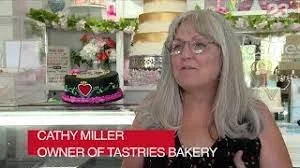
Another Christian baker wins what may be a temporary (It’s California) First Amendment victory in her fight to stay in business, even though she declined to create a one-of-a-kind, artistic wedding cake for a same-sex couple.

What connects these two stories? That was the topic at the heart of this weeks “Crossover” podcast (CLICK HERE to tune that in), which was recorded this week while I was on grandfather duty. This post is a day late because I’ve been driving back to East Tennessee and it’s really hard to write in a car in cross winds on the High Plains.

The connecting link in the podcast is the Religious Freedom Restoration Act of 1993 — or RFRA for short. This was a crucial piece of liberal (in the old sense of the word) church-state law backed by a stunningly broad coalition of religious and legal groups during the Bill Clinton administration. Try to imagine: There were only three “nay” votes in the U.S. Senate. Would that happen now? Clearly, the answer is “nay.’

These days, many reporters act as if “RFRA” was some kind of dirty, four-letter term that cannot be spoken in elite newsrooms. If you want some additional info on this syndrome, click here (“Covering a so-called 'religious liberty' story? Dig into religious liberty history”) or here (“Religious Left returns to RFRA: Washington Post explores a crucial Florida abortion showdown”).

The key is that RFRA doesn’t guarantee a victory for citizens who claim that their First Amendment rights have been violated. RFRA states that people have a right to argue that case and that — following some guidelines that have developed over the years — courts have to take these arguments seriously.

So let’s start with this Religion News Service headline: “Shuttered cannabis church takes fight to reopen to California Supreme Court.” Here’s the overture:

A cannabis church in Southern California — which was shut down by the county of San Bernardino over accusations it was illegally functioning as a dispensary — is taking its fight to reopen to the state Supreme Court, arguing that it uses cannabis for religious healing.


Please respect our Commenting Policy