People

Great Britain's first Hindu prime minister inherits a prominent role in Anglicanism

Great Britain's first Hindu prime minister inherits a prominent role in Anglicanism

ry to imagine, say, U.S. President William Howard Taft, who was a Unitarian, involved with choosing bishops who rule the Episcopal Church, or President Joseph Biden, a Catholic, participating in the selection of bishops in the United Methodist Church.

After the historically brief leadership of Britain's Liz Truss, Conservative Party members of Parliament this week agreed on Rishi Sunak to succeed her as prime minister at a moment of severe economic and political turmoil.

Despite sporadic calls for a change in the system, this Hindu believer will have the unique task of proposing each new Church of England bishop for formal action by King Charles III, the church’s Supreme Governour and “Defender of the Faith.” Then again will that be “Defender of Faith” this time around?

The Sunak religious anomaly provides the media a sidebar to the astonishing ascent of this Anglo-Indian as the first “person of color” and first person from ethnic minorities to lead the British government. He’s also the first prime minister who is not at least nominally a Christian.

The Times of India reports Sunak has called himself a “proud Hindu” and regularly attends the temple in his hometown of Southampton. He has sworn his oath of office on the Bhagavad Gita rather than the Bible.

By coincidence, Sunak’s triumph occurred on Diwali, the annual festival of lights celebration when Hindus invoke the goddess Lakshmi for prosperity. The Times article depicts this 42-year-old’s remarkably prosperous corporate career and rapid political rise.


Please respect our Commenting Policy

FitzSimons Allison: Bookish Episcopal bishop who dared to say 'apostasy'

FitzSimons Allison: Bookish Episcopal bishop who dared to say 'apostasy'

It has been three decades since the Rt. Rev. C. FitzSimons Allison took his first step away from his life as one of the Episcopal Church's strongest evangelical voices.

That tentative move took place in a small-group discussion during an Episcopal House of Bishops meeting in Kanuga, N.C., during his final year serving as the 12th bishop of the historic Diocese of South Carolina. The topic that day was, "Why are we dysfunctional?"

Allison attacked Episcopal priests and seminary professors who were openly proclaiming their faith in an ancient, erotic, divine spirit "older and greater" than the God of the Bible. There was, Allison said, a clear, ancient word for that -- "apostasy."

Other bishops said they had no problem accepting clergy who were testing the boundaries of ancient Christian doctrines.

After that clash, Allison remained in his pew and declined to share the consecrated bread and wine during a Holy Eucharist with the entire House of Bishops. He didn't publicly discuss this act of broken Communion for several years, but his silent protest was a poignant symbol of early cracks forming in the global Anglican Communion.

Now the 95-year-old bishop has officially resigned his status as an Episcopal bishop, making his departure official. Two weeks ago, he wrote U.S. Presiding Bishop Michael Curry to clarify that he had been received into the Anglican Church in North America -- a body recognized as valid by many Anglican bishops in Africa, Asia and the Global South, but not by the Archbishop of Canterbury or leaders in the U.S. Episcopal Church.

"Some people said that I didn't need to do this, because everyone knows where I stand," said Allison, reached by telephone. "But I felt, the way things have been going, that I still needed to make things official. That's just the way I am."


Please respect our Commenting Policy

Doctrine and fashion: As Iran protests persist, what women's clothing does Islam require?

Doctrine and fashion: As Iran protests persist, what women's clothing does Islam require?

THE QUESTION:

As Iran protests persist, what women’s clothing does Islam require?

THE RELIGION GUY’S ANSWER:

The facts are these. On September 13, Iran’s morality police arrested 22-year-old Mahsa Amini for violating the legally required Muslim dress code for women. She was wearing the mandatory head scarf (hijab), but apparently it did not correctly conceal all of her hair. Three days later, Amini died while still in police custody. The government blames a heart attack, but suspicions that she was abused run rampant.

In the spontaneous uproar that resulted, refusal to wear the hijab became a symbol of resisting oppression as protests across the nation targeted not only restrictions for women but expressed over-all rejection of the harsh theocratic regime that has ruled revolutionary Iran the past 43 years. At this writing, at least 200 Iranians have reportedly been killed and 1,500 demonstrators arrested.

Azadeh Moaveni of New York University wrote in The New York Times that resentment boiled over in part because women in Tehran’s wealthy and politically-connected elite flagrantly ignore the Muslim dress laws without arrest.

There’s always been vigorous discussion of the complexities about exactly what attire is properly modest and thus faithful to Islam.

Responding to events in Iran, Deina Abdelkader at the University of Massachusetts Lowell contends that clothing rules “have nothing to do with Islamic tenets” while Muslim countries have imposed — or forbidden — forms of women’s attire in order to proclaim their ideology, whether secular or scrupulously religious.

Islam’s fundamental concern here is not unique, since religions normally advocate modesty and propriety. In particular, Jewish tradition associates attire as part of a general admonition in the Torah (Deuteronomy 23:15, JPS translation): “Let your camp be holy; let Him [God] not find anything unseemly among you and turn away from you.”


Please respect our Commenting Policy

Bobby Ross, Jr., tweets and tweets and tweets bonus coverage of that new SBC president

Bobby Ross, Jr., tweets and tweets and tweets bonus coverage of that new SBC president

Just a note from tmatt, even though the byline on this piece says Bobby Ross, Jr.

There’s a good reason for that.

The Rev. Bart Barber has certainly been in the news, of late — “Yes, Southern Baptists are talking about '60 Minutes' (while Ryan Burge keeps doing the math)” — and, as it turns out, chart-master Ryan Burge wasn’t the only GetReligionista who has been talking with him or about him.

Bobby wrote a profile piece on Barber the other day for the Associated Press (this has been happening more often, methinks) and, as it turns out, he had material left over from that interview that he put in lots, and lots, and lots of tweets.

A Bobby Ross tweetstorm?

You got it.

All of these short punchy sentences, in Ross style, means it’s time to let the tweet-storm begin.

Roll tweets, in this bonus Ross piece.

Ready?


Please respect our Commenting Policy

Loretta Lynn's reality: Gospel truth mixed with rhinestone feminism in the real world

Loretta Lynn's reality: Gospel truth mixed with rhinestone feminism in the real world

On many Sundays, Loretta Lynn sent her social-media followers a thought for the day from Scripture.

Two days before her death at her ranch in Hurricane Mills, Tenn., the 90-year-old country-music legend posted two verses, repeating the second verse to stress her point.

Lynn's final Instagram post said: "Everyone who does evil hates the light, and will not come into the light for fear that their deeds will be exposed. But whoever lives by the truth comes into the light, so that it may be seen plainly that what they have done has been done in the sight of God. John 3:20-21"

The feisty superstar experienced plenty of darkness and light and shared the gritty details in a career that changed the role of women in Nashville. Lynn was raised poor in the Kentucky hills and spent years in church pews before she started singing in honky-tonks. Her husband Oliver "Dolittle" Lynn struggled with alcoholism, but they stuck together in a union that inspired songs about love and loyalty, as well as break-ups and fist fights, such as "Don't Come Home A-Drinkin' (With Lovin' On Your Mind)."

Lynn vowed to tell the truth about both sides of her life. She loved to sing hymns and gospel music, while critics hailed the rhinestone feminism of her hits such as "You Ain't Woman Enough," "The Pill," "Rated X" and "You're Looking at Country."

In her "Coal Miner's Daughter" memoir, Lynn described her faith journey: "I believed it all, but for some reason, I was never baptized. After I started in music, I got away from going to church and reading the Bible. I believe I was living the way God meant me to, but I wasn't giving God the right attention."

In that same 1976 memoir, she added: "I'm trying to lead a good Christian life, especially since I got baptized two years ago. So there ain't too much spicy to tell about me -- just the truth." Christian Chronicle editor Bobby Ross, Jr., noted that she later added a strong kicker to that: "Nobody's perfect. The only one that ever was, was crucified.”

Anyone who explored the details of Lynn's life and music knew that she wasn't a good fit in the "elite feminist establishment" or among advocates of a "status-quo idea of domesticity," noted Russell Moore, Christianity Today's editor in chief.


Please respect our Commenting Policy

Podcast: Are (all) evangelicals the only folks tempted to gloss over candidates' sins?

Podcast: Are (all) evangelicals the only folks tempted to gloss over candidates' sins?

Oh my. It appears that editors at the New York Times has veered back into what could be called “evangelical voter monolith mode” once again.

I base that comment on the thesis paragraphs of a recent Times report that ran with the headline, “‘Saved by Grace’: Evangelicals Find a Way Forward With Herschel Walker.” That story was the hook for this week’s “Crossroads” podcast (CLICK HERE to tune that in). I will return to the Walker drama in a minute.

But before we go there, let’s pause and flash back to a Gray Lady report from a few months ago that ran with this headline: “As a ‘Seismic Shift’ Fractures Evangelicals, an Arkansas Pastor Leaves Home.” It’s the first half of that headline that interests us, right now. Here is some of the crucial language:

Across the country, theologically conservative white evangelical churches that were once comfortably united have found themselves at odds over many of the same issues dividing the Republican Party and other institutions. …

Michael O. Emerson, a sociologist at the University of Illinois Chicago, described a “seismic shift” coming, with white evangelical churches dividing into two broad camps: those embracing [Donald] Trump-style messaging and politics, including references to conspiracy theories, and those seeking to navigate a different way.

That’s accurate, of course. Anyone who has followed evangelical debates in the Trump era knows that the big story is rooted in tension, pain and divisions — not monolithic unity about how to approach politics.

At the same time, evangelicals are still facing a crushing binary reality when they approach election-day decisions — trying to decide, in some cases, between what they view as flawed GOP candidates and Democratic candidates whose stances on First Amendment and sanctity-of-life issues put them in a “can’t go there” category.

Evangelicals of various kinds do not agree on how to handle that, falling into camps that resemble the 2016 and 2020 national elections.

Thus, here is a flashback to my Trump-era evangelical voter typology from several years ago. When reading it this time, simply substitute “Walker” for “Trump” and apply these camps to White, Black (they exist) and Latino (they exist) evangelical/charismatic voters in Georgia.


Please respect our Commenting Policy

Plug-In: From Loretta Lynn to Aaron Judge, the week's top nine religion newsmakers

Plug-In: From Loretta Lynn to Aaron Judge, the week's top nine religion newsmakers

A country music queen. A home run king.

A former White House press secretary. A current U.S. Supreme Court plaintiff.

They are among nine key religion newsmakers who made headlines this past week (in alphabetical order):

Bart Barber: I’m showing a little bias here because I wrote this week’s Associated Press profile of Barber, a small-town Texas pastor and rancher elected to lead the 13.7 million-member Southern Baptist Convention at a time of major crisis. Barber will be featured Sunday night in a “60 Minutes” interview with Anderson Cooper.

Chris Jones and Sarah Huckabee Sanders: Jones is the Democrat and Sanders the Republican in Arkansas’ gubernatorial race. “With two preachers’ kids and a pastor in the race, Arkansans are poised to elect a governor who can sing hymns by heart and quote Scripture from memory,” the Arkansas Democrat-Gazette’s Frank Lockwood writes as he delves into faith and politics. (Sanders served as former President Donald Trump’s White House press secretary from 2017 to 2019.)

Aaron Judge: The New York Yankees star made history when he hit his 62nd home run of the season Tuesday night. Prayer and faith played a key role during Judge’s chase, reports the Deseret News’ Ryan McDonald.

Loretta Lynn: The country music superstar and Kentucky coal miner’s daughter died Tuesday at age 90. “She really was serious about her faith and a devout member of the church,” retired minister Terry Rush, who maintained a close friendship with Lynn, told me.

John Henry Ramirez: The Texas killer fought all the way to the U.S. Supreme Court to have his pastor lay hands on him and pray during his execution. “Just know that I fought a good fight, and I am ready to go,” Ramirez said before his death by lethal injection Wednesday, as noted by The Associated Press’ Juan A. Lozano and Michael Graczyk.

Lorie Smith and Jack Phillips: The two claim in an opinion piece for USA Today that Colorado is trampling on their First Amendment rights as Christian artists, and they’re fighting back. Website designer Smith’s case is headed to the U.S. Supreme Court, the Deseret News’ Kelsey Dallas reports.


Please respect our Commenting Policy

Loretta Lynn: A tough, trailblazing woman whose edgy art included doses of grit and faith

Loretta Lynn: A tough, trailblazing woman whose edgy art included doses of grit and faith

If you know Nashville, then you probably know that there is nothing new about major country music stars also being Christian believers. In fact, it’s probably worthy of a headline or two if and when superstars send signals that they’re NOT at home in the Bible Belt.

That being said, I am still amazed when journalists produce stories about country artists and edit out the details in their lives and music that point toward faith. It happens all the time.

I’m not just talking about musicians putting a gospel song or two in their set lists when touring, as a kind of music-history exercise. I’m talking about reporters missing revelations in autobiographies, social-media statements to fans or mini-sermons on stage. I’m talking about passing up chances to talk with pastors who have known performers for years.

This brings me to the death of honky-tonk angel herself, Loretta Lynn — the matriarch for a generation or more of female artists in guitar town. As you would expect, the obits following her death stressed — with good cause, let me stress — her daring hit songs about blue-collar American life, with strong doses of reality about hard times, troubled homes, cracked marriages and lots of other sobering subjects.

Which is why, to cut to the chase, it’s even more important that this legend turned to Christian faith as an adult, in the midst of all that gritty stuff. Hold that thought. Here is a chunk of the Associated Press report that will appear in most American newspapers:

The Country Music Hall of Famer wrote fearlessly about sex and love, cheating husbands, divorce and birth control and sometimes got in trouble with radio programmers for material from which even rock performers once shied away.

Her biggest hits came in the 1960s and ’70s, including “Coal Miner’s Daughter,” “You Ain’t Woman Enough,” “The Pill,” “Don’t Come Home a Drinkin’ (With Lovin’ on Your Mind),” “Rated X” and “You’re Looking at Country.” ...

Lynn knew that her songs were trailblazing, especially for country music, but she was just writing the truth that so many rural women like her experienced.

“I could see that other women was goin’ through the same thing, ‘cause I worked the clubs. I wasn’t the only one that was livin’ that life and I’m not the only one that’s gonna be livin’ today what I’m writin’,” she told The AP in 1995.

All true.


Please respect our Commenting Policy

In Islamic tradition, what is a fatwa? Why the demands to kill novelist Salman Rushdie?

In Islamic tradition, what is a fatwa? Why the demands to kill novelist Salman Rushdie?

THE QUESTION:

In Islam, what is a fatwa? Why the demand to kill novelist Salman Rushdie?

THE RELIGION GUY’S ANSWER:

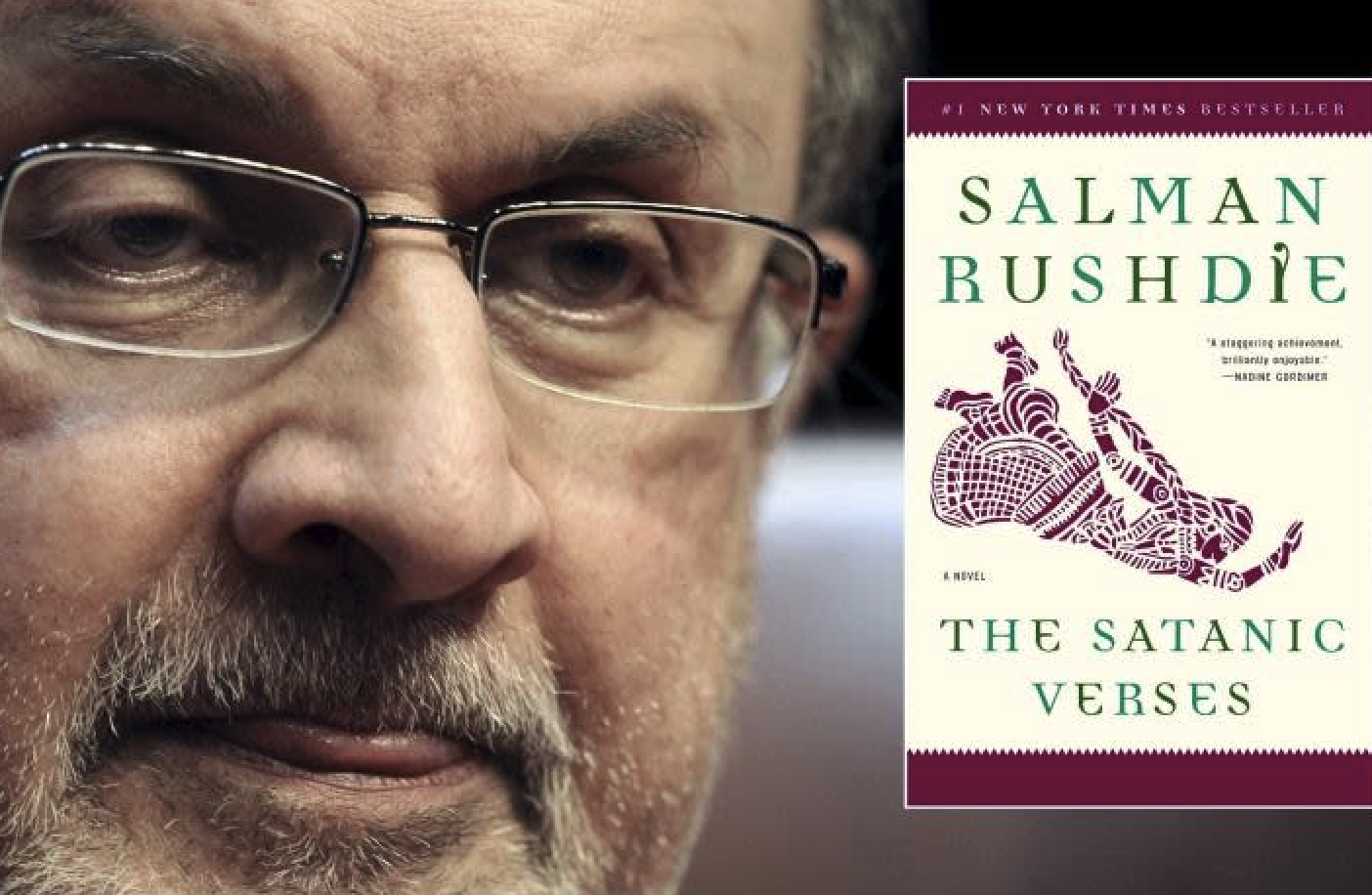
In 1989, the Ayatollah Ruhollah Khomeini, Iran’s theocratic ruler, ordered the assassination “without delay” of novelist Salman Rushdie because of his novel “The Satanic Verses.” Remarkably, this official fatwa imposed the duty of freelance killing in the name of God upon masses of Muslim believers in all nations, and also demanded death for the editors and publishers involved with the book.

Three decades later, a Lebanese-American stands accused of attempting to murder Rushdie by repeated stabbings onstage at New York’s Chautauqua Institution. The author suffered severe injuries but survived. Though the Muslim Council of Britain condemned the attack, the Iranian regime’s Kayhan newspaper dispatched “a thousand bravos” to “the brave and dutiful” assailant while militants in other Muslim lands celebrated. We’ll see what prosecutors and defense attorneys finally say about links between Iran’s fatwa of death and the sensational bloodshed.

Rushdie’s complex fantasy had dream sequences in which depraved enemies of Islam — not the author himself — complain about moral absolutism and treatment of women and demean the Prophet Muhammad’s wives and closest Companions. They also challenge the divine inspiration of the Quran. A Wall Street Journal op-ed correctly noted that the far greater threat to the Quran is the revisionist theorizing on its origins by the late John Wansbrough at the University of London.

The Rushdie novel resulted in book-banning and riots in the Muslim world, and the famous fatwa sent Rushdie into hiding for years. In 1998, Iran’s president declared the case “finished” during diplomatic efforts, but the regime did not actually abolish the fatwa. It was reaffirmed by Khomeini’s successor as Supreme Leader in 2017, and re-published on a government Web site five days before the Chautauqua stabbing. During the past decade, Iranian groups have pledged to pay a $3.9 million bounty to anyone who slays Rushdie.


Please respect our Commenting Policy