People

This just in! Southern Baptists are still very conservative on issues of marriage and sex!

This just in! Southern Baptists are still very conservative on issues of marriage and sex!

Let’s face it, it’s rather hard for a congregation to be “removed from fellowship” — that’s Baptist-ese for “kicked out” — from the Southern Baptist Convention.

After all, are we talking about ties being cut to the local association, a state convention (some states, for doctrinal reasons, have more than one) or the various programs linked to the national SBC? Then there are, for extra-conservative or extra-progressive congregations, alternative “fellowship” networks that have their own vague relationships with the larger SBC ship.

Finally, if a church is “removed from fellowship” and any or all of these levels of voluntary association, it may simply become an independent autonomous Baptist church, as opposed to an autonomous SBC church. Most local folks will never know the difference and independent, often nondenominational, congregations are the fastest growing sector of American religious life.

But if you dig into the Google search in my first paragraph, you will see that churches have been pushed out the exit door of SBC life for several reasons and that this is nothing new. However, it is true that these churches are being kicked out for reasons that many (not all) journalists may consider more worthy of coverage than others. Think “politics.”

Consider this summary material from a New York Times piece last year that ran with this headline: “Southern Baptists Expel 2 Churches Over Sex Abuse and 2 for L.G.B.T.Q. Inclusion.”

The Southern Baptist Convention is the nation’s largest Protestant denomination and has been increasingly divided in recent years over a variety of cultural and political issues, including racism, sexuality and white evangelicals’ embrace of former President Donald J. Trump. …

[A]n increasingly influential conservative wing of the denomination accuses those leaders of prioritizing “social justice” over biblical truth. They denounce the encroachment of “critical race theory” — an academic framework intended to capture the deep influence of racism — and accuse the S.B.C.’s national leadership of being out of step with the rank and file.

It’s pretty easy to spot the subjects that would leap into headlines, right?

There is, for example, nothing new about “progressive” Baptist congregations veering to the doctrinal left on issues linked to gender and sexuality.

Please respect our Commenting Policy

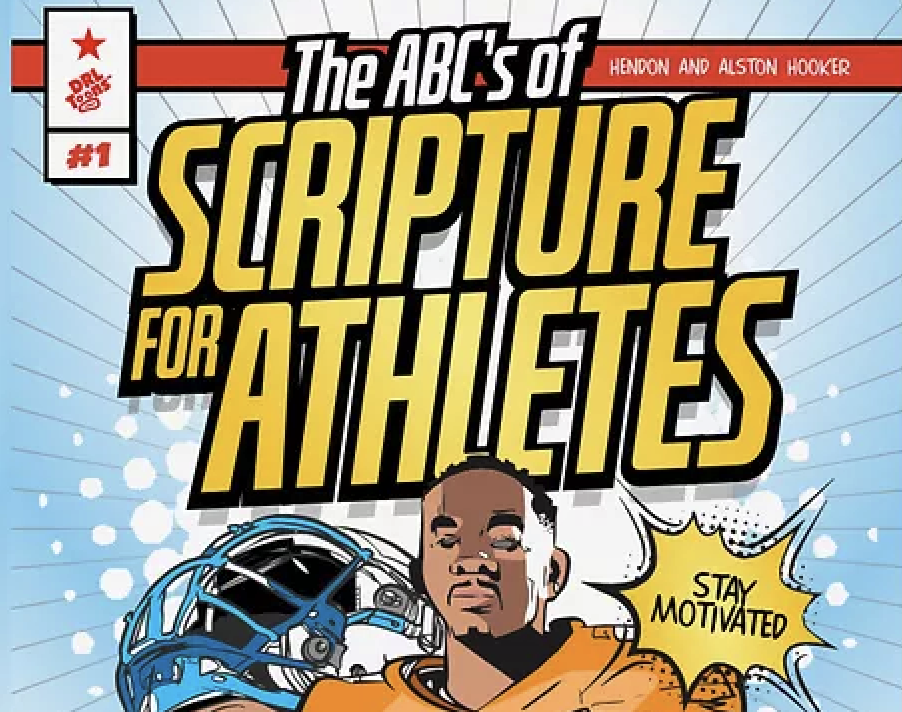
It's hard to miss the facts about faith, and scripture, in Tennessee QB Hendon Hooker's life

It's hard to miss the facts about faith, and scripture, in Tennessee QB Hendon Hooker's life

This post has nothing to do with the game in which the University of Tennessee Volunteers hung on to defeat the Gators of the University of Florida (click here for highlights).

Well, there is some connection. But the goal here is, once again, to urge sports journalists to listen to what many athletes have to say when asked questions about what makes them tick — as people and as leaders in their sports communities. I’ve written a hundred or so posts (it seems) on this subject during the past 18 years or so.

Consider this a refresher memo on that topic, since Vols senior quarterback Hendon Hooker — after the post-game shows this past weekend — has officially entered the Heisman Trophy chatter zone.

In this case, Hooker isn’t the stereotypical athlete who uses vague God-talk during sideline interviews or in his post-game press conferences. While that kind of language can be important, I have always thought that journalists need to look for deeper signs of faith — in friendships, family ties and concrete actions in daily life.

Thus, let me note a story of two in East Tennessee media that spotted crucial faith facts about this calm, steady quarterback and worked them into a sports-page basic — the pre-game rituals feature. The headline at the Knoxville News Sentinel read: “How Hendon Hooker will calm his nerves before Tennessee football plays Florida.” The faith issue even made it into the overture:

Neyland Stadium will be rocking before Tennessee football plays Florida … , but Hendon Hooker will go into slow-jam mode and lean on his faith.

ESPN’s College Gameday will rev up the crowd. Checker Neyland will create quite a scene. And the sellout crowd will shake the stadium moments before the Vols run through the Power T.

A few lines later there is this basic quote:

“I just go into meditation mode and put my gospel playlist on,” Hooker said Monday. “I really just listen to a lot of slow jams and really just relax. I kind of go through the locker room and dap up everyone, just to make sure that I’m ready to roll. And they give me the reassurance back by the look in their eyes that they’re ready to roll too.”


Please respect our Commenting Policy

Plug-In: Ties the bind -- Elizabeth II wove threads of faith and family into her funeral rites

Plug-In: Ties the bind -- Elizabeth II wove threads of faith and family into her funeral rites

In a previous Plug-in, we highlighted the importance of Queen Elizabeth II’s Christian faith in her life.

The 96-year-old monarch’s funeral rites certainly reflected that.

The Guardian’s Harriet Sherwood explains:

The powerful liturgy and rituals of the Church of England – the established church since the 16th century but increasingly marginalised in everyday life – were at the heart of a ceremony watched by billions around the world.

The Queen’s funeral took place under the magnificent gothic arches of Westminster Abbey, the setting for every coronation since 1066, home to the tombs of kings and queens, and the church where the then Princess Elizabeth was married in 1947.

The service was taken from the 1662 Book of Common Prayer, the C of E’s official prayerbook, noted for its beautiful and archaic language but largely displaced in recent decades by those seeking a more modern style of worship.

The Queen was said to be devoted to the Book of Common Prayer, along with the hymns and readings chosen personally by the monarch for her funeral.

The Washington Times’ Mark A. Kellner offers additional details:

“Few leaders have received the outpouring of love we have seen,” Archbishop of Canterbury Justin Welby said during the state funeral. “Her Late Majesty’s example was not set through her position or her ambition, but through whom she followed.”

Archbishop Welby said the queen, who reigned for 70 years and celebrated her Platinum Jubilee in June, modeled the servant leadership expressed in the life of Jesus, her savior.

“People of loving service are rare in any walk of life,” he said. “Leaders of loving service are still rarer. But in all cases, those who serve will be loved and remembered when those who cling to power and privileges are long forgotten.”

At the National Catholic Register, Father Raymond J. de Souza characterizes the queen’s state funeral this way:


Please respect our Commenting Policy

'Till we cast our crowns before Thee' -- ties that bind in last rites for Queen Elizabeth II

'Till we cast our crowns before Thee' -- ties that bind in last rites for Queen Elizabeth II

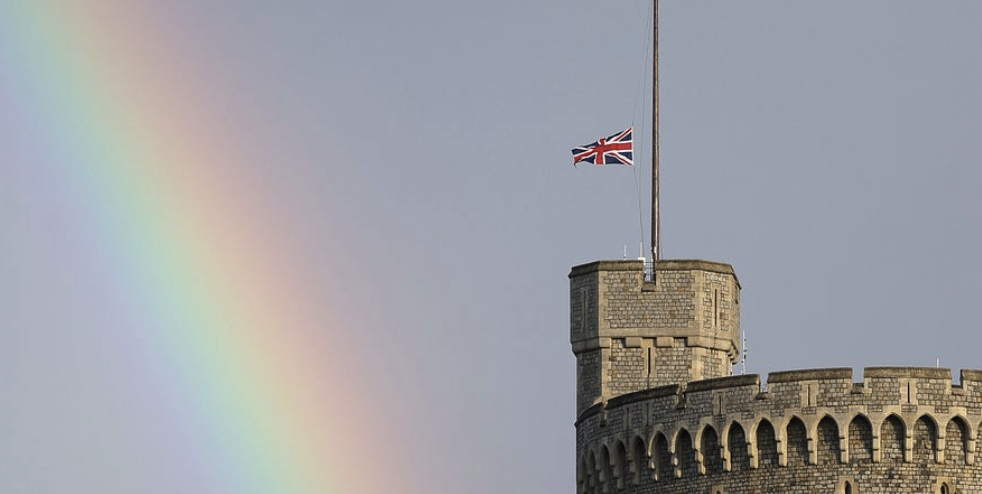
During the private funeral of her husband, Queen Elizabeth II sat alone near the St. George's Chapel altar, socially distanced from her family and wearing a black pandemic mask.

This searing portrait of grief moved viewers worldwide. And as Prince Philip's casket was lowered into the Windsor Castle vault, singers chanted the Kontakion of the Departed, a tie to his Orthodox roots in Greece.

“Give rest, O Christ, to thy servant with thy saints," they sang, "where sorrow and pain are no more; neither sighing but life everlasting. … All we go down to the dust; and weeping o'er the grave we make our song: Alleluia, alleluia, alleluia."

Only 18 months later, Queen Elizabeth requested the same chant, in the same chapel. This time it marked the start of the committal liturgy which closed a 10-day wave of statecraft, vigils, memorials and processions preceding the majestic state funeral.

The queen's final, intimate Windsor Castle service began where her husband's had ended, as if one rite was flowing into another.

"Queen Elizabeth was one of those people in this mortal life who always thought ahead," said David Lyle Jeffrey, distinguished senior fellow at the Institute for Studies in Religion at Baylor University. When preparing these rites, the queen was "clearly looking for prayers, scriptures and hymns that made connections she wanted to make for her family, her people and the world. … I think she succeeded brilliantly."

An Anglican from Canada, Jeffrey said the events closing the queen's historic 70-year reign were an appropriate time to explore the "essence of her admirable Christian character." Thus, the retired literature professor wrote a poem after her death -- "Regina Exemplaris (An exemplary queen)" -- saluting her steady, consistent faith. It ended with:


Please respect our Commenting Policy

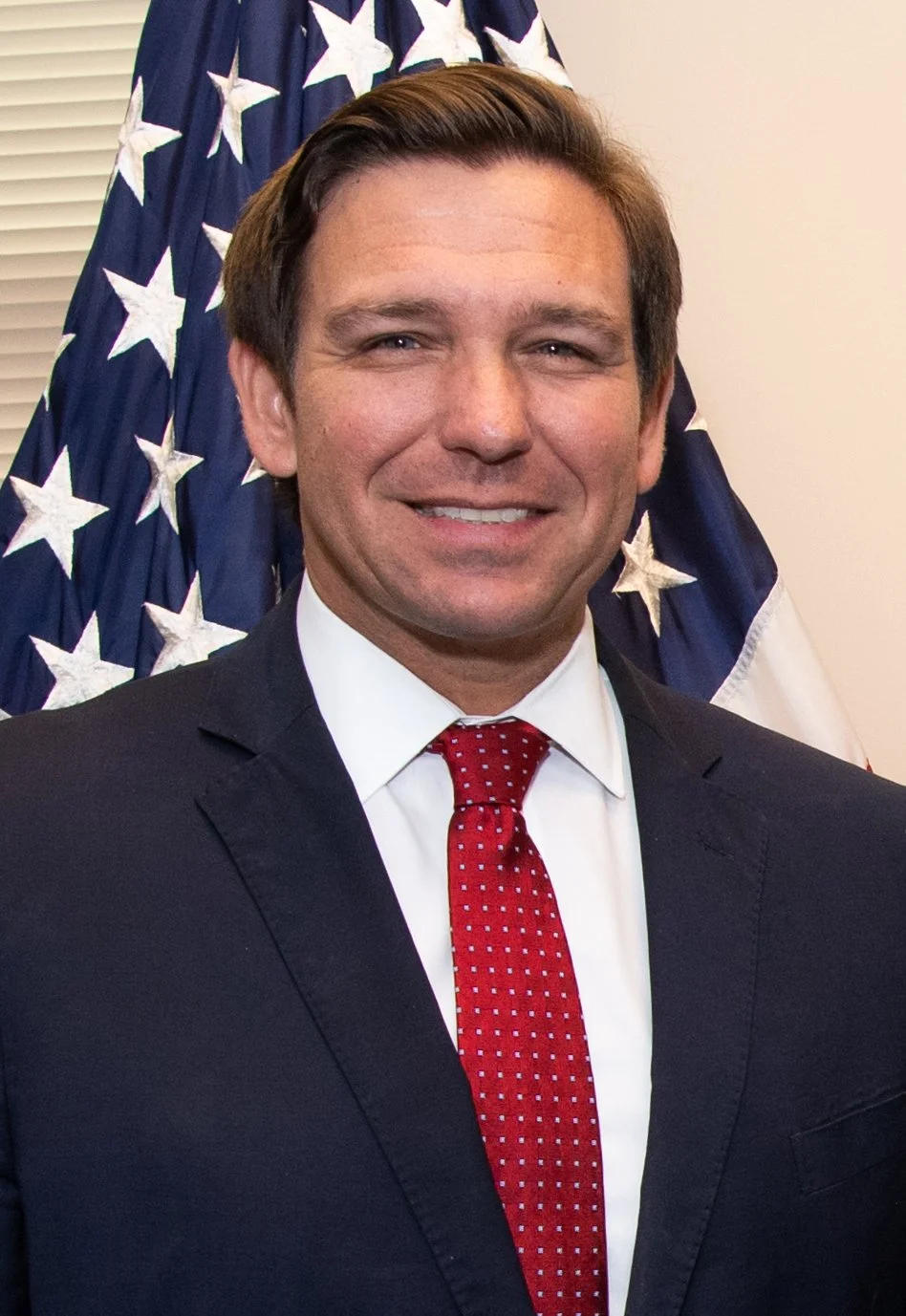
DeSantis as 'culture warrior' or theocrat: Coverage depends on a newsroom's worldview

DeSantis as 'culture warrior' or theocrat: Coverage depends on a newsroom's worldview

A Republican politician with presidential aspirations visits a Christian college. What happens next, in terms of the way the event is covered by the mainstream press, is predictable — during this era of niche news, with stories written to appeal to the beliefs of specific political flocks.

The politician in question is Florida Gov. Ron DeSantis and the school is Hillsdale College in Michigan. The visit took place this past February and was used as an example in a recent Miami Herald article of DeSantis’ mingling of faith and politics.

This is how the paper opens its Sept. 13 piece:

While visiting a private Christian college in southern Michigan that wields influence in national politics, Gov. Ron DeSantis rephrased a biblical passage to deliver a message to conservatives.

“Put on the full armor of God. Stand firm against the left’s schemes. You will face flaming arrows, but if you have the shield of faith, you will overcome them, and in Florida we walk the line here,” DeSantis told the audience at Hillsdale College in February. “And I can tell you this, I have only begun to fight.”

The Republican governor, a strategic politician who is up for reelection in November, is increasingly using biblical references in speeches that cater to those who see policy fights through a morality lens and flirting with those who embrace nationalist ideas that see the true identity of the nation as Christian.

That’s followed by the thesis:

He and other Republicans on the campaign trail are blending elements of Christianity with being American and portraying their battle against their political opponents as one between good and evil. Those dynamics have some political observers and religious leaders worrying that such rhetoric could become dangerous, as it could mobilize fringe groups who could be prone to violence in an attempt to have the government recognize their beliefs.

The article has no problem finding experts who warn of impending danger.


Please respect our Commenting Policy

Memory eternal: The quiet, yet very public faith, of Queen Elizabeth the Great

Memory eternal: The quiet, yet very public faith, of Queen Elizabeth the Great

Before wearing the Imperial State Crown, Queen Elizabeth II knelt at the Westminster Abbey altar for a moment of silent, private prayer.

The three-hour coronation in 1953 contained myriad oaths and symbols, but the most ancient rite -- Archbishop of Canterbury Geoffrey Fisher anointing Elizabeth with holy oil -- sought the highest possible blessing on her life's work and eventually her death.

"Our Lord Jesus Christ, the Son of God," he prayed, "who by his Father was anointed with the oil of gladness … that by the assistance of His heavenly grace you may govern and preserve the people committed to your charge in wealth, peace and godliness; and after a long and glorious course of ruling a temporal kingdom wisely, justly and religiously, you may at last be made partaker of an eternal kingdom."

Televised for the first time, 27 million BBC viewers watched what Oxford don C.S. Lewis called the "tragic splendour" of this drama.

“Over here people did not get that fairy-tale feeling about the coronation. What impressed most who saw it was the fact that the Queen herself appeared to be quite overwhelmed by the sacramental side of it," he noted, writing to an American friend.

It was "a feeling of (one hardly knows how to describe it) -- awe -- pity -- pathos -- mystery. The pressing of that huge, heavy crown on that small, young head becomes a sort of symbol of the situation of humanity itself: humanity called by God to be his vice-regent and high priest on earth, yet feeling so inadequate."

Few could have imagined that the woman many now call "Elizabeth the Great" would reign for 70 years, striving to lead by example after the suffering of World War II and into an age in which humanity would be united by the Internet, terrorism, pandemics and other challenges.


Please respect our Commenting Policy

Podcast: What will Queen Elizabeth II tell the world about her faith with her funeral liturgy?

Podcast: What will Queen Elizabeth II tell the world about her faith with her funeral liturgy?

This week something unexpected happened after I filed my national “On Religion” column, something that I have never seen before in my decades of religion-news work.

What? A retired literature professor responded to my column with a poem.

The topic was easy to predict. Like millions of other people around the world, but especially in Great Britain and the Commonwealth, I have spent many hours watching (primarily on British television) the rites and public drama surrounding the death of Queen Elizabeth II.

I will post the column at GetReligion at the usual time this weekend, after it has run in most newspapers linked to the Universal syndicate. But the podcast team decided to go ahead and use it as the hook for this week’s “Crossroads” (CLICK HERE to tune that in), since so many people are talking about the death of the queen. Here is a short clip from that column:

Throughout her life, Queen Elizabeth II understood the symbolic importance of kneeling, according to former Durham Bishop N.T. Wright. After one Church of England synod, she privately expressed surprise — disappointment, even — that worshippers in Westminster Abbey simply lined up to receive Holy Communion, instead of kneeling.

“Kneeling was important to her,” said the popular author, in a “Premier Christianity” tribute. In his encounters with her, Wright found the queen “very friendly and clearly a very devout, what we would consider ‘old fashioned’ Church of England Christian. I remember thinking during more than one Christmas broadcast, she has just preached the Gospel to the nation in a way that perhaps nobody else could have done.”

In response to the column, a reader raised in Canada — but best known for his work at Baylor University in Texas and at Peking University — wrote a poem and sent it to me.

David Lyle Jeffrey, now a distinguished senior fellow at Baylor’s Institute for Studies in Religion, noted that he has never considered himself a “royalist,” but the queen’s death is certainly a time to explore the “essence of her admirable Christian character and gracious reign.” The former Baylor provost and literature professor entitled the poem “Regina Exemplaris (An exemplary queen).” Here is how it ends:


Please respect our Commenting Policy

More Elizabeth II coverage: Washington Post goes deep on her Billy Graham contacts

More Elizabeth II coverage: Washington Post goes deep on her Billy Graham contacts

Confession: I am still paying next to zero attention to American telly when it comes to rites linked to the death of Queen Elizabeth II. I’m tuned into BBC World and, via YouTube, streaming Sky News.

The few times I’ve flipped over to the major U.S. networks left me with the same impression as before — that the Royal Family is viewed as kind of a cleaned-up version of the Kardashians, with the queen as a sad, nobel celebrity matriarch. See this earlier post: “Elizabeth the Great: Why do many journalists choose to edit faith out of her Christmas talks?

I think the big gaps (other than details about her faith) have been any sense of (a) the gravitas added by her World War II service, including her work driving an Army ambulance. Also, it’s poignant that, (b) until the stunning abdication of King Edward VIII, she was raised with zero expectation of becoming queen. This relatively normal childhood (until age 10) created tight ties to her parents and shaped her views on family.

Yes, the BBC has had a very heavy emphasis on the admiration for the queen seen in mainline, establishment churches and minority faiths. At some point I would like to know if the admiration for Elizabeth II common among American evangelicals also exists in the UK. Click here for a roundup of that, including these typical remarks from Bishop Andrew Forster of the Church of Ireland:

"Throughout her life she set Christ, and his message and his teaching, as the primary thing that has helped her and blessed her and I think made her into the incredible monarch, sovereign that she was."

Bishop Forster described the late Queen as the "grandmother of the nation".

"Maybe it was because people understood that she had an understanding of some of the issues that we might face behind closed doors, some of the issues of increased frailty, of family strife — there was that sense of a grandmotherly figure who understood the challenges of life," he said.

In my previous post, I noted that a Washington Post feature about the queen’s “most memorable remarks” that said her public appearances were “peppered with words of wisdom, faith and occasionally personal reflections.” There was content about her Christmas messages, while omitting any faith content.

However, the religion desk — veteran Sarah Pulliam Bailey (a former GetReligion contributor) — went in depth on one of the most interesting religion-news angles from the queen’s long life: “Fact checking ‘The Crown’: Queen Elizabeth’s faith and her close relationship with preacher Billy Graham.”


Please respect our Commenting Policy

Plug-In: Five newsworthy faith facts about the life and work of Queen Elizabeth II

Plug-In: Five newsworthy faith facts about the life and work of Queen Elizabeth II

When news broke Thursday of Queen Elizabeth II’s death at age 96, I immediately consulted with the leading expert of her 70 years on the throne I know: my wife, Tamie. Seriously, I texted my bride of 32 years.

“Yes, I’ve been watching,” she replied. “The news and social, that is.”

A few years ago, Tamie, a fellow writer, sent the queen a letter and received one back in an enveloped stamped “Royal Mail” from Buckingham Palace.

“She never sat for an interview, so a few documentaries are the closest thing to hearing her asked/answering questions,” Tamie told me. “I thought it was worth writing to tell her how much I enjoyed it, and this response came a few weeks later on her behalf.”

“The Queen wishes me to write and thank you for your card and very kind message,” the reply said.

Did Elizabeth actually see my wife’s letter? Tamie has no way of knowing. I’m a skeptical journalist, so I’m guessing not. But it’s cool to imagine that she did.

In the meantime, here are five facts about religion in the life of Elizabeth, who wrote the foreword to a 2016 British Bible Society book titled “The Servant Queen and the King She Serves” (that king being Jesus):

(1) She was the official head of the Church of England.

The Associated Press obituary by Danica Kirka, Jill Lawless and Sylvia Hui explains:

In Britain’s constitutional monarchy, the queen is head of state but has little direct power; in her official actions she does what the government orders. However, she was not without influence. The queen, officially the head of the Church of England, once reportedly commented that there was nothing she could do legally to block the appointment of a bishop, “but I can always say that I should like more information. That is an indication that the prime minister will not miss.”

(2) She spoke openly about her Christian faith.

Writing for Religion News Service, Catherine Pepinster notes:


Please respect our Commenting Policy