People

Columns from 1991 & 2022: Mysteries surrounding the mind and soul of Mikhail Gorbachev

Columns from 1991 & 2022: Mysteries surrounding the mind and soul of Mikhail Gorbachev

It isn't every day that one of the creators of a political thriller gets to ask its real-life protagonist to evaluate the novel's plot.

But that happened when the late Billy Wireman, president of Queens University in Charlotte, N.C., handed the last Soviet Union leader a copy of "The Secret Diary of Mikhail Gorbachev." The 1990 novel was written by journalist Frye Gaillard, based on a Wireman idea.

The plot: There were spiritual motivations behind "glasnost" and "perestroika," Gorbachev's risky ideas to restructure Soviet life. But furious KGB insiders -- including a would-be assassin -- managed to steal Gorbachev's diary, in which he confessed his Christian faith.

Wireman wrote down Gorbachev's response after hearing the book's premise: "You must have been reading my real diary."

This faith question never vanished, no matter how often Gorbachev reaffirmed his atheism, while also stressing his respect for the beliefs of his Communist father and devout Russian Orthodox mother. His maternal grandparents hid holy icons behind their home's token Vladimir Lenin portraits.

Gorbachev died on August 30 at age 91 and his funeral was held in the Pillar Hall of Russia's House of the Unions, after President Vladimir Putin denied him a state funeral. He was buried next to his wife Raisa, who died in 1999 of cancer, in the cemetery of Moscow's Novodevichy Convent.

"Regardless of the geo-political realities of that era, there was something going on inside Gorbachev," said Gaillard, writer in residence at the University of South Alabama in Mobile and former Southern editor of The Charlotte Observer. He is the author of 30-plus books, including "A Hard Rain: America in the 1960s," which won the 2019 F. Scott Fitzgerald Literary Prize.

"Why did he do it? That's the question that won't go away," Gaillard added. "That's what has fascinated people for decades and it still does. We may never know now that he's gone. … But all that speculation about his beliefs is at the heart of the book."
Please respect our Commenting Policy

Elizabeth the Great: Why do many journalists choose to edit faith out of her Christmas talks?

Elizabeth the Great: Why do many journalists choose to edit faith out of her Christmas talks?

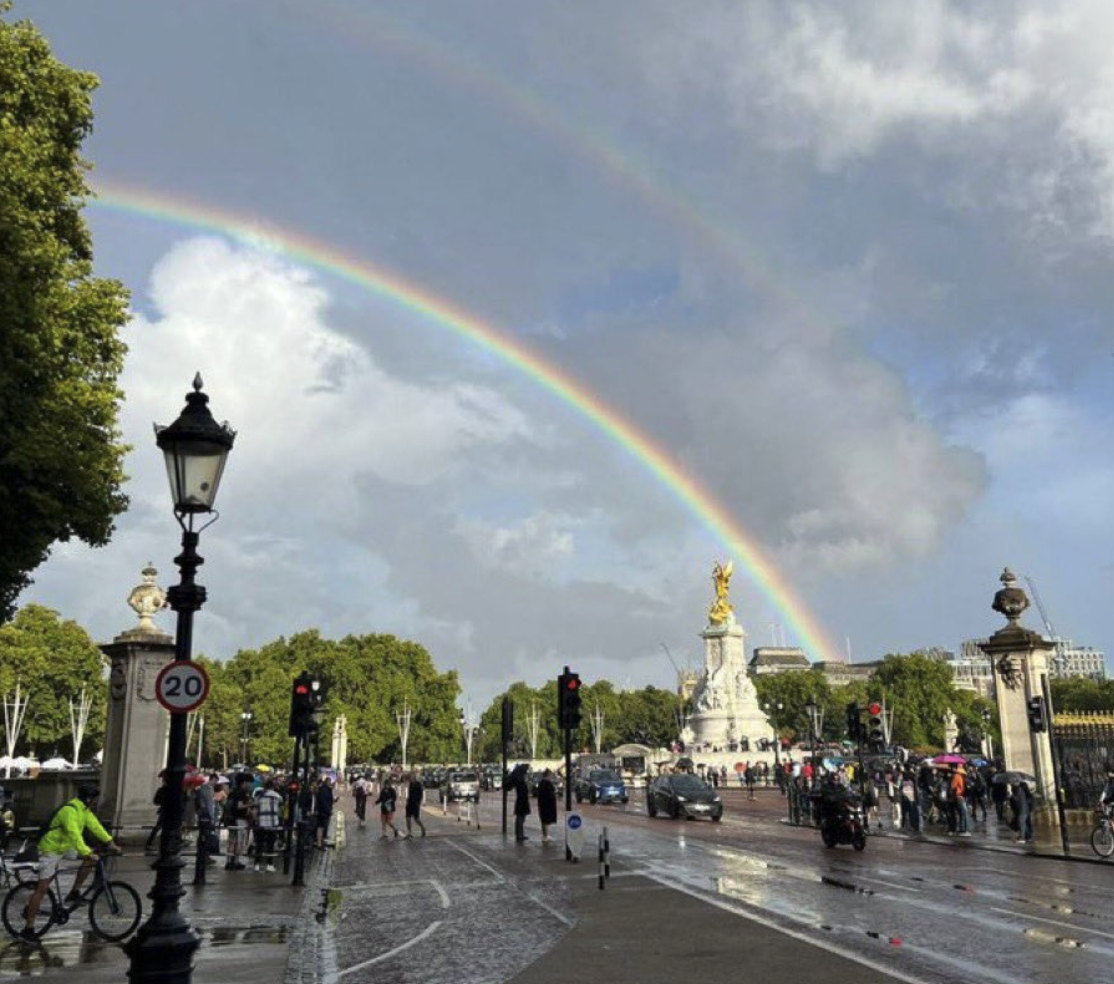
The Queen is dead. God save the King.

It’s hard to edit the religion content out of that equation. However, when journalists are asked to deal with the death of the queen who was, it can be argued, the most famous woman of the past 100 years, there are plenty of important, “real,” issues to deal with other than the state of her soul and her Christian faith.

I spent most of yesterday afternoon and evening watching the BBC Global coverage of the death of Queen Elizabeth II, as opposed to, shall we say, American “telly.” The BBC focused on the death of one of the greatest, if not “the” greatest, monarchs in Great Britain’s history. There were many references to her Christian faith. American television, for the most part, offered discussions of the death of a great celebrity. If I have been too harsh with that judgment, please send me some quality URLs.

How to approach this totally justified tidal wave of coverage? I think the easiest way to search out the religion-beat content is with two specific online searches.

First, search Google News for “Queen Elizabeth” and “Christmas.” Elizabeth the Great was known, of course, for her dignified and timely Christmas addresses — an essential part of the season for Brits and those who love all things British. The vast majority of the mainstream-media obits for the queen contain references to her Christmas talks — sort of.

What did she say in these very personal messages? That’s the key.

This leads to my second Google News search, for “Queen Elizabeth” and “Christian.” This is where the mainstream press — unless I have missed something, somewhere — offer, well, something like this. In the religious press, readers will find many, many pages of content, such as this feature from Premier Christianity, a niche UK religion website: “Queen Elizabeth II served Christ.”

There was, however, this Washington Post feature with a hopeful title: “Queen Elizabeth II, in her own words: Her most memorable remarks.” After all, it did include a section with this title: “Annual Christmas speeches.” These talks were, readers are told, “peppered with words of wisdom, faith and occasionally personal reflections from the nonagenarian.” However, this is what the Post offered:

“In the old days the monarch led his soldiers on the battlefield and his leadership at all times was close and personal. Today things are very different,” she said in her first televised Christmas broadcast in 1957. “I cannot lead you into battle, I do not give you laws or administer justice but I can do something else, I can give you my heart and my devotion to these old islands and to all the peoples of our brotherhood of nations.”


Please respect our Commenting Policy

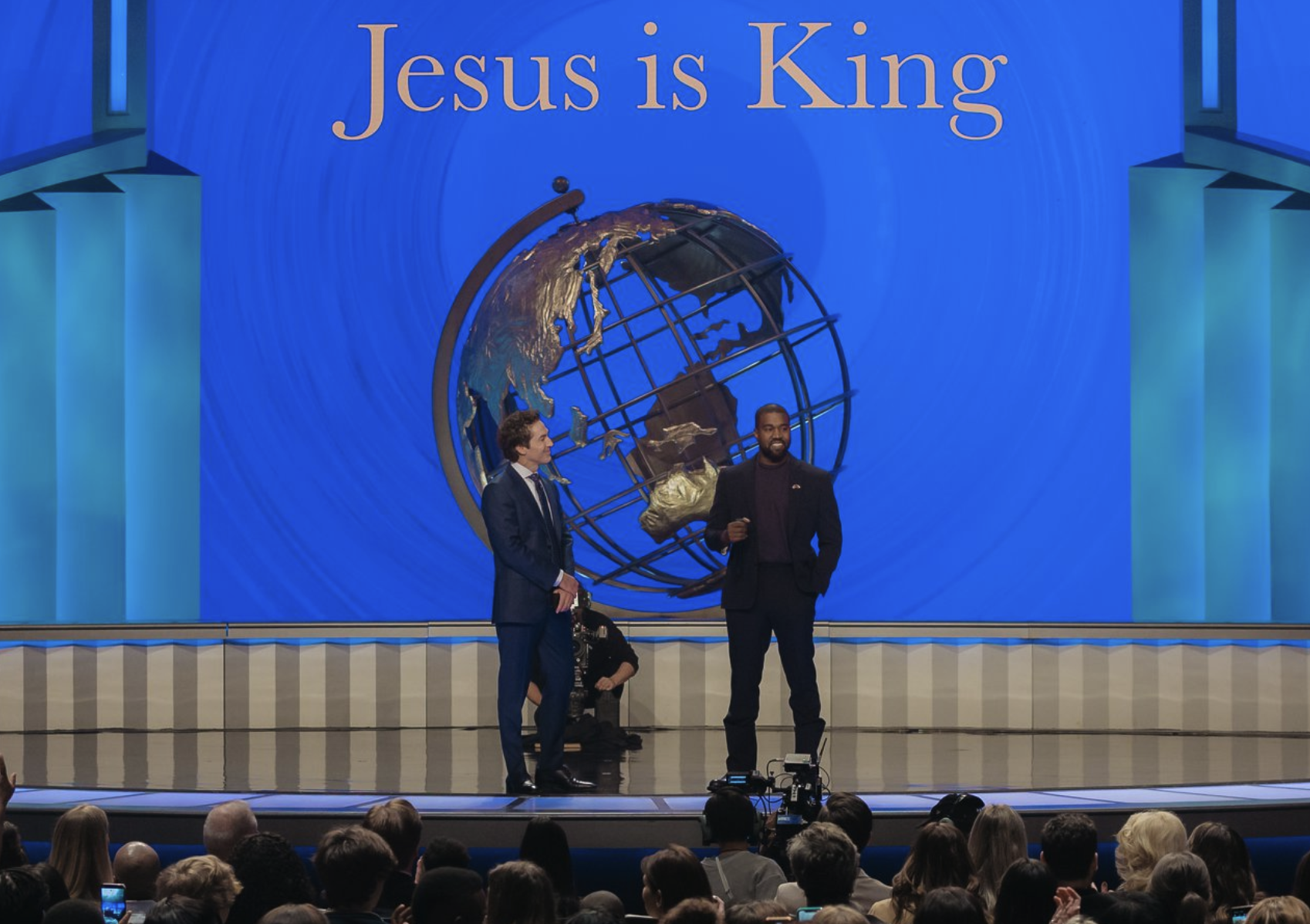
Is celebrity culture eroding American evangelicalism? This publishing insider says 'yes'

Is celebrity culture eroding American evangelicalism? This publishing insider says 'yes'

Evangelical Protestantism, by most accounts the largest camp in American religion, has run into various troubles lately, as The Guy and many others have chronicled.

Now there’s ample Internet buzz about Katelyn Beaty’s diagnosis of one factor in a new book from a major evangelical publisher that’s well worth coverage: “Celebrities for Jesus: How Personas, Platforms, and Profits are Hurting the Church.”

Make that hurting the “White Evangelical” church.

The type of personality cults she describes are pretty much absent in “mainline” Protestantism, Black Protestantism (there are some glaring exceptions in the health-and-wealth world), Catholicism and other U.S. religious bodies. By coincidence, Rodney Palmer, an American Baptist who teaches preaching at Palmer Theological Seminary, echoed her concerns just last week in an article for the progressive Baptist News Global website.

Inevitably, Beaty has much to say about the media that we practitioners and consumers should ponder.

She’s a well-marinated evangelical as author, former print managing editor of flagship Christianity Today magazine and currently a New York-based acquisitions editor with Baker Publishing Group, one of the majors whose Brazos Press division published “Celebrities.” (Note the company’s other book imprints: Baker Books, Baker Academic, Bethany House, Chosen, Revell.)

For this reason, The Guy finds especially newsworthy — and gutsy — Beaty’s chapter treating the evangelical book industry, which is said to pour “jet fuel” on the type of fandom, branding and marketing she decries.

The bottom line, here: This bite-hand-that-feeds angle alone offers a strong story theme that journalists could draw from this book.


Please respect our Commenting Policy

In praise of the humble news Q&A: God, Lt. Dan and spiritual motivations for public service

In praise of the humble news Q&A: God, Lt. Dan and spiritual motivations for public service

It would be hard to name a form of journalism more “humble” than a simple Q&A piece about a celebrity or someone else who has found his or her way into the news.

The journalist produces a short introduction and then, theoretically, gets out of the way.

Yes, the news organization still controls the narrative — as in asking the questions and then publishing edited versions of the questions and the answers. In practice, readers encounter this bit of journalism-speak: “This conversation has been edited for length and clarity.” (I often advise newsmakers to record these interviews for themselves, allowing them — if necessary — to post transcripts of what went down.)

This brings me to a recent Knoxville News Sentinel feature about actor Gary Sinise, whose work with injured veterans and first responders was bringing him back to Knoxville for the 2022 Medal of Honor Celebration. His public-service work on these issues is rather logical because of his famous role as Lieutenant Dan Taylor, an angry wounded warrior who finds his way back to wholeness in the movie “Forest Gump.”

Here at GetReligion, we often ask why so many journalists, when writing about public figures of this kind, tend to leave facts about religion out of the mix. This is especially problematic when the person being profiled has, on numerous occasions, made it clear that faith is one of the defining elements of his or her life. To cut to the chase: It’s harder to do that kind of crude editing when offering what is supposed to be a verbatim transcript of an interview.

There were zero “religious” questions about in this interview, even though Sinise has for years talked openly about his faith. But the humble Q&A format allowed the actor to talk about his life on his own terms. Here is an example of that in a discussion that is at the heart of the feature:

Knox News: You've played Lt. Dan, but also directed a production of "Tracers," a story about wounded Vietnam vets, in the '80s. You've been very involved with veterans in your show career, how has that influenced your work as a philanthropist?


Please respect our Commenting Policy

Shia LeBeouf converts to Catholicism: News coverage -- good and bad -- focuses on redemption

Shia LeBeouf converts to Catholicism: News coverage -- good and bad -- focuses on redemption

Celebrity news coverage and religion couldn’t be more polar opposites most of the time. Coverage of actors, models and others in the entertainment industry often resembles a list for the seven deadly sins.

Every so often, the world of celebrity and faith intersect. When they do, the mainstream press doesn’t know what to do with it, creating tone-deaf coverage similar to sports stories containing what GetReligion has long called religion “ghosts.”

Meanwhile, the religious press — I’m referring to Catholic media in this case — love to jump on this kind of story. This has certainly been the case with actor Shia LaBeouf this summer and public statements regarding his conversion to Catholicism.

It’s a textbook case of the mainstream press largely ignoring such an announcement, while the Catholic press can’t get enough of it. When the mainstream press did cover LaBeouf’s interview, it was in the context of his troubled personal life. For some journalists in the Catholic press, he became a poster child for upholding tradition and the Latin Mass against the more progressive forces in the church.

Depending on who and what you read, LeBeouf’s conversion story is either a farce, something to be celebrated or something to be feared.

LaBeouf, like many in his profession, does interviews primarily to promote specific movies and their careers overall. While promoting his new film “Padre Pio,” which premiered at the Venice International Film Festival, LaBeouf announced that he had converted to Catholicism. The movie is based on the life of Padre Pio, an Italian Franciscan Capuchin friar famous for exhibiting stigmata most of his life. He was canonized as a saint by Pope John Paul II in 2002.

The former “Transformers” star made it known that he was now a practicing Catholic during an Aug. 25 appearance on Bishop Robert Barron’s show “Conversations at the Crossroads.” The YouTube link alone has generated over 1.3 million views.

Here is where the celebrity news coverage got interesting.


Please respect our Commenting Policy

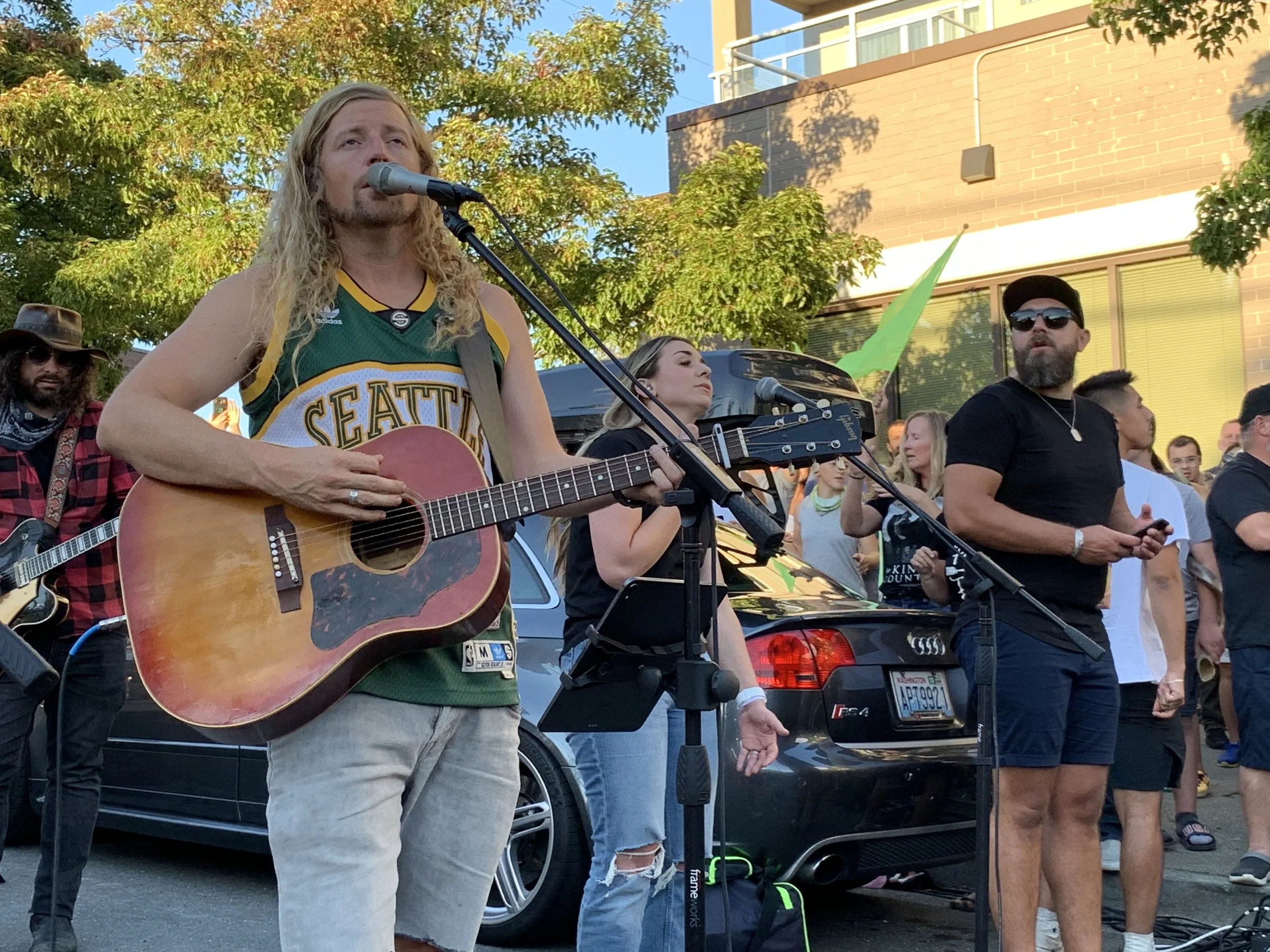
New stories on New Apostolic Reformation, Sean Feucht keep assuming a right-wing takeover

New stories on New Apostolic Reformation, Sean Feucht keep assuming a right-wing takeover

I’ve been complaining for years that journalists aren’t schooling themselves adequately on the prophetic movement (among charismatics) that some call the New Apostolic Reformation (NAR). Since the Jan. 6 uprising, they’ve started writing about it.

But be careful what you wish for. Not all that glitters is gold. I’ve read more than a few stories that sound like something out of a horror flick: An ominous theocratic movement involving millions of people, under uber-controlling leaders with a few White Christian nationalists thrown in.

The two pieces I’ll be addressing is Elle Hardy’s Aug. 23 story in The New Republic: “The Right-Wing Christian Sect Plotting a Political Takeover,” and Rolling Stone’s July 11 story on Sean Feucht. Both typify current Christian trends as scary movements with an end game of sending Donald Trump to the White House in 2024 and sending America back to the Middle Ages.

Hardy’s story had ambitious goals. It began with a summation of this movement starting from 1994 with a revival at a church once known as the Toronto Airport Vineyard. Also known as a “laughing revival” for the odd laughing fits folks had, it made major changes in North American Christianity and swept across the English-speaking world. (Three years later, I was interviewing folks in Iceland who said they were dramatically influenced by Canadian missionaries spreading its benefits.)

All this grew into the NAR, the author says, and (drum roll):

And they have one clear goal in mind — ruling over the United States and, eventually, the world.

NAR, as it’s often called, is a shadowy movement, rather than an organization; many who are considered a part of it deny that it even exists. Broadly, it seeks to return church structures to the fivefold ministry of the Bible (defined roles of apostle, prophet, evangelist, pastor, and teacher). The key roles in this pecking order are prophets, who have the visions, and apostles, the anointed ones who put ideas and networks into practice and, critically, to whom everyone else must submit.

OK. I did my first master’s thesis (in 1992) on authority and submission practices in the charismatic communities that were so popular among evangelicals in the 1960s and 1970s, plus I wrote a 2009 book that deals substantially with this issue. And I can tell you that the NAR folks did learn a thing or two about the mess caused by the 1970s “discipleship movement” which was deeply into one submitting oneself to an elder who was himself (usually this person was male) submitted to a higher elder in a hierarchical line reaching up to a small group of people.

They’re not going that same route today.


Please respect our Commenting Policy

Do the math: Was Archbishop Rembert Weakland a flawed hero or an erudite heretic?

Do the math: Was Archbishop Rembert Weakland a flawed hero or an erudite heretic?

Writing obituaries about controversial — but to many people beloved — public figures is a difficult task that involves some complicated mathematics.

The death of former Catholic Archbishop Rembert Weakland of Milwaukee is a classic example and, here is the crucial point in this post, this was not a simple matter of “left” vs. “right.”

That said, there is no question that for decades — during the papacies of St. Pope John Paul II and Pope Benedict XVI — Weakland was a liberal Catholic superstar, with the word “liberal” in this case defined in political, cultural and doctrinal terms. But then there were revelations about his ethics and private life.

Thus, it was not surprising to see a double-decker New York Times headline with this kind of content:

Archbishop Rembert Weakland, Critic of Vatican Orthodoxy, Dies at 95

In his long career, he was an intellectual touchstone for progressive Catholic reformers. But he resigned after the disclosure of a long-ago love affair.

The Gray Lady’s obit also included this block of background material:

In the 1980s and ’90s, Archbishop Weakland had been a thorny problem for the Vatican. Addressing issues that troubled many of America’s more than 60 million Catholics, he championed new roles for women; questioned church bans on abortion, birth control and divorce; and challenged the Vatican’s insistence on celibacy for an all-male priesthood.

He also became a leading critic of America’s economic and social policies during the administration of President Ronald Reagan, drafting a landmark 120-page pastoral letter on the economy that called for reordering the nation’s priorities to cut military spending and attack poverty and inequality.

However, let me stress that the Times placed that salute to Weakland AFTER a pretty solid, accurate look at his scandalous fall and other revelations that emerged about his behavior and decisions, for decades, during the Church of Rome’s hellish clergy sexual abuse crisis.

If you want to dig into the hard facts about Weakland’s role in that crisis, click here for crucial material — “Deposition of Archbishop Emeritus Rembert G. Weakland, O.S.B.” — by the independent Bishop Accountability organization. That is an organization that defied a simple “left” or “right” tag.


Please respect our Commenting Policy

Relevant fact? The great broadcaster Vince Scully had a rosary and he knew how to use it

Relevant fact? The great broadcaster Vince Scully had a rosary and he knew how to use it

OK, here we go again. Sports and God. God and sports, and that old question: Why do many journalists ignore the faith component in the lives of some sports heroes and celebrities?

If you read GetReligion, you know that Vin Scully — the greatest sports broadcaster ever (click here for a collection of his greatest hits) — was a faithful Catholic and that this was a big part of his life, that is if you paid attention to the actions of the man himself. Bobby Ross, Jr. — one of several baseball fanatics who have written for GetReligion — has written about Scully’s faith several times (click here and then here).

It also helps to click on this YouTube link and then close your eyes as you listen to that famous Scully voice speak these words, probably from memory:

Hail, Mary, full of grace, the Lord is with thee.
Blessed art thou amongst women and blessed is the fruit of thy womb, Jesus.
Holy Mary, Mother of God, pray for us sinners, now and at the hour of our death. Amen.

I don’t know about you, but I think that the whole “pray for us sinners, now and at the hour of our death” thing might have been relevant when writing a mainstream media obituary for Scully.

Sure enough, readers who dig into the lengthy New York Times obit for the legendary Dodgers broadcaster — Brooklyn before Los Angeles, of course — will learn that Scully went to a Catholic prep school, played for a Catholic baseball team and graduated from a Catholic University. All of that, without a single mention of the word “Catholic.” How did the Gray Lady pull that off? Here’s a hint:

For all the Dodgers’ marquee players since World War II, Mr. Scully was the enduring face of the franchise. He was a national sports treasure as well, broadcasting for CBS and NBC. He called baseball’s Game of the Week, All-Star Games, the playoffs and more than two dozen World Series. In 2009, the American Sportscasters Association voted him No. 1 on its list of the “Top 50 Sportscasters of All Time.”

Mr. Scully began broadcasting at Ebbets Field in 1950, when he was a slender, red-haired 22-year-old graduate of Fordham University and a protégé of Red Barber.

Ah, the word “Fordham” stands in for “Catholic,” in several crucial references. That’s the ticket.


Please respect our Commenting Policy

Tip for reporters: Don't assume what Catholics believe based on politics or Internet memes

Tip for reporters: Don't assume what Catholics believe based on politics or Internet memes

There are moments in journalism that stand out more than others. One of those moments is when a certain piece — whether it’s a news story, analysis or opinion — gets a lot of attention by a large group of people for good and/or for bad reasons.

For a set of bad reasons, The Atlantic piece on the weaponization of the rosary was that piece for many Catholics and those who keep a watchful eye on media coverage of matters pertaining to the largest Christian denomination in the United States.

The piece — not necessarily a news story, but it was not labeled as commentary or even analysis — became a viral conversation topic among many family and friends over the last week. While the issue of Christian nationalism is important to understand, the bigger discussion — and questions I had to field — was more like this: What’s wrong with journalism these days?

That’s the central preoccupation of many — especially those of us who have been doing this for decades. (For more on that, please check out tmatt’s post and podcast from this past Friday. This view of what was going on in this piece may shock you.)

There were many lines from the Atlantic piece that stood out, but one that did most was this one:

The theologian and historian Massimo Faggioli has described a network of conservative Catholic bloggers and commentary organizations as a “Catholic cyber-militia” that actively campaigns against LGBTQ acceptance in the Church. These rad-trad rosary-as-weapon memes represent a social-media diffusion of such messaging, and they work to integrate ultraconservative Catholicism with other aspects of online far-right culture. The phenomenon might be tempting to dismiss as mere trolling or merchandising, and ironical provocations based on traditionalist Catholic symbols do exist, but the far right’s constellations of violent, racist, and homophobic online milieus are well documented for providing a pathway to radicalization and real-world terrorist attacks.

There’s the thesis of the piece, the connect-the-dots language linking strange behavior to current tensions in Catholic life in America.

There’s plenty to unpack here, but the reality is that citing a few political websites claiming to represent Catholic thought and then adding a smattering of social media memes is no way to gauge for what anyone really thinks and believes.


Please respect our Commenting Policy