People

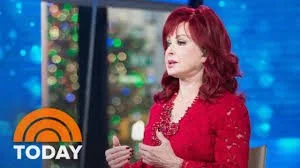
Naomi Judd: Press reports covered the dark nights of her life, but not the Sunday mornings

Naomi Judd: Press reports covered the dark nights of her life, but not the Sunday mornings

Journalists tend to remember symbolic details from many of interesting interviews — whether they are with superstars of various kinds or ordinary people who have seen remarkable things.

Exhausted after signing hundreds of copies of her “Love Can Build a Bridge” memoir back in 1993, Naomi Judd retreated to her tour bus parked behind the bookstore. She apologized for heading to the back room to get out of one of her famous stage dresses and into something from her farm outside of Nashville. The ground rules: no photos, but all questions were fair game.

At point in her life, she had already talked about some dark days and nights — from rape to a crisis pregnancy and beyond. But she hadn’t dug deeper into her childhood and the abuse that created the deep pools of depression that would eventually take her life.

But this was a woman who was driven to talk about her angels, as well as her demons. My favorite quote from that interview didn’t make it into the “On Religion” column that I wrote pre-Internet, but stashed deep in my file cabinets with pages of notes and transcripts.

Naomi Judd stressed that if people — journalists included — want to understand country music, and the relationship between the musicians and their fans, they need to remember that it’s normal, in a country music show, “to sing about Sunday morning, as well as Friday and Saturday nights.”

That’s what I went looking for in the coverage of her death and then the ceremony in which The Judds — Wynonna and Naomi — entered the Country Music Hall of Fame. Here’s the top of the Nashville Tennessean report on that event, as it ran in USA Today:

As Grammy-winning duo The Judds were inducted into the Country Music Hall of Fame Sunday evening, Wynonna Judd addressed the passing of her mother Naomi just one day earlier.

Following brief remarks from her younger sister Ashley, Wynonna spoke for roughly four minutes.

"It's a strange dynamic to be this broken and this blessed. … But though my heart is broken, I will continue to sing," she said.

Wynonna said Naomi Judd, 76, passed away at 2:20 PM, and that she kissed her mother "on the forehead and walked away." She also stated that the last act she, Ashley and unnamed other family members did together was praying the Bible's 23rd Psalm. The crowd in attendance all recited the Psalm in unison with Judd to complete her speech.

That’s solid and hints at the atmosphere during the ceremony.

Truth is, Hall of Fame member Ricky Skaggs — who knew the Judds from the days before their rise to fame — took the audience to church, as he struggled to control his emotions through the entire speech-sermon.



Please respect our Commenting Policy

Plug-In: Can a high school coach pray at 50-Yard line? Five SCOTUS hearing takeaways

Plug-In: Can a high school coach pray at 50-Yard line? Five SCOTUS hearing takeaways

The case of Joseph Kennedy, a Bremerton, Washington, high school football coach who wants to kneel and pray at the 50-yard line, made it to the U.S. Supreme Court this week.

Arguments took nearly two hours, double the time scheduled. Here are five key takeaways:

1. The issue: “The case pits the rights of government workers to free speech and the free exercise of their faith against the Constitution’s prohibition of government endorsement of religion and Supreme Court precedents that forbid pressuring students to participate in religious activities,” the New York Times’ Adam Liptak explains.

2. The significance: It’s “one of its most significant cases on prayer in decades … in a clear test for how the court's new conservative majority may rule on prayer in public schools,” Newsweek’s Julia Duin reports.

Duin adds:

The case focused on whether a high school coach could openly pray after the end of a football game. Arguments included examples from elsewhere in the sports world, with mentions of former Denver Broncos football player Tim Tebow, known for kneeling on the field in prayer, and Egyptian soccer player Mohamed Salah, who kneels in a thanksgiving prayer to Allah after he scores a goal.

Read Plug-in’s past coverage of Tebow’s controversial prayers. Also, see this Duin post — “Coach Joe Kennedy goes to the Supreme Court and the media coverage gets a B+” — here at GetReligion.

3. The hypotheticals: “The U.S. Supreme Court justices spun more than a dozen hypothetical prayer scenarios during oral arguments,” Christianity Today’s Daniel Silliman notes.

The Associated Press’ Jessica Gresko highlights some of those scenarios:

A coach who crosses himself before a game. A teacher who reads the Bible aloud before the bell rings. A coach who hosts an after-school Christian youth group in his home.

Supreme Court justices discussed all those hypothetical scenarios.


Please respect our Commenting Policy

Memory eternal: What were the big ideas that drove the work of Chuck Colson?

Memory eternal: What were the big ideas that drove the work of Chuck Colson?

As a D.C. Beltway power player, the late Charles W. Colson worked with a "Thank God it's Monday" attitude that meant his colleagues always knew they could contact him about hot topics and decisions.

But there was one exception -- visits by his autistic grandson Max.

"If Chuck was with Max, his phone was turned off," said Dave Carlson of the Colson Center for Christian Worldview. "Max could stop him in his tracks."

This bond was rooted in a conviction that shaped the Nixon White House strategist's work after his 1973 born-again Christian conversion and guilty plea for Watergate crimes that put him in federal prison, said Carlson, who spent two decades as a Colson aide and editor. This same conviction led Colson to create the global Prison Fellowship ministry in 1976.

"It didn't matter if you were in prison or what kind of crimes put you there. It didn't matter if you were missing a chromosome or were autistic," he said. Colson believed "we are all humans made in the image of God -- Imago Dei. He was passionate about that until the end."

The 80-year-old Colson died on April 21, 2012, felled by a brain hemorrhage moments after a speech about rising threats to religious liberty. His colleagues marked the 10-year anniversary by rebroadcasting that speech during a BreakPoint radio commentary.

"What we're witnessing in our culture … is but the tip of the iceberg. It's the latest visible manifestation of a growing hostility towards Christianity mainly because -- this has always been the case -- government officials feel threatened by the power of the church because we all worship a king higher than the kings of this earth," said Colson.

Cultural issues are bigger than mere politics, he stressed.

"Elections are important. Whoever serves in office, it makes a difference what kind of person that is and what that person believes," he said. "But elections can't solve the problem we've got. The problem we've got is that our culture has been decaying from the inside for 30 or 40 years, and politics is nothing but an expression of culture. So how do you fix the culture?"


Please respect our Commenting Policy

Father Joseph Ratzinger's sobering 1969 vision of the future and the new German reality

Father Joseph Ratzinger's sobering 1969 vision of the future and the new German reality

The 1960s were turbulent times and, in Europe, Catholics faced storms of radical change that left many weary or even cynical.

In 1969, one of Germany's rising theologians -- a liberal priest at Vatican II who then became a conservative -- was asked what he saw in the future.

"What St. Augustine said is still true -- man is an abyss; what will rise out of these depths, no one can see in advance," said Father Joseph Ratzinger, on German radio. "Whoever believes that the church is not only determined by the abyss that is man, but reaches down into the greater, infinite abyss that is God, will be the first to hesitate with his predictions."

Ratzinger's words grew in importance in 1977 when he became Archbishop of Munich and quickly became a cardinal. Then Pope John Paul II made him prefect of the Vatican's powerful Congregation for the Doctrine of the Faith, where his orthodoxy led liberals to call him "God's Rottweiler." In 2005, he became Pope Benedict XVI.

Catholics continue to ponder his 1969 words: "From the crisis of today the church of tomorrow will emerge -- a church that has lost much. … As the number of her adherents diminishes, so it will lose many of her social privileges. In contrast to an earlier age, it will be seen much more as a voluntary society, entered only by free decision. As a small society, it will make much bigger demands on the initiative of her individual members."

The future pope predicted a "crystallization" process creating a "more spiritual church, not presuming upon a political mandate, flirting as little with the left as with the right. … It will make her poor and cause her to become the church of the meek."

The retired pope celebrated his 95th birthday on April 16th -- Holy Saturday. During an earlier meeting with Jesuits, Pope Francis called his predecessor "a prophet" and cited Benedict's predictions of a "poorer" and "more spiritual" church..


Please respect our Commenting Policy

That missing piece, again: Why edit the faith factor out of Scheffler's win at the Masters?

That missing piece, again: Why edit the faith factor out of Scheffler's win at the Masters?

I’m sorry, but there will be no apologies here.

Yes, I realize that it has only been a week or so since I wrote a piece asking why mainstream sportswriters ignore the spiritual component in global-level events — even when the winner at the press-conference microphone openly discusses the role that faith plays in his life. Here’s that previous post: “What happened when this 2022 Final Four hero was asked to explain his heart, mind and soul?”

To add insult to injury, that post even opened with me waving a non-apology flag:

OK, faithful GetReligion readers, you know the drill.

Especially those of you who are among the small circle of our readers who join millions and millions of ordinary Americans in caring about sports news and personalities.

Why keep writing about this issue? Frankly, I think this is one of the biggest signs (and there are many) of the gap between elite journalists and ordinary people (sports fans included) in flyover country. The key, once again, is this journalism question: When probing what makes a superstar tick, why not heed what this athlete says when asked questions about precisely that question?

This time around, we are talking about the Masters and young Scottie Scheffler’s stunning rise to become the No. 1 ranked golfer in the world. Facing the world’s press, he offered this response to a question about his goals and motivations:

“The reason why I play golf is I’m trying to glorify God and all that He’s done in my life,” he said. “So for me, my identity isn’t a golf score. Like Meredith told me this morning, ‘If you win this golf tournament today, if you lose this golf tournament by 10 shots, if you never win another golf tournament again,’ she goes, ‘I’m still going to love you, you’re still going to be the same person, Jesus loves you and nothing changes.’ All I’m trying to do is glorify God and that’s why I’m here and that’s why I’m in this position.”

As one would expect, that is a quote from a story at the religion-market Sports Spectrum website.


Please respect our Commenting Policy

Five faith facts about the life of Ketanji Brown Jackson, the first Black woman at SCOTUS

Five faith facts about the life of Ketanji Brown Jackson, the first Black woman at SCOTUS

Faith. It’s an important part of Ketanji Brown Jackson’s story.

Here are five religion facts about the 51-year-old judge who on Thursday became the first Black woman confirmed to the U.S. Supreme Court:

1. Jackson will be “the first-ever nondenominational Supreme Court justice,” as Christianity Today’s Kate Shellnutt points out.

2. She’ll become the second current Protestant on the court (along with Neil Gorsuch), joining six Catholics (Samuel Alito, Amy Coney Barrett, Brett Kavanaugh, John Roberts, Sonia Sotomayor and Clarence Thomas) and one Jewish justice (Elena Kagan), according to Christianity Today’s Megan Fowler.

But Religion News Service’s Jack Jenkins tweets that Jackson will be “the only current Supreme Court justice who publicly IDsas Protestant.” “Gorsuch attended an Episcopal church before joining SCOTUS,” Jenkins explains, “but grew up Catholic and how he personally IDs is unclear.”

3. Jackson “has put her religious faith front, center — and vague,” notes The Associated Press’ Peter Smith. “She’s spoken strongly of the role of her faith in her life and career but hasn’t gotten into the specifics of that commitment.”

RNS’ Adelle Banks offers more details on Jackson’s past statements about her faith in God.

4. At a hearing last month, Jackson was pressed on her faith by Sen. Lindsey Graham, a Republican from South Carolina, ReligionUnplugged.com’s Hamil R. Harris reports.

The Deseret News’ Kelsey Dallas recounts this exchange between Graham and Jackson:

“On a scale of 1 to 10, how faithful would you say you are in terms of religion? I go to church probably three times a year so that speaks poorly of me. Do you attend church regularly?,” Graham said.

Jackson declined to give a rating, noting that she worried about the message doing so would send to Americans watching at home.


Please respect our Commenting Policy

What happened when this 2022 Final Four hero was asked to explain his heart, mind and soul?

What happened when this 2022 Final Four hero was asked to explain his heart, mind and soul?

OK, faithful GetReligion readers, you know the drill.

Especially those of you who are among the small circle of our readers who join millions and millions of ordinary Americans in caring about sports news and personalities. In this case, we are talking about March Madness, the NCAA hoops festival that — taken as a whole — is a much more symbolic and emotional sports event than that whole SuperBowl thing.

Sure enough, the final act of this year’s tournament features a sports hero-coach who wasn’t supposed to be there, at least not this year, at this stage of his career. Here is the top of a typical news story about him, care of the always secular USA Today team:

NEW ORLEANS — Kansas coach Bill Self had a positive opinion of Hubert Davis long before North Carolina staged a thrilling run to the national championship game.

Self ran into Tar Heels' All-American big man Armando Bacot when both teams were in Fort Worth two weeks ago for the first two rounds of the NCAA Tournament.

"I went up to Armando and said, 'congratulations: are you having fun?' And the first thing he said: 'I love playing for Coach Davis.' That's the first thing he said to me," said Self, who had a relationship with Bacot from coaching him on the FIBA U18 team back in 2018. "So I think right there is a testament to how good (Davis) is, how special, and the relationship he has with his guys."

On April 5 of last year, Davis was named as the replacement to legendary UNC coach Roy Williams. For parts of 2021-22, it looked as if it would take time for Davis to transform the blue-blood back into a perennial power. Then the Tar Heels found another gear – starting with a March 5 road upset of rival Duke, an outcome they replicated in this Final Four to send Blue Devils coach Mike Krzyzewski into retirement.

So what makes this man unique? What does he have to say when he is asked to explain who he is, why he does what he does and what Makes. Him. Tick. as a man and a coach?

Consider this quote, in one of those high-profile press conferences before the Final Four:

"My faith and foundation is firmly in my relationship with Jesus. It just is.


Please respect our Commenting Policy

Will Smith's Oscars slap turned heads; Denzel Washington quietly warned about temptation

Will Smith's Oscars slap turned heads; Denzel Washington quietly warned about temptation

Moments after the Academy Awards slap heard 'round the world, Will Smith huddled during a commercial break with Denzel Washington, another of the Best Actor nominees.

No one could hear what Smith discussed with the man who is both an A-list player and the rare Hollywood superstar who has – after years in hot press spotlights – emerged as a mentor on issues of faith and family.

But Smith appeared to have Washington on his mind during his emotional remarks after winning the Oscar for his work in "King Richard." Smith apologized to his peers for slap-punching Chris Rock after his jest about his wife Jada Pinkett-Smith's shaved head. The comic apparently didn't know she was suffering hair loss with Alopecia.

“In this moment, I am overwhelmed by what God is calling on me to do and be in this world. … I'm being called on in my life to love people and to protect people," said Smith, tears on his face. "I know that to do what we do, you gotta be able to take abuse, you gotta be able to have people talk crazy about you. In this business, you gotta be able to have people disrespecting you. And you gotta smile and pretend that that's OK."

When Washington offered quiet words of encouragement from offstage, Smith thanked him and added: "Denzel said a few minutes ago: At your highest moment, be careful – that's when the devil comes for you."

This was not ordinary Oscars God-talk.

This drama triggered waves of social-media angst, with critics and millions of viewers debating who to blame for this crisis during an otherwise meandering Academy Awards show shaped by politics, pandemics, gender, race and low ratings.


Please respect our Commenting Policy

No need for balance? Washington Post offers sermon on behalf of Alabama trans activists

No need for balance? Washington Post offers sermon on behalf of Alabama trans activists

Before we get to the Washington Post story at the heart of this post, please allow me to share a journalism parable from my years at the Rocky Mountain News (RIP), back in the 1980s.

It was obvious that, sooner or later, Operation Rescue protesters would come to the Boulder Abortion Clinic, which was nationally known for its work in third-trimester abortions and other controversial procedures. I urged my editors to commit time and resources to a pair of profiles of important activists on both sides. One was a former abortionist who had joined the pro-life cause. The other was a liberal Christian who was pouring her life into the defense of abortion rights.

These profiles would be the same length and would run side-by-side, with similar art and headlines. There would be no need to include balance and dissent in each of the profiles since they represented competing voices on both sides of an important debate in public life. In the end, we heard praise and criticism from readers on both sides of this event.

Now, let’s look at the Post story that ran under this double-decker headline:

Activists face an avalanche of anti-transgender bills

‘If this bill don’t pass, it’s coming back next year,’ says an ardent advocate in Alabama

That sub-headline is, for all practical purposes, the only time that “conservative” cultural voices are heard in this long, long feature story. Every single sentence in this story is written using the precise terms, images and themes of the activists opposed to these “anti-transgender” bills in Alabama and across America.

In effect, this story — a totally valid profile of an important activist — is one half of a package covering these debates deep in the Bible Belt.

The problem is that there is no second profile. There is no feature of equal length addressing, let’s say, the views of a Black church leader who works with young people who are making efforts to “detransition” after declaring themselves trans.


Please respect our Commenting Policy