People

'God bless those who weep': Brilliant OSU lineman leaves football, after fighting suicidal thoughts

'God bless those who weep': Brilliant OSU lineman leaves football, after fighting suicidal thoughts

Athletes of all ages say all kinds of wild things on Twitter that make headlines.

It’s the digital age in which we live. Every now and then, these snarky quips and social-media pronouncements are actually newsworthy.

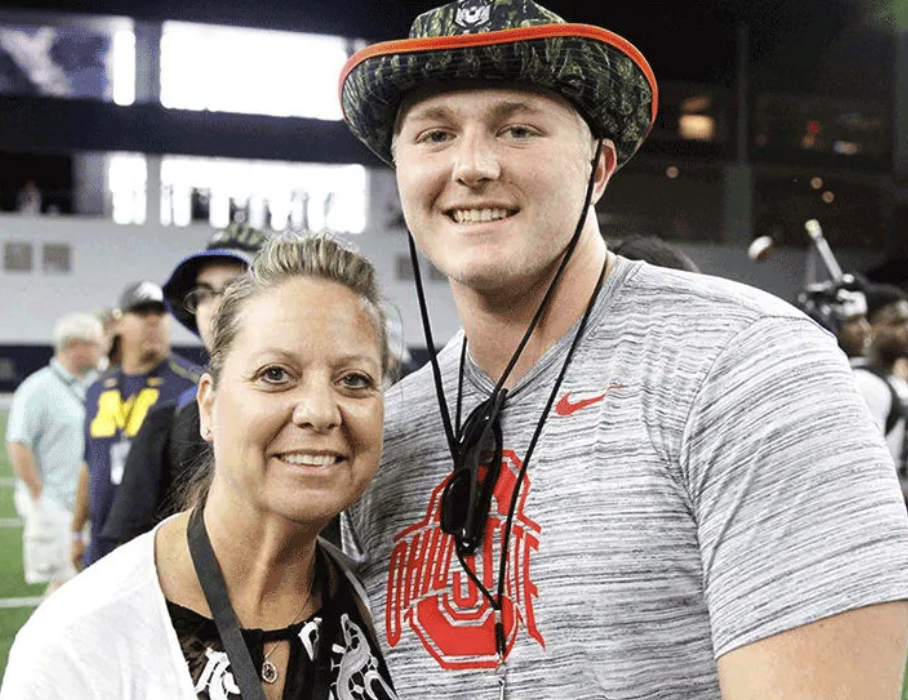
But that painful and haunting letter that Ohio State offensive lineman Harry Miller posted on Twitter was something else altogether. It was an appeal for public awareness of box-cutter scars and mental health issues that, far too often, can be hidden with muscles, bandages and layers of athletic gear. Here is the top of a Bleacher Report story — “Ohio State OL Harry Miller Retires From Football; Details Mental Health Struggles” — about this 5-star level football prospect:

Ohio State offensive lineman Harry Miller announced his medical retirement from football. … In a message posted to Twitter, Miller said that he had suicidal thoughts and went to Ohio State head coach Ryan Day to seek help.

"Prior to the season last year, I told Coach Day of my intention to kill myself," Miller wrote. "He immediately had me in touch with Dr. Candice [Williams] and Dr. [Joshua] Norman, and I received the support I needed."

Miller played for Ohio State from 2019-21. He was named an OSU Scholar-Athlete in 2019 and 2020. Miller also started seven games at left guard for the 2020 team, which won the Big Ten and the Sugar Bowl. He played two games in 2021. OSU recruited Miller, a 5-star recruit, out of Buford High School in Georgia.

"A person like me, who supposedly has the entire world in front of them, can be fully prepared to give up the world entire," Miller wrote. "This is not an issue reserved for the far and away. It is in our homes. It is in our conversations. It is in the people we love."

Miller is an unusual young man for several reasons. A long-time GetReligion reader (a professional writer with decades of experience) put it this way in an email to me this weekend:

He is straight A student in engineering and got a 1600 on the SAT. His mom was physically abused by her first husband and abandoned by Miller's father.

Yet, he has lived for others while becoming a five-star recruit. Now, the guts to do this.

So many religion ghosts, so little time.

Please respect our Commenting Policy

Podcast: What's next for Russian priests who asked if Putin will be damned for invading Ukraine?

Podcast: What's next for Russian priests who asked if Putin will be damned for invading Ukraine?

Warning: The following is not a “whataboutism” comparison between Joe Biden and Vladimir Putin or an attempt to find some kind of moral equivalence between their policies and actions.

What I am doing is making a comment about what journalists can and cannot know about a leader’s public and private religious convictions. This is a key theme in this week’s “Crossroads” podcast (CLICK HERE to tune that in) about religious issues linked to Putin’s invasion of Ukraine. The big idea is that politicians in a variety of cultures are skilled, when it comes to using religious themes and symbols.

First, what do we know about Biden’s Catholic beliefs?

We know that he carries a rosary, knows how to use it and frequently attends Mass, almost always in parishes sympathetic to him. We know that ancient doctrines in Catholic moral theology are important to him when it comes to immigration and social justice issues, but not when it comes to marriage, abortion, sexual ethics and, until recently, the death penalty.

What does this tell us about what he does or does not say during Confession and other crucial issues about the content of his faith? Next to nothing. Thus, his actions are crucial.

Now, what do we know about Putin’s Orthodox beliefs?

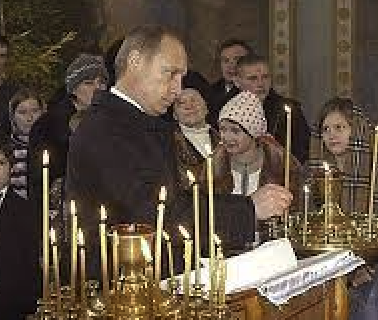
We know that he built a chapel near his office, that he knows how to make the sign of the cross and light prayer candles. We know that he believes that Orthodox Christianity is a crucial part of Russian history and that “Holy Mother Russia” is an important concept in Russian identity and nationalism. We know that issues such as abortion and marriage formation were not important to him — until it became clear that Russia is in a state of demographic collapse. Putin has, of course, used major themes from Orthodox history to justify his actions in Ukraine.

We also know that his government and his supporters have poured oceans of money into the rebuilding of Orthodox churches in the post-Soviet era, believing that this is in the national interest. This matters in a nation that endured the most sweeping wave of martyrdom in Christian history, with the closing of 98% of the land’s churches, the murder of 200,000 bishops, priests and nuns and millions of others in death camps, purges, planned famines (in Ukraine, especially) and other forms of persecution. We know that some clergy were crucified on the doors of their churches, slaughtered on their altars or stripped naked, doused with water and left outdoors in winter.

What does this tell us about what Putin does or does not say during Confession and other crucial issues about the content of his faith? Next to nothing. Thus, his actions are crucial.


Please respect our Commenting Policy

Can someone please report on the real Ginni Thomas? The truth is out there

Can someone please report on the real Ginni Thomas? The truth is out there

If it’s late winter, it must be time to report on the U.S. Supreme Court, its upcoming decisions and particularly about its most senior justice, Clarence Thomas.

Thomas is also the lone Black justice, although that may change in that President Joe Biden is poised elect the first black woman to the high court.

Two investigative stories have come out recently about Ginni Thomas, the second wife of the Supreme Court justice, and how her political activities are allegedly compromising her famous husband. One was this New Yorker piece and the other is this lengthy New York Times Magazine piece. I’ll be critiquing the latter in a moment, but I do want to excerpt one paragraph from the New Yorker piece:

Ginni Thomas has complained that she and her husband have received more criticism than have two well-known liberal jurists with politically active spouses: Marjorie O. Rendell continued to serve on the appeals court in Pennsylvania while her husband at the time, Ed Rendell, served as the state’s governor; Stephen Reinhardt, an appeals-court judge in California, declined to recuse himself from cases in which the American Civil Liberties Union was involved, even though his wife, Ramona Ripston, led a branch of the group in Southern California.

She may have a point. When I read the adulation that that the Times accords to people like Justice Ruth Bader Ginsburg (who made no secret of her political leanings) or Hillary Clinton (who wrote the book on activist wives), Ginni Thomas may be justified in complaining.

This is not to say she doesn’t have her issues, even with her Republican friends, and I’m not objecting to the reporting on Ginni Thomas’ activities about town. Fair is fair, but I simply don’t see the same disdain and suspicion meted out to activist spouses on the Left. Whenever the latter is politically active, that’s laudable. But if it’s someone on the cultural Right –- well, they’re compromisers.

I am no expert on anything pertaining to the U.S. Supreme Court; I’ve covered two or three hearings in person over the years and that’s that. So I’ll stick to the religious content of the piece. Here are two paragraphs that appear in the middle of the piece:


Please respect our Commenting Policy

Behind #MeToo headlines: Denhollander keeps advising church leaders about sexual abuse

Behind #MeToo headlines: Denhollander keeps advising church leaders about sexual abuse

In this age of small-group ministries, most pastors would know how to handle a crisis that affected significant numbers of believers in their pews.

"If you had one in four members of your congregation actively battling cancer or one in four members … experiencing being widowed or losing a spouse, chances are that you would have some level of intentional ministry to those individuals," said Rachel Denhollander, in a recent Trinity Forum event focusing on how churches respond to sexual abuse. "Maybe you would have a support group or a Bible study for them. You would have meal trains to help provide for their physical needs."

But many sexual-abuse victims hesitate to speak out, she said, because churches act as if they don't exist. Thus, they have little reason to believe the sins and crimes committed against them will be handled in a way that offers safety and healing. Far too many religious leaders act as if they haven't grasped the magnitude of this crisis.

"There is an astonishing perception gap and it's really inexcusable at this point in time," she said, speaking to victims, clergy and activists online -- including participants in 24 nations outside the United States. "We've had the data, literally, for decades. … Even what we know is dramatically undercounted.

"The statistic has stayed right around one in four women, for sexual violence, by the time they reach age 18. … The rate continues to rise and there really isn't any excuse, at this point in time, for not knowing that data. But sometimes, it's emotionally easier to not know that data and all of us have that intrinsic desire to not have to see the darkness that's around us."

Sexual abuse is a hot-button issue everywhere, from small fundamentalist flocks to the Roman Catholic Church. Revelations from #MeToo scandals have rocked the careers of A-list players in entertainment, politics, sports, academia and business.


Please respect our Commenting Policy

Podcast: What's the SCOTUS story? New Colorado case focuses on free speech, not religious liberty

Podcast: What's the SCOTUS story? New Colorado case focuses on free speech, not religious liberty

Here we go again?

That’s a logical question, in light of the news that — once again — church-state activists on left and right are preparing for more U.S. Supreme Court arguments involving the state of Colorado, a traditional Christian believer, LGBTQ rights and the First Amendment.

That was the news hook for this week’s “Crossroads” podcast (CLICK HERE to tune that in). But to understand that conversation, it really helps to dig into a key passage or two in the majority decision in that 2019 SCOTUS case focusing on Masterpiece Cakeshop and the Colorado Civil Rights Commission (full text .pdf here).

So, all rise. The writer is, of course, then Justice Anthony Kennedy:

The laws and the Constitution can, and in some instances must, protect gay persons and gay couples in the exercise of their civil rights, but religious and philosophical objections to gay marriage are protected views and in some instances protected forms of expression. While it is unexceptional that Colorado law can protect gay persons in acquiring products and services on the same terms and conditions as are offered to other members of the public, the law must be applied in a manner that is neutral toward religion.

The result was one of those narrow decisions much beloved by Chief Justice John Roberts.

Then, what you hear in this next passage is the sound of Kennedy punting the crucial religious-liberty decision in this First Amendment case into the mists of the future:

The outcome of cases like this in other circumstances must await further elaboration in the courts, all in the context of recognizing that these disputes must be resolved with tolerance, without undue disrespect to sincere religious beliefs, and without subjecting gay persons to indignities when they seek goods and services in an open market.


Please respect our Commenting Policy

Texas couple survives journey through COVID hell, apparently without clergy help of any kind

Texas couple survives journey through COVID hell, apparently without clergy help of any kind

One of my closest friends is a veteran doctor in a town deep in the Bible Belt. I’ve had lots of conversations with him about this experiences during the coronavirus pandemic. He has had COVID and so have I.

One common theme in our conversations has been a sense of mystery that medical professionals, from the beginning, have had about this evolving disease. They understand why COVID hits some people hard, especially older patients and people who, for various reasons, have respiratory problems. The mystery is why this disease strikes with deadly force in some cases — but clearly not all — involving young, healthy adults. And why does COVID attack some hearts and not others?

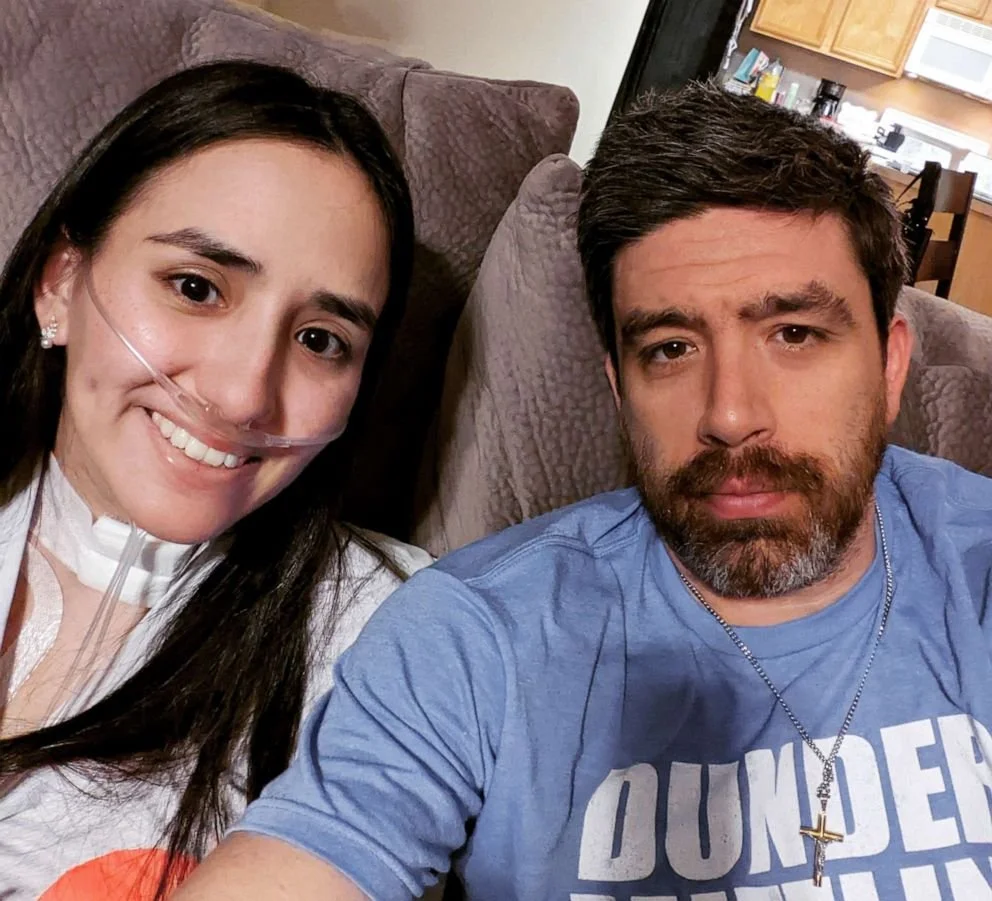
Readers will collide with some of these mysteries while reading a stunning Washington Post story about a family’s 139-day hospital drama that has received quite a bit of attention in social media and the mainstream press. The headline: “Chris Crouch was anti-vaccine. Now his pregnant wife had covid, and he faced a terrible choice.” Here is the overture:

KINGWOOD, Tex. — Chris Crouch had had low expectations for online dating. He was a police officer in his 30s, almost a year out from a painful divorce, and, he said, the women he had met had been “playing games” in ways that left him dispirited.

Then he met her.

Diana Garcia Martinez was 24 and a busy single mom whose sister had set up her profile without her knowing. She was intelligent, empathetic and upfront, and by the third date, he was in love. “It was just a feeling. … I felt like I knew her my whole life,” he recalled explaining to his cousin Gilbert, knowing it was a cliche but also true.

What role does religious faith play in this story? That’s a complex question.

I mean, we are talking about people in Texas. No one should be surprised by frequent Godtalk and references to prayer.

However, as the son of a Texas Baptist pastor (who spend the last decade of his ministry as a hospital chaplain), I was very surprised that the word “church” is missing. Did this couple really go through this medical hell alone, without a pastor or friends who share a pew with them? Maybe this couple is in the “Nothing in particular” demographic, but I have my doubts.


Please respect our Commenting Policy

Pronoun wars? The 'usual suspects' quoted by the press skewed Baptism-gate coverage

Pronoun wars? The 'usual suspects' quoted by the press skewed Baptism-gate coverage

What is the role of journalism? Above all, it is to inform and educate. We know that reliable information is needed for any society to properly work. At the very least, readers deserve accurate information.

What happens when this isn’t the case? That’s the dilemma that befell many news organizations in recent days when a big Catholic news story came across their newsroom desks.

Yes, I’m referring to the botched baptism story out of Arizona last week that made so many headlines. And that’s hard to do considering the ongoing pandemic, the Beijing Olympics and Russia-Ukraine crisis.

Yes, baptism-gate has been all the rage. News coverage of it, however, not so good. More on that later.

To summarize: a priest named Andres Arango, following a church investigation, determined that he’d incorrectly performed thousands of baptisms over more than 20 years. It meant that those who had been baptized in Phoenix, and at his previous parishes in Brazil and San Diego, needed to be baptized again.

What did he do wrong? Arango, who has since resigned after making the mistake, used the wrong pronoun. Instead of saying, “I baptize you in the name of” he used “we.” After diocesan officials found out, they said people who Arango baptized aren’t officially Catholic. That means they weren’t eligible for other sacraments like Holy Communion.

This is where the news coverage got interesting. Once again, on an issue of great importance to Catholic readers and church leaders, secular news outlets assumed the views of one side were normative — even accurate — at the expense of church doctrine. Here at GetReligion, we have a name for that approach (click here for information).

Everyone from The New York Times and USA Today to NPR and local news outlets covered the story. What we learned from the coverage was telling. It was also largely one-sided and inaccurate.


Please respect our Commenting Policy

Cooper Kupp's spiritual vision: Well, it's hard not to pay attention to the Super Bowl MVP

Cooper Kupp's spiritual vision: Well, it's hard not to pay attention to the Super Bowl MVP

It’s hard not to pay attention to what the winner of the Most Valuable Player award has to say after the Super Bowl.

Thus, a few mainstream media features after the Los Angeles Rams’ victory focused on a bit of very personal testimony by superstar wide receiver Cooper Kupp. In a way, what he said resembled the kind of stereotypical Godtalk that filters into the news when believers are asked to express their first reactions after a major event — glorious or tragic — in their lives.

Long ago (pre-Internet), I interviewed the late, great Dallas Cowboys coach Tom Landry about all of this. People tend to think that believers pray to win football Games and either God hears them or not, he said. The reality is more complex than that and, most of the time, players and coaches are trying to make sense of these events — wins and loses — in the context of how God is working in their lives.

In the case of Kupp, this win in The Big Game linked into what he claimed was a vision after a Super Bowl loss. Here is the top of a story from The Athletic: “How the Rams’ Cooper Kupp’s quiet vision became reality in front of the whole world.” This is long, but essential:

INGLEWOOD, Calif. — The vision arrived with unbelievable clarity. Cooper Kupp long ago saw an unmistakable image of himself not only playing in and winning a Super Bowl but also earning the Most Valuable Player award.

But what was notable about this visualization was its peculiar timing. It came as Kupp was walking off the field at Mercedes-Benz Stadium in Atlanta after watching — not playing in — the Rams’ Super Bowl LIII loss to the Patriots. Kupp missed that game with a knee injury, but he says he received confirmation that night that he’d be back.

“What it was is just this vision that God revealed to me that we were going to come back and we were going to win it and somehow I was going to be the MVP of the game,” Kupp said. “I shared that with my wife because I couldn’t tell anyone else, obviously. But from the moment that this postseason started, there was such a belief in every game. It was written already, and I just had to play free knowing that I got to play from victory, not for victory.”

Kupp finally shared his vision with the world Sunday night. By then, the world had already seen the manifestation of it all. It was no longer was a vision. It was Kupp’s incredible reality.

Note this phrase: “I couldn’t tell anyone else, obviously.”


Please respect our Commenting Policy

Once again, why avoid religious questions in the 2017 Sutherland Springs church massacre?

Once again, why avoid religious questions in the 2017 Sutherland Springs church massacre?

Consider, for a moment, a hypothetical case in which an angry anti-abortion activist massacres worshippers gathered at a liberal church known for its advocacy of abortion rights.

What about a radicalized Muslim attacking a synagogue? A gunman decked out in Make America Great Again clothing attacking a mosque?

Would facts about the identities of these shooters, as well as their previous statements and actions, be considered relevant in follow-up stories? We are, of course, wrestling — again — with the “Why?” component in the journalism mantra, "Who," "What," "When," "Where," "Why" and "How."

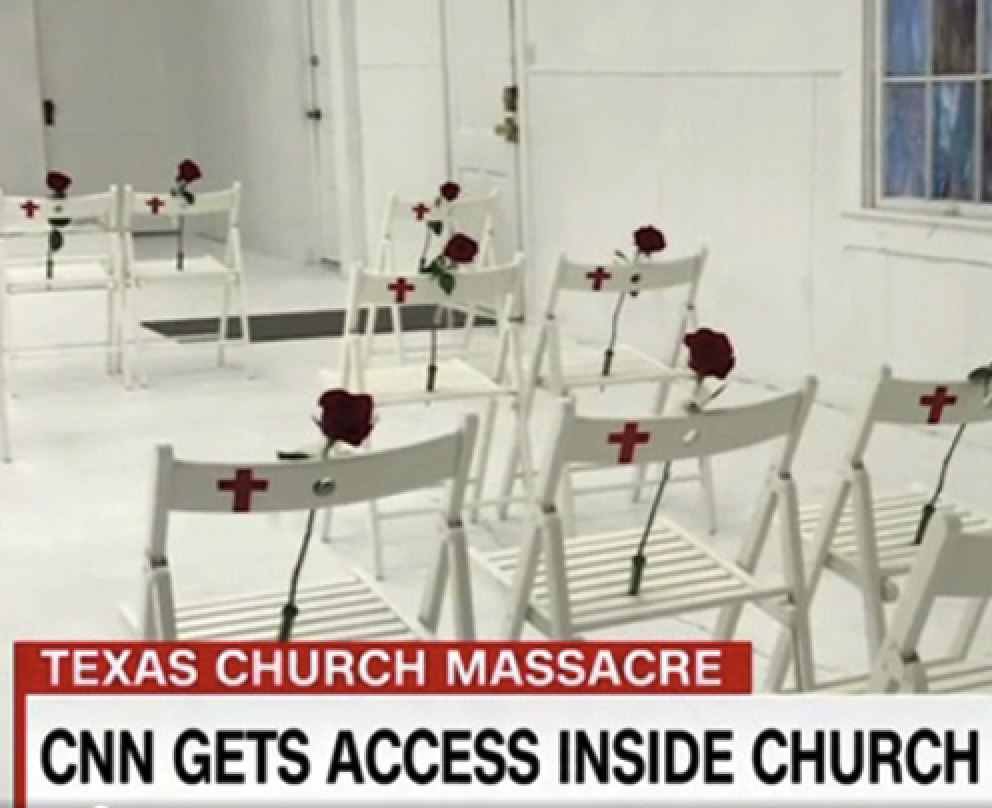
In this case, we are dealing with background materials in media coverage of a development in the 2017 massacre at the First Baptist Church in Sutherland Springs, Texas. Here’s the New York Times headline: “Air Force Ordered to Pay $230 Million to Victims of 2017 Church Shooting.” The overture states:

A federal judge ordered the U.S. Air Force … to pay more than $230 million to the survivors and the families of the victims of a 2017 shooting at a Texas church because the Air Force had failed to report the gunman’s criminal history.

In his ruling, Judge Xavier Rodriguez of the U.S. District Court for the Western District of Texas wrote that the Air Force could have blocked the gunman, Devin P. Kelley, who had served on an Air Force base in New Mexico, from buying the rifle he used to kill 26 people on Nov. 5, 2017, at the First Baptist Church in Sutherland Springs, Texas.

For its failure to report Mr. Kelley’s 2012 conviction for domestic assault, the Air Force must pay damages to the victims for their “pain and suffering, mental anguish, disfigurement, impairment and loss of companionship,” the judge wrote. He added that the case was “unprecedented in kind and scope.”

After previous commentary on this massacre, some readers noted that — reacting to detailed coverage in European newspapers — it wasn’t automatically relevant that Kelley was an outspoken atheist.

That is a valid point. However, my question is whether it is worthy of discussion (perhaps one or two sentences in news reports) that he had, in arguments on social media, expressed virulently anti-Christian beliefs and made remarks that suggested he was unstable.


Please respect our Commenting Policy