People

That murdered 'priest' and accusations of abuse: But this wasn't another Catholic case

That murdered 'priest' and accusations of abuse: But this wasn't another Catholic case

I have, since the 1980s, heard my share of complaints from Catholic readers about news coverage of sexual abuse by clergy.

There are readers who get angry about this coverage, period. They want the topic to go away and see anti-Catholic bias in any coverage of the subject, even when the coverage is accurate and fair-minded.

However, other Catholic readers get mad when they see valid coverage that leaves the impression that sexual abuse is only an issue in the Church of Rome. Many of these readers (on the Catholic left or right) want to see accurate, informed coverage on this hellish topic, which would include some mention of the many, many cases that take place in secular settings (think public schools) and in other religious groups.

That’s the broader context for complaints that I heard about a recent New York Times story that ran with this dramatic double-decker headline:

Scandal on a Wealthy Island: A Priest, a Murder and a Mystery

The Rev. Canon Paul Wancura led a quiet, privileged life. But after his shocking death, a sexual abuse allegation followed.

There were two problems with this tragic story — one obvious and one not so obvious.

The first problem was that readers didn’t find out, until quite a ways into this piece, that this was a story about an alleged abuser in the Episcopal Church. The word “priest” stood alone in the headline and in 300-plus words of text. It helps to read the lengthy overture:

Not much happens of note on Shelter Island, all 8,000 bucolic acres of it. Sandwiched between Long Island’s North and South Forks, it’s the kind of place where people seem to know one another, where car doors are often left unlocked and where, for some 20 years, the most bothersome problem has been Lyme disease-carrying blacklegged ticks.

But much of that changed in March 2018, when the Rev. Charles McCarron was asked to check in on another clergyman who had recently been commuting to a town on Long Island as a fill-in priest. He had failed to show up at church that day.

Please respect our Commenting Policy

Podcast: Reporters who ask the right questions will find lots of NFL religion stories

Podcast: Reporters who ask the right questions will find lots of NFL religion stories

Several days before former Miami Dolphin head coach stunned the National Football League with his class-action lawsuit alleging racial discrimination and other sins, I read a very interesting profile at The Athletic about one of my sports heroes.

The headline summed things up: “Bears Hall of Famer Mike Singletary is hungry for a second chance to be an NFL head coach, but will it ever come?”

Singletary was a legend in Chicago and, before that, at Baylor University — where I met him because of a mutual friend. Singletary was a highly articulate preacher’s kid from Houston with a voice that sounded like he was auditioning to be the next James Earl Jones. He was a leader from Day 1 at Baylor and demonstrated all the characteristics that made him the face, brain and soul of the greatest defensive unit in NFL history.

This is where the Singletary feature became relevant during this week’s “Crossroads” podcast (CLICK HERE to tune that in), which focused on why journalists struggle to spot “religion ghosts” in so many sports stories, such as the life of Los Angeles Rams superstar Cooper Kupp (“Emerging NFL superstar — Cooper Kupp — puts his faith on his hat, not that reporters notice”) and the beliefs that appear to be putting the steel in the spine of Flores.

Why hasn’t Singletary had a second shot at being an NFL head coach, after his tumultuous tenure in San Francisco (not the best city for his views on faith and culture)? It may have something to do with Singletary trying to “stand for what he had been preaching” with the 49ers. Read this long passage carefully:

… 49ers owner John York, CEO Jed York, director of player personnel Trent Baalke and other executives called Singletary to a meeting. They had a trade in place with the Steelers for Ben Roethlisberger, who had recently been accused of sexual assault. Singletary vetoed the deal. …

“I had been telling the team I wanted a team of character,” he says.


Please respect our Commenting Policy

Emerging NFL superstar -- Cooper Kupp -- puts his faith on his hat, not that reporters notice

Emerging NFL superstar -- Cooper Kupp -- puts his faith on his hat, not that reporters notice

If you have been following the remarkable 2022 National Football League playoffs, then you have probably heard quite a bit about Cooper Kupp, the all-world wide receiver for the Los Angeles Rams.

I know. I know. Not many GetReligion readers are into sports, as Bobby Ross Jr., and I have bemoaned for quite a few years. But this Super Bowl thing is a pretty big deal in American culture and, once again, there’s a religion ghost linked to the life of one of the key players in The Big Game. Not that readers and viewers would know anything about that, based on the elite sports-media coverage.

You see, “crown” is the big word attached to Kupp right now. This year, he became only the fourth player in NFL history to win the “triple crown” as a wide receiver, leading the league in receptions, receiving yards and receiving touchdowns (click here for a Los Angeles Times profile that stresses this fact, “When it mattered most, Cooper Kupp again carried the Rams”).

Wait, there’s more. As this CBS Sports feature noted, Kupp also became the first NFL player EVER to have more than 2,000 receiving yards in the regular season and postseason combined.

The “crown” thing keeps showing up in those stories and many others like them, along with countless references to how selfless Kupp is and how much he and his wife Anna contribute to their community.

At some point, reporters need to read the message — mixing sports and faith — that is written on that signature hat that Kupp keeps wearing in press appearances. See this reference, care of Sports Spectrum — a Christian news website.

As he spoke, he sported a hat from his own apparel line. On one side of the hat it says, “Do it to get a crown that will last forever.” The phrase comes from the Bible verse 1 Corinthians 9:25, which says, “Everyone who competes in the games goes into strict training. They do it to get a crown that will not last, but we do it to get a crown that will last forever.”

As always, it isn’t news, in and of itself, that Kupp is an outspoken Christian.


Please respect our Commenting Policy

Podcast: As it turns out, it was totally logical for Jerry Falwell, Jr., to embrace Donald Trump

Podcast: As it turns out, it was totally logical for Jerry Falwell, Jr., to embrace Donald Trump

When reading That. Vanity. Fair. Article, it will help to focus on the obvious answer to the big question that will immediately pop into your head (especially if you happen to be a journalist).

The question: Why did Jerry Falwell, Jr., choose to talk to a magazine with a solid footprint on the American cultural and journalistic left?

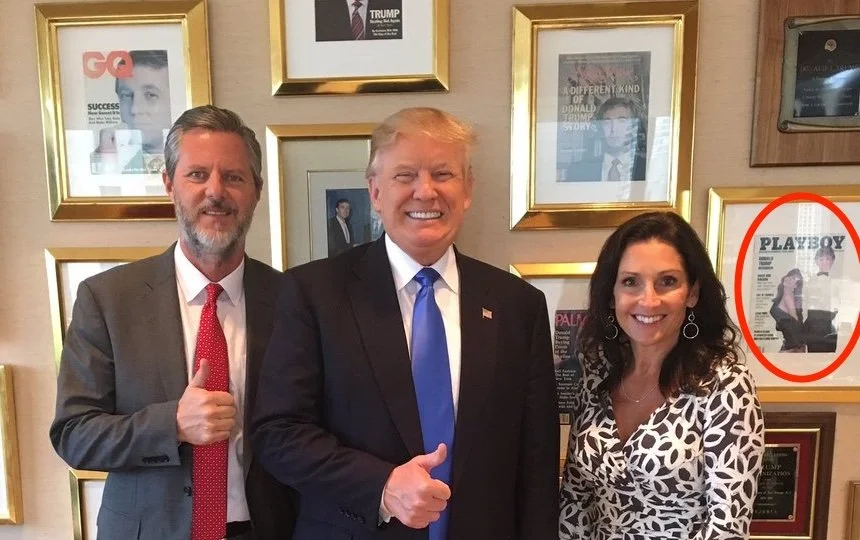
The answer: Falwell is a lawyer who, at the moment, has a number of pressing legal issues in his life. To put this in D.C. Beltway lingo, he appears to be “hanging a lantern” on his problems. Here is one online definition of that term:

"Hang a lantern on your problem” was entered into the political lexicon in the 1980s by Chris Matthews, a former chief of staff to Speaker of the House of Representatives Tip O’Neill. Matthews explained “hang a lantern on your problem” to the New York (NY) Times in 1987: “The first step is, admit you have a problem; that gives you credibility. The second step is to use that credibility to redefine your problem, or use the problem for your own purposes.”

As I explained during this week’s “Crossroads” podcast (CLICK HERE to tune that in), it is interesting to read the Vanity Fair piece and, with a mental highlighter pen (a real one if you get the analog magazine), mark the questions that Falwell chooses to answer and the ones that he declines to answer. Then, repeat the process with the questions that are answered and rejected by other key voices — think Giancarlo “pool boy” Granda and legal representatives for Liberty University.

This process will yield insights into two of the most obvious plot lines in this soap-opera mess, as in its steamy Miami-angle sex scandal and the ugly legal wars between Jerry Falwell, Jr., and the shamed leaders of Liberty University.

Once you’ve done that, you’re read to dig into the deeper elements of this story, which are clearly visible in the long, long, long second deck of it’s double-headline:


Please respect our Commenting Policy

Visiting the monks at Christ in the Desert monastery, during a pandemic that closed its gates

Visiting the monks at Christ in the Desert monastery, during a pandemic that closed its gates

Religion-beat work is complicated, in part because of the many different ways that believers use the same words when describing their lives. The word “charismatic” has a rather different meaning in a Pentecostal flock than when Baptists — or maybe most Baptists — use it to describe preachers.

Here at GetReligion, we frequently note the challenges faced when journalists from other beats cover complex stories that are baptized in religious language and imagery.

That brings me to a feature that ran the other day at The Washington Post with this headline: “Monks in New Mexico desert dedicated to hospitality reflect on two years without guests.”

There is much to praise in this piece, along with a few word choices that would be challenged by insiders in specific religious traditions. Also, I should note that the author of this piece is Chris Moody, a CNN veteran who is a former student of mine at both Palm Beach Atlantic University and the Washington Journalism Center.

It’s rather hard to critique and praise the work of a talented former student! However, I know that many GetReligion readers will want to see this feature. Plus, I love New Mexico and, early in my religion-beat work, I wrote similar pieces about monasteries in North Carolina and later Colorado.

Let’s start with the overture, which is long, but shows the larger context of this COVID-tide story:

CHAMA RIVER CANYON, N.M. — Hidden in this canyon of crimson sandstone cliffs encompassed by miles of federally protected wilderness, the Monastery of Christ in the Desert seems like an ideal place to ride out a pandemic.

For more than 50 years, a small community of Benedictine monks has quietly lived, worked and worshiped here in a cluster of off-grid adobe buildings along the banks of northern New Mexico’s Chama River. Considered the most remote Catholic monastery in the hemisphere, it can be reached only by a 13-mile single-lane earthen road that winds through the canyon. Abiquiú, the closest village — population 151 — is 25 miles away. Groves of cottonwood and willows line the river where bald eagles hunt for rainbow trout. Black bears, coyotes and cougars prowl the pinyon- and sage-scented Santa Fe National Forest, which surrounds the monastery.

Despite the difficult journey, outsiders have flocked to this serene abbey for decades in search of spiritual renewal.


Please respect our Commenting Policy

Was the life of Dorothy Day too Catholic for the New York Times to grasp?

Was the life of Dorothy Day too Catholic for the New York Times to grasp?

The New York Times veers close to self-parody in publishing “Was Dorothy Day Too Left-Wing to Be a Catholic Saint?

The very deck beneath the headline undercuts it: “The Archdiocese of New York has asked the Vatican to consider the social activist for sainthood. But church leaders are not entirely comfortable with her politics.”

Actually, Day has always made Catholics on the right and left uncomfortable. The key is making sure that readers know why this is true.

What Liam Stack has to report is pretty straightforward.

Martha Hennessy was upset with what Cardinal Timothy Dolan preached during a Mass in Day’s honor:

“He has reduced her to ‘she lived a life of sexual promiscuity and she dabbled in communism,’” she said. “What worse enemy could we have, saying those things about her?” Ms. Hennessy is active in the [canonization] movement and did a reading at the Mass. “We have got to focus on her policies, we have got to focus on her practices.”

Stack’s report does not link to the cardinal’s homily, which is available on YouTube and embedded in this post (the homily begins at one hour and 15 minutes).

Viewers will note that there is no indication in Cardinal Dolan’s remarks that he is anything other than an admirer. He calls Day “one of our greats,” and mentions that he asked Pope Francis to declare her venerable: one major step toward becoming a saint.

While Dolan’s brief homily did not dwell on Day’s political life, he referred to the significant detail of her being on assignment by a Catholic magazine to report on a Hunger March in 1932 in the nation’s capital. Dolan added a detail omitted by the Times: after observing this march, Day prayed in the Basilica of the Immaculate Conception and took another step toward integrating her politics and her emerging faith.


Please respect our Commenting Policy

Plug-In: Five key story angles linked to Texas synagogue where hostages were taken

Plug-In: Five key story angles linked to Texas synagogue where hostages were taken

When I first saw news on social media of a ranting man taking hostages at a Texas synagogue Saturday, I immediately clicked the link to an Associated Press report.

To my shock, I discovered that the standoff involved Congregation Beth Israel in Colleyville, Texas.

I first wrote about that suburban congregation nearly two decades ago when I covered religion for AP in Dallas.

In 2004, I did a national feature on “frequent-flier rabbis” filling a need at then-fledgling Congregation Beth Israel and other small Jewish congregations across the nation. That same year, I wrote about Anna Salton Eisen, one of the congregation’s founders, and her Holocaust survivor father, George Lucius Salton.

Just this past October — 17 years later — Eisen trusted me to tell her family’s story again. I wrote a follow-up piece for AP on a surprising “reunion” between Eisen and the children of several Holocaust survivors who were in concentration camps together.

“I started this synagogue with two other families and am heartbroken and fearful,” Eisen wrote on Facebook on Saturday. “What has become of the world?”

I shared her status on my page and asked my friends to pray for a peaceful end. I was so relieved when Rabbi Charlie Cytron-Walker and two other hostages escaped unharmed Saturday night. A fourth hostage was released earlier. The FBI hostage rescue team shot the gunman.


Please respect our Commenting Policy

Novak Djokovic is both Orthodox and unorthodox: Why ignore faith when covering this story?

Novak Djokovic is both Orthodox and unorthodox: Why ignore faith when covering this story?

First things first. I am not a tennis fan. I don’t think I have seriously cared about the outcome of a tennis match since the late Arthur Ashe won Wimbledon in 1975.

Also, as a Baby Boomer at high risk (asthma), I have had both shots and the booster. I am currently in semi-lockdown. I wear a mask when shopping and in jammed public places. I’m one of those folks in the middle — pro-vaccine, but anti-government mandate. What about religious exemptions? As I have written here at GetReligion, that would be a complex U.S. Supreme Court case.

This brings me to the Novak Djokovic drama. I vaguely knew that he was one of the world’s top tennis players, but knew nothing about his unique — bizarre, even — beliefs about a host of medical issues.

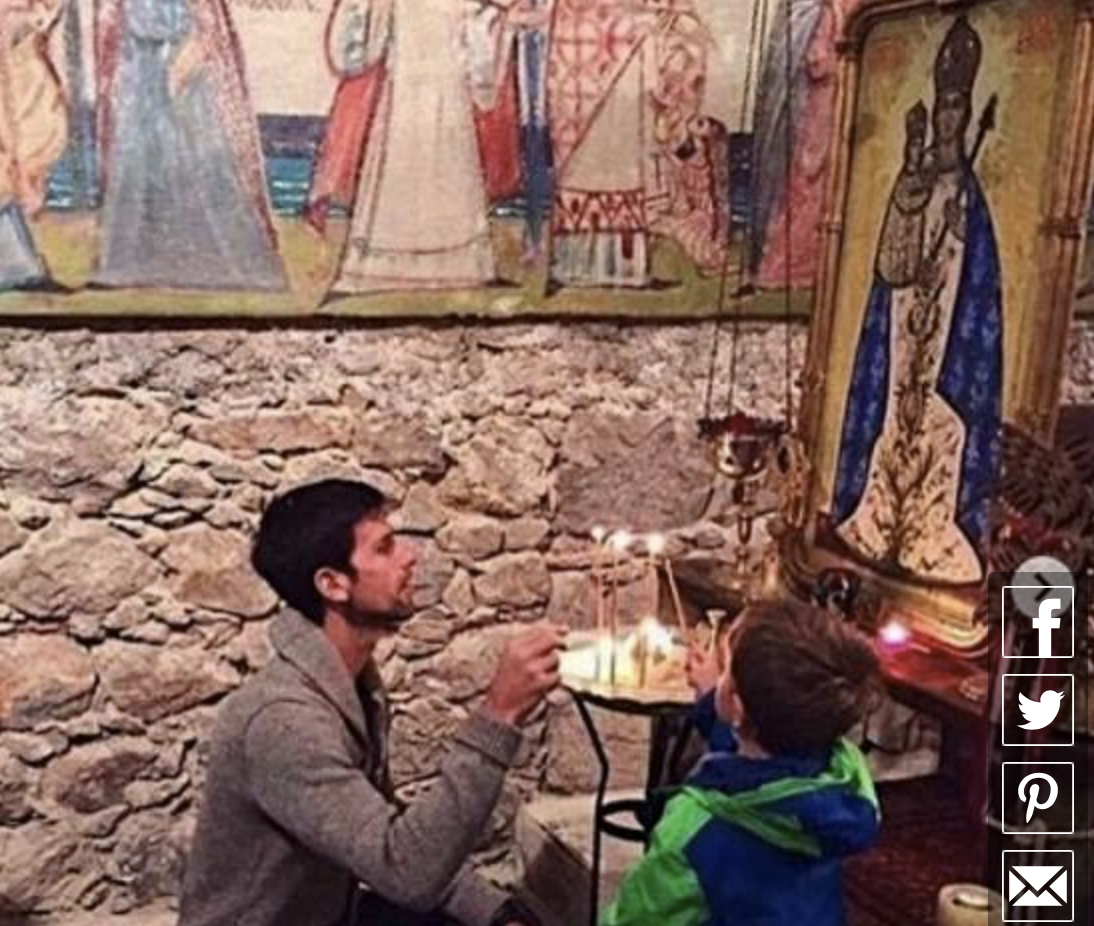
Then I saw an image that hit home for me, as an Eastern Orthodox Christian believer. It showed Djokovic doing what Orthodox parents do — helping his young son light prayer candles and venerate icons.

What follows in this post has nothing to do with whether readers think Djokovic is right or wrong, a liar or a Serbian hero, a lunatic or a misunderstood believer, of some kind of another. What I am doing here is asking a journalism question about mainstream coverage of this battle in the wider COVID-19 wars. I read the New York Times, of course, so that was where I immediately went for information.

The question: How could journalists try to tell the story of Djokovic and his opposition to COVID-19 vaccines without digging into his complex and, it seems to me, confusing set of Orthodox and unorthodox religious beliefs? Isn’t that a crucial and factual element of this story?

I am aware, of course, that anti-vaccine sentiment is present in some Orthodox circles — such as Serbia — but certainly not all (my own bishop has been very careful during the pandemic).


Please respect our Commenting Policy

Concerning Elon Musk, the Babylon Bee and the wise teachings of Jesus

Concerning Elon Musk, the Babylon Bee and the wise teachings of Jesus

At the end of each podcast, Babylon Bee leaders ask guests the same 10 questions, including this stumper: "Calvinist or Arminian?"

That caught Elon Musk by surprise, and he needed clarification on the difference between Arminian believers and persons from Armenia. After some background on Protestant history, he said: "My mind would say 'determinism' and my heart says, 'free will.' "

Why was the mastermind behind Tesla and SpaceX -- a man worth $278 billion at the end of 2021-- talking to a Christian satire website? The answer: Musk has 69.7 million Twitter followers, and he frequently responds, even if it's a U.S. senator questioning his taxes.

"You know, he engages with our content from time to time," Bee CEO Seth Dillon told Fox News. After email exchanges about a meeting, Musk said: "Fly to me and we'll do it."

The result was 100-plus minutes of conversation in Austin, Texas, ranging from satire to science, from politics to pop culture. Topics included why entrepreneurs are fleeing California, sustainable energy, superheroes (Musk would choose to be "Irony Man"), the physics of reusable rockets, cyborgs, how "wokeness" threatens humor, CNN morality and the future of a planet near an expanding sun.

Musk discussed his journey from South Africa to America, including his days as a manual laborer while struggling to pay student loans. Then he dove into computer coding and online commerce, making millions of dollars that led to Tesla. The rest is history.

On celebrity websites, Musk is often described as an atheist or agnostic. Asked if he prays, Musk once replied: "I didn't even pray when I almost died of malaria." But after the success of the first manned Falcon rocket mission, Musk said, in his public remarks: "You know, I'm not very religious but I prayed for this one."


Please respect our Commenting Policy