People

New podcast: Are news reports 'dunking' on the late religious broadcaster Marcus Lamb?

New podcast: Are news reports 'dunking' on the late religious broadcaster Marcus Lamb?

If you search for the word “posterized” in up-to-date online dictionaries, this is what you find: “A slang term depicting a play in basketball. In said play, a player dunks the ball over top or in front of another player, making a play so picturesque that it may appear on a poster, hence the term, posterized.”

Clearly, this is linked to another term frequently used in the nasty verbal wars that are common on social-media sites, with Twitter — dominated by liberal and conservative voices in elite zip codes — being the best example.

That term is “dunking.”

“Dunking” is relevant to the main topic discussed in this week’s “Crossroads” podcast (click here to tune that in) about media coverage of the death of religious broadcaster Marcus Lamb, who died of COVID-19 after using his Daystar Television Network to criticize vaccine mandates and other anti-pandemic rules and guidelines, while advocating alternative treatments.

“Dunking” is defined, sort of, in this Slate article: “ ‘Dunking’ Is Delicious Sport — But it might be making Twitter even more terrible.” Here is a relevant passage:

Since Twitter rolled out the feature a couple of years ago, the quote-tweet has evolved into something like a pair of magic high-tops dispensed to every user on the service: Anyone can botch a tweet, and anyone can leap over him or her to score a couple of points—or a couple thousand likes and retweets.

The basketball term is apt: In a Twitter dunking, someone has made his point or said her piece, and instead of responding to it with a direct reply, perhaps in the spirit of equal-footed debate, the dunker seizes it like an alley-oop on his or her way to the basket. Maybe another player gets the unwitting assist, but the point is yours to be liked and retweeted not just as a reply but as a worthier tweet in its own right.

What does this look like in practice? Consider this example from the blitz of tweets about Lamb’s death. This dunk comes from the creator of the “America’s Best Christian” brand:
Please respect our Commenting Policy

From Off Broadway to movie screens: The complicated conversion story of C.S. Lewis

From Off Broadway to movie screens: The complicated conversion story of C.S. Lewis

While historians argue about what C.S. Lewis did or didn't say, it can be stated with absolute certainty that the Oxford don never patted down his rumbled, professorial tweed jacket before exclaiming, "Where's my phone?"

That line occurs at the start of "The Most Reluctant Convert," as actor Max McLean enters a movie set preparing for the first scene. Seconds later, the camera follows him into the real Oxford, England, where Lewis was a scholar and tutor at Magdalen College.

At first, the famous Christian writer explains how he became an atheist. When he walks into the real White Horse pub, he orders two pints of beer, with one for the viewer. Soon, scenes from his memories spring to life, with Lewis striding through them as a narrator.

"Lewis is in his imagination. He's personified in his thoughts. … I do think that the structure emerged out of the fact that Lewis had a lot to say," said McLean, laughing.

Thus, director Norman Stone -- a BAFTA winner for BBC's "Shadowlands" -- let the "voice of Lewis articulate his struggle, his passion. He is one of those rare individuals where one's intellect, one's emotions and one's spirituality are completely intertwined," said McLean.

All of this is second nature to McLean since the film covers much of the same territory as his own "C.S Lewis Onstage." This was a one-man show at the Fellowship for Performing Arts in New York City, an off-Broadway company McLean founded and guides as artistic director. It has staged other Lewis works, such as "The Screwtape Letters" and "The Great Divorce," drawing warm reviews from The New York Times and other major publications.

The first-person narration, explained McLean, was primarily drawn from Lewis' autobiography, "Surprised by Joy," and the many volumes of his personal letters.

The jump from stage to screen, of course, allowed the film's creators to seek permission to film in some of the most important sites linked to Lewis' life.


Please respect our Commenting Policy

Podcast: Why was the New York Times so interested in Marvin Olasky? Take a guess ...

Podcast: Why was the New York Times so interested in Marvin Olasky? Take a guess ...

Why was The New York Times so interested in Marvin Olasky and his views on journalism and Christian faith?

That’s a question that I heard several times this week from readers and others.

Actually, the Times published a previous article on Olasky, which I mentioned in a post here earlier this week (“Wut happened? Tensions behind World's move to push Olasky out of his editor's chair”). So let’s tweak that question a bit, to get to the point that host Todd Wilken and I discussed in this week’s “Crossroads” podcast (click here to listen to it).

Why was the Times team so interested — it’s a long, complex feature — in Olasky right now?

Actually, the answer to that question is pretty clear. Read the headline: “His Reasons for Opposing Trump Were Biblical. Now a Top Christian Editor Is Out.” Now,. read the thesis statement:

At one level, Mr. Olasky’s departure is just another example of the American news media sinking deeper into polarization, as one more conservative news outlet, which had almost miraculously retained its independence, is conquered by Mr. Trump.

It also marks the end of a remarkable era at a publication that has shaken evangelical churches and related institutions with its deeply reported articles. … At a time when hot takes get the clicks, these articles offered something old-fashioned and hard for any community to take: accountability reporting.

That’s actually two answers, isn’t it.

Answer No. 1: Trump, Trump, Trump, Trump. Answer No. 2: Olasky has built a magazine known for producing hard-news articles. That’s rare, in today’s digital world dominated by a quick-click business model that loves opinions and commentary work. The editorial approach at World was shaped by cultural, religious conservatism, more than partisan politics.

Think of this magazine as an evangelical version of the late, great New Republic.


Please respect our Commenting Policy

How will media cover the secretive Afghan mullah who will shape Islam's global status?

How will media cover the secretive Afghan mullah who will shape Islam's global status?

Showing his age, The Guy notes with amusement that early in his career "Afghanistanism" meant "the practice (as by a journalist) of concentrating on problems in distant parts of the world while ignoring controversial local issues" (per the authoritative Merriam-Webster)!

Today, many will argue that no nation is more important in news terms than the Islamic Emirate of Afghanistan, which affects both international turmoil and Islam's global status and cultural direction.

Journalists may ask, “Why?” This is probably the most heavily Muslim of nations and the Taliban who regained power in August proudly proclaim totalist governance based upon strictly interpreted and enforced Sharia (Islamic religious law). This example of Islam in action presents a huge challenge to the world religion.

A two-page (paywalled) Wall Street Journal status report by chief foreign correspondent Yaroslav Trofimov last weekend said the militantly Sunni Taliban have yet to impose the harshest policies that provoked wide condemnation during the prior Taliban years in power.

But the future is iffy.

For the moment, females seem able to attend primary school, but mostly not high school and college. Rigid bans on women leaving home unless accompanied by male relatives have not reappeared, and some women continue careers though many do not.

Public spectacles of beheading of opponents, and street beatings by religious police, have not resumed (though there are social-media rumors), nor have music and visual art yet been restricted. Shia and Sufi Muslims, and the tiny enclaves of non-Muslims, are understandably anxious, along with Christians, both coverts and missionaries who chose to remain after the exodus. (Other aspects of autocratic rule are commonplace in that part of the world.)


Please respect our Commenting Policy

Wut happened? Tensions behind World's move to push Olasky out of his editor's chair

Wut happened? Tensions behind World's move to push Olasky out of his editor's chair

First things first: Readers need to know that Marvin Olasky has been a friend of mine for yearly three decades. If I was dangling off a cliff, I’d trust Olasky to hold the rope.

Through the years, Marvin and I have disagreed on many journalism issues and had some stimulating debates. For example: He was dead right when, in the first years of Internet life, he predicted that life in the digital world — think social media in particular — would undercut old-school standards of balance and objectivity in journalism. In GetReligion terms, think “Kellerism” and much of today’s New York Times.

Back to the present, and a pretty solid Times piece that is lighting up Twitter. Here’s the double-decker headline:

His Reasons for Opposing Trump Were Biblical. Now a Top Christian Editor Is Out.

A clash over culture and politics comes to World, a groundbreaking journalistic institution that covers evangelical Christians.

There is, of course, no way to leave Donald Trump out of this story, with Olasky submitting his resignation (he was planning to retire next summer) after a coup in the World board after several years of tensions. Among the hot-button issues, readers learn, were COVID-19 masks and voter fraud (#DUH).

As I said, the story is pretty good, with Olasky — rare, this — portrayed in the elite press as a good guy. However, there is one statement that I need to challenge right up front:

At one level, Mr. Olasky’s departure is just another example of the American news media sinking deeper into polarization, as one more conservative news outlet, which had almost miraculously retained its independence, is conquered by Mr. Trump.

Has the newsroom at World been “conquered by Trump”?

I would say that we do not know that, yet. It’s clear that the World board signed off on the creation of an ambitious World-branded commentary website — without Olasky’s approval as editor. But do we know that the news team will not bravely carry on with its work?

We do not know that, do we?


Please respect our Commenting Policy

Plug-in: Supreme Court questions inmate's demand for vocal prayers in Texas death chamber

Plug-in: Supreme Court questions inmate's demand for vocal prayers in Texas death chamber

Last week, we set the scene for the U.S. Supreme Court’s hearing of a religious freedom case involving a Texas death-row inmate.

This week, we summarize the mixed response justices gave in that inmate’s case.

Christianity Today’s Daniel Silliman lays out the plot aptly:

If you give a man in a Texas execution chamber the right to a prayer, is he entitled to two?

Can he ask for candles?

Or Communion?

If the United States Supreme Court says a condemned man has the religious right to have his pastor touch his foot while the state injects a lethal dose of chemicals into his veins, then will the court also have to allow a pastor to touch a man’s hand, his head, or even the place where the needle pierces the skin?

The justices quizzed attorney Seth Kretzer about the slippery slope of death penalty prayer on Tuesday morning, as they weighed whether the First Amendment and the Religious Land Use and Institutionalized Persons Act (RLUIPA), passed by Congress in 2000, give 37-year-old John Henry Ramirez the right to have his pastor lay hands on him and pray aloud when the state of Texas puts him to death.

The high court was skeptical of the inmate’s “demand that his pastor be allowed to pray out loud and touch him during his execution,” according to The Associated Press’ Jessica Gresko.

Justice Clarence Thomas raised concerns “about inmates ‘gaming the system’ by asserting dubious religious claims that served to delay their executions, notes the Wall Street Journal’s Jess Bravin.

The court “seemed divided,” explains the Washington Post’s Robert Barnes, who produced a “deeply reported and evocative” advance piece on the case, reporting from Corpus Christi, Texas.


Please respect our Commenting Policy

United Methodist pastor dives into HBO drag-queen culture, drawing joyful RNS applause

United Methodist pastor dives into HBO drag-queen culture, drawing joyful RNS applause

Religion news consumers who have been alive for a few decades are probably aware that — on issues related to the Bible and sexuality — United Methodists are, in fact, not united.

Anyone looking for deep background on that topic can turn to a classic document from the mid-1980s entitled “The Seven Churches of United Methodism.” Click here for the first of two “On Religion” columns I wrote about the continuing relevance of that report, which was written by Duke University sociologist Robert L. Wilson, who died in 1991, and William Willimon, now a retired bishop.

Of course, there are bipartisan plans for a United Methodist divorce that would create a more LGBTQ-friendly version of the current denomination and a global Methodist body that would retain traditional teachings on marriage and sexuality. Hold that thought.

Every now and then, Religion News Service — one of the definitive sources for news on the Christian left — produces a news report that perfectly illustrates just how divided Methodists are on edgy issues related to sexuality. This brings us to the following dramatic double-decker RNS headline:

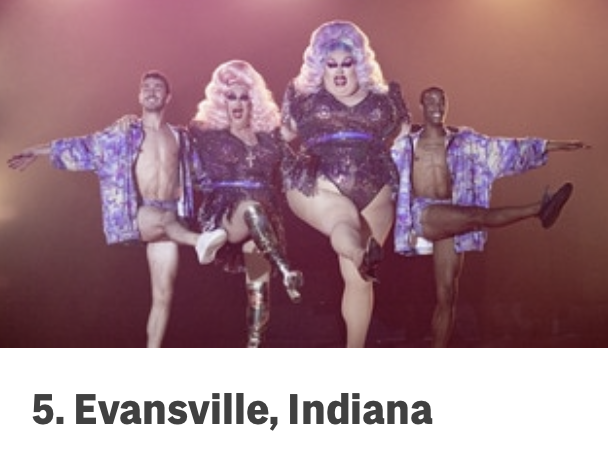
Meet the United Methodist pastor featured on HBO’s drag reality show ‘We’re Here’

Performing in drag was an ‘incredibly wonderful, refreshing, deepening, powerful spiritual experience,’ said Pastor Craig Duke of Newburgh United Methodist Church in Indiana.

Let me note, right up front, that this story opens all kinds of doors to discussions of the two doctrinal approaches that — on issues of biblical authority and a host of other issues — can be found in the current United Methodist Church. However, the story includes absolute zero voices from Methodists on the traditional side of these debates — even from members of the pastor’s own congregation who can be expected to ask questions about his TV leap into the world of drag culture.

Here is the overture to this advocacy-journalism report. This is long, but essential:


Please respect our Commenting Policy

When facing modern chaos, priests need old symbols and truths -- not more politics

When facing modern chaos, priests need old symbols and truths -- not more politics

Chaos is coming, so get ready.

That was the warning that -- four years ago -- iconographer and YouTube maven Jonathan Pageau offered to leaders of the Orthodox Church in America's Diocese of the South.

The French-Canadian artist was reacting to cracks in "cultural cohesion" after Donald Trump's rise to power, with wild reactions on left and right. And corporate leaders, especially in Big Tech, were throwing their "woke" weight around in fights over gender, racism, schools, religious liberty and other topics. Fear and angst were bubbling up in media messages about zombies, fundamentalist handmaidens and angry demands for "safe spaces."

Pageau didn't predict a global pandemic that would lock church doors.

But that's what happened. Thus, he doubled down on his "chaos" message several weeks ago, while addressing the same body of OCA priests and parish leaders.

"If some of you didn't believe me back then, I imagine you are more willing to believe me now," he said.

Pageau focused, in part, on waves of online conspiracy theories that have shaken many flocks and the shepherds who lead them. Wild rumors and questions, he said, often reveal what people are thinking and feeling and, especially, whether they trust authority figures.

"Even the craziest conspiracy nuts, what they are saying is not arbitrary," he said, in Diocese of the South meetings in Miami, which I attended as a delegate from my parish in Oak Ridge, Tenn.

"It's like an alarm bell. It's like an alarm bell that you can hear, and you can understand that the person that's ringing the alarm maybe doesn't understand what is going on. ... They may think that they have an inside track based on what they've heard and think that they know what is going on. But the alarm is not a false alarm, necessarily."

The chaos is real, stressed Pageau. There is chaos in politics, science, schools, technology, economic systems, family structures and many issues linked to sex and gender.


Please respect our Commenting Policy

New podcast: Did Glenn Youngkin win the Latino vote in Virginia? Maybe ask folks in pews?

New podcast: Did Glenn Youngkin win the Latino vote in Virginia? Maybe ask folks in pews?

On the morning after The Virginia Election, I noted that the sharp folks at a must-bookmark niche-news website — A Journey Through NYC Religion — had done some old-fashioned digging and discovered some interesting religion ghosts (to use an old GetReligion term) in that political earthquake. Click here for that story: “Faith trumps Trump in Virginia.”

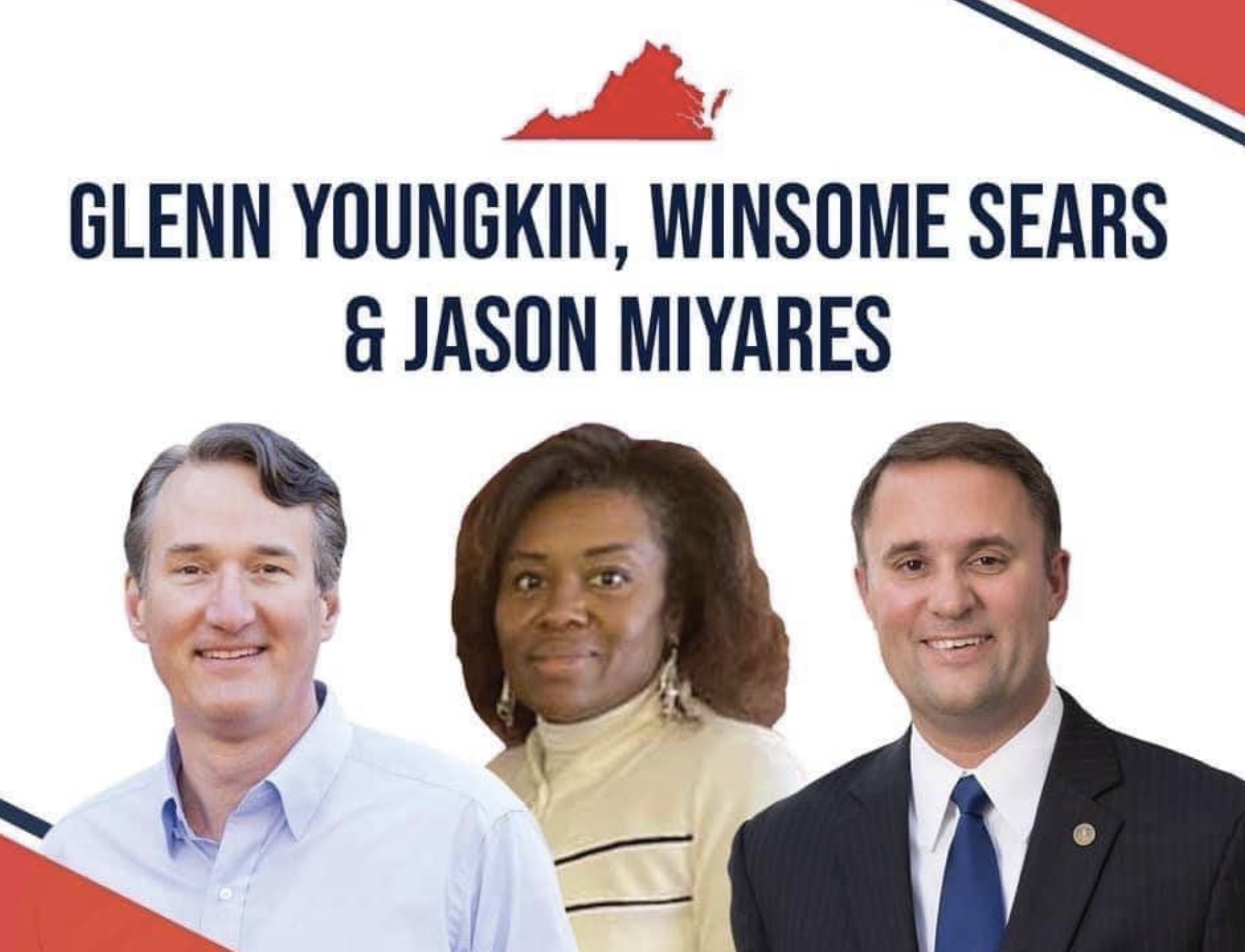
I sure didn’t know, from reading mainstream press coverage, that Governor-elect Glenn Youngkin was an evangelical Anglican who once was a leader in the Alpha course, an evangelism program that expanded from the Church of England into churches and denominations around the world.

I didn’t know that Lieutenant Governor-elect Winsome Sears, an African American evangelical and former Marine, had once led a Salvation Army ministry and that the state’s new attorney general, Jason Miyares, appears to be a Latino evangelical Episcopalian.

All of that showed up in my post-election piece with this headline: “Yes, there were overlooked religion angles in today's biggest U.S. political news story.”

We talk about all of that in this week’s “Crossroads” podcast (click here to tune that in), but also veered off into other religion-based angles in the current political climate. One of them took us into familiar territory, at least for those who have followed GetReligion for the past five or six ears. I’m talking about the rising political clout of Latino evangelicals, traditional Catholics and Pentecostal believers.

There’s some evidence that Youngkin and the diverse GOP lineup actually WON the Latino vote in the Virginia election (click here for a totally faith-free Politico discussion of that topic).

So here is that question again: How can journalists cover shifting patterns among Latino voters — and Black voters, as well — without examining the role of religion and cultural issues?

Let’s say: Is it safe to assume that pro-life Latinos are more likely — lacking acceptable Democrats on the ballot — to opt for Republicans? How about Latinos who favor school choice? Who old traditional Christian views on gender issues?


Please respect our Commenting Policy