People

New York Times dares to interview Stephen Strang, a major player in Pentecostal media

New York Times dares to interview Stephen Strang, a major player in Pentecostal media

On the Sunday I was returning to the United States from an international trip, the New York Times ran a surprising story on a religion beat insider that, frankly, I never thought they’d touch.

All sorts of folks were sending me links to a business story on Stephen Strang, someone who is widely known in the charismatic universe but not so well known in wider Christian circles.

Yet, Times freelancer Sam Kestenbaum swooped down and delivered an informative, timely piece, which started as follows:

This spring, the media mogul Stephen E. Strang made an unusual apology to readers in the pages of his glossy magazine.

Mr. Strang presides over a multimillion-dollar Pentecostal publishing empire, Charisma Media, which includes a daily news site, podcasts, a mobile app and blockbuster books. At 70, he is a C.E.O., publisher and seasoned author in his own right. Despite all that, Mr. Strang worried something had gone awry.

“I’ve never been a prophet,” he wrote in a pleading March editor’s note. “But there were a number of prophets who were very certain that Trump would be elected.”

This had not come to pass. Mr. Strang continued, “I hope that you’ll give me the grace — and Charisma Media the grace — of missing this, in a manner of speaking.”

That was a back entrance into a story on the “Trump prophets,” which were dozens of well-known Pentecostal personalities who falsely prophesied that President Donald Trump would win a second term. Although a few apologized when it was clear Joe Biden would be taking the oath of office on Jan. 20, many refused, succumbing to fantasy theories that the election had been stolen.

(I’ve been covering the prophets story since late last year and earlier this year for GetReligion here, here and here, plus begging other religion writers to get up to speed with modern-day Pentecostalism and the way Pentecostals and their sister movement, the charismatics, was the spirituality of choice in the Trump White House.

Kestenbaum specializes in religion-news-of-the-weird pieces for the Times , and maybe, to him, Strang is weird. Oddly, the story (whose news hook is Strang’s newest book) ended up in the business section. My fav quote in the whole piece:

Mr. Strang seems to have discovered that one way to handle being publicly wrong is to change the subject and to pray readers stick around.

Yes, that’s what the whole prophecy movement has been doing since January. The next chunk of copy is the why-you-should-read-this part:

Beyond the spiritual test of unrealized prophecies, there are very earthly stakes here: Under Mr. Strang’s stewardship, Charisma had grown from a church magazine to a multipronged institution with a slew of New York Times best sellers, millions of podcast downloads and a remaining foothold in print media, with a circulation of 75,000 for its top magazine.

It is widely regarded as the flagship publication of the fast-growing Pentecostal world, which numbers over 10 million in the United States. With its mash-up of political and prophetic themes, Charisma had tapped a sizable market and electoral force. In 2019, one poll found that more than half of white Pentecostals believed Mr. Trump to be divinely anointed, with additional research pointing to the importance of so-called prophecy voters in the 2016 election.

His numbers are way too low; Pew Forum says charismatics and Pentecostals comprise about 23 percent (you heard that right) of the American population, so we’re talking about 65 million people. If that sounds like a lot of people, remember, this number includes charismatic Catholics.

As I read through the piece, I thought Kestenbaum hit it square on the nose many times.

Please respect our Commenting Policy

Norm Macdonald: Theological mysteries, a red-brick wall, a spotlight and a microphone

Norm Macdonald: Theological mysteries, a red-brick wall, a spotlight and a microphone

While debating heretics, early Christians used the Greek term "hypostasis" -- meaning "substance" and "subsistence" -- to help define their belief in the Incarnation of Jesus as one person, yet with divine and human natures.

This "hypostatic union" is not the kind of subject a comedian typically raises on a TV talk show while chatting about mortality with a Hollywood legend. Then again, Norm Macdonald -- who died on September 14 after a secret nine-year fight with cancer -- wasn't a typical funny man. He openly identified as a Christian, while making it clear that he didn't consider himself a very good one.

During an episode of "Norm Macdonald has a Show," the former Saturday Night Live star asked Jane Fonda -- who at one point briefly embraced evangelical Christianity -- this question: "Are you a religious person?"

"I have faith," said Fonda. The host quickly asked, "In Jesus Christ?" Hesitating, Fonda called herself "a work in process," saying she accepted "the historical Jesus."

Macdonald responded: "But do you believe in the hypostatic Jesus?"

When Fonda said "no," he added, "So, you're not a Christian. But you believe, you believe in something."

Raised vaguely Protestant in Canada, Macdonald didn't discuss the brand-name specifics of his faith, even as he wrestled with his own demons -- such as habitual gambling. Yet he could be stunningly specific when addressing criticisms of Christian beliefs. As a judge on NBC's "Last Comic Standing," he quietly shot down a contestant who trashed the Bible, before praising the Harry Potter series.

"I think if you're going to take on an entire religion, you should maybe know what you're talking about," said Macdonald. "J.K. Rowling is a Christian, and J.K. Rowling famously said that if you're familiar with the scriptures, you could easily guess the ending of her book."

The result was a public persona laced with paradoxes, an edgy, courageous comic who often seemed unconcerned if his work pleased the public or his employers.


Please respect our Commenting Policy

Lisa Beamer on the hard spiritual lessons learned in a media spotlight after 9/11

Lisa Beamer on the hard spiritual lessons learned in a media spotlight after 9/11

For those who lived through Sept. 11, 2001, the drama of Todd Beamer and the heroes of Flight 93 has become an essential part of many anniversary rites.

Everyone remembers the final act, with Beamer aboard the hijacked plane, patched through to a telephone operator for a clandestine13-minute call. After learning about the World Trade Center attacks, Beamer and other passengers decided to try to seize control of the plane.

Finally, Beamer said: "Let's roll." That was the end of the call, moments before the plane -- now believed to have been headed to the U.S. Capitol -- crashed into a rural field near Shanksville, Pa.

That wasn't the whole story, of course. The young software salesman had also asked operator Lisa Jefferson if he could be connected to his wife, Lisa Beamer, and, if not, he shared a final message to her and their two sons.

"I was trying to get as much information from him as I could, and he told me to say the Lord's Prayer with him," said Jefferson, in a transcript of her talk days later with Beamer's wife.

"He wanted you to say the Lord's Prayer with him? … And you guys completed it?", asked Lisa Beamer.

"Top to bottom," said Jefferson. "He just said, 'Oh God, help me. Jesus could you please help me.' … He wasn't upset at all. He was very peaceful."

The details of the Flight 93 passenger revolt were soon made public -- a story of courage and sacrifice welcomed by a stunned nation.


Please respect our Commenting Policy

New podcast: Did a religious search help shape Norm Macdonald's haunting humor?

New podcast: Did a religious search help shape Norm Macdonald's haunting humor?

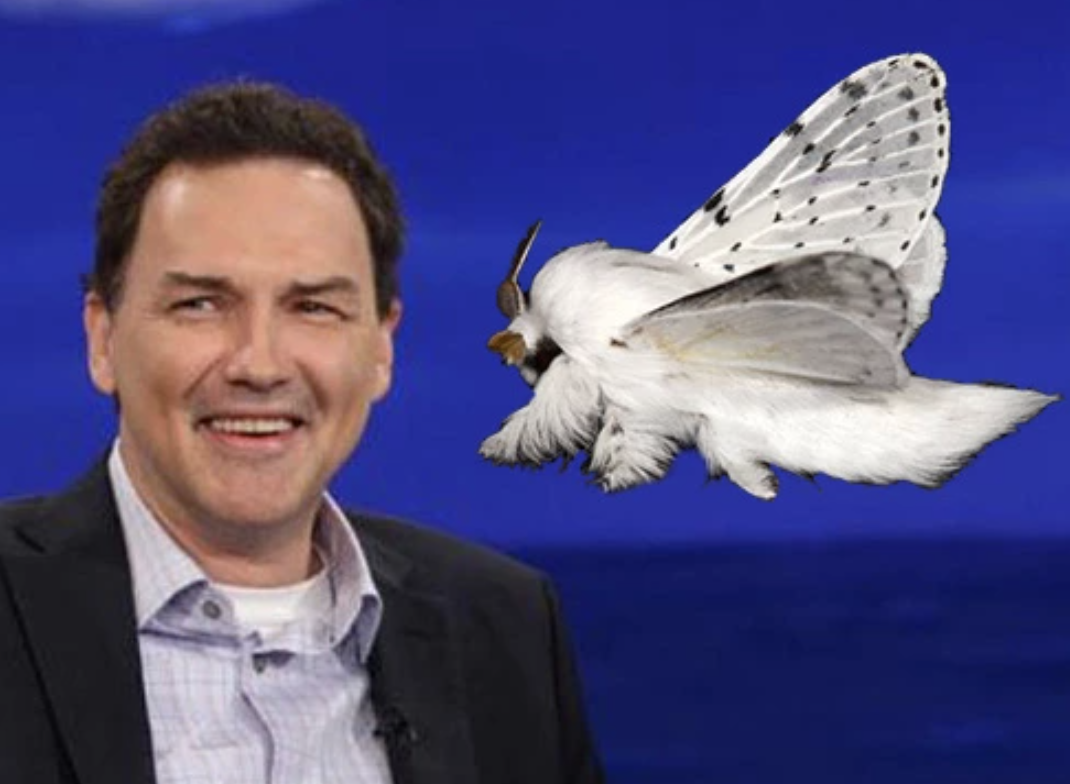
While it may sound strange, I would argue that there are theological “ghosts” hiding inside the great comic Norm Macdonald’s most famous joke. This was the “moth” story, of course.

Right. This joke wasn’t a Saturday Night Live shot at O.J. Simpson or Bill Clinton. It was a long, twisting, bizarre story about a nihilistic moth who was afraid of eternity. It was the kind of joke that fit with the summary of Macdonald’s life and work that opened this Ricochet tribute by Jon Gabriel: “Norm Macdonald — Dostoyevsky in Front of a Red Brick Wall.

The smartest comedians portray themselves as the dumbest; Norm Macdonald was the best at this sleight of hand. He graduated high school at 14, read Russian literature in his downtime, and had long philosophical discussions with clergy. … Macdonald was a student of human nature first, comedy second.

Macdonald was also a self-identified Christian, yet he made it clear that he didn’t consider himself a very good one.

The question raised during this week’s “Crossroads” episode (click here to tune that in) was whether news consumers had any right to expect journalists to mention that reality in their obits of this brilliant, courageous, edgy, mysterious comedian.

The more I read about him — following some really simple online searches — the more I hoped that someone would spot the religion “ghost” in his death-and-virtue haunted work. It also, at least to me, became obvious that many of his spiritual and religious questions were linked to his secret 10-year battle with the cancer that took his life. Cue up these two YouTube clips (here and here).

So this brings us to a crucial text: The actual “moth story” as it unfolded on on Conan.

Read carefully and keep thinking — Russian literature and maybe even a glimpse of a sacred icon.

Yes, I know that this is long. That’s the point:


Please respect our Commenting Policy

Bishop is transgender, but where's the reporting on Megan Rohrer as a 'Lutheran'?

Bishop is transgender, but where's the reporting on Megan Rohrer as a  'Lutheran'?

The news of the recent installation of the Evangelical Lutheran Church in America’s first transgender bishop has been leading me to wonder what makes a culture Lutheran and what impact Lutherans have on the cultures of the countries they live in.

Here’s the context. For the past week, I’ve been traveling about Iceland and Greenland, two countries where the Lutheran Church put down roots centuries ago as the national church. In fact, 2021 marks the 300th year of Christianity being introduced to Greenland via the Danish missionary Hans Egede.

Oddly, Greenland chose not to celebrate the anniversary in July, which is when Egede came in 1721.

Iceland has notorious rates of church non-attendance — in one of the world’s seven officially Lutheran countries, Iceland’s adherence rate may be the lowest at 10 percent. (One of the fastest-growing groups in that Nordic country are the pagans, a phenomenon about which I’ll be reporting on next week for my new gig at Newsweek).

I am no expert on religion in Greenland, but I do know this inaccurate piece put out in 2019 by the World Council of Churches is quite wrong in saying there’s only two churches in Nuuk, the country’s capital. Maybe there are only two Lutheran churches, but I stumbled upon a very lively Pentecostal assembly in the center of town during the Sunday morning I was there.

Which brings me to there being a Lutheran culture in these two countries, church attendance rates notwithstanding. There is a prominent church in the center of each Greenlandic town of any size. Confirmation day remains a big deal for teen-agers there. The Icelanders have made their futuristic looking churches a matter of national pride, whether or not people go inside them and even though some media call the church “irrelevant.”

And being that Greenland has some of the world’s highest suicide rates, does that make the church there is “irrelevant” as well? Hard to say. But these are countries where Lutheranism is part of the air they breathe.

Here in the USA, the ELCA is slated for statistical oblivion by the 2040s. No joke, read about it here. In view of how many of the world’s growing denominations are the ones that trend conservative, the denomination’s 2009 vote to allow same-sex marriages among its clergy and, now, non-gender-specific bishops is rather symbolic. Lutheran conservatives would call it a death wish.


Please respect our Commenting Policy

New podcast: Where is the elite news coverage of tensions between Pelosi and her bishop?

New podcast: Where is the elite news coverage of tensions between Pelosi and her bishop?

Here is a political science question for you, but it’s relevant to an important religion-beat story.

The vice president of the United States is No. 2, in terms of the presidential line of succession, just ahead of the Speaker of the House of Representatives. But in terms of real, day-by-day power, who has more clout in America’s system of government, the vice president or the speaker?

If you have lived and worked on Capitol Hill (as I did for a decade or more), I think you would agree the speaker has more dollars-and-cents clout, as opposed to the largely symbolic “one heartbeat away” status given to the vice president.

With that in mind, let’s turn to an important news story that ran in July at Crux, under this headline: “SF Archbishop says Pelosi can’t call herself a ‘devout Catholic’.” This story was at the heart of the discussion during this week’s “Crossroads” podcast (click here to tune that in). Here is the overture of that piece:

NEW YORK – Archbishop Salvatore Cordileone of San Francisco, the home archdiocese of House Speaker Nancy Pelosi, has insisted that “devout Catholics” can’t support abortion, just after Pelosi had described herself in precisely those terms.

“Let me repeat: No one can claim to be a devout Catholic and condone the killing of innocent human life, let alone have the government pay for it,” Cordileone said in a statement. “The right to life is a fundamental — the most fundamental ­— human right, and Catholics do not oppose fundamental human rights.”

Hours earlier, at her weekly press conference, Pelosi stated her support for repealing the Hyde Amendment, which prohibits federal funding of abortion, “because it’s an issue of health for many women in America,” and she also emphasized her Catholic faith.

“As a devout Catholic and mother of five in six years, I feel that God has blessed my husband and me with our beautiful family,” Pelosi said. “But it’s not up to me to dictate that’s what other people should do, and it’s an issue of fairness and justice for poor women in our country.”

This leads us to that op-ed by Cordileone that ran the other day at The Washington Post, with this headline: “Our duty to challenge Catholic politicians who support abortion rights.

Here is the top of that piece. Read carefully and look for an important term that is showing up in more and more statements by some, repeat “some,” U.S. Catholic bishops:


Please respect our Commenting Policy

Here's a flashback into religion-beat history, with the help of the legendary Lou Grant

Here's a flashback into religion-beat history, with the help of the legendary Lou Grant

If anyone ever writes a book about the history of religion news in the mainstream press it will need to include a photo of the glowering, and often smirking, mug of Lou Grant.

Lou Grant was a TV character, of course, played by the Emmy-winning actor Ed Asner, who died on Sunday (August 29) at age 91. But for millions of Americans, he provided -- in "The Mary Tyler Moore Show" and the sequel "Lou Grant" -- an archetypal image of what old-school journalism was all about.

One 1977 "Lou Grant" episode certainly captured some of the attitudes I encountered while interviewing journalists for my 1982 graduate project at the University of Illinois in Urbana-Champaign, which focused on why few newsrooms made serious attempts to cover religion events and trends -- unless they were linked to politics.

Quite a few editors sounded like Lou Grant.

In this episode, entitled "Sect," the city editor of the mythical Los Angeles Tribune was wrestling with two problems at the same time. The problems seemed to be unrelated.

First, the Trib had lost its veteran religion editor. Grant searched and searched, but no one was interested in filling that empty desk. After all, what self-respecting journalist wanted to be stuck with the religion beat?

Problem number two was how to get rid of lazy, often-drunk, no-good reporter Mal Cavanaugh. All through this episode the newsroom's leaders had been searching for a way to get Cavanaugh to resign. Then came a spark of inspiration. The printed script is simple:

LOU: Well, Mal, you've been with this paper a mighty long time. As you say, this is your family.

CAVANAUGH: (All that humility) Aw, well, it's nice to be appreciated.

LOU: And I think I've found a place where we'll be able to use that special, sweet style that is Mal Cavanaugh.

CAVANAUGH: (Those eyes are getting moist; he sees himself getting a column) What's that, Lou?

LOU: Congratulations, Mal. You're the Trib's new religion editor.


Please respect our Commenting Policy

New podcast: Harvard head chaplain is an atheist and Gray Lady covers half of that story

New podcast: Harvard head chaplain is an atheist and Gray Lady covers half of that story

Perhaps you saw that New York Times headline the other day that proclaimed: “The New Chief Chaplain at Harvard? An Atheist.”

That led, during this week’s “Crossroads” podcast (click here to tune that in) to a logical question: Is it really surprising, and newsworthy, that the office for chaplains at today’s Harvard is led by an atheist/humanist rabbi?

For me, this was a totally valid story. However, I do wish that the Times had followed through and fleshed out the two big themes mentioned in this feature.

You can see one of those themes in the sub-headline: “The elevation of Greg Epstein, author of ‘Good Without God,’ reflects a broader trend of young people who increasingly identify as spiritual but religiously nonaffiliated.”

Ah, another story about the young “religiously unaffiliated” folks who have received so much ink in recent years, following in the footsteps of the “spiritual, but not religious” and “Sheilaism” trendsetters of previous decades. But how many of the “nones” are actually atheists or agnostics? Hold that thought.

The other big idea here is that Epstein was a popular choice among the Harvard chaplains, in part because of his abilities to build bridges between a wide variety of religious brands — including evangelical Protestants and Christian liberals. Hold that thought, as well.

I found myself, while reading the Times piece, wondering: What is the dominant religious worldview at postmodern Harvard? I am sure that there are more than a few atheists and agnostics there. But people I know with ties to the campus tell me that a kind of “woke” liberal faith is the norm, which actually fits with the school’s roots in mainline Protestant New England. Also, there are more than a few evangelicals in the mix (look up “The Veritas Forum”).

I was reminded of the debates almost a decade ago at Vanderbilt University, as campus leaders tried to push evangelical Protestant student ministries off campus because of tensions over You Know What.


Please respect our Commenting Policy

Reporting on faith-based investment guru Cathie Wood? Do your homework (better)

Reporting on faith-based investment guru Cathie Wood? Do your homework (better)

Investments aren’t my specialty at all, but I was lured to a New York Times business story recently that was headlined: “God, Money, YOLO: How Cathie Wood Found Her Flock.” (YOLO means “you only live once.”)

Hmm, I thought, an article about Christian investing? After all, this woman manages some $85 billion in assets. A superstar in the world of investing, she is known for her risky moves and appeal to the Reddit/Millennial crowd.

So, after 20 paragraphs describing the CEO of Ark Invest, we finally got to the God part.

It happened in the 21st paragraph, just after a mention about Wood speaking to business and religious groups about her late-career decision to start her own investment shop.

It began, she says, with a head-on encounter with the Holy Spirit.

On a gorgeous day in August 2012, Ms. Wood — a fund manager struggling through a rough quarter at AllianceBernstein — was struck by the silence inside her stately home in Wilton, Conn.

Her three children were gone, off to camp and other activities for the summer. She was facing two full weeks alone in the nearly 6,000-square-foot house she bought with her ex-husband in the 1990s.

Then she felt it.

“Wham,” Ms. Wood said last year on the “Jesus Calling” podcast, which is centered on the devotional writings of the best-selling Christian author Sarah Young. “I really feel like that was the Holy Spirit just saying to me, ‘OK, this is the plan.’”

“Jesus Calling,” for those of you who’ve lived on Pluto for the past few decades and have never heard of it, is one of the most successful devotional aids of all time. Thirty million units of this book -– and associated products –- have sold since 2004, when the one-time reclusive missionary to Australia (now living near Nashville) first published a devotional with words allegedly from Jesus himself.

Its fans claim that its words are what Jesus would sound like today if living in the 21st century. Its detractors call it theologically shallow and New Agey.


Please respect our Commenting Policy