People

Rabbit hole warning for journalists: When is a 'Catholic priest' not a 'Catholic priest'?

Rabbit hole warning for journalists: When is a 'Catholic priest' not a 'Catholic priest'?

There are few religion-beat rabbit holes deeper and more twisted than the world of alternative and splinter Catholic churches and the bishops and priests who lead them.

Be careful out there, folks. Long ago, I spent days chasing the “apostolic succession” claims of a U.S. Postal Service carrier in a Denver suburb who was a mail-order archbishop in one of the hundreds of “Old Catholic” flocks linked to various schisms after Vatican I or II. Some alternative Catholic of these flocks are conservative and some are liberal. Some have actual parishes. To tip your toe into these troubled waters, click here.

Religion-beat professionals are aware that not all people — men and women — who say they are Catholic priests are actually Roman Catholic priests. As Mollie “GetReligionista emerita” Hemingway said more than a decade ago, just because someone says that he or she plays shortstop for the New York Yankees doesn’t mean that this claim is true. Someone in the House of Steinbrenner gets to make that call.

I say this because of the small, but educational, waves of social-media chatter the other day about the testimony of Father Gabriel Lavery at an Ohio legislature hearing linked to a bill that would prohibit vaccine mandates.

Eyebrows were raised when Lavery, during a discussion of the current pope’s support for COVID-19 vaccines, said that he doesn’t recognize Pope Francis as pope because “you have to be a Catholic to be the pope.”

There’s a sound bite for you. As scribes at The Pillar noted:

In another clip, the priest said of Francis that “there are many clergy, bishops around the world who have simply have looked at the obvious, that his teachings on many things contradict Catholic teaching, and it’s a simple basic principle of Catholic theology — you can’t be the head of the Church if you don’t profess the Catholic faith.”

The priest’s remarks have attracted attention, and have been covered in some press reports with little mention of his ecclesiastical status. In some accounts, he has been identified as a parish pastor.

As I noted earlier, religion-beat professionals know to ask questions about clergy folks of this kind — who play essential roles, for example, in the history of ordination claims in the the Womenpriests, WomenPriests or Women Priests movement. General-assignment reporters covering these events often quote what the activists are saying about their credentials and that is that.

Please respect our Commenting Policy

When talking about vaccines, shame isn't going to change minds in many pews

When talking about vaccines, shame isn't going to change minds in many pews

Donald Trump had to know it was coming, even if -- to use a Bible Belt expression -- he was preaching to his choir.

"You know what? I believe totally in your freedoms," he said, at a rally in Cullman, Ala. "You got to do what you have to do, but I recommend: Take the vaccines. I did it -- it's good."

Videos of this August 21 event make it clear that quite a few people booed this request by the former president.

Truth is, the longer a health crisis lasts, the more pollsters will find that anti-vaccine citizens have "turned into true believers" who are rock-solid in their convictions, said political scientist Ryan Burge of Eastern Illinois University. He is co-founder of the Religion in Public website and a contributor to the GetReligion.org weblog I have led since 2004.

"At this point, the holdouts are the only people that (pollsters) have to talk to. … They've heard everything, and nothing is moving the needle for them," he said. "In fact, it seems like whatever you say to try to change their minds only makes it worse. These hardcore folks are digging in their heels all the more."

When exploring the most recent Data for Progress poll numbers, it's hard to nail down a religion factor in this drama. As summer began, 70% of non-evangelical Protestants had received at least one shot of COVID-19 vaccine -- but so had 62% of both evangelical Protestants and Catholics. As the author of a book entitled "The Nones: Where They Came From, Who They Are, and Where They Are Going," Burge found it significant that only 47% of the religiously unaffiliated reported receiving at least one shot.

"Religion may be a factor, for some people, but it's not the main thing" causing Americans to be reluctant, he said. "Age is clearly the No. 1 factor, even when you factor in politics. Young Republicans and independents are the same. …


Please respect our Commenting Policy

When pinning wild COVID-19 quotes on a cardinal, it helps to be precise about fine details

When pinning wild COVID-19 quotes on a cardinal, it helps to be precise about fine details

If you’re the kind of person who likes to explore the wretched underbelly of Twitter, then you need to pay close attention to the waves of snarky messages that follow announcements that famous vaccine skeptics have been hospitalized with COVID-19.

Some of these skeptics are politicians, of course. Others are religious leaders.

That brings us to the Associated Press coverage of a prominent conservative Catholic who, for journalists, is best known as a frequent critic of liberal Catholic politicians and also of some — not all — actions taken by Pope Francis. Here is the overture on one of these updates:

MADISON, Wis. (AP) — Cardinal Raymond Burke, one of the Catholic Church’s most outspoken conservatives and a vaccine skeptic, said he has COVID-19 and his staff said he is breathing through a ventilator.

Burke tweeted Aug. 10 that he had caught the virus, was resting comfortably and was receiving excellent medical care.

“Please pray for me as I begin my recovery,” the 73-year-old Burke said in the tweet. “Let us trust in Divine Providence. God bless you.”

As you would expect, the AP report — in addition to offering a litany of examples of Burke criticizing liberal Catholics — eventually provided some information about the cardinal’s views on the coronavirus pandemic. Here are the crucial paragraphs:

Burke … has criticized how governments have handled the pandemic, referring to the virus in a homily last December as the “Wuhan virus,” a derogatory term used by former President Donald Trump to describe the coronavirus and warning people that governments were manipulating them. In May 2020, he spoke out against mandatory vaccinations, saying some in society want to implant microchips in people.

He said in March 2020 that the best weapon for battling “the evil of the coronavirus” is a relationship with Jesus Christ.

The most inflammatory material, of course, is the reference to implanting “microchips.” It would really help to know more about what Burke is alleged to have said and where and when he said it.


Please respect our Commenting Policy

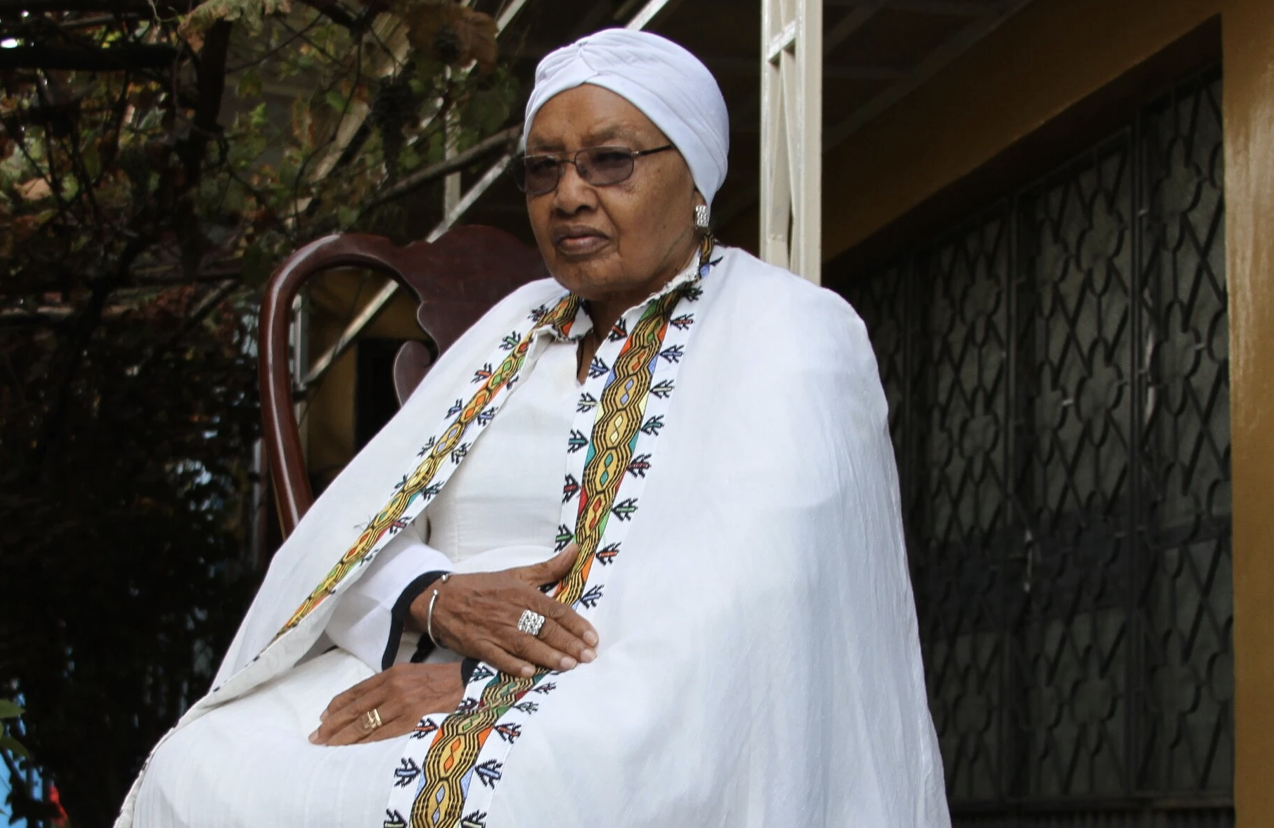
Yo, New York Times editors: Why edit faith out of obit for the 'Mother Teresa' of Africa?

Yo, New York Times editors: Why edit faith out of obit for the 'Mother Teresa' of Africa?

If you know anything about old-school journalism, then you have heard this mantra — “who, what, when, where, why and how.” During my nearly three decades as a journalism and mass media professor, I used to refer to these essential building blocks of hard-news reporting as the “W5H” formula.

Clearly, when you are dealing with the life story of a woman who sacrificed everything in order to help poor, suffering, abandoned children, the “why” factor in that equation is going to be especially important.

This brings us to two very different news reports about the death of one of modern Ethiopia’s most beloved figures, a woman who was frequently described as a living saint. Here is the New York Times headline: “Abebech Gobena, the ‘Mother Teresa’ of Africa, Dies at 85.” And here is the overture:

Abebech Gobena was returning from a pilgrimage to the holy site of Gishen Mariam, about 300 miles north of the Ethiopian capital, Addis Ababa, when she saw the woman and her baby.

It was 1980, and Ms. Gobena was passing through an area recently stricken by drought and an accompanying famine. All along the road were bodies — many dead, some dying, some still able to sit up and ask for food.

“There were so many of these hungry people sprawled all over, you could not even walk,” she said in a 2010 interview with CNN. She handed out what little she had — a loaf of bread, a few liters of water.

The word “holy” in the lede is rather important, since we are talking about Coptic Orthodox monastery of Gishen Mariam.

According to ancient traditions, Gishan Mariam is the location of a piece of the cross on which Jesus was crucified. It was a gift from St. Helena, the mother of Constantine I, and came to Ethiopia as a gift from the Patriarch of Alexandria. A festival called “Meskel,” celebrating the finding of the cross, is a major event in Ethiopian life.

So the story begins with Gobena returning from a pilgrimage to this holy site, which almost certainly tells us something about this woman’s life. This is interesting, since the Times piece does not include any of the following words — “Christian,” “Orthodox,” “Coptic,” “faith” or “saint.”

Would it make a difference, for example, to know that the small amount of water Gobena was carrying, which he gave to those who were suffering, was holy water that she was carrying home from the shrine to be used for rites of blessing and healing?


Please respect our Commenting Policy

When a Catholic politician is denied Communion, why does Axios think he's heroic?

When a Catholic politician is denied Communion, why does Axios think he's heroic?

Ever since President Joe Biden took office, fellow GetReligionista Clemente Lisi has been writing articles about the new president’s inevitable clash with Catholic bishops over Communion, and how President Biden is regularly framed as a “devout” Catholic despite his major departure from said doctrine on life issues, not to mention religious liberty. The bishops, on the other hand, are framed as “right wing.”

The Communion conundrum has spread to a state where I used to live: New Mexico, home of the country’s largest annual pilgrimage of penitents who walk 30 miles every Good Friday from Santa Fe to the Chimayo sanctuary in the northern hills. New Mexico is drenched in Catholicism, starting around April 30, 1598, when Spanish explorers coming north from Mexico held a Thanksgiving Mass and dinner near the Rio Grande.

There are evangelical Protestants, Jews, Buddhists and other groups around the state, but the bulk of the populace is Catholic, so the Communion issue is going to matter there, which is why one bishop’s decision to bar a local Catholic politician from the altar makes waves. Here is how Axios framed it:

A New Mexico lawmaker denied Communion by a bishop over his vote to advance abortion protections told Axios exclusively he won't be bullied and looks forward to receiving Communion with President Biden one day.

Just for fun, I’ll also run the lede from the National Catholic Register just for comparison:

After a New Mexico state senator said he was denied Communion this weekend because of a political matter, his diocese responded that it had privately warned him he should not present himself for Communion, due to his obstinate support for a pro-abortion bill.

Two different takes, no? Back to Axios:

Why it matters: The example set by Sen. Joseph Cervantes, a Democrat, is drawing the attention of lawmakers around the country. Blue states are moving to protect abortion rights should the Supreme Court overturn or erode Roe v. Wade.

• "I won't have any problem finding to place to receive Communion," Cervantes said during an interview. "In fact, I look forward one day to receiving Communion at the same parish where President Biden does."

• He said other parishes and another diocese in New Mexico have offered to give him Communion, highlighting the split among U.S. Catholic bishops over elected officials and abortion.

The slant of this piece is a textbook example of why conservatives of all religious persuasions tend to loathe the media. The lede basically states takes Cervantes’ word for it that he is being “bullied,” without mentioning that Cervantes went out of his way to defy private exhortations from his spiritual overseers.


Please respect our Commenting Policy

Washington Post still thinks sin and repentance have nothing to do with Holy Communion

Washington Post still thinks sin and repentance have nothing to do with Holy Communion

For years now, quite a few mainstream journalists have made it pretty obvious that they think the bishops of the Catholic church have a moral and perhaps even legal obligation to let Catholics do whatever they want to do in public life while continuing to take Holy Communion.

All that matters, according this newsroom version of the evolving spirit of Vatican II, is that these Catholic individuals believe — as a matter of conscience — that they are good to go. Catholics who are on the right side of history even have the right to openly state, in word and deed, that they believe Catholic doctrine is wrong and should be changed. This used to be called Protestantism, but nevermind.

This brings us to yet another Washington Post report about the life and times of a Michigan judge named Sara Smolenski, her same-sex wife Linda and the East Grand Rapids parish in which she is not allowed to take Holy Communion. (For a flashback to earlier coverage, please see this Julia Duin post: “Press doesn't get why a Catholic priest would withhold Communion from outspoken gay judge.”)

This story does a great job of proving that progressive Catholics have strong views on this issue. The story also offers small bites of material from Catholics stating the church’s doctrinal stance on this matter. If you are looking for any sense of fairness and balance — such as Catholics explaining or defending church doctrine — then you are not going to find it in the Post coverage. Again.

One other key point: This story contains zero references to the role that Confession — the Sacrament of Penance — plays in Catholic teachings on sin, repentance, forgiveness, salvation and, thus, Holy Communion. Hold that thought, because we will return to that point.

The Post headline, this time around, states: “Bishops’ debate over Communion sparked by Biden seeps into holiest sacrament for Catholics.” Here’s the overture:

St. Stephen Catholic Church is the parish and school where Sara Smolenski grew up with her nine siblings, where her parents were married, where she worshiped on Sundays and served as a volunteer distributing Communion. It was also the place where the priest called in late 2019 to tell her she should no longer come up during Mass to receive the holy sacrament.

“He says: ‘I’m going to have to ask you not to take Communion because you’re married to Linda in the state of Michigan. He just kept saying: ‘Respect the church,’” said Smolenski, 63, a longtime District Court judge.


Please respect our Commenting Policy

Adventures in religion-beat life: What's the difference between a 'pool pit' and a pulpit?

Adventures in religion-beat life: What's the difference between a 'pool pit' and a pulpit?

I read the preacher’s words once — and then again — and tried to make sense of them.

In a Florida TV station’s report on a church promoting the COVID-19 vaccines, minister Charlie McClendon was quoted as saying, “Each week I emphasize it from the pool pit just before I preach.”

The pool pit?

I’ve covered religion for two-plus decades, but I hadn’t come across that term. Strange.

Later, my eyes popped wide open in the middle of the night.

Suddenly, it hit me.

“Pulpit.”

I burst into laughter, much to the chagrin of my sleeping wife.

After I posted on Twitter about the mistake, reporter Gretchen Kernbach offered a gracious mea culpa and corrected the wording.

Even before her tweet, I made clear — amid humorous responses and more serious calls for better religious literacy in journalism — that I wasn’t casting stones. In 30 years of news reporting, I’ve made plenty of doozy mistakes myself.

I just thought this particular one was funny. If you don’t believe me, feel free to ask my wife.


Please respect our Commenting Policy

New podcast: Indie fundamentalist near Nashville shows how to punch Washington Post buttons

New podcast: Indie fundamentalist near Nashville shows how to punch Washington Post buttons

For decades, I have felt a strange mix of anger and mild amusement whenever I heard news consumers, when complaining about something that upset them, say that journalists write and print “bad” stories “just to sell newspapers.”

“Bad,” of course, meant stories that they thought were biased, inaccurate or simply silly, perhaps something that in our digital age would be called “clickbait.” Of course, clickbait is clickbait because there’s digital evidence that readers consistently click on certain types of stories, which increases traffic and that helps the newsroom generate money (sort of like selling more newspapers).

Produce enough stories that please the faithful readers of a given publication — down South we call this “preaching to the choir” — and you can turn those readers into digital subscribers. That’s the Holy Grail, the ultimate goal, in the business-model crisis that has dominated American journalism for a decade or more.

This brings me to this unusual Washington Post headline that I saw the other day: “Evangelical pastor demands churchgoers ditch their masks: ‘Don’t believe this delta variant nonsense’.”

Now, was this pastor the leader of an important congregation somewhere in Beltway-land? Well, the answer is “no.”

If he wasn’t local, was he a prominent member of a major, powerful evangelical Protestant denomination or network of megachurches? Again, “no.” Was he connected, somehow, to an influential evangelical college, seminary, publishing company or parachurch ministry? A third time, “no.”

In other words, to ask the question that drove this week’s “Crossroads” podcast, why did editors decide that this story worthy of coverage by a reporter at the Post? (Click here to tune in this episode.)

Well, I think it’s safe to say that this stereotype-packed piece of simplistic, shallow, clickbait was produced because it punched all kinds of buttons that pleased digital niche-audience Post subscribers. In other words (I feel guilty typing these words), they did it to sell newspapers. Here is the overture:

Since the early months of the coronavirus pandemic, Greg Locke, the pastor at a Nashville-area church, has repeatedly called covid a hoax, undermined emergency mandates and refused to comply with guidance from public health officials.


Please respect our Commenting Policy

No vacation at Vatican? Thinking about an 'August surprise' from Pope Francis

No vacation at Vatican? Thinking about an 'August surprise' from Pope Francis

If you have lived and worked in Washington, D.C., you know that Beltway-land has its own unique media traditions.

For example, no one is surprised when politicos issue somewhat embarrassing statements and proposals late on Friday afternoons, especially during the seasons in which half of the city’s journalists and chattering-class superstars are parked in traffic on the Chesapeake Bay Bridge in Annapolis on their way to the beach. After all, who pays attention to the news on Saturdays and it’s too late to do a major feature for the Sunday newspaper.

Then there is the “October surprise,” which is when a presidential candidate who is trailing — especially an incumbent president — makes a wild domestic policy proposal, foreign policy gesture or accusation against his enemies in an attempt to jump-start the race and gain ground in the polls.

With that in mind, it’s interesting to pause and think about an interesting Crux analysis piece by editor and super-insider John L. Allen, Jr., that just ran with this headline: “Pope’s ‘August surprise’ could be most counter-cultural stand of all.” Allen didn’t make a specific proposal for an upcoming bombshell, but did say that this pope has a history of making news during a month when Italians — it's almost a sacred tradition — are on vacation.

I asked Clemente Lisi, our resident Italian and Catholic-media pro, what he thought of this thesis. He quickly answered — even though (irony alert) he is on vacation this week. His email said:

I know the feeling well. I spent every August in Italy as a child visiting relatives and being on vacation. And yes, everything was closed!

This papal August surprise could very well be a symptom of the media’s lack of attention during this month. In the pre-Donald Trump years, August was typically considered a “slow month” — at least in the United States — and also a time when many editors took time off after a long year. The same thing happens in Italy, probably on a grander scale.


Please respect our Commenting Policy