People

GQ's religion-focused cover story is (clickbait) worth reading -- even for non-Beliebers

GQ's religion-focused cover story is (clickbait) worth reading -- even for non-Beliebers

Let’s open this week’s roundup with Justin Bieber — and not just for the clickbait.

“The Redemption of Justin Bieber,” GQ’s May cover story by senior writer Zach Baron, really is a fascinating read.

As Christianity Today’s Daniel Silliman put it on Twitter, “If you don't care at all about Justin Bieber, this is still a good story about someone who was young, stupid, powerful, privileged, destructive, and sad and nevertheless found grace.”

Not interested in Bieber?

Try $300 Bibles.

Religion News Service’s Emily McFarlan Miller delves into the marketing of an expensive, “modern version of God’s Holy Word.”

Miller explores not just the price tag but also the history behind so-called “premium” Bibles.

After Bieber and Bibles, I feel like I need one more “b” item to round out the set. What about ballgames?

Juggling church and football isn’t just for NFL fans anymore, writes AP sports writer Teresa M. Walker, with whom I worked during my time with The Associated Press in Nashville, Tenn.

“Thanks to the coronavirus pandemic, it became the norm for college fans like the Mosleys as most Football Championship Subdivision leagues moved their schedules to the spring,” Walker explains.


Please respect our Commenting Policy

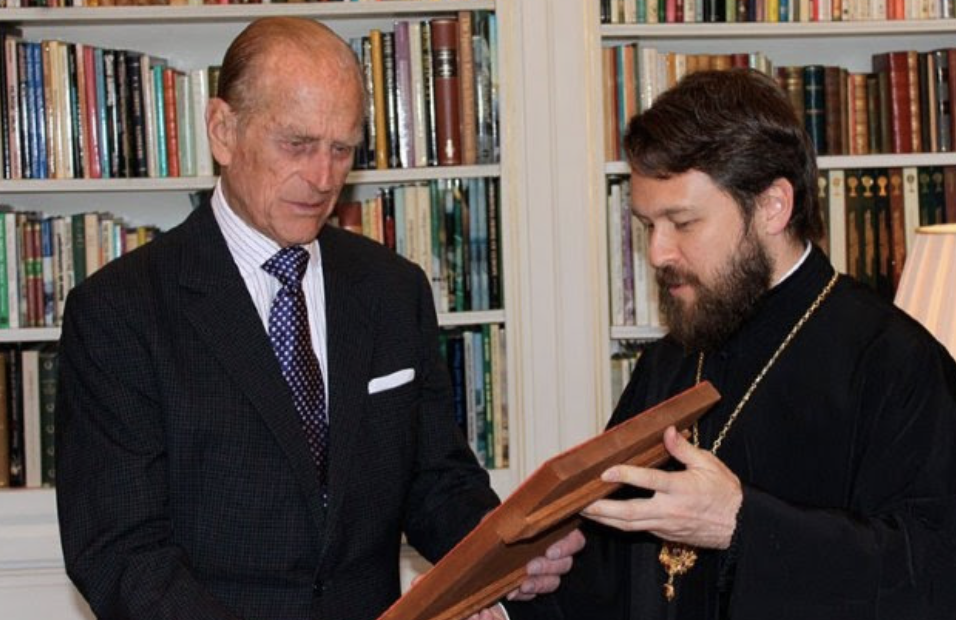
New podcast: The long, complex and mysterious life (and faith) of Prince Philip of Greece

New podcast: The long, complex and mysterious life (and faith) of Prince Philip of Greece

It’s a short scene from second season of “The Crown,” but certainly one the illustrates what the creators of the Netflix series thought of Prince Philip Mountbatten-Windsor — at least at one stage of his dramatic life.

In 1955, while the Rev. Billy Graham was in Scotland leading a crusade in Glasgow, the evangelist received a note from Buckingham Palace inviting him to preach on Easter morning in the private chapel at the Royal Lodge. It’s a poignant scene, especially when paired with another in which Graham visits the queen to discuss an important subject — the need to forgive others.

In the chapel, Graham discusses Christian faith in highly evangelical language, describing the need to have a personal encounter with Jesus Christ. Queen Elizabeth listens attentively. Prince Philip is clearly bored, upset, disturbed, offended, embarrassed or all of the above.

Was Prince Philip struggling with guilt linked to his rumored infidelities? What is happening in his head and heart? That was the starting point for this week’s “Crossroads” podcast, which focused on the mainstream press coverage of the prince after his recent death (click here to tune that in).

For millions of people, “The Crown” offered the dominant image of Prince Philip — the tall, handsome consort of the queen best known for his faults and weaknesses. He was an old-guard British man who went to war, who was known for blunt remarks many considered racist or sexist. Eventually, some would respect his progressive views on the environment.

But it was also obvious that something important happened during this royal couple’s 73 years of marriage. Somehow, they grew together, doing the best they could to handle the pressures of royal life and the searing spotlight on their four children and, eventually, their grandchildren and great-grandchildren.

News consumers who dug into the fine details learned that Prince Philip was, in many ways, an outsider from the Greek wing of Europe’s complicated world of interlinked royal families. He was an Orthodox Christian, at least until he married Elizabeth and, on bended knee, honored her as the leader of the Church of England. He befriended Anglican clergy and was known to confront priests for intense discussions after their sermons.

Something else was going on as the prince aged and matured. There were signs that, spiritually, he was seeking the roots of his faith and his family.


Please respect our Commenting Policy

What is news? Apparently, strangers shooting at nuns in an American convent isn't news

What is news? Apparently, strangers shooting at nuns in an American convent isn't news

It’s a question journalists hear all the time from mystified readers: “What is ‘news’?”

At least, that was a question we used to hear when newspapers tried to appeal to all kinds of people in a community, including those on both sides of common cultural and political divisions.

Why are some stories big local, regional and national news stories, while others are not?

Years ago, a Charlotte megachurch pastor asked me why it was news when a downtown Episcopal parish replaced a window, but it wasn’t news when his church built a multi-million-dollar facility. Well, I explained, there was controversy about changing that window because it was part of a historic sanctuary. What I didn’t say is that editors tend to think that what happens downtown is, by definition, more important than what happens in suburbs.

I raise this issue because of events that unfolding in rural Missouri. But before we get to that, let me ask a few questions. Would it be local, regional and even national news if strangers kept shooting rifles at a:

* Mosque in the Bible Belt?

* Catholic parish with an LGBTQ+ rainbow flag?

* Baptist church at the forefront of local #BlackLivesMatter demonstrations?

Clearly, the answer would “yes” in all three cases, especially if that Baptist church was in Georgia.

Now let’s look at an example of a story that is NOT news, care of the Catholic News site called The Pillar: “Missouri nuns targeted in multiple ‘extremely disturbing’ shooting incidents, motive unknown.” Here is the overture on this recent story:

Shots have been fired at a rural Missouri abbey of nuns on several occasions this Lent, the sisters have said, with a bullet from one shooting lodging in the bedroom wall of the order’s superior. The nuns are fundraising for a security fence, while local law enforcement is providing extra security and investigating the shootings.


Please respect our Commenting Policy

Obvious question: Maybe Christian faith played a role in the Scott Drew and Baylor hoops story?

Obvious question: Maybe Christian faith played a role in the Scott Drew and Baylor hoops story?

Frankly, I am not the most enthusiastic of Baylor University alums (I once passed up a request to apply for a faculty slot by telling the president that I had already died once in Waco wasn’t anxious for a reprise).

Still, you didn’t think that the Baylor basketball team was going to win the national championship (after being a favorite in the COVID-canceled 2020 dance) without a word of comment here? I mean, I have heard from other Baylor grads who worked their way through lots of the mainstream news coverage of the March Madness finale while thinking “ghost,” “ghost,” “another religion ghost.”

Yes, this was the Texas Baptists vs. Jesuits matchup that hoops fans wanted. And then you had the simple reality that Baylor (for better and for worse) is the world’s most prominent Baptist academic institution.

But how could the press ignore or short-change the fact that the story of coach Scott Drew and his underdog Bears was packed with valid religion facts and themes? Would all fans care that Final Four MVP Jared Butler teaches a Sunday School class for little kids? Probably not. But millions of people would.

But they key to everything was this big question: Why was Drew at Baylor in the first place? Why did he pack up and head to Waco 18 years ago, when the program was dead, dead, dead or worse. Here’s the top of a long CBS Sports feature: “Scott Drew never let others change his story, path or program, and that's how he led Baylor to its first title.”

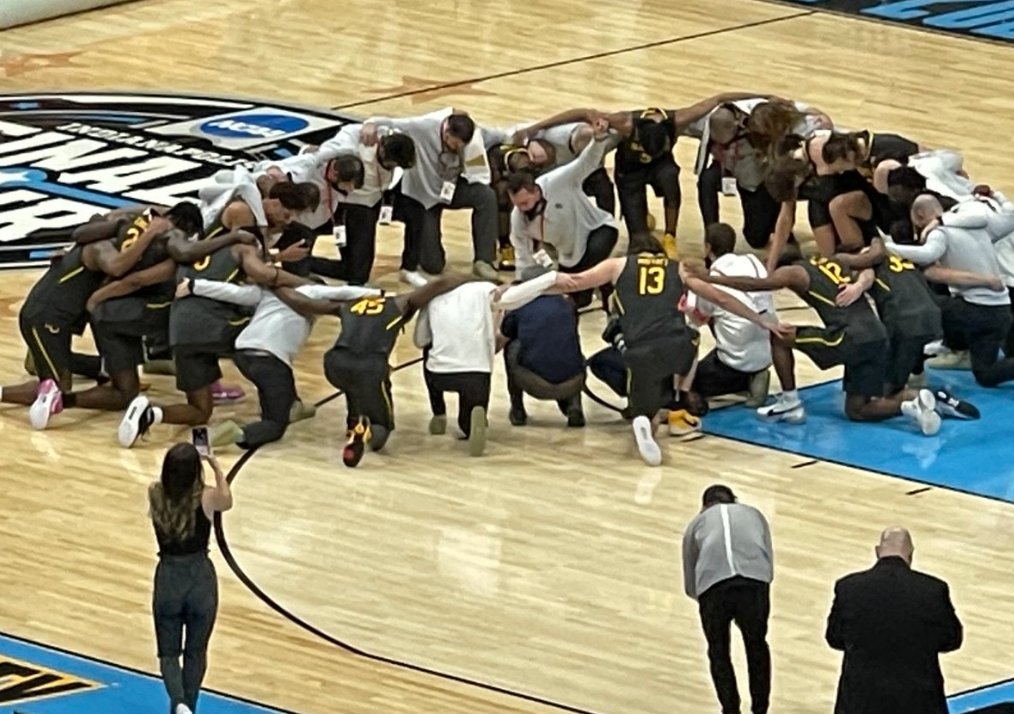
Leaping into the arms of his staff. College basketball's happiest coach on his happiest night. When it was over, Drew brought everyone into a huge circle on the court. They kneeled and said a prayer.

The greatest program reinvention in men's college basketball history was complete.

Drew took the Baylor job in 2003 when the program was near disintegration. The job Drew's done at Baylor in the 18 years since -- impressive is an understatement. There was no set of instructions when he got there, because there wasn't even a drawer to put them in. This was not a rebuild; what Baylor could be, in 2003, was a figment of Drew's imagination.

Drew is described in all kinds of upbeat, but strange, ways. This is one happy, upbeat, positive-thinking weirdo. Does it matter that, when he describes his bond with Baylor, he talks in terms of Christian faith, family and a sense that God called him to this job? Is that part of this national news story, just because Drew says so and there is tons of evidence that he means it?


Please respect our Commenting Policy

Plug-In flashbacks: Several religion-news questions and answers with Bobby Ross, Jr.

Plug-In flashbacks: Several religion-news questions and answers with Bobby Ross, Jr.

GetReligion readers really don’t need an introduction to religion-beat veteran Bobby Ross, Jr.

After all, he has been a contributor here since 2010 — which is longer than anyone other than the founders of the blog. There’s about 15 million words in our files, at this point, and Ross has to have written about 25% of them. And don’t forget that his wife, religion-beat veteran Tamie Ross, was a contributor here for several years, as well.

Bobby, of course, covered religion and all kinds of other topics for The Oklahoman and also spent several years with the Associated Press, working with religion-beat patriarch Richard Ostling, which is as good a credential as you can get. These days, readers around the world know him as editor-in-chief at The Christian Chronicle. He continues to write his weekly Plug-In feature for Religion Unplugged, which still runs here at GetReligion.

As a re-introduction to Ross, Religion Unplugged recently ran this short Q&A with him (and offered a short list of some of his top recent Plug-in pieces). I thought GetReligion readers who have followed him for a decade or more would like to see them.

You've covered religion since 1999. How did you first get onto the beat, and what's a favorite story you reported in your early days?

I had covered a religion story or two in my career up to then, including writing a 1994 piece about the Christian conversion of serial killer Jeffrey Dahmer. But in 1999, the editors at The Oklahoman assigned me to cover Pope John Paul II's visit to St. Louis. That was an important and challenging assignment, and my favorite story probably was the one I wrote about a big youth rally where dc Talk sang "Jesus Freak" to an "arm-waving, hip-shaking, foot-stomping" crowd before John Paul appeared on stage, and the decibel level got even louder.

As the news industry has changed since you began your career, the religion beat has certainly changed too. What's been the biggest challenge you've faced as a religion reporter because of these changes?


Please respect our Commenting Policy

'I Love Jesus, But I Want to Die' -- A sobering message to church leaders on mental health

'I Love Jesus, But I Want to Die' -- A sobering message to church leaders on mental health

The first time Sarah J. Robinson tried to kill herself was eight months after she became a born-again Christian.

She had struggled with suicidal thoughts since elementary school. She would imagine jumping into highway traffic or fill her hand with pills and consider swallowing them. But her depression only deepened after she was baptized as a teen and poured herself into Bible studies and upbeat youth-group projects.

She felt like a failure. Finally, she pressed a knife harder and harder into her skin -- but she couldn't force herself to end it all on the kitchen floor. Looking back, she wrote: "I didn't want my family to find me there, so I got up and put the knife away. I climbed into bed, put on a worship CD, cursed God and went to sleep."

Robinson kept stacks of journals and they provided crucial material for "I Love Jesus, But I Want to Die," a book written during three years of struggle and research. Her battles with depression have continued, even during her years working as a youth minister.

Images of handwritten pages appear in the book, including this 2007 plea: "Lord, I'm struggling. I need your help. This week has been really rough -- I've been sad & lonely & angry & numb. I cut myself and berated myself, wished for the end, tried so hard to hide it. I'm not just empty -- I've become a vacuum, taking on more and more of the absence of your presence. … God, please don't let me be lost."

It was hard to be that vulnerable, said Robinson, reached by telephone in Nashville. But including actual journal pages "seemed like a no-brainer" if the goal was to "let other people who are hurting know they are not alone. I wanted them to know that I've been there -- in that kind of midnight."

Among secular researchers, it's common to find two views of mental-health issues, said Robinson, citing the work of Stanford University researcher Carol Dweck. The first is a "fixed mindset" that assumes these conditions are predetermined and unchangeable. Thus, "setbacks and failures reveal who we really are and will always be," said Robinson." The second is a "growth mindset" that says individuals can adapt and change.

In pews and pulpits, many believers simply assume all mental-health struggles represent a lack of faith. Strugglers will be healed if they dedicate themselves to Bible study and prayer, while turning away from their sins. Church-based "pastoral counseling" is an option.

"The idea is that if I put the right things into the spiritual vending machine, then I'll get the right things out," said Robinson.



Please respect our Commenting Policy

March Madness in pandemic: Why it's fitting that Gonzaga is poised to win NCAA title

March Madness in pandemic: Why it's fitting that Gonzaga is poised to win NCAA title

A stroll through the European paintings gallery at the Metropolitan Museum of Art in New York City brings you face-to-face with dozens of masterpieces. Among them is an altarpiece by the Italian Baroque artist Giovanni Francesco Barbieri, commonly known as Guercino.

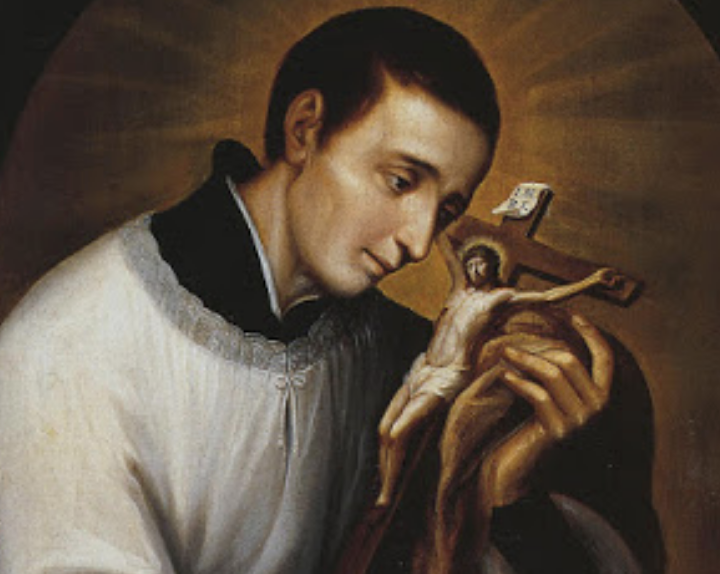
The piece depicts the celebration of Luigi (also known as Aloysius) Gonzaga, who resigned his inherited title of marquis (he was a member of a prominent Renaissance-era family) to become a Jesuit in 1585 in order to care for the poor in Rome.

Gonzaga died in 1591 at the age of 23 as a result of the plague. He was canonized a saint in 1726.

What does this painting and the man it depicts have to do with March Madness?

Turns out a lot. Gonzaga (the saint) and Gonzaga (the basketball team) are two different things. Nonetheless, the patron saint of Christian youth — who then died serving the poor in a pandemic — can help inspire a team to the final prize. Indeed, it would be only fitting that Gonzaga win it all after the year of COVID-19. And during a college basketball season when historical powerhouses such as North Carolina and Duke are not in contention, Gonzaga could very well capture its first national championship.

It’s no surprise that a Catholic university is among the heavy favorites this season in men’s hoops. After all, Catholic centers of higher education are no strangers to winning the NCAA Tournament. Villanova did it as recently as 2018.

Leading the pack is undefeated Gonzaga, runners up in 2017, who are undefeated so far this season. The school, located in Spokane, Wash., was once considered an underdog capable of defeating high-ranked teams, has reached the tournament every season since 1999. They have advanced to the Sweet 16 on six consecutive occasions.


Please respect our Commenting Policy

Welcome to Holy Days 2021: How to handle the latest sensational claim about the Bible

Welcome to Holy Days 2021: How to handle the latest sensational claim about the Bible

The New York Times often ignores developments in religious scholarship, an especially serious deficiency of its Sunday Book Review (where Nash K. Burger, who was hired by fellow Mississippian Eudora Welty, long and carefully monitored the field until he retired in 1974).

Thus, hallelujahs should greet a huge article by culture reporter Jennifer Schuessler, posted March 10 and granted two full pages in the Arts & Leisure section of last Sunday's print edition.

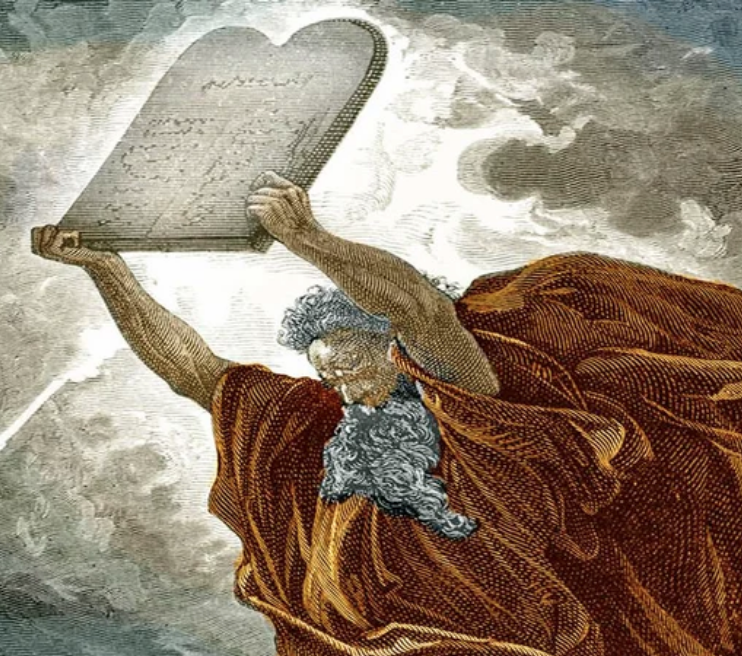
The piece reports that young Israeli-American scholar Idan Dershowitz may have identified "the oldest known biblical manuscript by far," which offers "an unprecedented window into origins and evolution of the Bible" and, in particular, the Book of Deuteronomy. If substantiated, some say, this "will be the most consequential Bible-related discovery since the Dead Sea Scrolls in 1947."

Or not. Journalists assessing what's hot should consider that across the years, manuscript frauds and ill-supported speculations about the Bible have been rife.

The Times is known to sometimes "bury the lede," and in this case it buried the news peg. The piece was nicely timed for Jewish Passover and Christian Holy Week when media often dig into biblical mysteries and controversies. But the news here is the April publication of Dershowitz's book "The Valediction of Moses: A Proto-Biblical Book."

The book will fill in the missing element in the Times story and thus provide major fresh substance for reporters to develop: Which portions of Deuteronomy are involved in this discussion, and how do specific wordings and passages in today's Bibles compare with the purportedly ancient texts Dershowitz cites? On that basis, what do the agreements and contrasts tell us and why?

Dershowitz seeks to rehabilitate Wilhelm Moses Shapira, whose 19th Century Jerusalem shop sold both tourist trinkets and allegedly valuable ancient manuscripts. He tried to sell these Deuteronomy fragments to a regular customer, the British Museum, but its expert and others declared them forgeries in 1883, based on what Dershowitz considers slipshod study.

Shamed, Shapira soon committed suicide in Rotterdam. The leather fragments themselves then disappeared.


Please respect our Commenting Policy

Returning to Kamp Kanakuk: Is this new expose a work of journalism, theology or both?

Returning to Kamp Kanakuk: Is this new expose a work of journalism, theology or both?

Readers with long memories will recall that, when the Internet arrived it had an immediate impact on important subjects that rarely received adequate coverage in mainstream media.

Take religion, for example. The lower cost of publishing online led to an explosion of forums, listservs, newsletters, online “radio” channels, podcasts and weblogs. Some failed or evolved into new forms — consider the long and complicated histories of Beliefnet and Patheos — and others became, well, normal.

Now, in the “cancel culture” era, it’s clear that another example of online evolution is affecting serious coverage of religion, as well as other complicated topics.

I am referring to the controversies surrounding Substack and the myriad newsletters and alternative publications thriving there. For a sample of the fea paranoia surrounding Substack, click into this thread from a professor at the UCLA Center for Critical Internet Inquiry or read between the lines of this Washington Post column: “The Substack controversy’s bigger story.” Here is a sample of that:

Substack is a start-up for self-publishing email newsletters: Writers decide how often to write and whether and how much to charge; Substack sends the newsletters and collects any fees. The ease of use has made it popular with journalists. …

Some of the most prolific users are heterodox political writers who had found mainstream publications an increasingly poor fit. A number quickly rose to the top of the Substack leader boards. This attracted the gimlet eye of the cancelers: Other online writers — some of whom had their own Substack newsletters — have leveled accusations of transphobia and other offenses. A nascent boycott aims to pressure Substack into deplatforming the alleged offenders. Reportedly, their campaign is having some effect.

“Heterodox” is an interesting word. It appears, in this context, to define the work of various kinds of conservatives or, even worse, free thinkers (Andrew Sullivan and Bari Weiss, for example) who accuse many “liberals” or “progressives” of turning dangerously illiberal.

This brings me to this weekend’s must-read missive from Nancy and David French, care of The Dispatch, an alternative conservative online publication that is thriving in this new online environment. Here is the dramatic double-decker headline atop this long feature:

‘They Aren’t Who You Think They Are’

The inside story of how Kanakuk — one of America’s largest Christian camps — enabled horrific abuse.


Please respect our Commenting Policy