People

Plug-in: Double standard? Treatment of Boulder suspect's faith raises tough question

Plug-in: Double standard? Treatment of Boulder suspect's faith raises tough question

Another week.

Another mass shooting.

Another 21-year-old suspect.

Last week's news coverage of Robert Aaron Long, charged in the deaths of eight people — including six women of Asian descent — at three Atlanta-area spas, focused on his ties to a Southern Baptist congregation.

Long's arrest sparked a barrage of stories and columns on evangelical theology, racism and "purity culture," including a Religion News Service op-ed headlined "Blaming Christians for the Atlanta shootings isn't persecution, it's prosecution."

On the other hand, Ahmad Al Aliwi Alissa's Muslim background has figured less prominently — so far — in reporting on the suspect in Monday's massacre that claimed 10 lives at a King Soopers grocery store in Boulder, Colorado.

In profiling the suspect, some major news organizations haven’t mentioned his religious affiliation at all. RNS has emphasized concerns that Alissa's arrest might ramp up "Islamophobia" and spark hate crimes as Muslims gather in congregational settings. (It’s a familiar storyline, going at least back to 9/11.)

"I think there definitely is a double standard," said Warren Smith, an evangelical who serves as president of the independent charitable giving watchdog MinistryWatch.com.

Smith, a longtime investigative reporter, offers this advice for covering a mass shooting: Stick to the facts. Avoid speculating on the gunman’s motives. Focus on the victims and the helpers.

"The perpetrator’s story will have an opportunity to come out in the legal process,” Smith said. “Let coverage of that process be the place where the perpetrator’s story is told factually, dispassionately, empathetically."

But the facts, not a double standard, are the reason for the different emphases in the Georgia and Colorado cases, said a journalist friend who is reporting on the Boulder massacre.

"The big difference to me is that police investigators brought up the 'sex addiction' question quickly and directly in Atlanta, which led people to seek where that guilt came came, which led to religious background," my friend said.

Please respect our Commenting Policy

Catholic journalists are must-read sources for those seeking reality of Cuomo scandals

Catholic journalists are must-read sources for those seeking reality of Cuomo scandals

It was just two months ago, in the aftermath of the U.S. Capitol riot, that an idea was floated that could help stop all the misinformation in our society: a “reality czar.”

It was a New York Times piece by tech columnist Kevin Roose (his new book “Futureproof is a must read if you’re interested in automation replacing you at work) on Feb. 2 that quoted experts who floated ideas to stop what the paper called the “scourge of hoaxes and lies.”

Roose’s piece threw out some interesting solutions — although “reality czar” is Orwellian, a Soviet-style solution to misinformation.

The harsh reality is that news consumers will need to read a wider variety of news sources if they are interested in finding solid facts, on-the-record sources and some sense of balanced reporting. On issues linked to religion, culture and politics, that will mean paying more attention to independent religious publications — including Catholic websites — that are now punching way above their weight. Hold that thought, because we will come back to it.

The truth is reality used to be what journalism purported to report on.

That’s no longer true given how polarized the news media has become over the past decade, a progression that sped up during the Donald Trump years and following the proliferation of partisan news sources during the internet age.

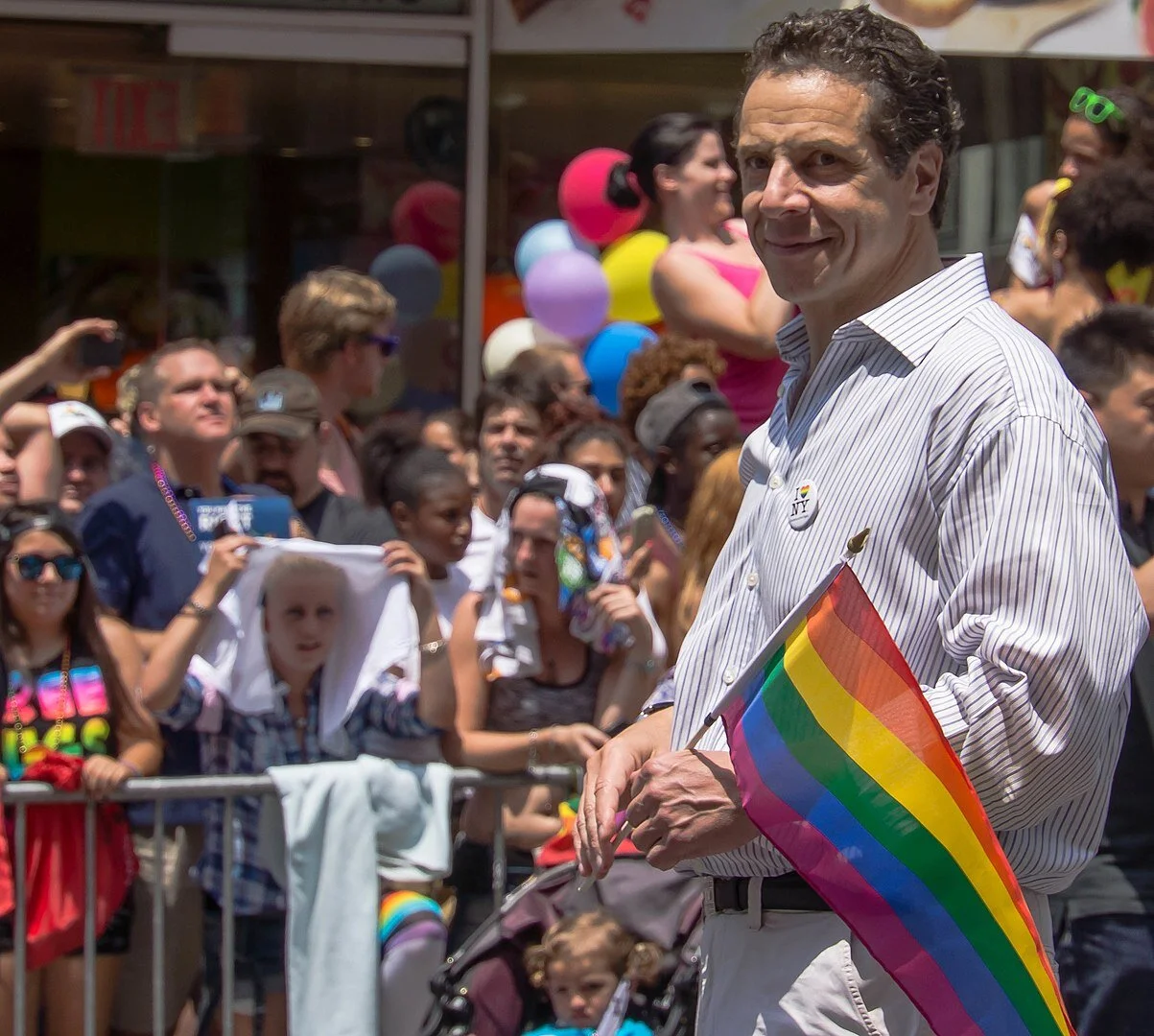
From a political standpoint, this brand of one-sided journalism has allowed politicians to earn cover from many mainstream newsrooms for alleged wrongdoings. On the left, New York Gov. Andrew Cuomo, embroiled in dual scandals regarding nursing home deaths during COVID-19 and growing claims of sexual harassment, is a prime example of this phenomena.

At this time last year, professionals at news organizations were fawning all over his press conferences as the country plunged into the pandemic. Many journalists considered Cuomo the coronavirus reality czar.

Why? Cuomo, a Democrat, served as the counterweight to then-President Trump.


Please respect our Commenting Policy

A police officer's calling and sacrifice: What about that sanctuary across from King Soopers?

A police officer's calling and sacrifice: What about that sanctuary across from King Soopers?

If you have lived in the Denver area, you know that King Soopers grocery stores are a familiar part of the urban and suburban landscape.

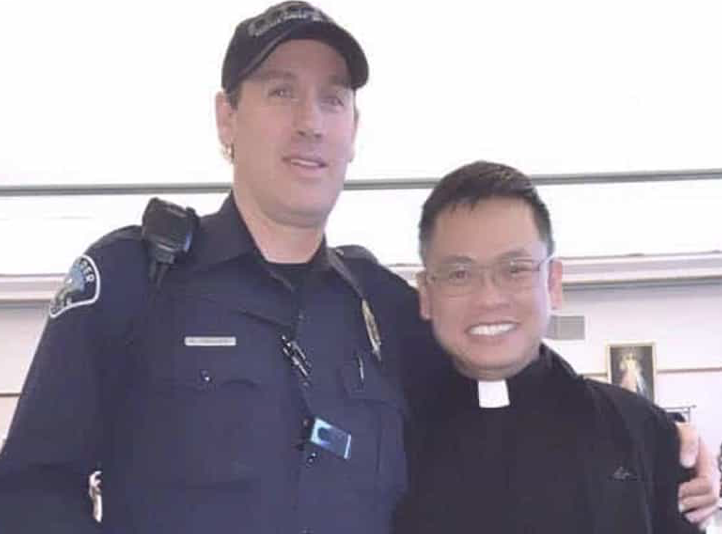
As the details emerged from the hellish shootings in Boulder that claimed 10 lives, it was clear that the fallen first responder — 51-year-old Officer Eric Talley — was an unusual man whose career in law enforcement had unusual roots. He came to the job, people said over and over, with a sense of “calling.” That is, of course, a word with strong faith overtones.

There were many pieces of information to assemble, in portraits of Talley. He was the father of seven children — ages 7 to 20 — who were being homeschooled by his wife. He bought a 15-passenger van to make family travel easier. Another officer told the Denver Post that Talley was a “devout Catholic.” This is a case where that all-too-common adjective fits the evidence.

Some news-media reports mentioned Talley’s faith, others did not. It was hard to miss this quotation, picked up by Washington Post:

His father, Homer Talley, told Denver TV station KMGH in a statement that his son was working to become a drone operator, a job he thought would be safer.

“He loved his kids and his family more than anything,” his father wrote. “ …He didn’t want to put his family through something like this and he believed in Jesus Christ.”

However, I was struck by another detail in a statement from Archbishop Samuel J. Aquila of the Archdiocese of Denver. As it turns out, there was a reason that Talley was familiar with this particular King Soopers location.

We do know that Officer Eric Talley was Catholic, and has been described as a man of character and strong faith, a loving father to seven children, a husband who cared deeply for his family, and a soldier for Christ. …

We also know that Officer Talley regularly stopped by St. Martin de Porres in Boulder and participated in its events, even though he wasn’t a parishioner there. For those unfamiliar with the area where the shooting occurred, St. Martin de Porres is just across the street from King Soopers.


Please respect our Commenting Policy

Plug-in: Debates about race, religion follow shooting of eight, Including six Asian women

Plug-in: Debates about race, religion follow shooting of eight, Including six Asian women

Was race a motive in Tuesday’s killings of eight people — including six Asian women — at three Atlanta-area massage parlors?

Was religion?

These are among the questions after the arrest of a White suspect with ties to a Southern Baptist church.

Despite police downplaying the role of race, the shootings have stirred national fear amid “reported record numbers of hate crimes and incidents of harassment” against Asian Americans, note the Los Angeles’ Times’ Jaweed Kaleem and Richard Read.

The first details concerning 21-year-old suspect Robert Aaron Long’s faith background were vague, with the Daily Beast indicating that “he was big into religion.”

But then Washington Post religion writer Sarah Pulliam Bailey interviewed his youth pastor:

As a teenager, Long would stack chairs and clean floors at Crabapple First Baptist Church in Milton, Ga., said Brett Cottrell, who led the youth ministry at Crabapple from 2008 to 2017. Long’s father was considered an important lay leader in the church, Cottrell said, and they would attend morning and evening activities on Sundays, as well as meetings on Wednesday evenings and mission trips.

“There’s nothing that I’m aware of at Crabapple that would give approval to this,” Cottrell said in an interview, referring to the shootings. “I’m assuming it’s as shocking and numbing to them as it has been to me.”

Today, a front-page story by a team of New York Times reporters, including religion writer Ruth Graham, focuses on Long’s battle against a “self-described sex addiction”:


Please respect our Commenting Policy

Thinking about J.S. Bach: As it turns out, it's hard to ignore the composer's views on doctrine

Thinking about J.S. Bach: As it turns out, it's hard to ignore the composer's views on doctrine

Sometimes we forget how strange the Internet is, in terms of providing an environment for reading and sharing news stories and other features.

Readers used to be able to flip through their daily newspaper and know that they had a chance, in an orderly manner, to look at “everything” that was in those pages. Today, there is no way to know — for a variety of technical reasons — if you’ve looked at everything in the “daily” New York Times or any other news product . It all exists in a vast digital cloud of material that is always evolving and being updated. There is no logical sequence or form.

People find “news stories” with a search engine, they run into them on Facebook or people end them URLs in emails or texts. Often these articles are stripped of context — news or editorial, for example — and often the publication dates vanish, as well.

Thus, every now and then, GetReligion readers ship us a story that they think deserves praise or criticism. Sure enough, I’ll find that it’s amazing and start work on a post and then notice — oh no — that it’s actually several years old.

This happened to me the other day with a “feature” story from the Times with this headline: “Johann Sebastian Bach Was More Religious Than You Might Think.” Well, I love Bach. As far as I am concerned, the stunningly productive and brilliant Bach is either (a) evidence of intelligent life elsewhere in the universe, (b) the most important artist in the history of Western civilization or (c) both.

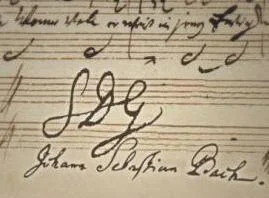
I dug into the piece and quickly realized that this essay by Michael Marissen, author of “Bach & God,” wasn’t a news feature and, on top of that, it ran in 2018. I’m sharing it as a weekend “think piece” because it is fascinating stuff and contains an interesting example of modern thinkers reaching conclusions about a historical figure — even though there is hard evidence that directly contradicts their views. This feature focuses on a piece of Bach material (not a piece of music) that I didn’t know about — with incredible implications for discussions of this cultural giant’s faith. Here is the overture:

Bach biographers don’t have it easy. Has there ever been a composer who wrote so much extraordinary music and left so little documentation of his personal life?


Please respect our Commenting Policy

New podcast: Early clue that Liberty may return to being a 'normal' Christian university?

New podcast: Early clue that Liberty may return to being a 'normal' Christian university?

Here’s a question for journalists and news consumers who remain interested in the future of the complicated, complex world of evangelical Protestantism: Now that Donald Trump is out of office, does it matter who becomes the next president of Liberty University?

Note that this question assumes that the future of Liberty is important — as a mainstream news story — if it is linked to politics, as opposed to questions about the future of Christian higher education.

There is another way to state this question: Would it be important if Liberty returned to the conservative Christian style and image of its founder, the late Rev. Jerry Falwell, instead of the high-energy, openly political agenda of Jerry Falwell, Jr.? In other words, the focus would be on conservative Christian beliefs and education, as opposed to political clout. That’s the question that was at the heart of this week’s “Crossroads” podcast (click here to tune that in).

If you followed the life and work of Jerry Falwell, Sr., you know that he was (#DUH) quite political. But this wasn’t an agenda that dominated the daily life and academic priorities of his university. Liberty was a conservative Baptist university and, for the most part, acted like one.

That changed under Jerry Falwell, Jr., of course. Consider this chunk of an “On Religion” column about that:

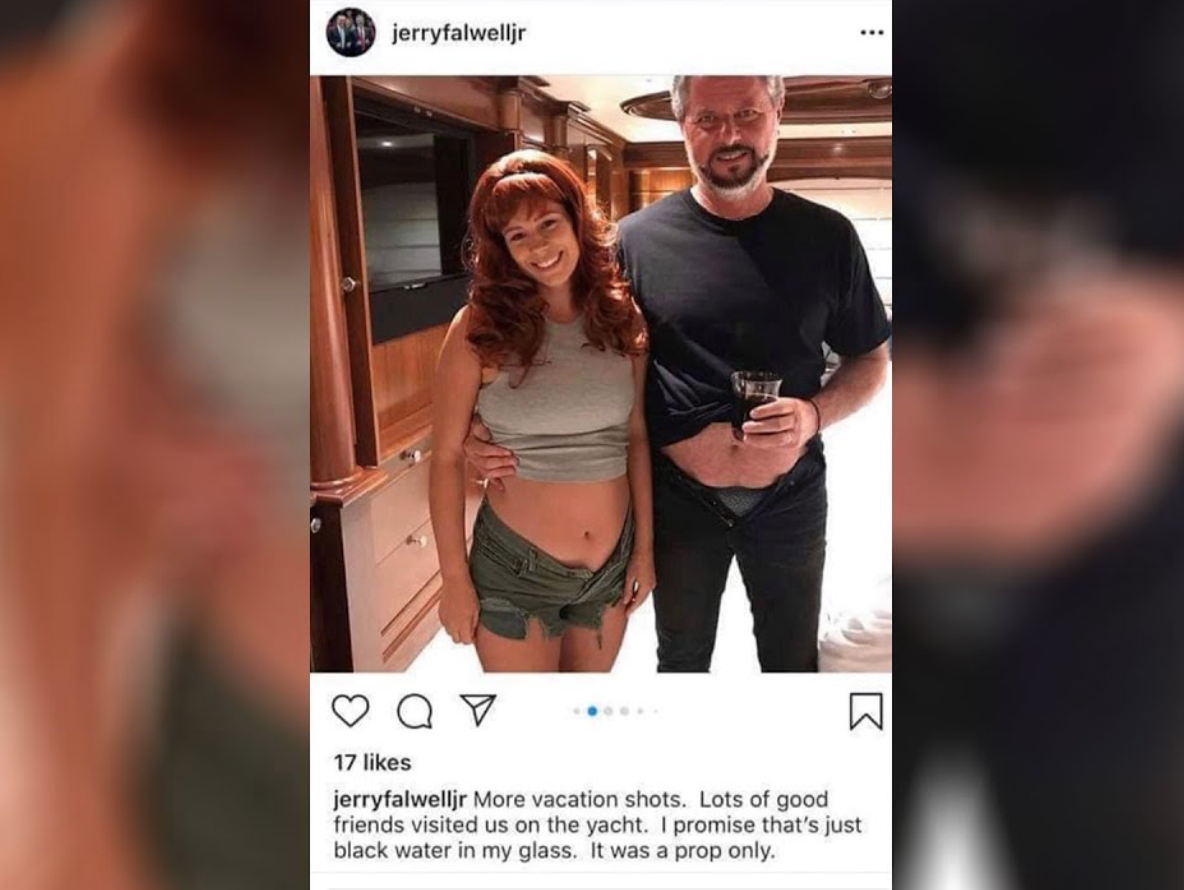
… Falwell Jr. developed a swashbuckling style that caused heat, especially when linked to race, guns, jets, politics, yachts and his specialty – real estate. Controversies about his de facto partnership with President Donald Trump thrilled many Liberty donors, alumni, parents and students, while deeply troubling others.

Many Christian college presidents are super-pastors who provide ties that bind to denominations, churches and networks of believers. Falwell Jr. — a lawyer — turned into a dynamic entrepreneur who courted powerful conservative politicos.

On regular Christian campuses, there "are higher expectations for presidents than members of the faculty, and members of the faculty live with greater expectations than students," noted religious-liberty activist David French, writing at The Dispatch.

"Liberty flipped this script. The president lived life with greater freedom than his students or his faculty. …”

This brings me to a fascinating news feature that ran the other day in The New York Times under this double-decker headline:

Conservative Activist Charlie Kirk Leaves Liberty University Think Tank

The Falkirk Center, named for its founders, Jerry Falwell Jr. and Charlie Kirk, was the center of evangelical Trumpism. Now, both are gone.


Please respect our Commenting Policy

Luis Palau: New York Times dug deeper than the 'Billy Graham of Latin America' label

Luis Palau: New York Times dug deeper than the 'Billy Graham of Latin America' label

It was the kind of question that general-assignment television reporters asked Billy Graham, since they didn’t realize that it had become a cliche: Who will be the “next Billy Graham?”

I heard Graham answer this question several times (and discussed it in depth with him in a 1987 one-on-one interview) and his response almost always included three key points.

First of all, he would say that he really didn’t know how or why he became “Billy Graham,” as in the world’s most famous evangelist (click here for his famous “turtle on a fencepost analogy). Second, Graham thought it was strange that reporters seemed to assume that he would know who the “next Billy Graham” would be. And finally, why did evangelists in other parts of the world need to be compared to him?

Take Luis Palau, for example. Graham said he didn’t consider him the “Billy Graham” of Latin America or anywhere else. Luis Palau, Graham told me, was Luis Palau, and that was who God wanted him to be.

I bring this subject up, of course, because of the double-decker headline that ran atop the recent New York Times obituary for this singular figure in modern evangelical history: “

Luis Palau, the ‘Billy Graham of Latin America,’ Dies at 86

He rose from preaching on street corners in Argentina to ministering to millions around the world, then focused his ministry on liberal corners of the U.S.

I’m not blaming the Times for using that image, since it appeared — to one degree or another — in almost every major news feature about his passing. In fact, the key to the Times feature is that dug deeper than that cliche and showed why Palau was a major player, in his own right, in global evangelicalism.

Still, everyone knows where this story will begin. But note the transition in this key summary passage near the top of the Times obit:

Though his headquarters were in Oregon, Mr. Palau was often called “the Billy Graham of Latin America.” He addressed that region’s 120 million evangelicals through three daily radio shows (two in Spanish, one in English), shelves of Spanish-language books and scores of revival crusades, in which he might spend a week, and millions of dollars, preaching in a single city. The Luis Palau Association estimates that he preached to 30 million people in 75 countries.


Please respect our Commenting Policy

Inspiring Easter feature idea sent aloft by (what are the odds?) producers at MSNBC

Inspiring Easter feature idea sent aloft by (what are the odds?) producers at MSNBC

Most media consumers will think of MSNBC as a heavy-breathing, politically and socially liberal cable television news operation — 24/7/365. Nor, so far as The Guy knows, has it shown much interest in religion coverage.

So it was quite the eyebrow-raiser when the March 11 edition of "Morning Joe" aired a relatively long and serious discussion of a theme that journalists may want to grab if they're looking for a promising Easter feature idea.

Adding to the surprises, MSNBC located and featured two intelligent evangelical Protestant leaders of the sort who all too rarely get air time on cable news networks, whether liberal or conservative.

One of this era's most successful pastors, the Rev. Timothy Keller of New York City, appeared to chat about his newly released book "Hope in Times of Fear: The Resurrection and the Meaning of Easter" (Viking). Joining him was journalist-attorney David French of TheDispatch.com, booked this time not as a #NeverTrump scribe but to undergird Keller's case for why modern people can believe in Jesus Christ's literal resurrection and what this means for them.

Adding to the drama, Keller mulled his simultaneous publication of one of those must-read articles, a very personal account for The Atlantic about writing an objective book on life and death during a year when he was coping with his own fatal diagnosis of pancreatic cancer.

As Keller confesses, it's one thing for a pastor to try to help parishioners face terminal illness and quite another for the pastor himself to face the same. In Keller's case, it took months for questions to give way to an even sweeter appreciation of life and of faith.


Please respect our Commenting Policy

Plug-in: Beth Moore, Southern Baptist trolls and a scoop that stunned Godbeat Twitter

Plug-in: Beth Moore, Southern Baptist trolls and a scoop that stunned Godbeat Twitter

In a little-noticed, late-night Twitter conversation on March 3, prominent author and speaker Beth Moore indicated that her Living Proof Ministries had ended its longtime partnership with Lifeway Christian Resources, a Southern Baptist Convention publishing house.

“Adored them but SBC baggage got to be too much,” Moore tweeted, matter-of-factly. “It was heartbreaking.”

A tip about the social media posts to Religion News Service national reporter Bob Smietana set in motion one of the year’s biggest religion news scoops.

Smietana called and set up an interview with Moore, who told him March 5 — last Friday — that she is “no longer a Southern Baptist.” After talking to Moore, the veteran religion writer then spent a nervous few days doing additional research and reporting — hoping no other journalist would learn about his in-depth exclusive.

When RNS published Smietana’s piece Tuesday, traffic quickly overwhelmed the wire service’s website, and the story became a trending topic on Twitter.

By Thursday, the Trump critic’s split with Southern Baptists was front-page news in the New York Times (read the story by Ruth Graham and Elizabeth Dias) and just missed the front page of the Washington Post (see the A2 coverage by Sarah Pulliam Bailey and Michelle Boorstein).

Other interesting follow-up coverage includes Holly Meyer’s report for USA Today, Kate Shellnutt’s story for Christianity Today and Ashlie D. Stevens’ analysis for Salon.

P.S. Kudos to RNS’ Emily McFarlan Miller for her front-page photo of Moore in the New York Times.


Please respect our Commenting Policy