People

It was hard to edit God out of Cicely Tyson's epic story, but some journalists gave it a try

It was hard to edit God out of Cicely Tyson's epic story, but some journalists gave it a try

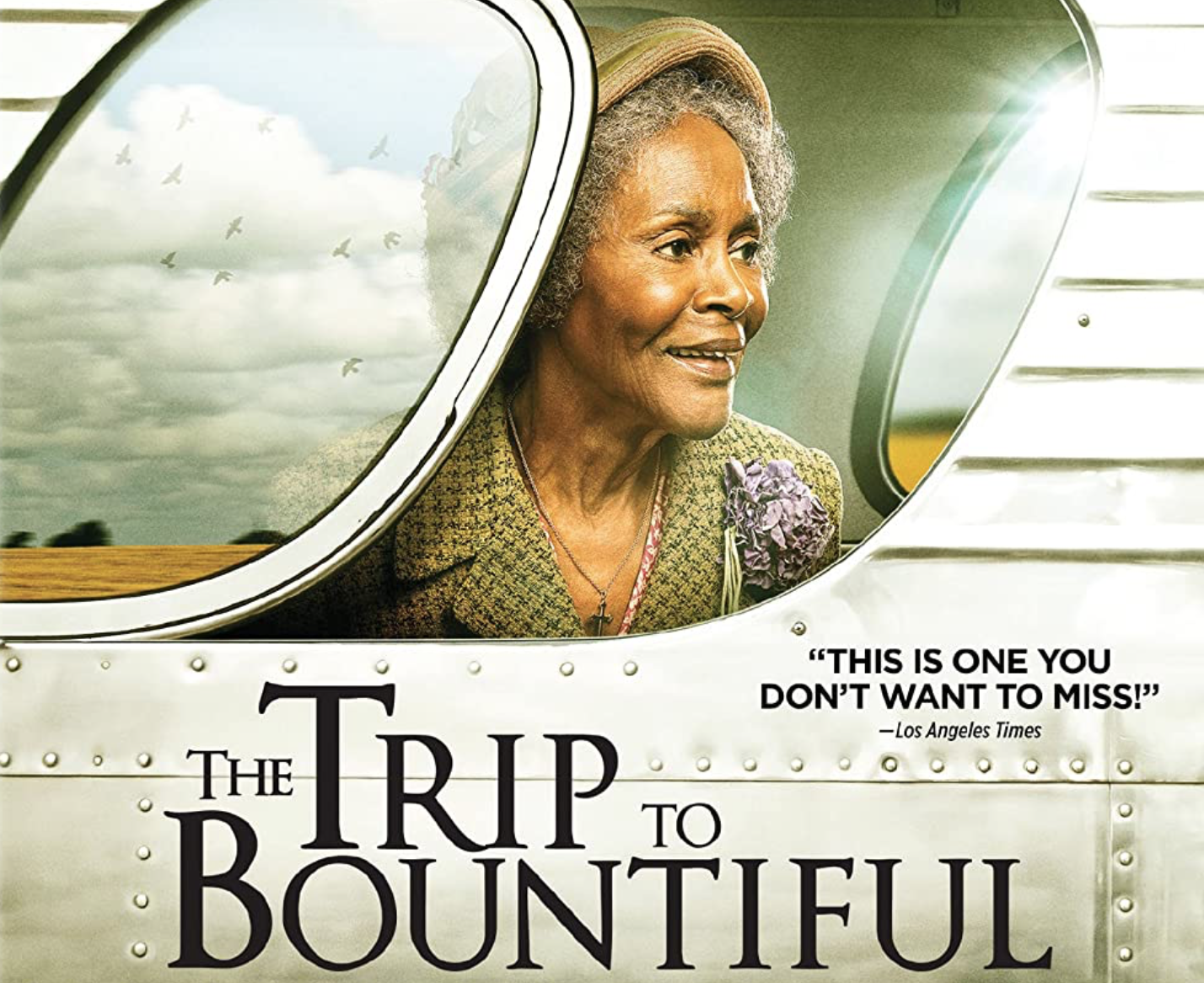
It was hard to listen to Cicely Tyson talk about her life without recognizing the strong undercurrent of Christian faith in her words, deeds and also in her art. While remaining a proud, private, dignified woman, her faith was not something that she tried to hide.

The question here at GetReligion, of course, was whether any of that imagery and information would make it into the news coverage surrounding her death at the age of 96.

The answer was, of course, “yes” and “no.” Many of the obituaries mentioned her Tony-winning return to Broadway in 2013, at the age of 88, to play the unstoppable matriarch in Horton Foote’s classic, faith-driven play, “The Trip to Bountiful.” The show-stopping moment, night after night, was when Tyson would sing — joined by many in the audience — the classic hymn “Blessed Assurance.” It’s hard to avoid the content of lyrics such as these:

Blessed assurance, Jesus is mine; Oh, what a foretaste of glory divine!
Heir of salvation, purchase of God; Born of His Spirit, washed in His blood.

This is my story, this is my song, Praising my Savior all the day long.

If you were looking for the faith-free version of Tyson’s life, the natural place to turn was The New York Times.

This story did a great job of capturing her impact on American culture, especially in terms of the sacrifices she made to portray African-American life with style, power and dignity. Here are two crucial summary paragraphs on that essential theme:

In a remarkable career of seven decades, Ms. Tyson broke ground for serious Black actors by refusing to take parts that demeaned Black people. She urged Black colleagues to do the same, and often went without work. She was critical of films and television programs that cast Black characters as criminal, servile or immoral, and insisted that African-Americans, even if poor or downtrodden, should be portrayed with dignity.

Her chiseled face and willowy frame, striking even in her 90s, became familiar to millions in more than 100 film, television and stage roles, including some that had traditionally been given only to white actors. She won three Emmys and many awards from civil rights and women’s groups, and at 88 became the oldest person to win a Tony, for her 2013 Broadway role in a revival of Horton Foote’s “The Trip to Bountiful.”

But the only reference to her Christian faith — negative, of course — came in this bite of biography:


Please respect our Commenting Policy

Lost in the digital morgue: David Caleb Cook (1850-1927), founder of a global publishing powerhouse

Lost in the digital morgue: David Caleb Cook (1850-1927), founder of a global publishing powerhouse

Alicia Fabbre, a freelance writer for the Elgin Courier-News, wrote a lovely story recently about Ramona and Sam Jones, who have rescued a former mansion in that city from a long abandonment.

Fabbre had a more dramatic story to tell but for one considerable detail that did not appear: Who was David Caleb Cook, and how did he afford to build this mansion in 1885?

Yes, there is a religion angle here.

Fabbre referred to Cook only as “a publishing magnate.” Imagine if someone bought the former mansion of the legendary and volcanic Robert R. “Colonel” McCormick and the Elgin Courier-News, which is owned Tribune Publishing, referred to him only as “a former Chicago newspaper editor.”

McCormick’s onetime home, Cantigny, was spared that fate and is under the protective shield of the McCormick Foundation. Still, the comparison is valid for Christians who have worked in Sunday schools that have relied on the extensive curriculum developed by David C. Cook, the global publisher that still bears its founder’s name.

A Courier-News story by Mike Danahey in May 2018 had this minimal detail about Cook:

Born in 1850, David C. Cook founded what would become the nation’s largest interdenominational publishing house. The Cook home is a 12-room mansion that cost $10,000 to build in 1885, the city said. It became a nursing home in 1945, and additions were added over the decades.

It appears the background on Cook’s former mansion may be the victim of morgue decay, in which good details fall to the side based on various reporters’ limits on column inches, or their greater interest in other matters.

Certainly the primary focus of this story belongs on the visionary couple from the suburbs of Atlanta who knew they had found a neglected jewel with an asking price of only $1.


Please respect our Commenting Policy

The New York Times looks at QAnon leader who is, wait, a Manhattan mystic from Harvard?

The New York Times looks at QAnon leader who is, wait, a Manhattan mystic from Harvard?

It would have been hard to have consumed mainstream press coverage during the 2020 race for the White House without hearing quite a bit about the impact of QAnon and other conspiracy theories on the most dedicated followers of Donald Trump. Conspiracy theories on the other side of American life? Not so much.

At the same time, for totally valid reasons, it was impossible to read about QAnon and other conspiracy theories without hearing about their impact in church pews, as well as blue-collar bars. In some media reports, QAnon was presented as an “evangelical” Christian movement, pure and simple.

Here at GetReligion, we have argued that the impact of QAnon in grassroots evangelical culture has been obvious and that this is an important story. (See this post, in particular: “Thinking about QAnon — Joe Carter sends strong warning to evangelicals about new heresy.”)

At the same time, it has been hard — so far — to argue that there is evidence that major institutions, denominations and leaders at the heart of evangelical culture have been sucked into this tragedy. (See this podcast and post, in particular: “New York Times says 'Christian nationalism' tied to white 'evangelical power'.”)

At this point, I am convinced that QAnon is, to use Joe Carter’s term, a “political cult” led by social-media activists who clearly know how to rattle the chains of evangelicals who are obsessed with speculating about the End Of All Things.

With all of that in mind, I was interested to dig into the recent New York Times multi-media feature that ran with this dramatic double-decker headline:

A QAnon ‘Digital Soldier’ Marches On, Undeterred by Theory’s Unraveling

Valerie Gilbert posts dozens of times a day in support of an unhinged conspiracy theory. The story of this “meme queen” hints at how hard it will be to bring people like her back to reality.

I assumed that this story would contain some religious content, if not clouds of speculation about evangelical involvement in QAnon.

So who is Gilbert?


Please respect our Commenting Policy

Creative ways to cover abortion stories near Roe v. Wade anniversary: Here's a few ideas

Creative ways to cover abortion stories near Roe v. Wade anniversary: Here's a few ideas

I always get frustrated with the lack of original thought when it comes to covering abortion stories connected to the anniversaries of Roe v. Wade. Last week’s reporting for the 48th anniversary was no exception.

There was the predictable updates (which I am not criticizing), such as President Joe Biden’s intent to codify Roe v. Wade, which the Catholic-news website Crux covered here. And Fox News ran a piece about a restrictive abortion law passed by the state of Tennessee last summer , and how that has become ensnared in the courts.

Now I know that, with the inauguration on the same week and all, there wasn’t a lot of energy out there to come up with Roe v. Wade stories that covered new ground. But the stories are out there, folks. It’s just that many of those in the media don’t feel like ferreting them out. Let’s suggest a few:

(1) Since Black Lives Matter has been a major newsmaker this past year, how about a revisit on black abortion rates? About a year ago, the Arizona Capital Times ran this opinion piece by a black member of the state house of representatives. I’ll pull out one paragraph:

The impacts on our black communities are hard to fathom. According to the Guttmacher Institute, which generally supports abortion, in 2011 360,000 black babies were aborted. CDC statistics for 2011 show that 287,072 black deaths occurred from all other causes excluding abortion. By these numbers, abortion is the leading cause of death among blacks.

Shouldn’t there be more reporting on something that kills more black children than police brutality ever has? Can’t say I’ve seen a whole lot. This story is also linked to debates in the Black church about politics, social issues, family, etc.

(2) Personality profiles. The pro-choicers get loads of them, such as this 2018 Washington Post piece about a black gynecologist who went from being anti-abortion to pro-abortion rights — and why. This was Willie Parker. The Atlantic, however, went more creative and much deeper in a feature about a war in the abortion movement where Parker is being accused of sexual assault, and the nasty infighting that’s resulted from that. Insider politics is always an interesting read, must say.

But where are the profiles of folks like Lila Rose and Joan Andrews Bell and many other lesser-known folks?


Please respect our Commenting Policy

'Hamilton,' the prophets and liberal Catholicism: Poet Amanda Gorman took her shot

'Hamilton,' the prophets and liberal Catholicism: Poet Amanda Gorman took her shot

After Inauguration Day, everyone was buzzing -- obviously -- about weary Sen. Bernie Sanders and his mittens, as well as Lady Gaga's massive social-distance enforcing dress. Commentators explored the socio-political importance of the various shades of purple worn by female Democrats, while Garth Brooks raised eyebrows with blue jeans and maskless-hugs of assorted presidents.

Oh, and President Joe Biden belted out an address that was Bill Clinton-esque in terms of length.

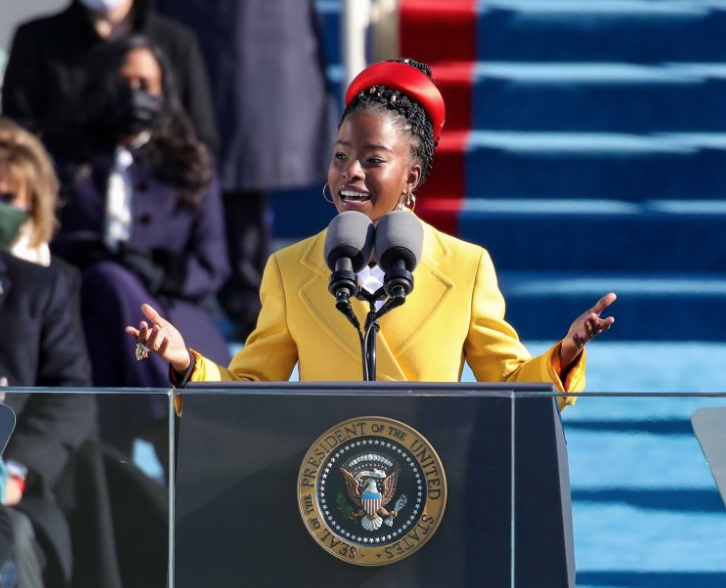
But there was no question that the day’s rising star was Amanda Gorman, the young poet in the canary-yellow coat who certainly didn’t throw away her shot. The question, for GetReligion readers, was whether there was a religion angle in her work that meshed with the rest of the Inauguration Day celebration of the Gospel according to the Religious Left.

Anyone with a computer-based device and a search engine could easily learn that the answer was, “Yes.”

As one would expect, the New York Times offered the definitive faith-free story: “Amanda Gorman Captures the Moment, in Verse.” Now, it was totally valid that the overture underlined the role that the January 6th conspiracy-theory apocalypse played in the creation of the poem. The question is whether this young Catholic woman’s faith was part of her response to it.

Two weeks ago, the poet Amanda Gorman was struggling to finish a new work titled “The Hill We Climb.” She was feeling exhausted, and she worried she wasn’t up to the monumental task she faced: composing a poem about national unity to recite at President-elect Joseph R. Biden Jr.’s inauguration.

“I had this huge thing, probably one of the most important things I’ll ever do in my career,” she said in an interview. “It was like, if I try to climb this mountain all at once, I’m just going to pass out.”

Gorman managed to write a few lines a day and was about halfway through the poem on Jan. 6, when pro-Trump rioters stormed into the halls of Congress, some bearing weapons and Confederate flags. She stayed awake late into the night and finished the poem, adding verses about the apocalyptic scene that unfolded at the Capitol. …

At one point, this Times piece came close to exploring the DNA of key passages in her poem. Of course, the “Hamilton” influence was relevant (hold that thought). Then there was this:


Please respect our Commenting Policy

New podcast: Why the infamous 'McCarrick doctrine' haunted U.S. Catholic bishops this week

New podcast: Why the infamous 'McCarrick doctrine' haunted U.S. Catholic bishops this week

It was a great week to be a Cardinal Theodore McCarrick Catholic.

Now, before anyone gets mad, let me stress that the McCarrick mentioned during this week’s “Crossroads” podcast (click here to tune that in) was not the “Uncle Ted” McCarrick known for bunking with seminarians or the trusted priest or bishop accused of fondling teen-aged boys from families that trusted him.

No, it was Cardinal McCarrick, the consummate networker, trusted fundraiser, ecclesiastical kingmaker and media manipulator. This was the man who, as archbishop of Washington, D.C., created the so-called “McCarrick Doctrine” that protected national-level Catholic politicians whose faith was a crucial part of their lives and images, even if many ancient doctrines didn’t mesh well with their political agendas. This McCarrick also claimed — in a public speech — to have helped elect Pope Francis.

This was the McCarrick whose legacy helped shape the remarkable war inside the U.S. Conference of Catholic Bishops that jumped into clear view on Inauguration Day.

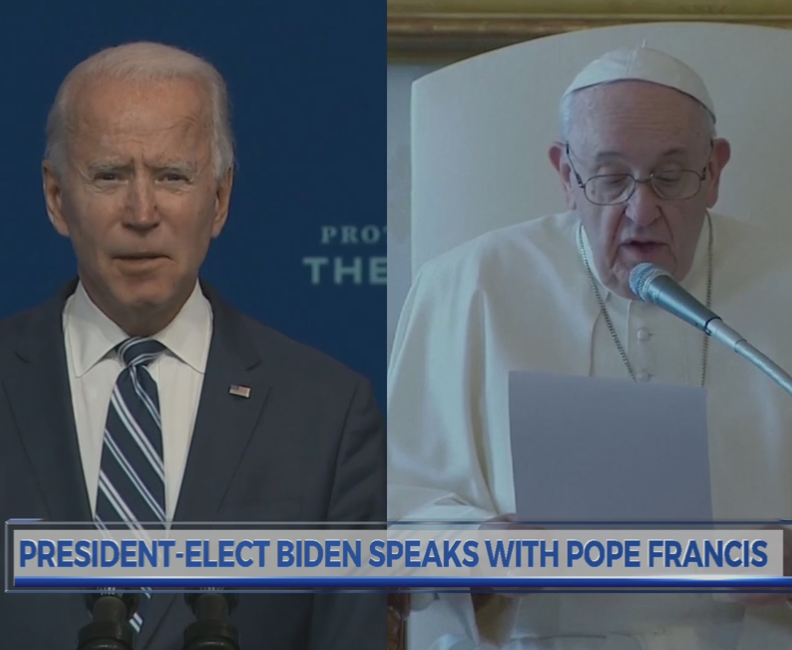
It was easy to see this coming. I wrote about it several weeks ago in this “On Religion” column: “Joe Biden and the U.S. Catholic bishops — Tensions remain about Holy Communion.” And Catholic-press veteran J.D. Flynn clearly knew something big was coming when, a day before the Biden inauguration, he wrote an analysis — “Biden and the bishops. This probably will not go well” — for his new (and essential) website called The Pillar. Check out this lede:

Shortly after President Joe Biden begins his term of office, the U.S. bishops will be derided as culture warriors and abortion obsessives, unwilling to find common ground with the administration of the second Catholic U.S. president.

Sure enough, the elected leader of America’s Catholic bishops issued a letter (hold that thought) criticizing Biden’s actions supporting abortion rights, while hinting at clashes over religious liberty (Hello, Little Sisters of the Poor) and church doctrines on marriage and sex.

This drew an angry social-media response from Catholic progressives — including key men wearing red hats. Their outcry led to this headline in The Washington Post: “As Biden is sworn in, president of U.S. bishops assails him over abortion.”

In a bombshell report, The Pillar noted that the Vatican tried to ban the distribution of the USCCB statement by Gomez — at least until team Pope Francis could release a more politically nuanced letter. That headline: “Vatican intervened to spike US bishops’ Biden statement release.”

But back to the Post. The overture for that report says exactly what one would expect it to say:


Please respect our Commenting Policy

When covering the Trump prophets, listen up: 'Heavenly inauguration' is in the wings

When covering the Trump prophets, listen up: 'Heavenly inauguration' is in the wings

Well, today is Jan. 20 and, contrary to the assertions of many Pentecostal prophets, President Donald Trump is on his way out of the White House and did not win the 2020 election.

Last week’s post on the “civil war” between Pentecostals and charismatics over failed prophecies by leaders in their movement created lots of buzz, with good cause. We’re not just talking about the failed “Trump prophecies,” as they are now termed, but also the fact that none of these prophets predicted the historic January 6th assault on the U.S. Capitol.

For those of you who’ve been unplugged from the news in recent days, here’s a bit of a review: There are still millions of these folks who believed that God was somehow going to replace Biden with Trump before the inauguration — or sometime in the coming months — simply because a coterie of prophets said so. See Kat Kerr’s Jan. 19 video saying this.

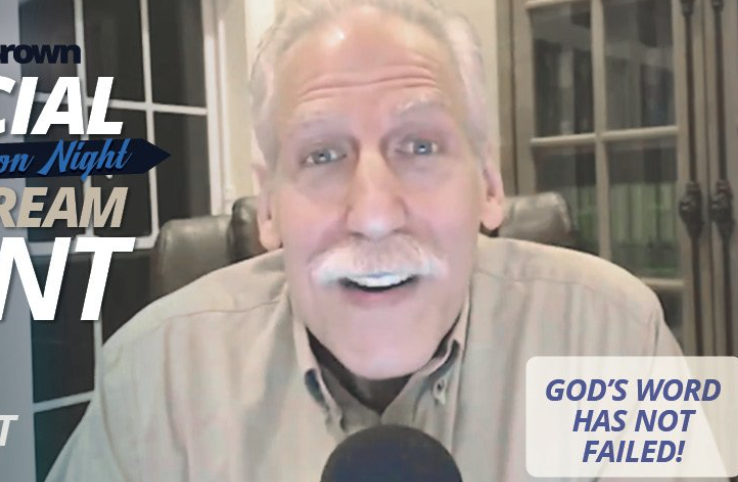
Now that this prophetic Hail Mary pass has failed, the recriminations are going to start. One leader in the movement, Michael Brown of 1990s Brownsville revival fame, has been calling out his fellow prophets to stand down for several weeks now and has established a ministry for disappointed charismatics. More on that in a moment. That’s a news story.

The prophets (and I won’t put that word in quotes like some say I should) range from Kat Kerr of Jacksonville, Fla. — who’s known for her flaming pink hair and tales of multiple trips to heaven –- to oldsters like Texas prosperity preacher Kenneth Copeland.

There’s also the Rev. Paula White, hailed as Trump’s pastor, who was holding out for a last-minute supernatural reprieve during December, but who’s been pretty silent of late. (News flash: See this video of her Jan. 17 Sunday sermon blaming other Christians for attacking her). Others, like Nebraska pastor Hank Kunneman, say that January 20th thing isn’t a factor now; when God wants to replace Biden with Trump, it will happen.

While researching a follow-up feature that ran the next day in ReligionUnplugged, I got to talk with a few scholars who follow this phenomenon –- and there aren’t many. One was Gordon Melton, now 78, who has helped religion reporters for decades with his encyclopedic knowledge of American religious history.

Now at Baylor University, he was telling me of how many –- of the top 40 people in the apostolic/prophetic movement that he’s tracking — are based close by. Not sure why the Lone Star state brings in all these folks, but Texas has always been an outlier, right?


Please respect our Commenting Policy

Evangelical 'power' and U.S. Capitol rioting: What about Franklin Graham and Falwell Jr.?

Evangelical 'power' and U.S. Capitol rioting: What about Franklin Graham and Falwell Jr.?

As a rule, I don’t use GetReligion posts to respond to feedback from readers. But several people — in emails, for the most part — have raised two crucial, and valid, questions about last week’s “Crossroads” podcast and post: “New York Times says 'Christian nationalism' tied to white 'evangelical power'.”

Actually, it’s the same question asked in two different ways. Hold that thought.

In the podcast and post, I argued that a much-read New York Times piece (“How White Evangelical Christians Fused With Trump Extremism“) did a fine job while offering illustrations that conspiracy theories such as the QAnon gospel have soaked into many pews and a few pulpits, especially in independent (and often small) charismatic and evangelical churches. My question was whether the feature provided solid evidence for this thesis:

The blend of cultural references, and the people who brought them, made clear a phenomenon that has been brewing for years now: that the most extreme corners of support for Mr. Trump have become inextricable from some parts of white evangelical power in America. Rather than completely separate strands of support, these groups have become increasingly blended together.

The key word was “power,” as in “some parts of evangelical power” becoming “inextricable” from the “most extreme” forms of Trump support — which has to be a reference to those who planned, not the legal National Mall rally for Trump, but the illegal armed attack on the U.S. Capitol.

In response, I wrote:

… Anyone who studies “evangelicalism” — white or otherwise — knows that we are talking about a movement based on the work of powerful denominations (this includes megachurches), parachurch groups, publishers (and authors) and major colleges, universities and seminaries.

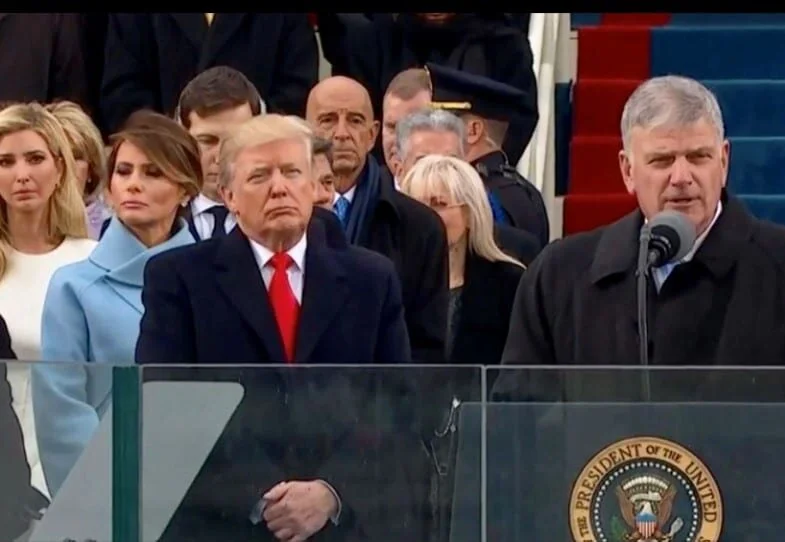
This led to several people asking this valid question: What about the Rev. Franklin Graham? Others asked: What about Jerry Falwell, Jr., and Liberty University?

These are certainly examples of evangelical brand names — Graham and Falwell.


Please respect our Commenting Policy

After the U.S. Capitol riot: Personality cults do not mix well with traditional Christian faith

After the U.S. Capitol riot: Personality cults do not mix well with traditional Christian faith

Year after year, thousands of Americans attend the March for Life, marching past the U.S. Capital on a late January date close to the anniversary of Roe vs. Wade.

Most of the marchers are young and come by bus from Catholic and evangelical schools. While most of the groups present are conservative, there are smaller groups like Secular Pro-Life and Democrats for Life. Most of the banners contain slogans such as, "Abortion Hurts Women," "Love Life, Choose Life" or "We are the Pro-Life Generation."

Things were different at the Save America March backing President Donald Trump's efforts to flip the 2020 election. Some banners contained messages like "Jesus is my Savior, Trump is my President." But many more proclaimed "Stand with Trump!" or "Trump 2020: No More Bulls--t."

It's one thing to march for a cause. It is something else to hail a political leader as the key to saving America, said Southern Baptist Seminary President R. Albert Mohler, Jr., a central figure in evangelical debates about Trump.

"The American experiment in ordered liberty is inherently threatened by a cult of personality. And we saw the results of that. … So many of those who were there as protestors explicitly said that they were there in the name of Donald Trump," said Mohler, in a podcast the day after U.S. Capitol riot. "It was Trump that was the name on the banners. They were not making the argument about trying to perpetuate certain political principles or even policies or platforms."

History shows that personality cults -- left or right -- are dangerous, he stressed. After this "American nightmare," Christians should soberly ponder the "way sin works" and its impact on powerful leaders who are tempted to become demagogues.

"Demagoguery simply means that you have a character who comes to power on the basis of emotion, rather than argument, and passion rather than political principles," said Mohler.

It's crucial to know that, in 2016, Mohler was numbered among evangelical leaders who opposed Trump's candidacy. When the New York City billionaire clinched the GOP nomination, Mohler tweeted: "Never. Ever. Period."

But in 2020 he said he would vote for Trump in support of the Republican Party, thus opposing the Democratic Party platform.


Please respect our Commenting Policy