People

Prayers for the soul of Brian Sicknick: Did anyone ask officers faith questions after Capitol riot?

Prayers for the soul of Brian Sicknick: Did anyone ask officers faith questions after Capitol riot?

When you live somewhere, you develop friendships and contacts that survive — especially in the age of email and social media.

I lived and worked in Baltimore and Washington, D.C, for a decade-plus and my commute took me to Union Station and then past the U.S. Capitol. Many of my students had press passes on the Hill and that landmark was simply part of work-day life.

Right after the rioting last week, I received an email through church contacts requesting prayers for the “repose of the soul of a friend and U.S. Capitol Police officer, Brian,” as well as prayers for other police who were injured. Christians in the USCP and linked to it were spreading this request.

It’s impossible to read all of the coverage of the January 6th riots. But if you dig into the coverage at all, you are sure to hit detailed coverage of the “Fight for Trump” rioters who carried Christian symbols and banners inside the U.S. Capitol security zone, even while surrounded by others chanting, “Hang Mike Pence” and slogans that can’t be printed here.

Let me stress, once again, that this coverage was and is valid. The impact of QAnon in corners of white evangelicalism cannot be denied and many of other conspiracy theory believers “speak evangelical” even if they’re not churchgoers.

The note from friends in Beltway land led me to look for signs of religion-news coverage on the other side of that battle line between police and the rioters. I know the U.S. Capitol community well enough to know that there are all kinds of prayer groups and Bible studies there, on both sides of the aisle and crossing them. Do similar groups exist in the USCP? Did anyone ask if Brian Sicknick was part of such a support network?

It’s clear that Sicknick was an unusual and even inspiring man, an officer appreciated by Democrats and Republicans. We know something about his politics, naturally. He was an Air National Guard veteran who, in some ways, backed Donald Trump. Sicknick was also a critic of many mainstream Republicans.

A Washington Post story quoted Chief Master Sgt. Lance C. Endee — Sicknick’s squad leader in the guard — as saying: “I think Brian had a bigger impact on people than he would have ever realized.” That same story included this:

In a statement, Sicknick’s family said “many details regarding Wednesday’s events and the direct causes of Brian’s injuries remain unknown and our family asks the public and the press to respect our wishes in not making Brian’s passing a political issue.”
Please respect our Commenting Policy

It's civil war among American charismatics and Pentecostals, but few reporters are covering it

It's civil war among American charismatics and Pentecostals, but few reporters are covering it

Last week’s riot at the U.S. Capitol has ignited a civil war among many Christians.

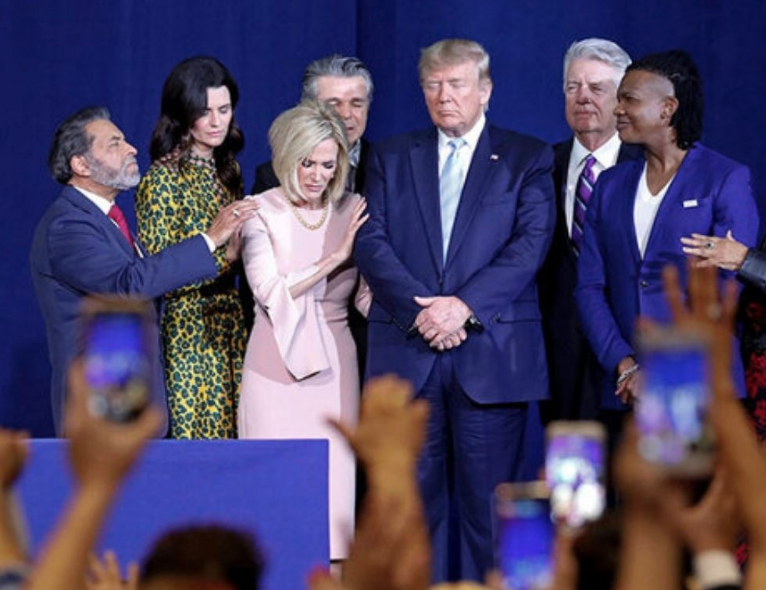
Whereas white evangelicals are being creamed in the media for their (nearly) unwavering support of President Donald Trump, their Pentecostal/charismatic cousins have hardly been mentioned. The latter is an evangelical subset little known to the media, and many of its adherents remain fiercely pro-Trump.

Why is this important, besides the fact that Pentecostalism is the fast growing form of Christian faith in the world? Well, for starter’s its most famous leader here in America, the Rev. Paula White-Cain, is Trump’s personal pastor.

Some have said that these charismatic and Pentecostal leaders are part of a New Apostolic Reformation, described in Holly Pivec’s and Douglas Geivett’s 2014 book. It’s not a creedal movement, but its basic tenet is that God has restored a cadre of apostles and prophets to lead worldwide Christianity in the 21st century.

Things are rocky, right now, among the NAR crowd. There’s a war going on in that group concerning the “prophets” who have set the tone for much of Pentecostal America. These are individuals who claim to have foretold Trump’s 2016 victory. For the past few years, almost to a person, their prophets said God had planned a 2020 repeat victory for Trump.

If you’ve not heard of those prophecies, that’s because you’re not monitoring their YouTube channels, Twitter and Facebook feeds or personal web sites. Their conversations generally are not available in the secular media, which they detest. There are ways to cover them, but you have to know the players.


Please respect our Commenting Policy

Thinking about, and with, Al Mohler: America's 'ordered liberty' was set afire -- by Trump

Thinking about, and with, Al Mohler: America's 'ordered liberty' was set afire -- by Trump

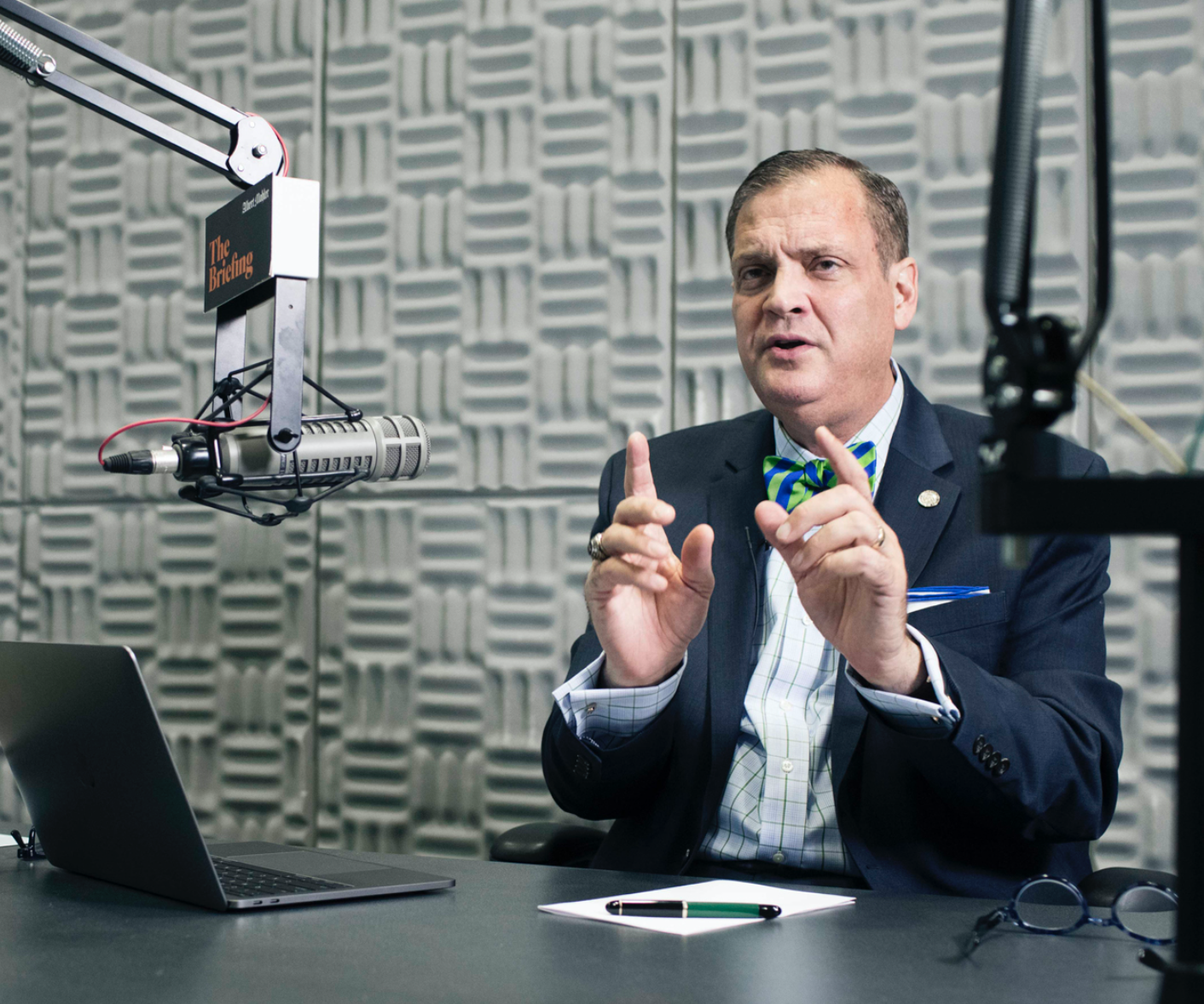
If you have followed the divisions inside the Southern Baptist Convention since 1979, or even earlier, you know this name — R. Albert Mohler, Jr. He was — for some — a L’enfant terrible among the conservatives in the early biblical inerrancy wars who (like him or not) grew, as president of Southern Baptist Theological Seminary, into one of the most important Southern Baptist voices of the late 20th and early 21st centuries.

It would be hard to describe the degree to which many Southern Baptists in the defeated “moderate” establishment detest Mohler, for a variety of theological, cultural and political reasons. At the same time, in the Donald Trump era, there are many in the ranks of far-right Southern Baptist life who view him as a traitor or even “politically correct.”

This is not an easy era in which to lead conservative religious institutions, even those with clout and many supporters. And it’s crucial to know that Southern Baptists leaders were, like evangelical leaders in general, sharply divided on whether to support the rise of Trump in 2015-2016. (Click here for the GetReligion typology describing six different evangelical views of Trump.)

Out of the tsunami of important statements by religious leaders following the U.S. Capitol riot, I have selected — as this weekend’s “think piece” — two articles by and about Mohler, Trump and the hellish scenes of January 6th. The first is a Houston Chronicle interview with Mohler by Robert “wut is happening?” Downen, an emerging religion-beat force in Texas and American in general. The headline: “Evangelical leader Albert Mohler says he’s horrified by chaos at Capitol, but stands by Trump vote.”

Downen notes that:

Mohler is the longtime president of the Southern Baptist Convention’s flagship seminary in Louisville, Ky., and is a contender to lead the SBC when the faith group elects a new president in June.

The evangelical leader has forcefully condemned Trump over the last half-decade, characterizing him as a sexual predator at one point and, after Trump clinched the Republican Party nomination in 2016, Tweeting simply: “Never. Ever. Period.”


Please respect our Commenting Policy

On the religion beat: Alma mater hails New York Times and Washington Post alums

On the religion beat: Alma mater hails New York Times and Washington Post alums

Three important women working the religion beat right now all graduated from the same small college within a span of six years.

Coincidence? Perhaps not when their alma mater is Wheaton College, the elite and devout evangelical campus whose magazine's current issue surveys a dozen alums in media careers.

(That's Wheaton of Illinois, not the Massachusetts school of the same name where religious roots are long distant. Disclosure: The Guy's late wife Joan was a 1961 Wheaton graduate, journalist and college journalism teacher.)

The three: Ruth Graham, '02 (no relation to the famed evangelist) was hired by The New York Times last year to report on "religion, faith and values" out of church-saturated Dallas. The influential daily bragged that Graham forms "a powerhouse team" with the Washington bureau's Elizabeth Dias, '08, a "faith and politics" reporter since 2018. Sarah Pulliam Bailey, also '08, joined the Washington Post's equally talented religion crew in 2015, based in New York where husband Jason (class of '07) is a Times editor.

Outsiders may assume that seriously religious colleges inculcate a narrow view of life and of religion. But The Guy observes that good liberal arts education, as much or even more at a religious school than today's secularized campuses, does not wall off students from a broad outlook. Moreover, the best way to understand any and all religions is immersion in a specific believing community, whether through education or personal experience.

It figures that a Wheaton graduate will comprehend the influence of religion on individuals and societies with sophistication. Whatever their private beliefs, nobody can claim these Wheaton alums show religious favoritism. If anything, they're more likely to lift rocks on evangelical embarrassments thanks to good sources.

Perhaps employers in the East Coast cultural bubble have come to realize that evangelicalism is the nation's largest and most dynamic religious sector, and that "Wheaties" are well-equipped to interpret its vast complexities. Just so, the media scouted for writers of Catholic background during the Second Vatican Council e.g. John Cogley at the Times, writer John Elson and Rome correspondent Robert Kaiser at Time and Kenneth Woodward at Newsweek.


Please respect our Commenting Policy

Life after Georgia: Questions about a pro-life Democrat in U.S. Senate and other issues ...

Life after Georgia: Questions about a pro-life Democrat in U.S. Senate and other issues ...

Once upon a time, there were these strange political unicorns called “pro-life Democrats.” They were often, but not always, part of another endangered species called “blue-dog Democrats.”

Most of these unique politicos were in the U.S. House of Representatives, but there were occasional — but increasingly rare — sightings in the U.S. Senate. After all, Tennessean Al Gore had an 84% rating with National Right to Life when he was a congressman, but that changed — for the most part — when he became a senator. And as vice president? Forget about it.

This brings us to the thought for the day, a quote drawn from a mini-firestorm in the Democratic Party back in 2017. Here is a quote from an “On Religion” column at that time:

… Democratic National Committee Chairman Tom Perez drew another bright line defining who participates in the work of his party.

"Every Democrat, like every American," he said, "should support a woman's right to make her own choices about her body and her health. This is not negotiable and should not change city by city or state by state." In fact, he added, "every candidate who runs as a Democrat" should affirm abortion rights.

What if that state is West Virginia?

Some key Democrats quickly stepped forward in 2017 — including Rep. Nancy Pelosi — to suggest that Perez wasn’t speaking for all top Democrats. Still, the party’s stance on abortion rights and funding continued to veer further and further to the cultural and religious left, eventually causing one Joe Biden to shed the last scraps of his once “centrist” stance.

This, of course, brings us to religion-beat angles in the aftermath of the Georgia earthquake, in which Democrats — Black and White — and other anti-Donald Trump voters appear to have handed the Democrats the slimmest possible control of the U.S. Senate.

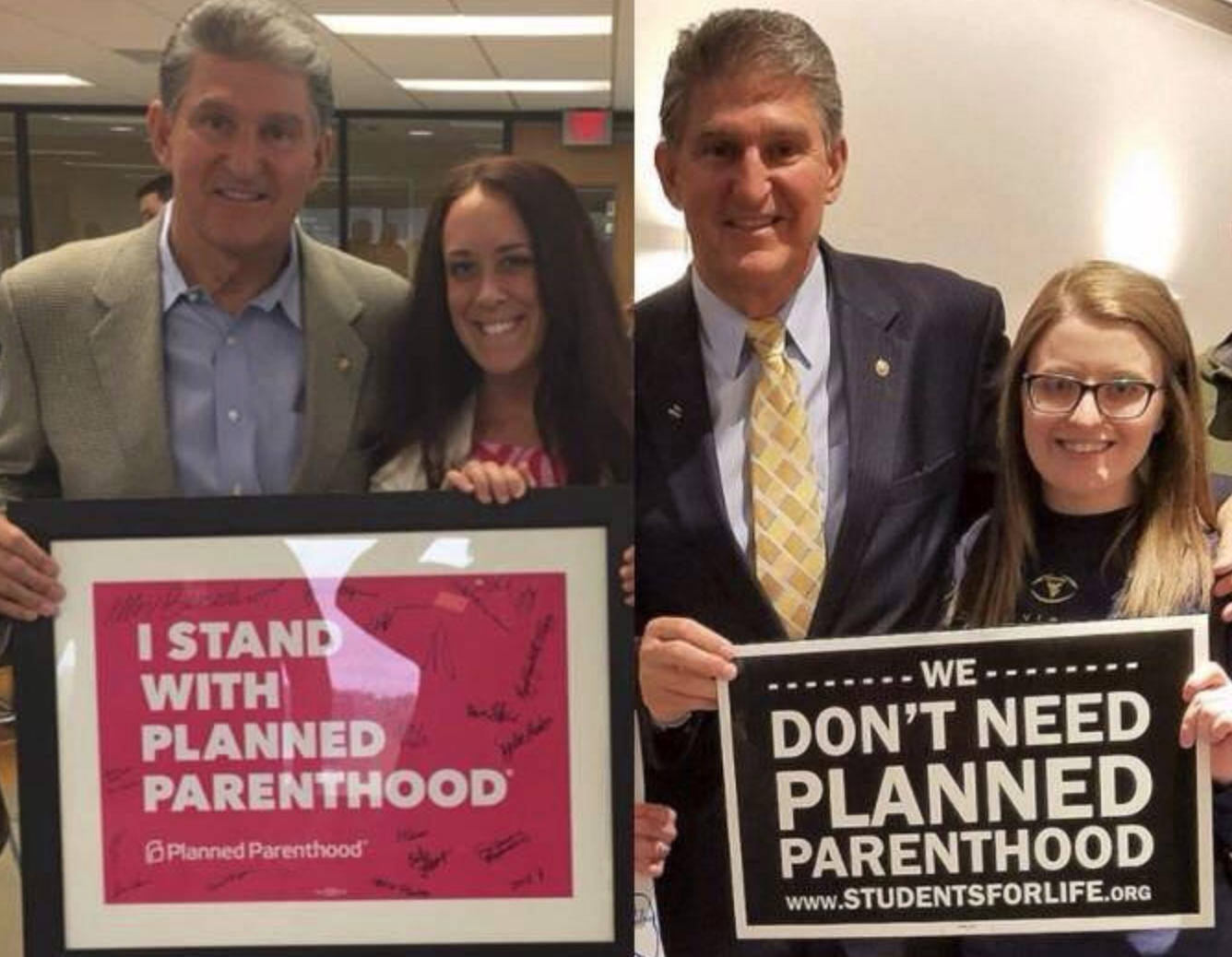
This brings us to Sen. Joe Manchin of West Virginia, a conservative Democrat and active Roman Catholic who has been endorsed by Democrats for Life, even though his record on that issue has become rather complex. He remains a throwback to the days when it was perfectly normal to be a Democrat and a cultural conservative. One can imagine the pressure he faces from establishment Democrats.

Well, how many Democrats want to toss Manchin out of the party right now?


Please respect our Commenting Policy

Pondering 'Things to Come,' with help from savvy thumbsuckers and backgrounders

Point of personal privilege. "Things to Come" is the title of a Religion Guy favorite, Dizzy Gillespie's jazz pulse-pounder from 1946 that's ever contemporary. Check out this remarkable high school performance just last year.

Turning to our beat's things to come in 2021 and beyond, here are some savvy thumbsuckers and backgrounders you might have missed.

Evangelicals and the ineludible Donald J. Trump — The outgoing President, who told Religion News Service this year he's "a non-denominational Christian," hopes to control the Republican Party through 2024 with attendant media visibility. His politically crucial following among white Catholics may well fade, but what will his digital dominance mean for those ultra-loyal white evangelical Protestants?

GetReligion contributor and political scientist Ryan Burge, who emerged as never before this year as the go-to guy on religion and U.S. politics, says the evangelical "brand" is not as tarnished by Trump as many suppose. Two major surveys show little variation in Americans identifying with the movement -- currently 34.6% -- over the past decade. Another Burge opus reinforces The Guy's observation on Trump-era political and moral chasm between evangelical leadership and the grassroots.

Speaking of evangelical leaders, none has done more significant work than attorney David French in two decades defending freedom for religious groups and individuals, especially on secular campuses. He says he's seen up front the "astonishing intolerance and even outright hatred" that a relentless "illiberal left" is aiming against good-hearted believers. (Did that help the Republicans in November?)

French's weekly religion column for TheDispatch.com has become a must-read, though few fellow conservatives will cheer when he turns to fiery anti-Trump sermons. One column branded "Christian Trumpism" as "idolatry" that threatens American law and order. Another contended that evangelicals bring hostility upon themselves over issues like race and immigration that face the U.S. in the 2020s.

An election eve reflection by Christianity Today's new CEO Timothy Dalrymple took a more temperate approach to these issues.

American Christianity in “free fall”? — Last year's big Pew Research report on the decline of U.S. Christianity provoked historian Philip Jenkins to respond that those "nones" who tell pollsters their religion is "nothing in particular" are surprisingly religious.


Please respect our Commenting Policy

Weekend Plug-In year in review: Religion-beat scribes select their top journalism of 2020

What a year for religion news!

From the pandemic to the election, the major headlines of 2020 had huge faith angles.

For this special year-end edition of Weekend Plug-in, I asked some of the nation’s top reporters and columnists to share the favorite religion story they wrote during 2020.

However, some of them couldn’t stop at just one. I guess I’m OK with that because it means more terrific links in the list below.

It’s a holiday week, so I didn’t catch up with everybody. But I sure appreciate my colleagues who responded. And I beg forgiveness for the excellent Godbeat work I missed in this roundup, this week and every week.

Power Up: The Year’s Best Reads

Journalists who write about religion pick their top story — or in some cases, top stories — of 2020.

Sarah Pulliam Bailey, Washington Post: Seeking power in Jesus’ name: Trump sparks a rise of Patriot Churches, published Oct. 26.

Adelle M. Banks, Religion News Service: Stacey Abrams’ passion for voting began with her preacher parents, published Oct. 16.

Deepa Bharath, Orange County Register: Hospital chaplains fill role of surrogate family members during times of isolation, depression, death, published July 12.

Michelle Boorstein, Washington Post: These Mormon twins worked together on an IRS whistleblower complaint over the church’s billions — and it tore them apart, published Jan. 16.

Katherine Burgess, Memphis Commercial Appeal: Family of Tennessee death row inmate awaits 'miracle' as 11th hour DNA test underway, published Oct. 20.


Please respect our Commenting Policy

Top 10 religion-news stories of 2020: Coronavirus pandemic touched almost everything

Some years, picking the No. 1 religion story is a real challenge.

This year? Not so much.

Give the global pandemic credit for making at least one thing easy during 2020.

Let’s count down the Top 10 stories, as determined by Religion News Association members (including yours truly). I’ll sprinkle a few links to related stories into the RNA summaries:

10. “Liberty University president Jerry Falwell Jr. resigns amid controversies including a risqué photo and an alleged sex scandal. Claims of sexual misconduct also made against late evangelical apologist Ravi Zacharias and Hillsong pastor Carl Lentz.”

9. “Pandemic-related limits on worship gatherings spur protests and defiance by Hasidic Jewish groups and evangelicals led by pastor John MacArthur and musician Sean Feucht. Supreme Court backs Catholic and Jewish groups' challenge to New York's limits.”

8. “A Vatican investigation into defrocked ex-cardinal Theodore McCarrick found that bishops, cardinals and popes failed to heed reports of his sexual misconduct. Debate ensues over the legacy of sainted Pope John Paul II, who promoted him to cardinal.”

7. “Dozens of nations decry what they term widespread human-rights abuses by China against predominately Muslim Uighurs and others in Xinjiang region, many in detention camps. New U.S. law authorizes sanctions against Chinese officials deemed complicit.”

6. “White evangelicals and other religious conservatives again vote overwhelmingly for President Trump, despite some vocal dissent. Protestants fuel his gains among Hispanic voters. Some religious supporters echo his denials of the election results.”

5. “Police, using tear gas, drive anti-racism protesters from Lafayette Square in Washington, clearing way for President Trump to pose for a controversial photo with a Bible at historic St. John’s Church. Episcopal, other faith leaders express outrage.”


Please respect our Commenting Policy

Trump calls COVID-19 vaccine 'medical miracle;' some religious believers remain skeptical

“A medical miracle.”

In a Friday night video, that’s how President Donald Trump characterized the first COVID-19 vaccine approved by the U.S. government.

“We have delivered a safe and effective vaccine in just nine months,” Trump said. “This is one of the greatest scientific accomplishments in history.”

But as the New York Times’ Simon Romero and Miriam Jordan note, “A vast majority of people will need to be vaccinated to create a decisive decline in infections.”

However, “only about half of Americans are ready to roll up their sleeves when their turn comes,” report The Associated Press’ Lauran Neergaard and Hannah Fingerhut.

What’s religion got to do with it? (A lot, actually.)

The Times article features a Mississippi pastor named Adam Wyatt who enrolled in a vaccine trial after one of his congregants died of the virus:

Mr. Wyatt views hospital visits as one of his most important obligations as a pastor, and recalls feeling helpless as he gathered with the congregant’s family in a hospital parking lot, barred from entry by pandemic precautions.

But Mr. Wyatt, 38, did not tell many people about his decision afterward to enroll in the trial in Hattiesburg, about an hour’s drive west of his small town. “You hear, ‘This vaccine is the mark of the beast, don’t get this, it’s Bill Gates’s population control, you’ll get the microchips in you,’” he said. “A lot of my folks probably won’t get it.”

Meanwhile, Washington Post religion writer Sarah Pulliam Bailey traveled to Houston to talk to a pastor whose life depends on the vaccine but who faces skeptics within his own church.


Please respect our Commenting Policy