
Nones

Skeptical thinking (from left) about role of religion in President Joe Biden's big day

Skeptical thinking (from left) about role of religion in President Joe Biden's big day

Back in the early days of GetReligion (we launched on Feb. 2, 2004) I urged reporters not to forget the old Religious Left and, when covering believers in those flocks, not to forget that there is more to their stories than politics. The left is the left because of doctrinal and worship traditions, as well as convictions that align with the New York Times editorial page.

Then something happened that modified my thinking on this subject. Hang in there with me, because I am working my way to an interesting think piece, care of Religion Dispatches. The headline: “The Inauguration’s Beautiful Call for Unity Was Undermined by the Invocation of Religion.”

Faithful readers of GetReligion will remember that, in the summer of 2007, political scientist and polling maven John C. Green spoke at a Washington Journalism Center seminar to a international circle of journalists who came to Capitol Hill to discuss press freedoms in their homelands. But the hot topic of the day was the rise of Sen. Barack Obama of Illinois and whether he could reach the White House. As I wrote in a previous post about that:

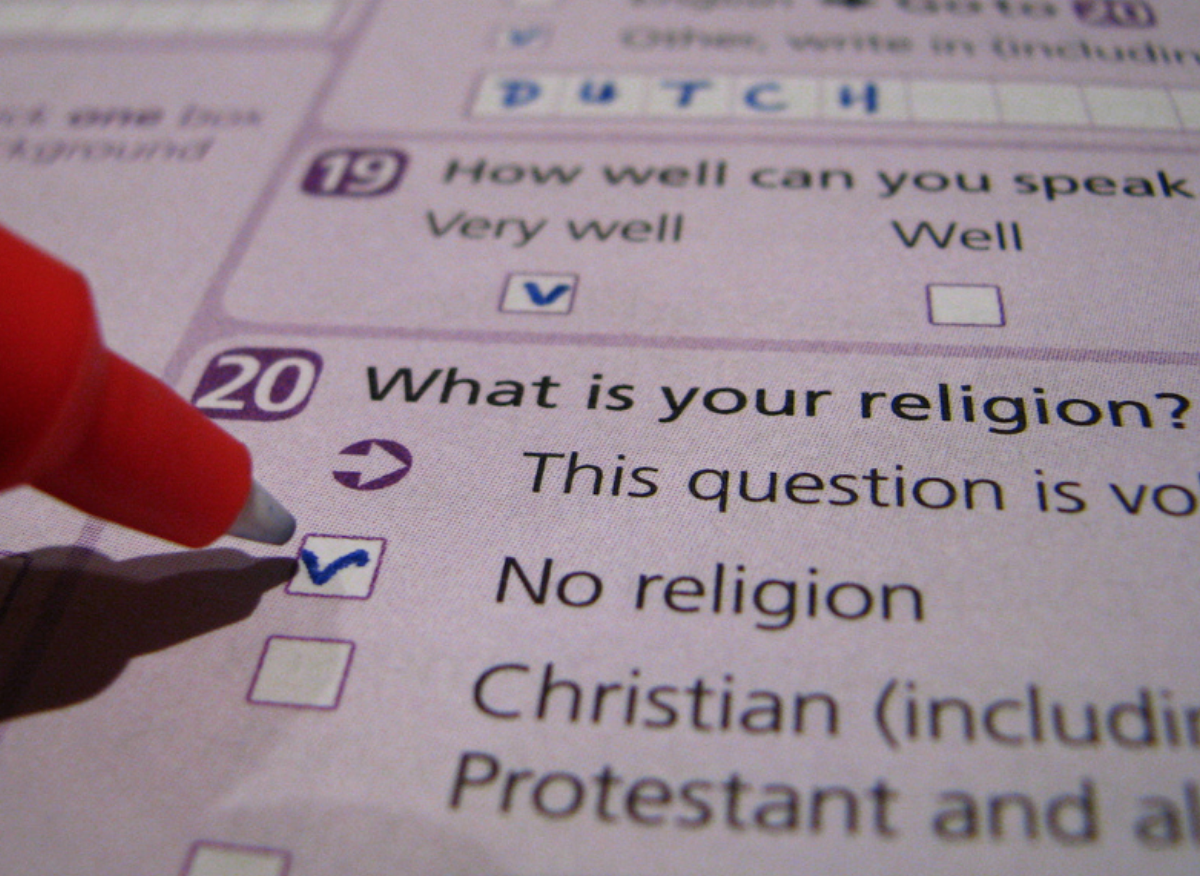
The bottom line: Obama was speaking directly to Democrats in the black church, but he was also reaching out to an emerging power bloc in his party — a group Green called the “religiously unaffiliated.” These so-called “nones” were poised to form a powerful coalition with atheists, agnostics and liberal believers.

Green made a prediction that was years ahead of schedule, in terms of the conventional thinking of Beltway politicos. At some point in the future, that growing coalition of secularists and religious liberals was going to cause tensions inside the Democratic Party.

Five years later, when the Pew Forum released its groundbreaking report on religiously unaffiliated Americans, Green raised that issue once again in a public event. Here’s a bite of the “On Religion” column that I wrote at that time.

[The] unaffiliated overwhelmingly reject ancient doctrines on sexuality with 73 percent backing same-sex marriage and 72 percent saying abortion should be legal in all, or most, cases. Thus, the "Nones" skew heavily Democratic as voters — with 75 percent supporting Barack Obama in 2008. The unaffiliated are now a stronger presence in the Democratic Party than African-American Protestants, white mainline Protestants or white Catholics.

"It may very well be that in the future the unaffiliated vote will be as important to the Democrats as the traditionally religious are to the Republican Party,” said Green, addressing the religion reporters. "If these trends continue, we are likely to see even sharper divisions between the political parties."

This brings us to Biden, today’s Democratic Party and some of the challenges he faces, when dealing with moral, cultural and religious issues in American life.
Please respect our Commenting Policy

State and federal elections spotlight America's diversity and (yet again) religious nones

State and federal elections spotlight America's diversity and (yet again) religious nones

The mayhem at the U.S. Capitol last week did not prevent Congress's ceremonial tally of the Electoral College victories of the nation's second Catholic president, Joseph Biden, and of Kamala Harris, the first African-American, first Asian-American and first female vice president.

Simultaneously, diversity was also demonstrated in the two Georgia runoff wins that give Democrats control of the U.S. Senate. Jon Ossoff is this heavily Protestant state's first Jewish senator. Baptist pastor Raphael Warnock makes history as only the South's second African-American senator elected since the Reconstruction era. The first is Republican Tim Scott in neighboring South Carolina.

OK. The press has reported all that.

Less noticed are some diverse Democrats newly elected to state legislatures, as featured in the "mainline" Protestant magazine Christian Century. Colorado, Delaware, Florida, Wisconsin and Oklahoma all elected their first-ever Muslim lawmakers, and the Oklahoman, Mauree Turner, is also America's first legislator to identify as non-binary. Episcopal priest Kim Jackson becomes the first openly lesbian member of Georgia's Senate. Kirk White, founder of the Wiccan Church of Vermont, joins that state's Assembly.

Journalists should also be reflecting on the societal change reflected in the religious makeup of the new U.S. Congress, documented in Pew Research Center's latest biennial report, drawn from CQ Roll Call data. Pew's report page is here and for future reference note you can click on "Detailed Table" for a listing of each member's religious identity.

Religious affiliations do not necessarily define members' policies and voting records. Consider all those Democrats who call themselves Catholic but are pro-choice on abortion -- churchgoer Biden among them. But the numbers tell the media something about society's broad religious trends.

Diversity rundown: Way back when, Congress was exclusively Christian and heavily Protestant. The new House and Senate have 33 Jews, three Muslims, three Hindus and two Buddhists. Like Jews, Unitarian Universalists are over-represented relative to the U.S. population with three members, while Pentecostalists are under-represented, with only two members.

Several organizations have compiled religious censuses of Congress over the years. Pew Research issued its first after the 2008 election.


Please respect our Commenting Policy

Yearenders-palooza: Ryan Burge (Who else?) charts religion and politics in #2020

Yearenders-palooza: Ryan Burge (Who else?) charts religion and politics in #2020

We now know, apparently, what happens if you force political scientist Ryan Burge into lockdown — but leave the WiFi turned on.

You end up with lots and lots and lots of charts, with most of them focusing on the major role that religion plays in politics and the American public square, in general.

Burge’s work was all over the place during 2020, with good cause. He’s a contributor here at GetReligion, but we keep stressing that journalists (and news consumers) really need to follow his active Twitter feed and his work at the weblog Religion In Public. Here in that blog’s “Year in Review” feature.

Anyway, I wrote Burge and asked him to send me several crucial bytes of his work from 2020, with some quick commentary. You will see that below. I have always appreciated the fact that Ryan’s work tends to poke at stereotypes on the left and the right.

I also asked him for his take on the Top 10 religion-beat news stories and trends of 2020, using the full list of options provided at the start of the Religion News Association poll. I have already offered my own take on that poll here in an “On Religion” column and then here, in a “Crossroads” podcast.

Burge’s commentary on that poll is at the end of this post.

So let’s get started, with Burge’s charts and commentary.


Please respect our Commenting Policy

Pondering 'Things to Come,' with help from savvy thumbsuckers and backgrounders

Point of personal privilege. "Things to Come" is the title of a Religion Guy favorite, Dizzy Gillespie's jazz pulse-pounder from 1946 that's ever contemporary. Check out this remarkable high school performance just last year.

Turning to our beat's things to come in 2021 and beyond, here are some savvy thumbsuckers and backgrounders you might have missed.

Evangelicals and the ineludible Donald J. Trump — The outgoing President, who told Religion News Service this year he's "a non-denominational Christian," hopes to control the Republican Party through 2024 with attendant media visibility. His politically crucial following among white Catholics may well fade, but what will his digital dominance mean for those ultra-loyal white evangelical Protestants?

GetReligion contributor and political scientist Ryan Burge, who emerged as never before this year as the go-to guy on religion and U.S. politics, says the evangelical "brand" is not as tarnished by Trump as many suppose. Two major surveys show little variation in Americans identifying with the movement -- currently 34.6% -- over the past decade. Another Burge opus reinforces The Guy's observation on Trump-era political and moral chasm between evangelical leadership and the grassroots.

Speaking of evangelical leaders, none has done more significant work than attorney David French in two decades defending freedom for religious groups and individuals, especially on secular campuses. He says he's seen up front the "astonishing intolerance and even outright hatred" that a relentless "illiberal left" is aiming against good-hearted believers. (Did that help the Republicans in November?)

French's weekly religion column for TheDispatch.com has become a must-read, though few fellow conservatives will cheer when he turns to fiery anti-Trump sermons. One column branded "Christian Trumpism" as "idolatry" that threatens American law and order. Another contended that evangelicals bring hostility upon themselves over issues like race and immigration that face the U.S. in the 2020s.

An election eve reflection by Christianity Today's new CEO Timothy Dalrymple took a more temperate approach to these issues.

American Christianity in “free fall”? — Last year's big Pew Research report on the decline of U.S. Christianity provoked historian Philip Jenkins to respond that those "nones" who tell pollsters their religion is "nothing in particular" are surprisingly religious.


Please respect our Commenting Policy

New year and many old issues: Catholic storylines journalists need to keep an eye on in 2021

I am not a very good prognosticator. Yet this is the time of year that forces many journalists to do just that.

What will 2021 bring? That’s the big question following a 2020 that will forever remain a year where the world was held hostage by a pandemic. It was also a year where we had a combative presidential election and a reawakened social justice movement that brought our divided politics out into our streets. Could any of us have accurately predicted what 2020 would have been like? I don’t think so.

That hasn’t stopped many from trying to predict what next year will be like. The vaccine could bring with it prosperity and freedom again, but a new strain of the virus has forced much of Europe into lockdown once again. A lot of what 2021 will look like — in terms of religion and faith — will depend on the virus and how politicians choose to handle it.

It’s true that the pandemic exposed all kinds of issues in our society. The journalism that is tasked with objectively reporting these issues so that citizens can make informed decisions failed us miserably, a trend that was years in the making, but peaked in 2020 with the presidential election. My post from this past June highlighted this extremely difficult realization for me after more than 20 years in the business. Here’s the main thrust of that post:

News coverage — be it about politics, culture or religion — is largely made up of crimes (in the legal sense) or lapses in judgement (in a moral one). But the news media has changed in the Internet age, primarily because of social media. Facebook, Twitter and TikTok, to name just three, allows users — everyday people — to pump out content. That content can take many forms — from benign observations to what’s called hot takes — for all to read and see.

Truth, fact checking and context are not important. What matters are likes and followers. What we have now is something some have called “The Great Awokening” and it appears to have forever transformed our political discourse and the journalism that tries to report on it.

Mainstream news organizations, in their quest for clicks amid hope of figuring out a new business model, now mirror the content we all see on social media platforms. Newsrooms loaded with a younger generation who grew up in this environment have imposed their own woke politics as their morality thermometer.

The news media both underplayed COVID-19 and then hyped it, only to pause their concern in the wake of the George Floyd protests. For a list of 2020 media misses, check out this roundup.

That’s in the past now, but we will indeed be talking about 2020 for years and decades to come. Instead of trying to predict the future, the aim of this post is to advise mainstream journalists on what the major Catholic news storylines will be over the next 12 months — in the United States and the world.


Please respect our Commenting Policy

Religious leaders facing complicated choices during complex 2020 COVID-tide

Religious leaders facing complicated choices during complex 2020 COVID-tide

Rather than preparing for a joyous Christmastide, believers are making tough decisions about how to celebrate during a season some call COVID-tide.

What about that beloved Christmas cantata or children's pageant? Government regulations about singing vary nationwide.

All those parties and dinners on the December calendar? Church officials may shut them down or, perhaps, look the other way.

The most emotional question: What about Christmas Eve, with glowing sanctuaries full of families gathered from near and afar dressed in festive holiday attire? In most churches some members will be allowed inside, while others stay home -- as during 2020's Holy Week and Easter -- holding candles while facing computer screens.

No one knows what will happen, especially in Protestant flocks where holiday traditions are more flexible and evolve from year to year.

Nevertheless, about 50% of American adults who typically go to church at Christmas hope to do so, according to a study by LifeWay Research in Nashville. In fact, another 15% of participants in the online survey said they were more likely to attend a service this year. However, 35% of typical churchgoers said they're more likely to stay home.

"About 50% of America are saying, 'We're going to do what we're going to do,' " said Tim McConnell, LifeWay's executive director. Since this survey was done before the recent coronavirus spike, "that makes things even more unpredictable" than they were already.

The survey results seem deceptively ordinary, but tensions emerge in key details. The survey focused on believers, and the unchurched, but included an oversample of self-identified evangelical Protestants.

"It's easy to look at these numbers and see that half the people say they will be having Christmas as usual. Then there's another group of people who say they plan to do even more," he said. "Then you look at the bigger picture and there's that other third that's missing. That's probably the large group of Americans who are older and at higher risk. …

“That's some important people in our families and churches -- like grandparents. That's some important people who are not going to be having a normal Christmas, whatever 'normal' means right now."


Please respect our Commenting Policy

At last, it's time for reporters to look abroad, with decline of Islam in Iran a brewing story

Enough with U.S. politics and punditry. How about more news-media reportage on major developments abroad?

One top hot spot in the coming Joe Biden era is Iran, with the regime's intensified rivalry with Arab neighbors led by Saudi Arabia, ongoing hatred toward a supposedly satanic United States and ambitious pursuit of nuclear weapons.

Journalists give far less notice to Iran's religious situation, perhaps because they tend to emphasize Islam's dominant Sunni branch more than the minority Shi'ism that became Persia's official faith in 1501, and because we assume rigid theocracy is frozen in place and that's that.

But what if the religo-political rule so famously imposed in 1979 upon this large and pivotal land has lost so much public respect that we see "the near collapse of official Iranian Islam"? That startling quote comes from Baylor University historian Philip Jenkins in a column for The Christian Century. If true, that's a huge story just waiting for thorough examination through interviews with stateside experts or, for media so equipped, on-the-ground coverage.

The new edition of the authoritative World Christian Encyclopedia says its sources report that starting around 2002, Iran's Islamic rule has inspired the quiet spread of small underground Christian fellowships with thousands involved -- some say a million -- despite the fact that those forsaking Islam face prison, even death. This has been discussed in niche Christian circles online, but that’s about it.

Jenkins is iffy on the extent of Christian growth, since hard evidence is lacking, but is confident about Islam's collapse due to an important opinion survey in Iran last summer by a Dutch organization.

What is happening? Only 78% of the Iranians sampled believe in God in any sense, and just 32% consider themselves to be Shi'a Muslims any longer. A mere one-fourth expect the coming Imam Mahdi (messiah), a fundamental tenet of Shi'ism.

"The vast majority of mosques are all but abandoned, even during great celebrations" on the Islamic calendar, Jenkins reports.

His sardonic comment: "Forty years of ruthless theocracy will do that to a country."


Please respect our Commenting Policy

Thinking about divided America: Our complex land is getting more secular AND more religious

In the overheated world of political fundraising and public-relations, America remains on the verge of theocracy, with women forced into red capes and white bonnets.

That’s the view of the political and cultural left, of course. On the right there are people who are absolutely sure that the drag-queen story hours held in some public libraries will soon be required in private religious schools. (Personally, I would like to see some of the folks on the right in those zip codes head to their public libraries and propose Narnia story hours or rosary-class meditation circles. If they are refused access, then it’s time to talk to authorities.)

The bottom line is that America is a very big, complex place and what flies in blue urban zones will not work in most of the heartland. While there is plenty of evidence that the nones-agnostics-atheists side of American life is growing (it is), there are also trends on the cultural and religious right that must be considered. As GetReligion has been arguing for years, the messy truth is that the mushy middle is what is vanishing.

This brings us to this weekend’s think piece at Religion & Politics, which ran with this headline: “Why the Partisan Divide? The U.S. Is Becoming More Secular — and More Religious.

What does that mean? Well, for starters, consider trends among Hispanic Americans. You know that top Republicans and Democrats are thinking about that, right now.

In the end, there is plenty of evidence that the warring halves of American culture are real and they are not going away. What does religion have to do with that? Plenty. Click here for a recent GetReligion look at half of that: “'Blue Movie' time again: Massive New York Times op-ed says the 'pew gap' is real and growing.”

But back to this new essay by Spencer James, Hal Boyd, and Jason Carroll, who are faculty members in Brigham Young University’s School of Family Life. Here’s a key chunk of their thinking:

The data suggest that our national divide is deeper than just knee-jerk partisanship — it involves a confluence of religio-geographic trends in the United States that all but guarantee the kind of political gridlock we saw manifest this month at the ballot box. The United States is not a purely secular nation — nor is it a fully religious one. The country stands out among its international peers as distinctly balanced. And acknowledging this reality may be the first step to burying the country’s cultural weapons of war and embracing a posture of greater political pluralism and cooperation.


Please respect our Commenting Policy

Looking back at 2020 voting: Here's five religion-news trends to think about -- so far

Looking in the rearview mirror, it appears that Election Day 2020 led to a series of verdicts, but with many questions unanswered. While a few insist that the presidency remains in the balance, there were a series of changes and trends that emerged as a result of 2020 voting.

Control of the U.S. Senate, to the surprise of many, still appears to be up for grabs. while Republicans managed to gain ground in the House of Representatives, to the shock of the Democratic Party majority.

President Donald Trump did a lot better than the pre-election polls, but, in many states, did not capture as many votes as down-ballot Republicans. The president, and a small number of his supporters, continue to argue that judges may rule that ballot fraud will overturn or weaken Democrat Joe Biden’s narrow victory at the polls.

As a result of this confusion, details regarding some voting trends — particularly from faith voters — were slow to trickle in given that so many mail-in ballots were used as a result of the pandemic. Here is a summary of some of what we have learned, so far, about the impact of religious issues and voters in the 2020 election:

Catholic vote makes a difference, but for whom?

The Catholic vote mattered once again in this election cycle. Biden, who is poised to become first Catholic president since 1960, spent the past few months courting faith voters. Trump, in turn, also pursued the Catholic vote in swing states like Ohio and Pennsylvania.

The Catholic vote usually decides the Presidential election. This year the exit polls for Catholics all have @JoeBiden under water. This is curious given @realDonaldTrump's vote count in the rust belt.
New York Times: Trump 68%
AP: Trump 46%
NBC: Trump 66% pic.twitter.com/whJyYlldZU

— Raymond Arroyo (@RaymondArroyo) November 4, 2020

The Catholic vote, according to The Associated Press, seems to be evenly split — 49% going for Trump and 49% for Biden. NBC News, however, offered contradictory numbers — 37% of Catholics voting for Biden and a whopping 62% for Trump.

An EWTN News/RealClear Opinion Research poll from last month found Catholics favoring Biden by a 12-point margin (53% to 41%) over Trump. As expected, the president did better with Catholics who regularly attend Mass.


Please respect our Commenting Policy