Mainline

Jill Biden's reborn Christian faith: Washington Post dug for some key details (AP didn't)

Jill Biden's reborn Christian faith: Washington Post dug for some key details (AP didn't)

Since I grew up Southern Baptist, I have heard many, many people give “testimonies” about how they embraced faith and were “born again.” Now that I am Eastern Orthodox, I have heard many people tell similar stories about how they came to embrace ancient Christian doctrines and beauty of sacramental worship.

Most of the time these stories include some details about history of the person’s faith or lack thereof. One part of telling the point to which a believer has travelled is to share some background information about where the journey started.

I would certainly think that this would be true when the person who is “testifying” is America’s current First Lady. Thus, I had a few expectations when I started reading the Associated Press report that ran with this headline: “Jill Biden says SC ‘prayer partner’ helped change her life.”

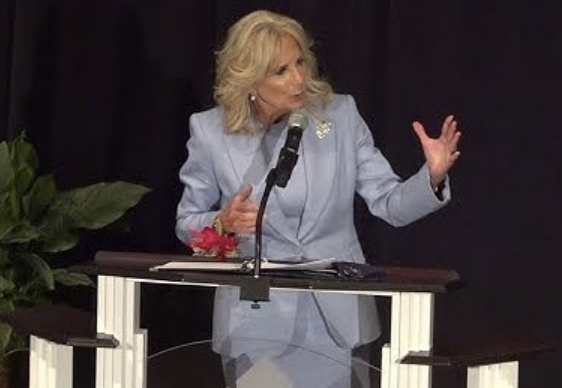
The hook for this story was the surprise visit that President Joe Biden and First Lady Jill Biden made to West Columbia, S.C., to honor the 50th anniversary of the Rev. Charles B. Jackson becoming the pastor of Brookland Baptist Church. The focus of the story, however, was on Jill Biden’s “prayer partner” relationship with the pastor’s wife, Robin. Here is the crucial passage in this AP report:

The first lady doesn’t usually speak publicly about her faith but said Sunday that “it’s always been an important part of who I am.” She recalled being a teenager who “fell in love with the peace of the quiet wooden pew,” the “joy of the choir” and the “deep wisdom of the Gospels.”

She said prayer helps her “connect to the people that I love and to the world around me.”

“But in 2015, my faith was shaken,” the first lady said, her voice breaking as she described watching “my brave, strong, funny, bright young son fight brain cancer.”

“Still, I never gave up hope,” she said. “Despite what the doctor said, I believed that my son would make it. In the final days, I made one last, desperate prayer and it went unanswered.”

Please respect our Commenting Policy

Concerning evangelical elites, Donald Trump and the press: The great crack-up continues

Concerning evangelical elites, Donald Trump and the press: The great crack-up continues

Ah, yes, those omnipresent American evangelical Protestants.

Love ‘em or hate ‘em, the media can't avoid ‘em. And in case anyone doubts media fascination, consider last Sunday's episode of NBC's influential, anachronistically-named gabfest "Meet the Press."

In the midst of a hyper-clogged October political agenda, the show devoted a major segment to what host Chuck Todd called "the debate among evangelicals about Donald Trump and whether he represents their values." Click here for the transcript. This was excerpted from a 30-minute piece that's streaming on Peacock.

The segment led off with a visit to the nondenominational, independent Patriot Church outside Knoxville, where the Ken Peters averred: "I think President Trump is a miracle. I think God picked Donald Trump, an imperfect vessel, to be the champion of His people." This is a congregation that has inspired almost as many headlines as it has members.

Yes, Pew Research tells us Trump scored 84% with white evangelical voters in 2020. But politicized preacher Peters is hardly representative of the sprawling and diverse network of evangelical clergy, churches, denominations, campuses and agencies.

An older-style evangelical pastor, the Rev. Phil Nordstrom of Knoxville's Life Church, told NBC that "we're trying to not fight the culture wars from the pulpit." Todd then interviewed the Rev. Russell Moore, former Southern Baptist social-issues spokesman turned "public theologian" at Christianity Today magazine, who fretted over Trump-era politicization of the evangelical image.

A prior Guy Memo weighed the possibility that a newsworthy evangelical crack-up is upon us, while another Memo focused on the related Donald Trump political angle. Now there are further developments.

In case journalists are gathering string for a broad state-of-the-evangelical-union article, The Guy looked for perspective in a real period piece from 1977, our Time magazine Christmas cover story, "That Old Time Religion: The Evangelical Empire."

Now this feature was written just before the advent of Jerry Falwell's Moral Majority, Ronald Reagan's presidency, Pat Robertson's Christian Coalition and presidential run, the rightward doctrinal lurch by the Southern Baptist Convention, the rise of anti-abortion militancy and all the rest that would gobble up headlines in succeeding decades.


Please respect our Commenting Policy

New podcast: Those Southern Baptist sex-abuse battles are not just about Southern Baptists

New podcast: Those Southern Baptist sex-abuse battles are not just about Southern Baptists

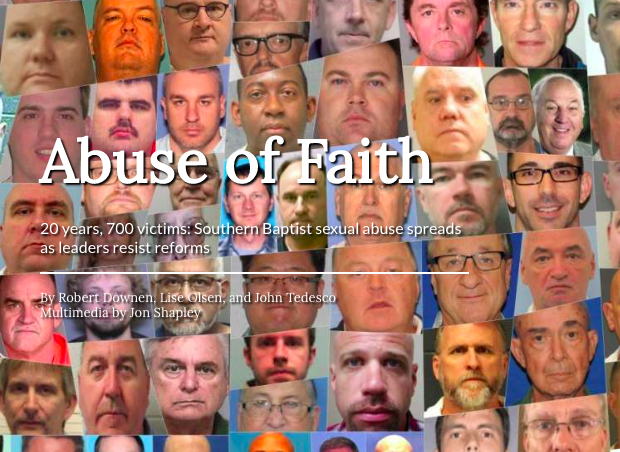
The Southern Baptist Convention’s ongoing fights about how to handle sexual-abuse claims against ministers and other church personnel and volunteers is a perfect example of the kind of story that drives newspaper editors crazy.

It’s big and complicated and it seems like something crazy or important (or both) happens every other day. But it also seems like it’s impossible to yank a big, dramatic headline out of this sprawling, complicated story.

The story never seems to end and the amount of background material needed — in story after story after story — makes it impossible to cover this stuff in tidy 500-word stories. But if a newsroom skips a few of the major developments, that makes it even harder to get back in the game and explain to readers what is happening. Oh, and did I mention that newsroom managers pretty much have to assign a reporter to this story full-time or near full-time? That’s expensive in this day and age. Obviously, this reporter has to have religion-beat experience and speak fluent Southern Baptist.

At the same time, in my experience, there will almost always be one or two editors who say (or think) something like this: “I know the SBC is huge and there are billions of dollars involved and we have lots of Southern Baptist churches (and maybe a college) in our news territory, but … I don’t ‘get’ why this story really matters to average readers. I mean, it’s not about sports or politics or something important (to me).”

As a Charlotte editor once told me, when I was poised to break a national-level SBC story in the early 1980s: Nobody reads this stuff but fanatics and every time you write about it we get too many letters to the editor.

This brings us to this week’s “Crossroads” podcast, which focuses on why the SBC’s struggles with sexual-abuse are important, and NOT just to Southern Baptists (click here to tune that in). The key is to identify major stories LINKED to sexual-abuse scandals that involve ethical, moral, legal and theological issues that can be seen in religious groups of all kinds (and many secular nonprofits and organizations as well). To illustrate this, let me tell you a story about an important evangelical counseling pioneer — the late Dr. Louis McBurney, founder of the Marble Retreat Center in Colorado.


Please respect our Commenting Policy

Keeping up: Ongoing 'woke' pronoun wars reach into the world of God-talk

Keeping up: Ongoing 'woke' pronoun wars reach into the world of God-talk

This Memo is a twofer, offering both a lively story theme to pursue plus an issue that is now affecting the work of every stylebook and copy editor in the American media.

An older campaign by feminists — including those working in the world of liturgy — sought to shun male pronouns, particularly when either gender is meant, in favor of plural they-them-their usage with singular antecedents. This increasingly common wording is of course grammatically incorrect given the structure of the English language, and can be confusing for readers.

That's now combined with the effort of transgender and "non-binary" advocates to suppress gender-specific adjectives by applying that same "singular they" along with newly crafted pronouns. A list of such neologisms recommended at the University of Wisconsin-Milwaukee, said to be non-exhaustive, covers ae, e, ey, fae, per, sie, tey, ve xe, ze and zie. So, for example, with "xe" the variants to parallel she-her-hers-herself are xem-xyr-xyrs-xemself.

As you would expect, references to God himself -- or is that "themself"? -- is now part of this debate.

Religion News Service ran a column last week from one of its regulars, Mark Silk, headlined "Why our preferred pronoun for God should be 'they'." He thinks calling God "they," not "he," and similar verbal tactics have become "imperative."

How would other progressives respond? His proposal was immediately publicized in a tweet from RNS's Catholic columnist, Jesuit Father Thomas Reese and the online comments began flowing.


Please respect our Commenting Policy

Death of a post-theist shepherd: The unorthodox faith of Bishop John Shelby Spong

Death of a post-theist shepherd: The unorthodox faith of Bishop John Shelby Spong

Newark Bishop John Shelby Spong never stuck "Why Christianity Must Change or Die" on the doors of Canterbury Cathedral, since it was easier to post a talking-points version of his manifesto on the Internet.

"Theism, as a way of defining God is dead," he proclaimed, in 1998. "Since God can no longer be conceived in theistic terms, it becomes nonsensical to seek to understand Jesus as the incarnation of the theistic deity."

Lacking a personal God, he added, it was logical to add: "Prayer cannot be a request made to a theistic deity to act in human history in a particular way."

Spong's 12-point take on post-theism faith emerged after spending years on the road, giving hundreds of speeches and appearing on broadcasts such as "The Oprah Winfrey Show" and "Larry King Live." While leading the Episcopal Diocese of Newark, within shouting range of New York City, he did everything he could to become the news-media face of liberal Christianity.

By the time of his death at the age of 90, on Sept. 12 at his home in Richmond, Va., Spong had seen many of his once-heretical beliefs -- especially on sex and marriage -- normalized in most Episcopal pulpits and institutions. However, his doctrinal approach was too blunt for many in the mainline establishment, where a quieter "spiritual but not religious" approach has become the norm.

Spong called himself a "doubting believer" and said he had no problem reciting traditional rites and creeds because, in his own mind, he had already redefined the words and images to fit his own doctrines. He also knew when to be cautious, such as during Denver visit in the late 1980s -- an era in which the Diocese of Colorado remained a center for evangelical and charismatic Episcopalians.

After a lecture at the liberal St. Thomas Episcopal Church, I asked Spong if he believed the resurrection of Jesus was an "historic event that took place in real time."

"I don't think that I can say what the disciples believed they experienced. I'll have to think about that some more," he said, moving on to another question.


Please respect our Commenting Policy

Does church attendance reduce political polarization? Not among White conservatives

Does church attendance reduce political polarization? Not among White conservatives

There are some concepts in political science that have just become impossible to ignore. Whether it’s leading a classroom discussion, talking to a member of the media, or just chatting with friends about the current state of the world, I can’t help but bring it all back to political polarization.

Put simply, it’s the idea that American society has become more politically tribalized, with Democrats huddled in the far left corner of the political spectrum and Republicans doing the same on the right side of the scale with a huge chasm between the two. And, the two parties loathe each other — not just disagreeing, but believing that if the other party wins an election, it will lead to the end of the Republic.

Compromise becomes impossible in a world in which you see the other side not only as wrong, but also as the enemy. The inherent problem is that our democratic processes grind to a halt without a level of bi-partisan support.

There’s been a ton of great research done on measuring the level of polarization in the United States Congress by using DW-NOMINATE scores. The results indicate that both parties have moved away from the center, but that is more pronounced among the GOP than among the Democrats. This visual (it comes from this paper) is one I use in class to show just how bad it’s gotten.

But, I wanted to take a different approach here. I wanted to see just how much polarization is perceived by the average American, how that has changed over time, and how religion plays a role in that perception.

Here’s how I did it.

Since 2012, the CCES has asked respondents a battery of questions that require them to place the Democratic Party, the Republican Party, and themselves on an ideology scale running from 1 (very liberal) to 7 (very conservative), with the moderate option described as “middle of the road.” For my purposes someone has a polarized view of the world if they describe either the Democrats as “very liberal” or the Republicans as “very conservative.” In essence, they are saying: “that political party can’t get any more extreme.”


Please respect our Commenting Policy

New podcast: Yes, New York's governor urged church folks to be her 'apostles' backing vaccines

New podcast: Yes, New York's governor urged church folks to be her 'apostles' backing vaccines

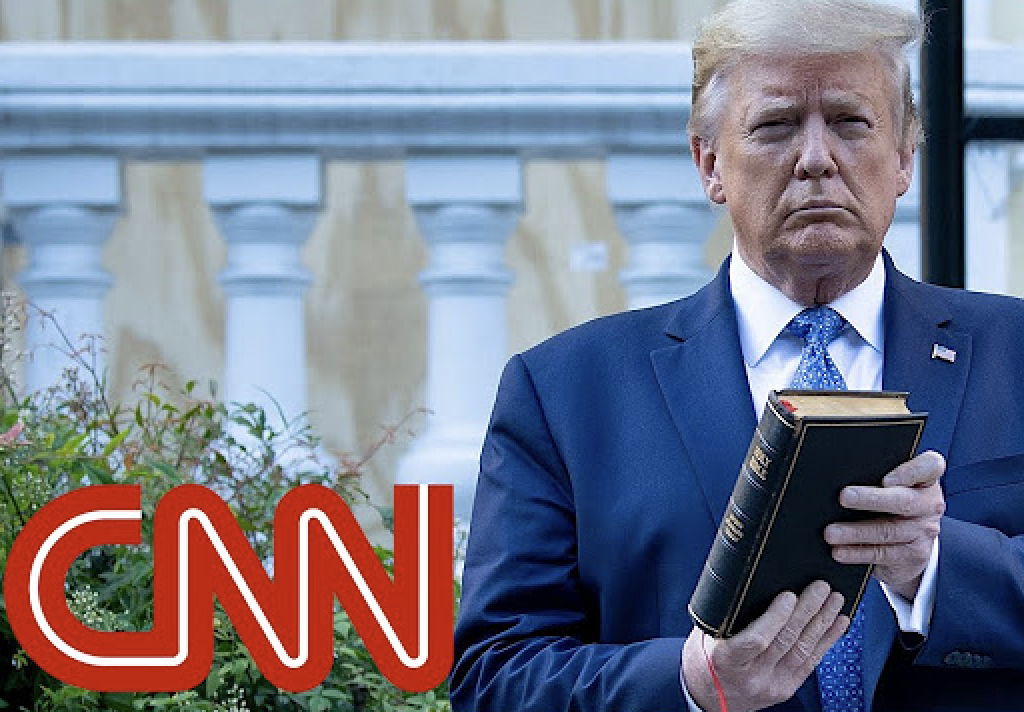
Hey news consumers, remember that time when President Donald Trump stood in front of a church (sort of in an urban war zone), held up a Bible and the world went nuts?

Chances are good that you heard about it. However, as a refresher, here are 66,100,1000 Google references to this incident, as well as as an imperfect collection of other Trumpian news involving the word “Bible.”

Or remember that time when Trump — long-time member of the liberal Presbyterian Church (U.S.A.) and probably, in terms of private life, one of the most secular presidents in American history — went to Liberty University to court evangelicals and said this (care of an NPR report):

"We're going to protect Christianity. I can say that. I don't have to be politically correct," he thundered at the beginning of his speech at the conservative evangelical university.

Then he moved on to cite "Two Corinthians 3:17, that's the whole ballgame. ... Is that the one you like?" Trump asked. "Now the Lord is that Spirit: and where the Spirit of the Lord is, there is liberty."

Over at Google, there appear to be a mere 2,380,000 references to this “Two Corinthians” incident.

Truth is, politicians often say and do strange things while courting support in religious settings that are way outside their own cultural comfort zone.

This brings us to this week’s “Crossroads” podcast, which focuses on the coverage — actually, the lack of coverage — of the recent visit that New York Gov. Kathy Hochul paid to the Christian Cultural Center, a massive and very influential predominantly African-American megachurch in Brooklyn. Click here to get that podcast, or head over to Apple Podcasts.

Now, there was more to this political-religious event than the hilarious typo in the rushed transcript of the governor’s remarks produced, apparently, by a staff member. Check out the opening words here: “The phrase be to God, this is the day the Lord has made. Amen, amen.”

Let’s assume that the governor actually said “praise be to God.”


Please respect our Commenting Policy

Notable omission among liberal religious voices in phase 2 of Supreme Court abortion case

Notable omission among liberal religious voices in phase 2 of Supreme Court abortion case

The media are prepping for the U.S. Supreme Court's December 1 hearing on the strict Mississippi abortion law and the subsequent ruling.

In a prior Guy Memo on religious "friend of the court" briefs filed on the pro-life side, I promised a second rundown when pro-abortion-rights activists weighed in with their views. Now that second wave of religious arguments has landed — with a notable omission in those ranks that journalists will want to pursue.

To explain, we'll need some religion-beat history on this issue.

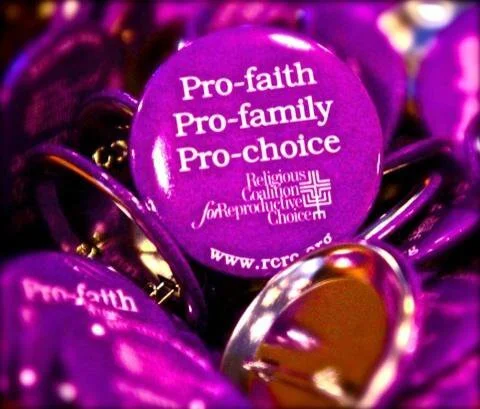
In 1967, two years before NARAL Pro-Choice America was founded, the 1,400-member Clergy Consultation Service formed to help women obtain abortions and fight legal barriers. After the high court legalized U.S. abortions in the 1973 Roe v. Wade decision currently at issue, the related Religious Coalition for Abortion Rights was founded to campaign for moral acceptance. (In 1994 it dropped the A-word and was renamed the Religious Coalition for Reproductive Choice or RCRC).

Founders included a significant chunk of "mainline" and liberal Protestantism, including the Episcopal Church, Presbyterian Church (U.S.A.) Mission Agency, United Church of Christ and several independent Protestant caucuses. The United Methodists' General Board of Church and Society hosted the founding, and the Methodist women's division also joined, but both later backed away. The Coalition also included major non-Orthodox Jewish organizations and the Unitarian Universalist Association (UUA).

In the new Court filings, abortion-rights law gets continued support from RCRC, UUA and Jewish organizations. But no Protestant denomination that favors abortion choice has joined to support Roe. Reporters should find out why they sidestepped this historic showdown. For example, have complex schism talks led to silence on the United Methodist left, as opposed to earlier debates (see YouTube video at the top of this post)?

The silence from "mainline" churches deprives the high court of in-depth moral thinking from pro-choice Christians that answers conservatives on issues that make abortion unusually difficult for public policy, among them: Does a genetically unique and developing human embryo or fetus have value? Why, or why not?


Please respect our Commenting Policy

Norm Macdonald: Theological mysteries, a red-brick wall, a spotlight and a microphone

Norm Macdonald: Theological mysteries, a red-brick wall, a spotlight and a microphone

While debating heretics, early Christians used the Greek term "hypostasis" -- meaning "substance" and "subsistence" -- to help define their belief in the Incarnation of Jesus as one person, yet with divine and human natures.

This "hypostatic union" is not the kind of subject a comedian typically raises on a TV talk show while chatting about mortality with a Hollywood legend. Then again, Norm Macdonald -- who died on September 14 after a secret nine-year fight with cancer -- wasn't a typical funny man. He openly identified as a Christian, while making it clear that he didn't consider himself a very good one.

During an episode of "Norm Macdonald has a Show," the former Saturday Night Live star asked Jane Fonda -- who at one point briefly embraced evangelical Christianity -- this question: "Are you a religious person?"

"I have faith," said Fonda. The host quickly asked, "In Jesus Christ?" Hesitating, Fonda called herself "a work in process," saying she accepted "the historical Jesus."

Macdonald responded: "But do you believe in the hypostatic Jesus?"

When Fonda said "no," he added, "So, you're not a Christian. But you believe, you believe in something."

Raised vaguely Protestant in Canada, Macdonald didn't discuss the brand-name specifics of his faith, even as he wrestled with his own demons -- such as habitual gambling. Yet he could be stunningly specific when addressing criticisms of Christian beliefs. As a judge on NBC's "Last Comic Standing," he quietly shot down a contestant who trashed the Bible, before praising the Harry Potter series.

"I think if you're going to take on an entire religion, you should maybe know what you're talking about," said Macdonald. "J.K. Rowling is a Christian, and J.K. Rowling famously said that if you're familiar with the scriptures, you could easily guess the ending of her book."

The result was a public persona laced with paradoxes, an edgy, courageous comic who often seemed unconcerned if his work pleased the public or his employers.


Please respect our Commenting Policy