Mainline

Future scenarios emerge as the media debate the health of U.S. Mainline Protestantism 

Future scenarios emerge as the media debate the health of U.S. Mainline Protestantism 

What has long been called “Mainline” Protestantism suffered inexorable shrinkage this past generation, eroding so much of its once-potent U.S. cultural impact that the news media tend to neglect these moderate-to-liberal churches. Yet a new Public Religion Research Institute poll reported what it argues is a sudden comeback and indicates Mainliners even outnumber the rival conservative "evangelicals" widely thought to dominate Protestantism.

True? The Religion Guy assembled devastating statistics that raise questions about that claim.

U.S. religion's hot number-cruncher Ryan Burge is even more doubtful and notes the Harvard-based Cooperative Election Study found a recent rise in Americans who self-identify as "evangelical."

As reporters ponder that debate, they should also play out longer-term Mainline scenarios, for instance for the Episcopal Church and United Methodist Church.

The hed on another Burge article proclaimed that "The Death of the Episcopal Church is Near."

"I don't think it's an exaggeration at all to believe that Episcopalians will no longer exist by 2040," he contended.

His gloomy forecast relied partly on a stark, candid piece from the blog of the Living Church magazine. It reasoned that annual marriages and baptisms foretell how the denomination will fare. If trends continue, the former would fall from 39,000 in 1980 to 750 as of 2050, and the latter from 56,000 to 2,500, over decades when average worship attendance would plummet from 857,000 to 150,000.

Similarly, in 2019 the Evangelical Lutheran Church in America's research agency projected that this now-sizable denomination would dip below 67,000 members by 2050 and average Sunday attendance would hit 16,000 by 2041. Two years before that, Wheaton College's Ed Stetzer notably warned that Mainline Protestantism has "23 Easters left."


Please respect our Commenting Policy

Hot Takes: Ryan Burge on return of debates about evangelicals and QAnon (etc.)

Hot Takes: Ryan Burge on return of debates about evangelicals and QAnon (etc.)

Well, Bobby Ross, Jr., is taking the week off.

Thus, I went looking for another list of religion-news material featuring short punchy takes on lots and lots of different topics.

I settled on this VICE News chat with GetReligion contributor Ryan Burge — that must-follow guy on Twitter who is also well known for his work at the Religion in Public weblog.

To say that this punchy little video report includes some Hot Takes is an understatement. Yes, there is a flashback to the whole QAnon and evangelicalism wars.

However, let me stress that there are some producers at VICE News who are sincerely interested in the complex world of American evangelicalism and they are doing their homework. I know this because I sent about three hours with one of their production teams several months ago and I know the wide range of materials that we covered.

That video is still in a vault somewhere. It would be interesting if they turned bites of it into a bullet-list collection of takes similar to this one with the always quotable Burge.

So what shows up in this Burge blast? He put this list out on social media:

Things I discuss in this Vice News video:

QAnon

John Darby

Dispensationalism

Thomas Jefferson as the anti-Christ


Please respect our Commenting Policy

Any kind of turnaround for 'Mainline' Protestantism would be big news, but is it true? 

Any kind of turnaround for 'Mainline' Protestantism would be big news, but is it true? 

One danger facing religion-beat veterans is that a broad trend becomes so familiar we overlook its continuing journalistic importance. One example is the year-by-year-by-year decline of America's once-influential "Mainline" Protestant churches over the past half-century, even as conservative or "Evangelical" Protestants generally kept up with population growth -- until recently.

(For additional background, please note that the June 24 Guy Memo lamented media neglect of Mainline angles in spot news coverage. See also this recent Ryan Burge post.)

The Mainline shrinkage is one of this era's momentous changes in American religion, a great void in the public square into which evangelicals moved. Other major trends include the substantial rise of unaffiliated "nones," immigration-driven increases in Hispanic Catholics and followers of Asian religions, and white Catholics' shift from loyal Democrats to pivotal Republican constituency.

It's big stuff if that Mainline Protestant slide has bottomed out or that’s any kind of upswing. And what if Mainliners now suddenly outnumber the rival white Evangelicals (leaving aside the distinctive Black and Hispanic Evangelicals). Such is the scenario in a major new survey released July 8 by the Public Religion Research Institute (contacts at press@prri.org or 202-238-9424).

PRRI tells us that white Mainliners are now 16.4% of the U.S. population, a remarkable gain from 13% as recently as 2016, while white Evangelicals have fallen to 14.5% from a 23% peak in 2006. White Catholics constitute a pretty stable 11.7%.

Politically, Mainliners are divided and thus have less clout than other groups, identifying as 35% Democrats, 33% Republicans, and 30% Independents.

As journalists ponder what to make of this surprising report, begin with what's “Mainline” in the church marketplace. The Guy (and others) say the word designates those Protestant denominations — the so-called “Seven Sisters” — born in Colonial America or the early Republic, with predominantly white memberships, that are affiliated with the National Council of Churches and are tolerant or favorable toward liberal belief. We could add that the well-educated Mainliners typically enjoy relatively high incomes and social status.

Here is the key: This PRRI survey at hand identified Mainliners by what they are not instead of what they are.


Please respect our Commenting Policy

Think about it: Southern Baptist tweetstorm spotlights an important issue for religion-beat pros

Think about it: Southern Baptist tweetstorm spotlights an important issue for religion-beat pros

How many times have you read a story that said something like, “Southern Baptists are expected to do so-and-so or such-and such”?

I’m not talking about coverage of the actual annual meeting when “messengers” from autonomous SBC churches actually get together and vote on this-and-that and make statements and changes in the mechanisms that affect their common work. I am referring to news stories that seem to assume that Southern Baptists can be summed up with one set of cultural or political images or a set of data points.

You know: I’m talking about news coverage of Southern Baptists that assumes that Sunbelt suburban megachurches are the only reality. It’s so easy, when trying to write news reports of 666 words or so, to settle into language that attempts to make the blurry real world snap into super-sharp focus.

The same is true of all big religious movements, of course. We all know that the singular “Catholic vote” doesn’t exist, now or ever. We know that rural United Methodists are not the same folks as blue zip-code urbanites (and there are complexities inside those two groups). We know that many Episcopalians in north Texas are not the same as those in northern California. But there’s only so much space (even in today’s online world) and editors always want snappy phrases and punchy conclusions, usually with a political hook or two.

Anyway, Nathan A. Finn — provost at North Greenville University, a campus in South Carolina with strong Southern Baptist ties — recently rolled out a tweetstorm in the wake of all the news coverage of the SBC annual meeting in Nashville.

This is not a news story. It isn’t even a conventional “think piece,” although Finn could have turned it into one quite easily. It’s “just” a long chain of tweets. Nevertheless, there is much to learn here. Let us attend.

The chain opened with the tweet at the top of this post. Here’s the rest of the “storm” (sorry about the repeats, but it’s the best way to keep the URLs clear).


Please respect our Commenting Policy

These stark numbers are headline worthy: Death of the Episcopal Church is approaching

These stark numbers are headline worthy: Death of the Episcopal Church is approaching

Last November, I wrote a post for Religion in Public with the title, “The Data is Clear — Episcopalians are in Trouble.” In it, I used survey data to paint a portrait of a denomination that was on the brink of collapse.

One of the most troubling things about the future of the Episcopal Church is that the average member is incredibly old. The median age of an Episcopalian in 2019 was sixty-nine years old. With life expectancy around 80, we can easily expect at least a third of the current membership of the denomination to be gone in the next fifteen or twenty years. That’s problematic when membership has already been plummeting for decades.

But, I came across some data in the last few weeks that I just had to look at in more depth.

Before I get into the graphs I have to give some serious kudos to the data team that works for the denomination. I have looked at the websites of all kinds of Baptist, Methodist, Presbyterian and Catholic traditions over the last few years. The Episcopalians blow them all out of the water in terms of accessibility and ease of use.

Don’t believe me? Well, they have an interactive dashboard of all their churches in the United States. You can sort based on a map, church size, or amount of offering. It’s incredible and can be accessed at this link.

Let’s get down to it, though. How many people actually attend an Episcopal church on an average Sunday? I grabbed a PDF of their membership reports from here and did some quick analysis of the national trends.

In 2009, 725,000 people attended an Episcopal church on an average weekend. According to their own data, the Episcopal Church has about 1.8 million baptized members. (The denomination’s membership peaked at 3.4 million in the 1960s.) Thus, about 40% of current members attend on a regular basis. That’s been declining steadily over the last decade. A typical year sees attendance dip by 25,000-35,000 people. That represents a 2-3% year-over-year decline.

By 2019, the weekly attendance was 547,000. In percentage terms, the Episcopalians have seen their attendance drop by a quarter in just the last decade.

But, that doesn’t tell the whole story about the future of the Episcopalians.


Please respect our Commenting Policy

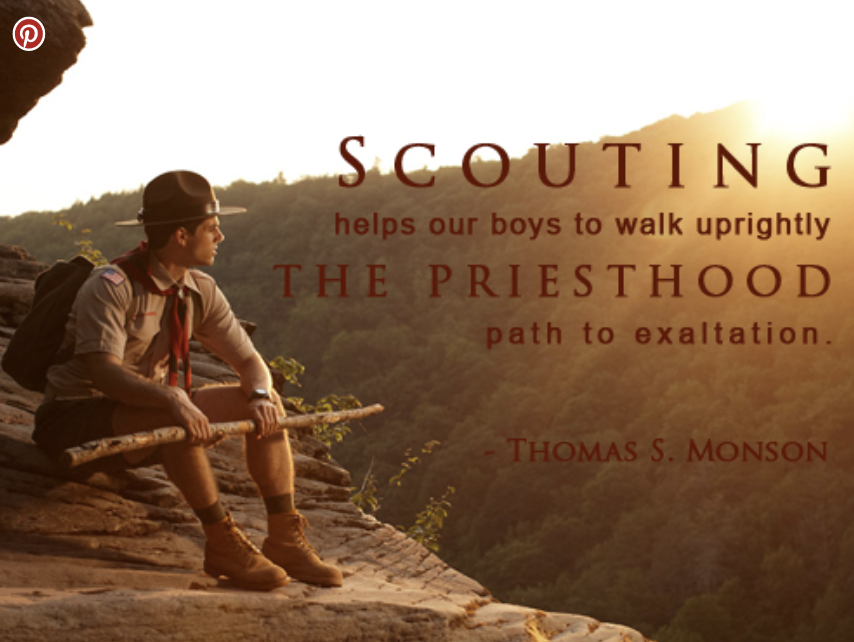
Scouting membership numbers collapse: AP totally ignores role of religion in this drama

Scouting membership numbers collapse: AP totally ignores role of religion in this drama

It’s the question that I have been trying to answer for 40 years or so: Why do news organizations ignore basic religion facts and trends when it is clear they are relevant in a major news story?

Ever since the first GetReligion post, back in 2004, we’ve been talking about religion “ghosts” in mainstream news coverage. Some “ghosts” are rather subtle and, frankly, it’s easy to understand why journalists with zero religion-beat experience would miss some facts and trends linked to religious law, history or doctrine.

But then you have “ghosts” — super ghosts, maybe — that are much, much more obvious and harder to explain. Consider, for example, the Associated Press story that came out the other day with this headline: “Boy Scouts, Girl Scouts suffer huge declines in membership.” Here’s the overture:

America’s most iconic youth organizations — the Boy Scouts of America and the Girl Scouts of the USA — have been jolted by unprecedented one-year drops in membership, due partly to the pandemic, and partly to social trends that have been shrinking their ranks for decades.

While both organizations insist they’ll survive, the dramatic declines raise questions about how effectively they’ll be able to carry out their time-honored missions. … Membership for the BSA’s flagship Cub Scouts and Scouts BSA programs dropped from 1.97 million in 2019 to 1.12 million in 2020, a 43% plunge, according to figures provided to The Associated Press. Court records show membership has fallen further since then, to about 762,000.

Other than the COVID-19 crisis, what else caused this massive drop?

Reasons for the drop include competition from sports leagues, a perception by some families that they are old-fashioned, and busy family schedules. The pandemic brought a particular challenge.

Wait a minute. Parents were worried that the Scouts are “old-fashioned,” which implies that Scouting would be growing if its leaders made more efforts to modernize their methods and beliefs?

Then again, maybe it would help if the story mentioned decisions by leaders of the Church of Jesus Christ of Latter-Day Saints to cut ties to the Boy Scouts (click here for AP story on that bombshell) because of changes linked to gender and sexuality in the name of becoming more modern and, well, woke? Not that long ago, LDS congregations hosted 37% of all Scout troops. At the same time, many — perhaps most — Southern Baptist Convention churches have dropped out of Scouting for the same reasons.


Please respect our Commenting Policy

New podcast: When preachers copy preachers -- is this an old story or something new?

New podcast: When preachers copy preachers -- is this an old story or something new?

As longtime GetReligion readers may know, my father was a Southern Baptist minister, spending his whole career in Texas pulpits and hospitals.

I heard him, from time to time, gently correct people who called him “preacher.” He would note that he wasn’t a “preacher,” he was a pastor. Brother Bert’s life and ministry were not defined by his pulpit work, although I always admired his ability to teach the Bible to laypeople.

Like it or not, preaching is the crucial skill — almost a Darwinian performance art — in the world of megachurches and evangelical power. Superstar clergy, about 99% of the time, are known for their preaching skills, even in liturgical-church traditions. The styles may differ, from one church brand to another, but growing churches usually have orators who can pull people into the pews.

That was the subject looming over this week’s “Crossroads” podcast (click here to tune that in), which focused on a strong Religion News Service report about the #Sermongate controversy surrounding the new leader of the Southern Baptist Convention. The headline: “New SBC President Ed Litton apologizes for using JD Greear sermon quotes without credit.” Here is some crucial material right up top:

A video posted on YouTube Thursday (June 24) showed clips of a ­­­January 2020 sermon on the New Testament book of Romans from Litton and clips from a January 2019 sermon on the same Bible passage from J.D. Greear, whose term as SBC president ended in June.

At several points, the comments from the two preachers are nearly identical. … The two pastors also say very similar things about homosexuality, which both believe is sinful.

But they each say Christians have erred by treating sexual sin as if it is worse than other sins — and singling out LGBT people as the worst of sinners.

What does “nearly identical” look like?


Please respect our Commenting Policy

Any religion ghosts here? Martin Methodist College joins University of Tennessee system

Any religion ghosts here? Martin Methodist College joins University of Tennessee system

For years, parents have been asking me a logical question, in light of my quarter of a century teaching in Christian liberal arts colleges and programs. The question: How do we know which college is right for our kid? They often link this to questions about how small colleges can compete in the modern marketplace.

Hang in there with me, since — for me — these questions are linked to the news coverage of an interesting higher-education story that is unfolding here in Tennessee.

In my experience, Christian liberal-arts colleges are not for everyone. The key is whether a private school’s academic strengths (most schools are stronger in some areas than others) match a student’s needs. It’s also important to know if an academic subject is a good fit with that school’s history and sense of mission.

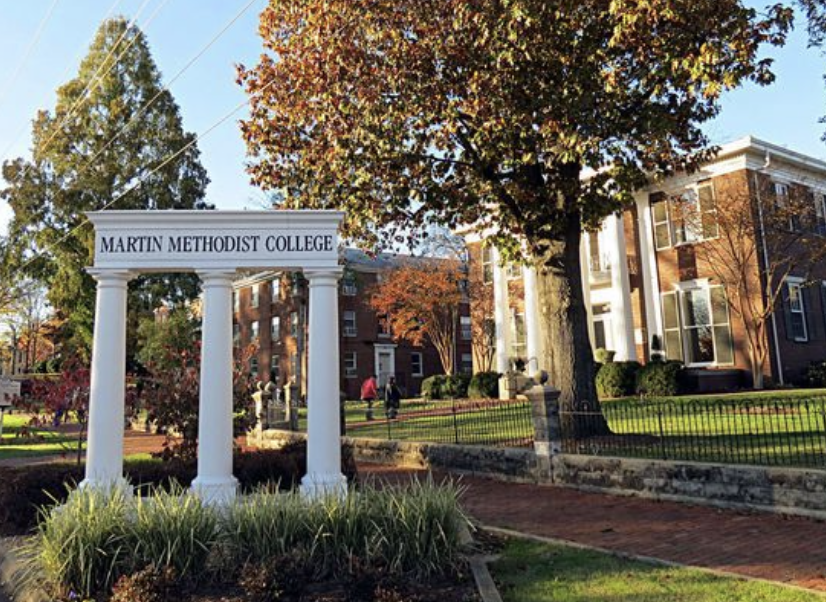
This brings me to this recent headline in the Gannett newspapers here in Tennessee: “University of Tennessee adds fifth campus with Martin Methodist College merger.” Here’s the overture:

The University of Tennessee System has added a fifth campus, the first addition to the statewide higher education network in more than 50 years.

Martin Methodist College, located in Pulaski, will join the system as the University of Tennessee Southern, a nod to the regional identity the system hopes to create. The merger with Martin Methodist College is intended to bring affordable higher education to southern Middle Tennessee. The school is located about 75 miles southwest of Nashville, near the Alabama border.

The UT board of trustees unanimously approved the merger … after nearly a year of collaboration with Martin Methodist.

I’ve been following this story throughout the year and the coverage has, to use one of the defining images of this blog, been haunted by religious questions linked to this merger between a Christian college and a massive, secular university system. In this case, “haunted” means the coverage hasn’t mentioned these issues at all.

I am really curious to know what will happen to programs at Martin Methodist — academic and service oriented — that were linked to its Christian identity and ties to Tennessee United Methodists. I would imagine that there were also changes in some campus policies linked to moral and social issues.


Please respect our Commenting Policy

How will this Supreme Court decide, or sidestep, pivotal religious liberty questions?

How will this Supreme Court decide, or sidestep, pivotal religious liberty questions?

The major U.S. Supreme Court ruling in Fulton v. Philadelphia (.pdf here) allows a Catholic agency to avoid placing foster-care children with same-sex couples. Importantly, the Catholics will place gay children and will place children with gay singles since there's no conscience crisis over defying the church's doctrines on marriage.

For decades there's been confusion and acrimony over the court's applications of the Constitution's ban on government "establishment of religion," but now disputes over the religious "free exercise" clause grab the spotlight. The Fulton ruling sidestepped the heart of this generation's conflagration between religious rights and LGBTQ+ rights and, thus, may even have added logs to the fire.

The justices backed the Catholic claim with what The Economist's headline correctly labeled "The 3-3-3 Court." The narrow technical grounds for the decision enabled the three liberals (Stephen Breyer, Elena Kagan, Sonia Maria Sotomayor) to make the ruling unanimous. The conservatives were split between three demanding a thorough overhaul of "free exercise" law (Justice Samuel Alito, in a vigorous 77 pages, joined by Neil Gorsuch and Clarence Thomas) and three unwilling to take the plunge at this time (Chief Justice John Roberts and the two newest members, Brett Kavanaugh and Amy Coney Barrett).

Similar caution apparently underlies the court's majority decision this week not to review transgender student Gavin Grimm's victory against his Virginia school over bathroom access.

Journalists should prepare for more years of extensive -- and expensive -- politicking and litigation before the Supreme Court defines -- or decides not to define -- how First Amendment guarantees apply in 21st Century culture.

For those on the religion beat, it is easy to see that this case has hardened the related conflict among major denominations.


Please respect our Commenting Policy