Lawsuits

As Mississippi abortion case arrives, key religion stories vote views of Jews, evangelicals

As Mississippi abortion case arrives, key religion stories vote views of Jews, evangelicals

Let’s start with the basics, for those who have not been following weeks of heated commentary in the mainstream press.

On today’s docket at the U.S. Supreme Court is Dobbs v. Jackson Women’s Health Organization, a case out of Mississippi some say is designed to overturn Roe v. Wade, the 1973 landmark case that legalized abortion.

It involves a 2018 Mississippi law that bans most abortions after 15 weeks, with few exceptions. If decided favorably, states with more restrictive laws (i.e. Texas) would be able to enforce them. Abortion would not be outlawed, but it would be greatly limited — which is why it’s annoying to hear broadcasts, such as the Fox TV item featured at the top of this post, saying the case could “end Roe v. Wade.”

Well, not quite. Because of its new “heartbeat” law, abortions in Texas are down 50% from what they were this time last year, to give you an idea of what may lie ahead.

As for me, I’d like to think that SCOTUS would actually make a decisive ruling on something that has divided the American public for 48 years and resulted in 60 million abortions. These justices have dithered a lot in similar cases and I’m guessing they will bail on this case as well — as they did with Masterpiece Cakeshop case in 2017 in refusing to rule on the merits of the case. I do realize the makeup of the high court has shifted since then. I’m guessing they’ll refuse to give Dobbs a definitive ruling and base their decision on some technicality.

So yes, I’m a pessimist. Key members of this court appear to shun clarity. But at least abortion is on the table again in terms of public discussion, with religion as one of its many permutations, which makes covering this case important for religion reporters.

On the left, this Slate piece argues that abortion rights are in dire peril:

On the eve of Dobbs — before a tsunami of protesters descend upon the court, before nerve-racking oral arguments before a partly empty courtroom, before months of tense deliberations behind the velvet curtains — the smart money counts five votes to gut Roe. …



Please respect our Commenting Policy

Tough question? Some obits included how priestly sexual abuse shook Phil Saviano's faith

Tough question? Some obits included how priestly sexual abuse shook Phil Saviano's faith

If you have seen the movie “Spotlight” — especially if you are a journalist — you know that it’s one of the two or three best films ever made about the picky, high-stakes work involved in investigative journalism.

But there was another layer to this film that I found especially powerful.

Obviously, the subject of clergy sexual abuse is painful and divisive. Every now and then, I still hear from angry readers who believe this whole hellish scandal — which began creeping into headlines in 1984 with the Gilbert Gauthe case in Louisiana — was a media plot against the Church of Rome. It’s important to note that there were conservative Catholics who dug down to the roots of this scandal (see the scathing book “Sacrilege” by Leon Podles), along with the efforts of many Catholic liberals and many ex-Catholics.

The scandal affected many people in different ways. The movie “Spotlight” stressed how the shock and anger unleashed by this scandal affected the faith of some of the Boston Globe journalists. Then there were the shattered victims. It’s amazing that any of them emerged with their faith intact. Some did. Many did not.

This brings me to some of the major-media obituaries for Phil Saviano, a victim who became one of the most important activists who tirelessly worked for justice. Saviano served as a consultant for the “Spotlight” screenwriters and his character appeared in the movie, played by actor Neal Huff.

As I read the coverage, I kept wondering: Would anyone include information about Saviano’s faith? Did he leave Catholicism? Did he convert to another faith?

As you would expect, the Globe obituary is long and detailed. I thought this detail was exceptionally powerful:

When the advent of protease inhibitors to treat HIV/AIDS prolonged Mr. Saviano’s life, he kept speaking out until the end through a series of health issues. Not least among them was a crisis on that night in 2016 when “Spotlight,” the movie based on the Globe’s clergy sex abuse coverage, won the Academy Award for best picture.


Please respect our Commenting Policy

Coverage of the Arlene's Flowers story may be over, but many more cases are on the way

Coverage of the Arlene's Flowers story may be over, but many more cases are on the way

Last week, a famous set of court cases: Arlene’s Flowers v. State of Washington and Ingersoll and Freed v. Arlene’s Flowers, Inc., was settled, allowing both sides to retreat with some feeling of vindication.

The case concerned Barronelle Stutzman, owner of a flower shop in eastern Washington state who was friends with a local gay male couple — but who refused to provide flowers for their same-sex wedding because of her traditional Christian beliefs about marriage.

The gay couple sued her and then the state attorney general, Bob Ferguson, also sued her, saying she couldn’t discriminate on basis of religion. It wasn’t about discrimination, she said. After all, she’d served gay customers before and had employed gay florists in her shop. But her religious beliefs gave her no choice but to refuse to create floral arrangements for the wedding rite.

The case went to the U.S. Supreme Court. The high court, which had just ruled on a similar Colorado case, Masterpiece Cakeshop v. Colorado Civil Rights Commission, remanded it back to Washington state for further consideration in light of their favorable decision on behalf of the owner of the cake shop. But, true to form for those of us living in this ultra-blue state, the Washington Supreme Court ruled again against Stutzman.

The case returned to the U.S. Supreme Court, where Justices Neil Gorsuch, Samuel Alito and Clarence Thomas agreed to take the case. However, that was one justice short of what was needed. (An essay at First Things asked questions about why certain other conservative justices bailed on taking this case).

Now 77 and more than ready to retire, Stutzman settled this month, paying Robert Ingersoll, one of the two men, $5,000 and freeing herself of additional legal costs. You may remember that she raised some $174,000 through GoFundMe before the managers of the website rejected her beliefs and shut her down.

Here's how the Tri City Herald, the local paper, covered the Stutzman’s finale:


Please respect our Commenting Policy

Plug-in: Supreme Court questions inmate's demand for vocal prayers in Texas death chamber

Plug-in: Supreme Court questions inmate's demand for vocal prayers in Texas death chamber

Last week, we set the scene for the U.S. Supreme Court’s hearing of a religious freedom case involving a Texas death-row inmate.

This week, we summarize the mixed response justices gave in that inmate’s case.

Christianity Today’s Daniel Silliman lays out the plot aptly:

If you give a man in a Texas execution chamber the right to a prayer, is he entitled to two?

Can he ask for candles?

Or Communion?

If the United States Supreme Court says a condemned man has the religious right to have his pastor touch his foot while the state injects a lethal dose of chemicals into his veins, then will the court also have to allow a pastor to touch a man’s hand, his head, or even the place where the needle pierces the skin?

The justices quizzed attorney Seth Kretzer about the slippery slope of death penalty prayer on Tuesday morning, as they weighed whether the First Amendment and the Religious Land Use and Institutionalized Persons Act (RLUIPA), passed by Congress in 2000, give 37-year-old John Henry Ramirez the right to have his pastor lay hands on him and pray aloud when the state of Texas puts him to death.

The high court was skeptical of the inmate’s “demand that his pastor be allowed to pray out loud and touch him during his execution,” according to The Associated Press’ Jessica Gresko.

Justice Clarence Thomas raised concerns “about inmates ‘gaming the system’ by asserting dubious religious claims that served to delay their executions, notes the Wall Street Journal’s Jess Bravin.

The court “seemed divided,” explains the Washington Post’s Robert Barnes, who produced a “deeply reported and evocative” advance piece on the case, reporting from Corpus Christi, Texas.


Please respect our Commenting Policy

New podcast: Left, right, middle? Two giant U.S. seminaries are pro-vaccine, but anti-mandate

New podcast: Left, right, middle? Two giant U.S. seminaries are pro-vaccine, but anti-mandate

Let’s do a COVID-19 religion-news flashback, looking at a storyline or two near the start of the pandemic.

I’m doing this in order to analyze how the press is framing a major new development — the federal-court lawsuit filed by Southern Baptist Theological Seminary and Asbury Seminary challenging the Biden administration’s vaccine mandate. These are, by the way, two of the largest seminaries in the United States and, while other seminaries are collapsing, these two are growing.

Coverage of this lawsuit was the hook for this week’s “Crossroads” podcast. (CLICK HERE to tune that in.)

So now the flashback. Remember when I was writing — at GetReligion and in my national “On Religion” column for the Universal syndicate — about the vast majority of American religious groups who were caught in the middle of the “shelter in place” and lockdown wars linked to COVID-19?

Remember the Catholic priests in Texas who were trying to hear confessions out in the open air (in a big field and parking lot), while following guidelines for social distancing? Or how about the churches that were under attack for holding services in drive-in movie theaters, with the faithful in cars, while it was OK for folks to be in parking-lot scrums at liquor stores and big box super-marts? Then you had the whole casinos are “essential services” while religious congregations were not “essential.”

I argued, at that time, that this was way more complicated than religious people who cooperated with the government and those who didn’t. This was not a simple left vs. right, good vs. bad situation. In fact, there were at least FIVE different groups to cover in these newsy debates:

They are (1) the 99% of religious leaders who cooperated and took worship online, (2) some religious leaders who (think drive-in worship or drive-thru confessions) who tried to create activities that followed social-distancing standards, (3) a few preachers who rebelled, period, (4) lots of government leaders who established logical laws and tried to be consistent with sacred and secular activities and (5) some politicians who seemed to think drive-in religious events were more dangerous than their secular counterparts.

That’s complicated stuff.

The problem is that, in the world of American politics, things have to be crushed down into left and right templates or even, there for a few years, into pro-Donald Trump and the anti-Donald Trump. I’m sure we’re past that last part. Right?


Please respect our Commenting Policy

Journalism tips on: (1) Evangelical crack-ups, (2) campus faith fights, (3) COVID exemptions

Journalism tips on: (1) Evangelical crack-ups, (2) campus faith fights, (3) COVID exemptions

A potential U.S. evangelical crack-up continues as a lively story topic since Guy Memos here since these two Memos here at GetReligion, “Are we finally witnessing the long-anticipated (by journalists) evangelical crack-up?” and also “Concerning evangelical elites, Donald Trump and the press: The great crack-up continues.” In USA Today, Daniel Darling, for one, sought hope despite his recent victimhood in these tensions.

Media professionals considering work on this theme should note a lament at book length coming next week: "Struggling with Evangelicalism: Why I Want to Leave and What It Takes to Stay" by Dan Stringer. The author is a lifelong evangelical, Wheaton College (Illinois) and Fuller Theological Seminary alum, leader of InterVarsity's graduate student and faculty ministries in Hawaii and Evangelical Covenant Church minister. This book comes from InterVarsity Press.

The Guy has yet to read this book, but it looks to be a must-read for reporters covering American evangelicals in the Bible-Belt and elsewhere. Stringer ponders how evangelicalism can move beyond too-familiar sexual scandals, racial and gender conflicts, and Trump Era political rancor -- what a blurb by retired Fuller President Richard Mouw calls "blind spots, toxic brokenness and complicity with injustice."

Regarding the Donald Trump factor, the evangelical elite was largely silent, with one faction openly opposed, while certain outspoken evangelicals backed the problematic populist.

As The Guy has observed, recent politics exposed the already existing gap between institutional officials and the Trumpified evangelical rank and file. Problem is, to thrive any religious or cultural movement needs intelligent leaders united with a substantial grass-roots constituency to build long-term strategy.

Evangelicalism has always combined basic unity in belief with a wide variety of differences. Think denominational vs. independent, Arminian vs. Calvinist, gender "complementarian" vs. "egalitarian," Pentecostal-Charismatic vs. others and a racial divide so wide that many Black evangelicals shun the e-word alltogether.

In an October 21 Patheos article, historian Daniel K. Williams at the University of West Georgia added North vs. South to those internal divisions. He recounts that the Southern Baptist Convention remained mostly apart when northerners began to supplant "fundamentalism" with "evangelicalism" in the World War II era. Eventually, he says, this movement formed a North-South alliance but it's now eroding.


Please respect our Commenting Policy

Religious liberty at SCOTUS, again: Touch, comfort and the prayers of clergy at executions

Religious liberty at SCOTUS, again: Touch, comfort and the prayers of clergy at executions

The U.S. Supreme Court will hear religious freedom arguments Tuesday in the case of a Texas death-row inmate named John Henry Ramirez.

Ramirez, 37, wants his Southern Baptist pastor to lay hands on him and pray before and during his execution. The state of Texas won’t allow it.

Time magazine’s Madeleine Carlisle provides a nice overview of the case.

“The job of a minister is not to stand still and be quiet,” Dana Moore, the inmate’s pastor, tells Time. “Prayer is very important. And the power of touch is real. It’s encouraging. It brings peace. It’s significant… Why can’t I hold his hand?”

In an August interview with New York Times religion writer Ruth Graham, Ramirez took responsibility for killing Corpus Christi convenience store clerk Pablo Castro, calling Castro’s 2004 death a “heinous murder.” (As noted by the Corpus Christi Caller-Times, Ramirez “beat and kicked Castro and stabbed him 29 times with a 6-inch serrated knife.” He and two female accomplices left the scene with $1.25.)

“It would just be comforting,” Ramirez said of wanting Moore by his side at the time of his lethal injection.

At The Associated Press, religion writer David Crary explains that the “ACLU has a long history of opposing the death penalty and also says that condemned prisoners, even at the moment of execution, have religious rights.”

Conservative church-state activists have been involved in this case, and others like it, since Day 1.

“Intriguingly, the ACLU’s position in the Ramirez case is echoed by some conservative religious groups which support the death penalty and are often at odds with the ACLU on other issues,” Crary reports.


Please respect our Commenting Policy

Many media pros have missed a mega-money source backing some big Christian causes

Many media pros have missed a mega-money source backing some big Christian causes

Follow the money.

Those three little words guide journalists and prosecutors alike. And that explains the news potential of the Georgia-based National Christian Foundation (NCF), www.ncfgiving.com/ which to date has quietly given $14 billion to 71,000 non-profit groups, $1.3 billion of that last year, in both tiny and huge grants. An Atlanta Journal-Constitution piece recently noted that "mysterious" operation is "one of the most influential charities you've never heard of."

Writing last week for Ministry Watch (a news website that reporters should follow), GetReligion alumnus Steve Rabey reports that NCF became "the world's largest Christian foundation" largely through word-of-mouth referrals rather than promotional efforts. The Chronicle of Philanthropy, which posted antagonistic coverage in February, ranks NCF as the nation's eighth-largest charity.

NCF calls itself a "ministry," and though it aids a wide range of secular non-profit charities it's a particularly important vehicle for religious donations from wealthy conservative Protestants who share its belief that "the entire Bible is the inspired and inerrant Word of God." The foundation's 26 offices around the U.S. handle donations -- contact info posted here -- so local angles for the media abound. (At national headquarters, Dan Stroud is C.E.O and Steve Chapman the media contact via info@ncfgiving.com or 404-252-0100.)

Rabey's piece includes a helpful link to the Guidestar.org posting of NCF's 593-page IRS Form 990 filed for 2019, with a listing of grant recipients that reporters will want to eyeball. The largest categories of donations ranged from local churches ($215 million) on down to medical care ($21 million). Major causes included evangelism, relief, education, children and youth work, museums, spiritual and community development, media and publishing, orphan care, Bible translation and ministry to the homeless.

NCF typifies the rising importance of "donor-advised funds" in U.S. philanthropy. The basic idea has existed for a century and was devised as a vehicle for Christian donors in 1982 by pioneering Atlanta tax attorney Terry Parker, still a board member, along with evangelical financial gurus Ron Blue and Larry Burkett.


Please respect our Commenting Policy

ProPublica covers horrors at Liberty University. But do all Christian colleges hide rape cases?

ProPublica covers horrors at Liberty University. But do all Christian colleges hide rape cases?

Yes, Liberty University is back in the news — for valid reasons. Yes, the news involves accusations of sexual violence.

Let’s start with the basics. It’s never good for a Baptist institution when the official news service of the Southern Baptist Convention publishes a story like this one: “Ex-Liberty spokesman says he was fired for raising concerns.”

The only thing missing from that somewhat soft headline is, well, the sex angle. However, that promptly shows up in the lede. Once again, we are talking about the overture in a story from a conservative, Baptist press office:

A former spokesperson for Liberty University is suing the evangelical school after being fired, alleging in a lawsuit filed Monday (Oct. 25) that his termination came in retaliation for voicing concerns that sexual misconduct accusations were mishandled.

Scott Lamb, a vice president-level executive at the school where he was hired in 2018, said in an interview with The Associated Press that he pushed for answers about what was being done to investigate claims raised in a lawsuit filed over the summer by 12 women, and was continually dissatisfied.

The women’s lawsuit, which is still ongoing, alleged the school had a pattern of mishandling cases of sexual assault and harassment and had fostered an unsafe campus environment. A student-led movement has since been established to advocate for systemic reforms, and the nonprofit investigative journalism outlet ProPublica published a deeply reported investigation … with findings similar to the allegations raised in the lawsuit.

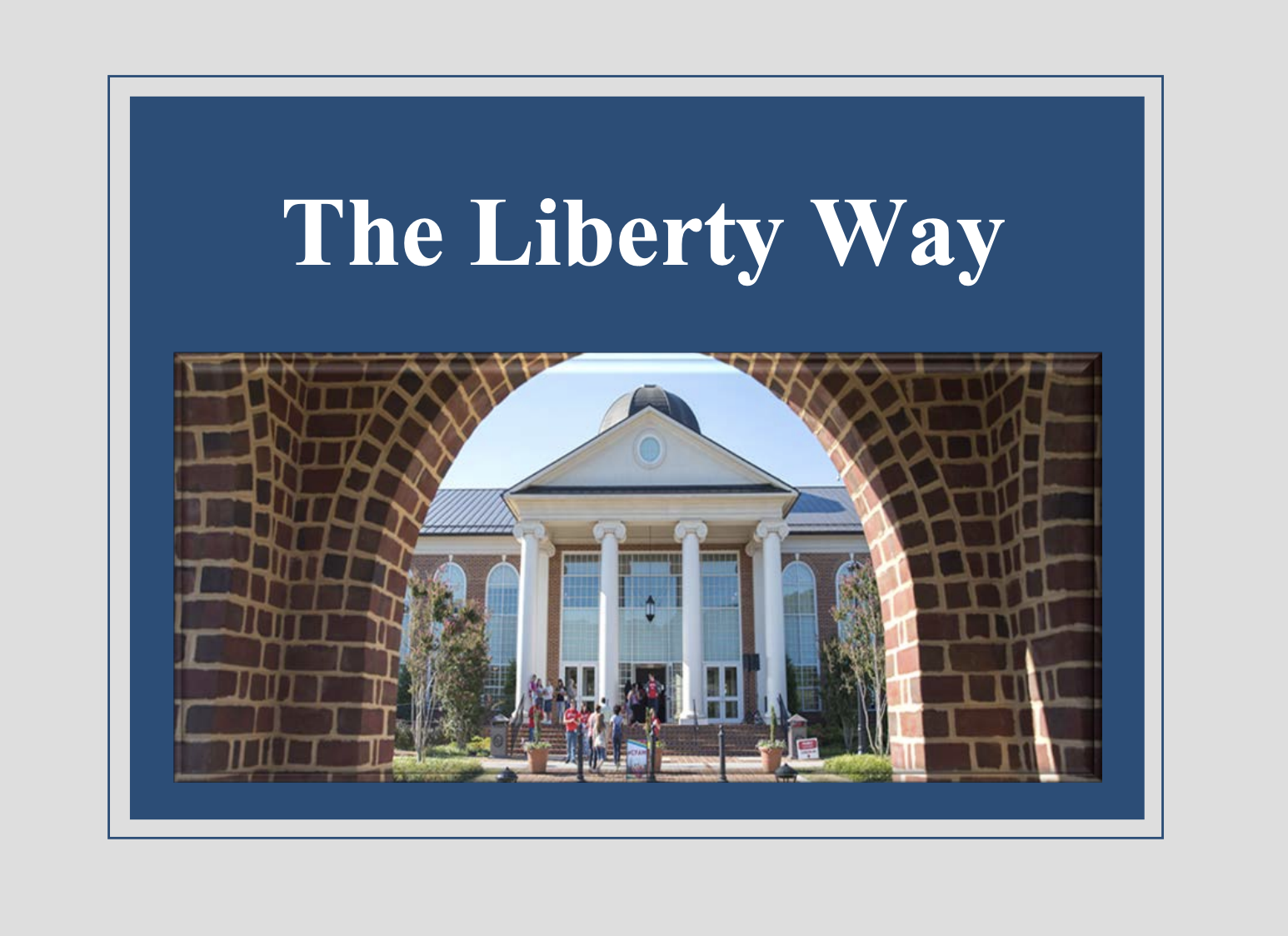
Now, the key to all of this is the brutal contents of that ProPublica piece: “ ‘The Liberty Way’: How Liberty University Discourages and Dismisses Students’ Reports of Sexual Assaults.” If you want a quick summary of the accusations — in another rather conservative source — check out this report at The New York Post: “Liberty University accused of making it ‘impossible’ to report rape, lawsuit alleges.”

The ProPublica report is, of course, hostile to Liberty University in every way possible. It’s also clear that Liberty officials appear to have gone out of their way to earn that hostility — in large part by refusing, at ever twist in the plot, to speak on the record about the university’s perspective on these issues.


Please respect our Commenting Policy