Lawsuits

Don't neglect the Supreme Court's potentially weighty case on religious schools funding

Don't neglect the Supreme Court's potentially weighty case on religious schools funding

Media eyes are trained on the U.S. Supreme Court's December 1 argument on Mississippi's abortion restrictions, preceded by a fast-tracked November 1 hearing about the stricter law in Texas. But don't neglect the Court's December 8 hearing and subsequent decision on tax funding of religious schools in the potentially weighty Carson v. Makin case (docket #20-1088).

University of Baltimore law Professor Kimberly Wehle certainly wants us to pay heed, warning October 14 via TheAtlantic.com that this is a "sleeper" appeal that "threatens the separation of church and state." In her view, the high court faces not just the perennial problem of public funding for religious campuses. She believes the justices could decide "religious freedom supersedes the public good" by aiding conservative Christian schools that, based on centuries of doctrine, discriminate against non-Christian and LGBTQ students and teachers.

Journalistic backgrounding: Thinly-populated Maine provides an unusual context for this story because the majority of its 260 school districts do not operate full K-12 systems and instead pay tuition for public or private schools that families choose for upper grades. Religiously-affiliated schools are included, but not if Maine deems them "sectarian."

Notably, the parents' plea for tuition is backed by major institutions of the Catholic Church, the Southern Baptist Convention and other evangelical Protestants, the Church of God in Christ (the nation's largest African-American denomination), Latter-day Saints (formerly called "Mormons") and Orthodox Judaism, alongside the 63-campus Council of Islamic Schools. A reporter's question: Has such a religious coalition ever formed in any prior Supreme Court case?

Of further interest, the case engages a major religious-liberty theorist, Michael W. McConnell, director of Stanford University's Constitutional Law Center and former federal judge on the 10th Circuit Court of Appeals. He wrote that circuit's 2008 opinion in Colorado Christian University v Weaver (.pdf here), which tossed out a law that barred "pervasively sectarian" colleges from a state scholarship program.

In Carson, McConnell filed a personal brief September 8 that hands the Supreme Court a history lesson (.pdf here) on religious freedom as conceived when the Constitution's First Amendment was framed. He has explored this ground since a significant Harvard Law Review article in 1989.

Please respect our Commenting Policy

New podcast: Are 'parental rights' references (inside scare quotes) the new 'religious liberty'

New podcast: Are 'parental rights' references (inside scare quotes) the new 'religious liberty'

Here’s a question that I heard recently from a young person down here in Bible Belt country: Why do students at (insert public school) need permission forms from their parents and a doctor to take (insert over-the-counter medication), but the school can assist a student’s efforts to change her gender identity while keeping that a total secret from the parents?

Obviously, something had changed at this school. The crucial question was whether parents had any right to shape or attempt to influence the education — or the moral and physical transformation — of their child in this setting controlled by the state and funded by their tax dollars. Yes, there are religious doctrines involved in many or even most of these cases.

Here’s the question we discussed during this week’s “Crossroads” podcast: Are media reports about this issue starting to turn parental rights into “parental rights,” complete with those prickly “scare quotes” that have turned references to old-school religious liberty issues into so-called “religious liberty” issues. Click here to listen to that podcast.

You can find traces of this conflict if you dig deep enough in a recent New York Times story with this double-decker headline:

The Unlikely Issue Shaping the Virginia Governor’s Race: Schools

Virginia Republicans in a tight governor’s race have been staging “Parents Matter” rallies and tapping into conservative anger over mandates and critical race theory.

The team behind this fascinating Times story didn’t spot the obvious religion ghost in this story. But this story didn’t attempt to turn these standoffs into libertarian dramas in which Trumpian parents are only concerned about COVID-19 conflicts about masks and vaccines (see a related Washington Post story, for example).


Please respect our Commenting Policy

It's hard to write SBC news reports when key players keep hanging up their phones

It's hard to write SBC news reports when key players keep hanging up their phones

What are reporters supposed to do when key actors on one side of a controversy in a major religious group keep refusing to respond to calls and other contacts seeking their input and information?

I ask this because of the challenges that reporter Liam Adams is facing as (welcome to the religion-news beat) he tries to cover the legal questions and accusations swirling around the executive committee of the Southern Baptist Convention — America’s largest non-Catholic flock.

I can imagine a scenario in which some readers read this recent Nashville Tennessean story — “Resignations follow Baptist vote on privilege” (text is behind a high paywall) — and asked themselves: Hey, where are the quotes from people on the more conservative (if that’s the right word in battles over sexual abuse) side of this story? And why are there so many quotes from someone like Ed Stetzer, a hero of the current SBC leadership?

This story is so complex that it’s hard to pull out individual chunks of material, but lets try this long passage::

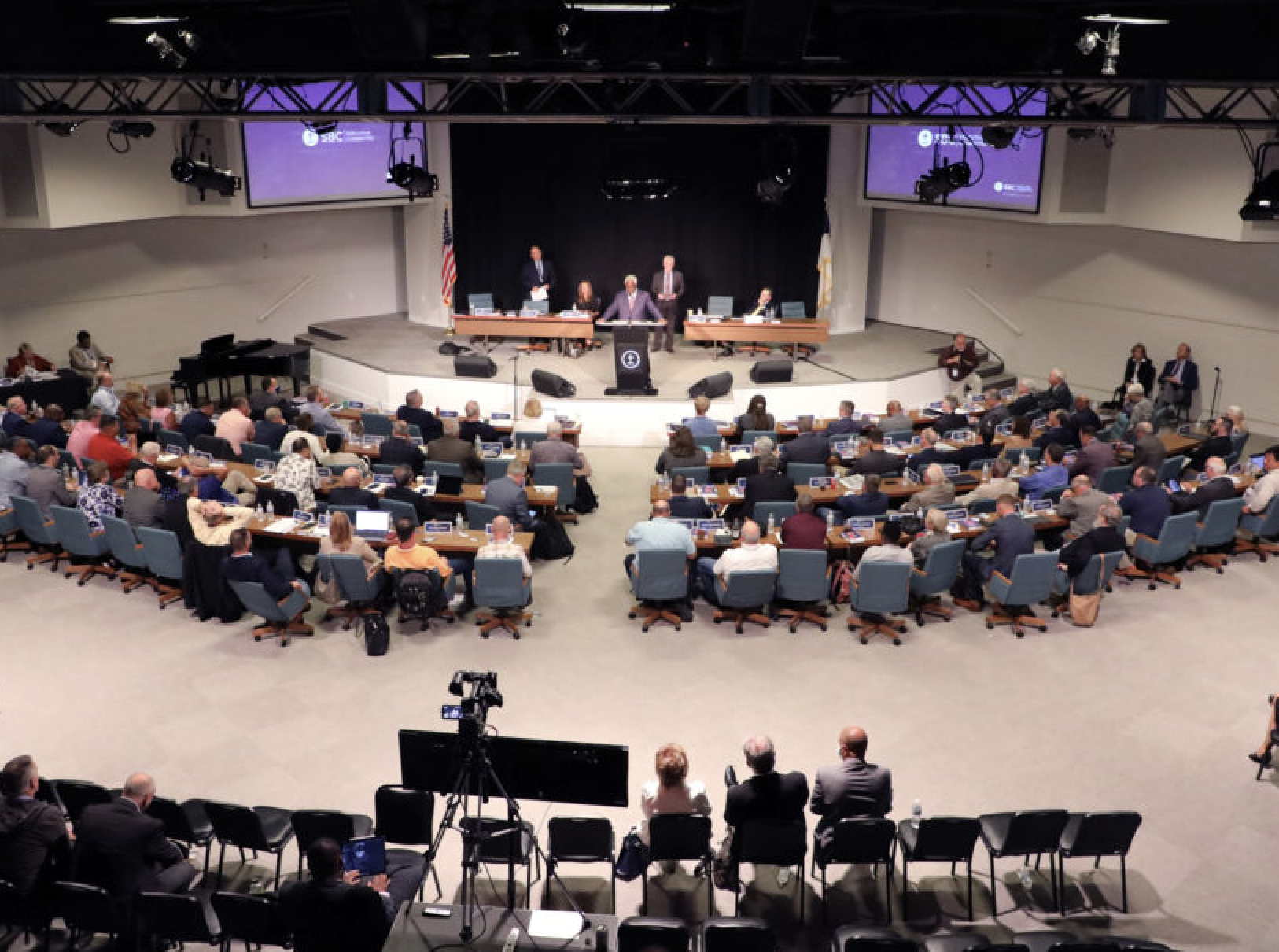
After two failed attempts at meetings on Sept. 21 and 28, the Southern Baptist Convention’s executive committee met for a third time Oct. 5 and voted to waive privilege. The committee acts on behalf of the convention when it is not in session.

In response, at least 10 executive committee members resigned either just before vote or shortly after — including some who are supporters of the Conservative Baptist Network. …

Conservative Baptist Network’s supporters on the executive committee all voted against allowing third-party investigators access to privileged files.

“It’s hard to see the correlation between the CBN and the objection to the waiver of privilege,” said Ed Stetzer, executive director of the Wheaton College Billy Graham Center. 'But there is clearly a correlation.'

In a news release last week, the Conservative Baptist Network said the group desired '“ruth and integrity.”


Please respect our Commenting Policy

Finding voices on both sides of Texas abortion debate? The Atlantic comes out on top

Finding voices on both sides of Texas abortion debate? The Atlantic comes out on top

In recent weeks, Texas has swung back and forth between prohibiting abortions after six weeks, then being forced bu judges to allow them, then managing to forbid them once again.

Currently, once the fetal heartbeat is detected, abortions are forbidden in the Lone Star state.

Meanwhile, journalists have gone full court press on the matter. There’s no surprise there. But did anyone strive to talk to women and men on both sides of this hot-button issue? Hold that thought.

Now, I don’t expect Hollywood ever to be balanced on the topic but a recent offering in The Hollywood Reporter on 12 abortion-positive movies was over the top, even for them.

It’s been 49 years since the two-part “Maude’s Dilemma” — written by future Golden Girls and Soap creator Susan Harris — premiered, but the choice faced by Bea Arthur’s title character, finding herself pregnant at 47, and the determination of Norman Lear’s show to discuss that choice in depth, and engage in a nuanced debate, would be provocative in an American broadcast sitcom today.

It’s still incredibly rare to find TV comedies dealing with actual abortions, though shows like Girls and Sex and the City used it as a conversation piece. Frequently, American television falls back on abortion being a thing characters talk about on-camera, do off-camera and then never speak of again..

Then comes the list:

“Dirty Dancinga clear and unapologetic argument for reproductive choice.” “Grandma,” which is “abortion as a regrettable but necessary option in many young women’s lives.” Or “Never Rarely Sometimes Always” about “a candid and clear-eyed contemplation of abortion as a choice arrived at not with hand-wringing but with sobering pragmatism.” Or “One Sings, the Other Doesn’t” about “love, whimsy, joyful bohemia and tenderness no less than healthy anger over injustice.”

You get the picture.


Please respect our Commenting Policy

New podcast: Those Southern Baptist sex-abuse battles are not just about Southern Baptists

New podcast: Those Southern Baptist sex-abuse battles are not just about Southern Baptists

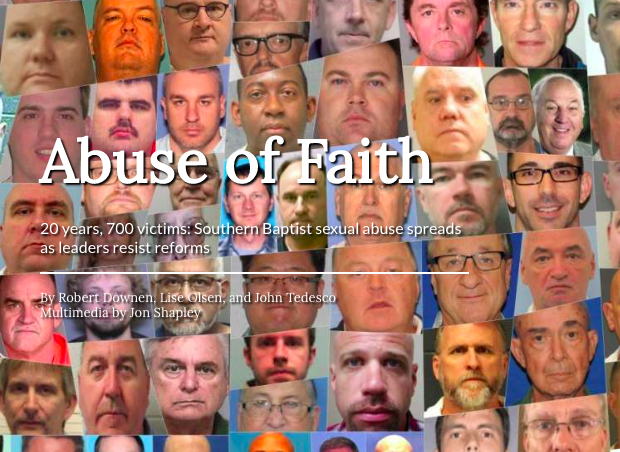
The Southern Baptist Convention’s ongoing fights about how to handle sexual-abuse claims against ministers and other church personnel and volunteers is a perfect example of the kind of story that drives newspaper editors crazy.

It’s big and complicated and it seems like something crazy or important (or both) happens every other day. But it also seems like it’s impossible to yank a big, dramatic headline out of this sprawling, complicated story.

The story never seems to end and the amount of background material needed — in story after story after story — makes it impossible to cover this stuff in tidy 500-word stories. But if a newsroom skips a few of the major developments, that makes it even harder to get back in the game and explain to readers what is happening. Oh, and did I mention that newsroom managers pretty much have to assign a reporter to this story full-time or near full-time? That’s expensive in this day and age. Obviously, this reporter has to have religion-beat experience and speak fluent Southern Baptist.

At the same time, in my experience, there will almost always be one or two editors who say (or think) something like this: “I know the SBC is huge and there are billions of dollars involved and we have lots of Southern Baptist churches (and maybe a college) in our news territory, but … I don’t ‘get’ why this story really matters to average readers. I mean, it’s not about sports or politics or something important (to me).”

As a Charlotte editor once told me, when I was poised to break a national-level SBC story in the early 1980s: Nobody reads this stuff but fanatics and every time you write about it we get too many letters to the editor.

This brings us to this week’s “Crossroads” podcast, which focuses on why the SBC’s struggles with sexual-abuse are important, and NOT just to Southern Baptists (click here to tune that in). The key is to identify major stories LINKED to sexual-abuse scandals that involve ethical, moral, legal and theological issues that can be seen in religious groups of all kinds (and many secular nonprofits and organizations as well). To illustrate this, let me tell you a story about an important evangelical counseling pioneer — the late Dr. Louis McBurney, founder of the Marble Retreat Center in Colorado.


Please respect our Commenting Policy

Notable omission among liberal religious voices in phase 2 of Supreme Court abortion case

Notable omission among liberal religious voices in phase 2 of Supreme Court abortion case

The media are prepping for the U.S. Supreme Court's December 1 hearing on the strict Mississippi abortion law and the subsequent ruling.

In a prior Guy Memo on religious "friend of the court" briefs filed on the pro-life side, I promised a second rundown when pro-abortion-rights activists weighed in with their views. Now that second wave of religious arguments has landed — with a notable omission in those ranks that journalists will want to pursue.

To explain, we'll need some religion-beat history on this issue.

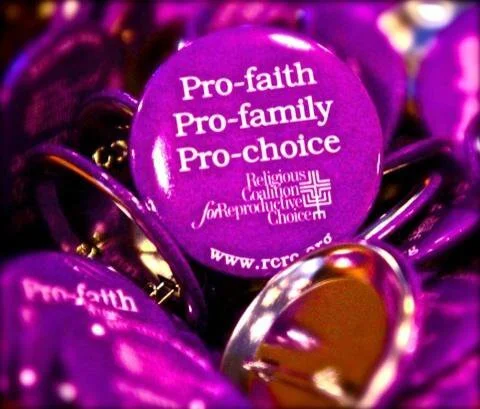
In 1967, two years before NARAL Pro-Choice America was founded, the 1,400-member Clergy Consultation Service formed to help women obtain abortions and fight legal barriers. After the high court legalized U.S. abortions in the 1973 Roe v. Wade decision currently at issue, the related Religious Coalition for Abortion Rights was founded to campaign for moral acceptance. (In 1994 it dropped the A-word and was renamed the Religious Coalition for Reproductive Choice or RCRC).

Founders included a significant chunk of "mainline" and liberal Protestantism, including the Episcopal Church, Presbyterian Church (U.S.A.) Mission Agency, United Church of Christ and several independent Protestant caucuses. The United Methodists' General Board of Church and Society hosted the founding, and the Methodist women's division also joined, but both later backed away. The Coalition also included major non-Orthodox Jewish organizations and the Unitarian Universalist Association (UUA).

In the new Court filings, abortion-rights law gets continued support from RCRC, UUA and Jewish organizations. But no Protestant denomination that favors abortion choice has joined to support Roe. Reporters should find out why they sidestepped this historic showdown. For example, have complex schism talks led to silence on the United Methodist left, as opposed to earlier debates (see YouTube video at the top of this post)?

The silence from "mainline" churches deprives the high court of in-depth moral thinking from pro-choice Christians that answers conservatives on issues that make abortion unusually difficult for public policy, among them: Does a genetically unique and developing human embryo or fetus have value? Why, or why not?


Please respect our Commenting Policy

Thinking about prayers at executions: These stories offer glimpses of an old church-state unity

Thinking about prayers at executions: These stories offer glimpses of an old church-state unity

This is a “feeling guilty” post. For quite some time now, I have been planning to examine the coverage of some important religious-liberty cases that have been unfolding in the death-row units of prisons.

The decisions are worthy of coverage, in and of themselves. At the same time, these cases have demonstrated that it is still possible, in this day and age, for church-state activists on the left and right to agree on something. Maybe I should have put a TRIGGER WARNING notice at the start of that sentence.

Like I said the other day in this podcast and post — “Covering a so-called 'religious liberty' story? Dig into religious liberty history” — this kind of unity in defending religious freedom has become tragically rare (from my point of view as an old-guard First Amendment liberal). Indeed, to repeat myself, “America has come a long way since that 97-3 U.S. Senate vote to approve the Religious Freedom Restoration Act of 1993.”

The problem is that you rarely, if ever, see reporters catch this church-state angle in these decisions. The key is to look at who filed legal briefs in support of the religious liberty rights of the prisoners.

This brings me to an important Elizabeth Bruenig essay that ran the other day at The Atlantic, under this dramatic double-decker headline:

The State of Texas v. Jesus Christ

Texas’s refusal to allow a pastor to pray while holding a dying man’s hand is an offense to basic Christian values.

Here is the meaty overture:

Devotees to the cause of religious liberty may be startled to discover during the Supreme Court’s upcoming term that the latest legal-theological dispute finds the state of Texas locked in conflict with traditional Christian practice, where rites for the sick, condemned, and dying disrupt the preferences of executioners.


Please respect our Commenting Policy

New podcast: Covering a so-called 'religious liberty' story? Dig into religious liberty history

New podcast:  Covering a so-called 'religious liberty' story? Dig into religious liberty history

Believe it or not, America’s commitment to the First Amendment and religious liberty wasn’t dreamed up by the Religious Right.

However, at some point — mainly during press coverage of clashes between the Sexual Revolution and traditional forms of religion — religious liberty turned into “religious liberty” or even “so called ‘religious liberty’ ” and other language to that effect. America has come a long way since that 97-3 U.S. Senate vote to approve the Religious Freedom Restoration Act of 1993.

Now we are seeing waves of valid news coverage of religious liberty disputes linked to people seeking exemptions from mandates requiring COVID-19 vaccines. During this week’s “Crossroads” podcast (CLICK HERE to tune that in) I suggested that it would help for journalists to dig into the details of how courts have handled earlier religious liberty cases.

Consider this recent Washington Post headline, involving a White evangelical leader in Oklahoma: “This pastor will sign a religious exemption for vaccines if you donate to his church.” Here’s the overture:

A pastor is encouraging people to donate to his Tulsa church so they can become an online member and get his signature on a religious exemption from coronavirus vaccine mandates. The pastor, Jackson Lahmeyer, is a 29-year-old small-business owner running in the Republican primary challenge to Sen. James Lankford in 2022.

Lahmeyer, who leads Sheridan Church with his wife, Kendra, said Tuesday that in the past two days, about 30,000 people have downloaded the religious exemption form he created.

“It’s beautiful,” he said. “My phone and my emails have blown up.”

This minister isn’t alone in thinking this way. Here is a New York Daily News story about an African-American Pentecostal leader: “A Brooklyn preacher’s blessing is a pox upon his flock.”


Please respect our Commenting Policy

Southern Baptist sexual-abuse puzzle: Can Executive Committee act on its own legal authority?

Southern Baptist sexual-abuse puzzle: Can Executive Committee act on its own legal authority?

I do not envy the journalists who are attempting to cover the current meetings of the Southern Baptist Convention’s Executive Committee.

The financial and moral stakes are huge. Many of the questions being debated have, from a congregational polity point of view, theological as well as legal implications. You have some activists who want the SBC to take steps that, under its system of governance, it can’t really take. You also have SBC leaders who don’t appear willing to take the actions that they can take, in order to be transparent on sexual-abuse cases.

This may sound strange, but I think it may help to look at the top of the Baptist Press report covering the opening day of the meetings in Nashville. Yes, Baptist Press is an SBC operation and its leaders report directly to the Executive Committee. That makes one statement here even more important:

NASHVILLE (BP) — In its first meeting since messengers to the June 2021 Southern Baptist Convention Annual Meeting called for an independent, third-party review of the SBC Executive Committee, the EC responded to several routine motions and moved to fund the independent review but declined to waive attorney-client privilege for the time being.

After a three-hour extra session Tuesday afternoon, the Executive Committee ultimately rejected a proposal from its officers and instead adopted a temporary measure to move the sexual abuse review forward leaving the details to be hashed out between the officers and the Sex Abuse Task Force within seven days. One of the most significant undecided details was whether or not the EC will agree to waive attorney-client privilege as Guidepost Solutions, the independent firm chosen by the task force to conduct the review, has requested. In the motion passed SBC messengers in June, the EC was instructed to abide by the recommendations of the third-party firm, up to and including the waiver of attorney-client privilege.

Did you catch that last sentence? That’s one of the most important facts in this standoff. The Executive Committee is charged with carrying on the work of the SBC when the national convention is not in session. However, in terms of authority, the EC’s powers come from the local church “messengers” attending the annual SBC national convention.

It appears that a majority of the Executive Committee think they get to debate whether or not to approve the waiver of attorney-client privilege as part of a third-party investigation of how the EC, or some of its leaders, handled accusations of sexual abuse. However, “messengers” at the national convention already voted to approve that step.


Please respect our Commenting Policy