Lawsuits

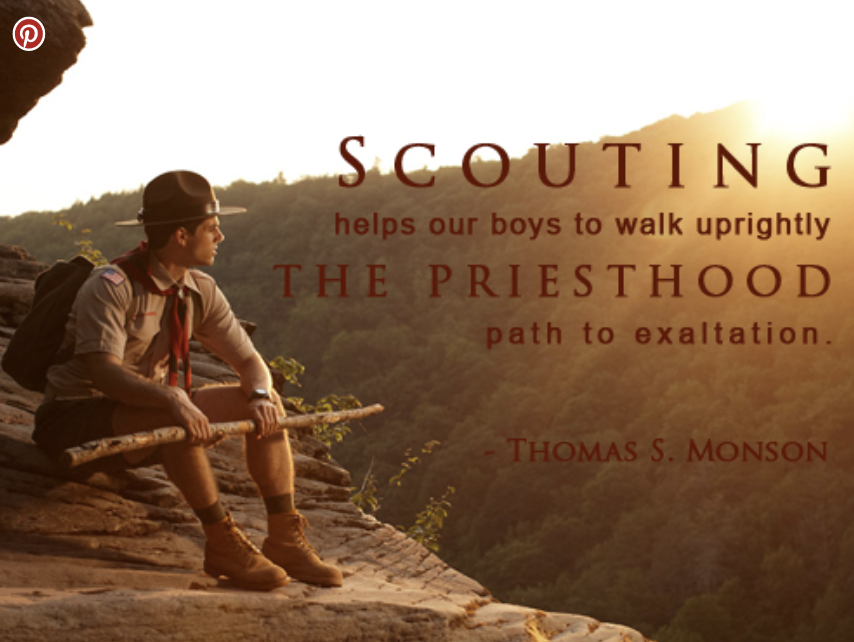
Scouting membership numbers collapse: AP totally ignores role of religion in this drama

Scouting membership numbers collapse: AP totally ignores role of religion in this drama

It’s the question that I have been trying to answer for 40 years or so: Why do news organizations ignore basic religion facts and trends when it is clear they are relevant in a major news story?

Ever since the first GetReligion post, back in 2004, we’ve been talking about religion “ghosts” in mainstream news coverage. Some “ghosts” are rather subtle and, frankly, it’s easy to understand why journalists with zero religion-beat experience would miss some facts and trends linked to religious law, history or doctrine.

But then you have “ghosts” — super ghosts, maybe — that are much, much more obvious and harder to explain. Consider, for example, the Associated Press story that came out the other day with this headline: “Boy Scouts, Girl Scouts suffer huge declines in membership.” Here’s the overture:

America’s most iconic youth organizations — the Boy Scouts of America and the Girl Scouts of the USA — have been jolted by unprecedented one-year drops in membership, due partly to the pandemic, and partly to social trends that have been shrinking their ranks for decades.

While both organizations insist they’ll survive, the dramatic declines raise questions about how effectively they’ll be able to carry out their time-honored missions. … Membership for the BSA’s flagship Cub Scouts and Scouts BSA programs dropped from 1.97 million in 2019 to 1.12 million in 2020, a 43% plunge, according to figures provided to The Associated Press. Court records show membership has fallen further since then, to about 762,000.

Other than the COVID-19 crisis, what else caused this massive drop?

Reasons for the drop include competition from sports leagues, a perception by some families that they are old-fashioned, and busy family schedules. The pandemic brought a particular challenge.

Wait a minute. Parents were worried that the Scouts are “old-fashioned,” which implies that Scouting would be growing if its leaders made more efforts to modernize their methods and beliefs?

Then again, maybe it would help if the story mentioned decisions by leaders of the Church of Jesus Christ of Latter-Day Saints to cut ties to the Boy Scouts (click here for AP story on that bombshell) because of changes linked to gender and sexuality in the name of becoming more modern and, well, woke? Not that long ago, LDS congregations hosted 37% of all Scout troops. At the same time, many — perhaps most — Southern Baptist Convention churches have dropped out of Scouting for the same reasons.

Please respect our Commenting Policy

How will this Supreme Court decide, or sidestep, pivotal religious liberty questions?

How will this Supreme Court decide, or sidestep, pivotal religious liberty questions?

The major U.S. Supreme Court ruling in Fulton v. Philadelphia (.pdf here) allows a Catholic agency to avoid placing foster-care children with same-sex couples. Importantly, the Catholics will place gay children and will place children with gay singles since there's no conscience crisis over defying the church's doctrines on marriage.

For decades there's been confusion and acrimony over the court's applications of the Constitution's ban on government "establishment of religion," but now disputes over the religious "free exercise" clause grab the spotlight. The Fulton ruling sidestepped the heart of this generation's conflagration between religious rights and LGBTQ+ rights and, thus, may even have added logs to the fire.

The justices backed the Catholic claim with what The Economist's headline correctly labeled "The 3-3-3 Court." The narrow technical grounds for the decision enabled the three liberals (Stephen Breyer, Elena Kagan, Sonia Maria Sotomayor) to make the ruling unanimous. The conservatives were split between three demanding a thorough overhaul of "free exercise" law (Justice Samuel Alito, in a vigorous 77 pages, joined by Neil Gorsuch and Clarence Thomas) and three unwilling to take the plunge at this time (Chief Justice John Roberts and the two newest members, Brett Kavanaugh and Amy Coney Barrett).

Similar caution apparently underlies the court's majority decision this week not to review transgender student Gavin Grimm's victory against his Virginia school over bathroom access.

Journalists should prepare for more years of extensive -- and expensive -- politicking and litigation before the Supreme Court defines -- or decides not to define -- how First Amendment guarantees apply in 21st Century culture.

For those on the religion beat, it is easy to see that this case has hardened the related conflict among major denominations.


Please respect our Commenting Policy

Newsy thinking about SCOTUS, sports images, religious liberty and the Sexual Revolution

Newsy thinking about SCOTUS, sports images, religious liberty and the Sexual Revolution

Wait, you mean there was another important religion story during the traffic jam of stories about the right vs. further right showdown at the Southern Baptist Convention and America’s Catholic bishops arguing about Holy Communion, the Catechism and liberal Catholic politicos?

Obviously, I noticed headlines such as this one in the Washington Post: “Supreme Court unanimously rules for Catholic group in Philadelphia foster-care dispute.”

The word “unanimous” is certainly important, in the fractured age in which we live. But look for the other crucial word in the overture on that story:

The Supreme Court ruled unanimously … that Philadelphia was wrong to end a Catholic group’s contract to provide foster-care services because the organization refused to work with same-sex couples.

It was the latest victory for religious organizations at the increasingly conservative court, and the second time it has ruled against governments trying to enforce an anti-discrimination law protecting LGBTQ rights against those claiming religious liberty.

But the opinion, written by Chief Justice John G. Roberts Jr., was narrow enough to draw the support of the court’s three liberals — and the consternation of its three most conservative members for not going further.

Obviously, the crucial word is “but.” This ruling encouraged some church-state conservatives, but also provided some hope for those who believe that the Sexual Revolution will, more often than not, trump the free exercise of religion.

So, it’s time for two think pieces that explore the degree to which this ruling was a win for religious liberty.

No surprise here: Religious liberty pro David French, of The Dispatch, was encouraged: “Four Things You Need to Know After a Huge Day at SCOTUS — ‘Good night, Employment Division v. Smith. Good work. Sleep well. I’ll most likely kill you in the morning​.’ “ Here is his reaction, at the level of SCOTUS personalities:


Please respect our Commenting Policy

A World Series MVP's marriage crashes and his pastor is more than a role player in the drama

A World Series MVP's marriage crashes and his pastor is more than a role player in the drama

Celebrity divorces are rarely tidy and uncomplicated. This is especially true when one of the people in the marriage is alleged to have been sleeping with the couple’s marriage counselor.

Two more details: The marriage counselor was (1) both the couple’s pastor and (2) the leader of a charitable foundation funded by the jilted husband. Now, throw in the fact that the husband was, at the time, a Major League Baseball star — the 2016 World Series MVP — with the Chicago Cubs.

This is not, alas, your usual upbeat Bobby Ross, Jr., story about God and baseball. Several news operations have reported on this sad affair, but the key report ran, logically enough, at The Chicago Tribune. The headline: “Ben Zobrist lawsuit alleges his pastor had an affair with his wife Julianna and defrauded the former Chicago Cubs player’s charity.

The story was written by a reporter who covers “sports pop culture with a Chicago focus as well as a range of other topics from the White Sox to fantasy football.” As you would expect, this story misses one or two religion details that many readers would have liked to have known. Here’s some crucial material right up top:

The lawsuit against Byron Yawn, CEO of the Nashville-area counseling firm Forrest Crain and Co., seeks $6 million in punitive and compensatory damages through a jury trial.

According to the complaint filed May 6 in Nashville Circuit Court, Yawn, while acting as the Zobrists’ marital counselor and executive director of Ben Zobrist’s charity, “usurped the ministerial-counselor role, violated and betrayed the confidence entrusted to him by the plaintiff, breached his fiduciary duty owed to the plaintiff and deceitfully used his access as counselor to engage in an inappropriate sexual relationship with the plaintiff’s wife.”

Yawn’s attorney, Christopher Bellamy of Nashville-based Neal and Harwell, told the Tribune …: “At the end of the day, a woman has the right to choose who she wants to be with. We’re in the middle of litigation, so I can’t really comment further at this point, but that’s what it boils down to.”

Yes, that certainly raises moral questions, in terms of the actions of high-profile conservative Christians. But that is not the stuff of journalism discussions.

I did, however, want to know more about this pastor and the church at the heart of this drama.


Please respect our Commenting Policy

Chicago Tribune's take on Moody Bible student lacks some tough, logical questions

Chicago Tribune's take on Moody Bible student lacks some tough, logical questions

One of the rules of journalism is to make clear why a reader should care what you’re writing about.

One way to make that happen is to choose a sympathetic figure. Personal stories are always easier to grasp than abstract concepts such as teachings, doctrines and beliefs. This principle has been used brilliantly by movements seeking to push modernist ideas, such as gay marriage. It’s one thing to oppose the idea; it’s another to oppose two human beings right in front of you.

Those of us who covered the Episcopal Church’s slide from an influential denomination of 3.6 million members into a fast-declining church of 1.8 million saw this principle used repeatedly in the 1990s and 2000s. Whenever the denomination wanted to push some novel sexual idea, it put forth stories of the courageous individuals who indulged in such practices. Such folks were easier to like than the seemingly stodgy types who were bent on keeping to the old ways.

All of which is why the Chicago Tribune chose a 24-year-old lesbian who was hounded by Moody Bible Institute administrators to be the face of a new lawsuit. An engaging dissident with a compelling story was far more interesting than the traditional institution she was fighting. The story begins:

Megan Steffen had completed all her college coursework at Moody Bible Institute and was at home with her parents in Michigan, waiting to graduate, when she got an email from the school, telling her an administrator needed to talk with her.

She agreed to a meeting via Zoom, where she learned that faculty members at the conservative Christian college had raised objections to her graduation.

Which was in 2020, by the way.

Then the two administrators on the Zoom call began asking questions, among them: Had Steffen ever had romantic or sexual relations with a woman? Had she ever dated men? Did she envision dating women in the future?


Please respect our Commenting Policy

The New York Times (#WHOA) probes ACLU's move away from First Amendment liberalism

The New York Times (#WHOA) probes ACLU's move away from First Amendment liberalism

I don’t know about you, but The New York Times was the last place that I expected to see a long news feature about disturbing trends at the American Civil Liberties Union away from its proud history of First Amendment liberalism.

I am sure that some ACLU insiders must have felt the same way, especially in light of recent headlines about the rising power of a generation of woke journalists at the Times. The pot calling the kettle black?

But there was no way around the contents of that dramatic double-decker headline the other day:

Once a Bastion of Free Speech, the A.C.L.U. Faces an Identity Crisis

An organization that has defended the First Amendment rights of Nazis and the Ku Klux Klan is split by an internal debate over whether supporting progressive causes is more important.

As the headline states, the emphasis in this report is about free speech. Maybe it was too much to ask Times editors to see the same illiberal trend developing in ACLU work defending the First Amendment clause protecting religious freedom, without “scare quotes.”

But we will take what we get because of the influence that the Times has in other newsrooms and even in some influential corners of elite academia.

The story opens with an event celebrating the career of lawyer David Goldberger, who played a key role in the famous 1978 case when the ACLU defended the free speech rights of Nazis to march in Skokie, Ill., the home of many Holocaust survivors. Read this long passage carefully:


Please respect our Commenting Policy

Where will American religious groups fit into the newly electrified abortion debate?

Where will American religious groups fit into the newly electrified abortion debate?

The U.S. Supreme Court's agreement to review Mississippi's strict abortion law means that the public argument on this unending dispute will be the most intense in many years -- with a ruling due right in the midst of the 2022 election campaign.

Despite the Court's increased conservative majority, there's no certainty it will clamp new restrictions on abortion. Yet it's also possible that the Court might overthrow its own 1973 Roe v. Wade decision, which legalized most abortions nationwide in 1973.

If so, the impact will be momentous but not quite as apocalyptic as "pro-choice" advocates suggest. Abortion would remain widely available because decision-making would simply be returned to democratically elected state legislatures and many would maintain liberal policies. Charities might aid women in the "pro-life" states needing travel for out-of-state abortions.

For those covering the religion beat, the coming year is a major defining moment as America's variegated denominations state what they now believe about the morality of abortion and why.

After the Roe ruling, the 1976 conventions of the two major political parties began setting opposite stances. The Democrats' platform acknowledged that many Americans had "religious and ethical" concerns but opposed a Constitutional amendment to bar abortions. Similarly, the Republicans' platform stated that some in the party favored the Supreme Court's edict, but advocated such an amendment "to restore protection of the right to life for unborn children."

Religion writers well know how that basic split hardened and reshaped religious voters' political alignments. There's been less attention to the way the advent of open abortion turned around the Social Gospel thinking of Protestant liberals.


Please respect our Commenting Policy

What do you know? Doctrinal-covenant fights can occur on an Orthodox Jewish campus

What do you know? Doctrinal-covenant fights can occur on an Orthodox Jewish campus

By now, GetReligion readers are probably aware that some journalists have their doubts about whether the First Amendment actually protects religious doctrines and the “free exercise thereof” by believers.

The problem is that the old-liberal defense of “religious liberty” — inside the usual “scare quotes” — now clashes with the evolving doctrines of the Sexual Revolution. This leads to fights on religious campuses in which journalists pit bad religious believers who defend ancient doctrines against good believers who want those bad doctrines to evolve to mesh with the good teachings of the New York Times and other sacred texts.

The key in most of these clashes is whether students, faculty and staff sign a “doctrinal covenant” when they choose to work or study at one of these private schools. Private schools — liberal and conservative — have a right to defend the doctrines of the religious groups that founded them. As GetReligion readers know (explore this file), journalists often ignore the content of these covenants and fail to ask progressive activists whether they read these covenants before signing them.

Most of these stories focus on disputes at evangelical and Catholic schools. If you ever wondered how an education-beat newsroom would handle one of these stories in an Orthodox Jewish context, now you know — care of an Inside Higher Education report under this double-decker headline:

Students Sue Over Denial of LGBTQ+ Club Recognition

A lawsuit accuses Yeshiva University of violating New York City human rights law in its long-standing refusal to recognize an LGBTQ+ student group

The reader who forwarded this URL was rather blunt, stating that the article is “a mess. Journalistically speaking, it's biased, lopsided, and incurious.”

As usual, there is no way to know whether the school’s admission documents include a doctrinal covenant, since the reporting is sketchy, at best, on that subject.


Please respect our Commenting Policy

Plug-In: Murder convictions in death of George Floyd -- why faith angles were important

Plug-In: Murder convictions in death of George Floyd -- why faith angles were important

Guilty. Guilty. Guilty.

This week’s big news — former Minneapolis police officer Derek Chauvin’s conviction on all counts in George Floyd’s murder — is a story about police brutality. And racial justice. And yes, the power of faith.

USA Today captures this powerful scene:

George Floyd's brother Philonise Floyd was sitting with his head bowed and his hands folded in front of his face in prayer before the verdict was read. As each verdict was read, his hands increasingly shook and his head nodded up and down.

"I was just praying they would find him guilty. As an African American, we usually never get justice," Floyd said.

The exceptional coverage by the Minneapolis Star-Tribune’s Chao Xiong and Paul Walsh contains this important highlight:

As news spread of the verdicts — guilty on all counts — social media sites reposted the Minneapolis Police Department's initial report that Floyd died of a medical event at the scene, an assertion that might never have been contradicted so forcefully were it not for a teenage girl, Darnella Frazier, walking by and recording Floyd's death last May 25 on her cellphone and posting it for the world to see.

"I just cried so hard. This last hour my heart was beating so fast, I was so anxious, anxiety [busting] through the roof," Frazier, who was 17 at the time, posted on Facebook after the verdict. "But to know GUILTY ON ALL 3 CHARGES !!! THANK YOU GOD THANK YOU … George Floyd we did it!! Justice has been served."

The Los Angeles Times’ Kurtis Lee recounts this scene:


Please respect our Commenting Policy