Lawsuits

Anatomy of a scandal: What's next for journalists working on the Ravi Zacharias fallout?

Anatomy of a scandal: What's next for journalists working on the Ravi Zacharias fallout?

File this memo under “be careful what you wish for.”

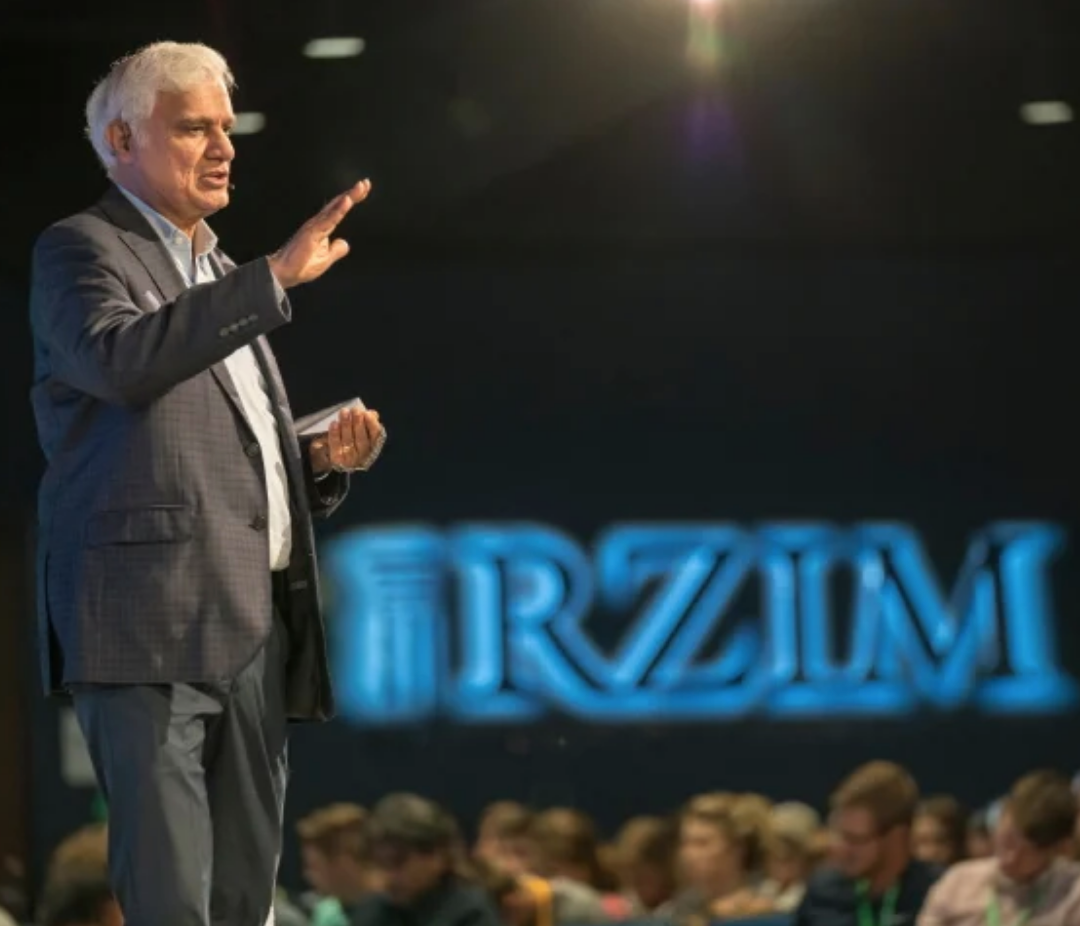
Those planning last May's funeral for evangelical star Ravi Zacharias were pleased to obtain live-streamed tributes from celebrities like Vice President Mike Pence and athlete Tim Tebow. Those outside the oft-disdained evangelical subculture may not comprehend the esteem Zacharias won by turning "apologetics" (defense of the Christian faith) from defensive bombast to intelligent and personable persuasion through books, countless personal appearances worldwide and the global team of some 100 speakers he built.

Presidential Press Secretary Kayleigh McEnany teared up as she told CBN News that Zacharias equipped multitudes so "you didn’t have to check your brain at the door when you became a Christian." She concluded, "Rest assured, his legacy will always be here and he will continue to change lives."

That encapsulates the drama of this harder-they-fall saga.

All the posthumous praise for Zacharias shocked one onlooker, a massage therapist who says he groped her, masturbated in her presence and asked her for sexualized photos. She searched his name online, contacted Steve Baughman of the hyper-hostile RaviWatch.com and then spoke with Daniel Silliman, news editor of the evangelical magazine Christianity Today.

Silliman's resulting investigation found three victimized massage therapists and provoked fury among some staffers and beyond, eventually forcing Ravi Zacharias International Ministries (RZIM) to drop its kid-gloves response and commission a totally independent investigation by a major Atlanta law firm, Miller & Martin.

Media analysts should understand that it takes far more guts for an evangelical magazine that survives on donors and advertisers to expose such situations than a metropolitan newspaper. Upshot: Silliman and colleagues can take satisfaction in distinguished service to the Christian constituency — which echoes those utterly candid authors of the Bible. [Disclosure: The Guy was this magazine's news editor early in his career.]

As agreed, RZIM released the attorneys' full findings on Feb. 9 (click here for .pdf) and they were mind-numbing. Christianity Today's lede had this socko summation:

Please respect our Commenting Policy

Ravi Zacharias scandal shows why independent ministries are so difficult to investigate

Ravi Zacharias scandal shows why independent ministries are so difficult to investigate

If you have followed the Ravi Zacharias story in recent years, you know that it’s a tragedy on multiple levels and a reminder of why repentance is a crucial element of orthodox Christianity.

I followed this story at a distance, because — unlike many religion-beat pros — I had next to zero contact with Zacharias. I interviewed him only once, by telephone, several decades ago. I thought that he was clever, especially when addressing Hollywood’s trendy take on Eastern religions (“Only in America would anyone argue that reincarnation is Good News).”

The stunning, sordid details of his abuse of women make it clear that he suffered from some kind of sexual addiction. And while his mind was razor-sharp when dissecting many questions about moral theology and ethics, he also used his intellectual gifts to justify his own behavior — to the point of saying that God was blessing his actions.

What can we learn from the news coverage of this scandal?

First of all, it’s a good example of what happens when editors allow religion-beat professionals to cover important stories on their beat. Second, the reporting — in Christianity Today and also in the mainstream press — is devastating because it is based on mountains of documentation and on-the-record sources, as well as the testimonies of victims who deserve privacy.

However, there is a third point that must be emphasized, echoing a point frequently made at GetReligion for nearly two decades. I repeat this as a way of stressing one of the biggest challenges facing journalists — even veteran religion-beat pros — covering stories of this kind.

The fall of Zacharias is a perfect example of why it is so difficult to cover independent, non-denominational parachurch ministries (and independent congregations, as well). Nine times out of 10, radically independent religious organizations are only as honest as their charismatic, gifted, rainmaker founders allow them to be. This is true whether we are talking yoga or the prosperity anti-gospel. It was true long ago when I worked with skilled investigative reporters trying to probe the hidden scandals of PTL’s Jim Bakker. Alas, this remains true today.

Hold that thought, because we will come back to it.

Readers who want to know the horrifying details of this case can start with Christianity Today or with The New York Times. Here is the summary material from CT:


Please respect our Commenting Policy

Supreme Court justices are not singing the same religious liberty tune during pandemic

Supreme Court justices are not singing the same religious liberty tune during pandemic

Legal battles over pandemic-era worship gatherings rage on.

Last October’s confirmation of Justice Amy Coney Barrett flipped the U.S. Supreme Court’s script on such questions.

The latest ruling came last Friday night: A 6-3 order stopped California’s ban on indoor worship in most of the nation’s most populous state. But the justices allowed a 25 percent capacity limit to remain.

Perhaps most interestingly, the majority said California can keep prohibiting singing and chanting. For now.

On the singing issue, the justices sang several different tunes:

Chief Justice John Roberts: “The State has concluded … that singing indoors poses a heightened risk of transmitting COVID–19. I see no basis in this record for overriding that aspect of the state public health framework.”

Barrett, joined by Justice Brett Kavanaugh: “Of course, if a chorister can sing in a Hollywood studio but not in her church, California’s regulations cannot be viewed as neutral. But the record is uncertain. … (H)owever, the applicants remain free to show that the singing ban is not generally applicable and to advance their claim accordingly.”

Justice Neil Gorsuch, joined by Justices Clarence Thomas and Samuel Alito: “California has sensibly expressed concern that singing may be a particularly potent way to transmit the disease. … But, on further inspection, the singing ban may not be what it first appears. It seems California’s powerful entertainment industry has won an exemption. So, once more, we appear to have a State playing favorites … expending considerable effort to protect lucrative industries (casinos in Nevada; movie studios in California) while denying similar largesse to its faithful.”


Please respect our Commenting Policy

Early arrests after U.S. Capitol riot: So were there evangelical leaders in the attack or not?

Early arrests after U.S. Capitol riot: So were there evangelical leaders in the attack or not?

If you’ve worked as a reporter for any amount of time, you know what it’s like to return from covering a Big Story. Then you face your editor and get THAT LOOK.

Here is the religion-beat version of this scene. The editor asks a question that sounds something like this: “So what happened? Did (insert name of ecclesiastical group) finally make a decision about (insert hot-button topic, usually involving sex and/or politics) or not? We need to know how big a story this is.”

The reporter answers that this or that religious group passed a vague resolution calling for more study, dialogue and prayer, but the text contains slight hints — often involving scripture references — that one side or the other is making progress toward achieving this or that goal (maybe). They’ll be arguing about this newsy issue again next year (or whenever the assembly has its next legal gathering), as they have been arguing about it for 25 years.

The editor gives the reporter THAT LOOK. It says, “You have got to be kidding” (or stronger words) and/or “Why did we spend money to send you to cover this national meeting? You said this was a Big Story.” Trust me: Reporters can detect THAT LOOK in an editor’s voice, even if this encounter is on the telephone.

Editor’s don’t like to wait. They like clear results that produce a BOLD headline over a Big Story.

With that in mind, let’s look at a recent New York Times story about the slowly unfolding legal process surrounding rioters who were arrested for attacking the U.S. Capitol during the Jan. 6 “Stop the Steal” protests. The headline stated, “Arrested in Capitol Riot: Organized Militants and a Horde of Radicals.”

My question: Did the 14 reporters involved in covering this story get THAT LOOK when their reporting revealed that the kinds of people facing federal charges (as of Jan. 31) were pretty much what careful news consumers would have expected? In particular, why isn’t there evidence — at this point — linking the violent rioters with (wait for it) evangelical networks and institutions?

To dig a bit deeper into that question, I think readers should read a Tony Carnes essay — “Mysteries about the Mob in the Capitol cleared up“ — at the website called “A Journey Through NYC Religions.” (That’s a deep website that GetReligion reader should include in their “favorites” lists in online browsers.) Carnes explores lots of logical religion questions about this story.


Please respect our Commenting Policy

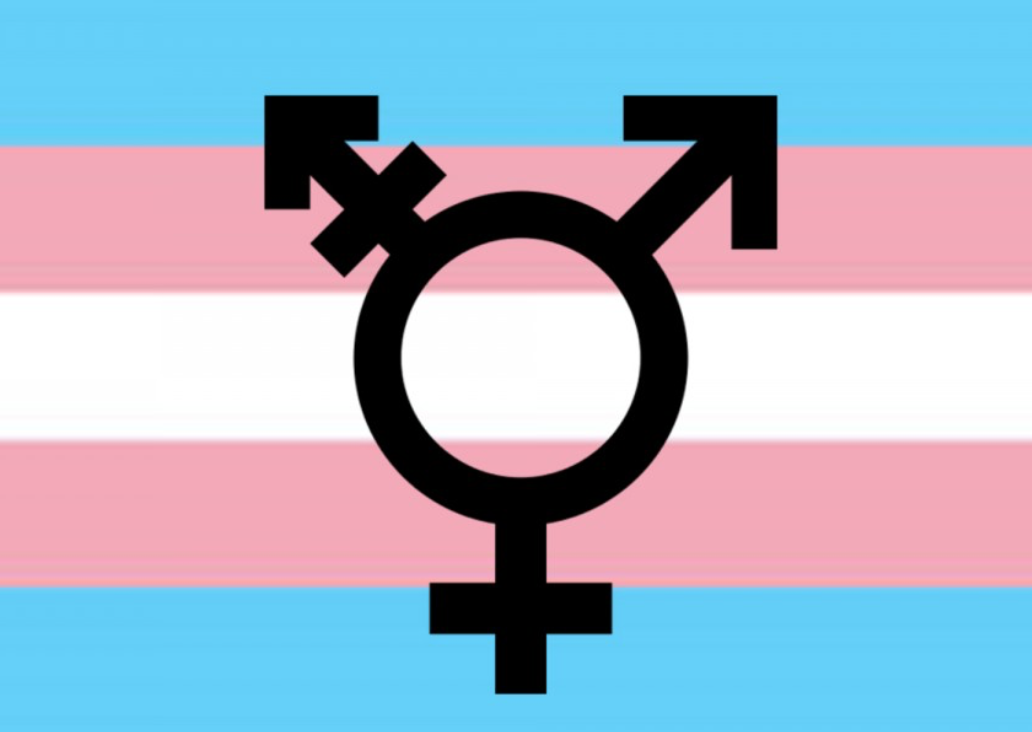
Joe Biden era puts transgender rights atop newsroom agendas (which creates religion news)

Joe Biden era puts transgender rights atop newsroom agendas (which creates religion news)

Among American "social issues," freedom of abortion is long-settled as a matter of law, so foes largely nibble at the edges. Courtroom victories for gays and lesbians have put dissenters on the defensive seeking to protect conscience claims.

Meanwhile, in the Biden-Harris era the transgender debate -- emotion-laden, multi-faceted and religiously weighty -- is moving to the top of the news agenda. {The Guy admits at the start he brings no psychological insight to this complex terrain and has personal knowledge of only two such situations.}

Democrats' zeal is the major new factor. President Joe Biden has said that he believes "transgender equality is the civil rights issue of our time. There is no room for compromise." Last year, Donald Trump appointee Neil Gorsuch made the case for "gender identity" rights in the Supreme Court's Bostock ruling, but this covered only secular employment. During his first hours in office, President Biden issued an executive order that extends this outlook across the board.

The president declared, for instance, that school kids shouldn't have to worry about their "access to the restroom, the locker room, or school sports," nor should adults be mistreated "because how they dress does not conform to sex-based stereotypes." He directed each government agency to spend the next 100 days reframing all gender policies accordingly.

Los Angeles Archbishop Jose Gomez, elected leader of the U.S. Conference of Catholic Bishops, immediately responded that on this and other matters like abortion, America's second Catholic president "would advance moral evils and threaten human life and dignity." Chicago's Cardinal Blasé Cupich assailed Gomez's Inauguration Day statement as "ill-considered." (Click here for GetReligion post and podcast on this topic.)

Then New York's Cardinal Timothy Dolan and four other chairmen of bishops' committees jointly declared that by reaching beyond the Supreme Court ruling Biden "needlessly ignored the integrity of God's creation of the two complementary sexes, male and female," and threatened religious freedom. This protest echoed the 2019 Vatican pronouncement "Male and Female He Created Them (.pdf here).”

A second Biden executive order Feb. 4 defined the new "LGBTQI+" approach in U.S. foreign policy. He directed 15 Cabinet departments and agencies to press other countries to comply with America's new stance, using diplomacy and, as needed, financial sanctions or visa restrictions. The State Department is to report annually on problem nations.


Please respect our Commenting Policy

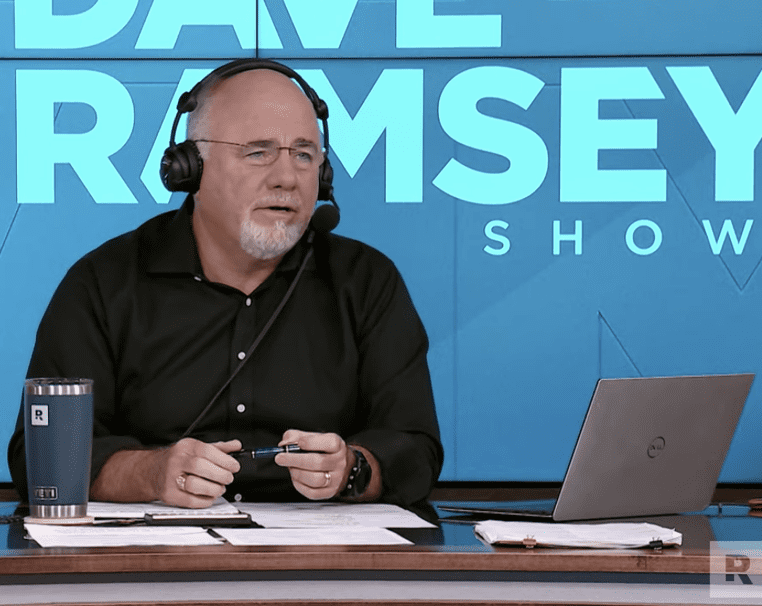
Now for something completely different: RNS scribe doxxed after investigating Ramsey Solutions

Now for something completely different: RNS scribe doxxed after investigating Ramsey Solutions

Religion reporters don’t usually have to fear for their lives, nor wonder if someone’s going to show up at their homes to exact some kind of revenge for an unfavorable story.

But there’s always a first time.

Several weeks ago, Bob Smietana, the veteran national reporter for Religion News Service, got to experience some very weird doxxing — not at the hands of some anti-religious conspiracy, but from devout Christians.

On Jan. 15, RNS published Smietana’s 4,150-word investigative piece on the workplace at evangelical financial guru Dave Ramsey’s $42 million headquarters in Franklin, Tenn., just south of Nashville. (The Tennessean, Nashville’s hometown newspaper, finally got around to running the piece on Jan. 28.)

That piece followed a Dec. 11 story by Smietana on Ramsey’s for-profit enterprise defying COVID-19 precautions such as wearing masks.

Put all that together and you had a non-flattering description of a workplace shaped by strict controls and perhaps even a personality cult. Here is what ran Jan. 15

NASHVILLE, Tenn. (RNS) — Dave Ramsey has spent the past three decades trying to build what he calls the best place to work in America.

From his headquarters south of Nashville, the evangelical Christian personal finance guru runs a media and live events empire that includes a popular national talk radio show. Tickets to workshops on topics such as “EntreLeadership” run from $3,000 to $10,000.

Thousands of churches around the country, meanwhile, host Ramsey’s “Financial Peace University,” a 9-week program built around his principles for handling money “God’s way.”

Several churches I’ve attended have indeed offered this program. Finances is something most pastors know nothing about, so they kick the task over to Ramsey, who’s making millions off these referrals.

But inside Ramsey Solution’s $42 million headquarters, there appear to be some problems, according to the kind of source one normally encounters in pieces of these kinds — former employees..

Ramsey’s intolerance for dissent has created what former employees call a cult-like environment, where leaders proclaim their love for staff and then fire people at a moment’s notice.


Please respect our Commenting Policy

Creative ways to cover abortion stories near Roe v. Wade anniversary: Here's a few ideas

Creative ways to cover abortion stories near Roe v. Wade anniversary: Here's a few ideas

I always get frustrated with the lack of original thought when it comes to covering abortion stories connected to the anniversaries of Roe v. Wade. Last week’s reporting for the 48th anniversary was no exception.

There was the predictable updates (which I am not criticizing), such as President Joe Biden’s intent to codify Roe v. Wade, which the Catholic-news website Crux covered here. And Fox News ran a piece about a restrictive abortion law passed by the state of Tennessee last summer , and how that has become ensnared in the courts.

Now I know that, with the inauguration on the same week and all, there wasn’t a lot of energy out there to come up with Roe v. Wade stories that covered new ground. But the stories are out there, folks. It’s just that many of those in the media don’t feel like ferreting them out. Let’s suggest a few:

(1) Since Black Lives Matter has been a major newsmaker this past year, how about a revisit on black abortion rates? About a year ago, the Arizona Capital Times ran this opinion piece by a black member of the state house of representatives. I’ll pull out one paragraph:

The impacts on our black communities are hard to fathom. According to the Guttmacher Institute, which generally supports abortion, in 2011 360,000 black babies were aborted. CDC statistics for 2011 show that 287,072 black deaths occurred from all other causes excluding abortion. By these numbers, abortion is the leading cause of death among blacks.

Shouldn’t there be more reporting on something that kills more black children than police brutality ever has? Can’t say I’ve seen a whole lot. This story is also linked to debates in the Black church about politics, social issues, family, etc.

(2) Personality profiles. The pro-choicers get loads of them, such as this 2018 Washington Post piece about a black gynecologist who went from being anti-abortion to pro-abortion rights — and why. This was Willie Parker. The Atlantic, however, went more creative and much deeper in a feature about a war in the abortion movement where Parker is being accused of sexual assault, and the nasty infighting that’s resulted from that. Insider politics is always an interesting read, must say.

But where are the profiles of folks like Lila Rose and Joan Andrews Bell and many other lesser-known folks?


Please respect our Commenting Policy

Evangelical 'power' and U.S. Capitol rioting: What about Franklin Graham and Falwell Jr.?

Evangelical 'power' and U.S. Capitol rioting: What about Franklin Graham and Falwell Jr.?

As a rule, I don’t use GetReligion posts to respond to feedback from readers. But several people — in emails, for the most part — have raised two crucial, and valid, questions about last week’s “Crossroads” podcast and post: “New York Times says 'Christian nationalism' tied to white 'evangelical power'.”

Actually, it’s the same question asked in two different ways. Hold that thought.

In the podcast and post, I argued that a much-read New York Times piece (“How White Evangelical Christians Fused With Trump Extremism“) did a fine job while offering illustrations that conspiracy theories such as the QAnon gospel have soaked into many pews and a few pulpits, especially in independent (and often small) charismatic and evangelical churches. My question was whether the feature provided solid evidence for this thesis:

The blend of cultural references, and the people who brought them, made clear a phenomenon that has been brewing for years now: that the most extreme corners of support for Mr. Trump have become inextricable from some parts of white evangelical power in America. Rather than completely separate strands of support, these groups have become increasingly blended together.

The key word was “power,” as in “some parts of evangelical power” becoming “inextricable” from the “most extreme” forms of Trump support — which has to be a reference to those who planned, not the legal National Mall rally for Trump, but the illegal armed attack on the U.S. Capitol.

In response, I wrote:

… Anyone who studies “evangelicalism” — white or otherwise — knows that we are talking about a movement based on the work of powerful denominations (this includes megachurches), parachurch groups, publishers (and authors) and major colleges, universities and seminaries.

This led to several people asking this valid question: What about the Rev. Franklin Graham? Others asked: What about Jerry Falwell, Jr., and Liberty University?

These are certainly examples of evangelical brand names — Graham and Falwell.


Please respect our Commenting Policy

Top 10 religion-news stories of 2020: Coronavirus pandemic touched almost everything

Some years, picking the No. 1 religion story is a real challenge.

This year? Not so much.

Give the global pandemic credit for making at least one thing easy during 2020.

Let’s count down the Top 10 stories, as determined by Religion News Association members (including yours truly). I’ll sprinkle a few links to related stories into the RNA summaries:

10. “Liberty University president Jerry Falwell Jr. resigns amid controversies including a risqué photo and an alleged sex scandal. Claims of sexual misconduct also made against late evangelical apologist Ravi Zacharias and Hillsong pastor Carl Lentz.”

9. “Pandemic-related limits on worship gatherings spur protests and defiance by Hasidic Jewish groups and evangelicals led by pastor John MacArthur and musician Sean Feucht. Supreme Court backs Catholic and Jewish groups' challenge to New York's limits.”

8. “A Vatican investigation into defrocked ex-cardinal Theodore McCarrick found that bishops, cardinals and popes failed to heed reports of his sexual misconduct. Debate ensues over the legacy of sainted Pope John Paul II, who promoted him to cardinal.”

7. “Dozens of nations decry what they term widespread human-rights abuses by China against predominately Muslim Uighurs and others in Xinjiang region, many in detention camps. New U.S. law authorizes sanctions against Chinese officials deemed complicit.”

6. “White evangelicals and other religious conservatives again vote overwhelmingly for President Trump, despite some vocal dissent. Protestants fuel his gains among Hispanic voters. Some religious supporters echo his denials of the election results.”

5. “Police, using tear gas, drive anti-racism protesters from Lafayette Square in Washington, clearing way for President Trump to pose for a controversial photo with a Bible at historic St. John’s Church. Episcopal, other faith leaders express outrage.”


Please respect our Commenting Policy