LGBTQ

Cardinal Pell's death puts spotlight on his words and arguments about Catholicism's future

Cardinal Pell's death puts spotlight on his words and arguments about Catholicism's future

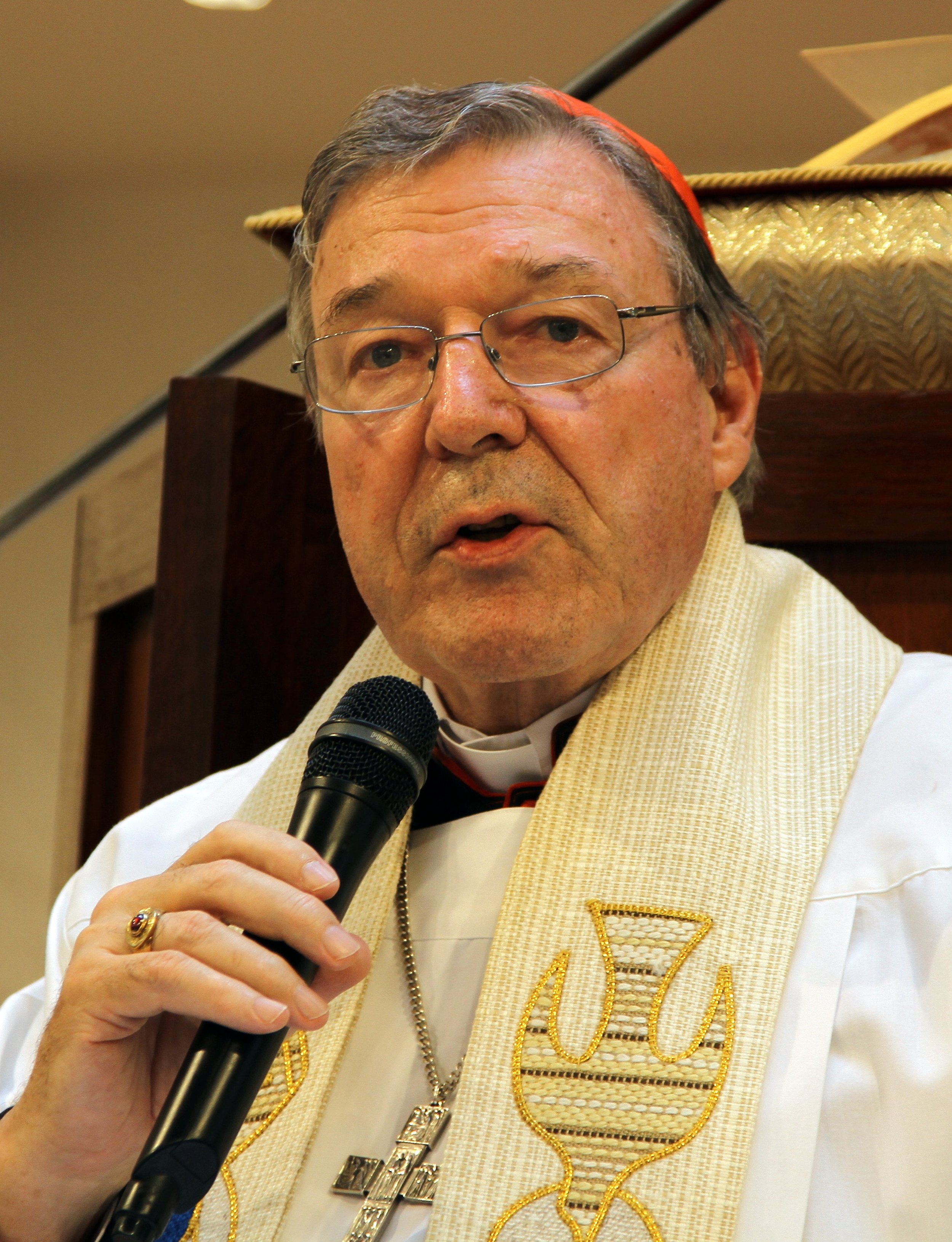
The Catholic church recently lost a giant. The death of Cardinal George Pell on Jan. 10 at the age of 81 was the literal loss of a giant — he stood at a towering 6-foot-6 and was once an Australian Rules Football player in his youth. But he was also a man who attracted both controversy and consternation.

Many remember Pell for what took place in the last chapter of his life — that of being found guilty of child sexual abuse in 2018. The cardinal won on appeal two years later, the convictions quashed by Australia’s High Court.

Pell also had some very real disagreements with Pope Francis regarding theology and the direction of the church in recent years — something that earned him headlines after his death calling him “divisive” and “controversial.”

Nearly two weeks after his death, Pell continues to be written about in both the secular and Catholic press. A lot of this coverage has been thin on reporting and loaded with commentary, conjecture and analysis. In fact, Pell’s death wasn’t only a reflection of the past, but where the church is headed in the future and what Francis’ papacy means.

It’s within this context — and some of the juicier revelations to come out once Pell died — that has kept journalists busy. Once again, the coverage is skewed heavily towards familiar arguments whether the church should stay true to beliefs regarding marriage and sex that go back 2,000 years or look to the future in order to mesh with the mores of the present.

It is through that prism that Pell has received coverage, especially after a secret memo Pell had penned was made public just days after his death.

Please respect our Commenting Policy

Gay Pride vs. Russian Orthodoxy: NHL star takes stand and journalists pounce in social media

Gay Pride vs. Russian Orthodoxy: NHL star takes stand and journalists pounce in social media

Let’s face it, the Ivan Provorov story had everything that Big Tech-era social warriors could have wanted — Gay Pride, religion, big-time sports, Russia and waves of hot-headed social-media commentary by journalists covering the story.

What it didn’t have, unless I missed it in my reading and search-engine work, was journalists connecting a few dots and spotting a possible role for a true villain — as in Russian ruler Vladimir Putin. Hold that thought.

If you missed this drama, here is the top of the Associated Press story what probably made it into many local newspapers with a headline something like this: “Flyers’ Provorov cites religion for boycott on Pride night.”

Flyers defenseman Ivan Provorov cited his Russian Orthodox religion as the reason he did not participate in pregame warmups when the team wore Pride-themed jerseys and used sticks wrapped in rainbow Pride tape.

The 26-year-old Provorov didn’t take part in the pregame skate with his teammates before their game against Anaheim … , when the Flyers celebrated their annual Pride night in celebration and support of the LGBTQ community. He played nearly 23 minutes in Philadelphia’s 5-2 victory.

“I respect everybody’s choices,” Provorov said after the game. “My choice is to stay true to myself and my religion. That’s all I’m going to say.”

Provorov declined to answer follow-up questions about his decision.

Flyers coach John Tortorella said Provorov “was true to himself and to his religion.”

“It’s one thing I respect about Provy, he’s always true to himself,” Tortorella said.

The AP story, quoting Flyers player Scott Laughton, hinted that the story probably wasn’t over.

Laughton said there would be more conversations ahead with Provorov, who moved from Russia to the United States as a teenager. He signed a six-year, $40.5 million contract before the 2019 season and won the Barry Ashbee Trophy as the Flyers’ outstanding defenseman in his rookie season, the youngest Philadelphia player to receive the honor.

Yes, Eastern Orthodoxy (I am a convert to this ancient Christian communion) defends centuries of Christian teachings and tradition when it comes to the sacrament of marriage and all forms of sex outside of marriage. This frequently creates clashes with the ever-evolving doctrines of the Sexual Revolutions.

These clashes draw relatively little ink, in part because Orthodoxy isn’t a major player, yet, in the marketplace of American religion news. However, Putin’s hellish invasion of Ukraine has changed that to some degree.


Please respect our Commenting Policy

About that Christian trans teen report -- Washington Post ignored all the inconvenient voices

About that Christian trans teen report -- Washington Post ignored all the inconvenient voices

A lot of folks in the religious world don’t know quite what to do with the trans movement. The holy writings of the monotheistic religions have nothing that directly address transsexuality, so it’s been a rough go for many clergy. However, Pope Francis has made some strong statements, which journalists seem to have forgotten.

When in doubt, religious authorities have likened it to homosexuality -– about which there is plenty of commentary in biblical writings and the Quran — but the shoe doesn’t completely fit. Nevertheless, media coverage has engaged transexuals as another sexual minority about whom traditional religious believers will eventually see the light and change their doctrines.

What’s ignored are deep questions on the nature of the creation and male- and femaleness being at the basis of one’s being, as opposed to the current “assigned at birth” term that implies that sex is more a social construct than a biological fact. DNA? That isn’t relevant for many.

If you’re going to write a story on religion and the gender wars, you need the theological chops to understand that for the major world religions the division of humanity into two sexes: male and female, goes to the beginning of creation and how this is a non-negotiable for several religions.

A story in the Washington Post that ran several weeks ago — “Transgender or devoutly Christian? An Iowa teen refuses to choose” — ignores that fact and debates about it. It’s also appropriate to ask: Is this a “news story,” a work of “analysis” or an editorial that openly argues one point of view, while ignoring others?

It is about an 18-year-old girl who now calls herself “Sid,” and presents as a boy. As the story opens, Sid and her family are listening to a sermon on YouTube.

People misgendered Sid at work, and teenagers posted mean comments on the TikTok page where he lip-syncs to “Pumped Up Kicks” and other pop songs. Even some of his fellow Christians were becoming more intolerant. Nearly 70 percent of White evangelicals think society has gone too far in accepting trans people, according to data the Pew Research Center released in the summer. That’s up from 61 percent five years ago.

“But Jesus was determined,” the pastor said. “He loves these people that will end up rejecting him. … Let’s have a prayer, shall we?”

Sid closed his eyes. He knew people thought you couldn’t be both Christian and trans, but as the country grew more divided, he found himself growing deeper in his faith. Maybe, he thought, he could do what Jesus had. He could move forward bravely in the face of danger, refuse to stop loving and spread a message of hope.

The story continues in that vein, chronicling the brave teenager who decides she’s trans at the age of 12.

Her family joins a Methodist church a year later. This is where the topic of sexuality, scripture and Christian tradition is openly addressed.


Please respect our Commenting Policy

Another day, another RNS First Amendment story with zero focus on the First Amendment

Another day, another RNS First Amendment story with zero focus on the First Amendment

Another day, another Religion News Service report about clashes between the First Amendment and the doctrines of the Sexual Revolution.

As is the norm, this news story about a crucial First Amendment issue does not include the term “First Amendment.”

As is the norm, this RNS story does not include material about how many, not all, private faith-based schools — they exist on left and the right — require students, faculty and staff to sign covenants in which they choose to join a community that is defined by a set of core doctrines that members promise to follow or, at the very least, not to attack.

It is always crucial for journalists, when covering these stories, to ask if a private school has a covenant of this kind. If one does not exist, then this radically strengthens the case of students who argue that the school is discriminating against them.

As is the norm, the RNS story includes one tiny bite of information from the bad-religion people, while framing the conflict in the arguments of the good-religion people. In this case, alas, the bad-religion people won. The headline: “Federal court dismisses LGBTQ students’ class-action discrimination lawsuit.

As always, let me stress that there is an important story here. Some Christian schools do a bad job — when recruiting and orienting students — of being honest about their covenants or handbooks. As I said, there are schools that do not have covenants, which means students (and parents) may not know what they are getting into when they choose to enroll at one of these private schools that are“voluntary associations” under the First Amendment. Hold that thought. Here’s the overture:

There is no legal remedy for LGBTQ students who claim they were discriminated against at their religious universities, an Oregon federal district court ruled in a high-profile case late Thursday (Jan. 12).

The judge dismissed the class-action lawsuit filed in March 2021 on behalf of about 40 students and former students at religious schools nationwide. The case, Hunter v. the U.S. Department of Education, claimed that the department failed to protect LGBTQ+ students at religious schools from discrimination.


Please respect our Commenting Policy

Why do 21st Century Christians favor, or oppose, same-sex marriage? (Clue: doctrine)

Why do 21st Century Christians favor, or oppose, same-sex marriage? (Clue: doctrine)

THE QUESTION:

Why do 21st Century Christians favor, or oppose, same-sex marriage?

THE GUY’S ANSWER:

Just before Christmas, a top Donald Trump-loving conservative on New York City talk radio professed disbelief that some Americans persist in opposing same-sex marriage because of some book (unnamed) written ages ago.

Obviously, The Guy again realizes that journalism has important work to do explaining the basics of centuries of Christian thinking, both con and pro.

The teaching against gay and lesbian sexual relationships stood essentially unquestioned for 2,000 years but now that’s changing.

Still, on the global level some 2 billion people belong to Catholic, Orthodox, conservative Protestant, and Independent indigenous churches where there’s no prospect of any major change, though individual members dissent. (The same for a billion Muslims.)

In the U.S., the traditionalists are on defense with gay and lesbian marriage legalized by the U.S. Supreme Court and now Congress. They seek recognition by courts and government agencies of their conscience claims, hope to avoid penalties, and worry that ostracism from polite society may lie ahead.

Many “mainline” Protestant churches in North America and Western Europe recently enacted historic breaks with tradition, approving same-sex marriages for clergy and parishioners. U.S. landmarks: Change was first formally proposed to Presbyterians in 1968 and the United Methodist Church in 1972. Evangelical Lutheran Church in America Lutherans published four major books advocating change between 1983 and 1999. The Episcopal Church consecrated its first openly gay bishop in 2003, deepening an international divide among Anglicans.

Among resulting walkouts, the biggest may be the United Methodist one that is finally erupting.

Protestant disputes always center on the Bible


Please respect our Commenting Policy

Here we go again: Hollywood doesn't 'get' America, so maybe religion is part of that?

Here we go again: Hollywood doesn't 'get' America, so maybe religion is part of that?

Every decade or so, power players in Hollywood discover that there are millions of Americans who do not mind buying tickets to see movies that contain overtly religious symbols, themes and even characters.

I’ve been covering this story since the 1980s. It’s fascinating how new generations of reporters manage to work up a sense of culture shock about this.

For example, consider that much-discussed Atlantic feature back in 2005 that ran with this headline: “Can Jesus Save Hollywood?

Another five or six years later, the discussion of niche-Christian entertainment was still creating buzz. The conservative interfaith journal First Things ran a provocative piece with this headline: “Is ‘Christian’ the new ‘Gay’?” Sociologist D. Michael Lindsay, at that time the president of Gordon College, responded to a question about that equation:

This comes from a quote that one woman who I interviewed in Hollywood recounted to me a story that she had where the conversation basically was a Hollywood producer telling her that it had become new and interesting for committed Christians to “come out” in Hollywood. And they actually used that language of “coming out” where one publicly identifies in this way. I think what it really reflects is although historically Christianity has been a very powerful force in this country, within the pockets of elite cultural life — in Hollywood, at universities like Harvard and Yale and the rarefied heights of arts and entertainment — being a deeply committed person of faith, whatever that faith tradition may be, is seen as unusual or odd. There’s pressure when you’re in those high positions not to be too public about your faith and certainly not a faith that is evangelistic in approach because that’s seen as overbearing or narrow-minded.

Like I said, this is “old” news. This trend will go on and on — because America is basically a red v. blue puzzle these days and it’s hard to ignore the evidence that “pew gap” statistics play some role in that.

That David French guy — much hated by Trumpian conservatives and lots of illiberal progressives — had a provocative summary of the situation in his must-read book “Divided We Fall: America's Secession Threat and How to Restore Our Nation.” Here is a summary of that French thesis from a new essay I wrote for the journal Religion & Liberty about the death of the old-school American Model of the Press:

The bottom line: Americans are divided by their choices in news and popular culture, choosing to live in protective silos of digital content. America remains the developing world’s most religious nation, yet its secularized elites occupy one set of zip codes, while most religious believers live in another. These armies share no common standards about "facts," "accuracy" or "fairness." 

 “It's time for Americans to wake up to a fundamental reality: the continued unity of the United States cannot be guaranteed,” wrote French. At this moment, “there is not a single important cultural, religious, political, or social force that is pulling Americans together more than it is pulling us apart.”

This brings me to a new City Journal piece with this headline: “Can Capitalism Save Hollywood? The gulf between elites and audiences is eroding profits throughout entertainment and news media — but signs of correction are emerging.”


Please respect our Commenting Policy

Of course the fall of Roe was 2022's top religion-beat story (including those church attacks)

Of course the fall of Roe was 2022's top religion-beat story (including those church attacks)

In the years before Roe v. Wade, one of America's largest Christian flocks struggled to find a way to condemn abortion, while also opposing bans on abortion.

A 1971 resolution said: "Some advocate that there be no abortion legislation, thus making the decision a purely private matter between a woman and her doctor" while others "advocate no legal abortion," permitting it "only if the life of the mother is threatened." Thus, it backed legislation allowing "abortion under such conditions as rape, incest, clear evidence of severe fetal deformity, and carefully ascertained evidence of the likelihood of damage to the emotional, mental, and physical health of the mother."

After the 1973 Roe decision, the same body stressed the "limited role of government" in abortion questions, while supporting a "full range of medical services and personal counseling" for expectant mothers.

That was the Southern Baptist Convention -- before its conservative wing gained control, creating a powerful cultural force against abortion rights.

Churches were always active in abortion debates, with some embracing centuries of doctrine on the sanctity of human life, while overs became strategic abortion-rights supporters. Thus, journalists in the Religion News Association named the Supreme Court decision to overturn Roe v. Wade as the year's top American religion-news story. Now churches -- left and right face -- face the challenge of proclaiming certainties while many states seek compromise.

Stressing politics, the RNA stated: "The Supreme Court overturns the 1973 Roe v. Wade precedent and says there is no constitutional right to abortion, sparking battles in courts and state legislatures and driving voters to the November polls in high numbers. More than a dozen states enact abortion bans, while voters reject constitutional abortion restrictions in conservative Kansas and Kentucky and put abortion rights in three other states' constitutions."

This poll avoided other religion-news elements of this story, such as acts of violence against churches -- especially Catholic parishes -- and crisis pregnancy centers, ranging from vandalism to arson, from the interruption of sacred rites to the destruction of sacred art. Protestors marched at the homes of SCOTUS justices and police arrested an armed man who threatened to invade the house of Justice Brett Kavanaugh.

This year, the RNA added an international list, selecting Russia's war against Ukraine as the top story, in part because of bitter tensions between the Russian Orthodox Church and the new Orthodox Church of Ukraine, backed by the United States and the Orthodox Ecumenical Patriarchate in Turkey.


Please respect our Commenting Policy

What's up in 2023? The Guy offers a first draft of a religion-beat agenda

What's up in 2023? The Guy offers a first draft of a religion-beat agenda

The new year could be climactic for two aspects of LGBTQ issues, first, the rights of religious and conservative dissenters within liberalized western culture, and second, the ongoing conflicts within church groups.

What should journalists be prepared to cover?

By June, the U.S. Supreme Court will decide the 303 Creative case, in which a website designer — based on First Amendment claims — seeks exemption from Colorado’s anti-discrimination law to avoid work on postings that celebrate same-sex weddings (background here). The Court might broadly define what rights various forms of religious traditionalists have in a host of legal conflicts facing e.g. U.S. religious colleges, social-service agencies and individual businesses now that same-sex marriage is legalized.

Inside a specific religion brand, this could be a pivotal year for the global Anglican Communion with its 46 national branches and some 85 million baptized members. A mid-January meeting of bishops in the “mother” Church of England may well decide dioceses can permit same-sex weddings. That historic change would then need approval from clergy and lay delegates at the February 6–9 General Synod.

Such a move would add explosive potential to the April 17-21 meeting in Kigali, Rwanda, of the Global Fellowship of Confessing Anglicans (“GAFCON”), long vexed by liberal moves in England, the United States and elsewhere in declining First World churches. GAFCON unites the heads of 10 Anglican branches, three of which alone (Kenya, Nigeria, Uganda) encompass half the world’s Anglicans. GAFCON’s chairman, Archbishop Foley Beach (admin@anglicanchurch.net and 724-266-9400), heads a church of conservatives who’ve left the U.S. Episcopal Church and Anglican Church of Canada.

Already, key archbishops have boycotted global Anglican confabs, continuing a slow-motion breakup that began decades ago. Will the maneuvers in England and elsewhere provoke a huge, definitive break from the London-based Anglican Communion by churches in GAFCON and the related Global South Fellowship of Anglican Churches?

The United Methodist Church could be on the brink of the biggest U.S. Protestant split since the Civil War. That’s a huge story at the local, regional, national and global levels.


Please respect our Commenting Policy

Five Catholic storylines journalists will need to follow closely as we enter 2023

Five Catholic storylines journalists will need to follow closely as we enter 2023

There are only a few days left to go in 2022. It was a busy news year — loaded with stories with strong religion angles.

Many of those stories had Catholic angles that were important to highlight and report on. A year ago, I took a look at the top Catholic angles journalists needed to focus on heading into 2022. I was prescient in my outlook, highlighting the Supreme Court decision regarding abortion among the top things to focus on.  

This is what I wrote a year ago looking ahead to 2022:

Issues around politics and religion will likely dominate once again in 2022. The abortion issue and a pending Supreme Court decision regarding access to it will be a big story in the coming year. The Catholic church, a major part of the abortion debate in this country for decades, will play a major role in news stories that will be written over the coming months.   

As we prepare to ring in 2023, I want to highlight five big storylines and trends to look for over the next 12 months:

(5) Catholic politicians vs. bishops

The culture war that has embroiled many societies, especially in the United States and now Western Europe, will continue to pit Catholic bishops and politicians. It will be especially pronounced when it involves Catholic lawmakers.

We’ve already seen this with President Joe Biden and outgoing House Speaker Nancy Pelosi. Both are practicing Catholics who have butted heads with many bishops who keep noting public remarks and actions by these politicians that directly clash with centuries of Catholic doctrines on a great number of moral issues.

The U.S. Conference of Catholic Bishops recently elected a new president. As conference president, Archbishop Timothy Broglio of the Archdiocese of the Military Services will have to focus on many hot-button issues. Above all, fights over issues surrounding abortion and contraception will continue, including questions about whether politicians who openly clash with church teachings should receive Holy Communion.


Please respect our Commenting Policy