LGBTQ

Podcast: Much to learn in ongoing cases with cannabis church and yet another Christian baker

Podcast: Much to learn in ongoing cases with cannabis church and yet another Christian baker

A cannabis church (It’s California) keeps fighting for freedom of worship.

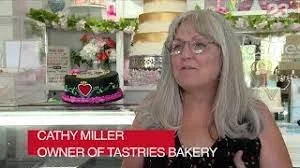
Another Christian baker wins what may be a temporary (It’s California) First Amendment victory in her fight to stay in business, even though she declined to create a one-of-a-kind, artistic wedding cake for a same-sex couple.

What connects these two stories? That was the topic at the heart of this weeks “Crossover” podcast (CLICK HERE to tune that in), which was recorded this week while I was on grandfather duty. This post is a day late because I’ve been driving back to East Tennessee and it’s really hard to write in a car in cross winds on the High Plains.

The connecting link in the podcast is the Religious Freedom Restoration Act of 1993 — or RFRA for short. This was a crucial piece of liberal (in the old sense of the word) church-state law backed by a stunningly broad coalition of religious and legal groups during the Bill Clinton administration. Try to imagine: There were only three “nay” votes in the U.S. Senate. Would that happen now? Clearly, the answer is “nay.’

These days, many reporters act as if “RFRA” was some kind of dirty, four-letter term that cannot be spoken in elite newsrooms. If you want some additional info on this syndrome, click here (“Covering a so-called 'religious liberty' story? Dig into religious liberty history”) or here (“Religious Left returns to RFRA: Washington Post explores a crucial Florida abortion showdown”).

The key is that RFRA doesn’t guarantee a victory for citizens who claim that their First Amendment rights have been violated. RFRA states that people have a right to argue that case and that — following some guidelines that have developed over the years — courts have to take these arguments seriously.

So let’s start with this Religion News Service headline: “Shuttered cannabis church takes fight to reopen to California Supreme Court.” Here’s the overture:

A cannabis church in Southern California — which was shut down by the county of San Bernardino over accusations it was illegally functioning as a dispensary — is taking its fight to reopen to the state Supreme Court, arguing that it uses cannabis for religious healing.
Please respect our Commenting Policy

Podcast: 'Culture Wars' again, as Muslims protest LGBTQ advances in public schools

Podcast: 'Culture Wars' again, as Muslims protest LGBTQ advances in public schools

If you read newspapers or magazines in America, you have heard the term “culture wars.”

If you have read GetReligion for any time at all, then you probably know that, in the work of sociologist James Davison Hunter, the term “culture wars” was given a very specific definition that rarely shows up in news coverage.

In the early 1990s, Hunter published a bestseller entitled, “Culture Wars: The Struggle To Control The Family, Art, Education, Law, And Politics In America.” The term leapt into news jargon and, as often happens, it became totally politicized.

What was Hunter talking about? Hold that thought, because we will come back to it. We will need to apply it to a story that’s in the news right now, a story that many will describe as a “culture wars” fight. We discussed all of this during this week’s “Crossroads” podcast (CLICK HERE to tune that in).

Let’s start with this local headline from the Detroit Free Press: “LGBTQ and faith communities struggle for unity in Dearborn, Hamtramck.” What we have here is one of those stories in which conservative religious parents are making a stand in protest LGBTQ education efforts — and some other gender trends — in their local schools.

Sound familiar? But there’s a twist. This time, the evangelical Protestants have what journalists clearly consider some unlikely parters. Here is the (long) overture to the Detroit story, which went national:

The protest began with a prayer.

On a Sunday afternoon last month in Dearborn, Nagi Almudhegi took the stage to address the crowd gathered outside Henry Ford Centennial Library to demonstrate against some LGBTQ books in Dearborn Public Schools' libraries.

"I'd like to start off first of all with a prayer," Almudhegi said. "And I'm going to read, recite the chapter on Fatiha (opening of Quran) in Arabic and then I will read the English translation."

As he spoke, some in the crowd held up signs denouncing books and educational materials in the public schools that they believe are too explicit for children.


Please respect our Commenting Policy

Catholic voters and the midterm elections: Mainstream news blitz ignores major voter bloc

Catholic voters and the midterm elections: Mainstream news blitz ignores major voter bloc

We are in the middle of another election season and in full mud-slinging mode.

Elections are an annual occurrence, to one degree or another, but the vote that will dominate this Nov. 8 are known as the midterms. It’s when a majority of seats in both the House and Senate are up for grabs, allowing for the party in the minority (in this case the Republicans in both chambers) to potentially becoming the majority. Midterm elections are also traditionally viewed as referendums on presidents.

This takes us to the Catholic vote and its impact on the outcome. This is a topic that is receiving little or no mainstream press coverage. As we say here at GetReligion: “Hold that thought.”

While inflation and crime will certainly be on the minds of most as they cast ballots, “culture war” issues are very much alive and well. Abortion, especially after this June’s Supreme Court decision that once again made it a state issue after Roe v. Wade was rolled back, will certainly be an issue.

There have been many, many news stories about how the abortion issue will motivate those on the political left to come out and vote following the Dobbs decision. The Washington Post, on Oct. 8, reported on the issue in a news feature that appeared under the headline, “Women powered Democrats in the 2018 midterms. Will they again in 2022?”

After opening with two Colorado women, Robin Kupernik and Elizabeta Stacishin, who had joined forces in 2016 to combat Donald Trump, who was elected to the presidency that year. This is the feature’s thesis:

In the 2018 midterm elections, women like Kupernik and Stacishin were part of a women-led army that changed politics. Women who had never been particularly active politically worked phone banks, wrote postcards and sent text messages to voters. They were repulsed by Trump and determined to do something about it.

They met in small groups, marched in the streets and went door-to-door to encourage people to vote for Democrats. Their passions were palpable. Many of the congressional candidates they were supporting flipped Republican-held seats, all part of a political tide strong enough to flush the GOP from control of the House, dealing Trump a major defeat. The Pew Research Center has estimated that 62 percent of White women with college degrees backed Democrats for the House four years ago.

That has become the major press-coverage storyline of the midterms.


Please respect our Commenting Policy

Under-covered story in tense times: Counseling with transgender Christian believers

Under-covered story in tense times: Counseling with transgender Christian believers

Experts at UCLA estimate that 0.6% of American adults currently identify as transgender.

Like other writers covering religion, politics and culture, The Religion Guy has accumulated a bulging file on recent transgender conflicts, which go far beyond grade-school curriculums or women’s shelters, locker rooms and athletics. The major question facing practitioners, legislators and moral theologians is how the age-old “do no harm” principle applies to the greatly increasing numbers of teens under 18, especially girls, seeking transition via puberty blockers, hormone treatments and surgery.

A planned Memo analyzing those developments has been supplanted by a new book, “Gender Identity and Faith: Clinical Postures, Tools and Case Studies for Client-Centered Care” (InterVarsity Press) by Mark A. Yarhouse and Julia A. Sadusky, who are evangelicals and licensed clinical psychologists. Their work turns journalistic attention from the socio-political debates to the situations of transgender individuals, especially those raised in traditional forms of religious faith.

A blurb from Laura Edwards-Leeper, who chairs the child and adolescent committee of the World Professional Association for Transgender Health, considers this book “essential” for mental health providers. But The Guy thinks it’s equally pertinent for individual clients, parents, pastors and churches (and journalists!) seeking understanding.

Even The Christian Century thinks that though the book “will at times disappoint” fellow religious progressives, it may “prove an important harm-reduction tool and entry point for conservatives who are struggling to join the conversation.”

The bottom line: Considering the timeliness and difficulty of the topic, The Guy sees it as a Book of the Year prospect in religion, and a compelling topic for journalism.


Please respect our Commenting Policy

AP covers the new Pentecost in United Methodist life, without mentioning Ms. Penny Cost

AP covers the new Pentecost in United Methodist life, without mentioning Ms. Penny Cost

As I have stressed many times, I totally understand the challenges that religion-beat professionals face when attempting to do short, balanced, accurate hard-news stories about the 40 years of warfare inside the United Methodist Church over issues of marriage, sex, biblical authority and some core Christian doctrines about salvation and Christology.

I understand because I have been covering this story since my arrival at the old Rocky Mountain News (#RIP) back in 1983, with the church-discipline case of an openly gay UMC pastor, the Rev. Julian Rush. The progressive Rocky Mountain Annual Conference backed Rush and, well, the rest is history.

The biggest challenge in this story is helping readers understand why the Methodists who are defending the UMC Book of Discipline have decided to hit the exit doors, even though they have — for several decades — been winning the key votes at the global level of the denomination.

The problem is that the church establishment here in North America is actually running the show and the center-left leaders want to tweak the Discipline to allow more freedom for doctrinal progressives, while assuring mainstream Methodists that nothing will change at the local level unless their congregation wants it to change. See this recent post: “Why are United Methodists at war? Readers need to know that sexuality isn't the only fault line.”

The Associated Press recently shipped a long feature that tries To Explain It All, and there is much to praise in this piece. Here is the stating-it-mildly headline: “United Methodists are breaking up in a slow-motion schism.” Here is a long, long, essential piece of this feature that shows the complexity of these issues:

In annual regional gatherings across the U.S. earlier this year, United Methodists approved requests of about 300 congregations to quit the denomination, according to United Methodist News Service. Special meetings in the second half of the year are expected to vote on as many as 1,000 more, according to the conservative advocacy group Wesleyan Covenant Association.

Scores of churches in Georgia, and hundreds in Texas, are considering disaffiliation. Some aren’t waiting for permission to leave: More than 100 congregations in Florida and North Carolina have filed or threatened lawsuits to break out.

Those departing are still a fraction of the estimated 30,000 congregations in the United States alone, with nearly 13,000 more abroad, according to recent UMC statistics.

But large United Methodist congregations are moving to the exits, including some of the largest in Arkansas, Georgia, Louisiana, Oklahoma and Texas.

The flashpoints are the denomination’s bans on same-sex marriages and ordaining openly LGBTQ clergy — though many see these as symptoms for deeper differences in views on justice, theology and scriptural authority. The denomination has repeatedly upheld these bans at legislative General Conferences, but some U.S. churches and clergy have defied them.


Please respect our Commenting Policy

Book bans: Are these fights about a Christian nationalist plot or something else entirely?

Book bans: Are these fights about a Christian nationalist plot or something else entirely?

Ever since the Jan. 6, 2021, attempted takeover of the U.S. Capitol, journalists have been trying to find some kind of national nexus for “White Christian nationalism.”

The term, which I’m putting in quotes because its meaning is all over the map, needed a locale.

About two months ago, national media thought they had one: tiny Bonners Ferry, Idaho, where there was a dust-up between a local library and a cadre of locals who wanted certain books banned. That the locale was — in the popular imagination — is Ground Zero for conservative crazies, was no surprise.

A CNN story made the case for the book burners being newcomers with an agenda:

And who are these newcomers she speaks of? Well, we reached out to a number of the people pushing the recall and demanding that books be banned. None of them would talk to us.

But they have made their feelings known at library board meetings. “Things need to change,” one man told the board at a meeting in late August. “Otherwise, you bring curses upon yourselves. Period. From the Most High.”

Definitely a religion angle there.

And at a meeting in July, Donna Capurso, a local realtor, said this: “My job is to protect our kids from sexual deviants, who will be drawn to our library if inappropriate sexual material is on our library shelves.” Capurso is an occasional contributor to a website called Redoubt News, which caters to a growing group here in northern Idaho of self-described, “God-Fearing, Liberty-Loving Patriots.”

“The American Redoubt” is a term coined in 2011 by a Christian survivalist. The idea is that Christian patriots should retreat here from modern America to live their truth and defend themselves. The Redoubt is a large chunk of land encompassing all of Idaho, Montana and Wyoming as well as eastern slivers of Washington and Oregon.

What’s curious now is that the right-wing banned books movement (as opposed to Big Tech leaders who fight the sales of conservative books) has spread around the country — with some extra PR poured on the flames during the recent Banned Books Week.


Please respect our Commenting Policy

Yes, Southern Baptists are talking about '60 Minutes' (while Ryan Burge keeps doing the math)

Yes, Southern Baptists are talking about '60 Minutes' (while Ryan Burge keeps doing the math)

One thing is certain, if you follow political scientist Ryan Burge on Twitter. You are going to read quite a few things that you agree with and quite a few things with which you will disagree.

Here’s the key to that statement: It really doesn’t matter who “you” are. You can be a liberal mainline Protestant and you will read things that please you and things that infuriate you. Ditto, if you are Southern Baptist Convention leader.

If you are a religious “none,” in Pew Research Center terms, then Burge is mapping your life and beliefs, one chart after another. If you are a nondenominational, independent evangelical/charismatic leader, Burge was one of the first researchers who grasped that your world is now the fastest growing corner of the marketplace of American religion.

Burge makes many Southern Baptists mad. He also makes many Episcopalians and liberal mainliners mad, even though Burge is, himself, a progressive Baptist pastor/thinker as well as a political science professor at a state university. I would imagine, however, that leaders on the right and the left are learning that they are going to have to study the trends shown in all of those Burge charts on Twitter (and in his books).

To be honest with you, I can’t remember when I spotted Burge’s byline and I’m not sharp enough, in terms of computer skills, to spot the oldest item in the nearly 4,000 items that show up in a Google search for “Ryan Burge” and “Terry Mattingly.” I’m guessing 2018 or so. However, Burge has been cooperating with GetReligion for several years now, with me retweeting, oh, hundreds of his tweets with a “Yo. @GetReligion” slug. He also has allowed me to re-publish some of the essays he has written for the Religion in Public weblog (and for Religion Unplugged).

I bring all of this up for two reasons.

(1) Many news consumers who continue to follow legacy media may have seen him featured last night in a “60 Minutes” feature about the Rev. Bart Barber, the new president of the Southern Baptist Convention.

(2) Burge and I recently agreed on the format for a new GetReligion feature that we will call “Do the Math,” in which he will take four or five of his data-backed tweets and then connect them to spotlight trends that journalists need to follow.


Please respect our Commenting Policy

Plug-In: From Loretta Lynn to Aaron Judge, the week's top nine religion newsmakers

Plug-In: From Loretta Lynn to Aaron Judge, the week's top nine religion newsmakers

A country music queen. A home run king.

A former White House press secretary. A current U.S. Supreme Court plaintiff.

They are among nine key religion newsmakers who made headlines this past week (in alphabetical order):

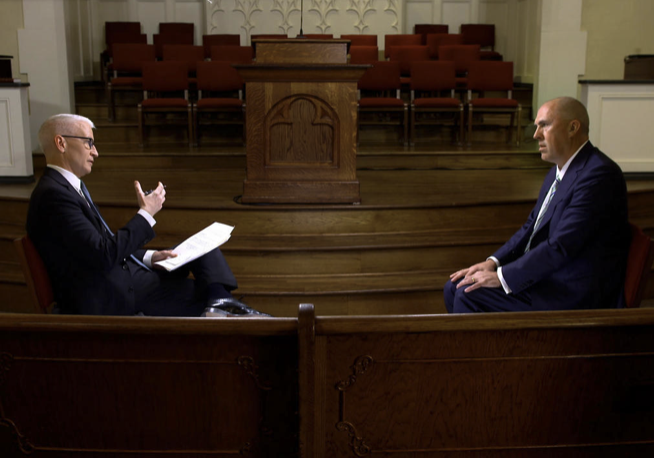
Bart Barber: I’m showing a little bias here because I wrote this week’s Associated Press profile of Barber, a small-town Texas pastor and rancher elected to lead the 13.7 million-member Southern Baptist Convention at a time of major crisis. Barber will be featured Sunday night in a “60 Minutes” interview with Anderson Cooper.

Chris Jones and Sarah Huckabee Sanders: Jones is the Democrat and Sanders the Republican in Arkansas’ gubernatorial race. “With two preachers’ kids and a pastor in the race, Arkansans are poised to elect a governor who can sing hymns by heart and quote Scripture from memory,” the Arkansas Democrat-Gazette’s Frank Lockwood writes as he delves into faith and politics. (Sanders served as former President Donald Trump’s White House press secretary from 2017 to 2019.)

Aaron Judge: The New York Yankees star made history when he hit his 62nd home run of the season Tuesday night. Prayer and faith played a key role during Judge’s chase, reports the Deseret News’ Ryan McDonald.

Loretta Lynn: The country music superstar and Kentucky coal miner’s daughter died Tuesday at age 90. “She really was serious about her faith and a devout member of the church,” retired minister Terry Rush, who maintained a close friendship with Lynn, told me.

John Henry Ramirez: The Texas killer fought all the way to the U.S. Supreme Court to have his pastor lay hands on him and pray during his execution. “Just know that I fought a good fight, and I am ready to go,” Ramirez said before his death by lethal injection Wednesday, as noted by The Associated Press’ Juan A. Lozano and Michael Graczyk.

Lorie Smith and Jack Phillips: The two claim in an opinion piece for USA Today that Colorado is trampling on their First Amendment rights as Christian artists, and they’re fighting back. Website designer Smith’s case is headed to the U.S. Supreme Court, the Deseret News’ Kelsey Dallas reports.


Please respect our Commenting Policy

English-language coverage of Italian elections packs lots of Meloni media baloney

English-language coverage of Italian elections packs lots of Meloni media baloney

I have received more texts than usual the past two weeks. Most of them were about a rather unusual subject — Italy’s national elections. I say unusual subject because it’s not every day that this subject is discussed among my American friends.

Many readers of this space may know that I am the son of immigrant parents who moved to the United States from Italy. As a result, I am bilingual (I read Italian news sites almost as voraciously as American ones) and also a dual citizen, meaning I can vote in Italian elections.

But the texts I was getting was coming from a place of fear. They feared that the center-right would win the election (they ultimately did on Sept. 25) and bring Italy back 100 years to an era marked by fascism.

This sentiment came as a result of the English-language press (predominantly the United States and England) that framed the political rise of Giorgia Meloni as threat to democracy. It was this skewed news coverage that got me to write about her twice in pieces for for Religion Unplugged, which included an analysis piece last week on what her election means and the Vatican’s reaction.

Running on a “God, homeland and family” platform, the 45-year-old was labeled a “neo-fascist” and “hard right” by The New York Times largely because of her traditional Catholic views regarding marriage and her anti-abortion views. The Times hailed Meloni’s election this way:

ROME — Italy turned a page of European history on Sunday by electing a hard-right coalition led by Giorgia Meloni, whose long record of bashing the European Union, international bankers and migrants has sown concern about the nation’s reliability in the Western alliance.

Results released early Monday showed that Ms. Meloni, the leader of the nationalist Brothers of Italy, a party descended from the remnants of fascism, had led a right-wing coalition to a majority in Parliament, defeating a fractured left and a resurgent anti-establishment movement.

It will still be weeks before the new Italian Parliament is seated and a new government is formed, leaving plenty of time for political machinations and horse trading in a coalition with major differences. But Ms. Meloni’s strong showing, with about 26 percent of the vote, the highest of any single party, makes her the prohibitive favorite to become the country’s first female prime minister.

The opening of this news story reads more like an opinion piece, loaded with adjectives such as “hard-right coalition.”

This was parroted by other U.S. newspapers as well as major television networks and cable news channels.


Please respect our Commenting Policy