LGBTQ

Why are United Methodists at war? Readers need to know that sexuality isn't the only fault line

Why are United Methodists at war? Readers need to know that sexuality isn't the only fault line

If you read most of the mainstream news coverage about chaos inside the United Methodist Church, then you know that this war centers on LGBTQ issues.

Readers who use niche websites offering the views of conservative United Methodists, in the United States and around the world, will learn that the war is about sex, salvation, biblical authority and core doctrines in ancient Christian creeds. Hold that thought.

Before we look at recent events in the divided United Methodist Church, let’s consider an important political-science term — “condensation symbol” — that journalists may want to ponder. In a 2021 post (“Queer Santa As A Condensed Symbol Of Progressivism”) — blogger Rod “Live Not By Lies” Dreher offered this material from a reader:

A condensation symbol is “a name, word, phrase, or maxim which stirs vivid impressions involving the listener’s most basic values and readies the listener for action,” as defined by political scientist Doris Graber. Short words or phrases such as “my country,” “old glory” “American Dream,” “family values,” are all condensation symbols because they conjure a specific image within the listener and carry “intense emotional and effective power.” … Graber identified three main characteristics of condensation symbols, as they: (1) Have the tendency to evoke rich and vivid images in an audience. (2) Possess the capacity to arouse emotions. (3) Supply instant categorizations and evaluations.

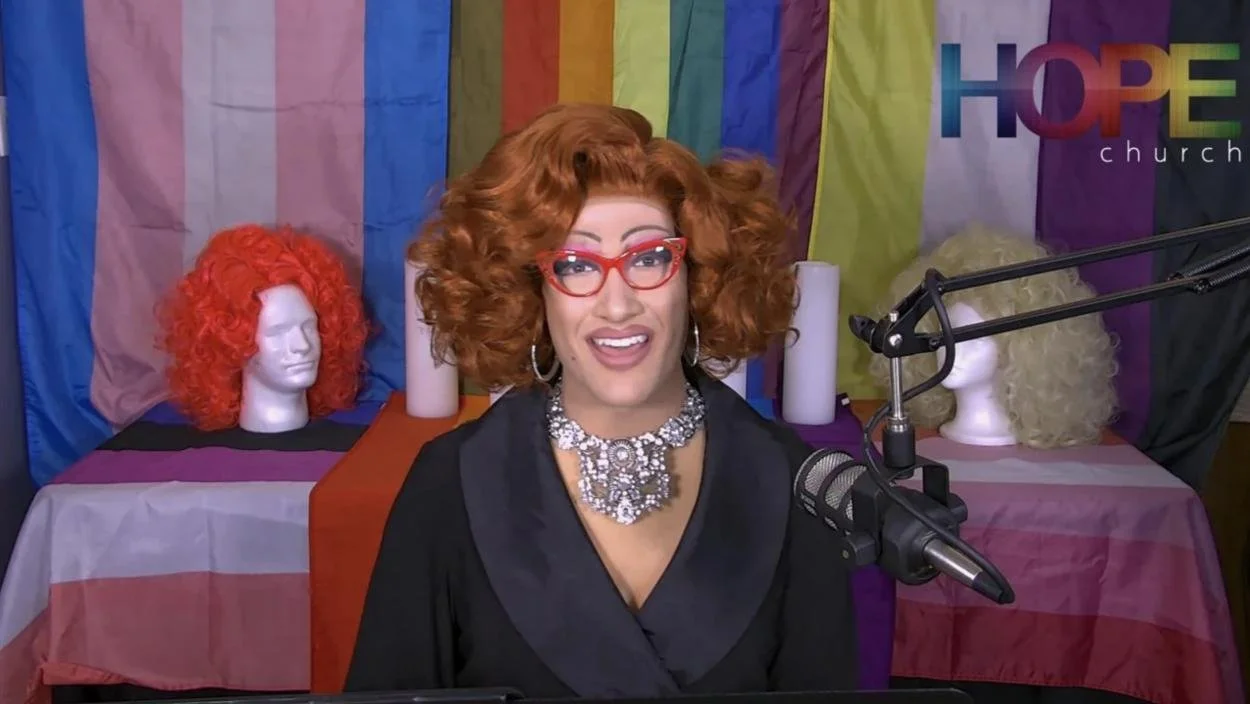
With that in mind, consider the ministry of Isaac Simmons — currently associate pastor at Hope United Methodist Church in Bloomington, Ill. — who has been accepted as a candidate for UMC ordination. Simmons (they/them) is best known as the drag-queen preacher Penny Cost.

At first glance, it would appear that Penny Cost is a perfect example of the LGBTQ issues causing the UMC split. However, I would argue that Simmons is a “condensed symbol” of the wider concerns of the global United Methodist coalition that wants to retain and defend the denomination’s current doctrines on a host of issues.

Consider the following from The American Spectator piece with this headline: “Methodist Church’s First Drag Queen Pastor: ‘God Is Nothing’.” This is, of course, a conservative publication. However, the following passage focuses on direct quotes from a new slam poem posted online by Penny Cost:

“God is nothing,” the self-described “dragavangelist” repeats throughout the poem, adding, “the Bible is nothing” and “religion is nothing.” In the end, he concludes God and the Bible are nothing “unless we wield it into something.”

“God must be f***ing nothing,” he says, “if her boundaryless, transubstantiated bodies of color are run down, beaten, and strewn in the streets of America instead of ruling the runways of life.”

Please respect our Commenting Policy

Abstinence may be 'in' again, but don't expect big-time media to give it a fair hearing

Abstinence may be 'in' again, but don't expect big-time media to give it a fair hearing

Some three weeks have passed since the Supreme Court dumped Roe v. Wade and the torrent of angry pro-abortion-rights pieces fills the pages of nearly every news publication out there.

Outlets like the New Yorker, for instance, just keep pumping them out at a rate that you have to wonder when they turned into the public voice of Planned Parenthood. The editors are, of course, preaching to their choir of faithful readers.

I’ll also say that the anti-abortion folks have been totally unprepared for the never-ending waves of attacks and, yes, some of the lies that have followed the ruling. I’m seeing precious few of their opinions out there in the secular media. Maybe they’re being blocked; hard to tell.

The underlying assumption of the argument is the gospel of the Sexual Revolution — people have a right to sex whenever, however, wherever and with whomever. This right is a modern invention. Most societies attempted to chaperone their teens and encouraged their offspring married young. They also punished adultery quite severely. One’s ‘right’ to sex was hedged in enormously.

Today, the thought of limiting one’s desires is equal to an obscenity in our culture, which is why the antidote to abortion –- abstinence -– draws such howls of protest. How dare anyone tell us no? And so an Religion News Service led a story on abstinence with these paragraphs:

(RNS) — In front of a room of middle schoolers, a youth minister in rural North Carolina scribbles “hand-holding” and “kissing” on the bottom of a whiteboard. He then writes “intercourse” on the top of the board. Between the gap, he draws a thick line, indicating that sex before marriage — anything more than kissing, actually — crosses a literal line of purity.

It’s a scene the Rev. Amelia Fulbright, now the transitional pastor of the Congregational Church of Austin, recalls from her childhood, when she attended a ministry-led sex-ed course.

The reporter chose someone from a liberal denomination, or responded to a a PR message from that church, to arrive at this inevitable conclusion.


Please respect our Commenting Policy

Pew gap in blue America? David French and Ryan Burge offer much to think about

Pew gap in blue America? David French and Ryan Burge offer much to think about

If you have followed GetReligion over the past decade or two then you have probably spotted some common themes linked to ongoing news trends (and I’m not talking about the musings of one Bill “Kellerism” Keller).

Here is a quick refresher with a few big ones:

* The press tends to ignore the RELIGION side of liberal faith groups, focusing only on their political stands.

* One of the biggest news stories of the late 20th century was the demographic implosion of Mainline Protestantism, leaving a public-square void filled, for the most part, by evangelicals.

* The rise of nondenominational evangelicals, with zero ties to existing evangelical power structures, has really confused lots of political reporters.

* It’s hard to do accurate, balanced, fair-minded journalism in an age when the technology pushes people into concrete media silos full of true believers. Preaching to the choir, alas, is good for business (but not for America).

* Newsroom managers need to hire experienced, trained religion-beat pros. That helps prevent lots of tone-deaf mistakes.

Here is one more. The political “pew gap” is real. Citizens who are committed members of traditional faiths tend to have radically different beliefs than those who are not. All together now: “Blue Movie.

This brings me to a rare business-week “think piece” built on a remarkable David French piece at The Dispatch that will be helpful to journalists who are — to name one trend GetReligion jumped on in 2016 — trying to make sense of the changing choices of Latino (as opposed to Latinx) voters. After watching the chatter on Twitter, I have added two relevant tweet-charts from Ryan Burge, a helpful scholar who cooperates with GetReligion. That French headline:

The God Gap Helps Explain a 'Seismic Shift' in American Politics

The most important religious divide isn't between right and left, but between left and left

The Big Idea: A funny thing happened on the way to that Democratic dream of dominating the future with a multiethnic coalition fighting a lily-white GOP.


Please respect our Commenting Policy

Pride meets Father's Day: Gay dads preach the 'radical inclusivity' of their Chicago parish

Pride meets Father's Day: Gay dads preach the 'radical inclusivity' of their Chicago parish

Landon Duyka and Alex Shingleton had almost given up on Catholicism.

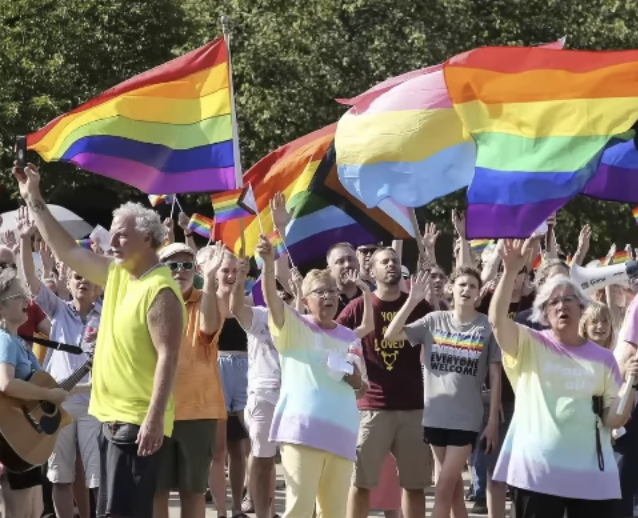
Then they found Old St. Patrick's Church in Chicago, where their family was welcomed because the parish practices what its clergy call "radical inclusivity." This year, the two husbands created an online buzz when, after a decade in these pews, they shared the pulpit during a symbolic Sunday Mass.

“Chicago is celebrating Pride and, of course, today is Father's Day and, conveniently, we tick both of those boxes," said Duyka. "In all honesty, if you had told us as young boys who wasted countless hours of our lives in church trying to 'pray the gay away' that we someday would be standing in front of all of you in our Catholic church talking about our family on Father's Day, we would never have believed you."

At this historic parish, their adopted daughters are thriving. The youngest was baptized with no complications, unlike the "secret ceremony" for their first daughter at a previous church. In 2016, the Old St. Pat's altar featured -- for a month -- photos of victims from Orlando's Pulse nightclub massacre. Parishioners shook their hands during the Sign of the Peace. There was no need to worry about sermons opposing gay marriage or seeing conversion-therapy pamphlets.

The Father's Day "reflection" by Duyka and Singleton filled the homily slot in the Mass, following the Gospel reading. There was no homily, even though Canon law requires a "priest of deacon" to deliver one during Sunday Masses with a congregation.

The details of this Pride-season Mass inspired online debates since it occurred in the powerful Archdiocese of Chicago, led by Cardinal Blase Cupich.

Pope Francis recently named Cupich to the Vatican's Dicastery for Divine Worship and the Discipline of the Sacraments. The Chicago cardinal has been a fierce defender of the pope's Traditionis Custodes ("Guardians of the Tradition") document limiting use of the Tridentine Latin Mass. With its authority, Cupich has also restricted other worship traditions favored by Catholic conservatives, such as priests celebrating Mass "ad orientem," as opposed to the modern "versus populum" stance in which, when at the altar, they face their congregations.

On LGBTQ issues, Cupich made news with his response to a 2021 Congregation for the Doctrine of the Faith text forbidding blessings for same-sex couples.


Please respect our Commenting Policy

Big story? American (at this point) archbishop baptises famous gay couple's children in Greece

Big story? American (at this point) archbishop baptises famous gay couple's children in Greece

I think that I will write this post before I start getting emails (one or two from inside the wider circle of current and former GetReligionistas) asking whether or not I will write this post.

But first, before I get to the journalism question for this post, allow me to pause and discuss the meaning of a key term — “Byzantine.” Here is the word in context: To understand the following news story, journalists will need to enter the Byzantine world of Eastern Orthodox polity in North America.

The word “Byzantine,” when used as an adjective, has two definitions. First there is this:

… relating to Byzantium (now Istanbul), the Byzantine Empire, or the Eastern Orthodox Church

Now, that meaning is — sort of — relevant in this case. But this second definition is the one that we need:

… (of a system or situation) excessively complicated, and typically involving a great deal of administrative detail.

When people ask questions about Eastern Orthodox “news,” I frequently have to remind them that Eastern Orthodoxy is not the Church of Rome. We do not have a pope, even if, from time to time, the ecumenical patriarch in Istanbul has tried to promote (with the help of many elite newsrooms) a papal vision of his “first among equals” role among Orthodox patriarchs, stressing “first” instead of “equals.” See: Ukraine.

With that in mind, let’s look at the GreekReporter.com story that ran with this headline: “First Greek Orthodox Baptism for Child of Gay Couple in Greece.” The question: Is this an important “news” story worthy of complex, balanced, accurate coverage in, let’s say, a mainstream publication such as The New York Times? Jumping ahead, my answer is “yes,” but with a heavy emphasis on “complex, balanced, accurate coverage.” Here is the whole story from Greece:

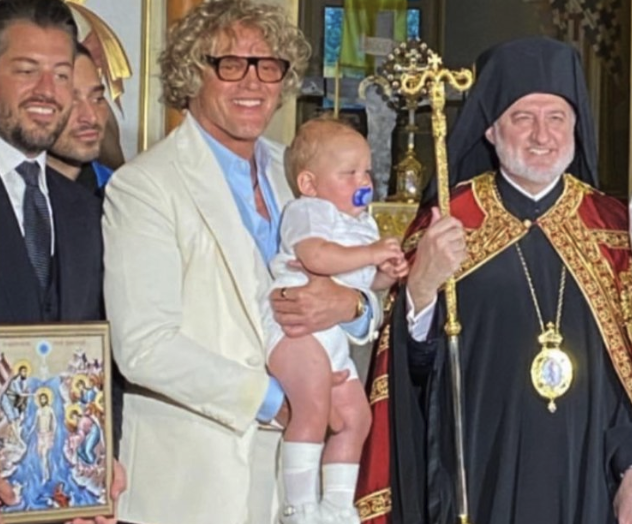
Evanggelos Bousis and Peter Dundas, both of Greek descent, became the first gay couple to hold a Greek Orthodox Baptism for their children in Greece. …

The couple’s children, Alexios and Eleni, were baptized by his Eminence Archbishop Elpidophoros of America at the Panagia Faneromeni Church in the southern Athenian suburb of Vouliagmeni.


Please respect our Commenting Policy

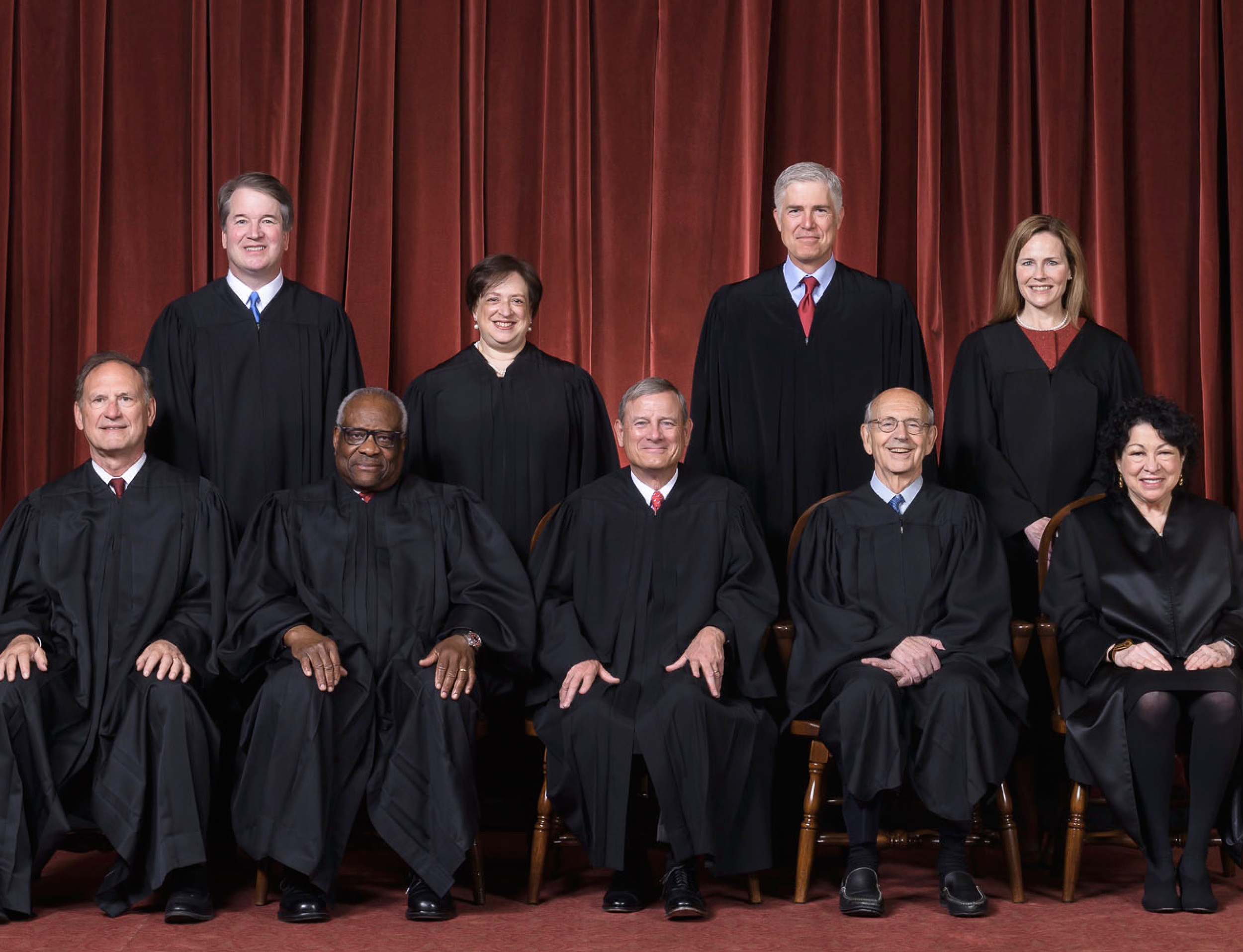
Associated Press: Today's Supreme Court contains too many pro-Catechism Catholics

Associated Press: Today's Supreme Court contains too many pro-Catechism Catholics

A long time ago, in Internet years, I got tired of trying to define “liberal” and “conservative” during discussions of Catholic life.

Truth is, the teachings of ancient Christianity (I am Eastern Orthodox) don’t fit neatly into the templates of American politics. If you believe, for example, that human life begins at conception and continues through natural death the you are going to be frustrated reading the Republican and Democratic party platforms.

At one point, I started using this term — pro-Catechism Catholics. I soon heard from readers who were upset that I was linking Catholic identity with the idea that Catholics were supposed to believe and even attempt to practice the teachings of the Roman Catholic Church.

This brings me to a new Associated Press story with a very familiar, in recent years, theme. The headline: “Anti-Roe justices a part of Catholicism’s conservative wing.” Here is the overture, which includes — #SHOCKING — a reference to the Catechism of the Catholic Church.

The Supreme Court overturned Roe v. Wade at a time when it has an unprecedented Catholic supermajority.

That’s not a coincidence. Nor is it the whole story.

The justices who voted to overturn Roe have been shaped by a church whose catechism affirms “the moral evil of every procured abortion” and whose U.S. bishops have declared opposition to abortion their “preeminent priority” in public policy.

But that alone doesn’t explain the justices’ votes.

U.S. Catholics as a whole are far more ambivalent on abortion than their church leaders, with more than half believing it should be legal in all or most circumstances, according to the Pew Research Center.

The problem, you see, is that there are justices who appear to embrace the Catechism, on issues linked to the Sexual Revolution, of course. They are clashing with generic “U.S. Catholics,” who are not defined, as usual, in terms of Mass attendance or other references to belief and practice (such as choosing to go to Confession).

What we have here is yet another clash between American Catholics and dangerous Catholics.


Please respect our Commenting Policy

Podcast: America is splitting, says trending Atlantic essay. This is news? Actually, it's old news

Podcast: America is splitting, says trending Atlantic essay. This is news? Actually, it's old news

In case you haven’t heard, controversial Supreme Court decisions are causing dangerous divisions in the United States of America.

Yes, I know. If you’re old enough you have been hearing people say that since 1973. And there is, of course, an element of truth in these statements, then and now. SCOTUS has become the only branch of government that matters when it comes to forcing one half of America to accept the legal, cultural and moral changes sought by the other half. Study several decades worth of presidential elections.

However, when it comes to mainstream media coverage, not all controversial Supreme Court decisions are created equal. If you have followed Twitter since the fall of Roe v. Wade, you know that large numbers of professionals in major newsrooms are freaking out.

Is this “new” news or old news? Truth is, arguments about red America (“Jesusland”) and blue America (“The United States of Canada”) have been getting louder and louder for several decades. This was the topic that dominated (once again) this week’s “Crossroads” podcast (CLICK HERE to tune that in), which focused on this Ronald Brownstein essay at The Atlantic: “America Is Growing Apart, Possibly for Good.”

What’s interesting about this piece is that it says America’s divisions have nothing to do with traditional forms of religion, culture, the First Amendment or the U.S. Constitution (especially Federalism). No, this is a war about racism, period. SCOTUS has been seized by the enemies of reason and freedom and, thus, America’s future is at risk. This is a concept with serious implications for news coverage.

IT MAY BE TIME to stop talking about “red” and “blue” America. That’s the provocative conclusion of Michael Podhorzer, a longtime political strategist for labor unions and the chair of the Analyst Institute, a collaborative of progressive groups that studies elections. In a private newsletter that he writes for a small group of activists, Podhorzer recently laid out a detailed case for thinking of the two blocs as fundamentally different nations uneasily sharing the same geographic space.

“When we think about the United States, we make the essential error of imagining it as a single nation, a marbled mix of Red and Blue people,” Podhorzer writes. “But in truth, we have never been one nation. We are more like a federated republic of two nations: Blue Nation and Red Nation. This is not a metaphor; it is a geographic and historical reality.”

The bottom line:

To Podhorzer, the growing divisions between red and blue states represent a reversion to the lines of separation through much of the nation’s history. The differences among states in the Donald Trump era, he writes, are “very similar, both geographically and culturally, to the divides between the Union and the Confederacy.


Please respect our Commenting Policy

United Methodist conflict hits Bible Belt pews, while Tennessean report omits crucial facts

United Methodist conflict hits Bible Belt pews, while Tennessean report omits crucial facts

If you have followed United Methodist warfare for the past 40 years or so, as I have, you know that this is a local, regional, national and global story that is only getting more complex now that it has reached pews in local churches.

For years, the key battles were between activists in the global UMC majority (primarily growing churches in Africa and Asia) and the North American UMC establishment (rooted in agencies, seminaries and shrinking blue-zip-code flocks).

At the moment, the fiercest battles are in parts of the Midwest and the Bible Belt where doctrinally conservative churches (usually rural and suburban) will square off with establishment leaders based in big-city-friendly regional conferences. You can see this drama in a recent Tennessean story: “As United Methodists in Tennessee navigate schism, 60 churches leave denomination.” Here’s the overture:

As 60 churches in West and Middle Tennessee leave the United Methodist Church, churches in East Tennessee are so far sticking around but passionately debating denomination policies.

The departures and disagreements were features of recent annual meetings for Tennessee’s two UMC conferences, illustrating the regional variation of the ongoing schism in the UMC.

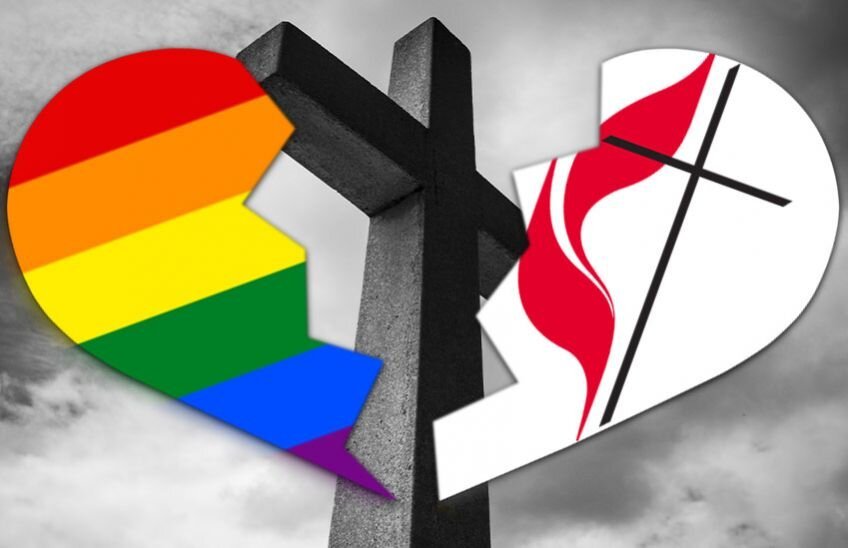
In May, the split within the UMC solidified when a new "traditionalist" denomination splintered from the UMC for churches with more conservative theological and cultural views, including on sexuality and gender.

When the new Global Methodist Church launched, the pace of churches leaving the UMC was expected to intensify.

Yes, there is that problematic word once again — “schism.” In this recent post — “In terms of church history, should the United Methodist break-up be called a 'schism'?” — I argued, for several reasons, that it’s more accurate to call what is happening a “divorce.”

Without repeating all of that, the crucial point is that group given the “traditionalist” label is, in fact, the majority in the GLOBAL denomination that has, for several decades, won tense votes defending the doctrines in the UMC’s Book of Discipline. The group seeking to change these doctrines is the entrenched North American establishment. According to the Tennessean framing, the majority is creating the “schism,” while the establishment minority represents the doctrinal heart of the denomination.

Instead of a “schism,” many in the denomination — a coalition on the doctrinal left and right —negotiated is a “divorce” plan that could save years of additional pain and millions of dollars in legal fees. That plan is the “Reconciliation and Grace Through Separation” protocol, which remains in limbo after establishment leaders twice delayed the vote, citing COVID-19 fears.

This Tennessean story never mentions this important document.


Please respect our Commenting Policy

Podcast: What happens at Calvin doesn't stay at Calvin. True, so what now for LGBTQ wars?

Podcast: What happens at Calvin doesn't stay at Calvin. True, so what now for LGBTQ wars?

Back in the spring, we did a GetReligion podcast that was accompanied by a post with this title: “What parents (and journalists) can learn from LGBTQ debates at Calvin.

The Big Idea in that podcast was that Calvin University isn’t just another Christian college — it’s the base camp for a kind of Reformed intellectual A-team that punches way, way, way above its weight in the Council For Christian Colleges and Universities (the global network in which I worked and taught for a quarter of a century or so). Thus, I stated: “What happens at Calvin doesn’t stay at Calvin.”

If you have followed Calvin closely in recent decades, you know that a significant chunk of its faculty believes (this is my summary) that those who truly honor and teach the great Reformed Tradition of Calvinism know that it’s time for new Reformers (that would be them) to reform the out-of-date theological conclusions of their ancestors. You can see similar streams of thought among Methodists, Anglicans, Catholics and even (in a few zip codes) the Eastern Orthodox.

With that in mind, it’s time for this week’s “Crossroads” episode (CLICK HERE to tune that in), which offers an update on Calvin and tensions inside its denomination, care of a Religion News Service story with this headline: “Christian Reformed Church codifies homosexual sex as sin in its declaration of faith.” Actually, if you read carefully, the CRC affirmed 2,000 years of Christian teaching that (a) sex outside of marriage is a sin and (b) Christian marriages unite a man and a women. Here is the overture of that RNS story:

(RNS) — The Christian Reformed Church, a small evangelical denomination of U.S. and Canadian churches, voted … at its annual synod to codify its opposition to homosexual sex by elevating it to the status of confession, or deration of faith.

The 123-53 vote at Calvin University in Grand Rapids, Michigan, caps a process begun in 2016 when a previous synod voted to form a study committee to bring a report on the “biblical theology” of sexuality.

The vote, following a long day of debate, approves a list of what the denomination calls sexual immorality it won’t tolerate, including “adultery, premarital sex, extra-marital sex, polyamory, pornography and homosexual sex.”

“The church must warn its members that those who refuse to repent of these sins — as well as of idolatry, greed, and other such sins — will not inherit the kingdom of God,” the report says. “It must discipline those who refuse to repent of such sins for the sake of their souls.”

Just asking: That “what the denomination calls” language is interesting. Doesn’t that kind of imply that these teachings belong to the CRC alone — as opposed to being doctrines affirmed by the world’s largest Christian bodies, such as the Roman Catholic Church, Eastern Orthodoxy, Third World Anglicans and most evangelical and Pentecostal believers.


Please respect our Commenting Policy