LGBTQ

Another SCOTUS win for 'equal access,' whether most journalists realized this or not

Another SCOTUS win for 'equal access,' whether most journalists realized this or not

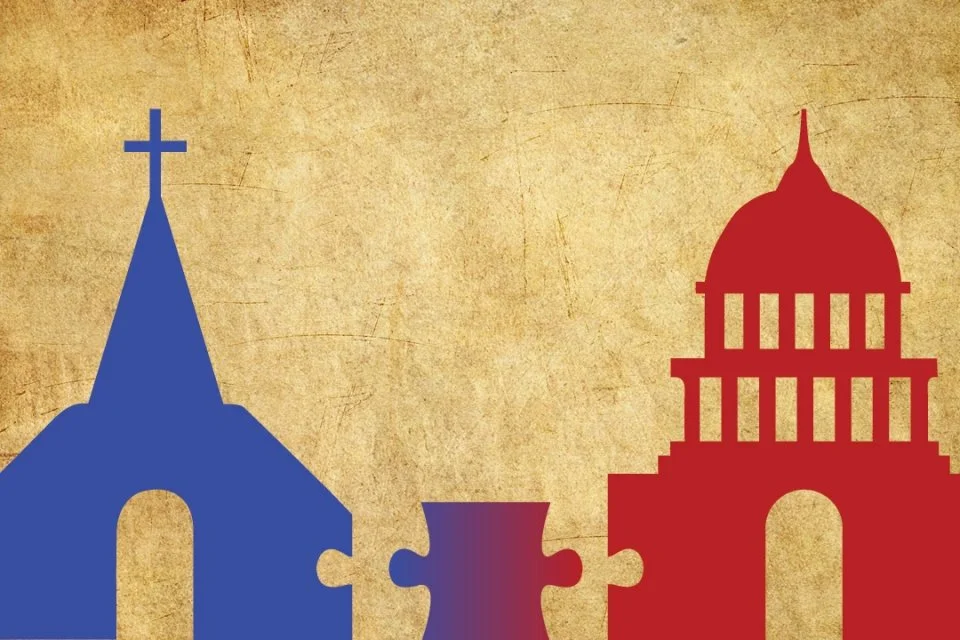
For a decade or more, U.S. Supreme Court justices have been arguing about the separation of church and state. What we keep seeing is a clash between two different forms of “liberalism,” with that term defined into terms of political science instead of partisan politics.

Some justices defend a concept of church-state separation that leans toward the secularism of French Revolution liberalism. The goal is for zero tax dollars to end up in the checkbooks of citizens who teach or practice traditional forms of religious doctrine (while it’s acceptable to support believers whose approach to controversial issues — think sin and salvation — mirror those of modernity).

Then there are justices who back “equal access” concepts articulated by a broad, left-right coalition that existed in the Bill Clinton era. The big idea: Religious beliefs are not a uniquely dangerous form of speech and action and, thus, should be treated in a manner similar to secular beliefs and actions. If states choose to use tax dollars to support secular beliefs and practices, they should do the same for religious beliefs and practices.

At some point, it would be constructive of journalists spotted these “equal access” concepts and traced them to back to their roots in the Clinton era (and earlier). But maybe I am being overly optimistic.

You can see these tensions, kind of, in the Associated Press coverage of the new SCOTUS decision that addressed a Maine law that provided tax funds for parents who chose secular private schools, but not those who chose religious schools. The headline of the main report stated, “Supreme Court: Religious schools must get Maine tuition aid.”

Chief Justice John Roberts wrote the opinion for the majority in this 6-3 ruling. In this story, “liberal” is used to describe the majority.

“Maine’s ‘nonsectarian’ requirement for its otherwise generally available tuition assistance payments violates the Free Exercise Clause of the First Amendment. Regardless of how the benefit and restriction are described, the program operates to identify and exclude otherwise eligible schools on the basis of their religious exercise,” Roberts wrote.

The court’s three liberal justices dissented. “This Court continues to dismantle the wall of separation between church and state that the Framers fought to build,” Justice Sonia Sotomayor wrote.


Please respect our Commenting Policy

What responsibility do journalists have when covering incendiary wars about religion and culture?

What responsibility do journalists have when covering incendiary wars about religion and culture?

We tend to pay attention to news that impacts us most directly. So for Americans, the culture war playing out between religious (and some non-religious) traditionalists and social progressives is most compelling.

Half-way around the world, however, another ongoing war about religion and culture has heated up yet again. This one has direct international ramifications and has the potential to negatively impact global religious-political alignments perhaps as much or more than America’s nasty cultural war.

It also contains an important lesson about the possible consequences of governments employing divisive culture war tactics for political gain (more on this theme below.) I do not think it absurd to fear that our homegrown culture war could become just as bad, or worse.

I’m referring to India, a constitutionally secular nation wracked by inter-religious conflict between majority Hindus and minority Muslims (Christians have been caught in this imbroglio, too, but put that aside for the duration of this post).

Here’s a recent overview of India’s situation from The Washington Post. And here’s the top of that report:

NEW DELHI — After a spokeswoman for India’s ruling party made disparaging remarks about the prophet Muhammad during a recent televised debate, rioters took to the streets in the northern city of Kanpur, throwing rocks and clashing with police.

It was only the beginning of a controversy that would have global repercussions.

Indian products were soon taken off shelves in the Persian Gulf after a high-ranking Muslim cleric called for boycotts. Hashtags expressing anger at Prime Minister Narendra Modi began trending on Arabic-language Twitter. Three Muslim-majority countries — Qatar, Kuwait and Iran — summoned their Indian ambassadors to convey their displeasure. The governments of Saudi Arabia, Indonesia and Afghanistan on Monday condemned the spokeswoman, Nupur Sharma, as did the Organization of Islamic Cooperation.

Inflammatory comments by right-wing activists and political leaders in India often make headlines and spark outrage on social media. But rarely do they elicit the kind of attention that Sharma drew in [early June], which sent her political party — and India’s diplomats — scrambling to contain an international public relations crisis.

Let’s step back from the news coverage for a moment to consider some underlying dynamics and their impact on journalism.


Please respect our Commenting Policy

Nowhere to hide: Los Angeles Times hit job focuses on one side of Biola University tensions

Nowhere to hide: Los Angeles Times hit job focuses on one side of Biola University tensions

If you have followed trends in academic and student life at Biola University over the past 25 years or so — I have spoken there about 10 times in that period — you know that this is a complex campus, with all kinds of divisions on theological, moral, political and cultural issues.

As a rule, campus administrators there are just as uncomfortable with strong conservative voices as they are with candid evangelical progressives. Thus, all kinds of Biola believers have learned to state radically different convictions in language that can be called “evangelical” to one degree or another. The goal is to keep painful fights out of publications read by parents, donors and even trustees.

It’s important to keep this in mind while reading the Los Angeles Times morality-tale sermon that ran the other day with this headline: “CRT, Trumpism and doubt roil Biola University. Is this the future of evangelical Christianity?” The headline failed to include the key issue in this story — clashes over the validity of 2,000 years of Christian doctrine on sexuality and marriage.

For additional insights on political and theological diversity found Christian campuses, it will help to read this classic 1995 essay at The Atlantic — “The Warring Visions of the Religious Right” — by the liberal Baptist scholar Harvey Cox of Harvard Divinity School (author of the ‘60s bestseller, “The Secular City”).

Oh, and speaking of liberal Baptist scholars, one of the defining voices in the new Los Angeles Times feature is David Gushee of Mercer University. It was totally valid to include his voice in this story, but it was interesting that he is quoted as a neutral academic expert on these matters, as opposed to being an articulate spokesman for activists on one side of the doctrinal war being covered in this story.

After all, it was Gushee who opened a classic 2016 essay for Religion News Service with these lines:

Middle ground is disappearing on the question of whether LGBT persons should be treated as full equals, without any discrimination in society — and on the related question of whether religious institutions should be allowed to continue discriminating due to their doctrinal beliefs.

It turns out that you are either for full and unequivocal social and legal equality for LGBT people, or you are against it, and your answer will at some point be revealed. This is true both for individuals and for institutions.

Neutrality is not an option. Neither is polite half-acceptance. Nor is avoiding the subject. Hide as you might, the issue will come and find you.

Thus, the Los Angeles Times has come to confront the leaders of Biola University.


Please respect our Commenting Policy

Podcast: So many questions after that symbolic Tampa Bay Rays conflict over 'Pride' logos

Podcast: So many questions after that symbolic Tampa Bay Rays conflict over 'Pride' logos

Symbolism often plays a major role in tense clashes between people with competing religious beliefs (or secular beliefs, for that matter).

You could see evidence of this fact during and after the recent kerfuffle about a small group of Tampa Bay Rays players who declined to wear special rainbow-logo uniforms during the team’s recent celebration of Pride Month. The media coverage of this clash was the subject of this week’s “Crossroads” podcast (CLICK HERE to tune that in), in part because the stories raised more questions than they answered.

I’ll get to some of those questions, but first let’s look at the Washington Post coverage. Note that this means the Rays conflict was a national story, since the Post doesn’t cover mere regional stories and disputes (see this classic M.Z. Hemingway post about the newspaper’s MIA stance on covering the trial of Philadelphia abortionist Kermit Gosnell).

The headline on this sports-desk story: “Rays players make ‘faith-based decision’ to shun Pride Night logos.” Yes, it’s important to note that there are doubts about the nature of this “faith-based” angle. Let’s look at some important passages in this:

A member of the Tampa Bay Rays said he and several teammates made a “faith-based decision” to not wear rainbow-colored logos on their uniforms during a “Pride Night” home game Saturday that recognized the LGBTQ community.

Most Rays players, per accounts from the game, wore the special uniform designs that had a rainbow pattern over the “TB” on their caps and over a sunburst logo on their right sleeves. The team, which has staged Pride Night for several seasons but had not previously included uniform changes, reportedly gave players the option to display the logos or go with the usual look.

The crucial fact there is that team management decided to allow players some degree of free-will in this case. Hold that thought.

Apparently, team management asked pitcher Jason Adam to make a statement on why he, and four others, elected to wear their usual jerseys for this symbolic event. Thus, he said:

“A lot of it comes down to faith, to like a faith-based decision,” said Adam, a 30-year-old in his fifth major league season.


Please respect our Commenting Policy

Red hat for San Diego Bishop Robert McElroy: Vatican message to U.S. Catholic bishops?

Red hat for San Diego Bishop Robert McElroy: Vatican message to U.S. Catholic bishops?

Two years before long-standing rumors about Cardinal Theodore McCarrick leapt into headlines worldwide, America's most outspoken activist on clergy sexual abuse met with his local bishop -- San Diego Bishop Robert McElroy.

"It was clear to me during our last meeting in your office, although cordial, that you had no interest in any further personal contact," wrote the late Richard Sipe, a former Benedictine priest who then worked for the Seton Psychiatric Institute in Baltimore. While church officials asked him to report to McElroy, "your office made it clear that you have no time in your schedule either now or 'in the foreseeable future' to have the meeting that they suggested."

Sipe's 2016 letter to the San Diego bishop was later posted online and is frequently cited as an example of a bishop ignoring warnings about the now defrocked McCarrick, who often boasted about his clout as a Vatican kingmaker. Now it will receive more attention because Pope Francis has named McElroy to the Sacred College of Cardinals. This promotes the San Diego bishop over several prominent archbishops -- including Los Angeles Archbishop Jose Gomez, who leads America's largest Catholic archdiocese and is president of the U.S. Conference of Catholic Bishops.

In his hand-delivered report, Sipe told McElroy that his ongoing research indicated that 6% of American priests were guilty of sex with minors. Meanwhile, a "systemic" trend was clear: "At any one time no more than 50% of priests are practicing celibacy."

As for the powerful McCarrick, Sipe noted: "I have interviewed twelve seminarians and priests who attest to propositions, harassment, or sex with McCarrick, who has stated, 'I do not like to sleep alone.' "

Debates about McElroy's elevation have focused on other divisive issues in Catholic life, although decades of sexual-abuse crimes loom in the background. He has, for example, supported the ordination of women to the diaconate, allowing them to preach, perform weddings and serve -- one step from the priesthood -- at Catholic altars.

McElroy has openly clashed with American bishops anxious to address "Eucharistic coherence" as prominent Catholics, especially President Joe Biden and House Speaker Nancy Pelosi, support -- with words and deeds -- abortion and LGBTQ rights.


Please respect our Commenting Policy

Did the Washington Post profile of Karen Swallow Prior help critics understand her or not?

Did the Washington Post profile of Karen Swallow Prior help critics understand her or not?

It’s hard to do a critique of an elite-media feature about someone who is a real online friend.

But, in this case, there’s an issue that — at least to me — cannot be avoided in the glowing Washington Post religion-desk feature that ran the other day with this headline: “Karen Prior has worked for Roe's overturn for decades. This isn't what she'd hoped to feel.

Most fans of the “Notorious KSP,” I would imagine, loved this piece.

At the same time, I’m sure her worst critics loved it as well — for reasons linked to the journalism issue that I would like to spotlight in this post. It helps to understand that Prior has critics (and friends) who disagree with some things that she says and does and then she has critics that basically don’t want her to exist.

Meanwhile, anyone — worthy critics and supporters — who has followed KSP’s work through the years with any kind of an open mind knows the strength of her logic and (dare I say it) art when defending centuries of Christian doctrines about life issues, as well as marriage and sexuality. But to grasp that side of her life, and how it fits into the total package of her apologetics, people need to actually read or hear her address those topics.

This Post piece focuses, for the most part, on her actions and beliefs that have fueled controversy about her among some evangelicals (like me, she was #NeverTrump #Never Hillary in 2016). A more balanced profile of her would have included quoted material that would have — with good cause — offended, well, most Post readers and editors. Hold that thought, because I will come back to it.

The piece starts with Prior’s feelings of elation at the news that the U.S. Supreme Court appears to be poised to overturn Roe v. Wade.

Prior was shocked and thrilled. But within minutes the deep divisions and differences in priorities among antiabortion advocates came into view. After being put aside for decades as they worked together to overturn Roe, they had become impossible to ignore. While Chief Justice John G. Roberts Jr. took pains to say the leaked opinion may not be the final one, experts on abortion in America say even the potential of Roe’s demise is a turning point for the movement. If Roe falls, what does it mean to be for life now?

For Prior, it means much more than overturning Roe. It means more support for child care and pregnant women as well as supporting sex abuse victims, vaccinating as many people as possible against the coronavirus, and helping start and run an inner-city high school in Buffalo. But not all antiabortion activists agree and lately have begun splintering over next steps, such as whether to classify abortion as homicide and restrict contraception, as well as whether issues outside of reproduction even qualify as part of the “pro-life” cause.

Once again, this is an old, old story that is presented as something essentially new and, thus, linked to COVID-19, the Trump era and all kinds of “now” things. In reality, debates among evangelicals, and especially Catholics, about what it means to be “consistently pro-life” go back to the 1980s or earlier.


Please respect our Commenting Policy

Podcast: A growing post-Roe divide between 'Jesusland' and the 'United States of Canada'?

Podcast: A growing post-Roe divide between 'Jesusland' and the 'United States of Canada'?

Over the past week or so, I have received several emails — while noticing similar messages on Twitter — from people asking: “Why is The Atlantic publishing the same story over and over?” Some people ask the same question about The New York Times.

It’s not the same SPECIFIC story over and over, of course. But we are talking about stories with the same basic Big Idea, usually framed in the same way. In other words, it’s kind of a cookie-cutter approach.

The key word is “division,” as in America is getting more and more divided or American evangelicalism is getting more and more divided. A new Ronald Brownstein essay of this kind at The Atlantic — “America’s Blue-Red Divide Is About to Get Starker” — provided the hook for this week’s “Crossroads” podcast (CLICK HERE to tune that in).

The villains in these dramas are, of course, White evangelicals or, in more nuanced reporting, a radical wing of the White evangelicals. Just this week, I praised the New York Times for running a feature that offered a variation on one of these templates: “Bravo! The New York Times reports that evangelicals are divided, not united on politics.” That piece showed progress, in part, because it undercut the myth of the evangelical political monolith on issues such as Donald Trump, COVID vaccines, QAnon, etc.

Let me make this personal. There is a reason that all of these stories written by journalists and blue-checkmark Twitter stars sound a big familiar to me. You see, people who have been paying attention know that the great “Jesusland” v. the “United States of Canada” divide is actually at least three decades old. It’s getting more obvious, methinks, because of the flamethrower social-media culture that shapes everything,

So let’s take a journey and connect a few themes in this drama, including summary statements by some important scribes. The goal is to collect the dots and the, at the end, we’ll look at how some of these ideas show up in that new leaning-left analysis at The Atlantic.

First, there is the column I wrote in 1998, when marking the 10th anniversary of “On Religion” being syndicated (as opposed to the 33rd anniversary the other day). Here’s the key chunk of that:

… In 1986, a sociologist of religion had an epiphany while serving as a witness in a church-state case in Mobile, Ala.


Please respect our Commenting Policy

Bravo! The New York Times reports that evangelicals are divided, not united on politics

Bravo! The New York Times reports that evangelicals are divided, not united on politics

If you stop and think about it, the latest New York Times feature about those dreaded White evangelicals includes a few signs of progress.

The good news is that the story focuses on the many ways White American evangelicals are divided, these days. That’s progress, since it undercuts the dominant news narrative of the years since 2016. You know the one: That White evangelicals from sea to shining sea just love Donald Trump and that’s that.

The truth was always more complex than that, but many blue-checkmark experts on Twitter really needed someone to blame for Trump. White evangelicals were the answer, of course, since it would have required a great deal of introspection to blame the Democratic Party for nominating Hillary Clinton — perhaps the only opponent that scared millions of depressed Americans more than Trump.

But back to the key truth in this Times report — which is that White evangelicals are divided, which is true, and that is certainly not the same thing as the myth of monolithic unity. For background, see this 2018 post: “Complex realities hidden in '81 percent of evangelicals' love Trump myth.”

At the heart of this story is a character that will be familiar to some news consumers — a conservative religious leader whose beliefs would normally cause heart attacks in blue-zip-code newsrooms, but this leader is shown to deserve sympathy because believers who are much worse are attacking him/her. (The irony in this case is that this particular pastor seems very familiar to me since he appears to represent the evangelicalism in which I was raised and that I greatly respect.)

The headline: “As a ‘Seismic Shift’ Fractures Evangelicals, an Arkansas Pastor Leaves Home.” Here’s the overture:

FORT SMITH, Ark. — In the fall of 2020, Kevin Thompson delivered a sermon about the gentleness of God. At one point, he drew a quick contrast between a loving, accessible God and remote, inaccessible celebrities. Speaking without notes, his Bible in his hand, he reached for a few easy examples: Oprah, Jay-Z, Tom Hanks.

Mr. Thompson could not tell how his sermon was received. The church he led had only recently returned to meeting in person. Attendance was sparse, and it was hard to appreciate if his jokes were landing, or if his congregation — with family groups spaced three seats apart, and others watching online — remained engaged.

So he was caught off guard when two church members expressed alarm about the passing reference to Mr. Hanks.


Please respect our Commenting Policy

Ordinary protests at doxxed SCOTUS homes, Masses and a generic firebomb, as well

Ordinary protests at doxxed SCOTUS homes, Masses and a generic firebomb, as well

The Roe v. Wade related events of the past three or four days have created a very obvious case study that can be stashed into that ongoing “mirror image” case file here at GetReligion.

Start here. Let’s say that, during the days of the Donald Trump White House, something important happened related to LGBTQ rights — something like a U.S. Supreme Court decision that delivered a major victory to the trans community. At that point, some wild people on the far cultural right published the home addresses of the justices that backed the decision and, maybe, even any hospital that Justice Ruth Bader Ginsburg might be visiting for cancer treatments.

Another group, let’s call it “Bork Sent Us,” announces plans for protests at Episcopal Church parishes because of that denomination’s outspoken support for LGBTQ causes. Some protestors promise to invade sanctuaries and violate the bread and wine used in the Holy Eucharist. Along the way, what if someone firebombed a Planned Parenthood facility?

Obviously, Trump’s press secretary would be asked to condemn this madness, including violations of a federal law against intimidating protests at the homes of judges.

Let’s set that aside for a moment. I want to ask a “mirror image” journalism question: Would this be treated as a major news story in elite media on both sides of our divided nation and, thus, divided media? Would this, at the very least, deserve a story or two that made it into the basic Associated Press summary of the major news stories of the weekend?

Let me say that these events would have deserved waves of digital ink, with good cause.

This brings us, of course, to the leaked copy of a draft of a majority opinion by Justice Samuel Alito that points to a potential 5-3-1 decision to overturn Roe v. Wade. Twitter users may know many of the details of the anger this has unleashed in mass media and among Sexual Revolution clergy, both secular and sacred. There has been some coverage, including (#DUH) at Fox News. A sample on the church angle:

The White House on Sunday defended people's "fundamental right to protest" but warned against efforts to "intimidate" others during pro-abortion protests planned at Catholic churches across the country.

Multiple activist groups are planning protests defending abortion rights outside Catholic churches on Mother's Day and the following Sunday after a draft opinion from the Supreme Court threatened to overturn Roe v. Wade.


Please respect our Commenting Policy