LGBTQ

Press quiet as a mouse when it comes to Catholic angles in this Disney-DeSantis fight

Press quiet as a mouse when it comes to Catholic angles in this Disney-DeSantis fight

I was never nuts for Disney. I’ve never been to one of their a theme park, either as a child or now as a parent of two children, and never indulged in their movies much over my lifetime. I’ll freely admit that puts me in the minority, both in the United States and around the world, when it comes to Disney consumption.

I was, however, once a Disney employee. No, I didn’t work in one of their stores. Instead, I was employed at ABC News in New York, where I worked for their digital unit running the website and other internet assets such as social media. It was a great place to work — although not “The Happiest Place On Earth” as the official tagline for Disneyland states. It was, after all, a newsroom — but one of the perks was free tickets each year to their amusement parks.

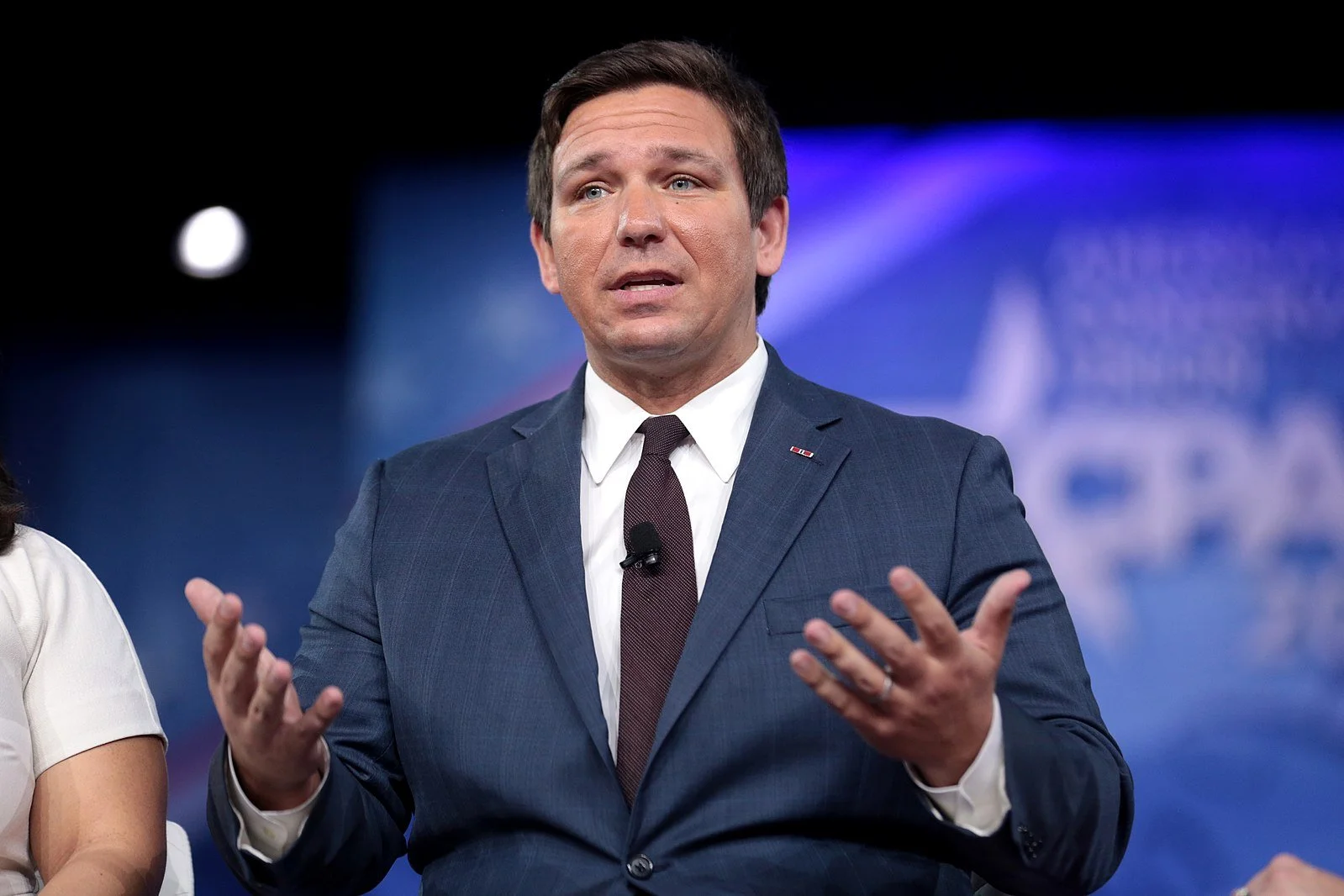
I say all this in the context of the ongoing feud regarding the Florida “Parental Rights in Education” bill, which is now law after Gov. Ron DeSantis signed it. This is the much-discussed bill that bans classroom instruction on sexual orientation or gender identity from kindergarten through third grade “in a manner that is not age appropriate or developmentally appropriate for students in accordance with state standards.”

The law continues to get media coverage for two reasons. First, because of Disney’s involvement and second due to the larger notion that DeSantis, a potential 2024 presidential candidate, is — everyone chant the media mantra — “engaging in a culture war.” This remains a political story, a business story and a pop culture story.

Is this also an important religion story? It certainly is (tmatt takes on this very topic in GetReligion’s most recent podcast).

My most recent GetReligion post focused on the news media’s largely ignoring the Republican DeSantis’ Catholic faith in regard to the widespread news coverage around the bill, which opponents effectively labeled “Don’t Say Gay” even though the bill never used those words.

At the same time, the news coverage for conservative press around the legislation has centered much more on Disney’s late-in-the-game activism in opposing it. The coverage among mainstream and progressive news sites continues to center on that activist “Don’t Say Gay” mantra.

Please respect our Commenting Policy

Podcast: Concerning the many religion-beat stories linked to that 'Don't Say Gay' bill

Podcast: Concerning the many religion-beat stories linked to that 'Don't Say Gay' bill

Let’s talk news-business realities for a moment.

If you do an online search for the following terms — “Parental Rights in Education,” Florida — you will get about 43,000 hits on Google News (as of Thursday afternoon).

Then again, if you run a search for these terms — “Don’t Say Gay,” Florida — you will get 6,820,000 hits on Google News and 24,100,000 hits on Google (period).

That’s a pretty big difference. What’s going on?

On this week’s “Crossroads” podcast (CLICK HERE to tune that in) I argued that the real name of this bill sounded way, way too much like a whatever it was that parents in Virginia wanted during that recent election that left the Democratic Party establishment in shock.

As it turns out, a new Public Opinion Strategies poll (.pdf here) found that registered voters — a majority of Democrats, even — liked the contents of this controversial Florida bill when shown its key, defining language:

“Classroom instruction by school personnel or third parties on sexual orientation or gender identity may not occur in Kindergarten through third grade or in a manner that is not age appropriate or developmentally appropriate for students in accordance with state standards.”

Clearly, “Don’t Say Gay” worked much better for political activists who wanted to keep the focus on LGBTQ-era sexual education for prepubescent children. The whole idea was that way too many parents are burdened with religious, moral and cultural beliefs that were on the wrong side of history. Thus, “parental rights” and classroom transparency are not helpful concepts.

What does this have to do with the many religion-angle stories that journalists could be chasing linked to this legislation and variations on this bill that are sure to show up in other states?


Please respect our Commenting Policy

Are lawyers 'ministers?' Unanswered questions plague Union Gospel Mission coverage

Are lawyers 'ministers?' Unanswered questions plague Union Gospel Mission coverage

Last week, the Supreme Court turned down a very interesting case that has gotten comparatively little media coverage outside the Pacific Northwest, which is where it originated. It was Woods v. Seattle’s Union Gospel Mission (UGM) and it’s an important milestone in allowing gay employees to be employed at evangelical Christian organizations.

I wish the high court had taken the case, as it would have gone a long way toward explaining if all employees at religious organizations are counted as “ministers,” or only the ones with spiritual-sounding titles.

It’s a battle that’s going to keep on being fought and I’m guessing that leaders at evangelical and Catholic groups are not taking the Court’s silence on this case as good news.

The Seattle Times’ account of the Court’s rejection is below, although I would’ve liked to have seen a more balanced headline than: “U.S. Supreme Court won’t hear Seattle’s Union Gospel Mission’s anti-LGBTQ+ hiring policies case.” The kind of gives you an idea of where the article is going, doesn’t it?

Assuming the Times reporters did read some of the arguments from UGM, they would have known the subject was not just some anti-gay organization, but that UGM also had problems with this employee’s lack of clear Christian commitment.

The U.S. Supreme Court announced … that it will not review a case involving Seattle’s Union Gospel Mission, which was sued in 2017 over its anti-LGBTQ+ hiring policy after it declined to hire a bisexual lawyer who applied for a job.

Justice Samuel Alito and Justice Clarence Thomas agreed with the decision not to hear the case at this stage. But according to The Associated Press, they said that “the day may soon come” when the court needs to confront the issue the case presents.

The Seattle-based Christian organization filed a petition in August 2021, asking the Supreme Court to decide a case in which the Washington Supreme Court ruled in favor of the plaintiff, attorney Matt Woods, in March 2021.

I covered this in December for Newsweek (of course it helps that I live driving distance from UGM’s headquarters), and believe me, UGM helps the folks who no one else wants to help.


Please respect our Commenting Policy

Podcast: What parents (and journalists) can learn from LGBTQ debates at Calvin

Podcast: What parents (and journalists) can learn from LGBTQ debates at Calvin

Any list of the two or three most influential evangelical Protestant colleges and universities in America has to include Calvin University in Grand Rapids, Mich.

Hang around at Council of Christian Colleges and Universities gatherings (I was a senior fellow and journalism professor for 20 years) and you’ll hear chatter about the “Calvin mafia” that has long provided intellectual clout shaping trends and programs nationwide. In other words, what happens at Calvin doesn’t stay at Calvin.

You could say that was the Big Idea in this week’s “Crossroads” podcast (CLICK HERE to tune that in), which focused on a Religion News Service story with this headline: “Fallout over LGBTQ spouses at Calvin University captures broader evangelical divide.” The second line: “A same-sex wedding led the university to split with its longtime research center over Christian teaching on sexuality.” Before we look at the overture, let’s jump down to a crucial passage in this story:

Provost Noah Toly did confirm that all faculty and staff, including those at the center, are required to follow the school’s employment policies, which bar sex outside of a marriage between a man and a woman. He also said that hiring managers and supervisors are required to enforce the policy.

“Employment policies” is a rather secular way of stating that Calvin has a doctrinal statement linked to its ties to the Christian Reformed Church. It’s safe to assume that, at some point, faculty and staff sign a copy of that statement or a “lifestyle covenant” that states the doctrines in practical terms. At some schools, faculty and staff reaffirm that doctrinal statement/covenant every year.

When we are talking about defining the boundaries of a voluntary association of this kind — an explicitly Christian liberal-arts university — “doctrines” are more important than “policies.” Keep that quote from the provost in mind as you read the top of this RNS story. This is long, but crucial:

For years, Calvin University, a leading evangelical school in Grand Rapids, Michigan, has tried to walk a fine line of being welcoming to LGBTQ students while still enforcing traditional Christian Reformed Church views on sexuality.


Please respect our Commenting Policy

No need for balance? Washington Post offers sermon on behalf of Alabama trans activists

No need for balance? Washington Post offers sermon on behalf of Alabama trans activists

Before we get to the Washington Post story at the heart of this post, please allow me to share a journalism parable from my years at the Rocky Mountain News (RIP), back in the 1980s.

It was obvious that, sooner or later, Operation Rescue protesters would come to the Boulder Abortion Clinic, which was nationally known for its work in third-trimester abortions and other controversial procedures. I urged my editors to commit time and resources to a pair of profiles of important activists on both sides. One was a former abortionist who had joined the pro-life cause. The other was a liberal Christian who was pouring her life into the defense of abortion rights.

These profiles would be the same length and would run side-by-side, with similar art and headlines. There would be no need to include balance and dissent in each of the profiles since they represented competing voices on both sides of an important debate in public life. In the end, we heard praise and criticism from readers on both sides of this event.

Now, let’s look at the Post story that ran under this double-decker headline:

Activists face an avalanche of anti-transgender bills

‘If this bill don’t pass, it’s coming back next year,’ says an ardent advocate in Alabama

That sub-headline is, for all practical purposes, the only time that “conservative” cultural voices are heard in this long, long feature story. Every single sentence in this story is written using the precise terms, images and themes of the activists opposed to these “anti-transgender” bills in Alabama and across America.

In effect, this story — a totally valid profile of an important activist — is one half of a package covering these debates deep in the Bible Belt.

The problem is that there is no second profile. There is no feature of equal length addressing, let’s say, the views of a Black church leader who works with young people who are making efforts to “detransition” after declaring themselves trans.


Please respect our Commenting Policy

As Florida's DeSantis wages culture war, his Catholic faith isn't news -- unless it's used to attack him

As Florida's DeSantis wages culture war, his Catholic faith isn't news -- unless it's used to attack him

The two things that lots of people don’t want to read about these days is the coronavirus pandemic and Donald Trump, part of a larger trend regarding news fatigue in this country. Unfortunately, this post will mention both and only because it is about Ron DeSantis.

The Florida governor has been in the news the past few years because of his connection to the former president and a virus that paralyzed the planet for two years. A hero to the right and bogeyman to the left, DeSantis has received plenty of mainstream news coverage — much of it one-sided — because of his use of so-called culture war issues to push legislation.

DeSantis, who is running for re-election and among the favorites to run for the White House in 2024, has been a lightning rod for Democrats and a focus of criticism from the mainstream press for the last two years. His actions regarding COVID-19 were at odds with how blue states handled the virus, often catapulting him to national attention.

While the coverage has predictably focused on politics, the religion-news hooks in these stories have largely been ignored — unless they were highlighted to be used against him. The bottom line: DeSantis is not the kind of Catholic who draws cheers from journalists who admire progressive Catholics.

Those angles were once again set aside by the press coverage of the recent debate about the state’s sex-education bill.

As political conservatives and liberals battled it out over the merits of this bill, the press ignored DeSantis’ Catholic faith throughout the past few weeks of coverage.

The legislation — which the press insisted on calling the “Don’t Say Gay” bill — was, as the Associated Press recently noted, the following:

Since its inception, the measure has drawn intense opposition from LGBTQ advocates, students, national Democrats, the White House and the entertainment industry, amid increased attention on Florida as Republicans push culture war legislation and DeSantis ascends in the GOP as a potential 2024 presidential candidate.

There’s a lot to unpack in that paragraph, but mostly for what’s not mentioned.


Please respect our Commenting Policy

Never forget: There are more than two strategic camps in the global United Methodist war

Never forget: There are more than two strategic camps in the global United Methodist war

It’s time for another religion-beat journey beyond “whataboutism” and the basic assumption that all controversial subjects have “two sides,” and that’s basically that.

Of course, we live in an age in which many elite newsrooms decline to cover “one side” of a story if, according to newsroom doctrines, it’s already obvious which side is good and which side is bad. Here at GetReligion we have a term for this — “Kellerism,” a nod to candid remarks once made, on the record, by former New York Times editor Bill Keller.

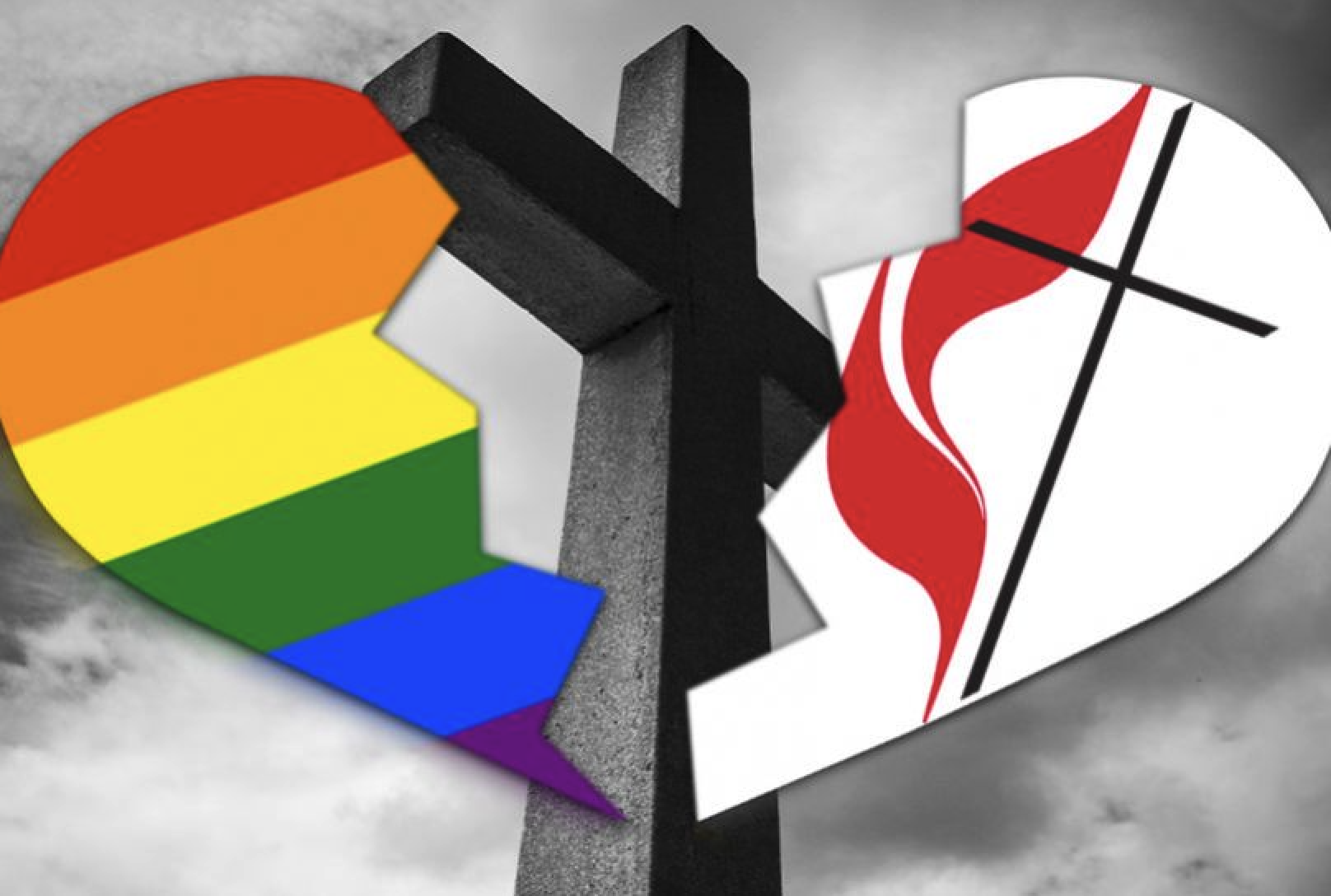
In this case, we are looking at a religion-beat superstory at the local, regional, national and global levels — the break-up of the United Methodist Church, the second largest Protestant denomination in America.

To get the big picture, please see this recent GetReligion post by Richard Ostling: “The latest United Methodist bombshell will create news throughout 2022 and beyond.” To see how long this battle has been going on, check out this “On Religion” column that I wrote in 1998: “United Methodists — Breaking up is hard to do” and two more on a related topic, “Old fault lines can be seen in the ‘seven churches’ of divided Methodism” (and then part II).

Here are Three Big Ideas for today. Remember that I have, as a reporter, been wrestling with this ongoing story since the early 1980s.

(I) Never forget the unique element of this story, which is that the United Methodist Church has a GLOBAL structure that includes the growing churches of Africa and Asia, as well as the splintering (and usually shrinking) congregations in the United States. Readers should question news reports that fail to mention — or even stress — the racial and cultural diversity of the global conservative United Methodism coalition.

(II) While fights about LGBTQ issues make headlines, the United Methodist wars have — behind the scenes — included clear divisions on basic, even credal, issues in Christian theology. In addition to clashing views of biblical authority, we’re talking about splits on salvation, sin, heaven, hell, the Resurrection and the very nature of Jesus Christ. Reporters need to ask questions about issues other than sex.

(III) There are, at the very least, three major groups involved in this story. Let’s call them the “candid left,” the “establishment left” and then the “traditional” United Methodists, as in the defenders of the existing laws and doctrines in the United Methodist Book of Discipline. However, there are subgroups on the right. Never assume that the global conservatives have precisely the same views as their American counterparts.

To see that these issues look like “in the wild,” consider this recent Religion News Service story: “Vote delayed again, some United Methodists say they quit. Now what?”


Please respect our Commenting Policy

The latest United Methodist bombshell will create news throughout 2022 and beyond

The latest United Methodist bombshell will create news throughout 2022 and beyond

Yet another United Methodist bombshell will create news throughout 2022 and beyond

In this, the 50th anniversary year of the 12.9-million-member United Methodist Church's fierce debate over the Bible and sexuality, a late summer General Conference was set to settle how to split. But a March 3 bombshell announcement cancelled this all-important meeting, already postponed twice due to COVID. Without plans for an orderly and respectful breakup, rancor will persist till delegates finally do assemble, presumably in May, 2024.

Here's some lay of the land for the media through 2022 and beyond.

"The only problem with [cancellation] is everything," remarks Religion News Service commentator Jacob Lupfer. "Every major faction in the church agrees on the need for schism. The status quo is untenable." The liberal Reconciling Ministries Network supports the delay, but "this lengthening test of our patience" postpones "the road to justice for our LGBTQ+ kin" who want a policy change that regularizes weddings and clergy ordinations for Methodists in same-sex relationships.

Conservatives are more upset, so much so they immediately rushed to launch a new "Global Methodist Church" (GMC) on May 1. Mark your calendars: GMC supporters will hold a "global gathering" in Avon, Indiana, just afterward on May 7. The GMC will combine U.S. conservatives with sizable groups from the Methodists' flocks in Africa, the Philippines and elsewhere in the diverse Global South. (Most other "mainline" denominations exist in the United States only.)

Crucially, the breakup "protocol" on the 2022 General Conference agenda would have approved a temporary time window until 2024 during which congregations could quit the UMC and keep ownership of their buildings and other assets. The 2024 General Conference could still OK such an escape clause, but by then the schism will be in full swing.

Here is the key for journalists working at the local and regional levels: Without a mutually agreed pact, Lupfer expects expensive, "chaotic, unruly litigation."


Please respect our Commenting Policy

Vatican 'Synod on Synodality': Why the press has largely ignored this big Catholic story

Vatican 'Synod on Synodality': Why the press has largely ignored this big Catholic story

We interrupt your reading about the war in Ukraine with a very important post about the global Catholic Synod on Synodality.

Synod on synodality? Say that three times fast. For some Catholics it’s kind of a Zen thing.

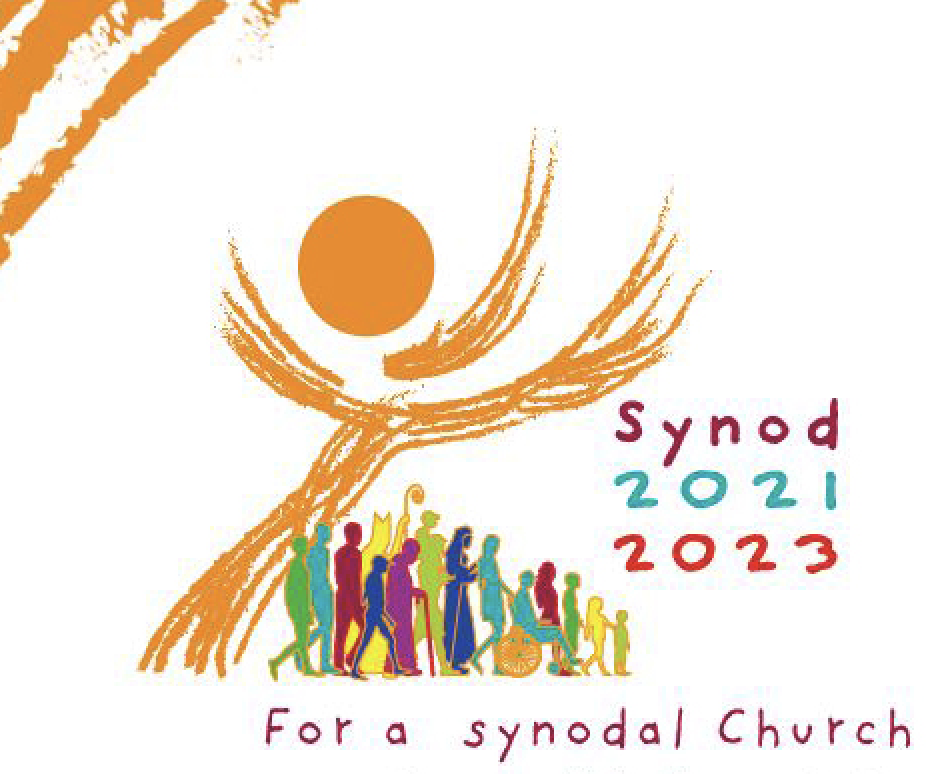
The Synod of Synodality is a two-year process that Pope Francis began last October. Officially known as “Synod 2021-2023: For a Synodal Church,” it is a process that allows bishops to consult with Catholics — from parishioners all the way up to priests — in a spirit of collaboration and openness. This includes official dialogue with some activists who actively dissent from church teachings.

Why should anyone care? Is this a news story that editors will care about?

A phrase like Synod on Synodality certainly won’t ever make it into a punchy headline, not even at The New York Post.

The secular press isn’t all that interested in doctrinal issues that don’t appeal to a larger audience or lack a political connection. It’s the reason why the pope going after the Latin Mass got little mainstream news attention while bishops batting President Joe Biden about receiving Holy Communion got tons of coverage. Then again, the synod will almost certainly contain strong LGBTQ news hooks.

It was in March 2020, on the eve of the pandemic, that Pope Francis announced the synod. It was quickly forgotten as the world battled the outbreak of COVID-19. The Vatican even set up a Twitter account for the synod.

Last October, when the pope launched the start of this process, the Catholic press did a very good job explaining what the Synod of Synodality is. For example, Catholic News Agency explained this global synod and its purpose this way:

The pope acknowledged that learning to listen was “a slow and perhaps tiring exercise” for bishops, priests, religious, and laity.


Please respect our Commenting Policy