LGBTQ

The New York Times fails to ask a key 'parental rights' question linked to Texas trans wars

The New York Times fails to ask  a key 'parental rights' question linked to Texas trans wars

No one in his or her right (or left) mind would expect the college of journalism cardinals at The New York Times to write a balanced story about one of the latest battles in Texas over core doctrines of the Sexual Revolution.

In this case, I am not referring to Gray Lady coverage of the state’s efforts to ban most abortions after unborn children have detectable heartbeats, which is about six weeks into pregnancies.

No, I am referring to a massive new story about Gov. Greg Abbott call for child-abuse investigations of parents who back appeals by their children and teens to begin medical efforts to transition to another gender. The double-decker headline is rather restrained, when one considers the level of outrage among the vast majority of Times-persons.

Texas Investigates Parents Over Care for Transgender Youth, Suit Says

The investigations by the state’s Department of Family and Protective Services started last week with an employee of the agency, according to the suit, after Gov. Greg Abbott called for such inquiries.

As I said, no one would expect the Times to do a balanced story on this kind of subject, one that is so close to the newspaper’s doctrinal heart.

I was, however, surprised that this story didn’t include (a) some kind of reference to the newspaper’s involvement in an important discussion of a related topic by two of America’s leading trans activists and medical professionals and (b) some input from religious conservatives — major players in Texas life — discussing whether Abbott’s actions limit parental rights in decisions affecting their children. Religious conservatives have been very concerned, in the past, about government efforts (see this ongoing Canada case) to punish parents who oppose transition efforts by their children (usually backed by a former spouse).

Back to the Times report. Here is some crucial material:

The investigations by the state’s Department of Family and Protective Services, which have not been previously reported, were started in response to an order from Mr. Abbott to the agency, the lawsuit says. The order followed a nonbinding opinion by the Texas attorney general, Ken Paxton, that parents who provide their transgender teenagers with puberty-suppressing drugs or other medically accepted treatments — which doctors describe as gender-affirming care — could be investigated for child abuse.
Please respect our Commenting Policy

Podcast: What's the SCOTUS story? New Colorado case focuses on free speech, not religious liberty

Podcast: What's the SCOTUS story? New Colorado case focuses on free speech, not religious liberty

Here we go again?

That’s a logical question, in light of the news that — once again — church-state activists on left and right are preparing for more U.S. Supreme Court arguments involving the state of Colorado, a traditional Christian believer, LGBTQ rights and the First Amendment.

That was the news hook for this week’s “Crossroads” podcast (CLICK HERE to tune that in). But to understand that conversation, it really helps to dig into a key passage or two in the majority decision in that 2019 SCOTUS case focusing on Masterpiece Cakeshop and the Colorado Civil Rights Commission (full text .pdf here).

So, all rise. The writer is, of course, then Justice Anthony Kennedy:

The laws and the Constitution can, and in some instances must, protect gay persons and gay couples in the exercise of their civil rights, but religious and philosophical objections to gay marriage are protected views and in some instances protected forms of expression. While it is unexceptional that Colorado law can protect gay persons in acquiring products and services on the same terms and conditions as are offered to other members of the public, the law must be applied in a manner that is neutral toward religion.

The result was one of those narrow decisions much beloved by Chief Justice John Roberts.

Then, what you hear in this next passage is the sound of Kennedy punting the crucial religious-liberty decision in this First Amendment case into the mists of the future:

The outcome of cases like this in other circumstances must await further elaboration in the courts, all in the context of recognizing that these disputes must be resolved with tolerance, without undue disrespect to sincere religious beliefs, and without subjecting gay persons to indignities when they seek goods and services in an open market.


Please respect our Commenting Policy

Yes, a cardinal with strong Pope Francis ties said church doctrines on LGBTQ issues are wrong

Yes, a cardinal with strong Pope Francis ties said church doctrines on LGBTQ issues are wrong

It isn't every day that a prince of the Roman Catholic Church, and a strategic Jesuit ally of the pope, openly rejects centuries of Christian teachings that clash with core doctrines of the Sexual Revolution.

"The Church's positions on homosexual relationships as sinful are wrong," said Cardinal Jean-Claude Hollerich of Luxembourg, in a recent interview with KDA, a German Catholic news agency. "I believe that the sociological and scientific foundation of this doctrine is no longer correct. It is time for a fundamental revision of Church teaching, and the way in which Pope Francis has spoken of homosexuality could lead to a change in doctrine. …

"In our archdiocese, in Luxembourg, no one is fired for being homosexual, or divorced and remarried. I can't toss them out, they would become unemployed, and how can such a thing be Christian? As for homosexual priests, there are many of these, and it would be good if they could talk about this with their bishop without his condemning them."

The latest unorthodox proclamations by Cardinal Hollerich commanded attention because he leads the Commission of the Bishops' Conferences of the European Union, as well as being the pope's choice as "relator general" for the October 2023 global Synod of Bishops, helping shape its work to weigh the church's future.

"This Cardinal seems to be claiming a private revelation which is contrary to scripture & the Catechism of the Catholic Church," tweeted Bishop Joseph Strickland, an outspoken conservative who is Bishop of Tyler, Texas. "Any private revelation that contradicts public revelation must be condemned."

However, the recent "Synodal Way" meetings of German Catholic leaders voted to approve draft texts that affirmed some of Cardinal Hollerich's beliefs, including overwhelming approval for a document entitled "Blessing celebrations for couples who love each other." Support was just as strong for a "Magisterial reassessment of homosexuality" text stating that official church teachings on chastity and homosexuality "should be revised."


Please respect our Commenting Policy

Here we go again: What ails U.S. evangelicalism and where is this movement headed?

Here we go again: What ails U.S. evangelicalism and where is this movement headed?

It's hard to imagine a print article more eye-catching than a lead item in The New York Times Sunday Review that sprawls over three pages, or to imagine a more prominent scribe than columnist David Brooks. The February 6 Brooks opus lionized "the dissenters trying to save evangelicalism."

Save from what? "Misogyny, racism, racial obliviousness, celebrity worship, resentment, and the willingness to sacrifice principle for power" — that last phrase targeting disciples of Donald Trump.

We're at the publicity apex for what Brooks, and movement outsiders and insiders, are calling a "crisis" for this conservative Protestant movement. In recent months The Guy has, less elegantly, pondered a "crack-up. Thus:

* “Are we finally witnessing the long-anticipated (by journalists) evangelical crack-up?

* “Latest angles on Trump-era 'evangelicals,' including questions about the vague label itself.”

* “Concerning evangelical elites, Donald Trump and the press: The great crack-up continues.”

* “Journalism tips on: (1) Evangelical crack-ups, (2) campus faith fights, (3) COVID exemptions.”

This struggle will continue to need fair-minded journalistic attention, simply because this loosely-organized and variegated movement remains the largest and most dynamic segment of American religion. To a considerable extent, as evangelicalism goes, so goes the nation. Both are polarized, troubled and scandal-ridden.

On this topic it's always necessary to remember we're talking about WHITE evangelicals because Black Protestants, though often evangelical in style and substance, form a distinctly separate subculture (which "mainstream" media typically ignore alongside their fixation on the white variety).

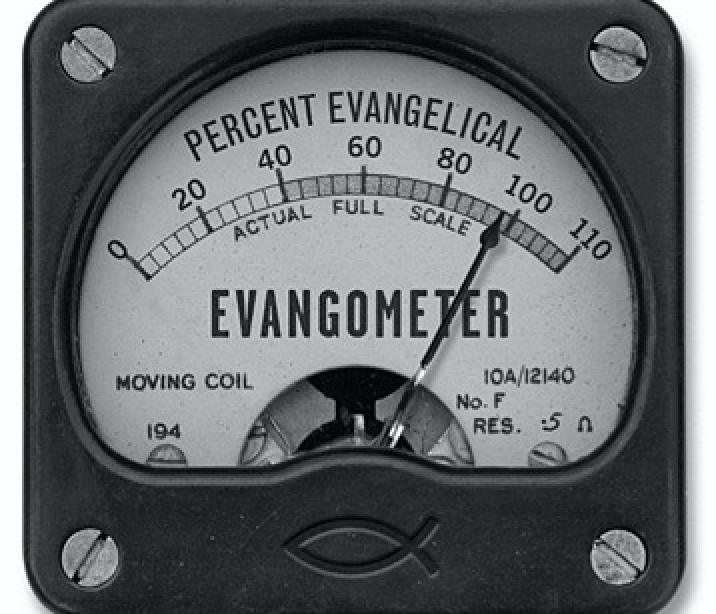
A related preliminary point: What is an "evangelical" anyway?


Please respect our Commenting Policy

What role will religion play in current U.S. Supreme Court nomination intrigue?

What role will religion play in current U.S. Supreme Court nomination intrigue?

When President Biden soon chooses a successor to Supreme Court Justice Stephen Breyer, journalists will need to keep in mind highly contentious religious issues, not just on matters like abortion but over how much to limit First Amendment claims of religious freedom, as in same-sex disputes, and where to draw lines on church-state separation.

Liberal, secularist and separationist voices are quick out of the gate with warnings to Biden about the Court's 6-3 conservative majority. Americans United for Separation of Church and State wants a new justice who'll be "a bulwark against the court's ultra-conservative majority, who seem set on redefining religious freedom as a sword to harm others instead of a shield to protect all of us." This lobby asserts that "our democracy depends on it."

A must-read from the cry-of-alarm forces is the analysis of numerous recent Supreme Court religion rulings from Ian Millhiser — Vox.com's specialist covering law and "the decline of liberal democracy." He asserts that a religion "revolution" is the "highest priority" of the Court's six Republican appointees, who are "rapidly changing the rules of the game to benefit" religious interests.

However, Kelsey Dallas at Salt Lake City's Deseret News tabulates that Breyer, in tandem with fellow liberal Justice Elena Kagan, voted with conservative justices in nine out of the 13 Court's decisions from 2006 to 2020 that backed religious-freedom claims.

The most illustrative example of the Jewish justice's thinking came in 2005 with two apparently contradictory rulings about Ten Commandments displays on public property. Beyer formed a 5-4 majority to permit the display on the Texas state Capitol grounds (Van Orden v. Perry) but then switched to create a 5-4 majority that outlawed displays in two Kentucky courtrooms (McCready County v. A.C.L.U.)

How come? Breyer advocated the "fullest possible" religious liberty and tolerance to avoid societal conflict.


Please respect our Commenting Policy

Pope Benedict's blunder and ensuing media coverage have put his legacy on the line

Pope Benedict's blunder and ensuing media coverage have put his legacy on the line

It has been 20 years since The Boston Globe broke open the decades of sexual abuse by Catholic priests, dragging into the light a hellish story that had lingered on the edge of elite media coverage since the 1980s (see this GetReligion post: “That gap between 1985 and 2002”).

Two decades later, this is a story that continues in the form of questions about who in the Catholic hierarchy knew what and when in a variety of dioceses around the world.

The issue wasn’t limited to Boston. Predator priests were everywhere — a scandal that may have been unearthed in the United States, but one that continues to plague other parts of the world.

The focus the past few weeks has been on Germany and the involvement of Benedict XVI in the handling of some abuse cases, decades before he became a key church official in Rome and, eventually, pope. This was also long before the church — in part due to his leadership — adopted stricter policies on how to handle cases of clergy sexual abuse.

This is a complex subject for journalists to cover, in part when events in the past are viewed through the lens of present church policies and standards. How is the press doing?

Here’s a timeline of these fast-moving developments. This latest chapter in the decades-long clergy sex abuse saga began on Jan. 20 when a law firm released a report, commissioned by the German church, to look into how cases of sexual abuse were handled in Munich between 1945 and 2019. Benedict, the former Cardinal Joseph Ratzinger, headed that archdiocese from 1977 to 1982, when he was named to head the Vatican’s Congregation for the Doctrine of the Faith.

The report’s authors found that Ratzinger failed to stop the abuse in four cases. The report also faulted his predecessors and, this is crucial, his successors for their own misconduct in allowing clergy accused of sex abuse to stay in ministry.

The 2,000-page report also criticized Cardinal Reinhard Marx, currently the archbishop of Munich and Freising, for his role in two cases dating back to 2008. Marx offered his resignation to Pope Francis last year, saying he was willing to take responsibility for his part in the sexual abuse crisis. Francis did not accept the resignation, which says something about what this pontiff thinks of the German prelate.


Please respect our Commenting Policy

That murdered 'priest' and accusations of abuse: But this wasn't another Catholic case

That murdered 'priest' and accusations of abuse: But this wasn't another Catholic case

I have, since the 1980s, heard my share of complaints from Catholic readers about news coverage of sexual abuse by clergy.

There are readers who get angry about this coverage, period. They want the topic to go away and see anti-Catholic bias in any coverage of the subject, even when the coverage is accurate and fair-minded.

However, other Catholic readers get mad when they see valid coverage that leaves the impression that sexual abuse is only an issue in the Church of Rome. Many of these readers (on the Catholic left or right) want to see accurate, informed coverage on this hellish topic, which would include some mention of the many, many cases that take place in secular settings (think public schools) and in other religious groups.

That’s the broader context for complaints that I heard about a recent New York Times story that ran with this dramatic double-decker headline:

Scandal on a Wealthy Island: A Priest, a Murder and a Mystery

The Rev. Canon Paul Wancura led a quiet, privileged life. But after his shocking death, a sexual abuse allegation followed.

There were two problems with this tragic story — one obvious and one not so obvious.

The first problem was that readers didn’t find out, until quite a ways into this piece, that this was a story about an alleged abuser in the Episcopal Church. The word “priest” stood alone in the headline and in 300-plus words of text. It helps to read the lengthy overture:

Not much happens of note on Shelter Island, all 8,000 bucolic acres of it. Sandwiched between Long Island’s North and South Forks, it’s the kind of place where people seem to know one another, where car doors are often left unlocked and where, for some 20 years, the most bothersome problem has been Lyme disease-carrying blacklegged ticks.

But much of that changed in March 2018, when the Rev. Charles McCarron was asked to check in on another clergyman who had recently been commuting to a town on Long Island as a fill-in priest. He had failed to show up at church that day.


Please respect our Commenting Policy

Variations on old questions: What do U.S. churches believe on transgender issues?

Variations on old questions: What do U.S. churches believe on transgender issues?

THE QUESTION:

What do U.S. churches believe on the transgender issue?

THE RELIGION GUY'S ANSWER:

As with American society at large, churches' consideration of the sensitive transgender issue emerged only recently and rather suddenly, compared with their decades-long-debate over whether to leave behind the Christian tradition against sexual activity in gay and lesbian relationships. The religious implications go well beyond political agitation over "bathroom bills," athletic competition or women's shelters.

Transgenderism is part of a broader gender-fluidity movement. A recent survey by the interfaith Religion News Service asked readers to identify themselves as either female, male, transgender, trans woman or MTF, trans man or FTM, intersex, questioning, non-binary, genderqueer, gender fluid, agender or "other."

Among theologically flexible "Mainline" Protestants, a key breakthrough was the Evangelical Lutheran Church in America's September installation of Megan Rohrer of California, its first transgender-identified bishop. Rohrer was barred from the clergy until a 2009 policy change, so was originally ordained by the independent Extraordinary Lutheran Ministries, which works for full LGBT inclusion. (Oddly, that organization suspended Rohrer from membership in December over alleged and unspecified "racist words and actions.")

The United Methodist Church is expected to split this year over the older same-sex disagreement, exactly 50 years after the first floor debate at a governing General Conference. In October, religious media reported the gender transition of the formerly "cisgender" Methodist pastor married to Peggy Johnson, the just-retired bishop for eastern Pennsylvania, Delaware and eastern Maryland. But last month Indiana Methodists removed Pastor Craig Duke from his congregation over drag queen shows and drag education to express solidarity with his daughter, who identifies as pansexual.


Please respect our Commenting Policy

Despite San Francisco Chronicle sermon, parents oppose teachers hiding LGBTQ evangelism

Despite San Francisco Chronicle sermon, parents oppose teachers hiding LGBTQ evangelism

Some of you may have heard of Abigail Shrier, the Wall Street Journal columnist and author of one of last year’s most controversial books, “Irreversible Damage: The Transgender Craze Seducing Our Daughters.” It discusses the stunning surge in the number of teen-aged girls who are declaring that they are transgender.

The book has done quite well, despite a temporary ban on Amazon.com, and Shrier has become quite the crusader in spreading the message that no one under 18 should try transitioning to an opposite gender without stiff challenges from clinicians. After all, puberty blockers, testosterone treatments and mastectomies are, well, irreversible.

She’s branched out into related subjects. In November, she reported a sensational story: “How Activist Teachers Recruit Kids” on her Substack newsletter, The Truth Fairy. Reaction was swift. More on that in a moment. And by the way, there is a clear religion hook in this story, which is why it is relevant to religion-beat reporters and GetReligion readers, in general.

Shrier’s original story story, which is a must-read no matter what side of the trans debate you’re on, reports on a California Teachers Association conference in October where two presenters bluntly described how they could spy on students’ Google searches and listen in on their conversations to recruit kids into LGBTQ-friendly clubs. They also had tips on how to get LGBTQ material into morning announcements in schools, while making sure parents that don’t know anything about what is happening.

We’re talking middle-schoolers here, not 18-year-olds.

Shrier had the advantage of being sent audio files of the entire conference, so much of her material was verbatim remarks by the presenters. In a recent story, The San Francisco Chronicle offered its version of the event.

Now, tell me, does this headline take a stance or not? It read: “Two California teachers were secretly recorded speaking about LGBTQ student outreach. Now they’re fighting for their jobs.”


Please respect our Commenting Policy