LGBTQ

All those fast-growing Christian schools: Are they really bastions of racism, intolerance?

All those fast-growing Christian schools: Are they really bastions of racism, intolerance?

Usually most New York Times’ pieces about anything conservative and (particularly) Christian gets reams of nasty remarks in the comments section. But a recent story on the rapid growth of private Christian schools drew a wider range of constructive responses.

I’m talking about Ruth Graham’s piece about a Christian school in an obscure corner of southwestern Virginia (drive west of Richmond, then head south) and how such schools are booming around the country in the wake of COVID-19 realities.

It’s a trend that a lot of us have seen coming. The key question, for GetReligion readers, is how the story handled the “Why?” factor looming over this trend. We will start at the beginning:

MONETA, Va. — On a sunny Thursday morning in September, a few dozen high school students gathered for a weekly chapel service at what used to be the Bottom’s Up Bar & Grill and is now the chapel and cafeteria of Smith Mountain Lake Christian Academy.

Five years ago, the school in southwestern Virginia had just 88 students between kindergarten and 12th grade. Its finances were struggling, quality was inconsistent by its own admission, and classes met at a local Baptist church.

The Smith Mountain Lake real estate market is the largest marketplace for lake property in Virginia unless you can afford expensive beachfront to the east.

Now, it has 420, with others turned away for lack of space. It has grown to occupy a 21,000-square-foot former mini-mall, which it moved into in 2020, plus two other buildings down the road.

Smith Mountain Lake is benefiting from a boom in conservative Christian schooling, driven nationwide by a combination of pandemic frustrations and rising parental anxieties around how schools handle education on issues including race and the rights of transgender students.

Homes in Franklin County, which includes Smith Mountain Lake, are selling at 35% above assessed value, so people are definitely moving to this exurb because, well, they can.

Everyone is working remote these days and if you don’t HAVE to live near a place like Washington, DC (about a four-hour drive to the north), why would you?

Please respect our Commenting Policy

New podcast: Are 'parental rights' references (inside scare quotes) the new 'religious liberty'

New podcast: Are 'parental rights' references (inside scare quotes) the new 'religious liberty'

Here’s a question that I heard recently from a young person down here in Bible Belt country: Why do students at (insert public school) need permission forms from their parents and a doctor to take (insert over-the-counter medication), but the school can assist a student’s efforts to change her gender identity while keeping that a total secret from the parents?

Obviously, something had changed at this school. The crucial question was whether parents had any right to shape or attempt to influence the education — or the moral and physical transformation — of their child in this setting controlled by the state and funded by their tax dollars. Yes, there are religious doctrines involved in many or even most of these cases.

Here’s the question we discussed during this week’s “Crossroads” podcast: Are media reports about this issue starting to turn parental rights into “parental rights,” complete with those prickly “scare quotes” that have turned references to old-school religious liberty issues into so-called “religious liberty” issues. Click here to listen to that podcast.

You can find traces of this conflict if you dig deep enough in a recent New York Times story with this double-decker headline:

The Unlikely Issue Shaping the Virginia Governor’s Race: Schools

Virginia Republicans in a tight governor’s race have been staging “Parents Matter” rallies and tapping into conservative anger over mandates and critical race theory.

The team behind this fascinating Times story didn’t spot the obvious religion ghost in this story. But this story didn’t attempt to turn these standoffs into libertarian dramas in which Trumpian parents are only concerned about COVID-19 conflicts about masks and vaccines (see a related Washington Post story, for example).


Please respect our Commenting Policy

The New Yorker torches Teen Challenge residential programs in vivid, one-sided report

The New Yorker torches Teen Challenge residential programs in vivid, one-sided report

This must be the season for exposés on Christian youth ministries.

Business Insider just came out with a huge piece on Young Life and a lot of folks are talking about the New Yorker’s recent exposé on the Christian drug rehab organization, Teen Challenge. Based on 60-plus interviews, it’s about one teen-aged girl’s story of being taken from her adopted parents’ home in the middle of the night and forced into a hellish residential program in central Florida.

The story has been framed as Teen Challenge attacking gay teens, although Emma, the central character, arrives at the school pregnant and ends up marrying a man four years later. Much of the story is about how she was forced to give up her child while sequestered at Teen Challenge.

It’s important, when reading this vivid story, to keep asking: Where are the voices on the other side of this drama?

Many of the events reported by The New Yorker took place a decade ago. Here’s how it started:

In the spring of her freshman year of high school, in 2011, Emma Burris was woken at three in the morning. Someone had turned on the lights in her room. She was facing the wall and saw a man’s shadow. She reached for her cell phone, which she kept under her pillow at night, but it wasn’t there. The man, Shane Thompson, who is six and a half feet tall, wore a shirt with “Juvenile Transport Agent” printed on the back. He and a colleague instructed Emma to put on her clothes and follow them to their car. “She was very verbal, resisting,” Thompson told me. Her parents, who had adopted her when she was seven, stood by the doorway, watching silently.

Thompson drove Emma away from her house, in Royal Palm Beach, Florida, and merged onto the highway. Emma, who was fifteen, tried to remember every exit sign she passed, so that she could find her way home, but she was crying too hard to remember the names. …

Part Scottish and part Puerto Rican, Emma was slight, with long, wavy blond hair. Her parents, whose lives revolved around their church, admonished her for being aggressive toward them and for expressing her sexuality too freely. She watched lesbian pornography and had lost her virginity to an older boy.

“Being aggressive toward them?”


Please respect our Commenting Policy

Lots of Latter-day Saints are going liberal? Washington Post story tries to make that case

Lots of Latter-day Saints are going liberal? Washington Post story tries to make that case

Back in late 2010, I began a seven-year stint of freelancing for the Washington Post’s Sunday magazine to help fill a gap in coverage of conservative religion. I wrote about Pentecostal serpent handlers, a female Jewish ambassador from Bahrain and the Orthodox Church of America’s rather controversial metropolitan, among other things.

Then sometime in 2017, a new editor came onboard and, after running my story on Paula White (which made quite a splash I might add), simply refused to respond to any more of my emails. “There goes in-depth religion coverage,” I thought, and turned to other markets.

But lo and behold, the magazine just ran a piece about the Church of Jesus Christ of Latter-day Saints about a “battle for the future of Mormonism.”

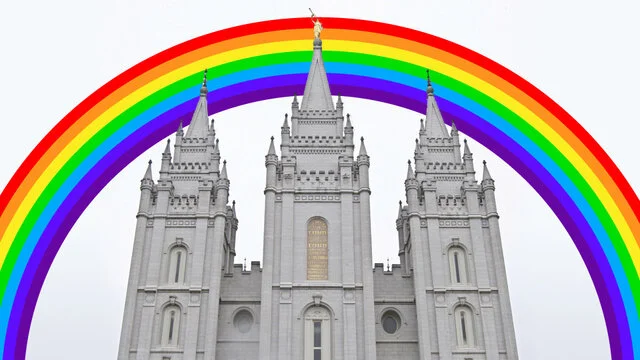
Basically this article makes the case that the Mormons are veering left on gay issues. The reporter visits a very liberal congregation in Berkeley, Calif., and some conservatives in Rexburg, Idaho, considered a traditional Latter-day Saint bastion.

Not to my surprise, the reporter, in support of this thesis, only cites people in both locations who are gay or gay-friendly.

It felt like the reporter had a predetermined goal for the story that just needed the right quotes to scaffold it. Why? I see all the interviews going in one direction: Committed, serious believers who have come to the conclusion that many Mormons are secretly quite liberal. Here at GetReligion, we call this “Kellerism,” a nod to the teachings of a former New York Times editor.

Part of the story is based on an amazing — and inaccurate — assumption.

More so than in other conservative religious institutions, liberals — or at least those disaffected from conservatism — are making their presence known inside and on the perimeters of the church, provoking something of a Latter-day Saint identity crisis.


Please respect our Commenting Policy

Death of a post-theist shepherd: The unorthodox faith of Bishop John Shelby Spong

Death of a post-theist shepherd: The unorthodox faith of Bishop John Shelby Spong

Newark Bishop John Shelby Spong never stuck "Why Christianity Must Change or Die" on the doors of Canterbury Cathedral, since it was easier to post a talking-points version of his manifesto on the Internet.

"Theism, as a way of defining God is dead," he proclaimed, in 1998. "Since God can no longer be conceived in theistic terms, it becomes nonsensical to seek to understand Jesus as the incarnation of the theistic deity."

Lacking a personal God, he added, it was logical to add: "Prayer cannot be a request made to a theistic deity to act in human history in a particular way."

Spong's 12-point take on post-theism faith emerged after spending years on the road, giving hundreds of speeches and appearing on broadcasts such as "The Oprah Winfrey Show" and "Larry King Live." While leading the Episcopal Diocese of Newark, within shouting range of New York City, he did everything he could to become the news-media face of liberal Christianity.

By the time of his death at the age of 90, on Sept. 12 at his home in Richmond, Va., Spong had seen many of his once-heretical beliefs -- especially on sex and marriage -- normalized in most Episcopal pulpits and institutions. However, his doctrinal approach was too blunt for many in the mainline establishment, where a quieter "spiritual but not religious" approach has become the norm.

Spong called himself a "doubting believer" and said he had no problem reciting traditional rites and creeds because, in his own mind, he had already redefined the words and images to fit his own doctrines. He also knew when to be cautious, such as during Denver visit in the late 1980s -- an era in which the Diocese of Colorado remained a center for evangelical and charismatic Episcopalians.

After a lecture at the liberal St. Thomas Episcopal Church, I asked Spong if he believed the resurrection of Jesus was an "historic event that took place in real time."

"I don't think that I can say what the disciples believed they experienced. I'll have to think about that some more," he said, moving on to another question.


Please respect our Commenting Policy

Thinking with Ryan Burge (and one of his critics) about abortion and evangelical voting

Thinking with Ryan Burge (and one of his critics) about abortion and evangelical voting

If you follow political scientist Ryan Burge on Twitter (which you should do, of course), then you know that he sends out waves of poll information, creatively sifted, in the form of charts.

From time to time, people have been known to bounce questions back to him, seeking clarification or more specific numbers on some strange angle of the topic at hand. I confess that I have been known to do that.

Burge is relentlessly helpful in that online setting. However — imagine this — there are people who argue with him? On Twitter, of all places! Some disagree with his interpretations. On Twitter!

I’m being sarcastic, to make a point linked to this weekend’s pair of “think pieces.” I’m one of those guys who disagrees with Burge from time to time. That happens, when someone is delivering and then interpretting lots of information in a public forum. The difference with Burge is that he is relentlessly candid, even when dealing with numbers and trends that challenge lots of common news templates.

Recently, Burge wrote a commentary piece — backed with some of his charts — for Religion News Service, flashing back to some polling from 2018. The piece ran with this double-decker headline:

Abortion just isn’t the motivating issue for evangelicals it once was

Studies show white evangelicals, by and large, do not have a hard-line approach to abortion — other issues like immigration and race are taking priority over advocating for the unborn.

Whatever your stance on “life” issues, don’t you want to read more about that claim? Here is a key (and quite long) section of that:


Please respect our Commenting Policy

What's next in Afghanistan? Press will have to face issues of religion, culture and gender

What's next in Afghanistan? Press will have to face issues of religion, culture and gender

The headline on the National Catholic Register story is simple and timely: “Trapped by the Taliban, Praying for Escape from Afghanistan.

The reporting is simple, as well, as long as the journalists involved have established contacts with people inside Kabul who have smartphones and there are functioning cell towers and satellites. The story is built on people describing what they claim is going on around them, especially events affecting their families and friends.

These people are U.S. citizens, Afghans with U.S. “green cards” and others who cooperated with Western governments and agencies, including religious groups, during the 20 years of “nation building” in the war-torn land of Afghanistan.

The question is whether the contents of this story remain newsworthy, since Afghanistan has, for now, moved off the front burner in elite newsrooms. What happened? Clearly, Republicans and centrist Democrats had “pounced” on the topic while blasting President Joe Biden and his White House team.

But is this NCR piece news? Yes, it is. Also, this is a story journalists can study while looking for clues about realities, and news, at ground level in the Taliban’s new-old Afghanistan. Here is the overture:

For two decades, Sher Shah had worked alongside U.S. and Afghans to build a democratic country free from the Taliban and war. He had established a new life with his family in the U.S. with the help of Catholic Charities and a Catholic sponsor family, but briefly returned to Afghanistan this summer to attend his father’s funeral.

Now, he’s a man trying to escape the Taliban and get back home to the U.S.

More? Here is a claim — let me stress this is a CLAIM — coming from this source. But the Register report has other anonymous voices making similar statements in what appear to be telephone interviews or contacts via email.

U.S. Secretary of State Anthony Blinken has stated approximately 100 U.S. citizens and lawful permanent residents remain in Afghanistan. …

But Sher Shah said he has heard nothing from the State Department since Aug. 26 — and he made use of the State Department’s information posted on its website for U.S. citizens and lawful permanent residents stuck in Afghanistan.

“There are thousands of Americans still in Afghanistan,” he said. “And I’m one of them.”

The reality that emerges, in this stories and others, is that the United States and other Western forces were not engaged in 20 years of “nation building,” as in building an Afghanistan government that looked to the nation’s past — its monarchy, for example. It would be more accurate to say the goal was building a new culture, one that incorporated elements of modernity and even postmodernity in America and Europe.


Please respect our Commenting Policy

Bishop is transgender, but where's the reporting on Megan Rohrer as a 'Lutheran'?

Bishop is transgender, but where's the reporting on Megan Rohrer as a  'Lutheran'?

The news of the recent installation of the Evangelical Lutheran Church in America’s first transgender bishop has been leading me to wonder what makes a culture Lutheran and what impact Lutherans have on the cultures of the countries they live in.

Here’s the context. For the past week, I’ve been traveling about Iceland and Greenland, two countries where the Lutheran Church put down roots centuries ago as the national church. In fact, 2021 marks the 300th year of Christianity being introduced to Greenland via the Danish missionary Hans Egede.

Oddly, Greenland chose not to celebrate the anniversary in July, which is when Egede came in 1721.

Iceland has notorious rates of church non-attendance — in one of the world’s seven officially Lutheran countries, Iceland’s adherence rate may be the lowest at 10 percent. (One of the fastest-growing groups in that Nordic country are the pagans, a phenomenon about which I’ll be reporting on next week for my new gig at Newsweek).

I am no expert on religion in Greenland, but I do know this inaccurate piece put out in 2019 by the World Council of Churches is quite wrong in saying there’s only two churches in Nuuk, the country’s capital. Maybe there are only two Lutheran churches, but I stumbled upon a very lively Pentecostal assembly in the center of town during the Sunday morning I was there.

Which brings me to there being a Lutheran culture in these two countries, church attendance rates notwithstanding. There is a prominent church in the center of each Greenlandic town of any size. Confirmation day remains a big deal for teen-agers there. The Icelanders have made their futuristic looking churches a matter of national pride, whether or not people go inside them and even though some media call the church “irrelevant.”

And being that Greenland has some of the world’s highest suicide rates, does that make the church there is “irrelevant” as well? Hard to say. But these are countries where Lutheranism is part of the air they breathe.

Here in the USA, the ELCA is slated for statistical oblivion by the 2040s. No joke, read about it here. In view of how many of the world’s growing denominations are the ones that trend conservative, the denomination’s 2009 vote to allow same-sex marriages among its clergy and, now, non-gender-specific bishops is rather symbolic. Lutheran conservatives would call it a death wish.


Please respect our Commenting Policy

New podcast: Gray Lady prints some complex Ryan Burge insights on Democrats and religion

New podcast: Gray Lady prints some complex Ryan Burge insights on Democrats and religion

Something old, something new.

Something red, something blue.

We started with something new and something blue during this week’s “Crossroads” podcast (click here to tune that in). But, as you will see, the “something old” turned out to be blue, as well.

“Blue,” of course, refers to the liberal/progressive half of the starkly divided American political scene, which also reflects, of course, divisions on moral, social, cultural and religious issues.

Oceans of mass-media ink have been poured out in recent decades by journalists covering the Religious Right and its scary impact on the Republican Party. What about the religious left — no capital letters, of course — and its impact on the Democrats?

That isn’t an important story, of course. At the start of the podcast I quoted some numbers retrieved at mid-week from some Google searches. A basic search for “Religious Right” yielded 6.5 million hits and a Google News search found 77,500 items. Do the same thing for “religious left” and you get 196,000 in the first search and 3,680 in the news search. Amazing, that.

This brings us to a New York Times op-ed essay by the increasingly omnipresent (and that’s a good thing) political scientist Ryan Burge, who contributes charts and info here at GetReligion. The headline: “A More Secular America Is Not Just a Problem for Republicans.” Here’s an early thesis statement:

Today, scholars are finding that by almost any metric they use to measure religiosity, younger generations are much more secular than their parents or grandparents. In responses to survey questions, over 40 percent of the youngest Americans claim no religious affiliation, and just a quarter say they attend religious services weekly or more.

Americans have not come to terms with how this cultural shift will affect so many facets of society — and that’s no more apparent than when it comes to the future of the Republican and Democratic Parties.

The impact on the GOP is rather obvious. While conservative religious groups remain strong in America (evangelicals are not vanishing, for example), the number of religiously unaffiliated (“nones”) continues to rise and the vague middle of the religious spectrum continues to shrink. Meanwhile, conservatives face an increasingly “woke” corporate culture and fading support on the left for old-fashioned First Amendment liberalism (think “religious liberty” framed in scare quotes).

Things get interesting — especially in the context of the Times op-ed world — when Burge discusses complications now facing Democratic Party leaders.


Please respect our Commenting Policy