LGBTQ

'Total Woman' redux: Obscure white evangelical says stupid things and it's national news

'Total Woman' redux: Obscure white evangelical says stupid things and it's national news

About the time that I started teaching journalism in Washington, D.C., I saw a movie in which Beltway professionals (including speechwriters) played a rather cynical bar game. I think the movie was “Speechless,” with Michael Keaton and Geena Davis.

If my memory is correct, the game was called “Spot the soundbite.” The goal was to watch a long, complicated political speech and then to accurately predict the tiny, often sensational 5-10 second “bite” that would make it into television news reports.

The message, of course, was that substance and nuance didn’t mean much in public life. Emotions and feelings linked to a fleeting soundbite — which could be funny or emotional or whatever — were what mattered. All together now: “Where’s the beef!” It was also clear that it was easy for journalists to pick good, sharp soundbites from “good” candidates and bad, stupid soundbites from “bad” candidates.

This brings us to this week’s “Crossroads” podcast (click here to tune that in), in which host Todd Wilken and I discussed the latest example of a preacher getting caught, in the age of YouTube and social media, failing to understand the rules of “Spot the soundbite.”

I heard about this epic news story when a former student — who has national print and television experience — sent me a wry email that said: “It’s weird that this random preacher’s sermon merits an NBC News story, no?” Indeed. In the world of short attention spans and tiny online news reports, this sermon by an unknown preacher, in a tiny church, in the middle of nowhere, in an obscure denomination, deserved a 900-word report.

My witty former student knew, of course, why this sermon received lots of national news coverage — including staff (not wire service) coverage in The New York Times (we will get to that shortly).

Yes, this preacher said some genuinely bizarre and disturbing stuff about women and marriage, especially when viewed through a #ChurchToo lens. However, was it national news that an unknown pastor said these things? Well, it is if the sermon contains the word “Trump” and this pastor can be turned into an archetypal symbol of white evangelicals in flyover country, the rubes many journalists blame for electing Orange Man Bad in the first place.

This preacher did not understand how to play “Spot the soundbite.”

Please respect our Commenting Policy

Why are Latinos veering into GOP? It's all about money, money, money (and zero faith)

Why are Latinos veering into GOP? It's all about money, money, money (and zero faith)

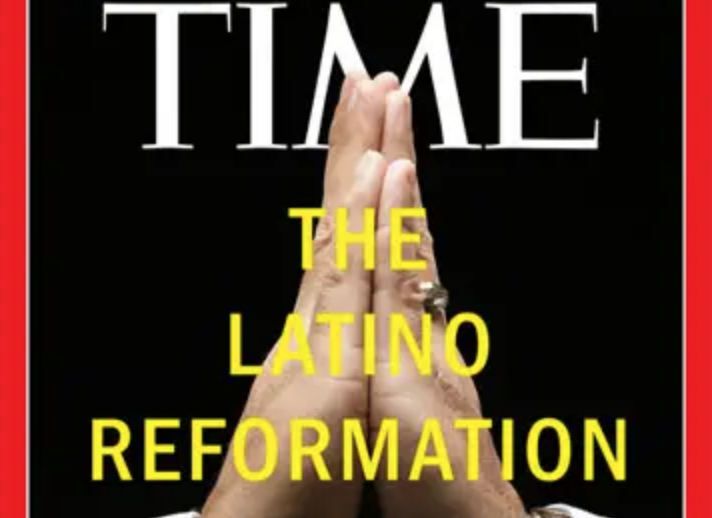
I know, I know. If you have read GetReligion for the past four-plus years, you know that we’re convinced that the rise of the Latino evangelical voter (often paired with traditional Catholic Latino voters) is an emerging story in American public life.

Part of this story is the rise of Pentecostalism in the Spanish-speaking world (classic Pew Research Center study here) and another part is linked to the defense of Latino family values (to use a loaded phrase).

There’s much more to this story than the role these voters played in Donald Trump’s surprising (to some) showings in some Florida and Texas zip codes. Click here (“New York Times listens to Latino evangelicals: 'Politically homeless' voters pushed toward Trump”) and then here (“Concerning Hispanic evangelicals, secret Trump voters and white evangelical women in Georgia”).

To be blunt about it, it appears that political-desk reporters are struggling with this issue, in part because it undercuts some themes in long-predicted demographic trends backing Democrats. You can see that in the recent, oh-so-predictable New York Times story that ran with this massive double-decker headline:

A Vexing Question for Democrats: What Drives Latino Men to Republicans?

Several voters said values like individual responsibility and providing for one’s family, and a desire for lower taxes and financial stability, led them to reject a party embraced by their parents.

The story is getting some Twitter attention because of this magisterial statement of woke Times doctrine:

Some of the frustrations voiced by Hispanic Republican men are stoked by misinformation, including conspiracy theories claiming that the “deep state” took over during the Trump administration and a belief that Black Lives Matter protests caused widespread violence.

But it’s more important to focus on the bigger picture, which is that this trend is all about Latino men wanting to get rich by being part of the American dream. The overture is long, but essential:


Please respect our Commenting Policy

New podcast: Yes, cover RFRA; but Equality Act coverage has also been quiet on local stories

New podcast: Yes, cover RFRA; but Equality Act coverage has also been quiet on local stories

What we have here is a logical question that journalists (and news consumers) should be asking at this point in coverage of debates about the Equality Act. It’s also one of the questions that “Crossroads” host Todd Wilken and dissected during this week’s podcast (click here to tune that in).

That question: How many religious health organizations, schools, recreation centers, homeless shelters, campgrounds, day-care centers and other forms of faith-driven ministries and nonprofit groups are located in the zip codes covered by the newsrooms of your local media outlets?

Earlier this week, I wrote a post (“Puzzle: Many reporters ignoring Equality Act's impact on this crucial Schumer-Kennedy legislation”) noting that a few mainstream news organizations have covered the ways in which the Equality Act would edit or even crush the Religious Freedom Restoration Act (RFRA) of 1993, which passed in the U.S. Senate vote of 97-3. That vote symbolized both the bipartisan nature of that legislation and stunning left-right coalition of sacred and secular groups that supported it.

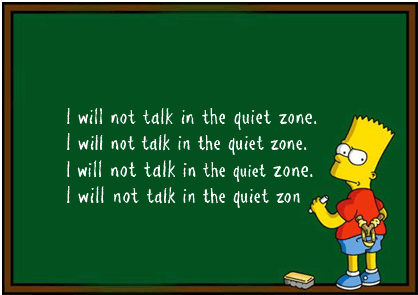
That remains a valid angle for coverage. However, the more I thought about this topic, and the more Equality Act reports that I read, the more I focused in on another “quiet zone” in the mainstream news coverage — including at the local and regional levels.

For starters, let’s look at two pieces of a major New York Times report on the Equality Act:

It was the second time the Democratic-led House had passed the measure, known as the Equality Act, which seeks to amend the Civil Rights Act of 1964 to add explicit bans on discrimination against lesbian, gay, bisexual and transgender people in both public and private spaces.

Now, that’s remarkably broad language. What kinds of groups and institutions, pray tell, are included under “both public and private places”? And remember this old journalism mantra: All news is local.

Later on, the story adds:

In a landmark decision in June, the Supreme Court ruled that the 1964 civil rights law protects gay and transgender people from workplace discrimination, and that the language of the law, which prohibits discrimination on the basis of sex, also applies to discrimination based on sexual orientation and gender identity. House Democrats sought to build on that ruling with the Equality Act, which would expand the scope of civil rights protections beyond workers to consumers at businesses including restaurants, taxi services, gas stations and shelters.


Please respect our Commenting Policy

Attention news editors: Are German Catholic bishops poised to become liberal Luthers?

Attention news editors: Are German Catholic bishops poised to become liberal Luthers?

Germany’s Catholic bishops embarked on a series of conversations in 2018 aimed at reforming church teachings. It was an ambitious, if not audacious, effort addressing everything from homosexuality, priestly celibacy and the ordination of women.

As always, the word “reform” — in this context — means modernizing ancient church doctrines.

Conservative Catholics across the world decried the prospect. The tensions that arose at that time — and still simmering today — even caused some to warn that a permanent split could occur.

Indeed, the dreaded “s-word” — schism — can be used to describe the current moment. It was just last year that a high-ranking prelate argued that pushing such changes could lead to a “German national church.”

That’s a big news story — period. Over the past three years, the bishops in Germany haven’t been shy about making headlines — in Catholic-market publications. The question is when their proposals will draw major coverage by professionals in major newsrooms, including television networks.

Meanwhile, Pope Francis has elevated women at the Vatican, but he hasn’t endorsed such progressive doctrinal proposals — although his papacy has emboldened the Germans to push for such changes.

The church across the West has suffered tremendously due to secularism and the clergy sex scandal, especially in Germany. None of these German innovations, along with the alleged cover-ups, has helped matters. Still, the German bishops have continued to propose “reforms” in the past few weeks — with a series of moves that could forever change Roman Catholicism.

These latest pronouncements have received attention in the U.S. press, primarily in conservative religious publications. There are exceptions, but overall these fast-moving developments have gone unnoticed as of late.

These moves come as the church in Germany continues to lose members. In 2019, for example, over 272,000 Catholics quit the church.


Please respect our Commenting Policy

Yo, Nashville Tennessean: What does 'people of faith' mean in a political argument?

Yo, Nashville Tennessean: What does 'people of faith' mean in a political argument?

When I arrived at the Rocky Mountain News (RIP) long ago — think early ‘80s — I quickly learned that the city-desk team had an informal way of checking the Colorado pulse on religious issues.

Basically, they were interviewing clergy at the churches in downtown Denver. That was pretty much it. They would also call the Denver Catholic archdiocese (rather progressive at that time) and the “local seminary,” as in the already “woke” Iliff School of Theology, nationally known as an edgy United Methodist campus. It appeared no one knew about the larger Denver Seminary (evangelical) only a few blocks from Iliff.

What kind of churches were downtown? Almost all of them were mainline Protestant congregations and very few of them were showing any sign of life, in terms of attendance and growth. But they were nearby and most were progressive, so that was that. Why talk to folks at the region’s growing megachurches?

Hang in there with me. I am working toward a recent Nashville Tennessean article that ran with this headline: “Hundreds of people of faith call on Tennessee's Republican congressional delegation to repudiate lies about election fraud.” The key question: Define “people of faith”?

Back to Denver, for one more comment. Early on, I attended a press conference linked to the Colorado Council of Churches. Here is how I described what happened in a post back in 2013:

The key was that the organization … was claiming that it spoke for the vast majority of the state's churches. The problem was that, by the 1980s, the conversion of the Colorado Front Range into an evangelical hotbed (including evangelicals in many oldline Protestant bodies) was well on its way. Also, a more doctrinally conservative Catholic archbishop had arrived in town, one anxious to advocate for Catholic teachings on public issues on both sides of the political spectrum. …

Still, it was an important press conference that helped document one side of a religious debate in the state.

Near the end of the session, I asked what I thought was a logical question: Other than the Roman Catholic Archdiocese of Denver, did any of the CCC leaders present represent a church that had more members at that moment than during any of the previous two or three decades?

Well, hey, I thought it was a fair question.


Please respect our Commenting Policy

Embracing LGBTQ adoptive parents: Was Bethany's change of heart (and doctrine) a surprise?

Embracing LGBTQ adoptive parents: Was Bethany's change of heart (and doctrine) a surprise?

Ever since she joined the New York Times last summer, Ruth Graham has been breaking stories left and right. Yesterday’s revelation of a revered Christian adoption agency agreeing to allow in gay parents is the latest of many.

Judging by her piece — and those of several other outlets — the decision must have been known for several days but was embargoed until that all-important email went out to the ministry’s staff.

Ever since the Supreme Court legalized gay marriage in 2015, it was only a matter of time before these newly legalized couples wanted to adopt kids.

This time around, state officials could be supporting them and any agency not complying would stand to lose financially big time. The story begins:

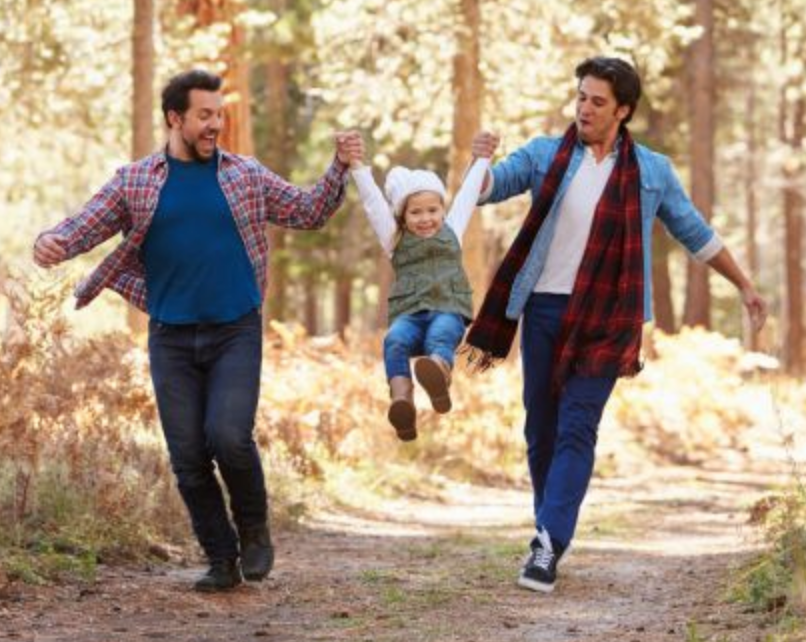
One of the country’s largest adoption and foster care agencies, Bethany Christian Services, announced on Monday that it would begin providing services to L.G.B.T.Q. parents nationwide effective immediately, a major inflection point in the fraught battle over many faith-based agencies’ longstanding opposition to working with same-sex couples.

Bethany, a Michigan-based evangelical organization, announced the change in an email to about 1,500 staff members that was signed by Chris Palusky, the organization’s president and chief executive. “We will now offer services with the love and compassion of Jesus to the many types of families who exist in our world today,” Mr. Palusky wrote. “We’re taking an ‘all hands on deck’ approach where all are welcome.”

What that means is that the amount of orphans is so great and the number of available parents are so few, that anyone available –- even if gay, single, older, etc. –- is needed to adopt these kids.

The announcement is a significant departure for the 77-year-old organization, which is the largest Protestant adoption and foster agency in the United States. Bethany facilitated 3,406 foster placements and 1,123 adoptions in 2019, and has offices in 32 states. (The organization also works in refugee placement, and offers other services related to child and family welfare.) Previously, openly gay prospective foster and adoptive parents in most states were referred to other agencies.

The decision comes amid a high-stakes cultural and legal battle that features questions about sexuality, religious freedom, parenthood, family structure and theology.


Please respect our Commenting Policy

Puzzle: Many reporters ignoring Equality Act's impact on this crucial Schumer-Kennedy legislation

Puzzle: Many reporters ignoring Equality Act's impact on this crucial Schumer-Kennedy legislation

I have been following the Equality Act coverage and, so far, a crucial piece in this puzzle has been missing.

Thus, here is a one-question pop test. That question: Name the piece of stunningly bipartisan legislation — vote was 97-3 in U.S. Senate — from the Bill Clinton era that will be gutted by passage of the Equality Act? Hint: It was introduced in the House by Rep. Chuck Schumer (D-NY) on March 11, 1993, and in the Senate on the same day by the late Sen. Ted Kennedy (D-MA).

We are, of course, talking about the Religious Freedom Restoration Act (RFRA). In today’s advocacy-media age that would, of course, be the “Religious Freedom” Restoration Act, complete with “scare quotes.”

The key is the impact the Equality Act would have on religious parachurch groups, social ministries, hospitals and educational institutions, from preschools to universities.

Now, does everyone agree on how the Equality Act would impact the First Amendment rights of religious believers and their doctrine-defined ministries?

Of course not. There are strong, credible voices on both sides of that debate that deserve serious, accurate, informed coverage by the mainstream press. However, this process — let’s call it “journalism” — would require newsroom managers to admit that this issue exists.

That’s why Andrew Sullivan — one of the world’s best-known gay public intellectuals — called the introductory Washington Post Equality Act story a “press release” (think PR) for the Human Rights Campaign. Here is that story’s description of the legislation’s impact:

The Equality Act would amend existing civil rights laws, such as the Civil Rights Act of 1964 and the Fair Housing Act, to explicitly ban LGBTQ discrimination in the workforce, housing, education, credit, jury service and other areas of American life.

If passed, the legislation would provide the most comprehensive LGBTQ civil rights protections in U.S. history, advocates say, significantly altering the legal landscape in a country where more than half of states lack explicit legal protections on the basis of sexuality or gender identity. …


Please respect our Commenting Policy

Keep the Bible in one hand, a newspaper in the other: Tips for stressed-out preachers

Keep the Bible in one hand, a newspaper in the other: Tips for stressed-out preachers

“You preach with the Bible in one hand and the newspaper in the other.”

That’s what Bishop Timothy Clarke, an Ohio senior pastor, said in a recent front-page feature by Danae King, the Columbus Dispatch’s religion writer.

It’s an idea that originated with the late Karl Barth, one of the most influential theologians of the 20th century. Barth put it this way: “Take your Bible and take your newspaper, and read both. But interpret newspapers from your Bible.”

Barth’s concept was a prominent theme of a Facebook Live panel discussion organized this week by the Siburt Institute for Church Ministry at Abilene Christian University in Texas.

“We used to think the hard part was interpreting the Bible, but now we've decided the hard part is interpreting the newspaper,” quipped Randy Harris, one of the co-hosts, along with Carson Reed, of the discussion on “Light, Truth and Fake News.”

The panel — on which I was honored to speak — aimed to help stressed-out ministers make sense of the news in a time of polarization and conspiracy theories.

“Read broadly. Value truth,” urged Cheryl Mann Bacon, a Christian Chronicle correspondent and retired journalism chair at Abilene Christian. “Be compassionate when you share it, but be courageous when you share it.”

Co-host Harris is a longtime preacher and spiritual director who works with the Siburt Institute.

He advised: “Pay attention to local news. We can get caught up with what's happening in Washington, but there's stuff that's happening in your town that needs a response. The second thing is, to ministers: You've made a commitment to read the news through a certain lens, and that's the lens of a crucified and risen Messiah.”


Please respect our Commenting Policy

Which issue drew more ink? SBC on Trump-era rifts, race, #ChurchToo abuse, gay marriage

Which issue drew more ink? SBC on Trump-era rifts, race, #ChurchToo abuse, gay marriage

Here’s a question for GetReligion readers, including journalists: Are you surprised that the Southern Baptist Convention still believes sex outside of marriage is sin and, yes, that marriage is defined — by two millennia of Christian teaching — as the union of man and woman?

All of you who are surprised, please raise your hands.

There shouldn’t be many hands in the air on that one.

Now, would you say that SBC action on that question is, well, sexier than the decision by the national convention’s executive committee to oust two congregations for violating guidelines on sexual abuse, following in the wake of many #ChurchTwo revelations (especially in major Texas newspapers)?

Meanwhile, SBC President J.D. Greear offered up a blistering speech to the executive committee in which he addressed what he called demonic attacks on SBC unity, attacks centering on two hot-button topics — racism and (to be blunt) Donald Trump-era politics.

Of these four issues, want to guess which drew mainstream-press headlines? That’s the question that host Todd Wilken and I discussed during this week’s “Crossroads” podcast. Click here to tune that in or head over to iTunes to subscribe.

According to the Associated Press, the biggest news was that totally predictable decision linked to marriage and sex. Meanwhile, I am happy to report that The New York Times produced a story that, while the headline was predictable (“Southern Baptists Expel 2 Churches Over Sex Abuse and 2 for L.G.B.T.Q. Inclusion”), was updated to become a solid look at the tensions surrounding Greear and some of these issues. We will come back to both of those stories.

But first, I think GetReligion readers need to read a large chunk of the (edited) text from the Greear broadside. (Click here for Baptist Press coverage and, most of all, here for a file that includes the full video.)

The key: Greear sets out to affirm the 1980s SBC move to the right on issues of biblical authority, while repudiating what he calls the “leaven of the Pharisees” emerging on the SBC’s right flank. The following is long, I know, but essential to understanding what is happening right now in America’s largest Protestant flock:


Please respect our Commenting Policy