Journalism

Benedict XVI's death ushers in media speculation on what Pope Francis can (or will) do next

Benedict XVI's death ushers in media speculation on what Pope Francis can (or will) do next

One of my five things to watch for in 2023 included media speculation over Pope Francis’ health and speculation over his possible retirement.

Within three days of that post — and prompted by the death on Dec. 31 of Pope Emeritus Benedict XVI at the age of 95 — speculation increased once again.

This is what I wrote in that Dec. 28 post:

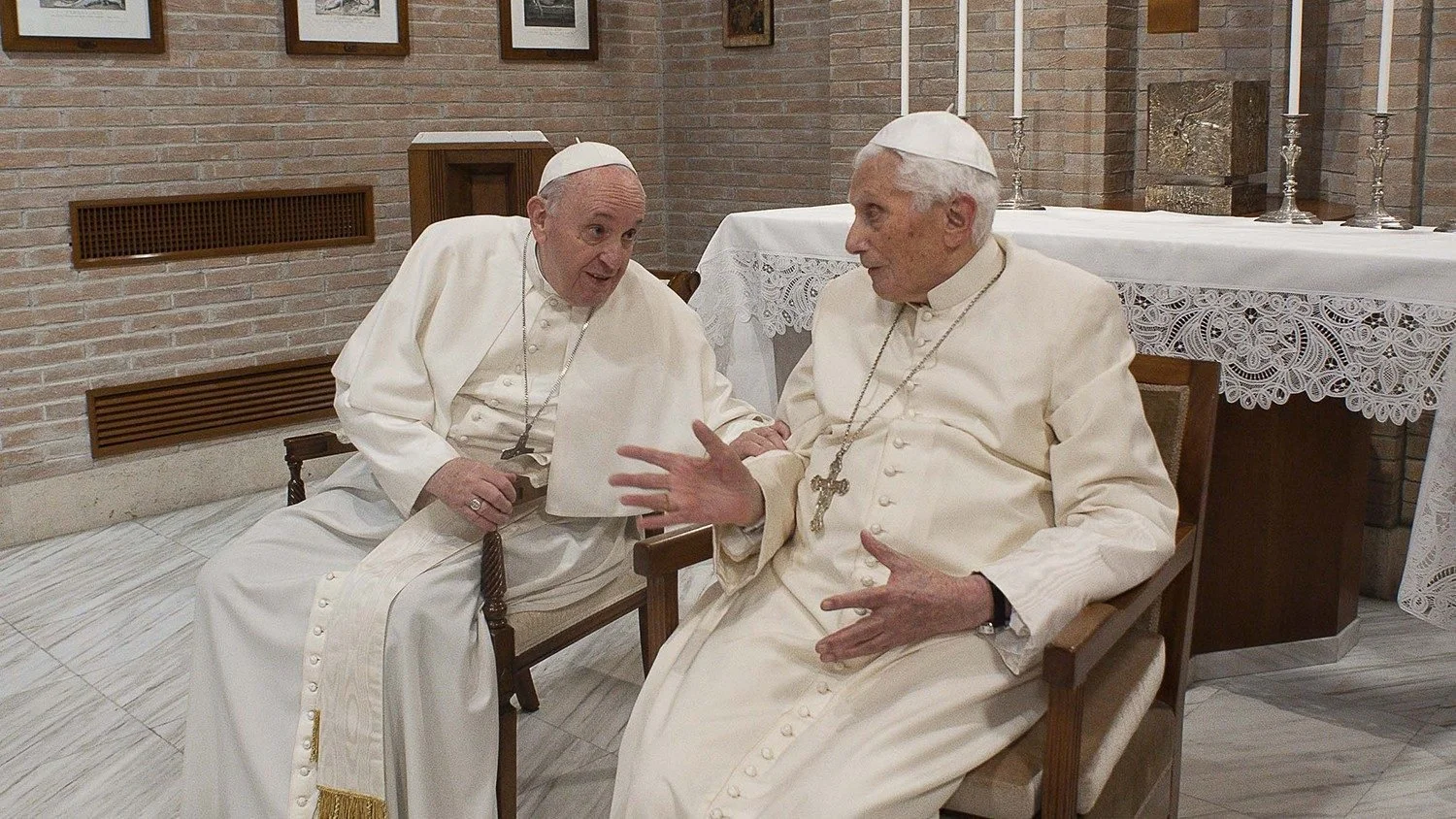
The pope has often praised the decision of his predecessor, now Pope-Emeritus Benedict XVI, to resign because he felt unable to carry the duties of the papacy due to his advanced age.

In 2013, Benedict, who currently lives in a monastery at the Vatican and is seldom seen, became the first pontiff to resign in 600 years, paving the way for Francis’ election. Now his health appears to be failing.

Will there be a new conclave in 2023? There’s no way to know that now. One thing, however, is certain. Speculation will only mount with each passing day. Pope Francis isn’t getting younger.

The election of a new pope is a story journalists love to report. It’s something like a cross between a presidential election and a royal wedding. The bottom line: Journalists see it as a political horse race.

Speculation will certainly mount. Journalists love elections.

Much of the speculation over what Benedict’s death means for Francis, however, cast a shadow over what should have been stories around the legacy of former Cardinal Joseph Ratzinger. Instead, the news coverage quickly shifted to “what happens next” — not an unusual journalism strategy in order to have political-style coverage that looks ahead rather than at the past — and whether Francis would someday step down.
Please respect our Commenting Policy

Correction? Washington Post on the 'religious event' that marked passing of Benedict XVI

Correction? Washington Post on the 'religious event' that marked passing of Benedict XVI

Once upon a time, it was relatively clear when a news organization did or did not need to publish a correction about an error in one of its reports.

But then the World Wide Web came along and reporters at major organizations began writing what were, in effect, news reports that evolved during or just after an important event — rather like the “write-thru” story updates that wire services had for decades sent to newsrooms.

In the old days, however, there was a definitive moment when ink hit paper and readers and journalists could consider a news report “published.” If there was an error of fact in that published story, then everyone (within reason) knew that there needed to be an ink-on-paper correction.

What is supposed to happen when a news report is merely published online? Is a story in digital bytes as “real” as the old ink-on-paper version? That’s the kind of issue journalists have been debating ever since professionals began “breaking” stories online or producing early versions of news reports that, eventually, merged into final reports that were “published.”

This brings me to an interesting sentence that ran, sort of, in a Washington Post foreign-desk (as opposed to the religion desk) story about the funeral Mass for Pope Emeritus Benedict XVI. Here is that sentence, which has circulated in screen shots taken of the Post website:

At the religious event, sometimes called the Eucharist, the faithful receive the sacrament, normally consecrated bread like wafers and wine, symbolizing the body and blood of Jesus.

I have done quite a bit of searching for that material online — especially the “symbolizing the body and blood of Jesus” reference — and I can only find fragments of digital material that show that it once existed. Maybe I have missed it, somehow. If so, I would welcome a correction and a working URL.

Meanwhile, check out, this wispy reference found in this online search file.


Please respect our Commenting Policy

Flashback: The late, great Walter Cronkite did some thinking about religion news

Flashback: The late, great Walter Cronkite did some thinking about religion news

Did you know that the late, great CBS News anchor Walter Cronkite, one of the most important news icons of all kind, once worked as a “church editor” for a mainstream newspaper in Houston (apparently the old Houston Press)?

That was a detail from his life that I missed. I had read, long ago, that he was a “cub reporter” after his college years, yet before he broke into broadcasting. But time as a “church editor”? That’s a journalism title from the old, old days, one that is even more condescending than the more common and inaccurate label “religious editor (as opposed to “religion” editor.

Anyway, a religion-beat friend recently send me a photocopy of a 1994 interview with Cronkite that ran in The Christian Century, the influential mainline Protestant journal. I can’t find it online, although it was quoted by Religion News Service in an a short obit — “And that’s the way he was” — in 2009.

Encountering that “church editor” label reminded me of the old “Lou Grant” show episode that I used as the opening for my graduate project at the University of Illinois in Urbana-Champaign, which ran — in a much condensed form — on the cover of The Quill in 1983. The headline on that journal essay was: “The religion beat: Out of the ghetto, into the mainsheets.

The “ghetto”? That was the “church page.” The overture of that Quill piece is long, but it will provide some context for the Cronkite remarks that I will share here:

As was often the case, Lou Grant was working on two problems at once. At first the problems seemed unrelated.

The Los Angeles Tribune had lost its religion editor. City editor Grant had searched far and wide and, of course, no one was interested in the position. After all, what self-respecting journalist would want to be stuck with the religion beat?

Problem number two was how to get rid of lazy, often-drunk, no-good reporter Mal Cavanaugh. All through this episode of Lou Grant the management of the Trib had been trying to find a way to get Cavanaugh to resign.

Then, a spark of inspiration. The script is simple:

LOU: Congratulations, Mal. You're the Trib's new religion editor.


Please respect our Commenting Policy

Five Catholic storylines journalists will need to follow closely as we enter 2023

Five Catholic storylines journalists will need to follow closely as we enter 2023

There are only a few days left to go in 2022. It was a busy news year — loaded with stories with strong religion angles.

Many of those stories had Catholic angles that were important to highlight and report on. A year ago, I took a look at the top Catholic angles journalists needed to focus on heading into 2022. I was prescient in my outlook, highlighting the Supreme Court decision regarding abortion among the top things to focus on.  

This is what I wrote a year ago looking ahead to 2022:

Issues around politics and religion will likely dominate once again in 2022. The abortion issue and a pending Supreme Court decision regarding access to it will be a big story in the coming year. The Catholic church, a major part of the abortion debate in this country for decades, will play a major role in news stories that will be written over the coming months.   

As we prepare to ring in 2023, I want to highlight five big storylines and trends to look for over the next 12 months:

(5) Catholic politicians vs. bishops

The culture war that has embroiled many societies, especially in the United States and now Western Europe, will continue to pit Catholic bishops and politicians. It will be especially pronounced when it involves Catholic lawmakers.

We’ve already seen this with President Joe Biden and outgoing House Speaker Nancy Pelosi. Both are practicing Catholics who have butted heads with many bishops who keep noting public remarks and actions by these politicians that directly clash with centuries of Catholic doctrines on a great number of moral issues.

The U.S. Conference of Catholic Bishops recently elected a new president. As conference president, Archbishop Timothy Broglio of the Archdiocese of the Military Services will have to focus on many hot-button issues. Above all, fights over issues surrounding abortion and contraception will continue, including questions about whether politicians who openly clash with church teachings should receive Holy Communion.


Please respect our Commenting Policy

Escaping that 'comfort zone': Press keeps missing obvious religion news at '22 World Cup

Escaping that 'comfort zone': Press keeps missing obvious religion news at '22 World Cup

The World Cup in Qatar continues to roll along into the semifinals. So far, the premier soccer tournament — and arguably the planet’s biggest sporting event — has showcased skill, drama and even some upsets. 

What the tournament has also generated are plenty of different kinds of storylines for news reporters and sports writers to focus on. As is the case with sporting events in general there are lots of storylines connected to religion that have gone unnoticed. 

It should come as no surprise that sports writers, and very often their editors back in the newsroom, don’t “get” religion. Go-to websites such as Fox Sports and ESPN, for instance, have failed to cover obvious stories in the past. They’ve also failed to do it in regards to the 2022 World Cup. For starters, think location, location and location. Why? Click here.

There are a few faith storylines — on and off the field — that did get coverage. Some of that coverage was great; some not so great.  

An example of a very good piece came via The New York Times. The newspaper found a way to discuss Qatar’s use of migrant workers to build stadiums and other infrastructure projects related to the World Cup in a new way.

The feature, which ran on a Sunday during Advent, looked at Qatar’s only Catholic church, located on the outskirts of the capital city Doha — in an area in which the government sanctions eight houses of worship, from Anglican to Eastern Orthodox. This feature, written by John Branch, is one of the rare times when a sports writer left his or her “comfort zone” and ventured outside the bubble of stadiums and press conferences to cover a story. 

Here’s the key section, showing why this story matters

Qatar is a nation deeply rooted in Islam. Calls to prayer can be heard five times a day throughout Doha. World Cup stadiums have prayer rooms for fans, and some staff at the games will stop what they’re doing to kneel in prayer.


Please respect our Commenting Policy

Machine guns in the Monastery of the Kiev Caves: Can reporters find sources for facts?

Machine guns in the Monastery of the Kiev Caves: Can reporters find sources for facts?

Let me begin with some personal remarks, since it would be valid for readers to raise these issues.

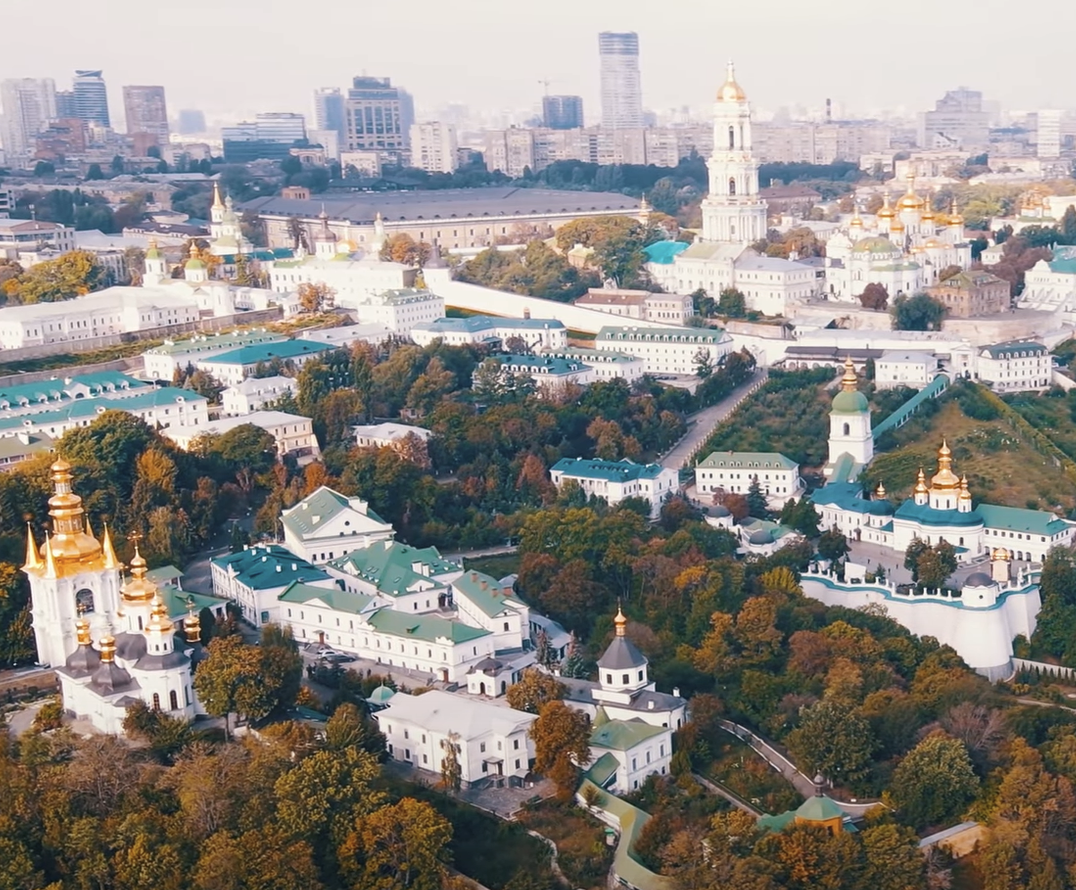
Yes, I am an Orthodox believer who has — twice — worshipped with the monks of the Monastery of the Kiev Caves. I have walked its matrix of underground sanctuaries, tombs and monastic cells. It’s hard for me to imagine something more horrifying than soldiers with machine guns inside the Lavra, passing the bodies of numerous saints. I confess that, for a decade, I have prayed that we would not see a military takeover of this sacred site by forces on either side of the divides inside Ukraine.

Yes, I saw the New York Times report with this headline: “Ukraine Raids Holy Site Amid Suspicion of Orthodox Church Tied to Moscow.” I have read a dozen or so other mainstream media accounts of the rising tensions about the current Ukrainian administration considering some kind of Lavra takeover.

All of these reports are based on information from government officials and the leaders of the new Orthodox Church of Ukraine, which was — depending on the sources cited —created by Western Ukrainian leaders, the U.S. State Department (under the administrations of Donald Trump and Joe Biden), the government of Turkey and/or the first-among-equals Ecumenical Patriarch who leads the tiny Orthodox body that remains based in Istanbul.

These reports continue to ignore or downplay the statements and actions of the historic Ukrainian Orthodox Church, led by Metropolitan Onuphry, which has — since the day of the Russian invasion — stressed its total opposition to this action of the Vladimir Putin government in Moscow. This church, the canonical church of Ukraine for many generations, has taken steps to cut its ties to Orthodox leaders in Moscow, even as its leaders have recognized they do not have the clear authority to do so. They appear to be pleading for the wider world of Orthodoxy (as in patriarches of multiple ancient churches, not just Istanbul) to intervene, somehow, in this crisis.

As a rule, mainstream journalists have expressed little interest in the actual Orthodox traditions and laws linked to this tragedy. In particular, the press has ignored the global voices of the Orthodox who oppose Putin, but support Metropolitan Onuphry and, thus, the monks of the Lavra.

Frankly, my head is spinning as I try to deal with the myriad journalism issues involved in covering this massive story. I am aware that most journalists are limited in what they can cover, due to language issues and the difficulty of on-site work in the midst of this conflict. I want to look at two issues in this Times report because — this is a positive — it includes some remarks from an actual monk from the Kievan Caves. Such as:

Father Hieromonk Ioan, a member of the Kyiv monastery, said that the clergy there were not loyal to Moscow but did not shy away from the close historic ties with Russia. “We have certain relations with Russia and it’s painful for us what is going on now,” he said in an interview outside the monastery. …


Please respect our Commenting Policy

Podcast: Is Colorado Springs covered by a 'fundamentalist' blanket of hate?

Podcast: Is Colorado Springs covered by a 'fundamentalist' blanket of hate?

At this point, there are many, many crucial facts that journalists do not know about the horrible Club Q massacre in Colorado Springs.

This lack of facts has done little to shape the coverage. We do not, for example, know if Mx. Anderson Aldrich is sincere when claiming, in case documents, to be nonbinary. It will, in the meantime, be interesting to see if many mainstream newsrooms choose to deadname Aldrich in their coverage, perhaps by striving to avoid pronouns altogether.

We do know that the alleged shooter was raised in a broken home with multiple mental-health and violence issues. Consider, for example, the father — an ex-con MMA fighter turned porn star (and a Republican, of one form or another).

At this point, it does appear that some journalists — while searching for the “why” in the “who, what, when, where, why and how” formula — have decided to place the city of Colorado Springs on trial and, perhaps, the whole state of Colorado. This was the primary topic discussed in this week’s “Crossroads” podcast (CLICK HERE to tune that in).

The key: A return of that dreaded journalism F-word — “fundamentalist.” For more background on this religion-beat disease, please see this GetReligion post by Richard Ostling (“What is 'Fundamentalism'? Name 666 or so examples from recent news coverage”) and this On Religion column (“Define ‘fundamentalist,’ please”) that I wrote in 2011.

Here is the key material from a USA Today story that, in my opinion, goes completely over the top while claiming that, to be blunt, a kind of hate cloud covers Colorado Springs. The headline: “Colorado Springs worked to change its anti-gay image — then its sole LGBTQ nightclub was targeted.”

Most notably, in 1992, religious fundamentalists from Colorado Springs wrote Amendment 2, a measure seeking to amend Colorado's constitution by making it illegal to ban discrimination based on sexual orientation. The measure was approved by Colorado voters that November, earning Colorado the nickname of the "Hate State," according to the Colorado Springs Pioneer Museum. Amendment 2 was ultimately struck down by the U.S. Supreme Court in 1996.

The city is also the headquarters of Focus on the Family, a fundamentalist Protestant organization whose founder James Dobson is known for his stances against gay and trans rights.


Please respect our Commenting Policy

To cover Qatar World Cup, journalists will have to understand both soccer and Islam

To cover Qatar World Cup, journalists will have to understand both soccer and Islam

The World Cup in Qatar kicks off in less than a week. It is likely to be the most controversial soccer tournament in FIFA’s history, something that has dogged the host nation since being awarded the tournament in 2010.

The controversy is largely tied to the Muslim country’s beliefs and mores. It’s about human rights, welcoming LGBTQ fans, drinking alcohol and modest dress. It’s as much a cultural and societal issue as it is a sporting one. It is also, of course, a religion-news story.

The focus of the news coverage so far has been around what could happen on the field as much as off of it.

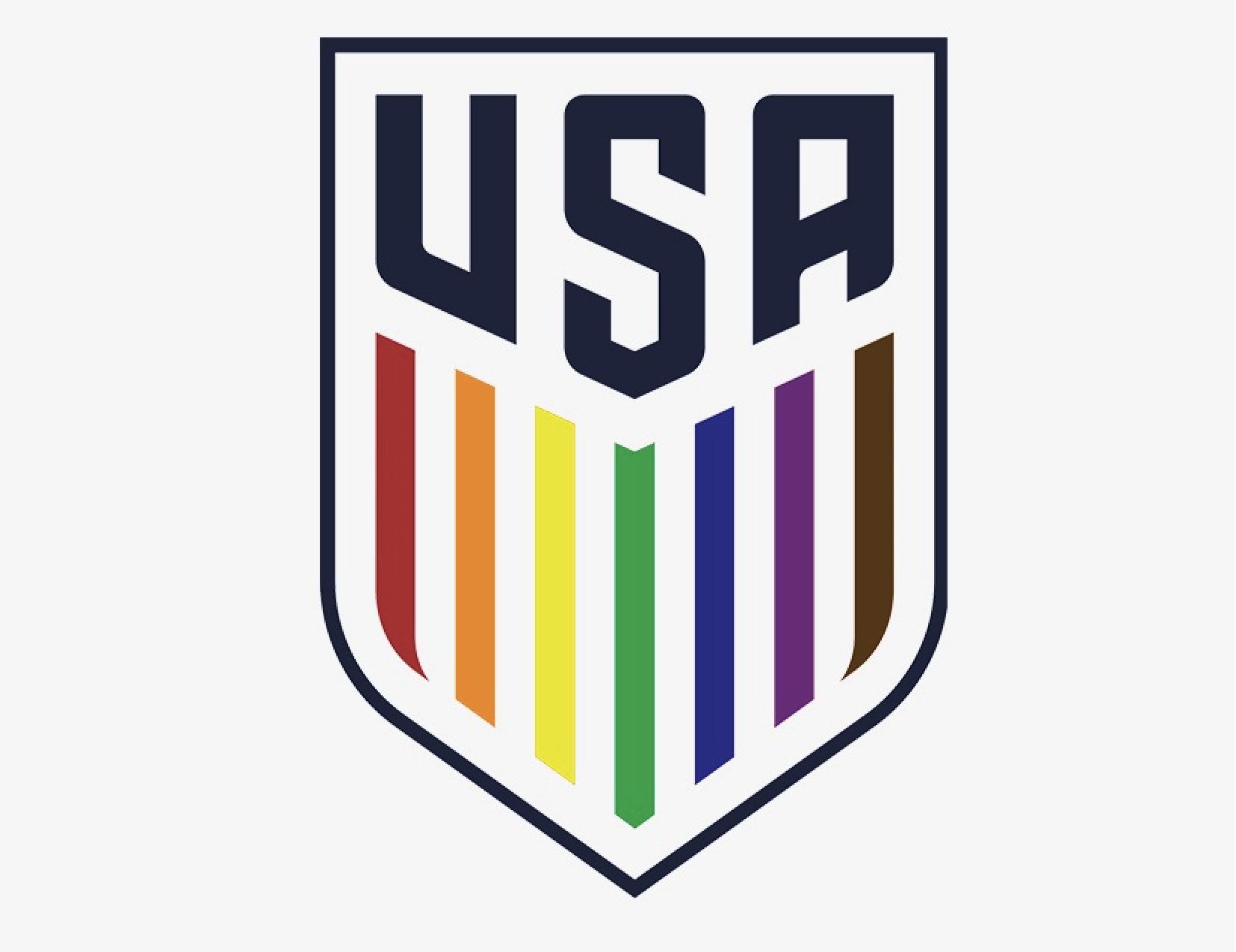
Qatari officials have labeled much of the negative coverage either racist or Islamophobic. Either way, this could be the first global sporting event in history where religion, and understanding it, will be a major part of the overall context of this competition. Even the World Cup’s official mascot is an homage to Islamic garb. And did you notice the Pride logo for the 2022 team USA kit?

I explore many of these themes and issues in my new book on the history of the World Cup. With over a billion followers, Islam is the second-largest religion in the world after Christianity. Muslims are forbidden from drinking alcohol since the Prophet Muhammad, to whom Muslims believe the word of God was revealed in the Quran, spoke against it. This is key for sports editors and journalists to understand when it comes to Qatar 2022 coverage.

For example, Qatari officials have said beer will be sold inside the venues and drinking will be allowed inside designated areas, such as fan zones, hotels and restaurants. I was asked that very question months ago when I was booking my trip to Doha. At the same time, billboards have been put up across the country with quotes from the Prophet Muhammed.

The Associated Press, with bureaus across the globe, put together a great explainer under the headline, “Islam in Qatar explained ahead of FIFA World Cup.” This is a must-read for editors and reporters as well as fans and visitors. Here is how it opens:

Qatar is a Muslim nation, with laws, customs and practices rooted in Islam. The country is neither as liberal as Dubai in the United Arab Emirates nor as conservative as parts of Saudi Arabia. Most of its citizens are Sunni Muslim.


Please respect our Commenting Policy

Podcast: Big Sexual Revolution victory in New York! Where's the elite news coverage?

Podcast: Big Sexual Revolution victory in New York! Where's the elite news coverage?

I think I heard this D.C. Beltway question for the first time during the George W. Bush years, when I moved back to greater Baltimore and began teaching full-time at the Washington Journalism Center. It was a time of high expectations for cultural conservatives. As is usually the case, they faced disappointment when wins by the cultural left continued, even though W. Bush was “in power.”

The question: What happens to culturally conservative Republicans when they get elected to, oh, the U.S. Senate and then immediately start losing their nerve?

I heard an interesting answer during an off-the-record chat session with some Senate staffers. It helps to remember that this was back in the day when many people still had radios in their cars that had button systems that allowed them a limited number of pre-set stations they could quickly punch while driving.

The answer: There are two kinds of Republicans inside the Beltway — those who have NPR as the first button on their car radios and those who do not.

Unpacking that answer was crucial to this week’s “Crossroads” podcast (CLICK HERE to tune that in), which focused on media coverage, or the lack thereof, about a recent court ruling in an important LGBTQ rights case in New York.

Ah, but was this a case that LGBTQ-rights activists and Sexual Revolution evangelists wanted to see publicized? That’s one of the questions that host Todd Wilken and I discussed.

We will work our way back to the NPR symbolism angle. But first, here is some key material from the top of a New York Post report that ran with this headline: “NYC judge rules polyamorous unions entitled to same legal protections as 2-person relationships.” This is long, but important. First, there is this:

In the case of West 49th St., LLC v. O’Neill, New York Civil Court Judge Karen May Bacdayan reportedly concluded that polyamorous relationships are entitled to the same sort of legal protection given to two-person relationships.


Please respect our Commenting Policy