Journalism

Biden says pope called him a 'good Catholic' and why (most) journalists took his word on that

Biden says pope called him a 'good Catholic' and why (most) journalists took his word on that

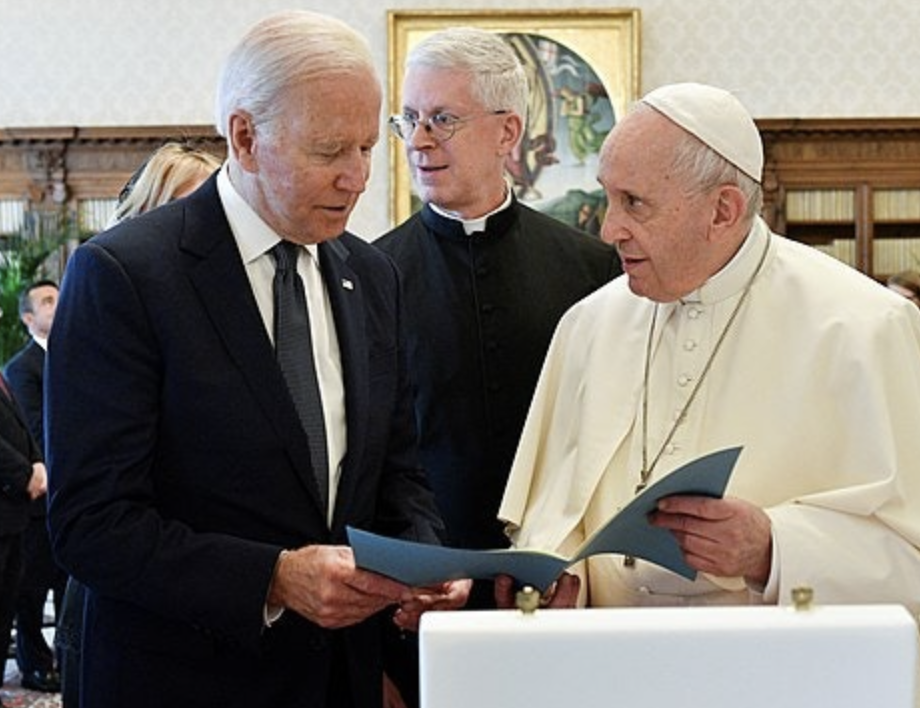
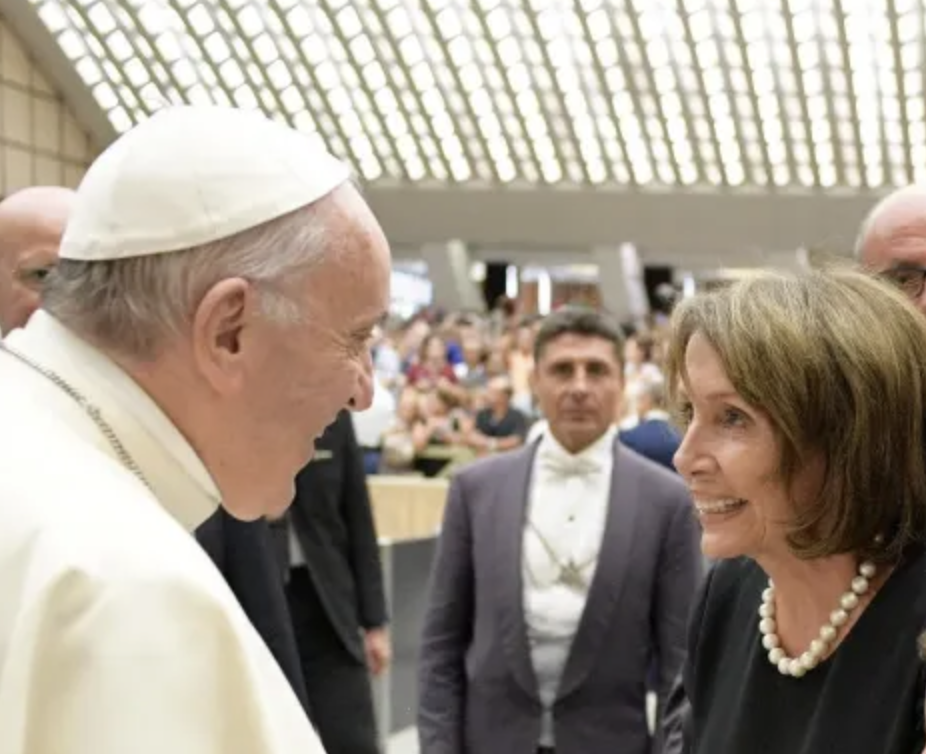
A funny thing happened when President Joe Biden visited Pope Francis at the Vatican.

The event actually made news, especially with Biden quotes about what allegedly happened in private.

In fact, it was big news across the media ecosystem — from the mainstream press to Catholic news sites — because of 20 words the president uttered to reporters in Rome after the face-to-face had already taken place.

“We just talked about the fact that he was happy I’m a good Catholic and I should keep receiving Communion,” Biden said.

With those words, Biden grabbed plenty of favorable headlines (much needed ones if you look at his sagging poll numbers as of late) online throughout the day and into the weekend. At the same time, it widened the rift between the pope and a group of U.S. bishops because of Biden’s support for abortion. Thus, it will lead to further conflict between Biden and those same bishops.

Given the love many in the press had given Biden even before the meeting, none of this should come as a surprise. The rush to accept Biden’s claim — while Vatican officials declined to confirm it — has shaped mainstream news coverage of this encounter.

Biden continued to get great headlines a day after the meeting and into Sunday when he boldly attended Mass at St. Patrick’s Church in Rome, where he received Communion. It’s worth noting that Biden was not given Communion by the pope during his private meeting. It’s also worth noting that the pope serves as the bishop of Rome.

Why all the glowing headlines, built on the acceptance of Biden’s second-hand quote from Pope Francis?

Biden’s words fit the popular news narrative on the Communion issue, beginning with the label that the president is a “devout Catholic,” even as his words and actions undercut Catholic doctrine. Far too many news accounts were happy to take Biden’s words at face value — perhaps because doing so validated their own beliefs on the issue. It amounted to a papal dispensation.
Please respect our Commenting Policy

New podcast: Are 'parental rights' references (inside scare quotes) the new 'religious liberty'

New podcast: Are 'parental rights' references (inside scare quotes) the new 'religious liberty'

Here’s a question that I heard recently from a young person down here in Bible Belt country: Why do students at (insert public school) need permission forms from their parents and a doctor to take (insert over-the-counter medication), but the school can assist a student’s efforts to change her gender identity while keeping that a total secret from the parents?

Obviously, something had changed at this school. The crucial question was whether parents had any right to shape or attempt to influence the education — or the moral and physical transformation — of their child in this setting controlled by the state and funded by their tax dollars. Yes, there are religious doctrines involved in many or even most of these cases.

Here’s the question we discussed during this week’s “Crossroads” podcast: Are media reports about this issue starting to turn parental rights into “parental rights,” complete with those prickly “scare quotes” that have turned references to old-school religious liberty issues into so-called “religious liberty” issues. Click here to listen to that podcast.

You can find traces of this conflict if you dig deep enough in a recent New York Times story with this double-decker headline:

The Unlikely Issue Shaping the Virginia Governor’s Race: Schools

Virginia Republicans in a tight governor’s race have been staging “Parents Matter” rallies and tapping into conservative anger over mandates and critical race theory.

The team behind this fascinating Times story didn’t spot the obvious religion ghost in this story. But this story didn’t attempt to turn these standoffs into libertarian dramas in which Trumpian parents are only concerned about COVID-19 conflicts about masks and vaccines (see a related Washington Post story, for example).


Please respect our Commenting Policy

Fallout from Pelosi's Roman holiday continues: More proof journalistic objectivity is dead?

Fallout from Pelosi's Roman holiday continues: More proof journalistic objectivity is dead?

Debates about the concept of objectivity in news coverage have been around for a long time — but now they are heating up to shockingly intense levels.

Objectivity, as it pertains to reporting, refers to fairness and nonpartisanship on the part of journalists and news organizations in the way they cover stories. An emphasis on objectivity is also linked to journalistic standards for balance, accuracy and showing respect for citizens on all sides of public debates.

This so-called “American model of the press” (click here for background) first evolved in the post-Civil War era and in the early 20th century as a way for U.S. newspapers to report and disseminate information to a wide, diverse body of readers. It allowed for a consistent method of testing that information so that personal and cultural biases would not undermine accuracy.

In a polarized digital age, the practice has been criticized and objectivity is all but dead as news outlets test new business models for struggling newsrooms. As a result, alternatives have emerged, most notably, in the form of a more partisan press that preaches to choirs of digital subscribers.

That brings us — no surprise — to the latest news story to inflame U.S. Catholics.

Despite it being almost two weeks since House Speaker Nancy Pelosi met with Pope Francis at the Vatican, the fallout and reaction from that October 9 private audience continues to reverberate across the American political landscape, especially among Catholics across the doctrinal spectrum. Naturally, some are concerned about how the news media we consume has covered it all.

If facts are what matters here, it’s obvious that San Francisco Archbishop Salvatore Cordelione should play a major role in these debates — since he is Pelosi’s bishop. Thus, he plays a crucial role in determining her sacramental status in the church. Who included his voice in this discussion and who didn’t?


Please respect our Commenting Policy

Progressive Catholic cardinal of Washington, D.C., pours praise on America's embattled press

Progressive Catholic cardinal of Washington, D.C., pours praise on America's embattled press

With a controversial Catholic in the White House, there was no way for Cardinal Wilton Gregory to face a pack of Beltway journalists without fielding political questions.

Job 1 was addressing President Joe Biden's statement: "I respect them -- those who believe life begins at the moment of conception and all -- I respect that. Don't agree, but I respect that."

The leader of the Catholic Archdiocese of Washington, D.C., has made it clear that Biden can receive Holy Communion. However, Gregory also noted: "The Catholic Church teaches, and has taught, that life -- human life -- begins at conception. So, the president is not demonstrating Catholic teaching."

That was the big headline after this event, but this wasn't the topic Gregory came to the National Press club to discuss. In his recent address, he poured praise on America's mainstream press, especially journalists who -- during this "anxious time" -- have openly pushed for change on issues linked to racism and social justice.

"You are the ones we rely on to keep us informed, updated and connected as a global community of various faith traditions," said Gregory, America's first Black cardinal. "Like all industries, journalism has certainly changed over the years. Technology has expanded your reach and abilities to share our life stories, our dreams and our hopes.

"You are the professionals with just the right words, who immerse yourselves in a community, a situation or even a crisis -- to bring us the facts, the people and the takeaways that can help us work toward living in true peace and equality for all, without the threat of violence or harm."

According to a sobering blast of data from Gallup, the cardinal's critique of the national press would ring true for Democrats and political progressives -- but not for Republicans and cultural conservatives. Catholics can be found in both of those camps, of course.

In their Sept. 1-17 poll, Gallup researchers asked: "In general, how much trust and confidence do you have in the mass media -- such as newspapers, TV and radio -- when it comes to reporting the news fully, accurately and fairly -- a great deal, a fair amount, not very much or none at all?"


Please respect our Commenting Policy

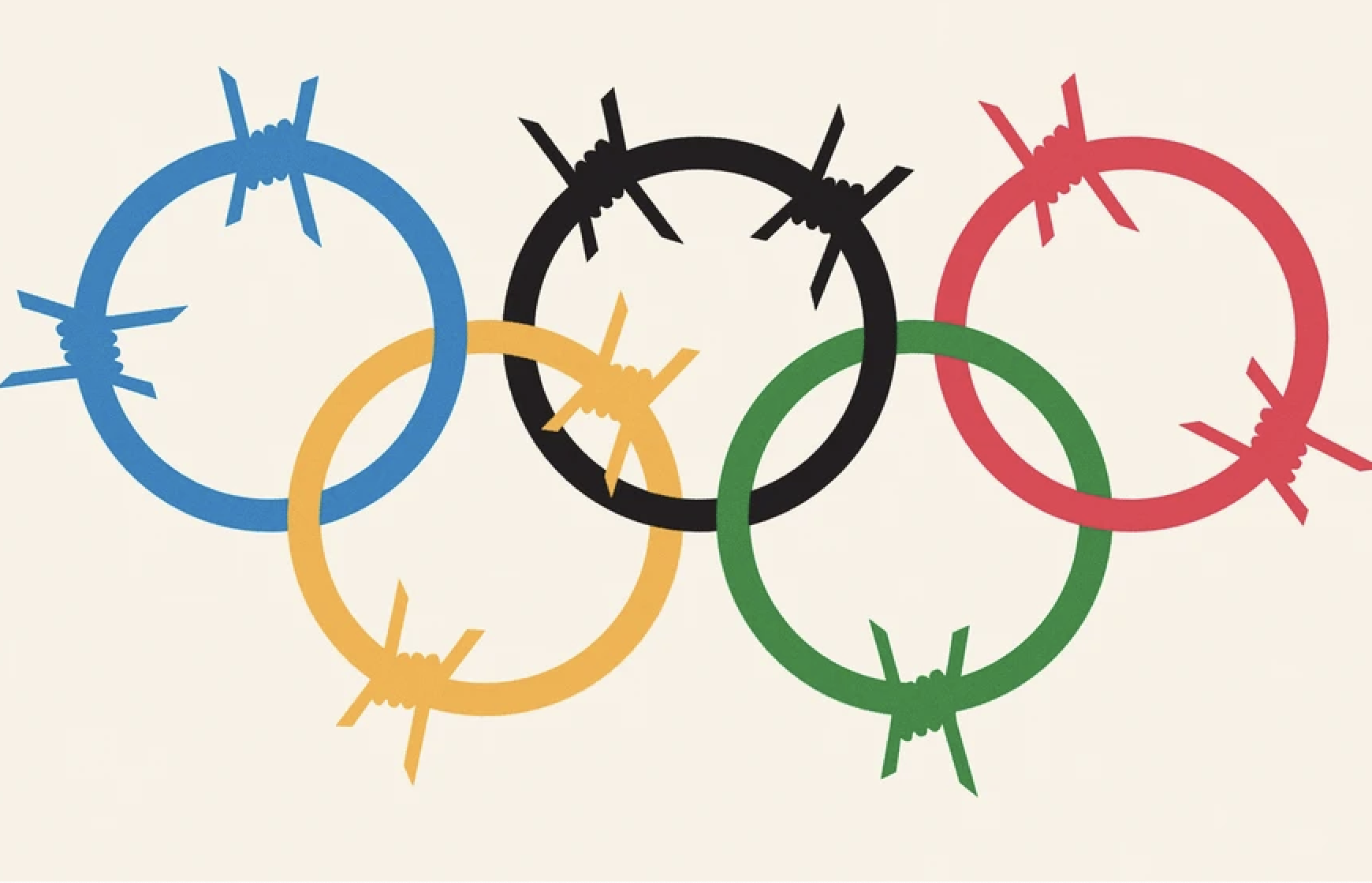
Berlin 1936. Beijing 2022. Must China's Uighurs play the role Jews did in Hitler Olympics?

Berlin 1936. Beijing 2022. Must China's Uighurs play the role Jews did in Hitler Olympics?

It should be evident to all paying attention that the 2022 Beijing Winter Olympics will proceed as planned. Forget the meager protests against China’s cruel and immoral treatment of its own. The bad guys appear to be on the verge of another power-play victory.

Never mind the plight of China’s Uighur Muslims, underground Christian churches, Tibetan Buddhists and all the other groups the Beijing government labels a political threat. They’re of no lasting concern to the international elite who are quick to issue public condemnations, but oh so slow when it comes to follow up.

China’s political power — a byproduct of its enormous economic strength — is just too much to counter. And Beijing’s despotic leaders darn well know it.

This recent Associated Press article — “Beijing Olympics open in 4 months; human rights talk absent” — underscores the point. These opening graphs summarize the story quite well. They're also a reminder of the efficacy of traditional wire journalism’s inverted pyramid style. This piece of the story is long, but essential:

When the International Olympic Committee awarded Beijing the 2008 Summer Olympics, it promised the Games could improve human rights and civil liberties in China.

There is no such lofty talk this time with Beijing’s 2022 Winter Olympics — the first city to host both the Summer and Winter Games — opening in just four months on Feb. 4.

Instead, there are some calls for governments to boycott the Games with 3,000 athletes, sponsors and broadcasters being lobbied by rights groups representing minorities across China.

IOC President Thomas Bach has repeatedly dodged questions about the propriety of holding the Games in China despite evidence of alleged genocide, vast surveillance, and crimes against humanity involving at least 1 million Uyghurs and other largely Muslim minorities. Tibet, a flashpoint in the run up to 2008, remains one still.

“The big difference between the two Beijing Games is that in 2008 Beijing tried to please the world,” Xu Guoqi, a historian at the University of Hong Kong, said in an email to The Associated Press. “In 2022, it does not really care about what the rest of the world thinks about it.”


Please respect our Commenting Policy

It's hard to write SBC news reports when key players keep hanging up their phones

It's hard to write SBC news reports when key players keep hanging up their phones

What are reporters supposed to do when key actors on one side of a controversy in a major religious group keep refusing to respond to calls and other contacts seeking their input and information?

I ask this because of the challenges that reporter Liam Adams is facing as (welcome to the religion-news beat) he tries to cover the legal questions and accusations swirling around the executive committee of the Southern Baptist Convention — America’s largest non-Catholic flock.

I can imagine a scenario in which some readers read this recent Nashville Tennessean story — “Resignations follow Baptist vote on privilege” (text is behind a high paywall) — and asked themselves: Hey, where are the quotes from people on the more conservative (if that’s the right word in battles over sexual abuse) side of this story? And why are there so many quotes from someone like Ed Stetzer, a hero of the current SBC leadership?

This story is so complex that it’s hard to pull out individual chunks of material, but lets try this long passage::

After two failed attempts at meetings on Sept. 21 and 28, the Southern Baptist Convention’s executive committee met for a third time Oct. 5 and voted to waive privilege. The committee acts on behalf of the convention when it is not in session.

In response, at least 10 executive committee members resigned either just before vote or shortly after — including some who are supporters of the Conservative Baptist Network. …

Conservative Baptist Network’s supporters on the executive committee all voted against allowing third-party investigators access to privileged files.

“It’s hard to see the correlation between the CBN and the objection to the waiver of privilege,” said Ed Stetzer, executive director of the Wheaton College Billy Graham Center. 'But there is clearly a correlation.'

In a news release last week, the Conservative Baptist Network said the group desired '“ruth and integrity.”


Please respect our Commenting Policy

Abortion-rights groups planning 'Hail Mary' efforts to block Texas law? #REALLY

Abortion-rights groups planning 'Hail Mary' efforts to block Texas law? #REALLY

Faithful followers of this website know that many, many of the news reports we critique are based on tips from readers.

These emails are important to me because, frankly, there is no way for us to follow as many media sources as our readers do, combined. This is especially true now that our team, due to finances, is smaller than it was for the previous decade or so.

From time to time, readers will react to something as simple as a horrible headline or a single rage-inducing phrase in a news report. There’s no way that I can respond to all of these, but here is a recent case that I think deserves a mention.

Read the top of this CNN piece (“The Justice Department's uphill battle against Texas' abortion ban“) and try to spot the issue that ticked off a reader:

In its lawsuit challenging Texas six-week abortion ban, the Justice Department is throwing a Hail Mary pass to get over the procedural stumbling blocks that have thwarted other attempts to block the ban in court.

The lawsuit, filed … in a federal court in Austin, relies on a novel strategy in seeking to halt enforcement of the ban, which was designed specifically with the goal of evading review of federal courts.

The arguments that the Justice Department is presenting on the merits -- that the law violates Supreme Court constitutional precedent on abortion rights -- are on solid ground. But the question is whether its lawsuit can get around the same procedural issues that doomed the earlier federal lawsuit brought by abortion clinics.

What’s the problem?


Please respect our Commenting Policy

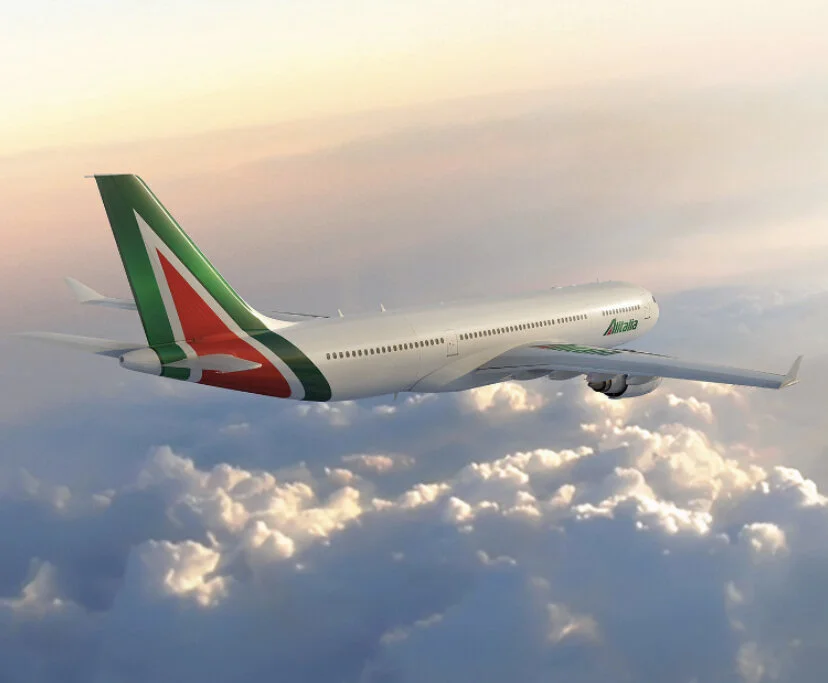
Pope's preferred airline goes bust: Alitalia's demise way more than a business story

Pope's preferred airline goes bust: Alitalia's demise way more than a business story

I have many fond memories of family trips to Italy that took place each summer during my childhood. Those summer pilgrimages to visit family and friends also included connecting with the place of my parents’ birth as well as seeing some of the country’s stories sites.

Visiting Vatican City for the first time in 1990 (when I was 14) remains one of the best memories. I would visit there again numerous times — including as a news reporter — in the decades that ensued.

Those New York-Rome trips involved flying with Alitalia, Italy’s national carrier. The airline — known for its nearly-impeccable safety record and sometimes appalling customer service — will officially close on Oct. 15. The announcement, made this past summer, marks the end of an era for an airline founded in 1946. it also marked the end of an era for my family, who were loyal to this brand to a fault.

Why is this a topic for GetReligion?

The airline’s demise and the start of a new one named ITA is a business story with a religion angle that too many news organizations ignored over the past few weeks. There was plenty of coverage regarding ITA buying new planes, potential layoffs and Italian government subsidies that kept the airline afloat for decades.

That religion angle? You see, my family and I weren’t the only loyal Alitalia customers over the years. The most famous has been the pope. It was in 1964, when Pope Paul VI traveled to Israel, when Alitalia became the pontiff’s official airline.

Alitalia put on plenty of miles under the papacy of now-St. Pope John Paul II, who visited 129 countries during his 27 years as head of the Roman Catholic church. The plane used by the pope — known in the press as “Shepherd One” as a way to compare it to the president’s “Air Force One” — continued to be used by Pope Benedict XVI and now Pope Francis. It’s also aboard these flights that the pope holds a news conference and always makes news.

Alitalia and the papacy will forever be intertwined.


Please respect our Commenting Policy

Bonus podcast: 'What's next in Afghanistan?' Warning: this news topic involves religion

Bonus podcast: 'What's next in Afghanistan?' Warning: this news topic involves religion

Here is a truth claim that, over the years, I have heard (or seen) stated in a number of ways by journalists and mass-media professors: Without strong, or at least adequate, visual images a story doesn’t exist in television news.

Yes, there are exceptions. But the exceptions almost always take place when big stories break in print media and television producers are highly committed to getting them on air — somehow.

Now, in the smartphone era, there are lots of ways for visual images to emerge (ask Hunter Biden). However, in our era of partisan, niche news, it may not matter if images exist. What citizens cannot see (or read) will not hurt them?

This brings me back to a subject I addressed in this recent GetReligion essay: “What's next in Afghanistan? Press will have to face issues of religion, culture and gender.”

The big question: Where does the Afghanistan story go next and, frankly, will elite American media cover the religion elements of this story?

That question was at the heart of a recent Religion Unplugged podcast discussion that I had with a friend and, long ago, a former religion-beat colleague — Roberta Green. In recent decades, she is better known as the philanthropist and fine arts-maven Roberta Green Ahmanson (click here for a typical arts lecture).

This new podcast is entitled, “How Will Afghanistan's Next Chapter be Written?” Click here to head over to iTunes to tune that in. Meanwhile, here is a key chunk of the GetReligion essay linked to our discussion about religion, journalism, culture, politics and “nation building”:

Viewed through the narrow lens of Taliban doctrine, it doesn’t matter if Western governments were forcing open doors for the work of Planned Parenthood or Christian missionary/relief groups, the work of LGBTQ think tanks (or the American corporations that back them) or Islamic thinkers and clerics whose approach to the faith clashed with their own.


Please respect our Commenting Policy