Journalism

New podcast: Yes, religious issues are part of the great divide in media and, thus, America

New podcast: Yes, religious issues are part of the great divide in media and, thus, America

When journalism profs talk about “old-school journalism,” we are actually discussing a rather modern phenomenon which is often called the American Model of the Press. It was born when printing presses started speeding up in the mid-to-late 19th century and, as it evolved, it stressed accuracy, fairness and balance when dealing with controversial issues.

What does that mean? At the very least, it meant showing respect for competing points of view — in part to allow newspapers (and advertisers) to reach a broad, diverse audience of readers.

This model replaced, at least in newspapers and wire services, what is often called the European Model of the Press. In this model, accuracy is still emphasized, but newsroom coverage is clearly and honestly based on specific editorial points of view — liberal, conservative, labor, business, etc. It is openly biased.

I offer this journalism history flashback because these terms played a major role in this week’s “Crossroads” podcast (click here to tune that in). The key question this week: How are readers supposed to relate to journalists and newsrooms when they claim to use the American Model, but their news coverage (especially online) is, on most issues (especially topics mixing politics and religion), clearly being crafted to fit a particular cultural or political template? Yes, we are talking about “Kellerism,” a term long used here at GetReligion (click here and then here for background).

In part, host Todd Wilken and I focused on a viral tweetstorm by the Russian-British comedian Konstantin Kisin, instead of dissecting the contents of one or more mainstream news reports.

It’s crucial to note that Brexit — as opposed to Donald Trump-era America — was the first hook for Kisin’s long, long commentary. Also, the ultimate goal here is to understand why so many people are skeptical when it comes to the COVID-19 vaccines (whether one agrees with that point of view or not).

(Reminder to readers: As a 67-year-old grandfather with asthma, I got my COVID shots as soon as possible. I also wear a mask when visiting institutions that ask me to do so. As for church, I follow the instructions of my bishop and our priests. It also helps to know that, after decades as a pro-life Democrat, I am now a third-party voter.)

Here is the opening of the Kisin thread. Whether he knew it or not, it is a litany mourning the loss of the American Model of the Press.
Please respect our Commenting Policy

Sports and religion: Simone Biles, mental health and why no mention of rosaries

Sports and religion: Simone Biles, mental health and why no mention of rosaries

It’s mid-August, so it’s the time of year when the Lisi clan leaves the hustle-and-bustle of New York City for a few weeks for the quieter environs of Long Island’s East End. It’s from this undisclosed beach location where I wrote this post about the latest goings on in the Catholic world.

It’s has been a busy summer for Catholicism and this month could be even busier. I’ve been distracted, in part, by sports. The subsiding of the pandemic brought back sports with a roar this summer. The centerpiece for it all has been the pandemic-delayed Tokyo Games.

The Olympics have been a great distraction from the Delta variant, our insane politics and the culture wars that dominate the news cycle every minute of each day.

It’s true that sports do intersect with these topics, but that’s why I typically limit my Twitter minutes this time of year. I’ve been fascinated by the athletes — and in particular the ones with ties to Catholicism — that dominated the recent Summer Games.

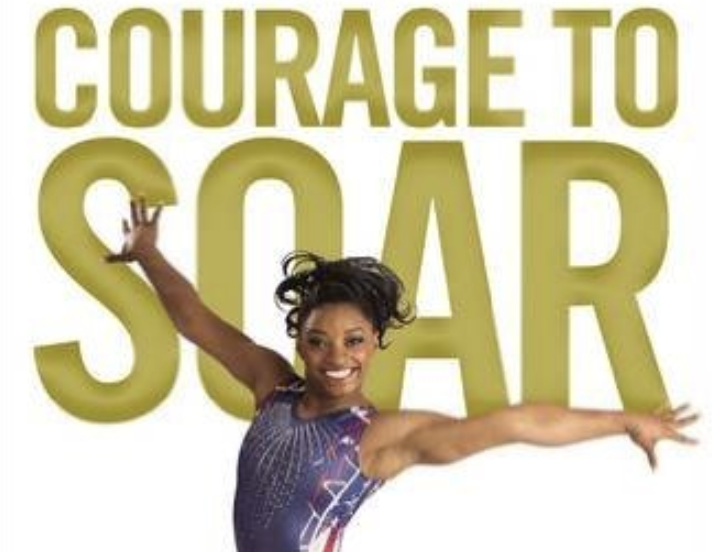
The headliner, of course, was gymnast Simone Biles and her decision to temporarily withdraw from competition to prioritize her mental health drew criticism, but also massive praise.

Her actions put a spotlight on athletes’ mental health, but also highlighted the inability of the mainstream press to delve deeper and ask pertinent questions regarding her faith. You see, Biles is a Roman Catholic, something written about leading up to the 2016 Summer Olympics in Rio. You wouldn’t know it from the news coverage of the past few weeks.

The lack of mentions in news accounts of Biles being Catholic in regards to her mental wellness spilled over this past Monday when the gymnast’s Instagram account made news. She claimed to be pro-abortion-rights in a post, triggering plenty of mainstream news coverage. In a subsequent Twitter post, Biles wrote that in no way did she favor aborting babies as an alternative to the foster care system. Biles grew up in the foster care system and was later adopted.

Again, none of the mainstream news coverage included that she is an active Roman Catholic.


Please respect our Commenting Policy

Washington Post still thinks sin and repentance have nothing to do with Holy Communion

Washington Post still thinks sin and repentance have nothing to do with Holy Communion

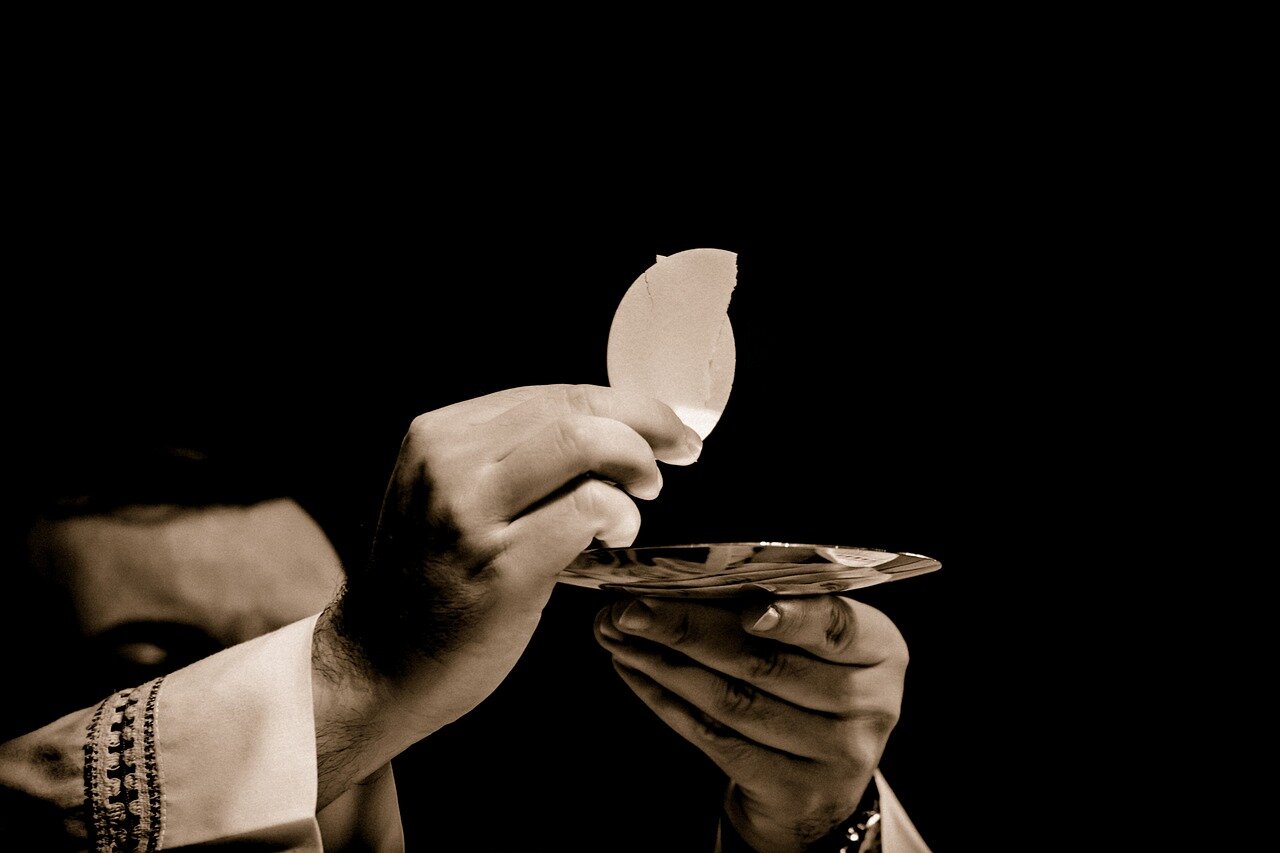
For years now, quite a few mainstream journalists have made it pretty obvious that they think the bishops of the Catholic church have a moral and perhaps even legal obligation to let Catholics do whatever they want to do in public life while continuing to take Holy Communion.

All that matters, according this newsroom version of the evolving spirit of Vatican II, is that these Catholic individuals believe — as a matter of conscience — that they are good to go. Catholics who are on the right side of history even have the right to openly state, in word and deed, that they believe Catholic doctrine is wrong and should be changed. This used to be called Protestantism, but nevermind.

This brings us to yet another Washington Post report about the life and times of a Michigan judge named Sara Smolenski, her same-sex wife Linda and the East Grand Rapids parish in which she is not allowed to take Holy Communion. (For a flashback to earlier coverage, please see this Julia Duin post: “Press doesn't get why a Catholic priest would withhold Communion from outspoken gay judge.”)

This story does a great job of proving that progressive Catholics have strong views on this issue. The story also offers small bites of material from Catholics stating the church’s doctrinal stance on this matter. If you are looking for any sense of fairness and balance — such as Catholics explaining or defending church doctrine — then you are not going to find it in the Post coverage. Again.

One other key point: This story contains zero references to the role that Confession — the Sacrament of Penance — plays in Catholic teachings on sin, repentance, forgiveness, salvation and, thus, Holy Communion. Hold that thought, because we will return to that point.

The Post headline, this time around, states: “Bishops’ debate over Communion sparked by Biden seeps into holiest sacrament for Catholics.” Here’s the overture:

St. Stephen Catholic Church is the parish and school where Sara Smolenski grew up with her nine siblings, where her parents were married, where she worshiped on Sundays and served as a volunteer distributing Communion. It was also the place where the priest called in late 2019 to tell her she should no longer come up during Mass to receive the holy sacrament.

“He says: ‘I’m going to have to ask you not to take Communion because you’re married to Linda in the state of Michigan. He just kept saying: ‘Respect the church,’” said Smolenski, 63, a longtime District Court judge.


Please respect our Commenting Policy

Conservative Catholic media set the journalism agenda on Latin Mass and Burrill resignation

Conservative Catholic media set the journalism agenda on Latin Mass and Burrill resignation

It’s been a busy month on the Catholic beat. There’s rarely a dull moment, especially in the Pope Francis era, as debates over the past few weeks focused on the Latin Mass and Grindr-clicking gay clergy in high places.

These are two different issues, of course, but ones where conservative Catholic media outlets have excelled. I’d even go as far as to say that the coverage in various corners of the Catholic press has set the agenda on these two raging issues — for everyone.

I have written about the importance of the growing independent Catholic press before. At a time when mainstream media very often ignores one side on hot-button issues, a healthy alternate media that covers the church and isn’t afraid to give those voices space has helped readers fully understand the broader spectrum of U.S. and global Catholicism.

The health scare that Pope Francis recently went through has seemingly inflamed the culture wars within Roman Catholicism. There is a feeling that this pope’s time may be coming to an end and that reformers need to move quickly before conservative bishops and priests embark on a takeover.

I have lauded The Pillar in this space for their ability to explain complicated issues as well as break stories and embark on investigations. This has been a wonderful month for them, even as they have been catching flak from the Catholic left (and, thus, from key mainstream news outlets).

The story they broke on July 20 is what we in the journalism business call “a bombshell.” The story revealed that Monsignor Jeffrey Burrill, former general secretary of the U.S. bishops’ conference, had resigned after The Pillar “found evidence the priest engaged in serial sexual misconduct, while he held a critical oversight role in the Catholic Church’s response to the recent spate of sexual abuse and misconduct scandals.”

This is what The Pillar’s reporting found (this is long, but essential):


Please respect our Commenting Policy

Journalists covering Canadian church arsons need to ask: Who's behind these attacks?

Journalists covering Canadian church arsons need to ask: Who's behind these attacks?

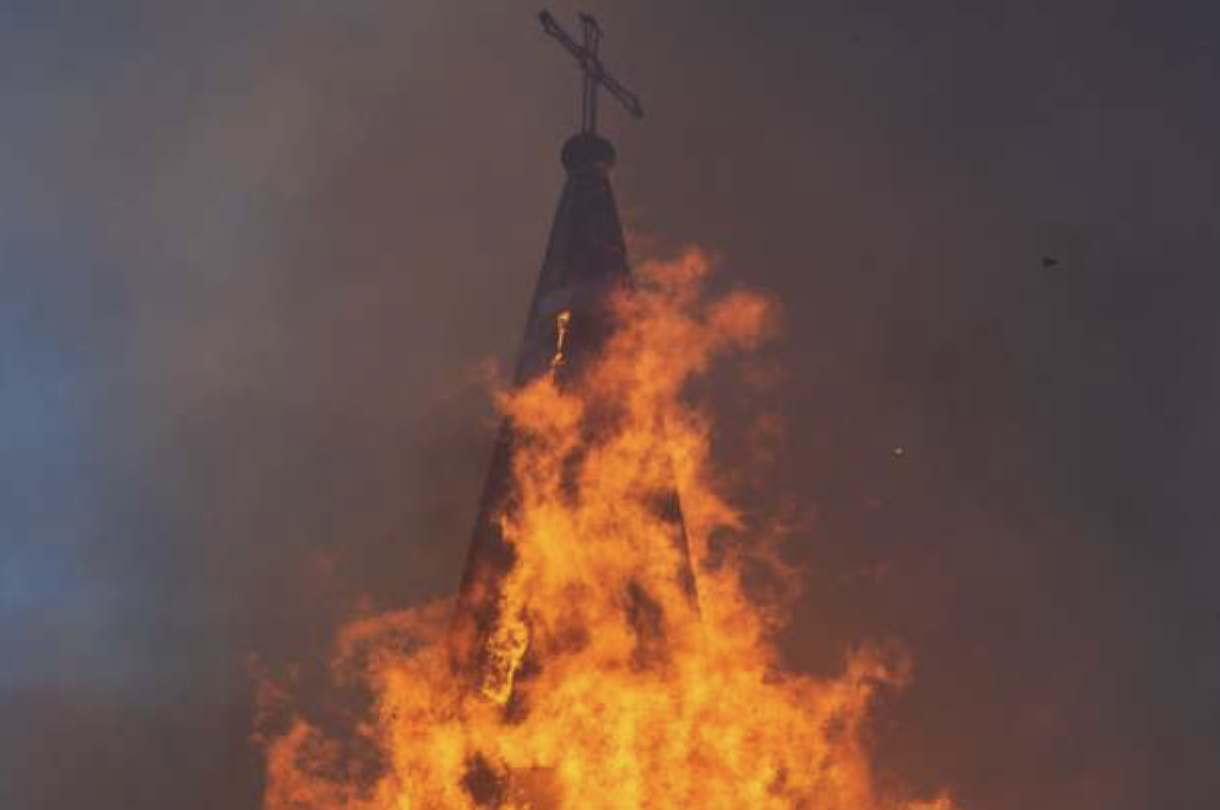
We’ve been here before, unfortunately. The “here” to which I am referring is a rash of suspicious church fires. We saw it pre-pandemic across France, during the COVID-19 outbreak in this country last summer and now in Canada just as the virus seemingly dissipates amid increased vaccinations.

In all, there have been fires at 10 Canadian churches — mostly Catholic ones — and multiple acts of vandalism this summer.

Why? That’s the question more mainstream journalists should be asking. So who not ask it?

This is how the Catholic news website Aleteia reported on the incidents in a July 9 report:

The incidents followed news that Native Canadians have used ground-penetrating radar in cemeteries on the grounds of former residential schools, which were part of a Canadian program to assimilate indigenous peoples. The existence of the cemeteries had been known, but the news this spring and summer has put the controversy over the residential schools back in the limelight.

Many of the schools, which stretched across Canada and were in operation from the mid-19th to the late-20th centuries, were run by Catholic religious orders. A truth and reconciliation commission several years ago detailed the ways children were forcibly removed from their families to be educated in European traditions at the schools, forbidden to use their native languages and forced to drop elements of their Native culture.

Prime Minister Justin Trudeau, who has called for Pope Francis to come to Canada to apologize for the Church’s role in the schools, said last week that he understands the anger behind the church burnings but said it was “not something we should be doing as Canadians.”

The way the indigenous people were treated is certainly a stain on Canada’s history and has been a widely reported news story, as it should be, in Canada as well as the United States. The vandalism churches have suffered stemming from that has been covered as well — but notably absent is any journalistic focus or investigation on who may be responsible for these acts and what motivates them.

Are these church burnings hate crimes, even acts of terrorism?


Please respect our Commenting Policy

Examining Joe Biden the Catholic is the story, not just what the bishops are doing

Examining Joe Biden the Catholic is the story, not just what the bishops are doing

British singer Winston Marshall, the banjo player for Mumford & Sons, announced that he decided to leave the band. The move came months after he’d faced criticism over a tweet in which he praised journalist Andy Ngo on his recent book — “Unmasked” — about the roots and strategies of the political protest movement known as antifa.

Marshall wrote an op-ed last Thursday for Medium under the headline “Why I’m Leaving Mumford & Sons” is a commentary on the world we live in today.

This is the section of his essay that stood out most for me, in the context of how mainstream journalists are covering America’s Catholic president:

Though there’s nothing wrong with being conservative, when forced to politically label myself I flutter between “centrist,” “liberal” or the more honest “bit this, bit that.” Being labeled erroneously just goes to show how binary political discourse has become. I had criticized the “Left,” so I must be the “Right,” or so their logic goes.

Indeed, it is this “binary political discourse” that dominates our lives these days. It may be a result of social media — Marshall details how he was attacked for his initial tweet and later his apology — in a world where nameless and faceless trolls dictate the discourse.

This takes me to the ongoing fallout from the U.S. bishop’s vote to draft a document that addresses “Eucharistic coherence” continues to be debated. The proposal’s aim is to ultimately decide whether Catholic politicians, like President Joe Biden, should be denied Holy Communion.

The news coverage in secular media on this very complicated theological matter has been disappointing, sub-par even in some cases. It’s no surprise at a time when skilled religion reporters are as hard to spot as a unicorn on stories of this kind. Far too often, political desk reporters at major news organizations cover such religious/theological issues. Politics, after all, is what matters.


Please respect our Commenting Policy

What to read, and why, as Catholic bishops mull plan to deny Biden Holy Communion

What to read, and why, as Catholic bishops mull plan to deny Biden Holy Communion

This is a week that could change Catholic life in this country. That is not an exaggeration when you consider what the bishops will be debating.

Barring an intervention from Pope Francis himself, the U.S. bishops will consider, and vote on Thursday, a plan for a document about Holy Communion that includes denying the sacrament to politicians who repeatedly support policies advocating abortion rights. That includes President Joe Biden, only the country’s second Catholic commander in chief ever.

The United States Conference of Catholic Bishops will gather virtually for their three-day Spring General Assembly starting tomorrow. The public sessions are available on the USCCB website for all to watch. While the bishops will have a busy agenda ahead of them, the biggest issue — in terms of news coverage — is this question of whether the sacrament of Communion can be denied to Catholic politicians with a history of backing abortion rights.

What can we expect from the news coverage?

This has been an issue that was pushed to the forefront by many bishops following Biden’s election last November. This is an issue that has been covered by both the mainstream press as well as Catholic media. The arguments and decisions made this week will have a lasting impact on Catholicism and those who practice it. The opinions many will form this week will come directly from the coverage they read.

Here is the debate in a nutshell: Some bishops want politicians who identify as Catholic to hold public policy positions that are not at odds with church teaching on abortion, marriage, LGBTQ rights and other issues in moral theology. Others argue that these politicians can hold political positions that clash with the church — while expressing private support for church teachings — and continue to attend Mass and receive Holy Communion.

That this division also happen to match with how these Catholics vote will dominate the coverage. it also comes at a time when the Supreme Court will take up a major abortion rights challenge.


Please respect our Commenting Policy

The New York Times (#WHOA) probes ACLU's move away from First Amendment liberalism

The New York Times (#WHOA) probes ACLU's move away from First Amendment liberalism

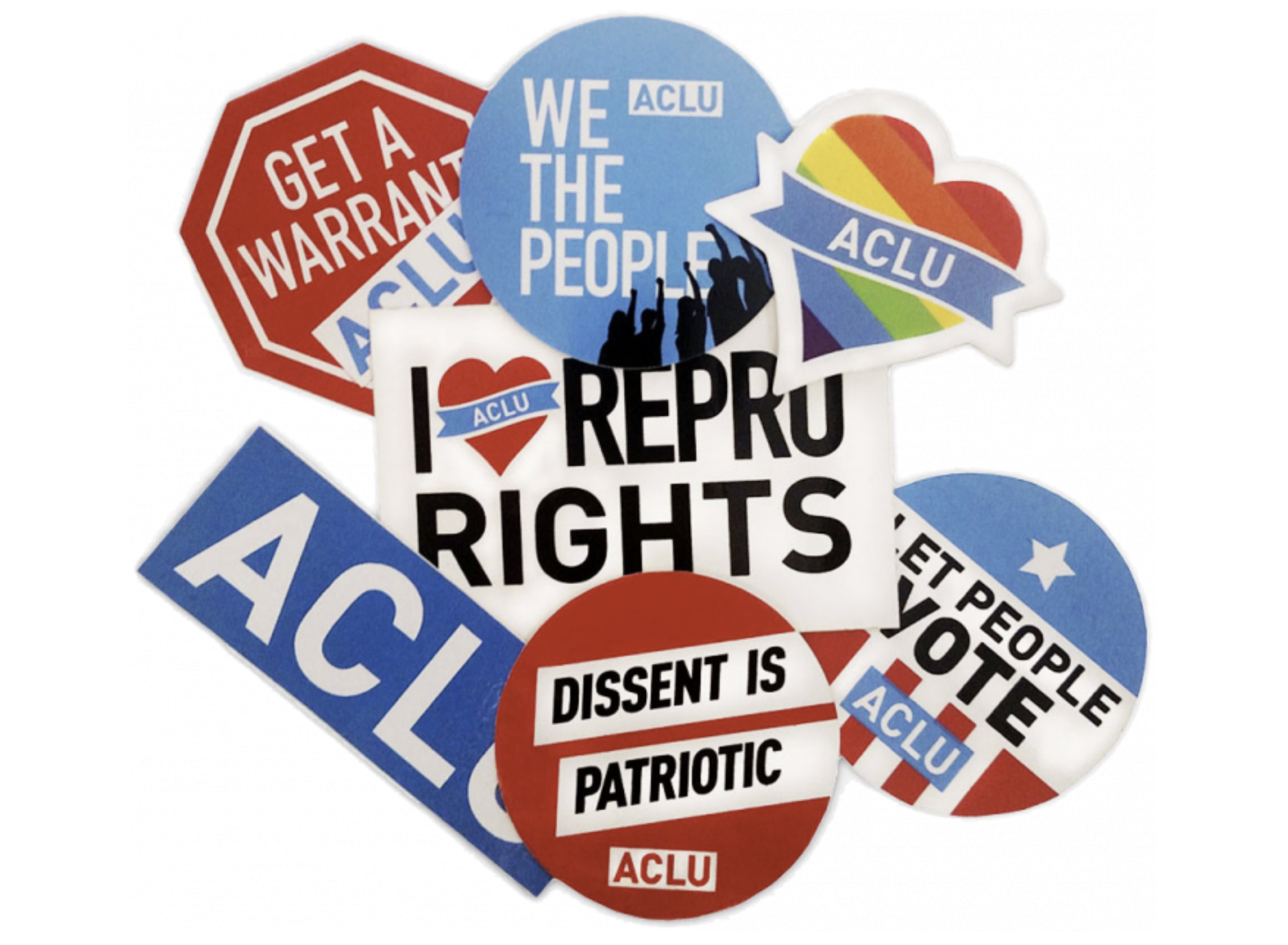
I don’t know about you, but The New York Times was the last place that I expected to see a long news feature about disturbing trends at the American Civil Liberties Union away from its proud history of First Amendment liberalism.

I am sure that some ACLU insiders must have felt the same way, especially in light of recent headlines about the rising power of a generation of woke journalists at the Times. The pot calling the kettle black?

But there was no way around the contents of that dramatic double-decker headline the other day:

Once a Bastion of Free Speech, the A.C.L.U. Faces an Identity Crisis

An organization that has defended the First Amendment rights of Nazis and the Ku Klux Klan is split by an internal debate over whether supporting progressive causes is more important.

As the headline states, the emphasis in this report is about free speech. Maybe it was too much to ask Times editors to see the same illiberal trend developing in ACLU work defending the First Amendment clause protecting religious freedom, without “scare quotes.”

But we will take what we get because of the influence that the Times has in other newsrooms and even in some influential corners of elite academia.

The story opens with an event celebrating the career of lawyer David Goldberger, who played a key role in the famous 1978 case when the ACLU defended the free speech rights of Nazis to march in Skokie, Ill., the home of many Holocaust survivors. Read this long passage carefully:


Please respect our Commenting Policy

What is valid journalism? America's racial debates spotlight concerns about bias

What is valid journalism? America's racial debates spotlight concerns about bias

Begin with the "Statement of Core Values" chiseled into stone at the Hussman School of Journalism and Media on the University of North Carolina-Chapel Hill campus. The school declares these values will "help rebuild the bond between the public and the media" -- a desperate need considering the unprecedented popular distrust of news outlets lamented in this earlier GetReligion post.

Read the UNC credo for yourself. But let's summarize key J-school principles at the nation's third-best public university, per the latest Wall Street Journal ranking (behind Michigan and UCLA, edging U-Cal Berkeley).

* "Impartiality," defined as "delivering the news honestly, fairly, objectively, and without personal opinion or bias," the news media's "greatest source of credibility."

* "The pursuit of truth," journalism's "noble goal," though the truth "is not always apparent or known immediately." Thus journalists must not decide in advance what's true but "report as completely and impartially as possible all verifiable facts" so audience members can discern what to think.

* Some journalism presents viewpoints, but to protect this impartiality and credibility the media and their consumers need "a sharp and clear distinction between news and opinion."

Think of it this way. How far should American newspapering drift toward the contrary -- and successful -- business model of cable TV "news"? (Alongside conservative Fox News, the once-centrist CNN moved leftward though its imitation of MSNBC's partisanship and that produces third-place audience ratings).

Walter Hussman Jr., whose name graces this J-school, donated $25 million in 2019 to foster the above credo, which appears daily in Little Rock's Arkansas Democrat-Gazette and other papers owned by his WEHCO Media. This company operates 10 dailies, eight weeklies, seven regional magazines, nine cable TV systems and broadband and digital services, all in six states.

Now his credo is swept into the culture-war convulsions emanating from the nation's troubled racial past and present, Black Lives Matter, "Critical Race Theory," the murder of George Floyd and especially The New York Times Magazine's "1619 Project," launched in 2019 and coming soon to a school near you.


Please respect our Commenting Policy