Journalism

Catholic News Agency looks at GetReligion (including why Catholics still care about news)

Catholic News Agency looks at GetReligion (including why Catholics still care about news)

There is no “Crossroads” post this week, in part because various people — including me — are engaged in long-awaited in what I think used to be called “vacations.” In my case, I will be trading the lovely mountains of East Tennessee for my old stomping grounds — the Rocky Mountains in Colorado.

If you want to check out some podcasts, by all means click here to head into our online library or go to Apple Podcasts and sign up for the automatic feed.

In place of a podcast, I think GetReligion readers — old and new — will want to check out a new Catholic News Agency feature — “GetReligion points out 'ghosts' in religion reporting among mainstream media“ — about the history of GetReligion and why we keep doing what we do. Here’s the overture:

The news-checking website GetReligion.org is in its 18th year of looking for “ghosts” in mainstream media. The “ghosts,” as co-founder and current editor Terry Mattingly calls them, are holes in news coverage that exist either because the media does not want to cover the religious aspect of a story or because the reporters are unaware that a religious component is present.

“The goal was to openly advocate for an old style, liberal approach to journalism where you are striving for accuracy and striving to let people on both sides of controversial issues have their voices heard in a way that is accurate and shows them respect,” Mattingly said.

GetReligion was founded in 2004. Mattingly and fellow co-founder Douglas LeBlanc set out to dissect news coverage and brought with them a number of experienced religion writers, including Richard Ostling, Ira Rifkin, Julia Duin and Bobby Ross. Together, they hoped to shed light on the inconsistencies in religion reporting or religion bias in the news.

Please respect our Commenting Policy

Mainstream press shrugs at Biden's Notre Dame snub for upcoming graduation rite

Mainstream press shrugs at Biden's Notre Dame snub for upcoming graduation rite

This is the time of year where college graduations dominate the lives of many Americans. A year after these ceremonies were relegated to Zoom because of the pandemic, graduations are back this spring, with masks and social distancing in place, to again signal the sending off to undergraduates into the workplace.

For journalists, graduations have long served as an easy news stories. Above all, the graduation speaker is what makes these ceremonies news. At that vast majority of rites at elite and state schools the speaker is — to one degree or another — a cultural or political liberal.

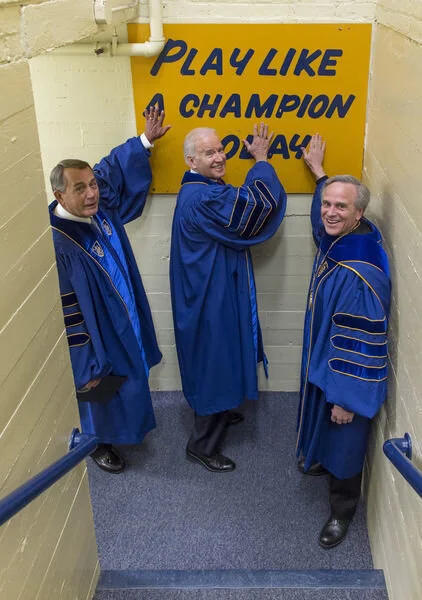
Thus, is it any surprise that the ongoing tug-of-war between the U.S. bishops and President Joe Biden has spilled over into the graduation season? Well, it has in the form of the president not addressing graduates at the University of Notre Dame this year.

This news story was broken by Catholic News Agency. Here’s how the May 11 news story opened:

In a break with recent tradition, President Joe Biden will not be delivering the commencement address at the University of Notre Dame this year – although he was invited by the university to do so.

On Tuesday, the university announced that its May 23 commencement speaker will be Jimmy Dunne, a finance executive and trustee of the university. During the last three presidential administrations, U.S. presidents or vice presidents have addressed the university's commencement in their first year in office, but that trend will not continue in 2021.

Although a university spokesman told CNA that, as a policy, “we do not discuss who may or may not have been approached to address our graduates,” sources from the White House confirmed to CNA that Biden had indeed been invited by the university but could not attend due to scheduling.

Biden, just the second Catholic president since John F. Kennedy in 1960, has not been shy about mentioning his faith in public.

While he’s attended Mass regularly on Sundays, Biden supports taxpayer-funded abortion in defiance of the U.S. bishops’ conference and, as vice president, he performed two same-sex marriage rites. The Biden administration has also started to roll back restrictions on public funding of abortion providers, has supported the expansion of LGBTQ rights and continues to wage a legal battle to keep a mandate in place for doctors to provide gender-transition surgeries.


Please respect our Commenting Policy

Plug-In: Mourning two amazing people and journalists -- Rachel Zoll and Amy Raymond

Plug-In: Mourning two amazing people and journalists -- Rachel Zoll and Amy Raymond

In 31 years of full-time journalism, I’ve been blessed to work with some incredible people.

The world recently lost two of the best.

Rachel Zoll was one of The Associated Press’ two New York-based national religion writers — along with Richard Ostling — when I joined AP’s Nashville bureau in 2002.

She was always so kind and supportive of me and my work, as she was with countless others. I last saw her at the 2017 Religion News Association annual meeting in Nashville. I had left AP more than a decade earlier, so I was surprised when she asked how my wife, Tamie, was doing. I had no idea she knew Tamie was battling autoimmune disease. But she did.

Early in 2018, Zoll was diagnosed with brain cancer. She died Friday in Amherst, Mass., at 55.

Her AP colleague David Crary, who called Zoll his “best friend at work,” wrote a truly touching obituary.

Zoll and Ostling were AP’s national religion dream team for five years until his retirement in 2006.

Ostling enjoyed a legendary career with Time magazine before going to work at AP and now, in retirement, with GetReligion. But he told Zoll during her illness that “on a day-to-day basis our work together was the highlight” of his time in journalism.

Amy Raymond and I both got our start working on The Talon campus newspaper at Oklahoma Christian University. I was excited when she joined The Oklahoman staff in 1997, a few years after me.

Although Raymond and I hadn’t worked together in nearly two decades, we stayed in touch via Facebook. We occasionally chatted about religious and political issues.

On a Zoom discussion Monday night, current and former colleagues kept saying — through tears — how smart and kind she was. That is the absolute truth.

“Amy started as a staff writer but her true passion became apparent as she made her way up the ladder as a copy editor, page designer, and then as night news editor,” my longtime friend and former Oklahoma Christian classmate Steve Lackmeyer wrote in The Oklahoman this week.


Please respect our Commenting Policy

Press coverage of Mount Meron tragedy offers window into Israel's ultra-Orthodox Jews

Press coverage of Mount Meron tragedy offers window into Israel's ultra-Orthodox Jews

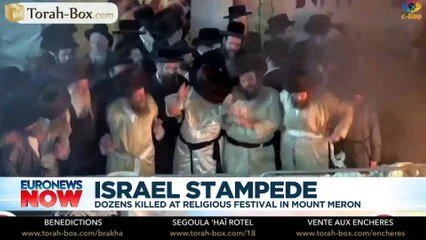
By now most GetReligion readers are likely aware of the fatal crushing of 45 Jewish pilgrims during a religious festival at Mount Meron in Israel’s north at the end of April. It’s been called one of the worst, if not the worst, civilian tragedy in Israel’s history.

(Sadly, the Meron tragedy has been superseded in the news by the serious explosion of Israeli-Palestinian violence this week. But as sad as this is — and as a Jew and a Zionist I find it almost debilitatingly sad —that’s not the subject of this post, so let’s return to Meron.)

For those in need of a refresher, here’s an early Times of Israel news story on the Meron catastrophe.

The sudden and dramatic loss of more than four dozen lives is, of course, a national trauma for a relatively small country such as Israel, which is not much larger than New Jersey. As has been noted elsewhere, “numbers numb.”

Among the dead were six Americans. Other victims came from Canada and Argentina. The youngest of the dead was a boy of nine. Some 150 others were injured.

Beyond the deaths themselves, the Meron incident surfaced major — and intricately interwoven — political and religious implications for Israel. That’s not an unusual mashup in Israel, where the divide between religion and state is near impossible to discern.

For journalists, the tragedy also underscores a Journalism 101 reality of the craft. Which is that the most interesting public commentators are often those closest to the story, such as varied eyewitnesses and longstanding, articulate members or observers of whatever groups are germane to the story.

I’ll say more about this below. First, some pertinent background.

The Meron tragedy took place on the Jewish holiday of Lag B’Omer. Because this is generally considered a minor holiday by most Jews, it’s largely ignored by the theologically liberal in Israel and elsewhere.


Please respect our Commenting Policy

The U.S. Census story and its hooks for religion news (plus a personal note about Rachel Zoll)

The U.S. Census story and its hooks for religion news (plus a personal note about Rachel Zoll)

The first round of 2020 U.S. Census data (with much more to come) is big news as states gain and lose seats in the U.S. House and politicos enter the wild decennial joust to gerrymander federal and state district lines to their advantage.

But here's another journalistic thought: What does the Census mean for religion?

Tony Carnes of the "A Journey Through NYC Religions" website provides an early example, analyzing possible implications for New York City that other writers could emulate for their own cities, towns or regions.

Editor Carnes (disclosure: a personal friend) is a professional sociologist leading a team that has spent years tracking religion developments in Gotham, notably at the neighborhood level. Despite the town's secular image, Carnes and company have documented that, starting in the late 1970s, thousands of new churches, synagogues, mosques and temples have been built. Such activity was continuing until the COVID-19 pandemic struck.

Carnes counts the populations moving in and moving out from the American Community Survey between 2010 and 2014 as updated by Census numbers for 2018. This shows a city gradually becoming less African-American (population down 96,000) and Hispanic (down 50,000). The gainers are non-Hispanic Whites (up 200,000) and Asians (up 97,000). We'll soon know if these trends continued in 2020.

Carnes calls that "a startling change in the racial/ethnic profile of the city, and it is also found in other cities in the United States."


Please respect our Commenting Policy

Passing of the guard at the Associated Press; the rise of Ministry Watch and the Roys Report

Passing of the guard at the Associated Press; the rise of Ministry Watch and the Roys Report

The death of a well-known religion reporter; a new job announcement from a beat veteran and a spotlight on two feisty independent religion news organizations is what concerns me this week.

Tmatt had previously offered an update on the health of Rachel Zoll, a former Associated Press religion specialist who came down with glioblastoma, a brain cancer that has no cure, in early 2018. That was only a few months after another religion-beat pro, Jeffrey Weiss of the Dallas Morning News, died of the exact same malady.

Last week, Zoll died at the age of 55 at her home in Massachusetts. She reported on religion for AP for 17 years.

There have been lots of tributes, so I’ll spotlight this Associated Press obit atop the list.

Zoll covered religion in all its aspects, from the spiritual to the political, and her stories reached a global audience. But her influence was far greater than that. Other publications often followed her lead, and AP staffers around the world depended on her generosity and guidance.

Zoll was at the forefront of coverage of two papal transitions, the clergy sex abuse scandal in the Catholic Church, and tensions within many denominations over race, same-sex marriage and the role of women.

She often broke news, as in 2014, when she was the first to report Pope Francis’ appointment of Blase Cupich to become the new archbishop of Chicago.

Fellow GetReligionista Dick Ostling, who was at AP from 1998-2006, wrote this:

My partner Rachel was simply a delight to work with and a personality enjoyed by everyone who knew her -- and who competed with her. But in broader and more historical terms she exemplified all that's needed in reporting and especially with a complex and emotion-laden field like religion. She was of course quick and accurate but those are the basics for any Associated Press writer. And then, remarkably intelligent. She knew her stuff and knew she needed to learn ever more stuff to handle this beat.


Please respect our Commenting Policy

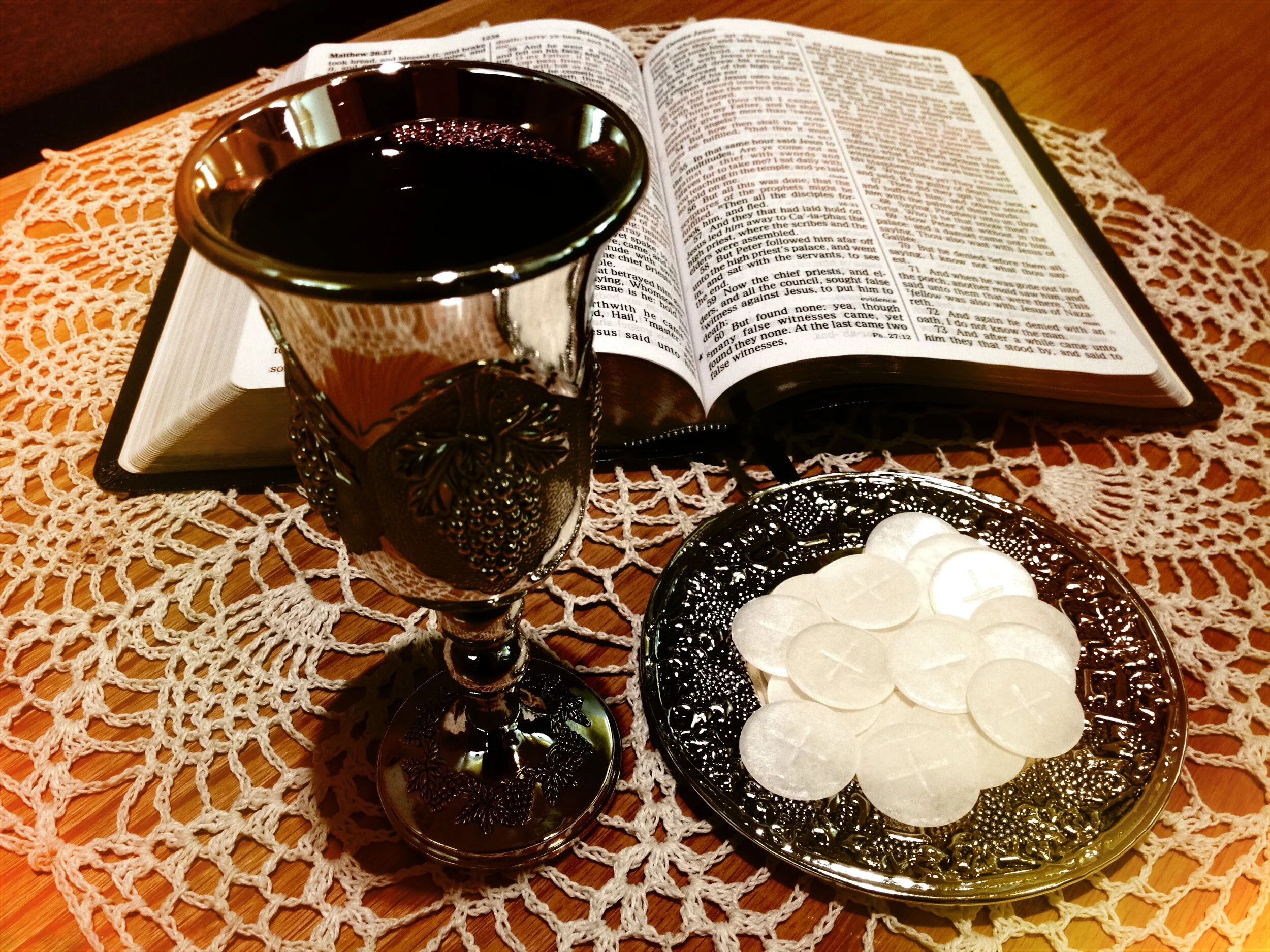
The politics of Holy Communion and what it says about news coverage of Joe Biden

The politics of Holy Communion and what it says about news coverage of Joe Biden

If you regularly read mainstream political news coverage, you can often come away with the notion that President Joe Biden is a man who governs as a moderate, seeks unity with Republicans and is consistently guided by his “devout” Catholic faith.

A lot of this reflexive media coverage is largely a fantasy. Biden went from being compared to JFK before Inauguration Day to FDR by the time he recently reached the 100-day mark. He has outlined a series of initiatives that his adversaries on the other side of the aisle have dismissed as socialism. Biden, it must be highlighted, is president at a time when the Senate is split 50-50 and Democrats have a slim majority in the House. The American people did not, in a tight election, give him a healthy mandate.

But this post isn’t aimed at breaking down Biden’s politics.

Instead, it’s to focus on the news coverage around Biden’s faith and how his beliefs relate to the church’s own teachings and the U.S. bishops tasked with enforcing doctrines. Is Biden a progressive revolutionary on matters of morality and doctrine? If so, can he also be “devout” in his faith? Should he — along with many other Catholic politicians — continue to receive Holy Communion? What can, and will, the bishops do next?

A lot of what we know regarding the answers lies in how the press cover such political issues and religion, of course. Combine political politicization in an age of misinformation with the culture wars and you have a very complicated set of factors for the news media to cover.

It should be noted that secular newsrooms don’t dislike organized religion like many may believe. Instead, they just don’t like religious leaders who attempt to defend traditional dogmas that govern said faith. Therefore, news coverage is often framed this way: Biden can be both “very Catholic” and pro-choice. He’s a good, modern Catholic, not a bad, ancient Catholic.

This very issue was thrust back into the forefront again when The Washington Post published an account on April 29 regarding the ongoing conflict between the president and U.S. bishops, a news story promoted on the newspaper’s Twitter that “a rising group of right-wing U.S. Catholic bishops” had come into conflict with a “very Catholic” Biden over his abortion stance.


Please respect our Commenting Policy

New podcast: German priests plan huge rite to bless gay unions? Time for time travel ...

New podcast: German priests plan huge rite to bless gay unions? Time for time travel ...

I don’t know about you, but this Crux headline sounds like a big story to me: “German Catholics plan huge blessing of gay unions on May 10.

I mean, think of the global ramifications of that kind of event, when connected to other doctrinal developments on the Catholic left in German and Europe in general. Remember that recent Memo to journalists that GetReligion patriarch Richard Ostling, the one with this headline: “With open talk of schism, will German bishops mar the rest of Pope Francis's reign?

But there seems to be some question about whether the plans for this event are worthy of mainstream media coverage. Why is that? That was the topic of this week’s “Crossroads” podcast (click here to tune that in or sign up for the podcasts with iTunes).

One crucial detail jumped out at me in the overture of this Crux report (see if you can spot it):

ROME — Continuing to openly challenge the Vatican, several Catholic leaders in Germany are openly supporting the blessing of same-sex couples, with a massive blessing service scheduled for May 10, in direct opposition to Rome’s chief doctrinal office.

Bishop Franz-Josef Overbeck of Essen said that the priests in his diocese will face no canonical consequence if they decide to bless gay and lesbian couples next month as part of the event called “Love wins, blessing service for lovers.” …

His comments came in an interview with WDR earlier this week, and follow his comments on Easter, when he argued that there are “many blessings for gay couples” in Germany. He also said that the Catholic Church is not supposed to reject gay people but “find ways for homosexuals to be able to live together.”

Note: We are not talking about one or two rebellious priests. There is a bishop who plans — in a rather passive-aggressive manner — to support the event by refusing to discipline his priests if they take part.

Obviously, Bishop Overbeck is not the only man in a mitre in Europe who has gone on the record in opposition to that recent headline-fueling Vatican ruling against same-sex marriages. Check out my “On Religion” column on that ruling and the aftermath on the Catholic left: “Did Pope Francis undercut that Vatican ruling on blessings for same-sex couples?”

There are many, many Catholic priests (and other activists) in the German Parish Priests Initiative who have signed a petition in support of same-sex blessings.


Please respect our Commenting Policy

Catholic news site proving to be a 'Pillar' when it comes to religion journalism

Catholic news site proving to be a 'Pillar' when it comes to religion journalism

I teach journalism at The King’s College in New York City. I have for the past four years. GetReligion readers may recall that tmatt used to teach there, as well.

Among the many classes I enjoy teaching is one called “Entrepreneurial Journalism and the Future.” It is a class that teaches aspiring journalists the importance of the business side of the profession and how technology has disrupted the traditional distribution methods by which people consume news.

We all know that the number of people who read a daily newspaper — in paper form that is — has dropped dramatically over the last decade as more people use iPads and smartphones to connect to information. The news ecosystem has grown to envelope legacy news organizations such as The New York Times and Washington Post to digital-only sites like Buzzfeed and Vice.

The Catholic news world has also seen its share of startups since the internet has changed the news industry. It’s these changes that have brought more issues like fake news and misinformation, but also allowed journalists to become entrepreneurs and build start-ups of their own.

Journalists have found news and innovative ways — like the growing subscription platform Substack — to tell stories and do great journalism.

One of the bright spots of 2021 so far has been The Pillar. Founded by journalists (and canon lawyers) J.D. Flynn and Ed Condon who have experience at a variety of places like Catholic News Agency, The Pillar says its “a Catholic media project focused on smart, faithful, and serious journalism, from committed and informed Catholics who love the Church.”

This is what else they claim to be:

Our focus is on investigative journalism, which is how we’ll spend most of our time. We think investigating stories that matter can help the Church to better serve its sacred mission, the salvation of souls.


Please respect our Commenting Policy