Journalism

ISIS executes another Coptic Christian: Once again, this appears to be 'conservative' news

ISIS executes another Coptic Christian: Once again, this appears to be 'conservative' news

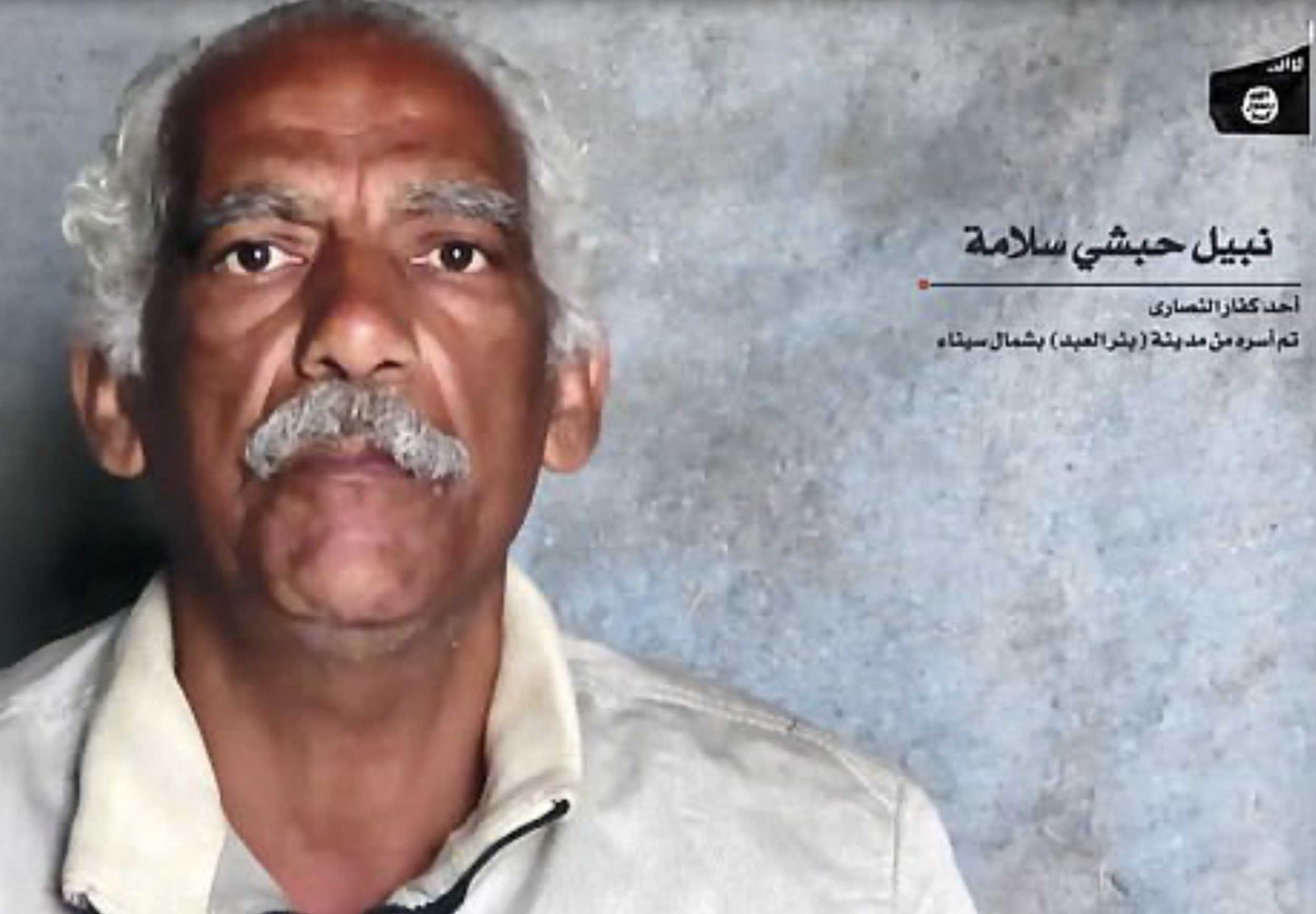
Let’s spend a moment examining a basic (you would think) file produced by a Google News search for this name — “Nabil Habashi Salama.”

Who is this man in the news? Simply stated, he is the latest Coptic Orthodox Christian killed by ISIS.

Does his death matter? Alas, this appears to be a political question, one that shapes basic journalism decisions about what stories are worthy of mainstream coverage.

First things first: Here is the overture of a report about his death published at Christianity Today. The headline: “ISIS Executes Christian Businessman Kidnapped in Egypt’s Sinai.”

The Islamic State has claimed another Christian victim. And Egypt’s Coptic Orthodox Church has won another martyr.

“We are telling our kids that their grandfather is now a saint in the highest places of heaven,” stated Peter Salama of his 62-year-old father, Nabil Habashi Salama, executed by the ISIS affiliate in north Sinai.

“We are so joyful for him.”

The Salamas are known as one of the oldest Coptic families in Bir al-Abd on the Mediterranean coast of the Sinai Peninsula. Nabil was a jeweler, owning also mobile phone and clothing shops in the area. Peter said ISIS targeted his father for his share in building the city’s St. Mary Church.

In a newly released 13-minute propaganda video entitled The Makers of Slaughter (or Epic Battles), a militant quotes the Quran to demand the humiliation of Christians and their willing payment of jizya — a tax to ensure their protection.

Now, what is Christianity Today?

Please respect our Commenting Policy

Biden's 'devout' faith is a news-media talking point, but a survey about it somehow isn't

Biden's 'devout' faith is a news-media talking point, but a survey about it somehow isn't

The culture wars have been on full display during the first two months of the Biden presidency.

It isn’t so much that Joe Biden is fueling the wars — he’s actually steered clear of many of these recent battles that brew on Twitter and cable TV news. Nevertheless, his actions over the arc of a career that spans almost five decades, as senator — vice-president and now commander-in-chief — certainly provides fodder for many Christians who differ with his policies and politics.

The president’s frequent references to his Catholic faith, mixed with affirmations of policies that clash with Catholic teachings, are at the heart of this discussion in public life and, every now and then, in the mainstream press.

USA Today, in a news feature from earlier this week, made the following observation:

When the Vatican announced last month the Catholic Church wouldn’t bless same-sex unions, the White House dodged when asked for a response from Biden, the nation’s second Catholic president and a gay rights supporter who officiated at a wedding of two men five years ago.

“I don’t think he has a personal response to the Vatican,” White House press secretary Jen Psaki said during a briefing that day. Psaki reaffirmed the president’s support of same-sex unions: “He’s long had that position.”

A couple of weeks earlier, Psaki punted when asked why Biden made no mention of Dr. Seuss in his proclamation declaring March 2 – the children’s book author’s birthday – as the annual “Read Across America Day.” Psaki suggested a reporter reach out to the Department of Education, which she said drafted the proclamation.

Psaki’s nuanced response to both questions underscores the delicate balance the White House is taking as Biden navigates a minefield of hot-button social issues ranging from the gender of children’s toys (see Mr. Potato Head) to transgender athletes in school sports to GOP complaints about “cancel culture.”

It was on March 30, a few days before Easter Sunday, that Pew Research Center released a study on how American Catholics view the president and how they view his approach to the Catholic faith. Here is a sample of that study’s results:


Please respect our Commenting Policy

Catholic journalists are must-read sources for those seeking reality of Cuomo scandals

Catholic journalists are must-read sources for those seeking reality of Cuomo scandals

It was just two months ago, in the aftermath of the U.S. Capitol riot, that an idea was floated that could help stop all the misinformation in our society: a “reality czar.”

It was a New York Times piece by tech columnist Kevin Roose (his new book “Futureproof is a must read if you’re interested in automation replacing you at work) on Feb. 2 that quoted experts who floated ideas to stop what the paper called the “scourge of hoaxes and lies.”

Roose’s piece threw out some interesting solutions — although “reality czar” is Orwellian, a Soviet-style solution to misinformation.

The harsh reality is that news consumers will need to read a wider variety of news sources if they are interested in finding solid facts, on-the-record sources and some sense of balanced reporting. On issues linked to religion, culture and politics, that will mean paying more attention to independent religious publications — including Catholic websites — that are now punching way above their weight. Hold that thought, because we will come back to it.

The truth is reality used to be what journalism purported to report on.

That’s no longer true given how polarized the news media has become over the past decade, a progression that sped up during the Donald Trump years and following the proliferation of partisan news sources during the internet age.

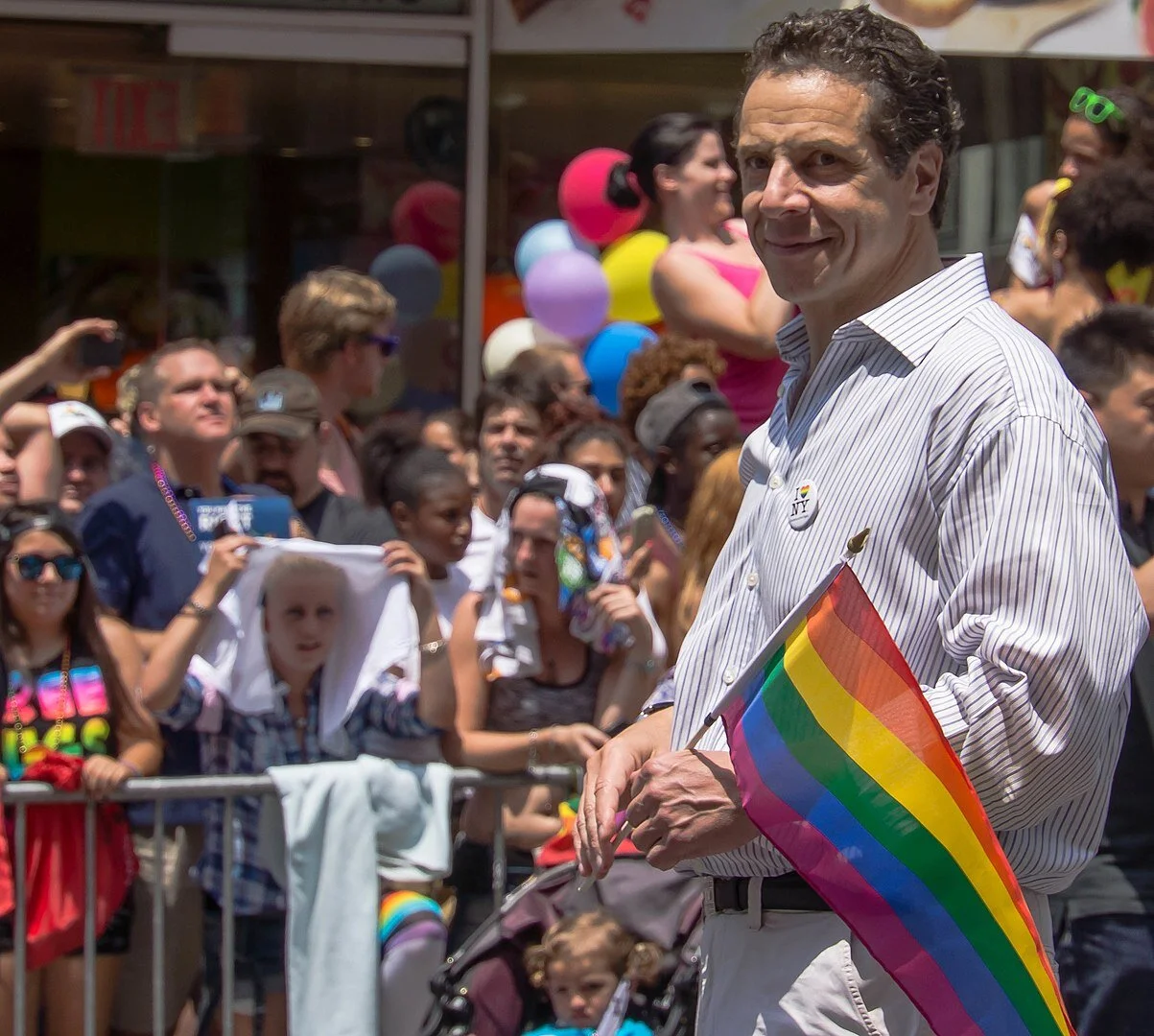
From a political standpoint, this brand of one-sided journalism has allowed politicians to earn cover from many mainstream newsrooms for alleged wrongdoings. On the left, New York Gov. Andrew Cuomo, embroiled in dual scandals regarding nursing home deaths during COVID-19 and growing claims of sexual harassment, is a prime example of this phenomena.

At this time last year, professionals at news organizations were fawning all over his press conferences as the country plunged into the pandemic. Many journalists considered Cuomo the coronavirus reality czar.

Why? Cuomo, a Democrat, served as the counterweight to then-President Trump.


Please respect our Commenting Policy

Keeping up with the times: If schools nix 'Mom and Dad,' is mainstream journalism next?

Keeping up with the times: If schools nix 'Mom and Dad,' is mainstream journalism next?

Reporters and editors want to be sensitive to personal and minority-group concerns alongside their professional duty to be clear, accurate and non-partisan.

How to handle this balancing act amid the West's fast-evolving verbiage to accommodate feminist or LGBTQ+ advocates? The media need to consider that proposed prohibitions now go well beyond replacement of "binary" pronouns with the singular usage of they-them-their (which breaks strict grammar in English and creates ambiguity on antecedents).

Grace Church School in lower Manhattan (sticker price $57,330 per year) provides a revealing rundown on new expectations for usage and diction in its "Inclusive Language Guide," enacted last September. It says e.g. that instead of "boys and girls," school personnel should now say "people, folks, friends," or specifics like "readers" or "mathematicians." Similarly, "husband, wife, boyfriend, girlfriend" give way to "spouse / partner / significant other." The Grace community is asked to say "grown-ups, folks or family" and shun the formerly acceptable "parents" or "Mom and Dad."

Some Moms and Dads were apparently upset upon learning about the guide when posted online in January. School leaders defended their new "inclusive" regimen but hastened to explain that wordings are "suggested," not "mandatory," and apply to the adult faculty and staff, not students.

The 12-page Grace guide, posted here under "Antiracism Resources" at is by no means unique in concept. It draws from such resources as the 2018 "language values" policy at New York City's Bank Street College of Education, which media policy-makers need to be monitoring.

The key disputes involve LGBTQ+ expectations and especially regarding gender identity and fluidity. Grace opposes "heteronormativity," that is, "the assumption that cisgender is the 'norm' or standard and transgender is the outlier or an abnormality." (Editors should ponder the "cisgender" neologism for labeling persons whose gender identity or gender expression matches their biology.)

"Language is constantly evolving," Grace correctly states, and the longstanding term "homosexual" should be eliminated. "More appropriate" designations include "queer,” formerly a derogatory equivalent of the N-word — but now rehabilitated as individuals' deliberate "political identification."


Please respect our Commenting Policy

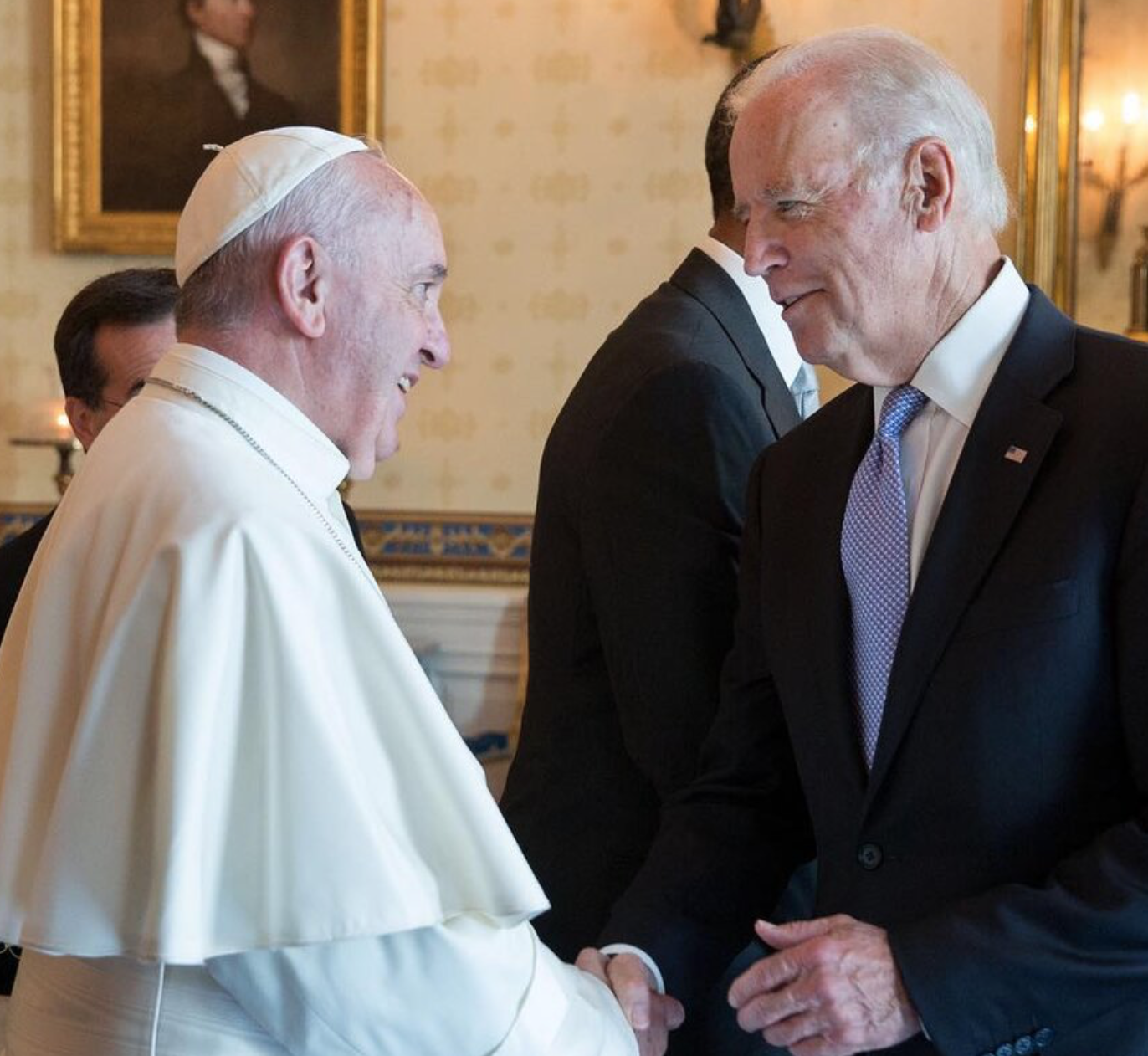
Does President Joe Biden need 'Catholic safe spaces' in order to receive Communion?

Does President Joe Biden need 'Catholic safe spaces' in order to receive Communion?

Whether some Catholic politicians can receive Holy Communion has been a matter of debate for decades.

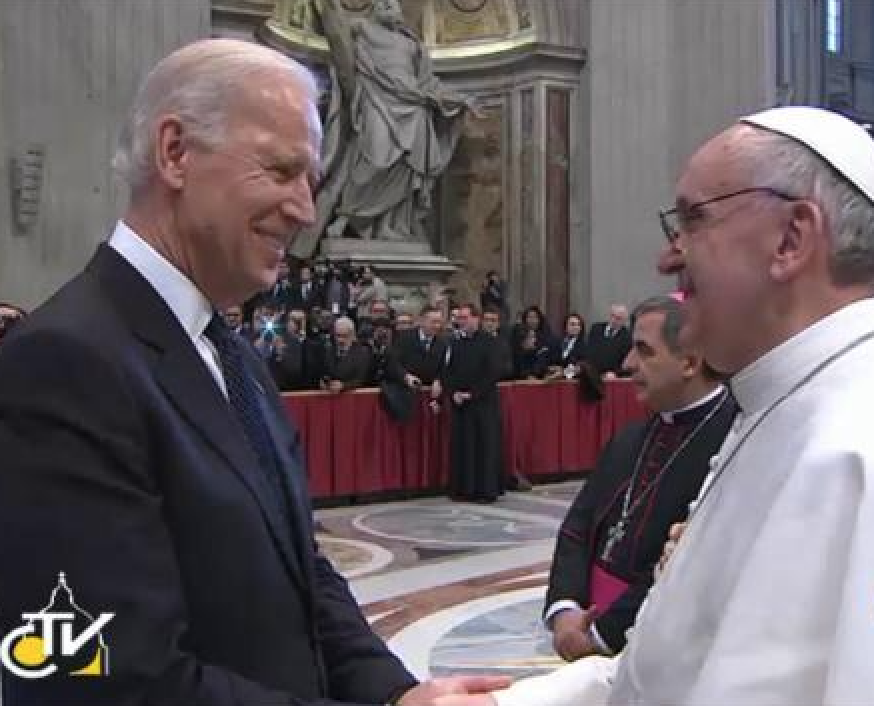
The election of Joe Biden — a man constantly identified as as a “devout Catholic” by his staff and, thus, the mainstream press — has put a hot spotlight on this familiar issues. The key is whether his Catholic piety is compatible with his statements and actions that are rooted in progressive politics.

This issue has come into greater focus during Biden’s first 100 days in office. The Atlantic, in a piece written by Emma Green, detailed how some key U.S. bishops — and “many conservative laypeople” — think the president should be denied access to Holy Communion.

Green’s well-reported feature detailed the ongoing battle between Catholics across this country and the current occupant of the Oval Office, a fight that’s expected to worsen over the next four years. Here’s the thesis:

If some Catholic leaders had their way, Biden wouldn’t be able to take Communion at all. A committee of bishops recently gathered to examine the “difficult and complex situation” of a Catholic president who publicly supports expanding abortion rights, contrary to the faith’s teachings. Later this year, a representative of that group will likely offer guidance on Biden’s future ability to take Communion. For now, the cardinal who oversees Washington, D.C., Wilton Gregory, has said the president is welcome to attend any Mass in his archdiocese. “I don’t want to go to the table with a gun,” Gregory told Religion News Service.

Biden, the second Catholic president in American history, is a man of faith who cites Saint Augustine and hymns in his speeches and carries a rosary that belonged to his son Beau. His presidency is a historic opportunity for the Catholic Church. But he’s also a symbol of a Church at political war with itself; Catholic voters are nearly evenly divided between the parties, and the bishops have been squabbling in public over how to deal with his administration. Sinners abound in politics. The question facing the Catholic hierarchy is whether to offer the most famous Catholic sinner in America an invitation to closeness with God, or to withhold Communion until the president falls fully in line with his Church’s teachings.

The story opened with Biden’s arrival at Holy Trinity Catholic Church in Washington, D.C. to attend Mass, the same place he attended when vice president.

A key detail: Father Kevin Gillespie “checked with Gregory” to make sure he had the cardinal’s backing.


Please respect our Commenting Policy

'Follow the science': Is there room for Catholic voices in COVID-19 news coverage?

'Follow the science': Is there room for Catholic voices in COVID-19 news coverage?

The phrase “follow the science” may very well be one of the most annoying to emerge from this pandemic. It’s proudly used by politicians, often to talk down to the rest of us when they are trying to chide political conservatives or religious people (not always the same thing) on an array of issues.

Was New York’s Gov. Andrew Cuomo “following the science” when his executive order last year forced elderly patients with COVID-19 be returned to nursing homes rather than kept in hospitals? He eventually reversed the order — but his administration remains in hot water after admitting they covered up the number of nursing home deaths. At least he didn’t fly to Cancun in the middle of all of it.

While he received wave after wave of positive press coverage, Cuomo’s actions last year were anti-science, since understanding how the virus was spreading at the time was critical to stopping it nationwide. The U.S. Attorney in Brooklyn and the FBI are now investigating the matter.

“Follow the science” is a phrase that has been used by politicians and mimicked by the mainstream press. A Google News search of the phrase yields 203,000 mentions. In mainstream news outlets, particularly last year when Donald Trump was president, the phrase became an attack on the administration’s handling of the virus. Post-Trump, the phrase continues to be one that journalists, especially in newsrooms like The New York Times are eager to quote.

This piece — “Studies Examine Variant Surging in California, and the News Isn’t Good” — began like this:

A variant first discovered in California in December is more contagious than earlier forms of the coronavirus, two new studies have shown, fueling concerns that emerging mutants like this one could hamper the sharp decline in cases over all in the state and perhaps elsewhere. …

“I wish I had better news to give you — that this variant is not significant at all,” said Dr. Charles Chiu, a virologist at the University of California, San Francisco. “But unfortunately, we just follow the science.”

This pandemic may have led to the wide use of this feel-good phrase, allowing government officials (copying what they hear from scientists) to exert enormous powers. However, other politically polarizing issues — such as abortion, transgender rights and climate change — have also led to its overuse. For many journalists, it means something like this: We have the truth on our side, while the rest of you believe in conspiracy theories. It’s a way to stifle debate, while offering lopsided news coverage.

What does it mean for journalism and particularly the impact of Catholic voices in news stories?


Please respect our Commenting Policy

Reader asks: How can news consumers decide if Ethiopian massacre reports are true?

Reader asks: How can news consumers decide if Ethiopian massacre reports are true?

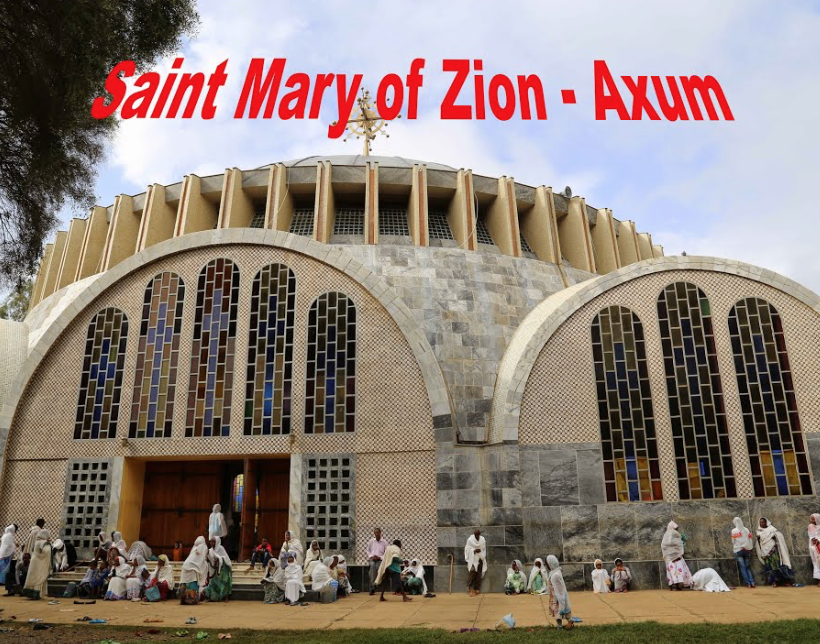
While Americans focused on the dramatic conclusion of 2020 White House race, reports began circulating in the overseas press claiming that a sickening massacre had taken place in a famous church — a pilgrimage site for the Ethiopian Orthodox.

How famous? For centuries, church officials have claimed that the Church of St. Mary of Zion in Axum contains the Ark of the Covenant.

This was, from the start, a journalism horror story — since Ethiopian officials were preventing foreign journalists from reaching the site of the alleged massacre. At the same time, activists on both sides of the stunningly complex conflict appeared to be working hard to shape the coverage that was taking place.

The other day, a frustrated reader sent me this note, after seeing materials posted online attempting to undercut claims that this massacre of 700-plus believers took place. “I’ve trusted you and your sources for about five years now so I’m hoping you can help get to the bottom of this,” the reader said.

I told the reader that, to me, it appeared that this was a case in which — at this point — certainty was impossible. A careful reader would note that some journalists were saying that claims about the massacre could not be verified — either way. “Human rights activists on left and right are concerned about the report and believe the attack COULD have taken place. But there has been no verification that has been locked down certain,” I said.

If you want to see what we’re talking about, check out these early reports from Catholic News Agency (“Hundreds reportedly dead after massacre at Oriental Orthodox church in Ethiopia”) and The Church Times (“Massacre ‘of 750’ reported in Aksum church complex, Tigray, Ethiopia”).

This is, of course, an argument about the attribution of truth claims. When journalists cannot (for a variety of reasons) do on-site reporting to seek evidence, they frequently are forced to seek the best sources that are available to them (often via telephone or other forms of technology) and report what they can. Here is the crucial point: Journalists have to clearly identify the identity of the sources and let readers know what kind of access they would or would not have to the information.

This leads us to a recent Associated Press story with a headline stating, “ ‘Horrible’: Witnesses recall massacre in Ethiopian holy city.

The key word is, of course, “witnesses.”


Please respect our Commenting Policy

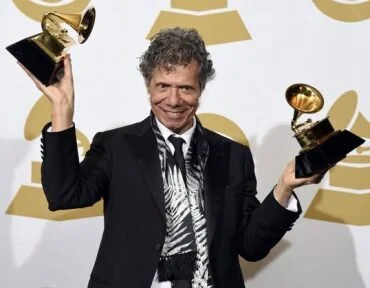
Chick Corea's life and music: If Scientology 'informed' his art, why not offer a few examples?

Chick Corea's life and music: If Scientology 'informed' his art, why not offer a few examples?

When it comes to modern forms of jazz, I was never a fan of the late Chick Corea’s work in the fusion megaband Return to Forever. I was a Weather Report guy.

However, I was totally into Corea’s classic duets with Gary Burton on vibes (see the epic 1979 live version of “Crystal Silence” at the top of this post) and his lovely “Children’s Songs” collection, for solo piano.

I can also remember debates long ago among my friends — secular and religious — about the impact that Corea’s embrace of the Church of Scientology would have on his life and music. After all, he was an instrumental musician. Were the teachings of L. Ron Hubbard supposed to have soaked into his unique chord voicings and the sparkling rhythms of his compositions?

This leads me to the solid New York Times obituary for Corea, who died recently after a short battle with a rare form of cancer. The double-decker headline on this feature covered a lot of ground:

Chick Corea, Jazz Keyboardist and Innovator, Dies at 79

When jazz and rock fused in the 1970s, he was at the forefront of the movement. But he never abandoned his love of the acoustic piano.

I’ve been thinking about this piece for a week now, wondering if it was worthy of a short post. I finally decided that it was. After all, the obit’s brief treatment of the religion angle demonstrated a classic puzzle that GetReligion has discussed many times in the past, linked to coverage of athletes, actors, writers, etc. Here is that section of the Times piece:

In the early 1970s, Mr. Corea converted to Scientology, and the religion’s teachings informed much of his music from then on, including his work with Return to Forever.

Armando Anthony Corea was born on June 12, 1941, in Chelsea, Mass., near Boston. His father, also named Armando Corea, was a trumpeter and bandleader in Boston, and his mother, Anna (Zaccone) Corea, was a homemaker. He began studying piano when he was 4.

And that was that.


Please respect our Commenting Policy

Welcome to New York Times 'religion' feed? A kissy-kissy chat with exiting NARAL boss

Welcome to New York Times 'religion' feed? A kissy-kissy chat with exiting NARAL boss

Does anyone else remember RSS feeds?

The whole idea of RSS — Really Simple Syndication — is that websites can allow you can set up an automated feed that feeds you updates on specific topics in a standardized, computer-readable format.

The key is that computer algorithms are supposed to detect when stories address issues that interest a specific reader.

Anyway, I received this item the other day in my RSS feed devoted to New York Times stories about religion. In this case, the Times defines the RSS criteria, not me.

In terms of religion news, this one is pretty weird — even for today’s Times. The headline: “Ilyse Hogue, Influential Abortion Rights Advocate, Will Step Down as NARAL Chief — In an interview, Ms. Hogue discussed a tumultuous era for abortion rights and the future of Roe v. Wade.”

In other words, this is a kissy-kissy Q&A marking Hogue’s exit after eight years as leader of NARAL Pro-Choice America. The Times informs readers that “abortion rights are at something of a crossroads, with Democrats facing the choice of whether to try to deliver on their promise of codifying Roe v. Wade.”

All right, says I, let’s see the many points in this report that touch on religion. After all, the RSS algorithms put this in the “religion” feed.

I found three, and even that it is stretching it. Can you spot the religious content in the following three bites from this news feature? The questions, obviously, are in bold type:

Let’s start with perhaps the biggest question: Is Roe v. Wade safe?


Please respect our Commenting Policy