Jews and Judaism

Hollywood's 'Noah' wars: Why not quote the Bible?

Let’s face it. That Noah character in Genesis 9 is one pretty wired, complex fellow. I don’t know about you, but I can see the volatile actor Russell Crowe digging into some of this stuff: The sons of Noah who came out of the ark were Shem, Ham and Japheth. (Ham was the father of Canaan.) These were the three sons of Noah, and from them came the people who were scattered over the whole earth.

Noah, a man of the soil, proceeded [a] to plant a vineyard. When he drank some of its wine, he became drunk and lay uncovered inside his tent. Ham, the father of Canaan, saw his father naked and told his two brothers outside. But Shem and Japheth took a garment and laid it across their shoulders; then they walked in backward and covered their father’s naked body. Their faces were turned the other way so that they would not see their father naked.

When Noah awoke from his wine and found out what his youngest son had done to him, 25 he said,


Please respect our Commenting Policy

Were there any ghosts in the Alfred Rosenberg diary? You think?

First things first: Anyone who is interested in history, especially the history of the ideas behind Adolph Hitler, is going to amazed by the twists and turns that unfold in the new Los Angeles Times “Column One” feature about the search for the lost diary of Nazi intellectual Alfred Rosenberg. This is one amazing ride, with the son of a Holocaust survivor acting as a kind of quiet, peaceful, but highly motivated Indiana Jones on the quest to find the Great White Whale of Holocaust studies. Here is how reporter Richard Simon begins this riveting tale, which has a Washington, D.C., dateline:

Mayer helped maintain the vast collection of artifacts at the U.S. Holocaust Memorial Museum and knew the diary had been kept by Alfred Rosenberg, the Nazi Party’s chief ideologue and a confidant of Adolf Hitler.

The diary was found in the final days of World War II, hidden behind a false wall in a Bavarian castle. Excerpts were introduced into evidence at the Nuremberg war crimes trials.


Please respect our Commenting Policy

Now who was that Joseph guy in the old story from Genesis?

Former GetReligionista Brad Greenberg passed along this interesting item from Twitter, which barely requires commentary of any kind. However, since commentary is what we do here, let’s start off with a bit of biblical context for this amazing correction from The New York Times. This famous story from the book of Genesis is offered here with no implied connection whatsoever to current economic conditions here in the United States of America or anywhere else. Honest. The great Gray Lady brought this up.

We will start with the voice of Joseph, in verse 33:

“… Now therefore let Pharaoh select a discerning and wise man, and set him over the land of Egypt. Let Pharaoh proceed to appoint overseers over the land and take one-fifth of the produce of the land of Egypt during the seven plentiful years. And let them gather all the food of these good years that are coming and store up grain under the authority of Pharaoh for food in the cities, and let them keep it. That food shall be a reserve for the land against the seven years of famine that are to occur in the land of Egypt, so that the land may not perish through the famine.”


Please respect our Commenting Policy

On the cautious use of loaded terms such as 'messianism'

The other day I wrote about a news report that ran in The Los Angeles Times that used a very interesting and, in the context of Israel and the Middle East, very loaded term. Here is the lede on that piece, once again: WASHINGTON – The White House on Tuesday condemned as “offensive” the reported comment of Israel’s defense minister that Secretary of State John F. Kerry’s campaign for Mideast peace grows from his “messianism.”

My question was quite simple. I suspected, based on the coverage offered by other mainstream outlets, that Moshe Yaalon had not actually used a specific noun best translated as “messianism,” but had used words that would best be translated, as my post noted, either as “messianic fervor” or words to that effect. Perhaps the goal was to say that Kerry suffers from some kind of “messiah complex.” Yes, I also wondered if — because of a variety of controversies linked to Christians in the Middle East — any use of a term similar to “Messianism” would have been considered especially cutting.

Thus, I thought that a reference to the noun “messianism” would have needed some explaining, no matter which definition was selected from a typical dictionary online:


Please respect our Commenting Policy

Whoa! Was John Kerry being too messianic or Messianic?

Holy dictionary! Talk about leaving a crucial term in a story undefined, unexplained, unattributed or all of the above. I almost spit my Diet Dr Pepper all over my iPad this morning (which is easier to clean than a computer keyboard, just sayin’) when I read the top of this Los Angeles Times report about Secretary of State John Kerry’s ongoing, some would say “relentless,” campaign to make headlines in the Middle East.

WASHINGTON – The White House on Tuesday condemned as “offensive” the reported comment of Israel’s defense minister that Secretary of State John F. Kerry’s campaign for Mideast peace grows from his “messianism.”

In an incident that may deepen strains between the two governments, Defense Minister Moshe Yaalon was quoted in the Israeli daily Yediot Aharonot as saying that Kerry is “inexplicably obsessive” and “messianic.” He added that “the only thing that may save us is if Kerry wins the Nobel Prize and leaves us,” the article said.


Please respect our Commenting Policy

News flash! AP ends the Great Schism of 1054!

Many moons ago — just under a quarter of a century — I covered a major ecumenical event in the Episcopal Diocese of Colorado. I believe it was a festive Divine Eucharist marking the departure of Bishop William C. Frey, as he exited to serve as dean and president of the Trinity School for Ministry. One of the honored participants in the service was Denver Archbishop J. Francis Stafford, who was a national level figure in Catholic ecumenical efforts (and today is a cardinal serving at the Vatican). It was natural for Stafford to be there, in large part because he had a positive working relationship with the charismatic Frey, who was a traditionalist on key doctrinal issues that affected ecumenical work in public life.

Stafford took part in the first half of the service, but did not formally vest to take part in the Holy Eucharist itself. As the rite moved into the sacramental prayers of the Mass, the Catholic archbishop moved to the side of the auditorium — where a prie dieu had been placed, allowing him to respectfully kneel in solitary prayer.

The symbolism was important: Stafford was there in prayer, but because the Catholic and Anglican churches are not in Communion, with a large “C,” he could not take part in the celebration of the Mass (with female priests, for example) or receive Communion. Stafford was there as a show of unity, to the degree allowed by the doctrines of the two churches.


Please respect our Commenting Policy

Happy (religious) New Year, all year long, age after age

Happy (religious) New Year, all year long, age after age

Lacking a specific question from a reader, The Guy takes on his own chosen topic — aspects of time’s passage in world religion. The commonly observed times have notably religious origins. Years (e.g. 2014) are counted from an ancient and inaccurate guess on when Jesus Christ was born. Non-Christians often designate years as C.E. (“Common Era”) instead of A.D. (“Anno Domini” meaning “Year of the Lord”). Our Gregorian Calendar is a reform ordered by Pope Gregory XIII in 1582, which skipped past 10 days and devised the leap year system. Because of that Roman Catholic origin, Anglican Britain and its Protestant American colonies didn’t switch from the ancient Julian Calendar until 1752, and Greece, where the Orthodox Church dominates, held out until 1922!

CHRISTIANITY – As with most faiths, January 1 has no religious significance whatever, though some congregations do hold New Year’s Eve services. For many, the “church year” begins on the first of four Sundays in the Advent season that prepares for Christmas. Celebration of Christ’s birth on December 25 (or January 7 for “old calendar” Orthodox) is an arbitrary choice that took hold in the 3rd Century.

JUDAISM – Rosh Hashanah (“head of the year”) begins a 10-day period of spiritual and moral reflection, the Days of Awe, culminating in Yom Kippur (the Day of Atonement). The new year occurs in September or early October and, oddly enough, on the religious calendar’s 7th month, not the first month, determined by complex calculations. The years (5775 begins next September 24) are counted from the traditional time for God’s creation of Adam and Eve.


Please respect our Commenting Policy

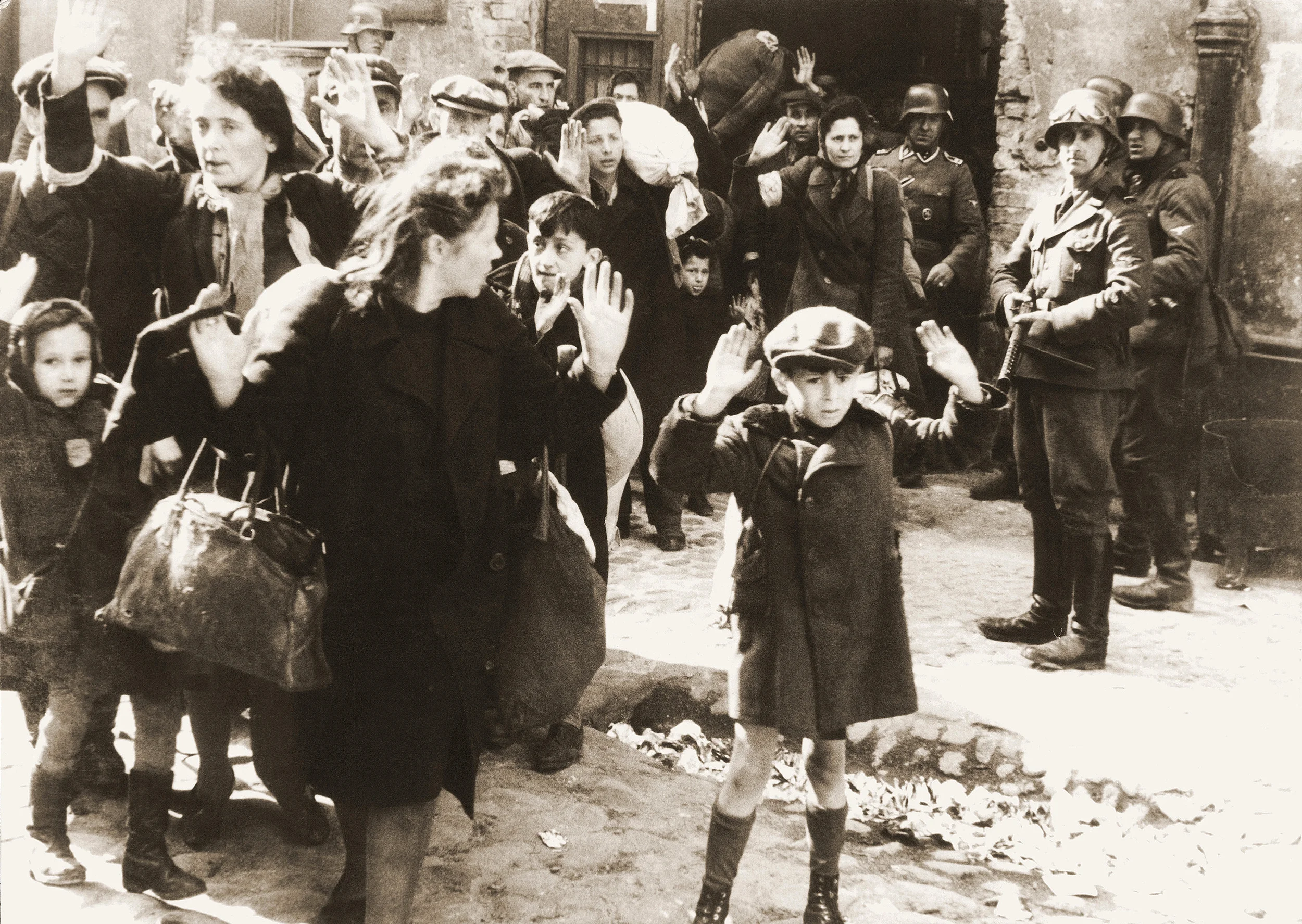
Haaretz and Jewish resistance to the Holocaust

Haaretz and Jewish resistance to the Holocaust

Do you remember Tom Lehrer, the composer/comedian/mathematician? I have long loved his music, which I discovered as a young boy when exploring my parent's record collection.

A recent article in the Israeli newspaper Haaretz set spinning in my head one of Lehrer's LPs this Christmas and to the embarrassment of my children I broke into song, serenading them with the refrain from Lehrer's satiric gem National Brotherhood Week (1965).

Oh, the Protestants hate the Catholics, And the Catholics hate the Protestants, And the Hindus hate the Moslems, And everybody hates the Jews.

My fertile mind however, added an additional line -- "And Haaretz does too!"

Hates the Jews that is.

How else can one explain this article, "The Myth of the Warsaw Ghetto" published last week in the leftist Israeli daily? Writing on the website of Commentary magazine, Eugene Kontorovich summarized the article's thesis, stating that Haaretz believed that if:


Please respect our Commenting Policy

UK's Telegraph finds atheists in Florida -- film at 11

Here’s a shocker: America is becoming more secular, atheism is on the rise and — get this! — for now there are more observant Muslims than Jews in Florida. Of course, it depends on whether you define a Jew as one who practices the Jewish faith or simply identifies culturally.


Please respect our Commenting Policy