International News

Plug-In: Pope Francis, the nones and an embattled pastor's life after Mars Hill Church

Plug-In: Pope Francis, the nones and an embattled pastor's life after Mars Hill Church

The next generation is leaving the Christian faith faster than parents realize, Lifeway Research’s Aaron Earls writes.

Religion cases are notably absent from the U.S. Supreme Court’s fall schedule, the Deseret News’ Kelsey Dallas notes. The question: Is that a good thing?

Surprisingly, state-level pandemic restrictions had no measurable, lasting impact on American churches, according to data cited by Christianity Today’s Daniel Silliman.

This is our weekly roundup of the top headlines and best reads in the world of faith. We start with major news we previewed last week: the Catholic Church’s Synod of Bishops on Synodality.

What To Know: The Big Story

Blessing same-sex unions: Even before the synod opened Wednesday, a doctrinal earthquake shook the Catholic world, as our own Clemente Lisi explains:

In a move that would signal a seismic shift for the Catholic Church, Pope Francis said he’s open to blessing same-sex unions and to studying the possibility of ordaining women to the priesthood.

The comments came in an eight-page letter Francis penned this past July — and released by the Vatican on Monday — in response to five cardinals who had written to the pope expressing concern about a number of issues that will be discussed at a meeting of bishops set to start Wednesday at the Vatican.

“Pastoral prudence must adequately discern whether there are forms of blessing, requested by one or several people, that do not transmit a mistaken conception of marriage,” Francis wrote.

A welcome for “everyone” — Lisi, a veteran journalist who has reported on the Vatican for years — offers additional insight in his coverage of the synod’s opening day:

Pope Francis opened a meeting of bishops at the Vatican on Wednesday by warning that the Catholic church needs to put aside “political calculations or ideological battles” and welcome “everyone” to dialogue about the faith.
Please respect our Commenting Policy

Five cardinals ask hard questions about doctrine and get a stunning Pope Francis response

Five cardinals ask hard questions about doctrine and get a stunning Pope Francis response

The same-sex blessings near Cologne Cathedral were a public salute to scores of private ceremonies among European Catholics in recent years.

The crowd waved rainbow flags and, according to media reports, sang "All You Need Is Love" by the Beatles. The mid-September rites included Catholic priests reciting blessings for same-sex and heterosexual couples and, though held outside of Cardinal Rainer Maria Woelki's cathedral, represented a bold ecclesiastical affront to the city's conservative archbishop.

Are these rites "weddings"? That was a crucial issue raised by five cardinals in "dubia" (Latin for "doubts") questions sent to Pope Francis weeks before the Vatican's global "Synod on Synodality," which opened this week. The five cardinals requested "yes" or "no" answers.

Instead, the pope offered a detailed analysis in which he restated established Catholic doctrines, noting that "the reality that we call marriage has a unique essential constitution that demands an exclusive name." Thus, the church should avoid rites giving the "impression that something that is not marriage is recognized as marriage."

Nevertheless, Pope Francis -- writing in July -- urged "pastoral charity" in this issue. Thus, the "defense of objective truth is not the only expression of this charity, which is also made up of kindness, patience, understanding, tenderness, and encouragement. Therefore, we cannot become judges who only deny, reject, exclude.

"For this reason, pastoral prudence must adequately discern whether there are forms of blessing … that do not transmit a mistaken conception of marriage. For when a blessing is requested, one is expressing a request for help from God, a plea for a better life, a trust in a Father who can help us to live better."

This drew praise from Francis DeBernardo, leader of the New Ways Ministry for Catholics seeking changes in centuries of Christian doctrine on sexuality.

"The allowance for pastoral ministers to bless same-gender couples implies that the church does indeed recognize that holy love can exist between same-gender couples, and the love of these couples mirrors the love of God," he wrote.


Please respect our Commenting Policy

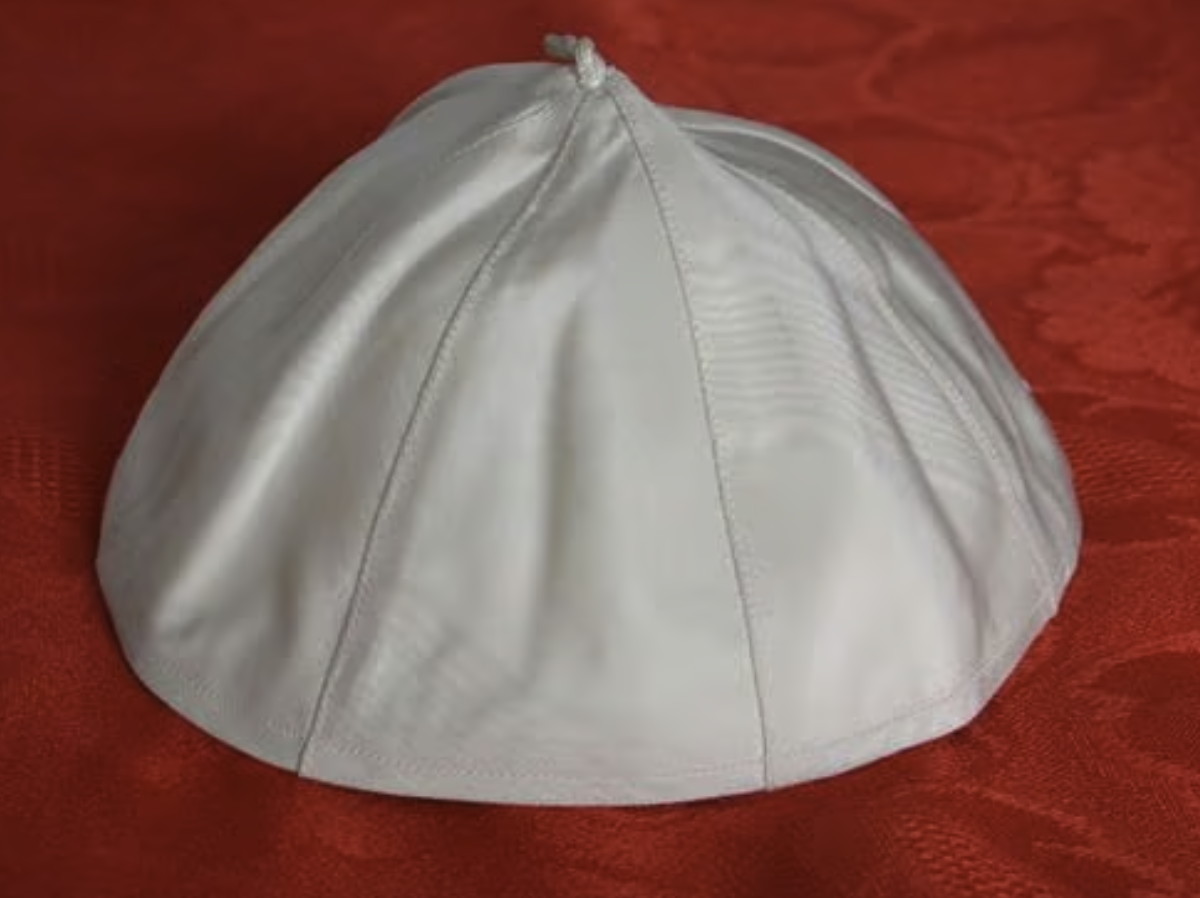
Podcast: Pope Francis tips his white hat on (location, location, location) same-sex blessing rites

Podcast: Pope Francis tips his white hat on (location, location, location) same-sex blessing rites

If you have ever bought a home, or looked for property for a business (or a church), you may have heard a realtor say this: “Location, location, location.” The Urban Dictionary defines this term as follows: “Phrase to remind people that the most determining factor in the price of a house is the location.”

Money isn’t the only thing that matters, of course.

Back in the 1980s, I began to realize that this location-times-three mantra was affecting many major religion-beat stories that I was covering, especially in Christian flocks that include folks called “bishops.” In so many cases, what happened in churches — even what was taught from pulpits — was shaped by what that congregation’s bishop encouraged, discouraged or even punished.

This basic equation loomed in the background during this week’s “Crossroads” podcast (CLICK HERE to tune that in), which focused on the stunning responses that Pope Francis offered to “dubia” (Latin for “doubts”) documents from five doctrinally conservative cardinals.

Did he or did he not signal his support for same-sex blessing rites (or sort-of rites) in Catholic parishes around the world? Well, this pope is a Jesuit, which means that he declined to give a “yes” or “no” answer. But what he seemed to say was this: There are Catholic clergy who can find ways to show “pastoral charity” to LGBTQ+ Catholics and, if this is OK with their local bishops, they can proceed with blessing gay couples (since that is what many of them are already doing).

Now, this is long and quite Jesuit (the adjective form of the word). But readers need to see all of this to understand what may or may not be showing up in the news that they read. Francis proclaimed:

a) The Church has a very clear conception of marriage: an exclusive, stable, and indissoluble union between a man and a woman, naturally open to the begetting of children. It calls this union “marriage.” Other forms of union only realize it “in a partial and analogous way” (Amoris Laetitia, 292), and so they cannot be strictly called “marriage.”

b) It is not a mere question of names, but the reality that we call marriage has a unique essential constitution that demands an exclusive name, not applicable to other realities. It is undoubtedly much more than a mere “ideal.“

c) For this reason the Church avoids any kind of rite or sacramental that could contradict this conviction and give the impression that something that is not marriage is recognized as marriage.

d) In dealing with people, however, we must not lose the pastoral charity that must permeate all our decisions and attitudes. The defense of objective truth is not the only expression of this charity, which is also made up of kindness, patience, understanding, tenderness, and encouragement.


Please respect our Commenting Policy

Journalists need to ask: Are emerging Catholic synod fights about 'ideology' or 'doctrine'?

Journalists need to ask: Are emerging Catholic synod fights about 'ideology' or 'doctrine'?

The Synod on Synodality is here and there are many, many angles for journalists to pursue.

Let’s put it this way (with much, much more to come), I don’t think Clemente Lisi will have lots of time for soccer (he is an internationally known reporter on all things futbol) in the days ahead. For starters, readers can dig into these Lisi features at Religion Unplugged, where he is editor: “Everything You Need To Know About The Synod On Synodality” and “Pope Francis Open To Church Blessing Of Same-Sex Unions.”

The same-sex blessing story is huge and, frankly, leaders in some mainstream newsrooms (scan this Google News search file) seem to be waiting for a clear signal from their usual Catholic sources on the degree to which it is appropriate to celebrate.

I would like to back off and examine an important word in recent statements by Pope Francis and, thus, the elite press. That word is “ideology.” You can see what is going on in the Associated Press report with this headline: “Ideological rifts among U.S. bishops are in the spotlight ahead of momentous Vatican meeting.”

The subject, of course, is the Synod on Synodality. Read this carefully:

The synod is intended to be a collegial, collaborative event, though the agenda includes divisive issues such as the role of women in the church and the inclusion of LGBTQ Catholics.

If there’s Exhibit A for how elusive consensus might be, it’s the United States’ participation. In effect, there are two high-level U.S. delegations widely viewed as ideological rivals — six clerics appointed by Pope Francis who support his aspirations for a more inclusive, welcoming church; five clerics chosen by the U.S. Conference of Catholic Bishops who reflect a more conservative outlook and more skepticism of Francis’ priorities.

The assumption, of course, is that the divisions among U.S. representatives and, one can assume others around the world, are essentially political.

As always: Politics is real. Religion? Not so much.

Let’s keep reading, before we return to that loaded word — “ideological.”


Please respect our Commenting Policy

Plug-In: Vatican Synod on Synodality is sure to make some Catholics mad and others happy

Plug-In: Vatican Synod on Synodality is sure to make some Catholics mad and others happy

Religion-beat professionals are following tragic news out of Pakistan: Dozens are dead after a suicide bombing in a crowd of people celebrating the birthday of Islam’s prophet, The Associated Press’ Abdul Sattar reports.

Meanwhile, Sen. Dianne Feinstein of California — the longest serving woman senator — has died at 90. An obituary by the Washington Post’s Emily Langer recounts that Feinstein “attended an elite Catholic high school where she was the only Jewish student.”

This is our weekly roundup of the top headlines and best reads in the world of faith. We start by previewing a major summit of the Catholic Church.

What To Know: The Big Story

‘Truly important’: “This is the biggest thing happening in the Catholic Church since Vatican II, there is no question about that,” a scholar tells The Tablet’s Carol Zimmerman.

John L. Allen Jr. of Crux characterizes the upcoming Synod of Bishops on Synodality as “this fall’s Catholic equivalent of the Super Bowl.”

“The unprecedented gathering of 464 Catholic clergy and laypeople, including women, begins Oct. 4 at the Vatican,” Religion News Service’s Claire Giangravé reports. More from RNS:

While some might dismiss the highly anticipated event as a meeting on meetings, the term synodality under Pope Francis has expanded to reflect his vision for dialogue and decision-making in the church.

“I am well aware that speaking of a ‘Synod on Synodality’ may seem something abstruse, self-referential, excessively technical, and of little interest to the general public,” Francis said to journalists at the Vatican on Aug. 26.

he summit will bring 464 Catholic clergy and laypeople, including women, to the Vatican to discuss hot-button issues ranging from sexual abuse to LGBTQ inclusion and female ordination.

“It is something truly important for the church,” the pope said.

Divided American clerics: Ideological rifts among U.S. bishops are in the spotlight ahead of the Vatican meeting, according to The Associated Press’ David Crary:


Please respect our Commenting Policy

Thinking about the legacy of 'Team Ted,' as Vatican insiders talk about the next pope

Thinking about the legacy of 'Team Ted,' as Vatican insiders talk about the next pope

If I have learned anything about mainstream journalism it is this: Editors love partisan political horse races.

This framework is, alas, also used when journalists ponder vacancy signs on the Throne of St. Peter in Rome.

In this kind of contest, scribes almost always (they don’t have to do this, of course) decide that there is a good horse and a bad horse. Most of the time, the “good” candidate is defined as the one who is in favor of “reform.”

What does “reform” mean, for most mainstream journalists? As I noted long ago in this post — “Who gets to ‘reform’ what?” — it helps to look up that loaded word in an online dictionary or two:

REFORM …

* make changes for improvement in order to remove abuse and injustices; "reform a political system"

* bring, lead, or force to abandon a wrong or evil course of life, conduct, and adopt a right one; "The Church reformed me"; "reform your conduct" ...

* a change for the better as a result of correcting abuses; "justice was for sale before the reform of the law courts" ...

* improve by alteration or correction of errors or defects and put into a better condition; "reform the health system in this country"

* a campaign aimed to correct abuses or malpractices.

Now, who gets to define what is and what is not an “abuse,” an “evil course of life,” an “injustice” or a “malpractice”?

That would be the players behind the horse race who are trusted by newsroom leaders and owners.

Thus, before we get to this weekend’s “think piece,” let’s pause and look back to a 2013 speech at Villanova University (YouTube at the top of this post) by the former, now disgraced, cardinal Theodore McCarrick. At the 18-minute mark or so, this media-maven Vatican player discusses his behind-the-scenes networking activity ahead of the conclave that gave the world Pope Francis.

So often the kingmaker in American Catholic life, McCarrick describes a meeting with an “influential Italian gentleman” at the North American College in Rome.


Please respect our Commenting Policy

Pope Francis vs. Bishop Strickland feud highlights the good and bad of journalism today

Pope Francis vs. Bishop Strickland feud highlights the good and bad of journalism today

Another week and yet another headline about Pope Francis feuding with a doctrinally conservative American prelate.

It’s become an all-too-common story and one that the legacy media often can’t resist.

It was late last month that the pope lamented what he called a “reactionary” Catholic church in the United States, where he said political ideology had replaced faith. Pope Francis had made the comments on August 5 in a private meeting in Lisbon — published three weeks later by the Jesuit journal Civilta Cattolica — with members of the Jesuit order, of which he is a member, during his trip for World Youth Day.

The pope’s comments, and the expected fallout, were widely covered by both the secular and Catholic press in the United States and abroad.

The latest salvo in this transatlantic war-of-words took place last week, on Sept. 11, when The Pillar reported that the pope had “discussed with Vatican officials the prospect of requesting the resignation of Bishop Joseph Strickland of the Diocese of Tyler, Texas.”

This is what The Pillar reported:

The pope met Sept. 9 with Archbishop Robert Prevost, OSA, head of the Dicastery for Bishops, and Archbishop Christophe Pierre, apostolic nuncio to the United States — both cardinals-elect.

Several sources close to the dicastery told The Pillar ahead of the meeting that the prelates would present the pope with the results of an apostolic visitation of Stickland’s diocese, conducted earlier this year, as well as subsequent public actions by the bishop, who has emerged as an outspoken critic of the Holy Father.

“The situation of Bishop Strickland is the agenda,” one senior official close to the dicastery told The Pillar, “and the expectation is that the Holy Father will be requesting his resignation — that will certainly be the recommendation put to him.”

While noting that the papal audience did not exclusively concern the Bishop of Tyler, who has previously accused the pope of having a “program [for] undermining the Deposit of Faith,” the official said that Strickland’s case was set to be the “primary point of discussion.”


Please respect our Commenting Policy

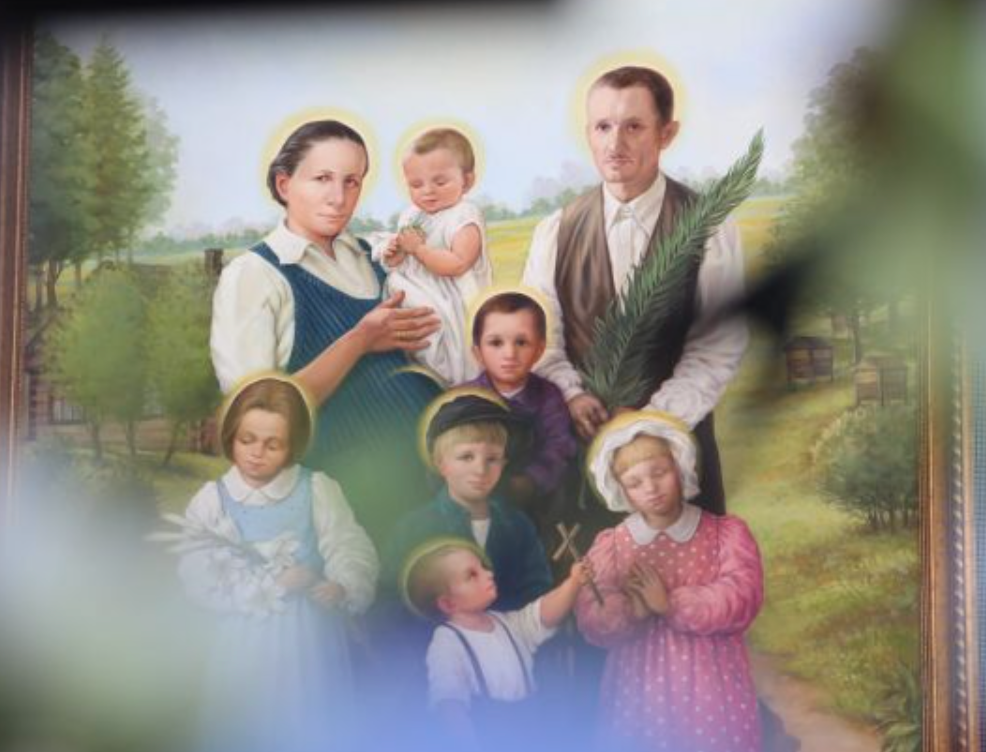
Reuters should correct a correction? Polish rite to beatify family of nine killed by Nazis

Reuters should correct a correction? Polish rite to beatify family of nine killed by Nazis

Does anyone remember newspaper “corrections”?

Let me explain the concept to younger GetReligion readers. Back in the days of ink-on-paper news, if a news organization made a mistake, the editors used to print an actual correction, noting the error and providing the correct information. Then, early in the online era, they would add a “correction” blurb at the top of a story and then insert a detailed correction at the end (or some variation on these items).

Then some, not all, news organizations simply started correcting mistakes — in the never-ending flow of online copy — without admitting that they made these mistakes in the first place. Thus, savvy news readers began making screenshots of errors they spotted, knowing that this was the only definitive way to prove the error ever existed.

Now, we have something really strange going on in the following Reuters news report: “Catholic Church to beatify Polish family, including new-born baby, killed by Nazis.”

If you follow Catholic Twitter, it appears that there were errors in an earlier version of this story.

Maybe. It’s hard to tell.

Then again, the current version of the story (as I wrote this) appears to contain a clash between two different accounts of this beatification story.

Start here: Note the “including new-born baby” reference in the headline.Then, let’s work through this, starting with the lede from several days ago:

VATICAN CITY, Sept 5 (Reuters) — The Catholic Church is to beatify a Polish family of nine including a new-born baby who died at the hands of the Nazis during World War Two, the Vatican's saint-making department said.


Please respect our Commenting Policy

Plug-In: Does traditional worship have a prayer post-pandemic? New reports offer info

Plug-In: Does traditional worship have a prayer post-pandemic? New reports offer info

Last week we highlighted the return of a Washington state high school football coach who won the right to pray on the field.

Now, after just one game back, coach Joe Kennedy has resigned, “citing family concerns and a lack of support from school district officials,” as the Washington Times’ Mark A. Kellner reports.

In other news, X owner Elon Musk is accusing the Anti-Defamation League of, well, defamation, “claiming that the nonprofit organization’s statements about rising hate speech on the social media platform have torpedoed X’s advertising revenue,” CNN’s Jordan Valinsky writes. At the heart of this battle is an Orthodox Jewish activist who is being defended by, wait for it, Musk.

Musk’s threat to sue the antisemitism watchdog extends the platform’s war of words, Religion News Service’s Yonat Shimron notes. At the heart of this battle is an Orthodox Jewish activist who is being defended by, wait for it, Musk.

Meanwhile, Ukraine’s Greek Catholic bishops told Pope Francis that his praise for Russia’s imperial past “pained” Ukrainians, as The Associated Press’ Nicole Winfield details.

This is our weekly roundup of the top headlines and best reads in the world of faith. Our big story concerns the state of worship attendance and giving after COVID-19.

What To Know: The Big Story

Post-pandemic challenges: For houses of worship, encouraging signs that a rebound is taking place are evident in a new study.


Please respect our Commenting Policy