International News

Pew Research Center report lifts the veil (as much as possible) on religion in China

Pew Research Center report lifts the veil (as much as possible) on religion in China

Amid a flow of recent news stories on the economic problems that plague China and its disruptive impact on global affairs, the Pew Research Center on August 30 issued a landmark 160-page report with a wealth of information on another persistent issue -- the status of various religious groups in this nation of 1.4 billion after 74 years of unremitting effort by Communist rulers to suppress or eliminate faith.

Given North Americans’ long-running interest in both China and its religious situation, especially for Christians, this report is important news. Editors will want to summon their art departments for charts to complement coverage. The report’s depiction of data sources and the huge difficulties in obtaining reliable information from the mainland adds to this notable achievement.

The upshot, according to Pew demographer Conrad Hackett, is that by available measures, China is — on the surface — “the least religious country in the world.” Not surprising when media and public meetings are restricted and the regime forbids religious education while subjecting children to intensive atheistic propaganda at school. Only a tenth of the Chinese report religious affiliation, and 3% say religion is “very important” in their lives, compared with 98% in nearby Indonesia (or 37% in the United States).

Government barriers meant Pew could not conduct its own field surveys as in other nations. So the numbers come from government reports, research by Chinese universities (a risky academic specialty), one private polling firm and the Sweden-based World Values Survey. The report provides excellent guidance on interpreting limits and problems with the available data sources and confusion over definitions.

Note this striking example: The government lists 34,000 registered Buddhist temples, compared with 190,000 counted by Sun Yat-sen University experts.

Yet the people are permeated with spiritual beliefs and superstitions. These include gravesite visits to venerate or assist ancestors in the afterlife, rituals to seek personal benefits, incense-burning, fortune-telling, planning of activities around auspicious calendar dates and feng shui (placement of buildings and furnishings thought to manipulate energies). With or without formal affiliation, a third of Chinese believe in the Buddha or enlightened Buddhist beings, and 18% believe in Taoist deities.

Are some believers afraid to discuss faith ties, while living under China’s expanding social credit system of rewards and punishments?

Please respect our Commenting Policy

Plug-In: That openly prayerful coach is back on the sideline, after his Supreme Court win

Plug-In: That openly prayerful coach is back on the sideline, after his Supreme Court win

NEW YORK — I filed this edition of Weekend Plug-in from my temporary, 38th-floor apartment in Midtown Manhattan. I’ve spent the week enjoying a mix of work and fun in Metropolis.

As I typed this, Pope Francis had just arrived in Mongolia, “becoming the first pope to visit the vast country with one of the world's smallest Catholic populations, nestled between Russia and China — two nations with complicated Vatican relationships,” as the National Catholic Reporter’s Christopher White reports.

Francis has long expressed an interest in visiting Russia and China, but Mongolia might be as close as he gets, the Wall Street Journal’s Francis X. Rocca explains.

As Mongolia Catholics welcome Francis, the nation’s evangelicals wrestle with growing pains, according to Christianity Today’s Angela Lu Fulton. Also, check out this Julia Duin background report at GetReligion.

This is our weekly roundup of the top headlines and best reads in the world of faith. Our big story concerns the return of a Washington state high school football coach who won a school prayer case before the U.S. Supreme Court.

What To Know: The Big Story

God on the gridiron: “Joe Kennedy — also known as the “praying coach” — is back as an assistant coach for the first time since the Supreme Court ruled that the Bremerton School District in Kitsap County had violated his religious freedom.” That’s the synopsis from Duin, who goes in depth on Kennedy’s return for The Free Press.

Readers may recall that Jovan Tripkovic interviewed Kennedy for ReligionUnplugged.com after the coach’s SCOTUS victory in 2022.

Friday night lights: The Seattle Times’ Nine Shapiro sets the scene for Kennedy’s return:

This much we can say for sure: Bremerton High assistant football coach Joe Kennedy will pray after Friday night’s opening game of the season, as the U.S. Supreme Court said he could.

“I’ll just go over to mid-field, like I always do, face the scoreboard, take a knee, and thank God for being here,” the 54-year-old coach said, sitting in the grandstands after practice Wednesday, having returned to coaching the Knights in early August following an eight-year absence.


Please respect our Commenting Policy

Thinking about the abaya, a garment causing new mosque-and-state conflicts in France

Thinking about the abaya, a garment causing new mosque-and-state conflicts in France

It’s back to school time across much of the world, but nowhere has the annual ritual drawn more attention than in France.

This attention comes after French officials said they will bar children in public schools across the country from wearing the “abaya,” a full-length robe used by some Muslim women to convey modesty.

The rationale for the ban, they said, was to stem a growing number of disputes in its secular schools. But critics of the new measure called it discriminatory, fueling another debate across France regarding the way Muslim women dress. Debates about immigration played a role in this, as well.

France, which prides itself on its secularism in public institutions, has since 2004 barred middle and high school students from wearing any symbols that have religious meaning, including a cross, a yarmulke or head scarf.

Since 2010, it has also been against the law to wear a face-covering veil in public. Last year, lawmakers placed a ban on hijabs and other “conspicuous religious symbols” in sports competitions. Earlier this summer, France’s top administrative court ruled against allowing body-covering “burkini” — a head-to-ankle piece of swimwear — in public pools for religious reasons, arguing it violated the principle of government neutrality toward religion.

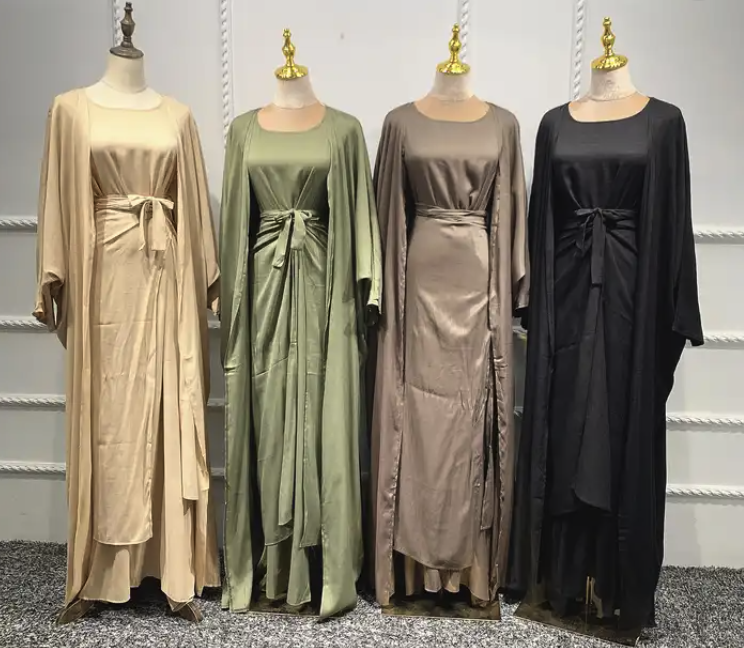
What is the abaya? It is a flowing dress that covers both arms and legs but not the head or hands.

While the robe is popular in Arab-majority countries, it does not have a clear religious meaning. it is mostly worn by Muslim women who want to follow the Quran’s teachings regarding modesty.

Some Muslims consider the female body — with the exception of the face and hands — “awrah,” which means it should be concealed in public and not to be seen by men.


Please respect our Commenting Policy

Off to Mongolia: As oldest traveling pontiff, Francis visits a country with few Christians

Off to Mongolia: As oldest traveling pontiff, Francis visits a country with few Christians

One of the most interesting, but least publicized religious events of the year happens this weekend, starting today actually, when Pope Francis travels to Mongolia. The papal schedule is here.

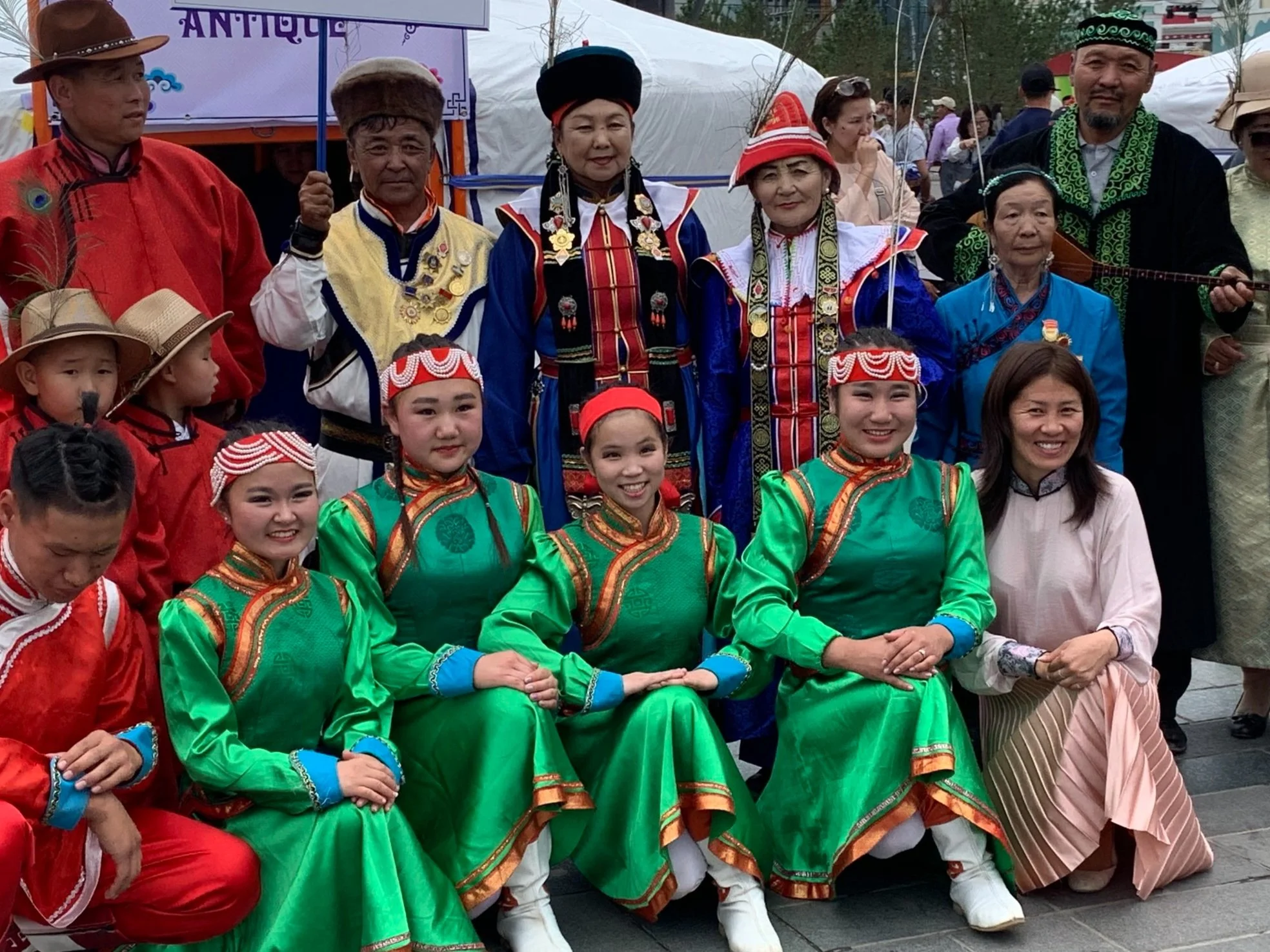
I spent three weeks in Mongolia in 2019. While there, I got to meet a variety of Protestants and Buddhists (Buddhism is more than half the population), but never saw any sign of the Catholics.

The logical question: What are the news hooks for this visit? What should journalists be covering?

Let’s do some math. There are only 3 million people in the country and 41,000  60,000 of them (estimates vary) are Christian — the vast majority evangelical Protestant — after three decades of evangelizing.

When missionaries poured into the country in the early 90s, they had to start from ground up, as much of the  populace was atheist thanks to Communism. Catholic missionaries were among them and, today, there are 1,300-1,500 Catholics there, which is pretty low compared with the many Protestants. There are roughly 196 churches in the entire country,out of which eight — plus one chapel — are Catholic.

Even the Church of Jesus Christ of Latter-day Saints claims more members (12,500) than that. See this Vatican overview for more on Mongolian Catholics.

There’s a lot of spiritual hunger there. When evangelist Franklin Graham (son of Billy) visited Mongolia last year, 17,000 showed up to hear him and 2,000 indicated conversions. I help support a Mongolian evangelist (her biography is here) who just completed a tour of the country and her sessions were packed (see this short video).

Evangelistically speaking, Mongolia is virgin territory, and everyone wants a cut of that pie. I am willing to bet that Francis’ new cardinal there unofficially told him the Protestants are making a lot of gains and he needs help. There are so many good stories in this trip, it’s hard to know where to start.

First, AP’s bare-bones intro:

VATICAN CITY — Pope Francis on Sunday described his visit later this week to Mongolia, the first-ever pilgrimage by a pontiff to the east Asian country, as a much-desired occasion to encounter a “noble, wise” people.

Speaking to the public in St. Peter’s Square, Francis said the trip would also be an opportunity to embrace the Catholic community there, describing the church in Mongolia as “small in numbers but lively in faith and great in charity.”


Please respect our Commenting Policy

New York Times offers a fascinating look at France's painful religion and immigration puzzle

New York Times offers a fascinating look at France's painful religion and immigration puzzle

Religion is very complicated in France. It’s almost as complicated as anti-religion traditions in France.

This makes it very hard for journalists to draw a line between the “good” religious believers and the “bad” religious believers, as well as the “good” anti-religion leaders and the “bad” anti-religious leaders.

For example, if a politician opposes public displays of religious tradition by Muslims, is that “good” anti-religion or “bad” anti-religion? After all, it could be see as logical after generations of French opposition to similar symbolic gestures by Catholics, Jews, etc. Ah, but what this action can be seen as opposition to European Union support for welcoming immigrants, no matter what?

Those seeking a quick glance at recent scenes in this complicated drama can surf through these GetReligion posts — “France's high court clears up burkini's legality; mainstream media still muddy the waters” and “More secular attacks on burkinis: The New York Times explains why this is not about religion.”

As with the burkini battles, France is now wrestling with another conflict about women, especially school girls, who choose to be modest for bad reasons. The New York Times has published a solid, fascinating report that ran with this complicated (which is fitting) double-decker headline:

France to Ban Full-Length Muslim Robes in Public Schools

Religious symbols are already banned in French schools, but the abaya — a loosefitting robe worn by some Muslim women — was in a gray area. Critics called the measure discriminatory

Ah, but what if there is nothing distinctively or historically Muslim about a particular garment?

What is the difference between a “good” evening gown that is dramatic (and modest) and a “bad” everyday gown that is dramatic and modest? The issue, of course, is whether the gown is worn for religious reasons. In this overture, note the distinction between an “abaya” and the “niqab,” which covers the face. (Oh, and note “children” in the lede, as opposed to “girls.”)

France will bar children in public schools from wearing the abaya, a loosefitting, full-length robe worn by some Muslim women, the government said this week. It said the measure was necessary to stem a growing number of disputes in its secular school system.


Please respect our Commenting Policy

Pope Francis and his Synod on Synodality (part one) looks like 2023's story of the year

Pope Francis and his Synod on Synodality (part one) looks like 2023's story of the year

Move aside, Southern Baptists and their drive to restrict women’s pastoral ministry in church. Women will be just one of many contested topics when Pope Francis presides October 4–29 over his Synod of Bishops at the Vatican, already in line to become the religion story of the year, even though final decisions await a second session in October, 2024.

Interest escalated with last week’s vigorous attack on the meeting from conservative Catholics, in the form of a 110-page booklet translated into eight languages, made available free online for journalists and parishioners. “The Synodal Process Is A Pandora’s Box” contends that planners have stacked the deck and this “watershed in Church history” constitutes an “imminent” threat to “demolish” the “Catholic Church as it has always existed.”

Hard to top the news possibilities that could amount to a Vatican II and a half: Marriage for priests, ordination of women as deacons (though not as priests) with more power otherwise, lay preachers, broader inclusion for “LGBTQ+” Catholics (yes the Vatican uses that fashionable term), blessing ceremonies (but not marriages) for same-sex couples as the Church of England authorized this year, openness to polygamy and Communion to divorced-and-remarried Catholics and restitution for victims of clergy sexual abuse.

Or not. Germany’s “Synodal Way” process has taken the lead in promoting such revisionist proposals. By contrast, some U.S, bishops downplayed participation in the pope’s synod project or publicly criticized it.

Raising the stakes, according to Rome's Civilta Cattolica on Monday, Francis told an August 5 meeting in Portugal that in the American church there is "a very strong reactionary attitude. It is organized and shapes the way people belong, even emotionally." The pope also said "there is an appropriate evolution in the understanding of matters of faith and morals" and that "backward-ism is useless."

News coverage understandably emphasizes the “Pandora’s Box” booklet’s foreword by American Cardinal Raymond Burke, the onetime archbishop of St. Louis who is now retired as head of the Apostolic Signatura at the Vatican, the church’s highest tribunal.


Please respect our Commenting Policy

How AI may be able to improve journalism when it comes to reporting on Catholicism

How AI may be able to improve journalism when it comes to reporting on Catholicism

One of the things I enjoy about the summer is catching up with people I haven’t seen all year to discuss news, politics and culture. Since so many of my friends are in the news business, inevitably the state of the mass media comes up as a topic.

The one constant subject that has arisen from these conversations is the rise (and potential threat) of artificial intelligence. Specifically, the topic of how AI can (and will) replace humans who report and write for a living.

While machines have yet to replace all writers, the threat is real. This isn’t just limited to journalists. AI has impacted Hollywood (look at the current writers strike), education (from grade school to college) and the retail industry. And yes, journalism is up there to when it comes to an industry seen as under threat, according to a poll conducted earlier this year.

AI a either a new technological monster or a friend to journalists. The industry is divided by the issue. Like the internet back in the 1990s, AI is both astonishing and perplexing.

How has AI and machine learning impacted journalism? Can it make it better or worse? These are just two valid questions people in newsrooms are asking. The question here at GetReligion is how AI could affect religion-beat work and, in this case, the state of Catholic news and publications.

For starters, consider that there will be 10 new AP Stylebook entries to caution journalists about common pitfalls in coverage of artificial intelligence. Here’s what the Associated Press said:

While AP staff may experiment with ChatGPT with caution, they do not use it to create publishable content.

Any output from a generative AI tool should be treated as unvetted source material. AP staff must apply their editorial judgment and AP’s sourcing standards when considering any information for publication.


Please respect our Commenting Policy

Plug-In: Jesus didn't pad his resume, but this top Southern Baptist leader did just that

Plug-In: Jesus didn't pad his resume, but this top Southern Baptist leader did just that

It’s National Shameless Plug Day.

Or maybe it’s really not, but I still want to share an in-depth feature I did on faith nights hosted by Major League Baseball teams. I traveled to San Diego and Los Angeles to report this story for ReligionUnplugged.

But that’s enough shameless plugging for now.

This is our roundup of the top headlines and best reads in the world of faith. We start with the resignation of a top Southern Baptist Convention official.

What To Know: The Big Story

Out immediately: Willie McLaurin, interim president and CEO of the Southern Baptist Convention’s Executive Committee, resigned Thursday.

“In a recent resume that I submitted, it included schools that I did not attend or complete the study,” McLaurin said concerning his decision.

The short version: He lied.

Not the first time: McLaurin is just the latest SBC Executive Committee head to leave amid controversy, as Religion News Service’s Bob Smietana points out:

McLaurin became interim president after Ronnie Floyd, the previous president, resigned in October 2021 after months of controversy over the SBC’s sex abuse crisis. Floyd’s predecessor, Frank Page, resigned in 2018 due to misconduct. 

Regarding McLaurin, the Washington Times’ Mark A. Kellner notes:

The first Black man to head the group that handles matters for America’s largest Protestant denomination outside of an annual business session, the pastor and leadership coach was considered a leading contender for permanent appointment.


Please respect our Commenting Policy

Elite press skips doctrine at World Youth Day in favor of (#surprise) scandal and politics

Elite press skips doctrine at World Youth Day in favor of (#surprise) scandal and politics

This summer has been a very busy one for Pope Francis and the church. Adding to all this news was World Youth Day held in Lisbon, Portugal. Last held in 2019, the event — often nicknamed the “Catholic Woodstock” — was initiated by Saint Pope John Paul II in 1985.

The concept of World Youth Day has been influenced by the Light-Life Movement that has existed in Poland since the 1960s, where Catholic teens celebrated a “day of community” during youth camp retreats. This has morphed into the five-day event that ended yesterday.

The journalists in the mainstream press have never known what to do with this event. This is, after all, a positive gathering that brings together millions of people, mostly young Catholics. This is not an everyday thing. It shows young Catholics happy to embrace the church, while celebrating its teachings — a stark contrast to the secular world and the messages of hopelessness and sin we get each day.

As a result, the mainstream press covers World Youth Day and the pope’s appearances through a lens of scandal and (#ShockedShocked) politics.

Doctrine, as is often the case, is simply swept aside. Anything positive that can be gleaned from the gathering of so many young people is tossed aside. World Youth Day is a snapshot of the church’s future — but you wouldn’t know it from much of the coverage of the last week. For example, going to confession (with the pope helping out) is a major part of the World Youth Day experience. Valid story?

For great — and complete — World Youth Day coverage, the Catholic press did its job, once again. Places such as CruxThe Pillar on Substack and Catholic News Agency created pages where all their stories could be found. In other words, a one-stop-shop for all things World Youth Day.

How did the mainstream media do?

Take a guess.

I understand there are different audiences to satisfy, but ignoring what’s in front of their eyes — large masses of young Catholics excited about their faith — in favor of what I saw as negative coverage isn’t a snapshot of reality. It is, instead, a focus on what editors and journalists think their own loyal niche audiences want to read about the modern church.


Please respect our Commenting Policy