International News

100 years ago this week, feisty Time magazine began changing the news game

100 years ago this week, feisty Time magazine began changing the news game

Friday, March 3, marks 100 years from the first issue date of Time magazine, self-described as “The Weekly News-Magazine.”

The feisty New York-based newcomer brought journalistic inventions that redefined what’s news and how it’s presented. When Time and other Time Inc. magazines were up for sale in 2018, an article in the rival New York Times bade farewell to “the pre-eminent media organization of the 20th Century.”

Here is a very obvious point of disclosure and personal privilege: The Guy worked there 1969-1998 as a field correspondent and Religion section writer.

Looking back, the magazine’s 75th anniversary spectacle converted Radio City Music Hall across the street into a banquet venue and invited every living person who’d ever appeared on its cover. The Rev. Billy Graham, say hello to Joe DiMaggio. President Bill Clinton, meet Lauren Bacall. You get the picture.

The current ownership, however, is low-key about the centennial. But Time’s survival is noteworthy in today’s harsh environment for print media, albeit with reduced circulation, budget, staffing and publishing frequency.

Then there is another important angle about the impact of Time in the news marketplace. News flash: Religion makes news!

Missionary Kid Henry Luce was the co-founder, and Time carried a religion news section each week, alongside other specialized “back of the book” sections like Press and Law -- subject areas that many dailies only covered with depth decades later.

Attention-grabbing Time covers, coveted real estate for all fields, added renown to numerous religious writers and thinkers (e.g. C.S. Lewis, 1947), bureaucrats (Eugene Carson Blake, 1961) and activists (Mother Teresa, 1975).

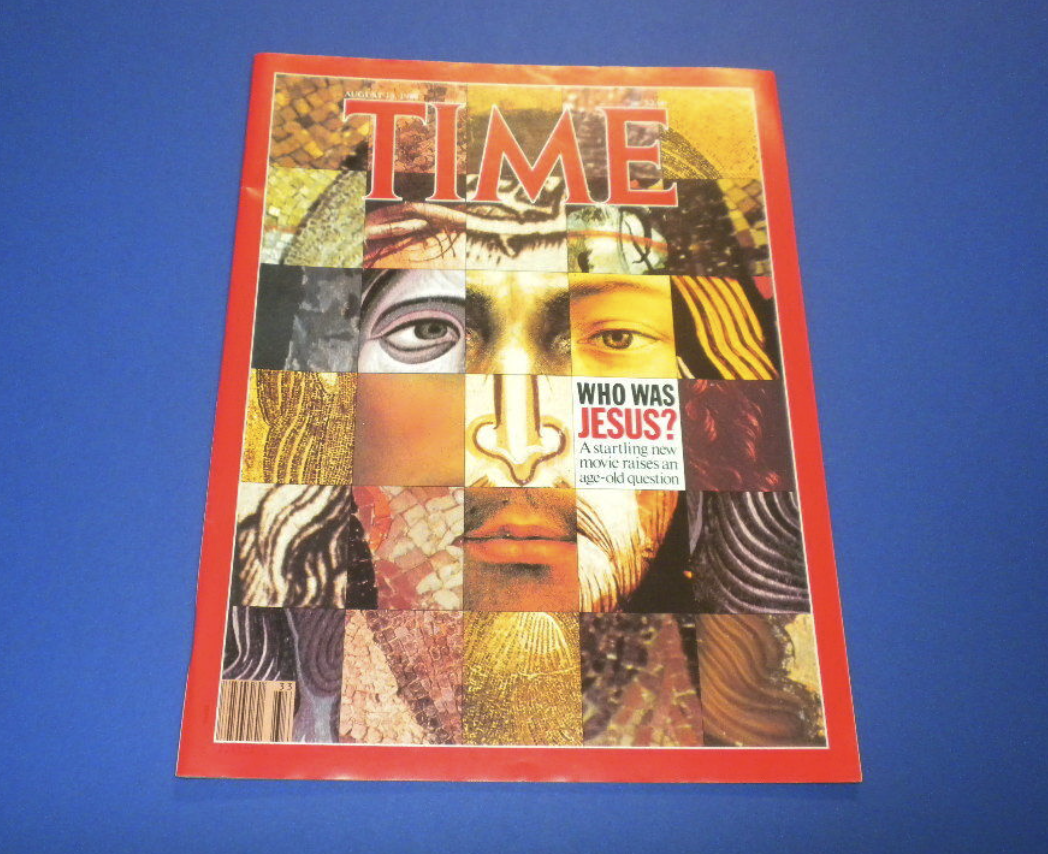
Some readers may recall one cover in particular — the much-misunderstood black-hued “Is God Dead?” Holy Week cover in 1966, written anonymously (no bylines in those days) by John Elson. This talented scribe, a churchgoing Catholic, was not undermining faith but asking whether there were any limits to the era’s “theological strip-tease” among liberal Protestants and post-Protestants. That cover was, in other words, ahead of its time.


Please respect our Commenting Policy

Plug-In: Latest Asbury revival is big news, from the New York Times to Christianity Today

Plug-In: Latest Asbury revival is big news, from the New York Times to Christianity Today

Good morning, Weekend Plug-in readers!

It’s the one-year anniversary of Russia’s invasion of Ukraine.

This week’s roundup features news about former President Jimmy Carter’s faith and Saddleback Church’s exit, for now, from the Southern Baptist Convention.

But we start with a story Plug-in already covered last week.

I explain why in 3, 2, 1 …

What To Know: The Big Story

Asbury revival, again: When the New York Times, Christianity Today and Terry Mattingly (IYKYK) all jump on the same story, it must be a big deal.

Such is the case with the spiritual phenomenon that drew thousands to a small Christian college in Kentucky.

The spontaneous, 16-day gathering that ended Thursday was like “‘Woodstock’ for Christians.” So declares Times religion writer Ruth Graham’s front-page story today.

Behind the scenes: “Chocolate chip cookies. ‘All the Chick-fil-A.’ Meetings in a storage closet. Flow charts.”

Christianity Today’s Daniel Silliman goes in depth to explore how Asbury University officials tried to “honor what is happening.”

‘Like deja vu all over again’: In his “On Religion” column for the Universal Syndicate, Mattingly delves into the history of past Asbury revivals.

They go all the way back to 1908, as alumnus and professor Stephen A. Seamands notes in Mattingly’s column:

“The wildness of these events is that they’re actually un-wild. The atmosphere is serene, deep and at times rather quiet,” he said. “It’s like a veil is pulled back and students see Jesus for the first time — Jesus manifested in a new and powerful way.”


Please respect our Commenting Policy

Yo, journalists: It's time for a big update (or two) on the old, old Anglican wars timeline

Yo, journalists: It's time for a big update (or two) on the old, old Anglican wars timeline

Scribes who have been covering the Anglican Communion wars since, oh, the late 1970s or so (there are a few of us Jurassic journalists left) know that this has been a long, complicated road.

In most recent elite-press coverage, this timeline has been radically truncated, turning battles over a wide range of doctrines and church-history issues into a simple good vs. evil clash over LGBTQ rights. In this version of history, this global doctrinal war began in 2003 with the consecration of a non-celibate gay bishop in the tiny, shrinking Diocese of New Hampshire here in America.

Here at GetReligion, I have long referred to this fallacy as “Anglican timeline disease.” Hold that thought, because we will come back to it.

The key, right now, is that journalists need to radically update this timeline, in the wake of some major global developments that are receiving little elite coverage. Here is the dramatic double-decker headline for the major report in The Wall Street Journal:

Conservative Anglican Leaders Call for Break With Church of England Over Same-Sex Blessings

Archbishops from Africa and elsewhere repudiate the Archbishop of Canterbury’s historic role as spiritual leader of Anglicans worldwide

The overture for this solid story included several bites of information that are worth noting:

Conservative Anglican archbishops on Monday said the Church of England had forfeited its traditional leadership role in the worldwide Anglican Communion by approving the blessing of same-sex relationships earlier this month, opening a historic rift in one of the world’s biggest Christian denominations. 


Please respect our Commenting Policy

Plug-In: A $50 million shrine dedicated to honor Catholic farm boy who became a martyr

Plug-In: A $50 million shrine dedicated to honor Catholic farm boy who became a martyr

Most weeks, I send out a “live” version of Weekend Plug-in.

This week, though, I expected to be on an airplane as this e-newsletter began arriving in readers’ inboxes. So if any UFOs got shot out of the sky this weekend, don’t look for the religion angle right here, right now.

But please do enjoy this prescheduled roundup of the best reads and top headlines in the world of faith.

What To Know: The Big Story

Blessed Stanley: A dedication Mass for a $50 million shrine honoring the Catholic Church’s first U.S.-born martyr was held in Oklahoma City. I wrote about the life — and death — of slain missionary Stanley Francis Rother for The Associated Press.

My story notes:

The Spanish colonial-style structure incorporates a 2,000-seat sanctuary as well as a visitor center, gift shop, museum and smaller chapel that will serve as Rother’s final resting place.

The shrine grounds also will feature a re-creation of Tepeyac Hill, the Mexico City site where Catholics believe the Virgin Mary appeared to an Indigenous Mexican man named Juan Diego in 1531. An artist created painted bronze statues of Our Lady of Guadalupe and St. Juan Diego — each weighing thousands of pounds — for the Oklahoma site.

Life and ministry: For the best in-depth coverage of Rother and the shrine, be sure to follow The Oklahoman’s faith editor, Carla Hinton, who has covered this story for years.

Among her features this week: a detailed look at the shrine museum and an exploration of how “Rother’s heart has remained with his beloved Guatemalan parishioners.”

A final shrine note: I first wrote about Rother in 2001 during my time as religion editor for The Oklahoman. In 2017, I did a Religion News Service feature on the love for “Father Stan” in his hometown of Okarche, Oklahoma.


Please respect our Commenting Policy

Dangerous four-way intersection looms ahead in Christian debates about LGBTQ issues

Dangerous four-way intersection looms ahead in Christian debates about LGBTQ issues

Flying home from his February Africa pilgrimage, Pope Francis held an unprecedented three-man press conference alongside Archbishop of Canterbury Justin Welby, leader of the Church of England and some 85 million members in the global Anglican Communion, and the Right Rev. Iain Greenshields, this year’s titular head of the Church of Scotland (equivalent of the mainline U.S. Presbyterians).

These men personify three emerging approaches to same-sex revisionism that reporters will be observing. A fourth option,of course, is strict limitation of sex to heterosexual marriage, a doctrine articulated in the Catholic Catechism and shared by all churches until recently. For example, see this summary issued last week by the Rev. J.D. Greear, a former Southern Baptist Convention president.

In the West, many “mainline” Protestant groups have shifted to option one — full-on approval of same-sex relationships, exemplified by liturgies to celebrate church weddings. The Church of Scotland joined them last May as assembly delegates gave this change 67% support. (Dissenting clergy will not be forced to perform weddings they oppose in conscience.) This followed an earlier go-ahead in America’s largest Presbyterian denomination.

With option two, Pope Francis has not proposed any alteration in the Catholic teaching that same-sex acts are sinful, but is ambiguous about how Catholic churches should welcome and potentially bless gay people (see this earlier GetReligion post on a test case in Chicago). That and his other “dialogue” initiatives rile doctrinal traditionalists. Backed by Welby and Greenshields, Francis asserted that secular law should not criminalize people for gay acts -- a striking plea in Africa, where many nations outlaw gay activity and some impose the death penalty.

Then Archbishop Welby’s church made an historic decision for option three — half-way liberalization. This approach would continue to bar same-sex weddings, while approving church “blessing” ceremonies for such couples after their civil marriages (legal in England since 2013). After six years of formal nationwide church discussion, and more than eight hours of floor debate, the General Synod voted February 9 to “welcome” that policy, which the bishops approved in January.

The motion expressed repentance over past and present “harm that LGBTQI+ people have experienced” in church. Welby and the Archbishop of York jointly stated that their church “will publicly, unreservedly and joyfully welcome same-sex couples.” This includes sexually active same-sex couples? Debate continues on that point.

This decision by no means settles matters.


Please respect our Commenting Policy

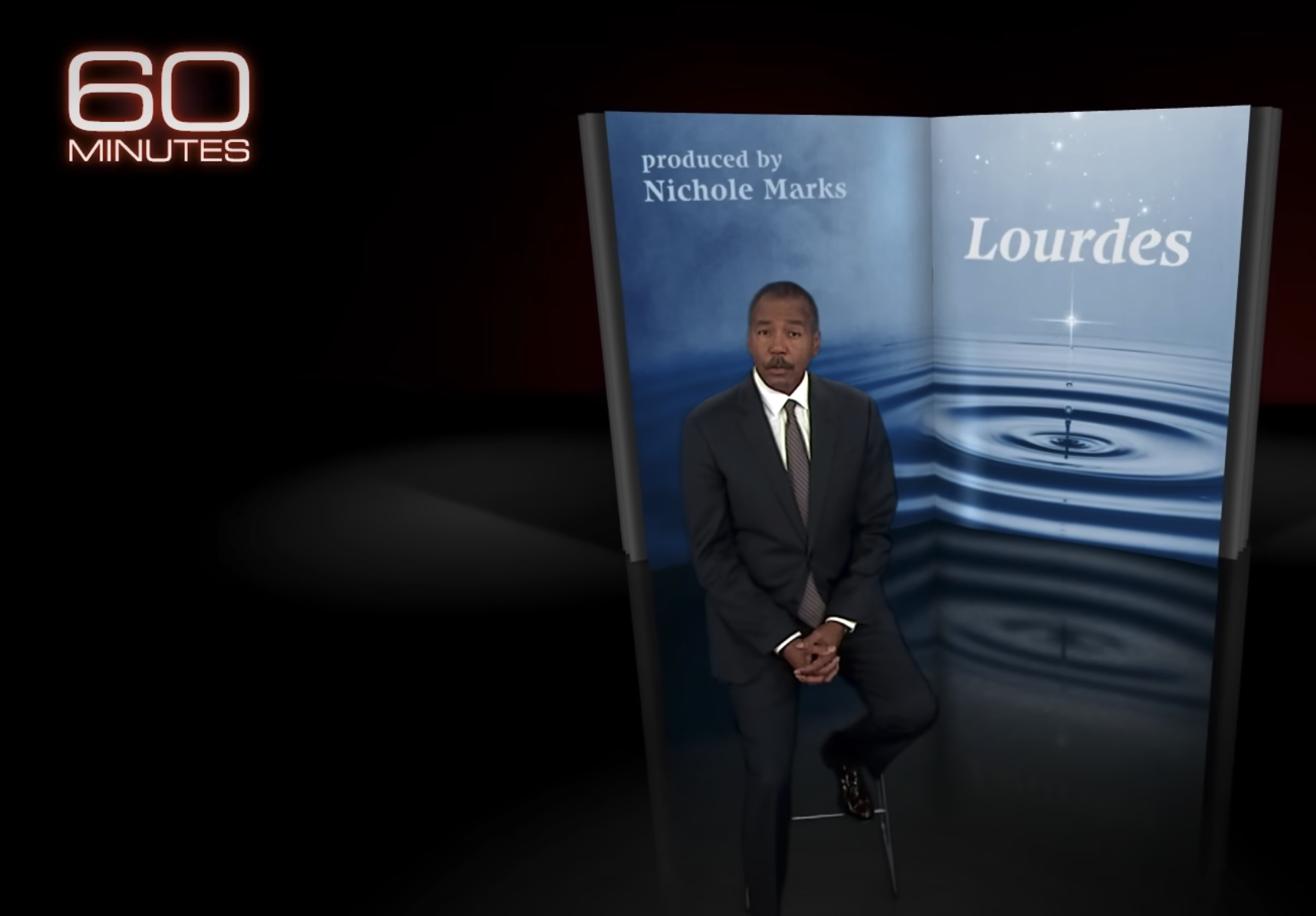
Podcast: 60 Minutes visits Lourdes and asks (some) very good questions about 'miracles'

Podcast: 60 Minutes visits Lourdes and asks (some) very good questions about 'miracles'

Back in the 1980s, I wrote a profile of a remarkable Episcopal priest in Colorado who was approaching his 100th birthday. He had been raised in pre-World War II Japan — the son of a samurai.

As a young man he became terribly ill and slipped into a coma. At one point, doctors said he flatlined — but they were able to restart his heart. When he awakened, he reported having a near-death experience in which a man in white robes told him that he would live and that there was much work for him to do.

The young man knew almost nothing about Christianity, other than a brief exposure to the New Testament in an English-language class. Nevertheless, he truly believed that this man was Jesus. This led to his conversion, the priesthood and a journey to America. During the war, the U.S. government put him in an internment camp — a painful episode in a long and amazing life.

Now, here is a question linked to this week’s “Crossroads” podcast (CLICK HERE to tune that in). Was this man’s transformation during his NDE a “miracle”? That was the term he used when he described it.

Actually, his vision took place during a life-and-death medical drama that was unusual — but these things happen. Was there a way to test his claims in a laboratory? No. Near-death experiences happen.

What is a “miracle,” anyway? This brings us to a recent 60 Minutes report that, on the CBS website, was given this headline: “France's Sanctuary of Our Lady of Lourdes — Where 70 medical miracles have been recognized by church officials.”

This must-see-TV report ventures into complicated territory where faith, science and centuries of church tradition overlap. The best thing about it is that it allows people to share their beliefs as well as information that, well, can be studied in a laboratory. The visuals are stunning, as thousands of pilgrims visit the site seeking healing for infirmities of body, mind and soul.

The Roman Catholic Church has, in the 160-year history of Lourdes pilgrimages, studied thousands of reports about miracles linked to the shrine. This brings us to the heart of this report:

Stories of inner peace and acceptance don't meet the bar for the Office of Medical Observations, and with just 70 medical miracles recognized in 160 years, you'd have better odds playing the lotto. Yet, thousands of faithful line up at the baths and at this grotto — where the first miracle is said to have occured.


Please respect our Commenting Policy

That timely AP interview: What, precisely, did Pope Francis say about homosexual 'sin'?

That timely AP interview: What, precisely, did Pope Francis say about homosexual 'sin'?

Let’s say that Pope Francis decides to sit down for an Associated Press interview, thus guaranteeing coverage that will appear in the maximum number of mainstream publications around the world.

The basic headline is generic, but points to newsworthy topics: “Pope discusses his health, critics and future papacy.” As you would expect, editors just love a papal interview addressing the potential for a political horse race before a Vatican election (with armies of dangerous right-wing “critics” in the wings).

Now, what angle of this interview would you expect to immediately jump into headlines and social media? Maybe something like, “The AP Interview: Pope says homosexuality not a crime.”

Obviously, the reaction have been different if AP editors had used this accurate headline (written by me), based on this interview: “The AP interview — Pope says homosexual acts are sins, not crimes.”

Hold that thought. First of all, I would like to know more about the backstory for this interview. The timing is interesting, in light of recent news linked to the death of Pope Benedict XVI (“Pope Francis meets Benedict's top aide as memoir rattles Vatican") and yet another powerful conservative leader (“Cardinal Pell authored controversial memo critical of Pope Francis, journalist reveals”).

It is also possible that the timing of this interview is linked to headlines such as this one, at The Telegraph: “ ‘Gay clubs’ run in seminaries, says Pope Benedict in posthumous attack on Francis: New book by the late pontiff makes extraordinary claims about the Catholic Church under his progressive successor.”

Say what? You haven’t seen coverage of this story in your local newspapers or on evening newscasts? Here is a sample of that report:

In a blistering attack on the state of the Catholic Church under his successor’s papacy, Benedict, who died on Dec 31 at the age of 95, said that the vocational training of the next generation of priests is on the verge of “collapse”.

He claimed that some bishops allow trainee priests to watch pornographic films as an outlet for their sexual urges.


Please respect our Commenting Policy

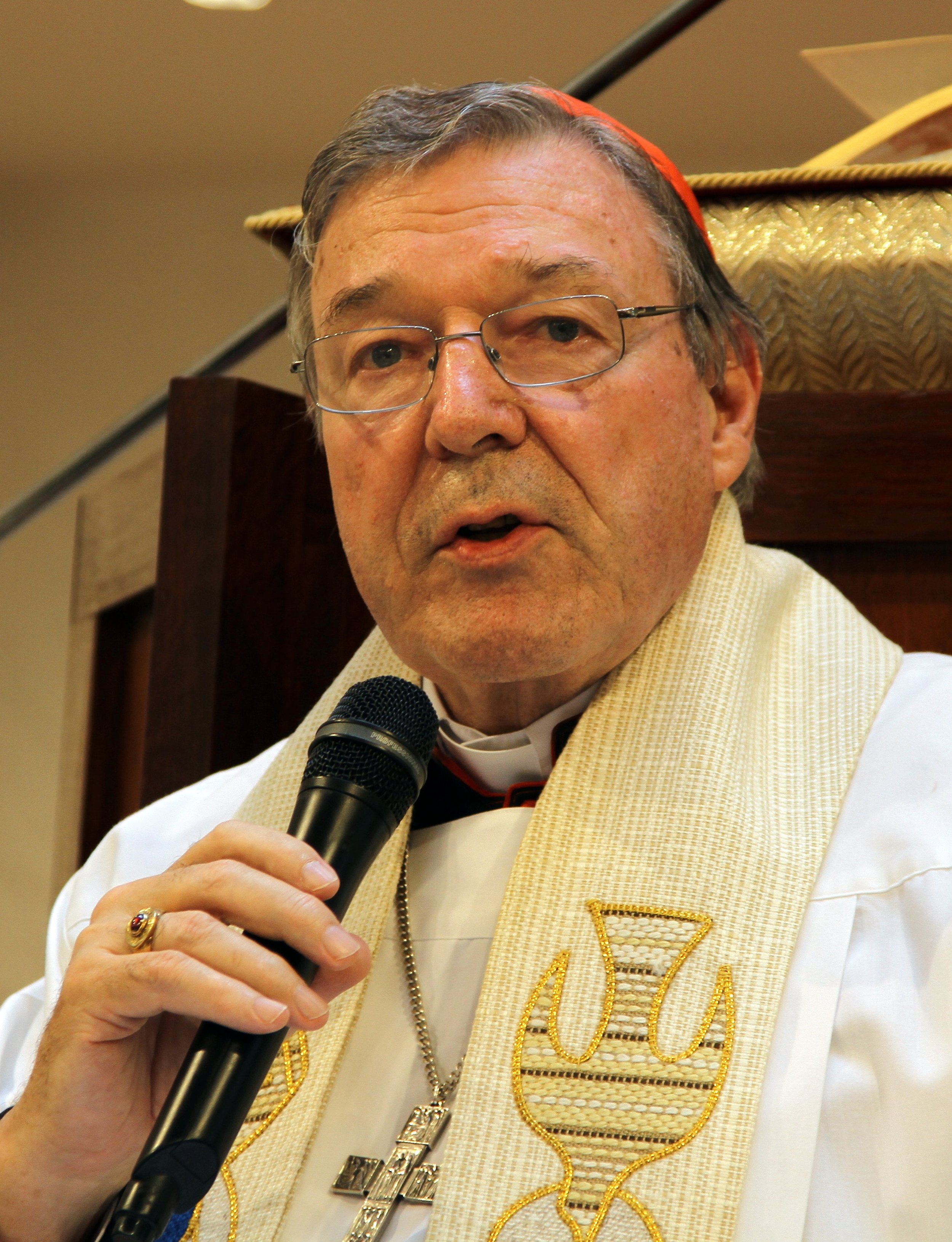
Cardinal Pell's death puts spotlight on his words and arguments about Catholicism's future

Cardinal Pell's death puts spotlight on his words and arguments about Catholicism's future

The Catholic church recently lost a giant. The death of Cardinal George Pell on Jan. 10 at the age of 81 was the literal loss of a giant — he stood at a towering 6-foot-6 and was once an Australian Rules Football player in his youth. But he was also a man who attracted both controversy and consternation.

Many remember Pell for what took place in the last chapter of his life — that of being found guilty of child sexual abuse in 2018. The cardinal won on appeal two years later, the convictions quashed by Australia’s High Court.

Pell also had some very real disagreements with Pope Francis regarding theology and the direction of the church in recent years — something that earned him headlines after his death calling him “divisive” and “controversial.”

Nearly two weeks after his death, Pell continues to be written about in both the secular and Catholic press. A lot of this coverage has been thin on reporting and loaded with commentary, conjecture and analysis. In fact, Pell’s death wasn’t only a reflection of the past, but where the church is headed in the future and what Francis’ papacy means.

It’s within this context — and some of the juicier revelations to come out once Pell died — that has kept journalists busy. Once again, the coverage is skewed heavily towards familiar arguments whether the church should stay true to beliefs regarding marriage and sex that go back 2,000 years or look to the future in order to mesh with the mores of the present.

It is through that prism that Pell has received coverage, especially after a secret memo Pell had penned was made public just days after his death.


Please respect our Commenting Policy

Gay Pride vs. Russian Orthodoxy: NHL star takes stand and journalists pounce in social media

Gay Pride vs. Russian Orthodoxy: NHL star takes stand and journalists pounce in social media

Let’s face it, the Ivan Provorov story had everything that Big Tech-era social warriors could have wanted — Gay Pride, religion, big-time sports, Russia and waves of hot-headed social-media commentary by journalists covering the story.

What it didn’t have, unless I missed it in my reading and search-engine work, was journalists connecting a few dots and spotting a possible role for a true villain — as in Russian ruler Vladimir Putin. Hold that thought.

If you missed this drama, here is the top of the Associated Press story what probably made it into many local newspapers with a headline something like this: “Flyers’ Provorov cites religion for boycott on Pride night.”

Flyers defenseman Ivan Provorov cited his Russian Orthodox religion as the reason he did not participate in pregame warmups when the team wore Pride-themed jerseys and used sticks wrapped in rainbow Pride tape.

The 26-year-old Provorov didn’t take part in the pregame skate with his teammates before their game against Anaheim … , when the Flyers celebrated their annual Pride night in celebration and support of the LGBTQ community. He played nearly 23 minutes in Philadelphia’s 5-2 victory.

“I respect everybody’s choices,” Provorov said after the game. “My choice is to stay true to myself and my religion. That’s all I’m going to say.”

Provorov declined to answer follow-up questions about his decision.

Flyers coach John Tortorella said Provorov “was true to himself and to his religion.”

“It’s one thing I respect about Provy, he’s always true to himself,” Tortorella said.

The AP story, quoting Flyers player Scott Laughton, hinted that the story probably wasn’t over.

Laughton said there would be more conversations ahead with Provorov, who moved from Russia to the United States as a teenager. He signed a six-year, $40.5 million contract before the 2019 season and won the Barry Ashbee Trophy as the Flyers’ outstanding defenseman in his rookie season, the youngest Philadelphia player to receive the honor.

Yes, Eastern Orthodoxy (I am a convert to this ancient Christian communion) defends centuries of Christian teachings and tradition when it comes to the sacrament of marriage and all forms of sex outside of marriage. This frequently creates clashes with the ever-evolving doctrines of the Sexual Revolutions.

These clashes draw relatively little ink, in part because Orthodoxy isn’t a major player, yet, in the marketplace of American religion news. However, Putin’s hellish invasion of Ukraine has changed that to some degree.


Please respect our Commenting Policy